REVIEW · TOKYO
Tokyo Chopstick Making Workshop with Artisan
Book on Viator →Operated by Local Guide Stars · Bookable on Viator
Chopsticks you carve yourself, not just buy. In Tokyo’s Misuji craft neighborhood, you create your own wooden chopsticks with a local artisan and leave with them the same day. I especially like the hands-on approach (this is not a demo you watch) and the small group size (max 10), which keeps the help coming as you work.
The main thing to consider is the effort level and costs: carving and smoothing can be a bit of an arm workout, and nicer wood options or engraving may add extra charges.
In This Review
- Key Things I’d Bet You’ll Care About
- Tokyo Chopstick Making Workshop: Where the Craft Happens
- Pick Your Wood in Misuji: Value Starts With Your Choices
- The Hands-On Carving Process: Turning a Block into Chopsticks
- Small-Group Coaching With Real People: Rasmus, Sakura, Kaana, Angie
- Cultural Notes You’ll Actually Remember at Dinner
- Finishing Touches: Engraving and Wrap-Ready Souvenirs
- How Long This Takes in Real Life: 1 Hour vs. 2 Hours
- Price and Value: Why $26.53 Can Still Feel Fair
- Who Should Book This Chopstick Workshop (and Who Might Skip)
- Practical Tips Before You Go
- Should You Book This Tokyo Chopstick Making Workshop?
- FAQ
- How long does the Tokyo chopstick making workshop take?
- Where is the meeting point?
- What is the price per person?
- Is the workshop limited in group size?
- Will I get a mobile ticket?
- Do I learn how chopsticks are culturally significant in Japan?
- Can beginners participate?
- Do nicer materials cost extra?
- Can I engrave the chopsticks?
- What is the cancellation policy?
Key Things I’d Bet You’ll Care About
- Small class size (up to 10) means more coaching while you shape the chopsticks
- Choose your wood and expect premium woods to cost more
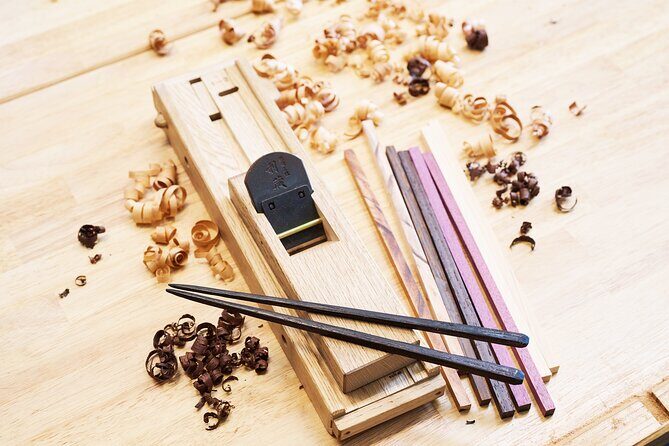
- Traditional tools and technique guide you from rough block to smooth finish
- Same-day take-home with your chopsticks wrapped and ready to use or gift
- Optional engraving for personalization (extra fee)
Tokyo Chopstick Making Workshop: Where the Craft Happens
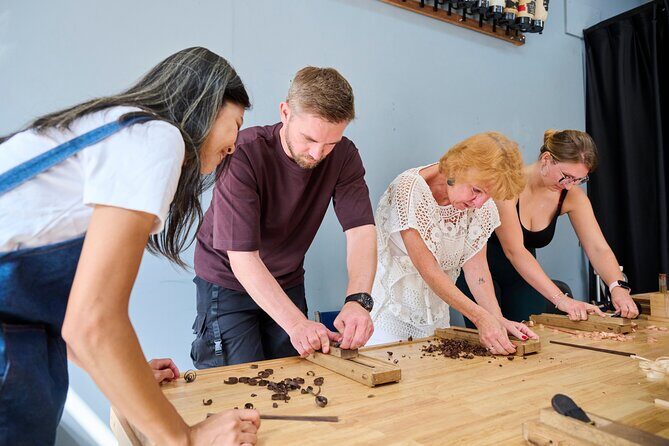
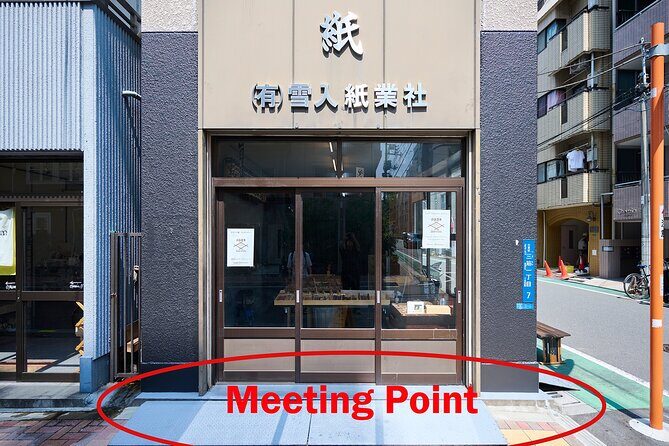
This workshop takes place in a real craft corner of Tokyo—specifically in Taito City, near 1-chōme-7-1 Misuji. The meeting point is set up for transit-friendly access, and that matters because you don’t want to burn your day chasing a workshop location. You’ll also find this area handy if you’re doing other sights around the Ryogoku area; it’s walkable to Ryogoku Kokugikan, so you can easily pair this with a casual half-day plan.
Inside, the vibe is straightforward: you’re seated at a work station, tools are provided, and your job is to turn a wooden piece into a functional pair of chopsticks. This isn’t the kind of class where you end up with something decorative that can’t really be used. The goal here is the practical object—something you can take to dinner.
One nice detail is that the class is capped at 10 travelers. In a group that size, it’s easier for the artisan to spot issues early—like uneven thickness or a handle that isn’t smoothing the way it should.
A few more Tokyo tours and experiences worth a look

Pick Your Wood in Misuji: Value Starts With Your Choices
The workshop is priced at $26.53 per person, which is a fair entry point for a hands-on craft session. But I’d treat that base price as a starter number, not the whole story. The key value lever is wood choice.
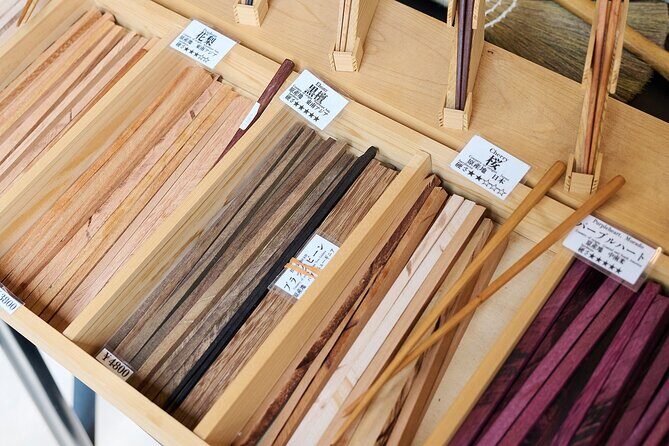
You’ll have options in wood type, and nicer woods typically cost extra. That’s not a dealbreaker—it’s a budgeting question. If you want a “first try” experience, you can usually pick something good without going premium. If you know you’ll love the hobby angle and want something special as a gift, then the upcharge can be worth it.
Two people can book the same workshop and end up with different totals based on wood. That’s normal for artisan crafts. The practical move is to decide what you want your chopsticks to represent:
- A fun souvenir that you’ll actually use at home
- A gift that feels a step more luxurious
- A memory piece that you might personalize further
Also note: engraving is an additional cost. The fact that engraving is available is a big plus if you like making a souvenir feel personal instead of generic.
The Hands-On Carving Process: Turning a Block into Chopsticks
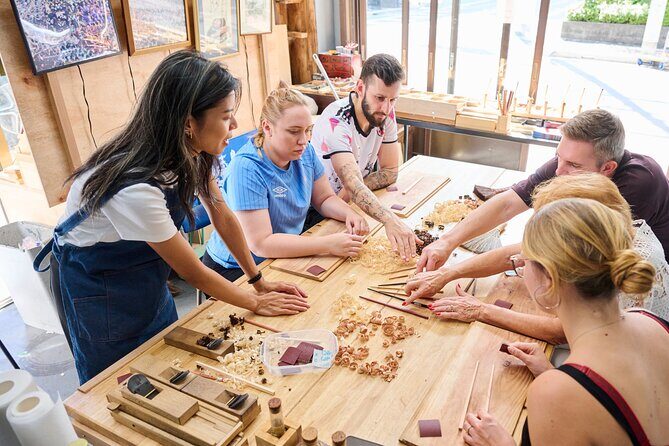
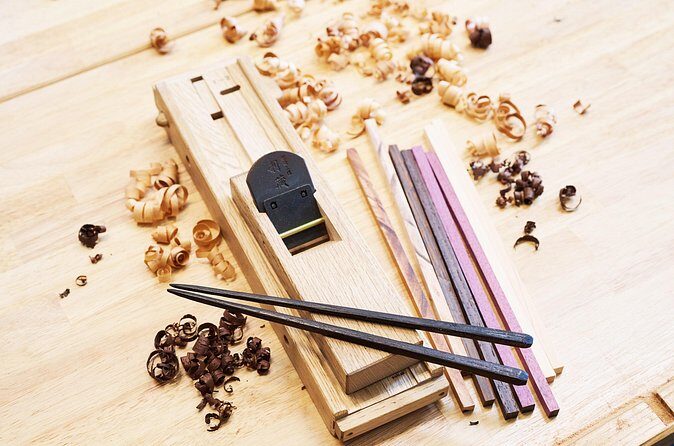
Your session is all about making. You’ll use traditional tools and techniques to shape the chopsticks from a wood piece into something smooth, balanced, and comfortable.
Here’s the workflow in practical terms:
- Shaping the profile
You’ll work the wood so the chopsticks start taking on their final form. This is where your technique matters most, because early unevenness is harder to fix later.
- Smoothing the surfaces
After shaping, you smooth. This part is important for two reasons: it makes the chopsticks pleasant in your hands, and it helps them look refined, not rough.
- Finishing to readiness
You finish your chopsticks so they’re presentable and usable right away.
The big “gotcha” is that woodwork is physical. One review called out the arm workout feeling clearly, and that matches what you should expect from planing, sanding, and shaping. If you have limited hand strength, take it slow and be ready to pause rather than rush.
The good news: the workshop is built for beginners. “Most travelers can participate” is the right expectation. You’re not expected to arrive with woodworking skills.
Small-Group Coaching With Real People: Rasmus, Sakura, Kaana, Angie
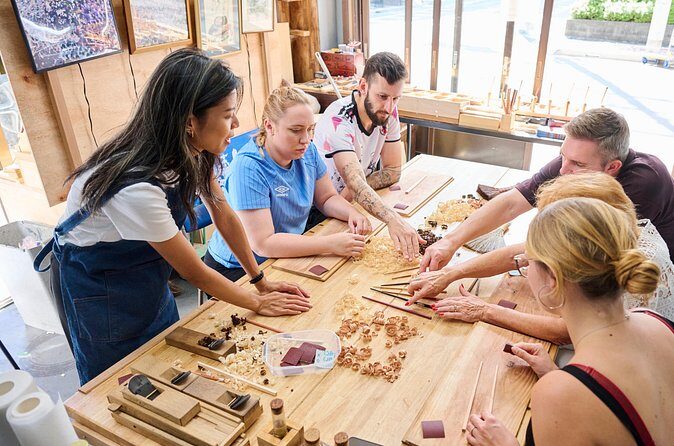
A class like this lives or dies by the instruction quality. Here, the support level is one of the strongest selling points.
Instructors named in the experience include Rasmus and Sakura, Kaana, and Angie, plus mention of Sensei in the teaching team. What you should take from that isn’t just names—it’s the hands-on attention. When the group is limited to 10, you’re more likely to get corrections while your chopsticks are still in progress.
In practice, that means:
- If your shaping is uneven, you can get guidance before you commit too far
- If your smoothing isn’t producing the finish you want, you can adjust while there’s still time
- If you’re unsure how hard to press or how to hold the tool, you can ask
And because the pace is real craft pace (not fast-tour pace), you don’t feel like you’re being yanked along by a clock.
Cultural Notes You’ll Actually Remember at Dinner
This workshop isn’t only about making. You also learn about the cultural significance of chopsticks in Japan—the idea that everyday objects can carry meaning, etiquette, and craftsmanship.
What I like about this kind of add-on is that it doesn’t feel like a lecture. Instead, it shows up as context while you’re working, which helps it stick. When you carve something yourself, the object stops being abstract.
Chopsticks are one of those items you use every time you eat Japanese food, so it’s a smart souvenir. It’s also a conversation starter at home. Even if you never become a chopstick pro, you’ll remember the craft story when you pick them up.





Finishing Touches: Engraving and Wrap-Ready Souvenirs
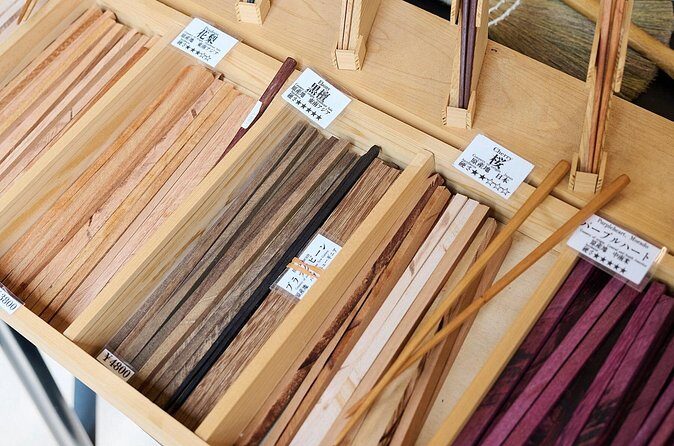
When you finish, you take the chopsticks home the very same day. That matters more than you might think. Many crafts in Japan are made on-site and shipped later, which is convenient but less tangible. Here, you leave with a completed set in your hands.
Your finished chopsticks are wrapped nicely, ready for:
- personal use
- a gift for someone back home
- a souvenir you can actually keep on your kitchen counter
The personalization option is the icing on the cake. Engraving can be added for an extra cost. If you’re traveling with family, kids, or friends, engraving can turn the chopsticks into something that feels uniquely yours instead of “one more Tokyo souvenir.”
One practical tip: if you’re thinking about engraving, decide your text before the moment feels time-tight. Personalized details are easiest when you’re calm.
How Long This Takes in Real Life: 1 Hour vs. 2 Hours
The workshop is listed at about 1 hour (approx.), but you should plan a little buffer. One experience note indicated it can take around 2 hours to finish for a group, and that’s believable for real carving and smoothing.
So how should you plan your day?
- If you have a tight schedule, add buffer time before and after
- If you’re flexible, treat it like a calm creative break from sightseeing
Because you’re working with tools, your time is partly controlled by precision—rushing can lead to a less comfortable result. The best classes here don’t feel rushed, which is why your total time can run long in a good way.
Price and Value: Why $26.53 Can Still Feel Fair
At $26.53 per person, this is an affordable entry into artisan craft. The value comes from three things:
- You make the real thing
You’re not buying a finished set from a shelf. Your hands do the work, and you’ll feel that every time you use the chopsticks.
- You take it home the same day
That saves time and adds emotional value. A souvenir you can use immediately tends to feel worth more than something that has to be stored or shipped.
- Small-group instruction
With a max of 10 people, you’re more likely to get help. For a beginner, coaching time is the difference between a fun project and a frustrating one.
Now the balanced view: the final cost can rise due to:
- upcharges for nicer woods
- additional engraving fees
Even with that, you’re still likely to land in “worth it” territory because you end up with a useful, personalized set—not a mass-made trinket.
If you want best value, pick a midrange wood and skip engraving unless you really want the personalization.
Who Should Book This Chopstick Workshop (and Who Might Skip)
This workshop is a strong fit if you:
- want a hands-on activity that isn’t just walking and shopping
- like traditional crafts and want something practical to take home
- travel with kids or teens (the format works well for ages around upper childhood, based on the experience notes)
- want a break that feels relaxing and structured
It may be less ideal if you:
- are worried about physical repetition in your hands
- want something extremely low effort and quick
- dislike paying add-ons (because wood choice and engraving can change the total)
Also, if you’re the type of person who loves “making one thing with your own hands,” you’ll probably come away smiling. Chopsticks are simple at first glance, but they reward attention.
Practical Tips Before You Go
A few things I’d do to make the session go smoothly:
- Wear comfortable clothing and expect you might get a little wood dust or residue on your hands
- Go in with a patient mindset. A craft is rarely a 60-minute sprint
- If you plan to engrave, think ahead about what you want on it
- If you know your grip strength is limited, don’t try to out-muscle the tools. Slow and steady wins
And one smart mindset: treat it like a small craft lesson, not a souvenir factory. The fun is the process.
Should You Book This Tokyo Chopstick Making Workshop?
Yes, if you want a memorable, useful souvenir that doesn’t feel generic. The combination of same-day take-home, a real craft process, and small-group help makes it a strong value play at $26.53.
I’d especially recommend it if you’re pairing it with a day around Ryogoku or you want something different from temples and shopping streets. It’s also a great “weather-plan B” option because it’s an indoor workshop you can count on.
If you’re sensitive to physical work or you’re trying to stick to a strict budget, choose your wood carefully and consider whether engraving is worth it to you. But overall, this is the kind of Tokyo experience that turns into a personal story you can keep using at home.
FAQ
How long does the Tokyo chopstick making workshop take?
The experience is listed at about 1 hour (approx.), but it may take closer to 2 hours depending on the pace and finishing time.
Where is the meeting point?
You’ll meet at 1-chōme-7-1 Misuji, Taito City, Tokyo 111-0055, Japan. The activity ends back at the meeting point.
What is the price per person?
The price is $26.53 per person.
Is the workshop limited in group size?
Yes. The experience has a maximum of 10 travelers.
Will I get a mobile ticket?
Yes. The tour includes a mobile ticket.
Do I learn how chopsticks are culturally significant in Japan?
Yes. You’ll learn about the cultural significance of chopsticks in Japan as part of the workshop.
Can beginners participate?
Most travelers can participate, and the workshop is designed to be fun and relaxing for beginners.
Do nicer materials cost extra?
You can choose different types of wood, and there is an extra cost for nicer woods.
Can I engrave the chopsticks?
Engraving is available, and it comes with an additional cost.
What is the cancellation policy?
You can cancel for free up to 24 hours in advance of the experience for a full refund.