REVIEW · TOKYO
Tokyo Sushi Making Class in Tsukiji with Professional Chef
Book on Viator →Operated by Japan Wonder Travel · Bookable on Viator
Sushi skills, taught where the fish lands. This Tsukiji class pairs a market walk with a tight 90-minute workshop, so you go from fresh fish to your own lunch fast. I love that your meal is handmade sushi—not a pre-made plate.
I also love the fish disassembly show and the knife-focused instruction before you start shaping nigiri and rolling maki. One drawback to plan for: the classroom is on the third floor, and it’s stairs-only.
In This Review
- Key highlights (the stuff that matters)
- Tsukiji Market Stops: getting context before you touch rice
- A small practical note
- Inside the third-floor classroom: fish prep, knives, and how sushi starts
- 1) Fish disassembly demonstration
- 2) Knife talk that actually helps
- 3) Tools and tableware are provided
- Stairs-only reality check
- Making 5 nigiri and 1 rolled sushi: what you’ll practice
- What’s included in what you make
- Step-by-step instruction (and why it works for beginners)
- Lunch you make: eating the results and a chef’s extra plate
- Photo moment
- English host + sushi master: how the class stays understandable
- Family-friendly, but do note the format
- Price and value: is $49.74 worth it?
- Who this Tsukiji sushi class suits best
- Should you book this Tsukiji sushi class?
- FAQ
- How long is the Tokyo Sushi Making Class in Tsukiji?
- What will I make and eat during the class?
- Is hotel pickup or drop-off included?
- Where do I meet for the tour?
- Is the class in an accessible location for people who can’t handle stairs?
- Are you able to accommodate allergies?
- Can the class accommodate kosher or halal requests?
- How many people are in the group?
- Is it near public transportation?
- Do I get a mobile ticket?
Key highlights (the stuff that matters)
- Fish prep demo first, so you understand the why, not just the how
- English-speaking host + pro sushi master guiding you step by step
- You make 5 nigiri + 1 rolled sushi, then you eat what you made
- The wasabi is treated like a fresh ingredient, not an afterthought
- Max 20 people, so you’re not lost in a crowd
- Classroom is third floor with stairs only, so don’t book this if stairs are a problem
Tsukiji Market Stops: getting context before you touch rice
This experience works because it gives you the right setting before the hands-on part. You meet at a specific address in Tsukiji (千社額棟4-chōme-16-2 Tsukiji, Chuo City), then the group moves through three Tsukiji areas.
Here’s how this helps you as a cook and not just a spectator:
- You see where the fish world happens. Sushi isn’t just a roll. It’s about sourcing, freshness, and how fish is handled.
- You spot types of seafood you wouldn’t pick in your home store. That makes the later “why this cut, why this preparation” talk click fast.
- You get oriented in Tsukiji before class time. The market area can feel like a maze if you show up late and hungry.
The itinerary points you to:
- Tsukiji Fish Market
- Tsukiji Jogai Market
- Tsukiji Nippon Fish Port Market
You’re not doing a long museum-style tour. The value is the practical context. You’ll understand what you’re about to work with, and you’ll ask better questions once you’re in the classroom.
A few more Tokyo tours and experiences worth a look

A small practical note
This is Japan—so plan to move on foot and be comfortable standing. The markets are active, and your schedule is short (about 1 hour 30 minutes total for the experience), so build in a little buffer if you’re juggling trains and a tight day.
Inside the third-floor classroom: fish prep, knives, and how sushi starts
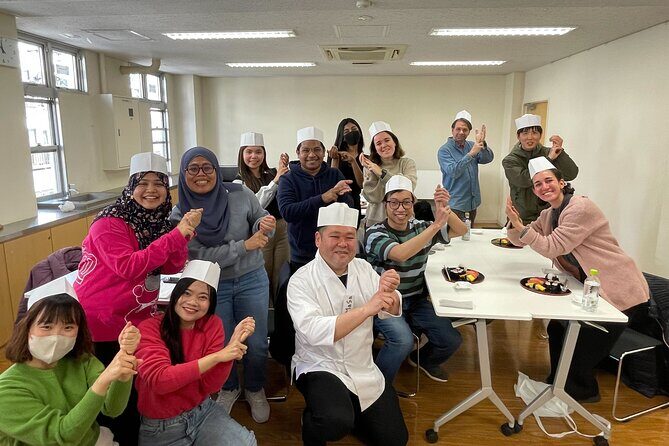
After the market time, the class shifts to a traditional-style classroom in a local Tsukiji building. The structure sounds simple, but it’s designed well: you watch key steps first, then you copy them.
Expect this flow:
1) Fish disassembly demonstration
You’ll start by watching the sushi chef handle fish cutting and preparation. This isn’t just to wow you. It teaches the basics of how sushi-grade handling works—what gets trimmed, how cuts are made, and how that affects the finished nigiri.
2) Knife talk that actually helps
You’ll learn about Japanese knives as part of the process. Even if you’re not buying a knife after class, you’ll walk away with better intuition for:
- why certain cuts look the way they do
- why precision matters for texture
- why sushi chefs think in “pieces you can eat cleanly”





3) Tools and tableware are provided
You don’t need to bring chopsticks skills or special equipment. Utensils and tableware are provided (sourced from local shops), so you can focus on learning technique instead of hunting gear.
Stairs-only reality check
Your classroom is on the third floor, with only stairs. If you have mobility limits, think carefully before booking. This isn’t about being dramatic—just about avoiding a frustrating day in a busy market area.
Making 5 nigiri and 1 rolled sushi: what you’ll practice
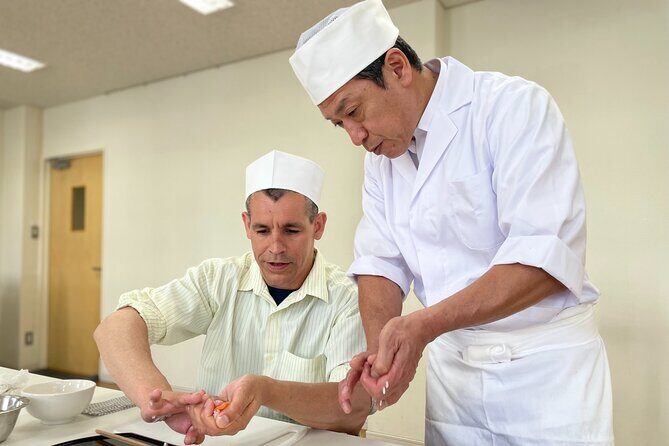
This is the hands-on core. You’ll learn two main styles:
- nigiri (fish on vinegared rice)
- rolled sushi (maki)
And you don’t just make one example. You make enough to feel the rhythm and understand where mistakes happen.
What’s included in what you make
You’ll create:
- 5 different nigiri
- 1 rolled sushi
That matters because sushi learning is repetition. If you only made one nigiri, you’d memorize a single “formula.” Making five gives you pattern recognition: different fish, slightly different handling, and different visual expectations.
Step-by-step instruction (and why it works for beginners)
The sushi master teaches you step by step. You’ll get help with technique, which is especially important for rice handling and shaping. Reviews repeatedly highlight how supportive staff are during the hands-on part, and that lines up with the structure here: watch → practice → correct → repeat.
If you’re a first-timer, this is the sweet spot. You get real guidance without spending half a day messing up rice in silence.
Lunch you make: eating the results and a chef’s extra plate
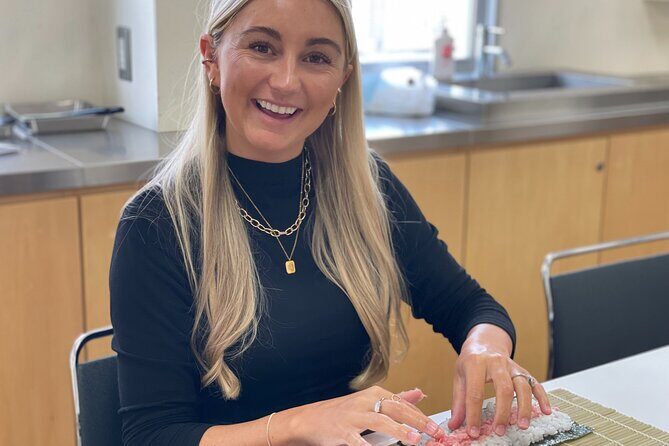
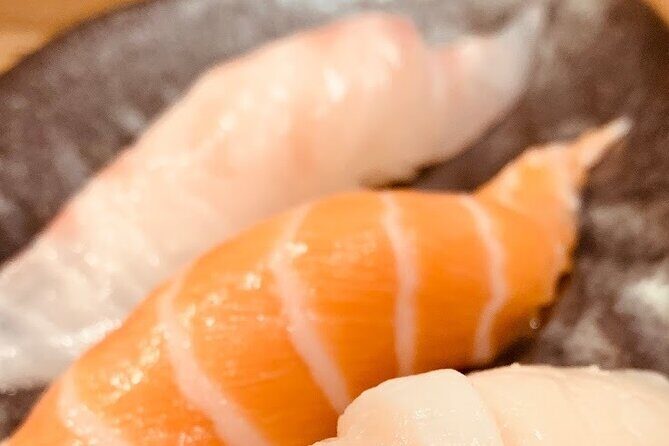
After the workshop, you eat your own sushi. This isn’t a bonus snack—it’s lunch.
Here’s what you get out of that:
- You learn what the technique tastes like, not just how it looks.
- You can adjust your own instincts for the next bite: rice pressure, fish placement, roll tightness.
- You get instant feedback from your own palate.
Also, the sushi master prepares another plate and uses freshly prepared wasabi. That’s a nice detail because many sushi experiences treat wasabi like a pre-squeezed condiment. Here, it’s handled as part of the craft.
Photo moment
One practical perk I like: you get time to take a picture of your finished sushi. It’s a small thing, but it helps you remember what you made and how it should look next time you try at home.
English host + sushi master: how the class stays understandable
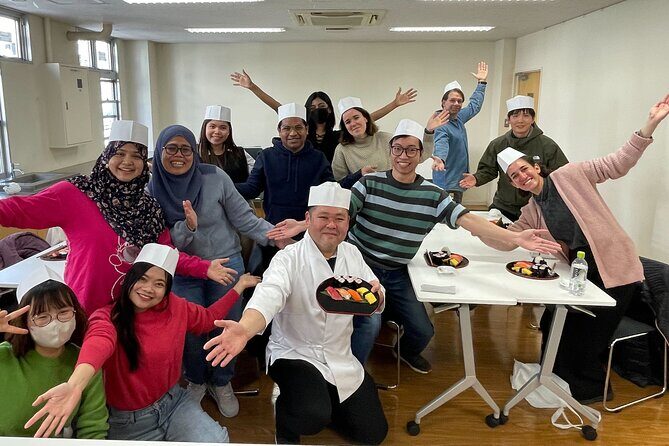
A lot of cooking classes fail at language. This one is built around translation help plus a direct sushi teacher.
You’ll have:
- an English-speaking host
- a professional sushi master
- guidance during the steps so you’re not guessing
In the feedback people shared, the host/translator roles often made a big difference—especially for families and first-timers. The common theme is clear communication and active help when your technique goes sideways.
This class also has a manageable group size: up to 20 travelers. That helps you get closer to the process and the instructors without waiting forever for corrections.
Family-friendly, but do note the format
It’s a good choice if you’re traveling with kids who are okay with stairs and hands-on work. Many families mentioned their kids had a great time making sushi (and trying real sushi for the first time), which is exactly why this “make and eat” format lands well.
Price and value: is $49.74 worth it?
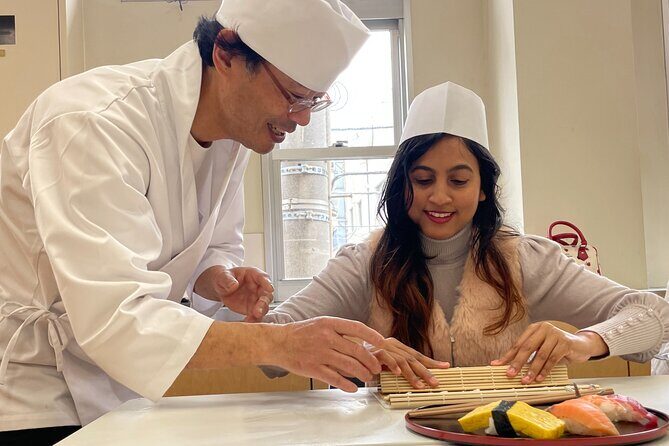
At $49.74 per person, the big question is what you’re actually buying.
You’re not paying just for an explanation. You’re paying for:
- a guided market experience through key Tsukiji areas
- a fish disassembly demo
- knife-and-technique teaching
- ingredients and utensils supplied
- 5 nigiri + 1 rolled sushi that you eat as lunch
That’s strong value compared with experiences that only teach technique without feeding you what you made.
Also, because the class is short (about 1 hour 30 minutes), you’re not stuck in a half-day block. In Tokyo, time has a cost. This one respects it.
Who this Tsukiji sushi class suits best
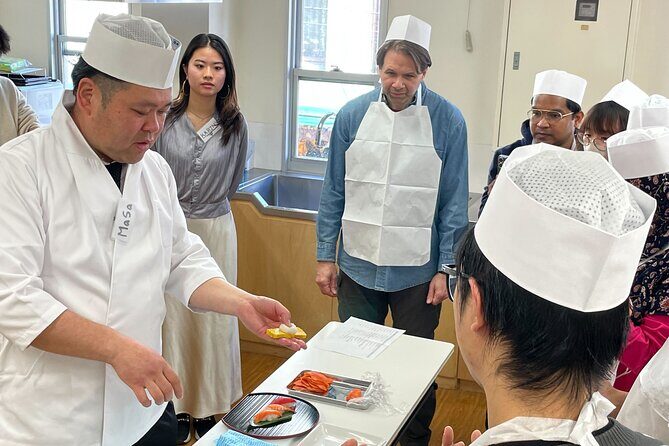
I’d point you toward this class if:
- You love sushi and want to understand it beyond ordering off a menu
- You’re a beginner who needs step-by-step coaching
- You want a fun, structured activity that fits into a busy Tokyo schedule
- You’d like a hands-on food experience where lunch is included
I’d think twice if:
- Stairs are an issue for you (third-floor classroom, stairs only)
- You need dietary options beyond what they can handle (see allergy and religious requirements below)
- You prefer a long, slow sightseeing pace rather than a short workshop format
Should you book this Tsukiji sushi class?
If you want a Tokyo activity that feels practical and satisfying, I’d book it. The market context plus the hands-on making is a great combo. You leave with rice-and-fish skills you can actually repeat at home, and you also leave fed—because you eat what you made.
My call: book this if you’re okay with stairs and you want a hands-on sushi lesson in one focused session. It’s the kind of experience that makes the sushi you order later taste smarter.
FAQ
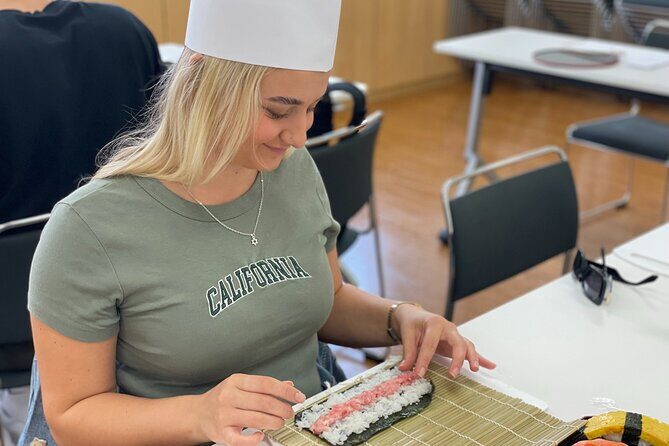
How long is the Tokyo Sushi Making Class in Tsukiji?
The experience lasts about 1 hour 30 minutes.
What will I make and eat during the class?
You’ll make and eat 5 different nigiri sushi and 1 rolled sushi.
Is hotel pickup or drop-off included?
No. Hotel pickup and drop-off are not included.
Where do I meet for the tour?
You start at 千社額棟4-chōme-16-2 Tsukiji, Chuo City, Tokyo 104-0045, Japan. The activity ends back at the meeting point.
Is the class in an accessible location for people who can’t handle stairs?
The classroom is on the third floor in a traditional Japanese building, and it uses stairs only. It’s perfect for people who have no problems with stairs.
Are you able to accommodate allergies?
They ask you to let them know about allergies when you reserve. They will try to accommodate allergy-related requests, though it may not be possible.
Can the class accommodate kosher or halal requests?
Kosher requests are not accommodated. Halal and kosher requests are listed as not accommodated.
How many people are in the group?
The tour has a maximum of 20 travelers.
Is it near public transportation?
Yes, it’s near public transportation.
Do I get a mobile ticket?
Yes, the tour includes a mobile ticket.