REVIEW · KYOTO
Kyoto Early Bird English Tour: Fushimi-Inari and Arashiyama
Book on Viator →Operated by Tomodachi Tours · Bookable on Viator
Kyoto before the crowds is a different city. This early-morning small-group tour trades peak-hour chaos for calmer photos at Fushimi Inari and Arashiyama, plus a human-scale pace with an English guide. I also like that Tenryu-ji admission is included, so you’re not doing math while you’re trying to enjoy the morning.
The main thing to consider is logistics. You’ll meet at Kyoto Station (near a 7-Eleven) and there’s a separate transportation fee (¥390 per person), plus food is on your own.
In This Review
- Quick hits you’ll feel on this Kyoto morning tour
- Why this early bird Kyoto format beats the daytime crush
- Meeting at Kyoto Station makes the route simple
- Fushimi Inari: red torii gates before the day-trippers arrive
- Bamboo Forest Street: how to get calm walking time in Arashiyama
- Tenryu-ji Temple: UNESCO Zen garden with admission included
- Togetsu-kyo Bridge: the short stop with serious photo payoff
- Train navigation and group pacing: why the guide matters
- English guides you might meet: Hiro, Jem, Eri, Vincent, Caleb, Haruka, and Cade
- Price and value: what $96.83 buys you in Kyoto time
- Weather and comfort: rain can turn the day kinder
- Who should book this tour, and who might skip it
- Should you book the Kyoto Early Bird English Tour?
- FAQ
- FAQ
- How long is the Kyoto Early Bird English Tour?
- Where is the meeting point?
- Is Fushimi Inari admission included?
- Is Arashiyama bamboo forest admission included?
- Is Tenryu-ji Temple admission included?
- What does the price include, and what extra costs should I expect?
- What is the group size limit?
Quick hits you’ll feel on this Kyoto morning tour
- Small group size (max 8 travelers) means less waiting and more time for pictures
- Fushimi Inari first gives you torii-gate views before the day-trippers pile in
- Arashiyama bamboo forest timing helps you walk through the groves with breathing room
- Tenryu-ji UNESCO stop with admission included, not just a quick pass-by
- Togetsu-kyo Bridge is a short but iconic photo moment over the Katsura River
- English guide help with trains and navigation, so you spend less time figuring out routes
Why this early bird Kyoto format beats the daytime crush
Kyoto’s top sights can feel like a conveyor belt after mid-morning. This tour attacks that problem the simple way: you start early, before the crowds thicken, so you can actually look around. It also gives you enough time at each stop to get photos without constantly fighting elbows.
You’re not just buying access to two famous places. You’re buying guidance, timing, and a smoother route between Fushimi Inari and Arashiyama. With a group limited to eight travelers, the morning stays controlled, and you’re less likely to lose the thread of where you’re going next.
Duration is listed as about 4 to 5 hours, which is a sweet spot if you’re trying to see Kyoto’s highlights without burning the whole day. You’ll finish back at the meeting point, so you’re not stuck in a faraway neighborhood afterward.
You can also read our reviews of more tours and experiences in Kyoto.



Meeting at Kyoto Station makes the route simple
The meeting point is at 7-Eleven Heart-In (JR Kyoto Station Central Entrance Store), on Karasuma-dori side near the station. It’s a practical choice because Kyoto Station is where you’ll already be spending time, especially if you’re staying near it.
The tour uses a mobile ticket, so you’re not hunting for paper. There’s also no hotel pickup or drop-off, so you’ll want to plan to arrive a bit early, grab water/snacks, and settle in before the group assembles.
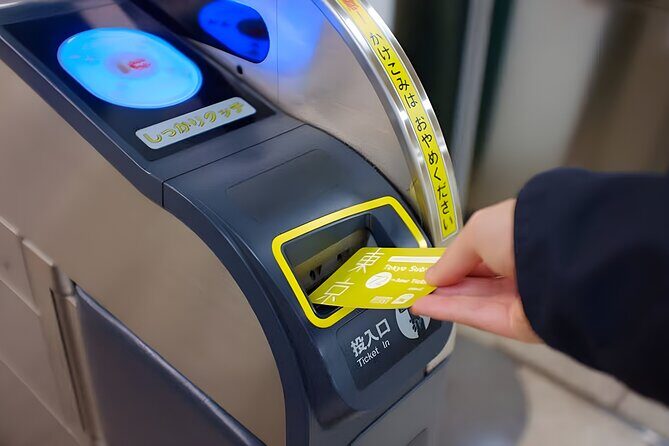
One more practical note: transportation costs are not included in the base price, with a separate ¥390 per person transportation fee. The good news is the guide helps you move as a group using public transit, which multiple guides were praised for doing smoothly.
Fushimi Inari: red torii gates before the day-trippers arrive
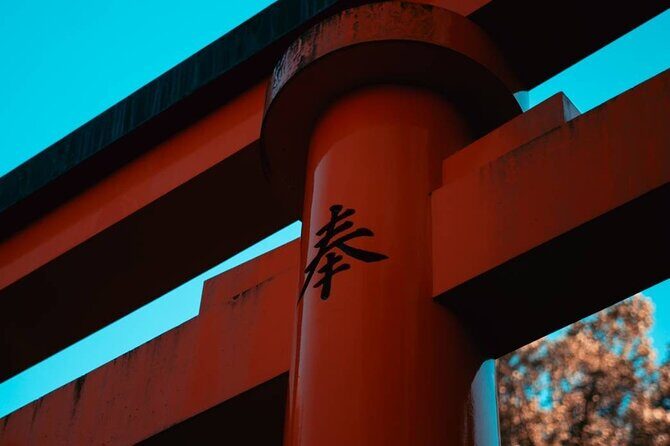
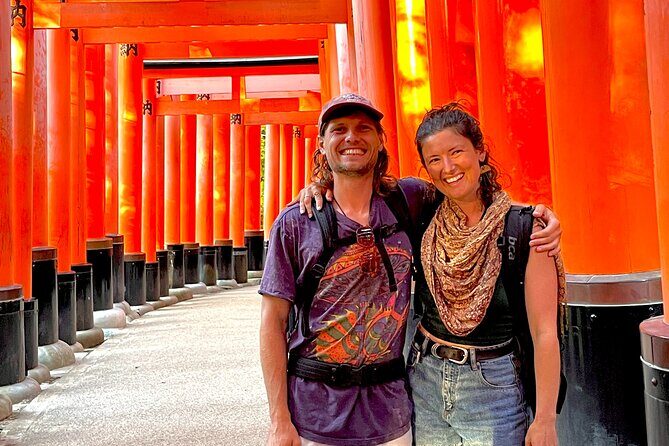
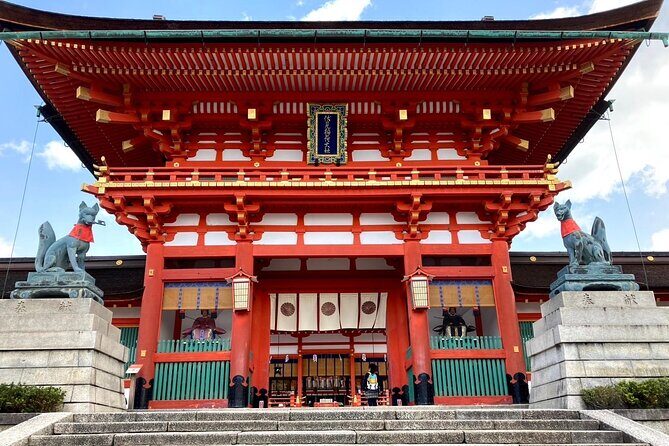
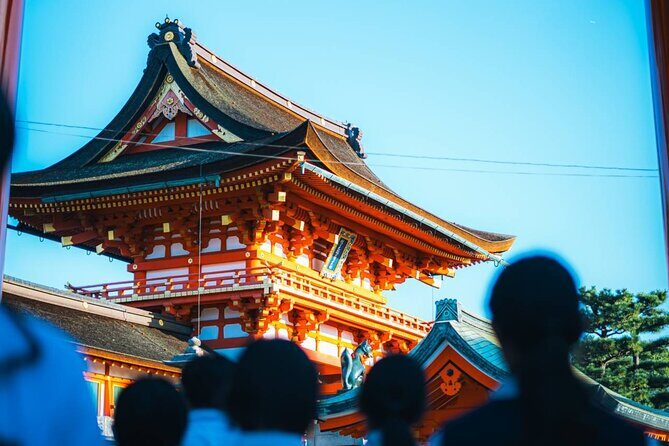
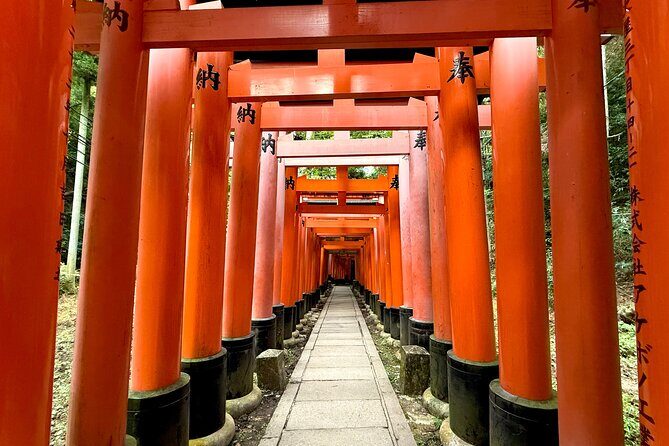
Fushimi Inari-taisha is Kyoto’s most photographed shrine for a reason. The torii gates climb up Mount Inari in a way that feels both grand and oddly intimate, especially when you get there early.
You’ll have about 1 hour 30 minutes here, and admission is free. That time matters because you don’t just want a single gate-and-snap. You want to walk far enough to feel the rhythm of the path, then turn back before fatigue hits.
The best part of doing this early is that the atmosphere changes. Even the same red gates feel different when you’re not surrounded by shoulder-to-shoulder crowds. This is also where a good guide helps, because you can focus on the best photo angles and the right walking pace instead of getting stuck at the most obvious bottleneck spots.
Fushimi Inari also tends to make people slow down. You’ll likely notice the shrine vibe goes beyond tourism: smaller details, side paths, and the feeling that this place has been part of daily life for centuries.
Bamboo Forest Street: how to get calm walking time in Arashiyama
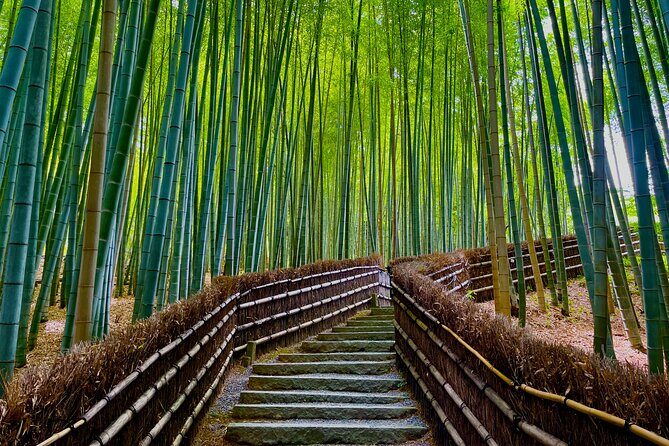
After Fushimi Inari, you head to Arashiyama’s bamboo area. This stop is listed at about 1 hour, and admission for the bamboo forest area is free.
The bamboo can look almost unreal in photos, but the real trick is how you experience it in person. Early timing helps because the grove can get jammed later, and once that happens it’s hard to actually enjoy the quiet that makes bamboo special.
I like how this itinerary gives you a full hour, not just a drive-by. That means you can walk in, find a stretch of shade and stillness, and then come back for photos without rushing. If it’s humid or warm, you’ll also appreciate having a schedule that isn’t constantly sprinting you from one crowd to another.
You’ll want to bring comfortable shoes. The area is walk-focused, and Arashiyama can include uneven ground depending on the exact paths you use.
Tenryu-ji Temple: UNESCO Zen garden with admission included
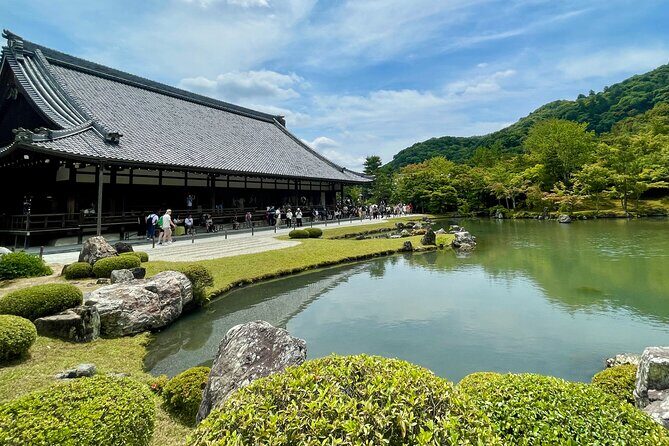
Tenryu-ji Temple is a UNESCO World Heritage site, and it’s the kind of stop that makes Kyoto feel more than just a photo list. Here you get about 1 hour, and the admission fee is included.
The highlight is the Zen garden and the broader Arashiyama views. In practice, this stop gives you a change of pace after Fushimi Inari and the bamboo forest. Instead of being swept along by spectacle, you can slow down and notice how gardens and temple spaces are designed to guide your sightline.
A useful consideration: one review mentioned stamp collection, and the person couldn’t get a stamp because the temple wasn’t actually open early enough for that activity. I can’t tell you the opening hours from this info alone, but if you’re the type who collects stamps, don’t assume every shop or stamp station will be ready at the start time.
If you want the garden to land emotionally, wear light layers and plan to be patient. Tenryu-ji rewards people who stop and look.






Togetsu-kyo Bridge: the short stop with serious photo payoff
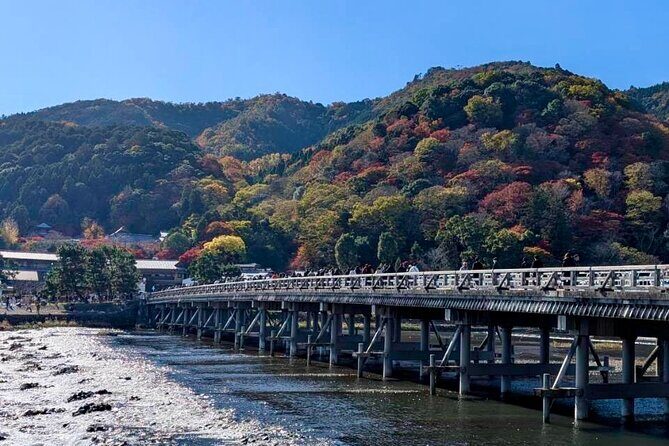
Next is Togetsu-kyo Bridge, about 15 minutes on the schedule, and it’s free. This bridge crosses the Katsura River, and it’s historically tied to the Heian Period even though the current structure dates to 1934.
The name, Moon Crossing Bridge, fits the vibe: it’s a long photo line where you can get a sense of the river, the surroundings, and the Arashiyama atmosphere in a single frame. Because the time here is short, you’ll want to pick your photo spot quickly and then enjoy the walk around it instead of trying to do everything at once.
Also, because it’s brief, this is a good moment to regain your energy before the tour ends and you head back toward Kyoto Station.
Train navigation and group pacing: why the guide matters
Kyoto is made for walking, but it’s also made for getting lost. The transport part of this tour matters because it connects two far-apart “must-sees” without you spending half your morning figuring out transit.
The tour does not include hotel pickup, so you’ll start at the station. You’ll then use public transportation with your guide keeping the group together and helping with the flow. Several reviews singled out guides who made train navigation feel easy, with clear instructions and steady pacing.
This is also where small-group size helps again. In a bigger group, you spend more time waiting at platform edges and less time actually being present at the sights. With a group around eight travelers, the morning tends to move with less friction.
One practical tip: Kyoto station can be chaotic right before departure times. If you’re coming by train, build in buffer time so you’re not rushing at the meeting point.
English guides you might meet: Hiro, Jem, Eri, Vincent, Caleb, Haruka, and Cade
What makes this tour feel personal isn’t just the sights. It’s the way the guide translates Kyoto into something you can use and remember.
Here are a few specific guide styles reflected in the feedback:
- Vincent was praised for being friendly, attentive, and helpful with navigation, plus he’s specifically mentioned for taking intentional photos for guests.
- Hiro earned strong marks for enthusiasm and humor, with clear guidance to photo spots that avoid the busiest areas.
- Caleb stood out for historical, cultural, and political context, which made the morning feel more meaningful than a checklist.
- Eri was described as fun and strong on site explanations, including shrine and garden stops.
- Haruka was noted for taking great pictures and for helping the group beat crowds and heat.
- Jem impressed a family group for engaging a child and keeping the experience smooth across multiple stops.
- Cade received praise for balancing pacing with plenty of photo opportunities and for moving the group efficiently through the day’s route.
That variety is a good sign. It suggests you’re not stuck with one rigid script. You’re more likely to get a guide who adjusts to the group’s energy and photo needs.
Price and value: what $96.83 buys you in Kyoto time
At $96.83 per person, this is not a bargain tour. But it can still be good value, depending on how you travel.
You’re paying for three big things:
- Early start strategy to reduce crowd time at the most famous photo sites
- English-speaking guidance that helps you move efficiently
- Inclusion of Tenryu-ji admission (a real, concrete cost that you’d otherwise need to handle yourself)
The add-ons matter. Food and drink are not included. And transportation costs include a separate ¥390 per person. So your true out-of-pocket cost is more than the base price, even if the tour does the heavy lifting in planning the route.
One review called the tour pricey but said the personalized attention and small group justified it. That aligns with how I think about pricing here: you’re buying fewer headaches and better timing, not just entry to places you could technically reach alone.
If you hate early mornings, you may find the price harder to justify. If you love photos and limited-time touring, it’s easier to feel that the cost buys time back.
Weather and comfort: rain can turn the day kinder
Kyoto mornings can be unpredictable. One review specifically mentioned rain, and the person felt it meant fewer crowds than usual, which is plausible. If the weather changes, early timing still tends to help, and a guide can keep the group moving without chaos.
Dress for walking. Wear shoes you can trust for temple and shrine steps, and bring a light layer in the morning. If you’re going in warmer months, expect humidity and start hydrating early.
Who should book this tour, and who might skip it
This Kyoto early bird tour is a strong fit if:
- You have a short stay and want Fushimi Inari + Arashiyama without wasting half a day
- You care about photos and want a better chance at clear views
- You prefer small groups and an English guide to handle navigation
- You’re traveling with family and want a paced route that keeps kids engaged, as seen with at least one family review
You might consider skipping or doing it DIY if:
- You want total freedom to wander far beyond the scheduled stops
- You’re stamp-collecting and rely on specific stamp availability right when you arrive
- You dislike mornings that start early, since the whole point is beating crowds and heat
Should you book the Kyoto Early Bird English Tour?
Yes, if your main goal is to see Kyoto’s headline sights with less friction. This tour’s biggest advantage is not magic. It’s timing, small-group pacing, and a guide who helps you get the most out of short windows at Fushimi Inari, bamboo, and Tenryu-ji.
If you’re the type who values efficient planning, clear instructions, and photo-friendly routes, you’ll probably feel good about the price. If you’re already comfortable navigating public transit and don’t mind crowd noise, you could DIY for less. Still, you’d be trading away the early advantage and the guide’s hands-on help.
FAQ
FAQ
How long is the Kyoto Early Bird English Tour?
The tour runs about 4 to 5 hours.
Where is the meeting point?
You meet at 7-Eleven Heart-In at JR Kyoto Station Central Entrance Store on Karasuma-dori side (Higashishiokojicho, Shimogyo Ward).
Is Fushimi Inari admission included?
Yes. The tour lists Fushimi-Inari Shrine with admission free.
Is Arashiyama bamboo forest admission included?
Yes. The tour lists Bamboo Forest with free admission.
Is Tenryu-ji Temple admission included?
Yes. Tenryu-ji Temple admission is included, and the tour lists an admission fee for Tenryu-ji.
What does the price include, and what extra costs should I expect?
The tour includes an English-speaking guide and admission for the listed sites, including Tenryu-ji. It does not include the transportation fee of ¥390 per person, and it does not include food and drink.
What is the group size limit?
The tour has a maximum of 8 travelers.