REVIEW · TOKYO
Japanese Speaking Experience Meet the locals Friend Cafe Shibuya
Book on Viator →Operated by Welcome Tokyo · Bookable on Viator
Two languages, one room in Shibuya. This Japanese speaking experience pairs English and Japanese conversation in a pub setting, so you can practice without the awkward pressure of a traditional class or formal lesson.
I like the topic cards that keep conversation moving, and I like how the host team switches seats so you actually meet more than the first couple of people.
One consideration: it’s over-18 only, and the ticket doesn’t include drinks, so plan on buying at least one drink when you arrive.
In This Review
- Key highlights at a glance
- Shibuya meet-up at Shibuya Bowling Cafe (B1F) and what to expect
- How the 2-hour language exchange actually runs
- Topic cards: the beginner-friendly trick that makes conversation possible
- Seat switching: why it feels social (not just one awkward pairing)
- Meeting locals and internationals in the same conversation cycle
- Pub setting in Shibuya: fun for adults, not ideal for everyone
- Price and value: why $29 can be a good deal for language practice
- Practical logistics that keep the night smooth
- Who should book this Japanese speaking exchange?
- Should you book Japanese Speaking Experience Meet the locals Friend Cafe Shibuya?
- FAQ
- Is the Japanese speaking experience in Shibuya beginner-friendly?
- How long is the event?
- Where do I meet for the event?
- Is it over-18 only?
- Do I need to buy drinks during the event?
- How does the language exchange schedule work?
- Are group sizes small?
- What’s included in the ticket price?
- What’s the cancellation policy?
Key highlights at a glance
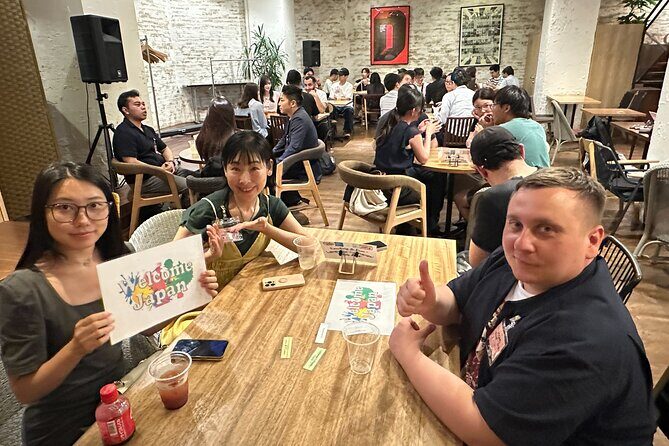
- English then Japanese on a timer (with short breaks to reset)
- Topic cards that help you start talking fast, even as a beginner
- Small groups (3–4 people) mixed with Japanese and international participants
- Seat changes every cycle so your conversations spread out
- Reception-led structure with a clear flow from check-in to a group photo
- A Shibuya pub meet-up that makes it easy to keep the night going afterward
Shibuya meet-up at Shibuya Bowling Cafe (B1F) and what to expect
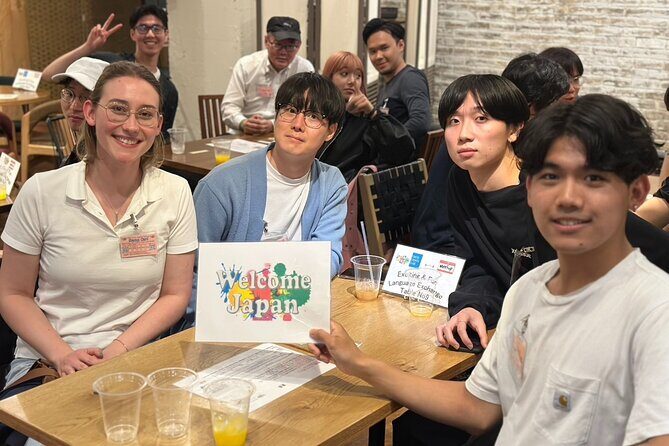
The experience starts in Shibuya at Shibuya Bowling Cafe Shibuya EST (1-chōme-14-14 Shibuya). The key detail for your first ten minutes: the cafe is on the B1F level. When you arrive, aim to find the reception/check-in area quickly rather than taking a slow lap upstairs first.
Check-in is part of the rhythm. After you confirm your ticket, you’ll head to where you can buy a drink from the store/bar area before the conversation portion begins. The setup is meant for a smooth start, not a “wander around and hope you find people” situation.
Timing matters here. Reception has a 10-minute starting window, so I’d show up a bit early, especially if you’re navigating Shibuya for the first time. You’ll still get pulled into the flow fast—groups get seated, topics get handed out, and the language exchange starts.
You can also read our reviews of more tours and experiences in Tokyo.



How the 2-hour language exchange actually runs
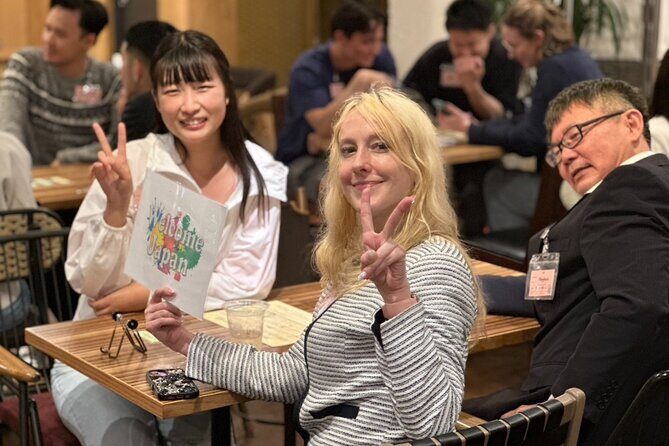
This is a structured conversation event, not a free-form party where you hope someone speaks your language. The schedule is built around repeating cycles, which is perfect when you want practice without overthinking every sentence.
Here’s the pattern you can plan your brain for:
- English conversation time
- Japanese conversation time
- Short break and changing seats
- Repeat the alternating pattern until the group rounds up
The main rhythm is 15 minutes of English conversation, followed by 15 minutes of Japanese conversation, with a brief 5-minute break in between where you reset and switch seats. Seats are planned so you’re not stuck talking to the same person the whole time.
The staff also split everyone into small groups of about 3–4 people, and those groups include a mix of Japanese and foreign participants. That matters because it reduces the “who speaks what” problem. You’re more likely to find someone you can connect with at each switch.
The evening ends back at the meeting point, with a closing group photo. It’s a small detail, but it helps the event feel finished and keeps the vibe friendly rather than chaotic.
Topic cards: the beginner-friendly trick that makes conversation possible
If you’re worried you can’t speak Japanese, this is exactly the kind of setup that helps. The experience provides topics cards for conversation, which turns language practice into something closer to guided chatting.
Without topic prompts, language exchange can quietly turn into:
- one person asking a question
- one person freezing
- the group moving on awkwardly
With topic cards, you get something concrete to react to. You don’t need perfect grammar—you need a starting point. Even simple answers can lead to follow-up questions, and those follow-ups are where speaking practice really happens.
Also, because the schedule alternates between English and Japanese, you get built-in support. If Japanese is tough that night, English gives you breath. If English is easy, Japanese cycles give you momentum. Either way, you keep talking.
Practical tip: bring a “small talk toolkit” mindset. Think in themes from the cards, and aim for short sentences with clear words. The goal is conversation flow, not a test.
Seat switching: why it feels social (not just one awkward pairing)
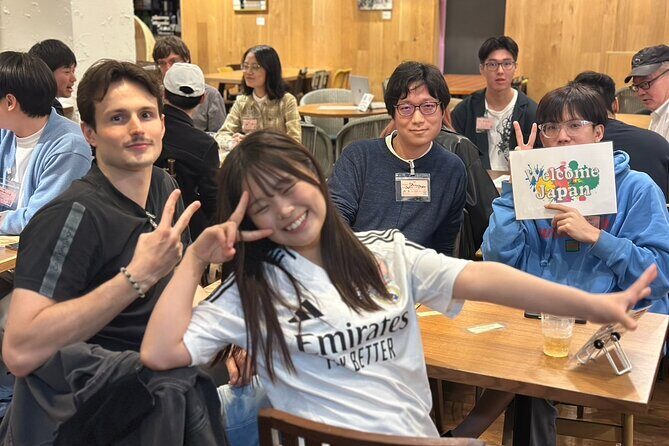
One of the best parts of this event is the deliberate seat-changing. The staff change seats so you get more chances to speak with different people, not just the person you initially click with.
That structure helps in two ways:
- You get more practice volume. More people means more chances to use your language skills.
- You avoid getting stuck. If you and one person don’t connect, you aren’t stuck for the whole event.
In past sessions, the host role has been praised for organization and keeping the mood light. Names like Candice and Rikiya show up in the feedback I’ve seen, and the common thread is clear: the host team helps people feel comfortable fast and keeps things moving on schedule.
So yes, the pub setting can feel loud and busy in places. But the staff structure is what keeps it from turning into noisy networking. You’re guided through the conversation rounds, and seat changes keep the experience from going stale.
Meeting locals and internationals in the same conversation cycle
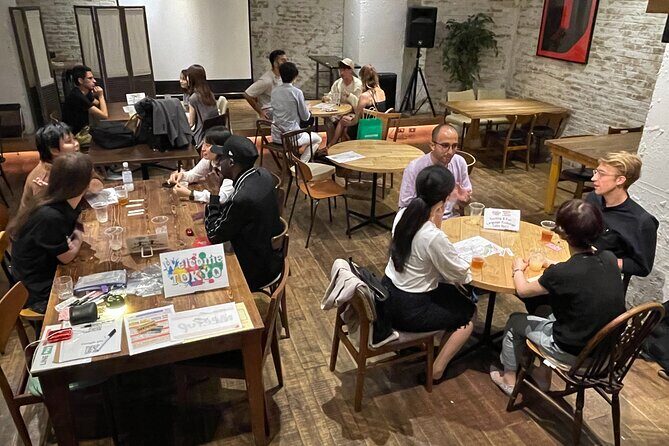
This event is built around variety. You’ll meet Japanese participants alongside people from other countries, and the groups are designed to mix these backgrounds within each mini-round.
That mix is useful if you want language practice with real humans, not just classmates. Language exchanges are often hit-or-miss when everyone speaks one language only. Here, you alternate between English and Japanese, which nudges the room toward the language you’re trying to learn.
It also helps your confidence. When you hear others using imperfect sentences, it’s easier to do the same. You’re not performing fluency—you’re practicing communication.
And because the group size stays capped (maximum 20 participants), you don’t feel swallowed by a giant crowd. The event feels like a real social circle that happens to have a language schedule.






Pub setting in Shibuya: fun for adults, not ideal for everyone
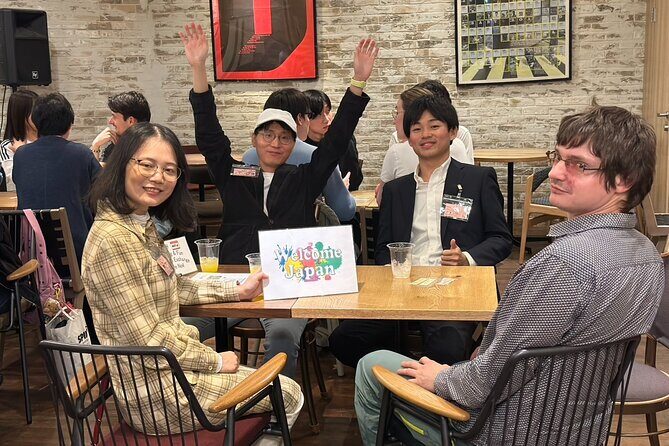
This is located in a pub, and it’s over-18 only. That’s part of the atmosphere. The upside is that it feels casual and social, and it’s easy to treat it like a pre-game activity before continuing around Shibuya.
The downside is also the downside of many social evenings in Japan: it’s centered on an adult venue. If you prefer quiet, structured learning spaces with no bar vibe, this may feel too noisy or too party-adjacent.
You should also plan around drinks. The ticket covers the event fees and taxes, but it doesn’t include alcohol. You’ll be asked to buy at least one drink at the bar when you arrive. If you’re not a big drinker, you can still participate—just budget for that first purchase so there’s no surprise.
Price and value: why $29 can be a good deal for language practice
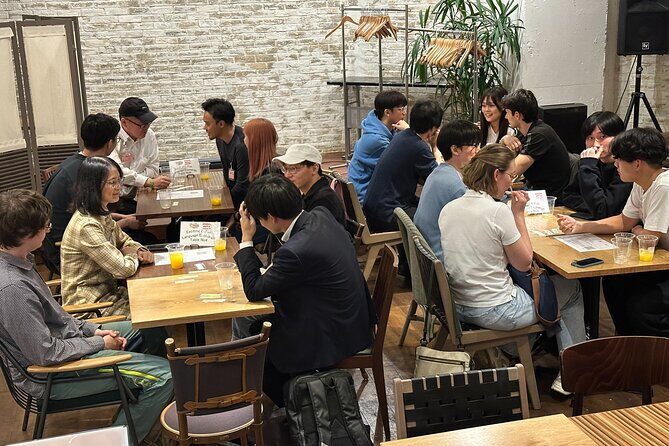
At $29 per person for roughly 2 hours, you’re paying for something specific: staff-guided organization, topic prompts, timed language rounds, seat changes, and group mixing. In Tokyo, that’s the hard part of language exchange. A lot of “free” meetups skip structure, which means you get less speaking time.
Also, the event caps at 20 people, so the coordination effort matters. You’re not just paying for the room—you’re paying for the fact that someone manages the flow.
What’s not included is also clear. Alcohol and food are on you. So the real value is: $29 gets you the language exchange format, and then you add the cost of a drink as your entry ticket into the pub atmosphere.
If you’re the kind of person who learns by talking—asking questions, making mistakes, repeating vocabulary—this format is more efficient than wandering around trying to find language partners on your own.
Practical logistics that keep the night smooth
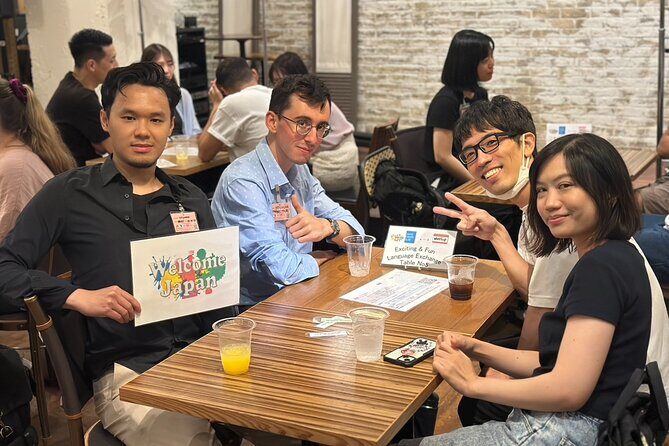
Here are the details that matter for having a comfortable experience.
Mobile ticket: You’ll use a mobile ticket, so have it ready on your phone.
Public transport nearby: The meeting point is near public transportation, which is handy in Shibuya where lines can be crowded.
Duration: Expect about 2 hours in total, with a tight schedule that doesn’t drag.
Check-in flow: There’s reception at the start, then the group starts when the conversation rounds begin. Showing up early helps you settle in.
One more practical thought: bring a “conversation pace” mindset. Because you’ll switch between English and Japanese, your answers may be shorter than normal. That’s okay. Short, clear replies keep the exchange moving and help you practice speaking in chunks.
Who should book this Japanese speaking exchange?
This experience fits best if you want:
- A low-pressure way to use Japanese, even if you’re a beginner
- A structured way to meet a mix of Japanese and international people
- A social plan that can work as a standalone event or the first step of a longer Shibuya night
It’s also a strong choice for English practice partners who like supporting others in real conversation. The alternation means both sides get time to speak, and the seat switching prevents you from falling into a single-language rut.
It may not be the best fit if:
- you’re under 18 (the event is adults-only)
- you dislike pub atmospheres
- you want a quiet, sit-down class style lesson
Should you book Japanese Speaking Experience Meet the locals Friend Cafe Shibuya?
I’d book it if you want a real conversation structure and you’re okay paying a small extra amount for drinks. The topic cards and seat-switching make it easier to talk than many casual meetups, and the English/Japanese rhythm gives your brain recovery time between harder speaking rounds.
Skip it if you’re looking for a cultural tour with lots of sightseeing stops. This is about people and speaking practice, in a pub setting in Shibuya.
If you’re deciding last minute, here’s my simple checklist:
- Are you 18+ and comfortable in a bar venue?
- Do you want guided language practice rather than guessing conversation topics?
- Are you okay with buying a drink on arrival?
If you said yes to those, this is a smart, fun way to get meaningful Japanese conversation time in Tokyo without making it complicated.
FAQ
Is the Japanese speaking experience in Shibuya beginner-friendly?
Yes. Beginner Japanese learners are welcome, and you’ll get topic cards to help you start conversations.
How long is the event?
It runs for about 2 hours.
Where do I meet for the event?
Meet at Shibuya Bowling Cafe Shibuya EST, 1-chōme-14-14 Shibuya, Tokyo 150-0002, Japan.
Is it over-18 only?
Yes. The activity is over-18 only because it’s located in a pub.
Do I need to buy drinks during the event?
Alcoholic beverages are not included in the ticket price. You should buy at least one drink at the bar when you arrive.
How does the language exchange schedule work?
The event alternates between English and Japanese conversation in 15-minute segments, with seat changes and short breaks between rounds.
Are group sizes small?
Yes. The staff splits attendees into small groups of about 3–4 people per group.
What’s included in the ticket price?
All fees and taxes are included. The ticket does not include drinks or food.
What’s the cancellation policy?
Free cancellation is available if you cancel up to 24 hours in advance of the experience start time. If you cancel less than 24 hours before, the amount paid is not refunded.