REVIEW · TOKYO
Tokyo: Learn Traditional Origami with a Local
Book on GetYourGuide →Operated by Manami Watanabe · Bookable on GetYourGuide
Paper turns into calm in 90 minutes. With East Tokyo native Manami Watanabe, I like that this isn’t just folding paper. You get the cultural meaning behind each shape, and the class is built around patient, practical coaching.
I also really liked the step-by-step guidance. You choose designs based on your interests and comfort level, and you work through them with support, not guesswork. Plus, the session includes a bunch of different traditional and modern papers, so your finished pieces actually look special.
One thing to think about first: the class is mainly aimed at beginners. If you already fold often, you may find the selected patterns a little too straightforward since you can’t customize the designs on site.
In This Review
- Key things you’ll notice in this origami class
- Finding FEEP Shinjuku Higashi-guchi without losing time
- Meet Manami Watanabe: origami training from age 3
- Choosing designs and selecting paper you actually want to keep
- How the 90 minutes actually flow at this workshop
- What you’ll make: cranes, frogs, helmets, lotus flowers, and more
- Price and value: why $58 can make sense in Tokyo
- Who this class suits best (and who should consider something else)
- Small logistics that make a big difference
- Should you book this Tokyo origami class with Manami Watanabe?
- FAQ
- How long is the origami class in Tokyo?
- Is the instruction in English?
- How many origami pieces will I make?
- What’s included with the experience?
- What skill level is this class for?
- Where is the meeting point and what’s the nearest station?
- Is there pick-up from the train station?
Key things you’ll notice in this origami class
- Manami’s East Tokyo perspective: she’s been surrounded by origami since childhood.
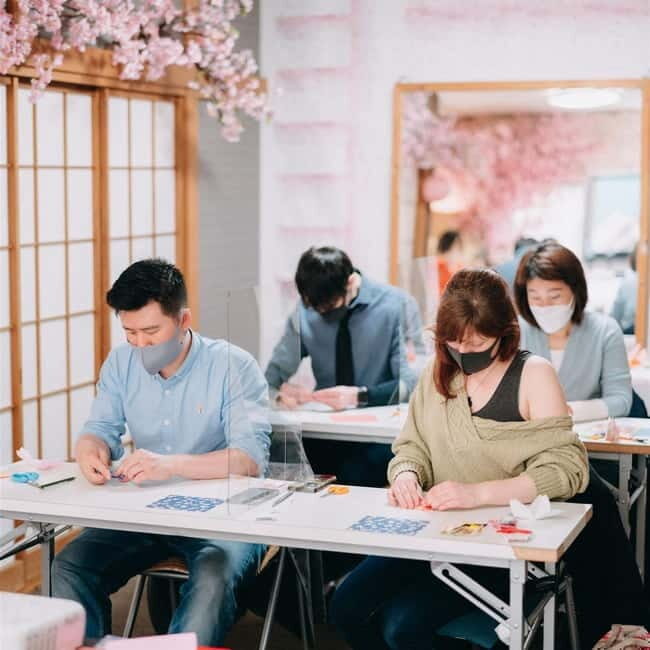
- 3 to 5 finished pieces in 90 minutes: you leave with multiple keepsakes, not one slow project.
- A mix of traditional and modern paper: you pick a sheet for each design you make.
- Patient, correction-focused teaching: you can ask questions while you fold.
- Stories tied to the shapes: you learn why cranes and other figures matter in Japanese culture.
- A neat takeaway setup: tools, small bags, plus a simple way to transport your work.
Finding FEEP Shinjuku Higashi-guchi without losing time
Your biggest job is simply showing up at the right door. The class meets at FEEP Shinjuku Higashi-guchi, Shinseido Bldg. 5F, 3-29-11 Shinjuku, Shinjuku-ku, Tokyo. It’s in a shared workspace where the floor is made up of many booths, and the entrance is locked.
The nearest station is metro Shinjuku-sanchome (M09, F13, S02). It’s also accessible from the east gate of JR Shinjuku station. The practical tip: once you reach the 5th floor, message the host so you can get inside. That detail matters because locked doors in Japan often mean you’re standing there waiting unless you contact someone.
If you’re the type who likes to arrive early, do it. Not because it’s a long walk, but because Shinjuku is busy and you’ll feel less rushed when you’re about to start folding quietly.
You can also read our reviews of more tours and experiences in Tokyo.



Meet Manami Watanabe: origami training from age 3
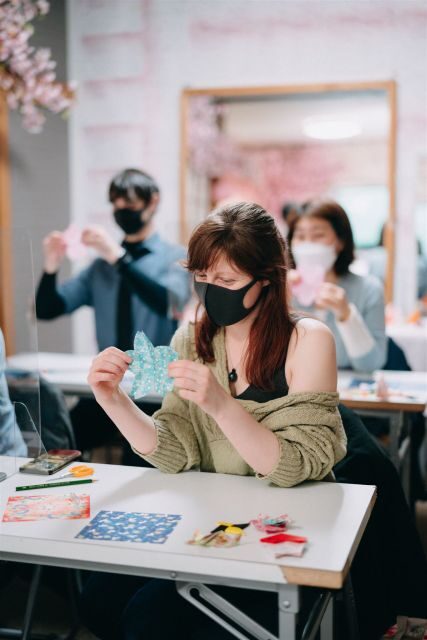
The star here is your instructor, Manami Watanabe. She comes from East Tokyo and has been immersed in origami since she was about 3 years old. That matters because you can feel it in the way she teaches: she doesn’t just recite steps, she explains what you’re aiming for and what good folding looks like.
Manami teaches in English, which is a big deal for this kind of skill. Origami has lots of small terms and fold cues, and when they’re explained clearly, your hands learn faster. From the start, she sets a calm pace and makes it easy to ask questions while you’re working.
You’ll also notice her style isn’t rigid. She offers supportive feedback and encourages you to keep going, even when a crease looks slightly off. That’s especially helpful if your first attempts feel clumsy.
Choosing designs and selecting paper you actually want to keep

At the beginning, Manami starts by showing you a range of origami options, including different skill levels. Your job is to choose what interests you. You’ll create 3 to 5 shapes during the session, and you work one design at a time with guidance.
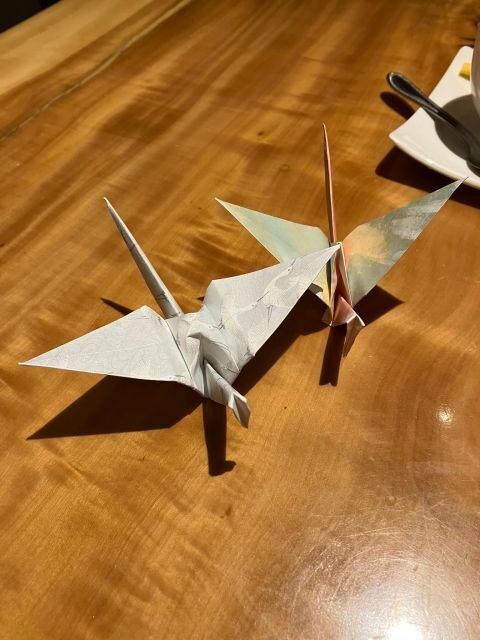
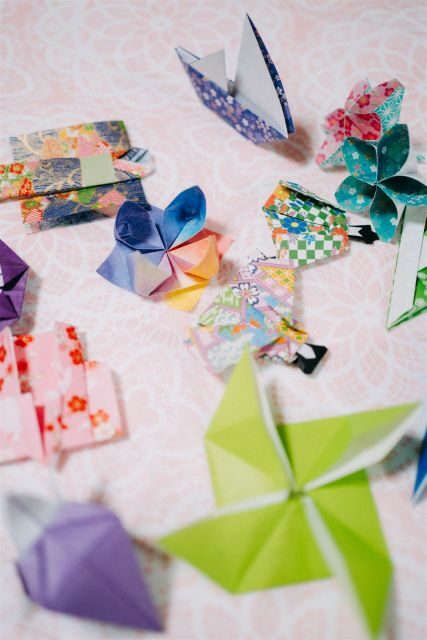
Then comes a detail I appreciate: you don’t just fold whatever paper is there. You get to choose from various papers, including traditional and modern styles, and you pick a sheet for each piece you make. That means your crane won’t necessarily be the same color or texture as someone else’s, even if you pick the same figure.
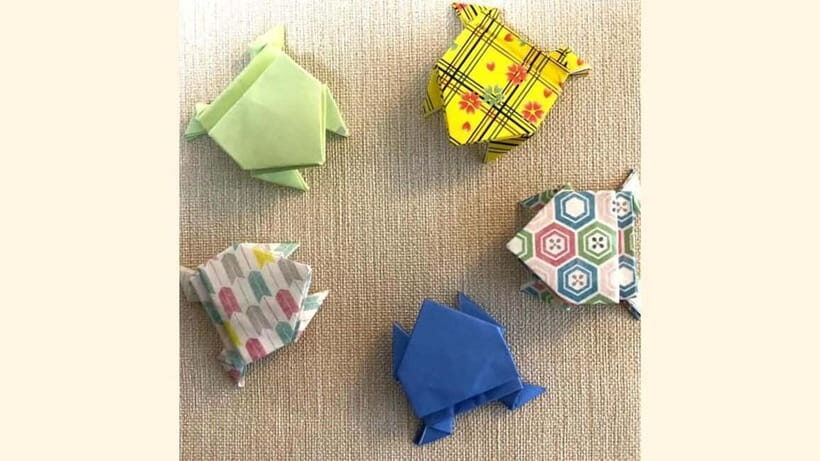
In past sessions, people often choose recognizable classics like the origami crane, along with fun figures such as a jumping frog or an open box, and sometimes more characterful designs like a samurai helmet or a lotus flower. Your exact options depend on the session selection, but the format is consistent: you choose, then you fold.
One practical note: you can’t customize the designs on site. So if you have a dream list of specific animals or shapes, check availability details in advance when you can.
How the 90 minutes actually flow at this workshop
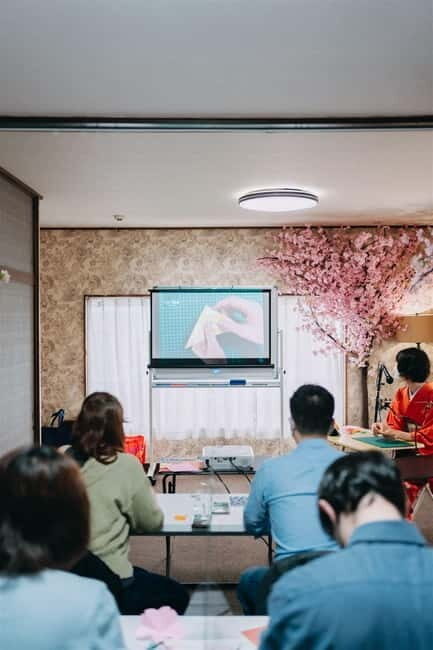
This class runs for 90 minutes, and it’s designed to keep you moving without rushing. In practice, it feels like this:
First, Manami introduces the set of patterns and demonstrates the approach. You’ll see how the basic folds connect to the final shape. That’s useful because once you understand the “why” behind the folding sequence, the next steps feel less like magic and more like logic.
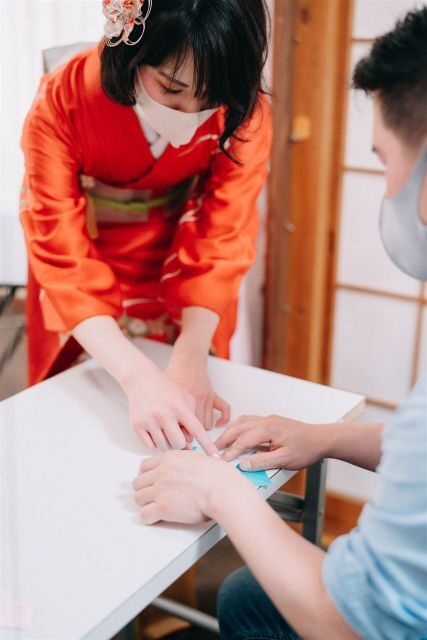
Next, you start folding with step-by-step instruction. The pace is intentionally beginner-friendly. You’ll work with patience and can ask for help as you go. If your folds are a bit shaky, Manami will guide you toward better creases rather than letting you wrestle with a stuck model.
As you finish each piece, Manami explains the story and cultural meaning behind it. For example, she’ll share why the origami crane is important in Japan. Even if you already know the crane legend, you’ll usually get extra context in how she connects the shape to family, tradition, and symbolism.
Finally, you wrap up with your finished creations. You’ll get small bags so you can bring your works back.
What you’ll make: cranes, frogs, helmets, lotus flowers, and more
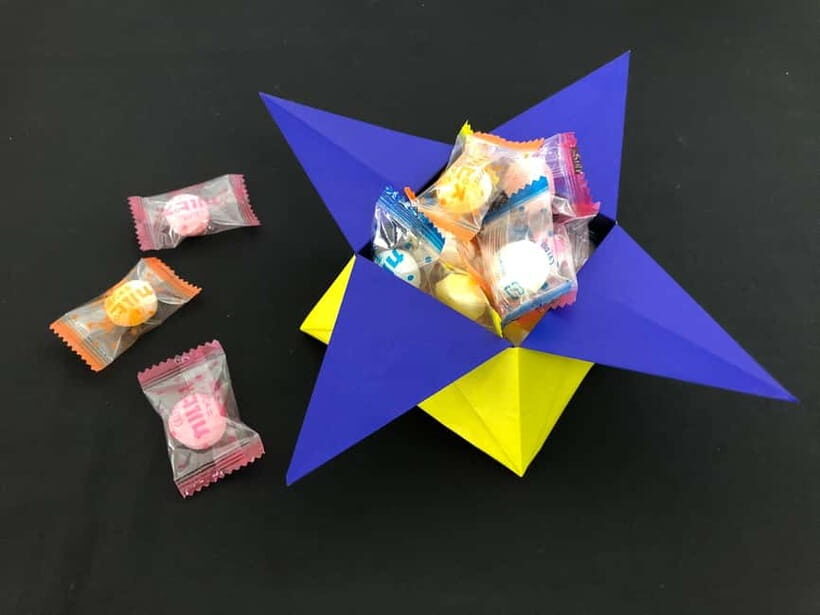
Your class isn’t limited to one “starter” craft. You can end up with a set of different pieces, typically 3 to 5 depending on what you choose and how quickly you pick up the folds.
Common patterns people make in this format include:
- Origami crane (classic symbolism, often tied to well-known cultural meaning)
- Jumping frog (a playful design that teaches precision)
- Open box (a practical shape that teaches folding structure)
- Lotus flower (a more decorative model with layered-looking folds)
- Samurai helmet (a memorable, characterful option)
Even better, you’re not just assembling a final product. The teaching includes the idea that many figures start from a common base pattern and then develop as you add folds. That’s the kind of insight that makes you want to try more later, even if you start from scratch.
And yes, it’s okay to take photos. You’ll be encouraged to capture selfies of finished creations, which is a nice way to make your keepsakes feel like part of your trip instead of just craft paper in a bag.






Price and value: why $58 can make sense in Tokyo
At $58 per person for 90 minutes, this isn’t the cheapest activity in Tokyo. But it often feels like fair value because you’re paying for more than paper.
Here’s what’s included:
- Origami paper (traditional and modern varieties)
- Scissors
- Pens
- Small bags to take your work home
- Water and some snacks
You’re also paying for the real advantage: coaching. Doing origami from a book can be slow because one unclear crease can derail the whole model. With Manami, you get corrections while you work. That shortens the learning curve and helps you actually finish multiple pieces in one sitting.
Also, Tokyo has plenty of “watch this” culture activities. This is different. Your hands do the work. The result is a tangible reminder you can carry home and place on a shelf.
If you compare the price to buying quality paper plus multiple learning attempts, the class starts to look more reasonable, especially when your teacher also brings stories and explanations.
Who this class suits best (and who should consider something else)
This workshop is designed mainly for beginners. The patterns may be too easy if you’re already very experienced or if you’re an exceptional craft talent. Also, you can’t swap in totally different designs on request.
It fits well if you’re traveling solo, as a couple, with families, or as part of a larger group. The structure works for different group setups because everyone folds at their own pace while the instructor checks in and supports.
There are also clear limits:
- Kids under age 7 aren’t allowed.
- Elderly guests or guests who need special care should let the organizer know in advance, since the venue may need to change.
- Alcohol and drugs aren’t allowed during the class.
On the positive side, the workshop is wheelchair accessible. So if mobility access is part of your planning, this is worth considering.
My bottom line: if you want a calm, hands-on Tokyo cultural activity and you don’t mind starting simple, this is an excellent choice.
Small logistics that make a big difference
A few practical points will help your experience go smoothly:
Bring comfortable sleeves. Folding for 90 minutes means your hands and wrists do repetitive work.
Wear shoes you can stand in for a short while, especially if you’re arriving from a station and walking through busy blocks.
Plan for the location’s “shared workspace” vibe. It’s on the 5th floor inside a building with multiple booths, and the entrance is locked. Message once you get there so you’re not stuck outside.
Finally, transport matters. Your creations don’t get rigid like ceramics, so the provided small bags help, but handle them gently. If you’re moving on to another activity after class, keep your origami on top of your bag so it doesn’t get crushed.
Should you book this Tokyo origami class with Manami Watanabe?
If you like hands-on cultural activities, I think you should book this. You’ll get multiple finished pieces, not just one beginner model. You’ll also learn the meaning behind what you’re making, and you won’t be left floundering because Manami walks you step by step and welcomes questions.
Skip it or consider another option if you’re already a serious folder who expects advanced techniques. Since the designs can’t be customized, experienced hands may feel the pace is slower than they want. Also, if you’re traveling with a child under 7, you’ll need to choose something else.
For most visitors, though, this is a relaxing, satisfying Tokyo experience that turns into a real souvenir you made with your own hands.
FAQ
How long is the origami class in Tokyo?
The class lasts 90 minutes.
Is the instruction in English?
Yes. The instructor teaches in English.
How many origami pieces will I make?
You can choose from the provided designs and create 3 to 5 beautiful shapes during the session.
What’s included with the experience?
The experience includes origami paper, scissors, pens, small bags to take your work home, plus water and some snacks.
What skill level is this class for?
It’s designed mainly for beginners. If you’re quite experienced or have exceptional craft talent, you might find the options too easy, and the origami options can’t be customized on site.
Where is the meeting point and what’s the nearest station?
The meeting point is FEEP Shinjuku Higashi-guchi, Shinseido Bldg. 5F, Shinjuku 3-29-11, Shinjuku-ku, Tokyo. The nearest station is metro Shinjuku-sanchome, and it’s also accessible from the east gate of JR Shinjuku station.
Is there pick-up from the train station?
No pick up is provided at the train station.
If you want, tell me your travel dates and who’s going (ages and origami experience). I’ll suggest what to pick so you end up with pieces you’ll actually be proud to carry home.