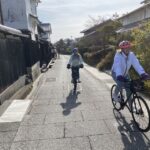
Kyoto by bike feels like cheating. This morning tour threads you through quiet alleyways and major landmarks without the stress of maps, wrong turns, or marathon walking. I love the e-bike setup with equipment rental included, and I love the private-group pace that actually lets you linger. One thing to plan for: in rain, the day can shift to ponchos and possibly public-transport walking, depending on conditions and your guide.
You’ll glide past geisha districts and old-style streets, then hit the Kyoto Imperial Palace grounds by bike along gravel paths. The route mixes visual eye-candy with real “how Kyoto works” context—like why those districts feel polished on the surface, but still carry everyday neighborhood calm.
A big part of the value is the person steering the conversation. Guides such as Rich-San and Yuichi have a habit of answering questions for as long as you keep asking, and Annie has a warm, attentive way of pointing things out. The only catch I’ve seen: English ability can vary a bit by guide, so be ready with a few simple questions or topics you’d love to understand.
In This Review
- Key things that make this tour worth it
- Why Kyoto feels easier when you have a local beside you
- Your e-bike ride: comfort, pace, and what to expect in 3 hours
- Miyagawacho Kaburenjo: that calm, old-Kyoto alley feel
- Gion: geisha district atmosphere, without the stress of crowd navigation
- Tatsumi Bridge and the willow-lined reset
- Kyoto Imperial Palace gardens: cycling the gravel paths
- Kashiwayacho and the Kamo River break that isn’t rushed
- Meet your guide: the difference between facts and stories
- Price and value: why $103.04 can actually be a bargain here
- Rain plans: staying flexible without wrecking the day
- Who this tour is best for (and who might skip it)
- Should you book this morning e-bike alleyway tour?
- FAQ
- How long is the morning tour?
- Is this a private tour?
- What’s included with the tour?
- Where does the tour meet and what time does it start?
- What stops are included in the route?
- Does the tour operate in rain?
- What group size is allowed per guide?
- Is there a minimum age or height requirement?
- Can I cancel and get a refund?
Key things that make this tour worth it
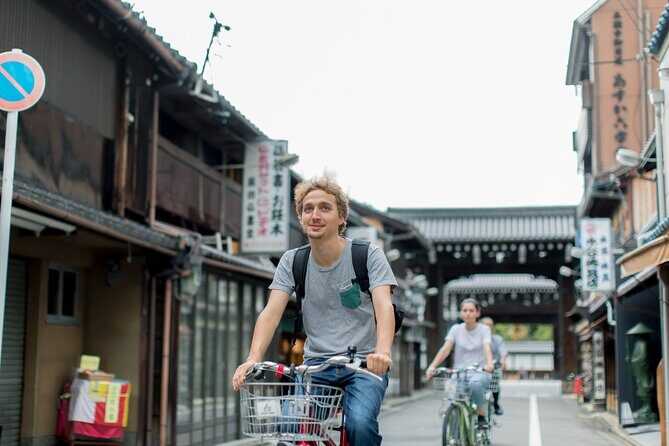
- E-bike without the learning curve: equipment rental is part of the deal, so you spend your morning riding, not troubleshooting gear.
- Private means you set the rhythm: your group keeps moving together at a comfortable pace, no need to sprint to stay with a crowd.
- Geisha districts at street level: you don’t just look from afar; you pass through areas like Miyagawacho and Gion where the atmosphere feels lived-in.
- A palace visit that avoids backtracking: cycling through the Kyoto Imperial Palace gardens on gravel paths saves time versus piecing it together on your own.
- Kamo River downtime is built in: you get a proper pause at Kashiwayacho rather than treating it like just another photo stop.
Why Kyoto feels easier when you have a local beside you
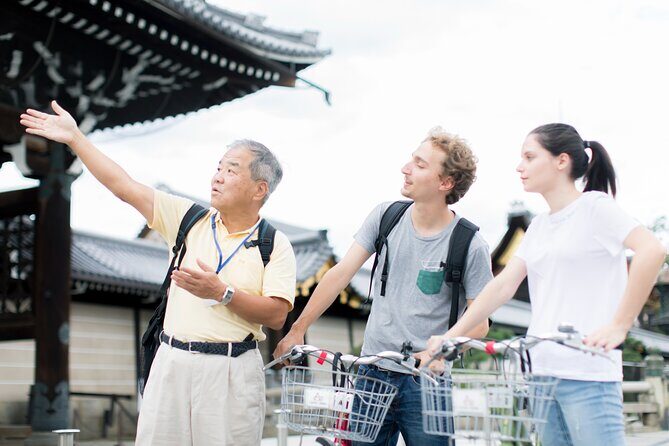
Kyoto is beautiful in a way that can also be annoying if you’re on your own. Streets twist. Signage can be confusing. And even when you’re close, it can take way longer than expected to connect one sight to the next.
This tour works because it hands you a moving plan. You ride between key areas while your guide handles the navigation and timing. That means you can focus on what matters: the texture of the streets, the look of the wooden houses, and the small details you’d normally miss while trying to find the next place.
A few more Kyoto tours and experiences worth a look
Your e-bike ride: comfort, pace, and what to expect in 3 hours
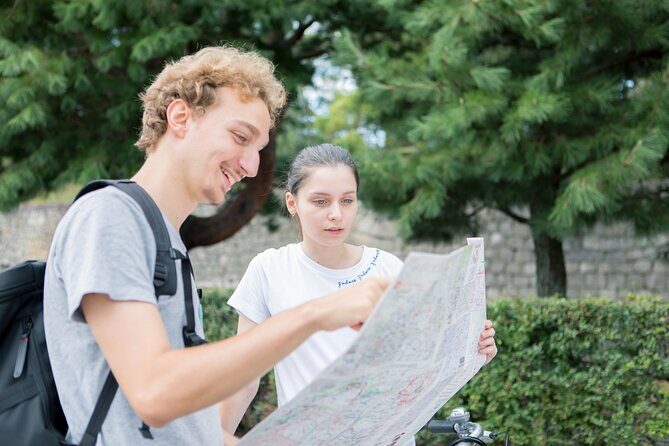
The tour runs about 3 hours, starting at 9:00 am and ending back at the meeting point. That timing is smart. You get cooler morning temperatures, and the neighborhoods feel less rushed.
You’ll cover multiple areas without turning the day into a long hike. The stops are short and purposeful—think 15–20 minutes each—so you get a taste of each place, then you’re off again. If you’re worried about sitting still too long, this format usually feels like a win.
The group size also matters for comfort. This is a private tour for your group, with a guide handling up to 6 guests. A single traveler isn’t accepted, so you’ll want at least two people. If you’re traveling in a larger group (7–12), an extra guide can be arranged—so you’re not stuck waiting for spacing gaps.
Miyagawacho Kaburenjo: that calm, old-Kyoto alley feel
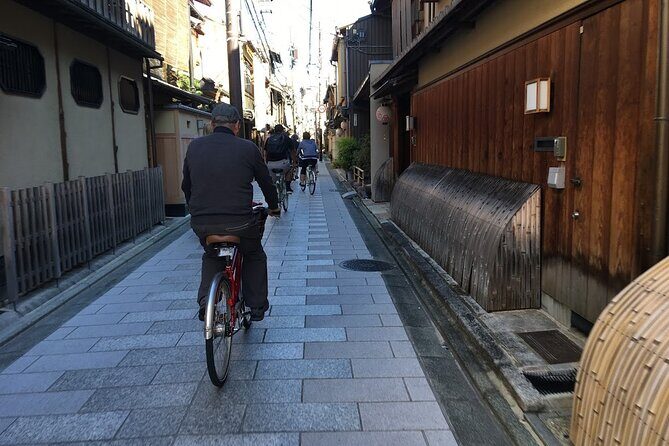
Stop one is Miyagawacho Kaburenjo. This is the second biggest of Kyoto’s five geisha districts, and it has that “ordinary quiet” you can’t fake with sightseeing crowds.
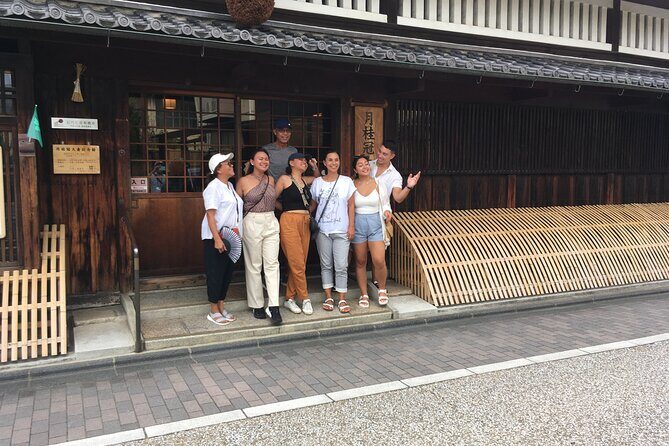
The alley is lined on both sides with traditional wooden houses. You’ll feel the shift right away: less spotlight, more lived history. It’s the kind of place where your senses slow down—wood grain, narrow space, and that gentle sense of time passing.
Practical note: the 15-minute stop is long enough to walk a bit and take photos, but short enough that you won’t get restless. It’s ideal if you like atmosphere more than constant museum-style explanations.
Gion: geisha district atmosphere, without the stress of crowd navigation
Next up is Gion, Kyoto’s most famous geisha district. You’ll pass through an area that still carries an elegant, old-time vibe, and you’ll understand it better because you’re moving through it rather than just standing at the edges.
This is where the guide’s context really helps. The tour framing explains the distinction between Maiko girls and Geiko women in a way that makes the streets more meaningful. Even if you’re not there for people-watching, knowing what you’re seeing changes the whole experience.
Drawback to consider: Gion can be busy depending on the day and time of year. Because you’re on an e-bike, you avoid a lot of the stop-and-go crowd chaos, but you’ll still be near active streets.
Tatsumi Bridge and the willow-lined reset
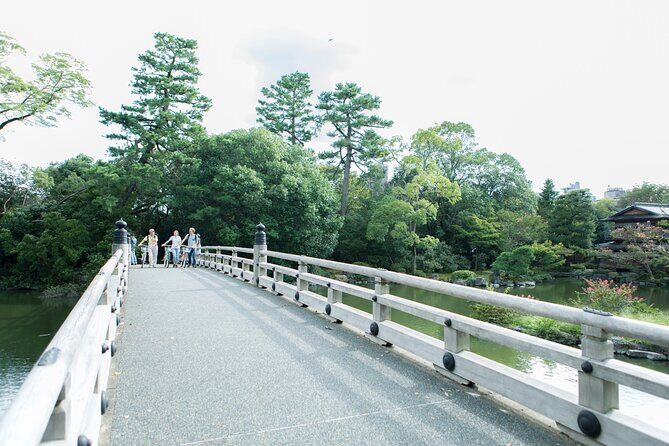
At Tatsumi Bridge, the tour shifts tone. Instead of architecture-first, it becomes nature-first.
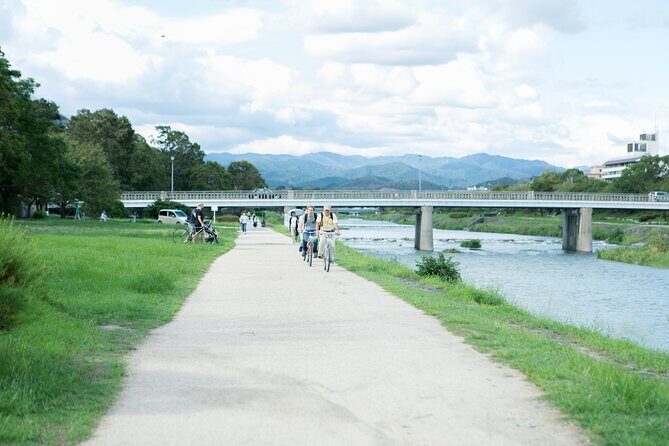
You’ll ride along a path by a small stream, with willows that sway in the breeze. It’s a simple moment, but it’s exactly the kind of pause that keeps a bike tour from feeling like just transportation. Your brain gets a break. Your camera gets a break. And the day stays balanced.
The stop is 15 minutes, so it’s not a long picnic. Still, it’s a nice reset before you ride into the more formal space of the Imperial Palace grounds.

Kyoto Imperial Palace gardens: cycling the gravel paths
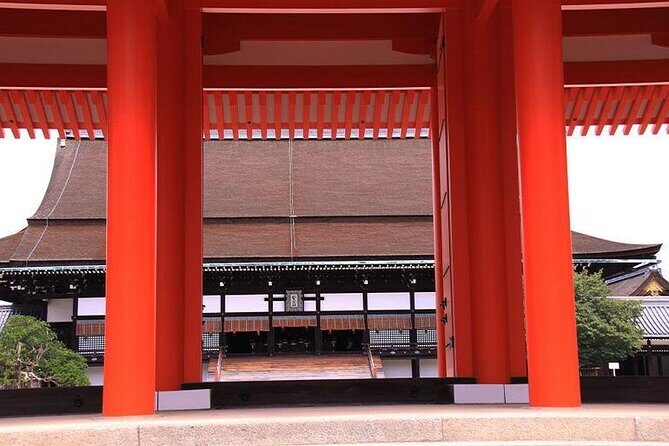
Kyoto Imperial Palace is the biggest “wow” stop on the route, and it’s handled in a practical way. You’ll cycle along gravel paths inside the palace garden area, which avoids the common problem of wasting time on awkward repositioning.
The palace used to be the residence of Japan’s Imperial Family. Today, it’s open as a national garden with seasonal flowers, which means your experience will vary with the time of year. That’s a plus for repeat visitors, but even once is enjoyable because gardens change your sense of scale and quiet.
Potential drawback: gravel paths can feel a bit different from smoother urban streets. The e-bike helps, but your comfort will depend on your own balance and the bike’s setup. If you’re sensitive about riding surfaces, go slower during the palace portion.
Kashiwayacho and the Kamo River break that isn’t rushed
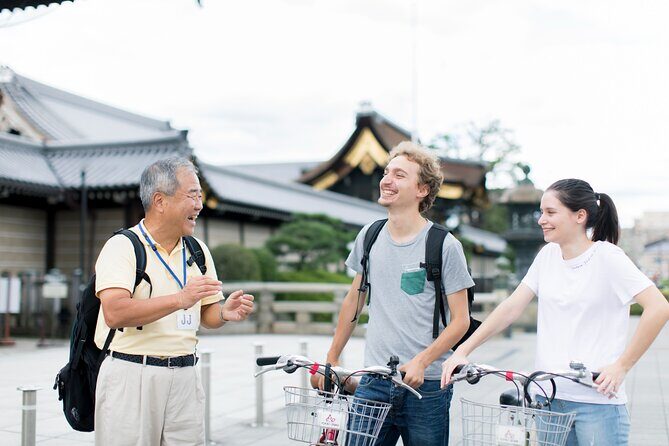
The final cultural finish is Kashiwayacho, with time to relax by the Kamo River. This stop is 20 minutes, and it’s one of the smartest parts of the itinerary.
Why? Because you’re not finishing with your head still in the last place you visited. You get a decompression moment. You can sit, watch the water and foot traffic, and feel how Kyoto rhythms differ from the “must-see” checklist mode.
In some cases, you may also be able to adjust with a small extra request like a coffee break. Don’t assume it will always be possible, but it’s worth asking your guide if you want one.
Meet your guide: the difference between facts and stories
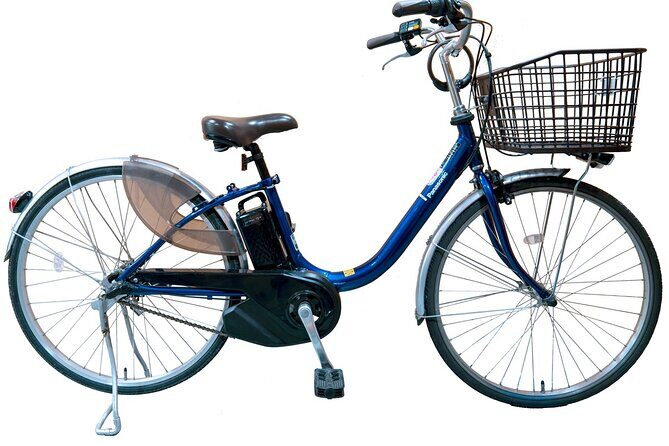
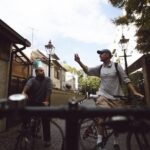
This is a guided tour, and the guides are the secret sauce. In particular, I love how guides like Rich-San tend to answer questions with real specifics—history, culture, and religion tied into what you’re seeing right now. Yuichi has a similar vibe: you get guidance that feels like conversation instead of a monologue.
Annie was noted for being gentle and attentive, with generous explanations and thoughtful service. That kind of guiding makes the alley stops feel more than pretty backdrops.
One consideration: English level can vary. On a rainy day in particular, the tour may lean more toward transit options and walking, and if your guide’s English is limited you might not connect as deeply to nuanced topics. Still, the visuals and route planning remain strong.
Price and value: why $103.04 can actually be a bargain here
At $103.04 per person for around 3 hours, this isn’t the cheapest thing in Kyoto. But it’s priced like what it is: a private guided ride with e-bike support, a curated route, and multiple meaningful stops.
Here’s where the value shows up:
- You’re renting the transport problem out of your day. With equipment included, you avoid figuring out bike options, insurance hassles, and where to ride.
- You’re paying for time efficiency. The route connects geisha districts, a bridge, and the Imperial Palace area in a way that’s hard to replicate without local navigation.
- You’re paying for pacing. Private means you don’t lose time to group bottlenecks or the anxiety of keeping up.
If you’re in Kyoto for a short visit—or if you want your first days to feel smooth instead of chaotic—this price can make a lot of sense.
Rain plans: staying flexible without wrecking the day
Kyoto weather can be unpredictable, and this tour is designed to keep going. The day can operate in rain. You’ll get the option to continue on bikes using a rain poncho (no extra charge), or switch to a walking tour that uses public transportation such as bus or metro (included in the tour fee).
If it’s pouring, you might find the public-transport option easier, since wet streets and visibility can make biking less relaxing. If your comfort is a concern, tell your guide how you’re feeling early on and choose the option that keeps your ride enjoyable.
Who this tour is best for (and who might skip it)
I’d book this if you want a smart first look at Kyoto’s contrast: geisha districts, quiet alley texture, river calm, and the Imperial Palace gardens. It’s also great for anyone who hates spending a vacation hunched over a phone trying to route themselves.
You might skip it if you strongly prefer walking only, or if you know you’re not comfortable riding a bicycle on city streets. Also, the tour requires you to be at least 10 years old and 145 cm or taller, and able to ride a bicycle safely without assistance.
Should you book this morning e-bike alleyway tour?
If your goal is to see a lot of Kyoto without burning time and energy, this is a strong pick. The private pace is a real quality-of-life improvement, and the route choices make sense: Miyagawacho’s calm, Gion’s refined vibe, Tatsumi Bridge’s natural pause, the Imperial Palace gardens by bike, then the Kamo River decompression.
Book it if you like learning through movement and conversation—especially if you’re the type who will ask questions. Consider a backup mindset for rain, and pick this early in your trip when you still want help getting your bearings.
If you want, tell me your travel month and your comfort level with biking. I’ll suggest what time of year tends to feel best for this exact route and what to wear for the morning ride.
FAQ
How long is the morning tour?
It lasts about 3 hours.
Is this a private tour?
Yes. Only your group participates.
What’s included with the tour?
E-bike equipment rental is included, and the Kashiwayacho/Kamo River rest is included as part of the experience. You also receive a mobile ticket.
Where does the tour meet and what time does it start?
The meeting point is 552-13 Higashiaburanokōjichō, Shimogyo Ward, Kyoto, 600-8235, Japan, and the start time is 9:00 am.
What stops are included in the route?
You’ll visit Miyagawacho Kaburenjo, Gion, Tatsumi Bridge, Kyoto Imperial Palace, and Kashiwayacho by the Kamo River.
Does the tour operate in rain?
Yes. You can continue by bike with a rain poncho, or switch to a walking tour using public transportation (bus or metro), with the tour fee covering the option.
What group size is allowed per guide?
The guide can accept a minimum of 2 and a maximum of 6 guests. One-person participation isn’t accepted, and for groups of 7–12 an extra guide can be arranged.
Is there a minimum age or height requirement?
Yes. Children must be at least 10 years old, 145 cm or above, and able to ride a bicycle safely on the road unassisted.
Can I cancel and get a refund?
The cancellation policy states it is non-refundable and cannot be changed for any reason.