REVIEW · KYOTO
From Kyoto: Nara Guided Morning Tour
Book on GetYourGuide →Operated by Japan Panoramic Tours · Bookable on GetYourGuide
Nara is more than sightseeing; it’s a morning you’ll remember. This 4-hour tour is built around Nara’s top UNESCO-style highlights plus the real-life chaos of free-roaming deer—all with a guided structure that keeps your time tight but not rushed.
I really like how the day blends three moods: deep temple awe at Todai-ji, calm nature wandering in Nara Park, and a shrine approach that feels special at Kasuga Taisha. I also like the small on-purpose comforts: air-conditioned coach ride with free Wi‑Fi and multilingual audio headsets.
One drawback to plan around: this is not a round-trip back to Kyoto. The tour ends at Kintetsu-Nara Station around 12 PM, so you’ll handle your return on your own.
In This Review
- What makes this Nara morning tour worth your time
- Meeting at Kyoto Avanti, then straight to Nara
- Passing the time on the coach with a real plan
- Kasuga Taisha Shrine: lantern-lined calm
- Nara Park deer: fun rules that keep it safe
- Todai-ji Temple: the Great Buddha moment
- The travel pass-by details that make the morning flow
- Price and timing: $77 for a smart Nara sampler
- Who this tour suits best (and who should skip)
- Quick “do this on the day” checklist
- Should you book the Kyoto-to-Nara morning tour?
- FAQ
- Where do I meet for the Kyoto to Nara morning tour?
- What time does the tour depart and how long does it last?
- What are the main stops during the tour?
- Is admission to Todaiji Temple included?
- Do I get an audio guide?
- Is there air-conditioning and Wi‑Fi during the ride?
- Does the tour include meals or drinks?
- Do I need to return to Kyoto on my own?
- Can I feed the deer in Nara Park?
What makes this Nara morning tour worth your time
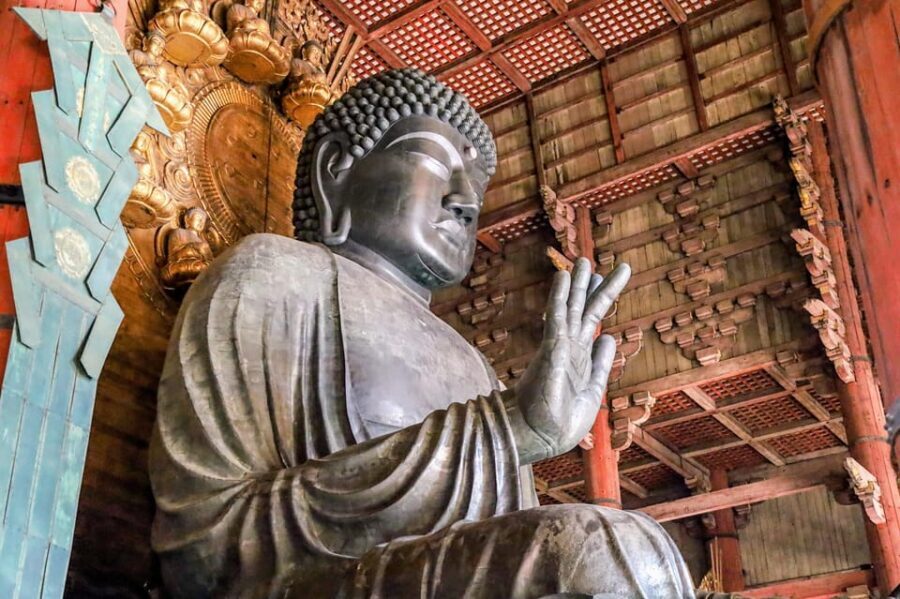
- Great Buddha at Todai-ji Temple with a guided visit inside the complex
- Nara Park deer time with instructions that help you feed them safely
- Kasuga Taisha Shrine visit timed for an early, serene feel on the lantern paths
- Comfort on the way there: air-conditioning and free Wi‑Fi on the coach
- Audio headsets in 7 languages for when you want extra detail (or your guide is moving fast)
- Useful, upbeat guides—I noticed a lot of praise for guides who kept groups organized and smiling, including Ciel, Tommy, Den, Sakura, Nagomi, and Mai
Meeting at Kyoto Avanti, then straight to Nara
You meet at Tully’s Coffee, in front of the Kyoto Avanti building (Kyoto Avanti side), at 7:50 AM for an 8:00 AM departure. It’s an easy meeting point if you already know the Kyoto Station area, and the early start helps you get to Nara before the day swells.
The coach ride is part of the convenience here. You’ll travel about an hour to Nara, and along the way you pass by major historic landmarks like Fushimi Castle and the former capital site Heijokyo Palace. It’s not a long stop-and-stroll moment, but it gives you context before you hit the big sights.
A few practical things I’d do before you go: charge your phone, but also know the tour includes audio headsets, so you don’t need to constantly switch apps or guess what’s happening. Wear shoes you can walk in without thinking. The tour includes stairs and hills at the sites.
You can also read our reviews of more guided tours in Kyoto
Passing the time on the coach with a real plan
This isn’t a free-for-all bus tour. You’re on a tight half-day schedule: coach time, then guided time at each major stop, plus a pocket of free time in the park.
You’ll also want to keep your expectations aligned with the format. You’re getting “best-of” coverage in a compact window, not a slow, sit-and-stare day. That’s why the early departure matters: it buys you enough quiet at the shrine and park to feel less chaotic.
The best practical value here is the combination of:
- Air-conditioning (Nara can get hot or sticky)
- Free Wi‑Fi on the bus (handy for maps later)
- Audio headsets in several languages so you can follow along even if the group moves quickly
Kasuga Taisha Shrine: lantern-lined calm
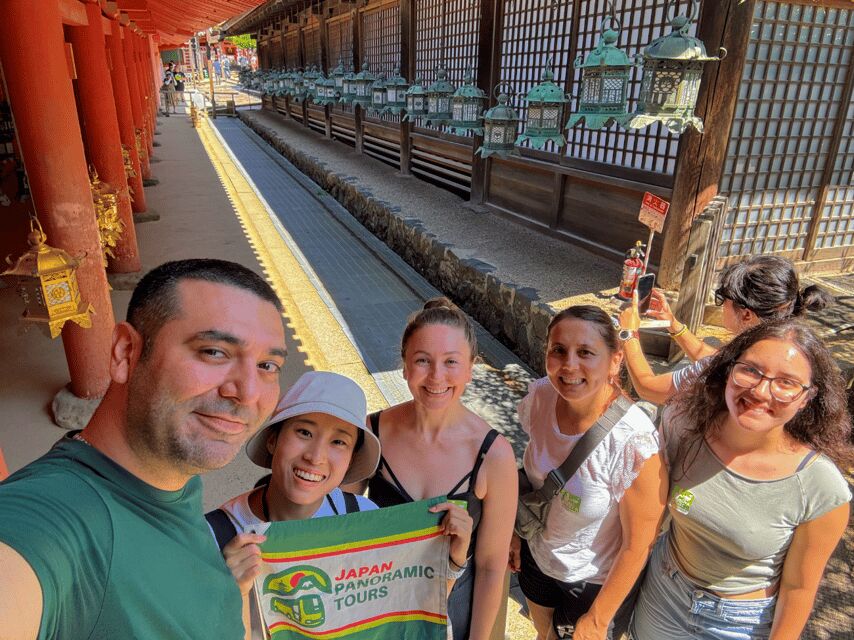
Kasuga Taisha is the kind of place where you start noticing details fast: stone lanterns, shrine paths, and the feeling that this is sacred space, not just a photo stop. On this tour, you get a guided visit of about 40 minutes here.
What you’ll likely love is the lantern approach. Kasuga Taisha is known for roughly 3,000 stone lanterns, lined along the pathways. The tour experience is early-morning oriented, which helps because the light and crowd level are gentler than later in the day. Also, the lanterns are lit during special festivals, but even without that timing, the sheer number of lanterns makes the walkway feel purposeful and atmospheric.
One small consideration: 40 minutes sounds long until you’re standing in front of a complex that rewards looking up and around. You’ll want your camera ready, but don’t let it fully steer you. If you follow the guide’s pacing, you’ll see more and miss less.
Nara Park deer: fun rules that keep it safe
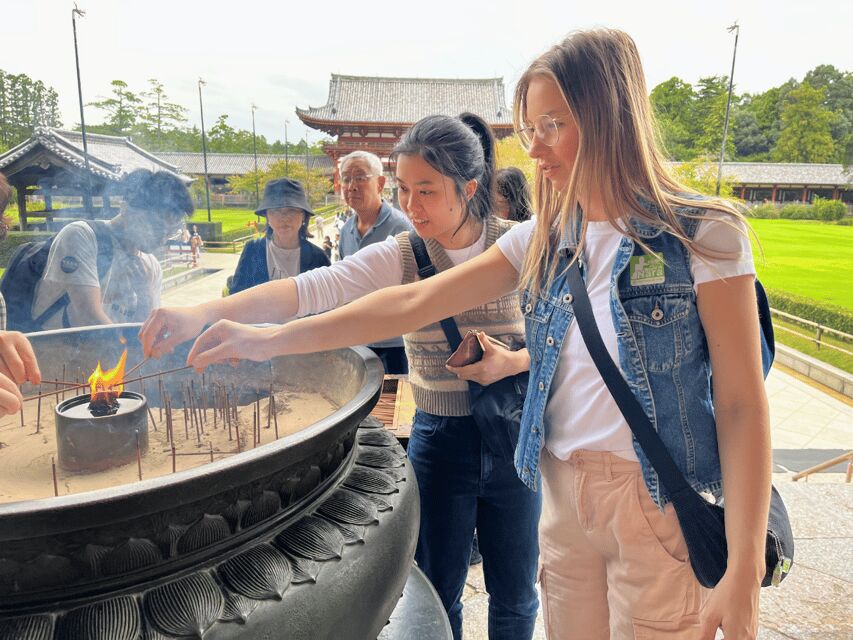
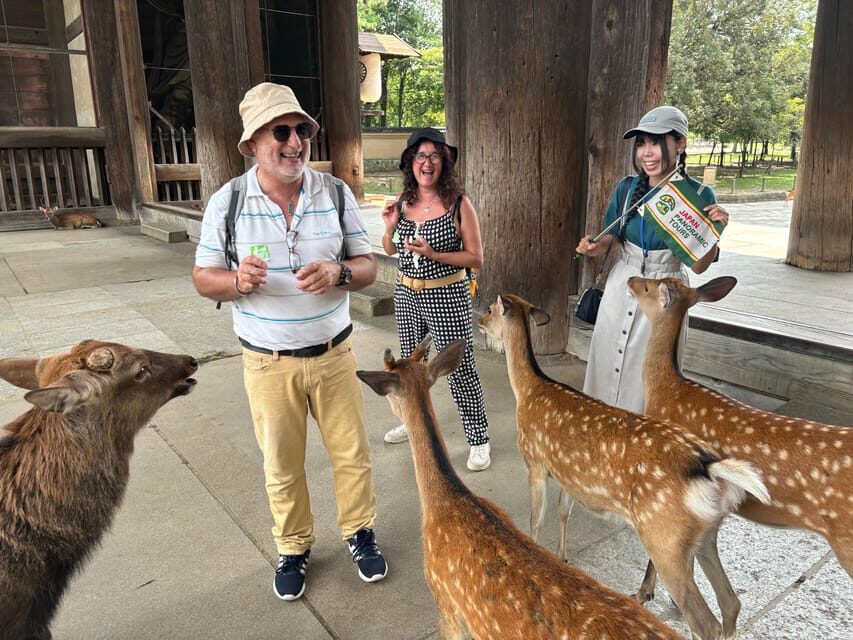
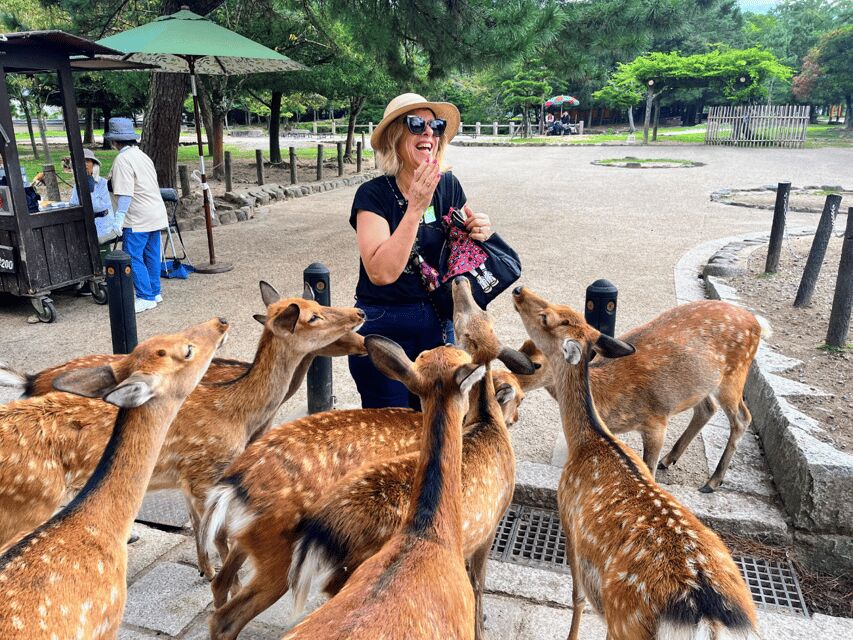
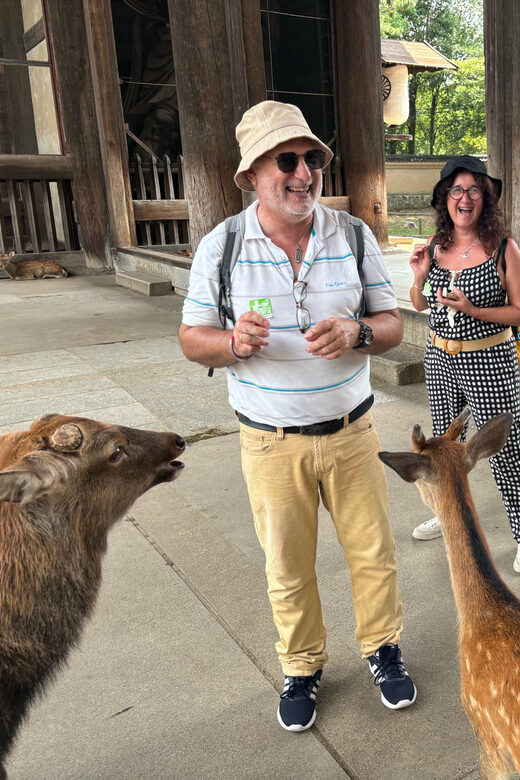
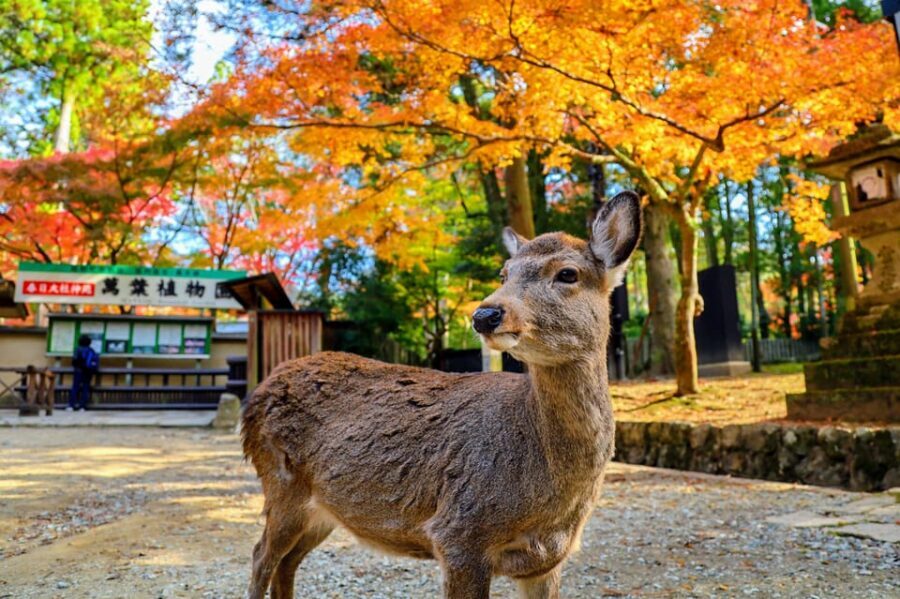
Then comes the part people talk about the most: Nara Park and its friendly, free-roaming deer. You’ll get around 30 minutes of free time here, which is enough to walk the main loops and experience the deer without feeling like you’re stuck for hours.
The deer are considered sacred, which helps explain why they’re so integrated into the landscape of daily visitor life. There are over 1,400 deer in the park, and they can be curious—and yes, sometimes bold—especially when food is involved.
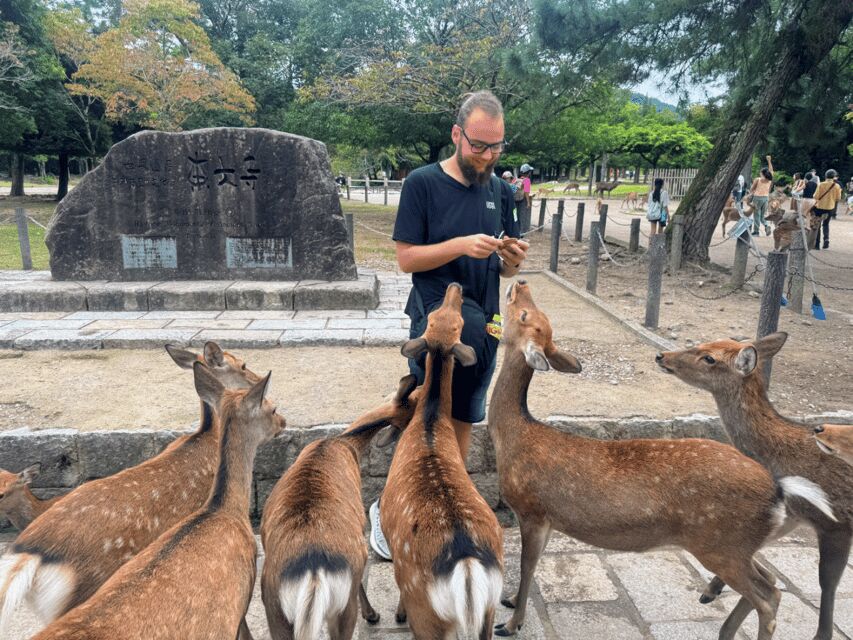
Feeding the deer is allowed, but responsibly:
- Feed them only with the special crackers sold in the park
- Don’t wave random snacks, because that’s how you end up with a deer that’s confused and pushy
A few safety tips I’d treat as non-negotiable:
- Keep your hands protected and controlled when you’re holding crackers.
- If you don’t have crackers, show that clearly by keeping your hands low and not baiting them.
- Expect deer to cluster quickly when food appears.
The tone from many guide experiences I’ve seen for this tour is consistent: guides like Tommy and Den tend to give clear deer etiquette and set expectations so the experience stays playful instead of stressful. One memorable piece of advice: if you want to avoid deer getting too focused on you, don’t act like you have food when you don’t.
Also note: you’re outdoors with animals around. If you’re nervous around animals, this part can feel intense at first. If you’re excited by the odd, you’ll probably leave grinning.
Todai-ji Temple: the Great Buddha moment
After Kasuga Taisha and the park, you end at Todai-ji Temple for a guided visit of about 50 minutes. This is where the “ancient Japan” feeling hits hardest.
The centerpiece is the Great Buddha Hall (Daibutsuden), a vast wooden structure that houses the Great Buddha of Nara. It’s not just impressive because it’s large; it’s impressive because it’s built to function as a spiritual home. Even if you’re not deep into Buddhism, you’ll understand why people travel here for this one room.
As you approach the temple, you’ll likely pass under the Nandaimon Gate, the grand entrance flanked by guardian statues. That gate works like a mental switch: you go from walking around Nara Park energy to full temple gravity.
Quick reality check: the complex includes stairs and hills in places, and your 50 minutes can feel busier if you stop to take photos constantly. My suggestion is to do the “big shots” first, then use the guide’s comments to frame what you’re seeing. You’ll appreciate it more without adding extra time pressure.
A few more Kyoto tours and experiences worth a look


The travel pass-by details that make the morning flow
Between Kyoto and Nara, you’re not just sitting. You pass by historic sites like Fushimi Castle and Heijokyo Palace, which gives you a sense of the arc between Kyoto’s present and Japan’s older capital history. It’s a nice touch because it prevents the trip from feeling like three disconnected stops.
And the overall rhythm matters. You’re guided at Kasuga Taisha and Todai-ji, you’re free in the park, and you’re back on the coach briefly before the end of the tour. For most people, that’s the sweet spot for a half-day: structured enough to learn, loose enough to breathe.
Just keep in mind that the order of stops can change due to traffic, weather, or operations. If you’re the type who likes strict timelines, don’t stress. The tour is designed to hit the key sites regardless.
Price and timing: $77 for a smart Nara sampler
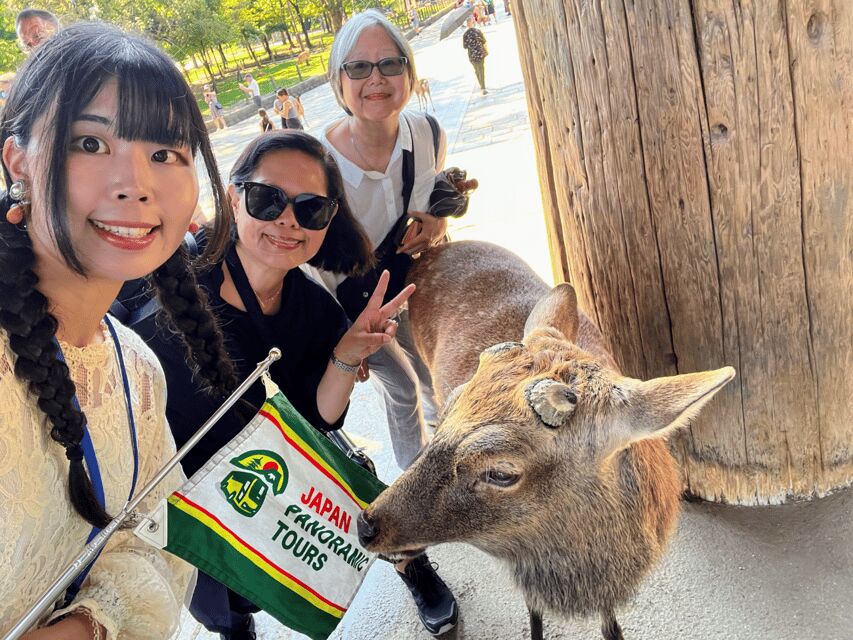
At $77 per person for about 4 hours, this is priced like a convenience-and-guidance package, not like a DIY day. Here’s why it can be good value:
- Temple admission to Todaiji is included, which is one of the bigger “must pay” components for many people.
- You get a professional English-speaking guide, which is especially useful at Kasuga Taisha and Todai-ji, where details make the visit click.
- You’re not just getting directions; you’re getting audio headsets in Spanish, French, Italian, German, Portuguese, and Ukrainian. Even if you’re English-only, it reduces the mental load for everyone in the group.
- The coach ride adds practical comfort: air-conditioning and free Wi‑Fi.
Where the value can feel thin is the same place the tour is honest about being a morning format: you don’t get a return bus to Kyoto. You finish around 12 PM at Kintetsu-Nara Station, so you’re responsible for the next leg.
If you’re okay handling that last step and you want maximum Nara in minimum time, this price can feel fair. If you strongly prefer a complete door-to-door round trip, you might compare with longer options.
Who this tour suits best (and who should skip)
This is a great fit if you:
- Want Nara highlights in a tight window without navigating stations and schedules
- Like guided context at major sites, but still want personal time for the park
- Are comfortable with walking plus stairs and hills
- Enjoy animal encounters and can follow deer feeding rules
It may not be ideal if you:
- Need the tour to take you back to Kyoto by bus
- Have mobility limitations, since it’s not suitable for wheelchair users or people with mobility impairments
- Are very sensitive about crowds, since Nara Park can be lively even in the morning
For families and solo travelers, the structure can be reassuring. I saw lots of positive energy tied to guides who kept groups together and gave practical tips. Names that showed up repeatedly in praise include Ciel, Tommy, Sakura, Nagomi, Den, and Mai, with multiple guests highlighting how guides handled the schedule and helped people feel at ease.
Quick “do this on the day” checklist
Here’s what I’d pack and plan based on what the tour itself asks for:
- Comfortable shoes (non-negotiable)
- Water (even in the morning)
- Hat and sunscreen (sun hits fast)
- Cash, just in case you want to buy things on-site (and especially for the special deer crackers sold in the park)
- A camera (lots of strong photo moments: lanterns, gate statues, the Great Buddha)
Also, you’ll want to follow site rules like no flash photography, and the usual common sense like no smoking or littering. It’s a respectful cultural day—treat it that way and you’ll have a better time.
Should you book the Kyoto-to-Nara morning tour?
I’d book it if you want an efficient, guided first look at Nara: Todai-ji’s Great Buddha, Kasuga Taisha’s lantern atmosphere, and deer in the park without spending your whole day planning logistics.
I wouldn’t book it if you need the comfort of a complete round trip back to Kyoto by tour bus, or if you’re not comfortable with stairs and uneven foot travel. Also, if deer interactions make you uneasy, you may find the park segment more stressful than magical.
If you’re a planner and you like clear structure, this morning format is a smart choice. You’ll leave with the big visuals and a memorable sense of Nara’s daily rhythm—plus the kind of deer encounter you’ll probably be talking about for days.
FAQ
Where do I meet for the Kyoto to Nara morning tour?
You meet in front of Kyoto Avanti at Tully’s Coffee (Kyoto Avanti building, Tully’s side). Meeting time is 7:50 AM.
What time does the tour depart and how long does it last?
The coach departs at 8:00 AM and the tour duration is about 4 hours.
What are the main stops during the tour?
You’ll visit Kasuga Taisha Shrine, Nara Park (free time), and Todaiji Temple, including the Great Buddha Hall.
Is admission to Todaiji Temple included?
Yes. Admission to Todaiji Temple is included.
Do I get an audio guide?
Yes. You get audio headsets. Languages listed are Spanish, French, Italian, German, Portuguese, and Ukrainian.
Is there air-conditioning and Wi‑Fi during the ride?
Yes. The coach is air-conditioned and offers free Wi‑Fi.
Does the tour include meals or drinks?
No. Meals and drinks are not included.
Do I need to return to Kyoto on my own?
Yes. This half-day tour ends at Kintetsu-Nara Station around 12 PM, and return to Kyoto by bus is not included.
Can I feed the deer in Nara Park?
Feeding the deer is allowed, but only responsibly and with the special crackers sold in the park.