REVIEW · KYOTO
Kyoto Morning Tour from Kyoto or Osaka
Book on Viator →Operated by JTB Global Marketing & Travel Inc. · Bookable on Viator
Three Kyoto landmarks, before the morning rush. This half-day tour strings together UNESCO-listed sights with a guide and an air-conditioned vehicle, so you’re not fighting city transit. I like the structure: Nijo Castle first, then Kinkakuji’s Golden Pavilion, and finally the Kyoto Imperial Palace area—enough to understand Kyoto’s power, elegance, and design without eating your whole day.
Two things I especially like are how the entrance fees are included and how you move smoothly between stops instead of hopping buses all morning. One consideration: the timing is tight, and in crowded areas you may struggle to hear the guide clearly, plus the Imperial Palace stop can be replaced on certain closed days.
In This Review
- Key Highlights at a Glance
- Why This Morning Tour Works for Short Trips
- Starting at Kyoto Avanti: Meeting Point and Timing Tips
- The Bus Ride Comfort Factor You’ll Feel Immediately
- Stop 1: Nijo Castle and Tokugawa-Era Architecture
- Stop 2: Kinkakuji Golden Pavilion and the Practical Walking Route
- Stop 3: Kyoto Imperial Palace, or the Backup Plan
- How the Guide and Group Size Affect Your Morning
- Included vs. Not Included: What You Should Budget For
- The Schedule Reality: Short Stops, Real Context
- Who This Tour Suits Best (and Who Should Skip)
- Should You Book This Kyoto Morning Tour?
- FAQ
- How long is the Kyoto Morning Highlights tour?
- How much does it cost?
- What’s included in the tour price?
- Where do I meet and where do I end?
- Is food included?
- What happens if Kyoto Imperial Palace is closed?
- What happens if Nijo Castle is closed?
- Is there free cancellation?
Key Highlights at a Glance
- Three UNESCO-level stops packed into one morning route
- Entrance fees included for the paid sites (and transport between them)
- Nijo Castle’s Tokugawa-era details, from cypress structures to Ninomaru Palace carvings
- Kinkakuji’s Golden Pavilion and its pond-side setting, plus a practical walking route
- Kyoto Imperial Palace visit with a swap plan if it’s closed
- Small-group feel for a bus tour with a max of 40 people
Why This Morning Tour Works for Short Trips
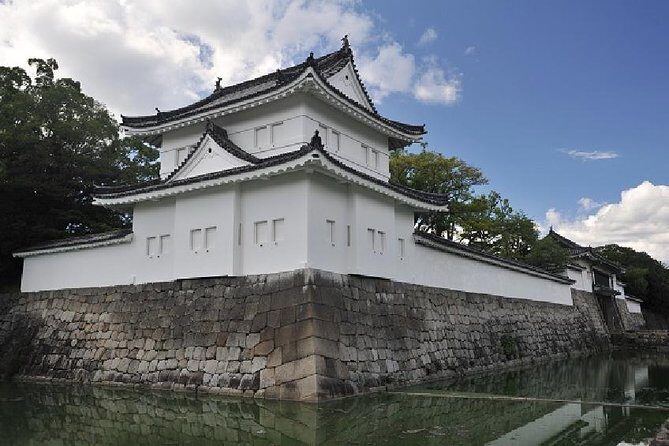
This is the kind of Kyoto tour you book when you want big-name sights, fast. You’re not trying to “cover everything.” You’re targeting three places that instantly show you what Kyoto did best: governance and architecture (Nijo Castle), refined beauty in temple form (Kinkakuji), and imperial symbolism (the Kyoto Imperial Palace grounds).
The best part is the logic. You’re driven between locations in the morning, when Kyoto’s streets and temple lines can be at their worst. That smooth travel is worth real money if your day plan includes other neighborhoods later—Arashiyama, Gion, Nishiki Market, or even a temple-hopping walk of your own.
You also get a licensed English guide interpreter included, so you’re not stuck with a phone translation during the details. And in the guides’ style, you’ll see a pattern: people have praised guides such as Mr. Harada, Jun, Casey (KC), and Jessie for being organized, funny, and strong on explanations. Not every morning is identical, but that feedback suggests the experience is designed to be clear, not just tour-bus sightseeing.
A few more Kyoto tours and experiences worth a look

Starting at Kyoto Avanti: Meeting Point and Timing Tips
The meeting point is Kyoto Avanti (Minami Ward), 31 Higashikujō Nishisannōchō, and the tour ends at the same spot—right in front of Kyoto Avanti across from Kyoto Station’s Hachijo Exit. That matters because “near Kyoto Station” can still be a headache at 8 or 9 a.m., especially if the group is large and everyone is hunting for the same bus.
If you’re coming from Osaka, the tour notes an outbound assistant on the trip from Hotel Granvia Osaka to the Sunrise Tours desk in Kyoto Avanti B1F. It’s not framed as a hotel pickup in your materials, so think of it as help getting to the Kyoto meeting area—not a separate private transfer.
The schedule is about 4 hours 40 minutes total. The time at each stop is relatively short: around 50 minutes for Nijo Castle, 45 minutes at Kinkakuji, and about 40 minutes for the Kyoto Imperial Palace portion (when open). Because of that, you’ll want to arrive on time, not “a few minutes late and we’ll catch up.” Seats aren’t assigned, so early arrivals can also mean a calmer boarding.
One more practical note: the tour says the order and arrival times can shift with road conditions and congestion. That’s normal in Kyoto, and it’s another reason to plan nothing too tight after the drop-off at Kyoto Station.
The Bus Ride Comfort Factor You’ll Feel Immediately
This tour uses an air-conditioned vehicle, which sounds like a small detail until you’re standing in the Kyoto morning sun or humidity and then suddenly you’re back inside with cold air. The route is designed to minimize dead time between sites, so the bus isn’t just a ride—it’s a time buffer.
A max group size of 40 also helps. That’s still a bus, so it won’t feel like a private day with elbow-room, but it’s not an ocean of people either. The flip side is audio. Multiple visitors have pointed out that hearing the guide can be tough in crowded spots if microphone transmission to individual headphones isn’t used. If you’re sensitive to sound issues, it’s smart to sit where you can see and hear the guide most of the way.
If you’re traveling with a child, children up to 5 can join free, but they won’t automatically get bus seats. If you need a seat for your little one, book the child rate so you’re not surprised at boarding.
Stop 1: Nijo Castle and Tokugawa-Era Architecture
Nijo Castle is your first major anchor, and it’s chosen for a reason. This is where you start seeing Kyoto as a political stage, not just a postcard city. The castle was built on orders from Tokugawa Ieyasu, the first shogun of the Tokugawa shogunate, with construction around 1603.
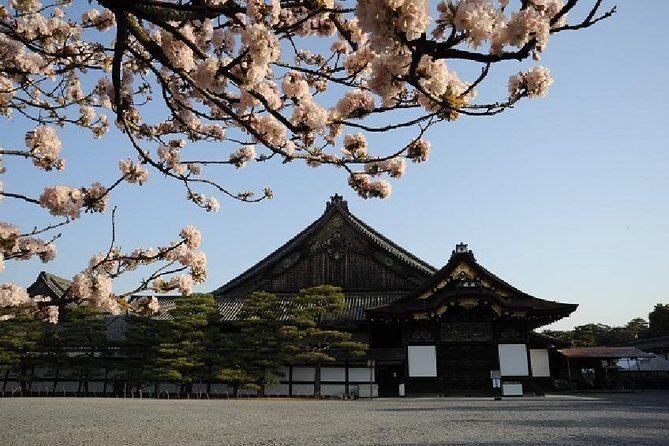
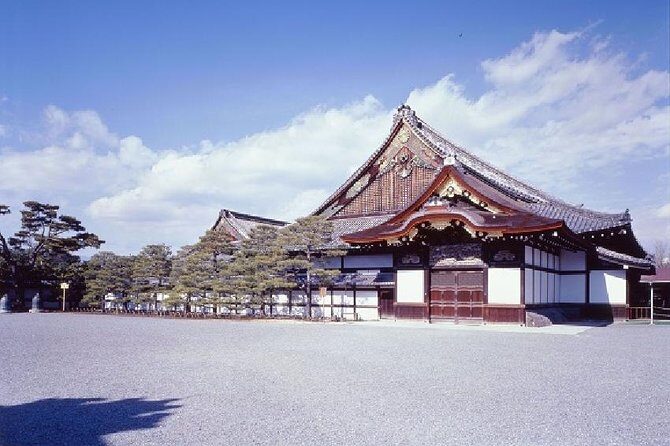
You’ll spend about 50 minutes here, with admission included. The highlights in the official description are detailed and specific: five connecting structures made of cypress wood, plus a complex known for elegant design and striking interiors. The living quarters covered in gold leaf are a focal point, but the experience also includes practical spaces like the kitchen and guardhouse, plus multiple gardens.
It’s also one of those places where short visits can still deliver value. You’re not trying to master every room. With a guide, you get the “why” behind the layout and materials. And if you’ve only got one morning, this castle stop gives you context that makes later temples feel more than pretty scenery.
One day-of consideration: Nijo Castle has closure patterns. It’s closed on Tuesdays during specific months (January, July, August, December) and from Dec. 26 to Jan. 3. If it’s closed on your day, the tour swaps in Ryoan-ji Temple. If you care about Nijo Castle specifically, check your date before you commit—or at least accept that Kyoto’s calendar can change your plan.
Stop 2: Kinkakuji Golden Pavilion and the Practical Walking Route
Next comes Kinkakuji, the Golden Pavilion, and it’s typically the most visually dramatic stop on this kind of itinerary. You get about 45 minutes, and admission is included.
Here’s what makes this place memorable beyond the gold color. The wooden architecture is covered in thin layers of pure gold, and the pavilion sits within a pond setting. The temple experience also includes Japanese gardens and design around the site, which helps explain why Kinkakuji is such a cultural reference point.
This is also where you’ll likely do the most walking within your short time. One theme from feedback is that the route can be busy and controlled, with a one-way system that includes a climb over uneven rocky steps. That doesn’t mean it’s a bad stop. It means you should treat it like a real temple walk, not a quick photo stop.
So plan your footwear like a city hike: supportive shoes help more than you think. Also, if the group is clustered and moving, hearing the guide may depend on where you are in line. If audio has been a problem in other tours you’ve taken, you may want to stay near the front half of the group so you can track the guide’s comments.






Stop 3: Kyoto Imperial Palace, or the Backup Plan
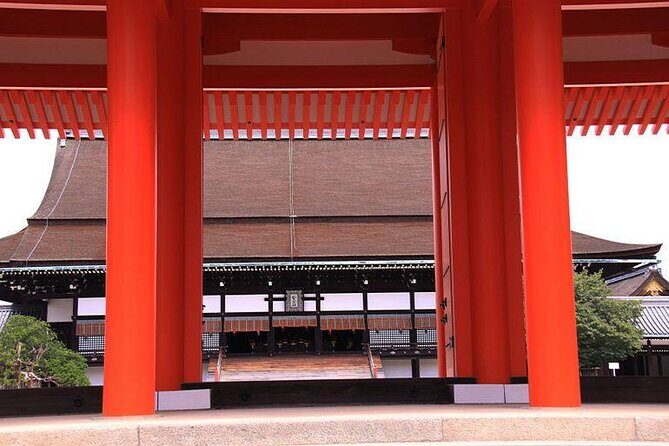
The third stop is the Kyoto Imperial Palace area, but this is where you need to be flexible. When it’s open, you’ll spend about 40 minutes and the stop is free admission. The palace is described as the Emperor’s former residence before Japan’s capital moved to Tokyo in 1868, about 150 years ago.
The visit focuses on symbolic and architectural simplicity: you can view the former site of imperial enthronement ceremonies and observe the elegant, straightforward design of the interior architecture. Even if you’re not chasing every detail, this stop gives you a different angle on Kyoto. It’s less “warrior castle power” than Nijo, and more “imperial order and restraint.”
But Kyoto closes things. According to the tour details, the Kyoto Imperial Palace is closed to visitors on Mondays (or the following day if Monday is a holiday) and on days when there’s an Imperial Household Agency event. If your day falls into one of those categories, the tour does not just cancel the stop—it swaps it.
Here’s what you might get instead:
- Kitano Tenmangu Shrine if the palace is closed on most of those days
- Nishi Hongan-ji Temple if the closed day falls on the 25th
And it’s worth saying clearly: refunds aren’t issued when the tour visits the alternative destinations instead of the Imperial Palace. That doesn’t make the tour worse—it just means you should check your calendar if the palace is your main reason for booking.
The good news: even with substitutions, the itinerary still holds the morning structure. You still get the same guided rhythm and bus transport, so you’re not left stranded at a single site.
How the Guide and Group Size Affect Your Morning
A guided tour can either feel effortless or like you’re constantly catching up. This one aims for organized flow, and you can see that in how multiple guide names got praise: Mr. Harada was described as entertaining and efficient; Casey (KC) and Jessie were praised for keeping the group moving and explaining history clearly.
That said, the group format is still a group format. With a bus load of people, crowded temple areas can swallow sound. Some feedback specifically mentions that the microphone system didn’t seem to be used with wireless headphone transmission, which meant the guide was harder to hear when the group got dense.
So here’s how you can make it work for you:
- Stay closer to where you can see the guide in crowded areas
- If you’re hard of hearing, consider bringing your own assistive solution
- Don’t plan on soaking in every room for 20 minutes; this is a structured sampler
The tour is designed to help you understand the layout and the meaning quickly. If you want slow, silent, long photography sessions, you’ll probably feel rushed. If you want clarity and momentum, this bus tour style can be a great match.
Included vs. Not Included: What You Should Budget For
The price is $87.19 per person, and it includes:
- National Government Licensed English guide interpreter fee
- Admission fees and transportation costs
What it does not include:
- Food and drinks
- Hotel pick-up and drop-off
Also, the tour ends at Kyoto Station area, and the materials note that it doesn’t include the return transportation expenses from Kyoto back to Osaka. So if your plan includes heading home right after, you’ll want to have that transit ticket ready.
The value math is simple. You’re paying for transport between three distant stops plus admissions at key locations. If you tried to recreate this solo, you’d still pay entrance fees and you’d still spend time on transit and lines. Here, the trade is time and flexibility: a longer morning walk is traded for less decision-making.
Also note the tour uses a mobile ticket, and confirmation is usually sent within 48 hours, depending on availability. That’s helpful for planning, but it also means you should keep an eye on your inbox after booking.
The Schedule Reality: Short Stops, Real Context
The itinerary is built on efficient pacing. You’re in each place long enough to see the main features and understand the theme, but not long enough to treat any stop as a half-day destination by itself. That’s perfect for a first Kyoto morning, and not great if you want depth at just one site.
The stops also create a neat storyline:
- Nijo Castle: power, design, and Tokugawa-era structure
- Kinkakuji: refined beauty, gold, pond, and garden composition
- Imperial Palace: imperial symbolism and architectural restraint
If you do this tour early, it helps you walk through Kyoto the rest of the day with better context. You’ll know what you’re looking at and why the city’s aesthetics feel so intentional.
Who This Tour Suits Best (and Who Should Skip)
This tour fits you if you:
- have limited time in Kyoto and want a strong highlights route
- like being guided through the meaning, not just the photos
- want a morning plan that starts and ends near Kyoto Station
It may not fit you if you:
- want long, slow visits where you can linger in one place
- struggle with crowds and sound during busy temple hours
- are traveling on a day when you strongly need the Imperial Palace visit and can’t accept a substitution
It also helps to know the tour has most travelers can participate listed, but there’s still real walking and stairs at places like Kinkakuji. Comfortable shoes are non-negotiable.
Should You Book This Kyoto Morning Tour?
If your goal is to get your bearings fast and see three headline Kyoto sites in one guided morning, this is a solid choice. The included admissions and transport reduce decision fatigue, and the guide support keeps the stops from turning into random sightseeing.
Before you book, do two quick checks:
- Confirm your date in relation to Kyoto Imperial Palace closure days and the Nijo Castle Tuesday patterns.
- Plan for crowds and short stop times, especially at Kinkakuji with its controlled route and uneven steps.
If you can accept that the palace stop might switch to Kitano Tenmangu Shrine (or Nishi Hongan-ji on a specific 25th scenario), then this tour becomes an excellent way to build confidence for the rest of your Kyoto day.
FAQ
How long is the Kyoto Morning Highlights tour?
It runs for about 4 hours 40 minutes.
How much does it cost?
The listed price is $87.19 per person.
What’s included in the tour price?
The tour includes the licensed English guide interpreter fee, admission fees, and transportation between stops.
Where do I meet and where do I end?
You meet at Kyoto Avanti and the tour ends in front of Kyoto Avanti across from Kyoto Station Hachijo Exit.
Is food included?
No. Food and drinks are not included.
What happens if Kyoto Imperial Palace is closed?
If it’s closed (such as on Mondays or due to an Imperial Household Agency event), the tour visits Kitano Tenmangu Shrine instead, and if the closed day falls on the 25th it visits Nishi Hongan-ji Temple.
What happens if Nijo Castle is closed?
If Nijo Castle is closed on its scheduled closure days (including certain Tuesday periods and Dec. 26 to Jan. 3), the tour visits Ryoan-ji Temple instead.
Is there free cancellation?
Yes. You can cancel up to 24 hours before the experience start time for a full refund.