REVIEW · KYOTO
Traditional Japanese Washi Papermaking- Kyoto morning
Book on Viator →Operated by kamitowa kyoto · Bookable on Viator
Kyoto’s washi class is calm, hands-on art. You’ll make traditional washi paper from raw materials and design it with cherry blossoms, maple leaves, and cut-out pieces, taught by bilingual instructors (including Hiro and Junko). I also really like the small group size and the relaxed pace, but one possible drawback is that you’ll need to get yourself to the workshop since transportation isn’t included.
This is the kind of Kyoto activity that feels like a break from the sightseeing churn. You’ll work through the whole process during the session, then take home what you made, packaged well for the trip.
In This Review
- Key highlights worth knowing
- Kyoto’s Washi Papermaking Morning: A Calm Creative Reset
- Price and Value: What $33.03 Gets You in a 60-Minute Class
- Finding the Workshop Near Shijo and Karasuma Oike Stations
- Inside Kamitowa Kyoto: The Small-Group Setup That Feels Personal
- From Raw Materials to a Real Sheet of Washi
- Decorating With Seasonal Botanicals, Cherry Blossoms, Maple Leaves, and Cut-Outs
- Your Take-Home Project: Postcards, Table-Mat, and Lampshade Options
- Waiting for Drying: The Short Video That Adds Context
- Group Pace, Timing, and Why 60 Minutes Works
- Add-On Option: The Extra Hour of Unlimited Paper Making
- Where the Workshop Shines for Families, Dates, and Solo Travelers
- Practical Tips for Carrying, Using, and Enjoying Your Paper Art
- Should You Book This Kyoto Washi Papermaking Class?
- FAQ
- FAQ
- How long is the Kyoto morning washi papermaking class?
- What will I be able to make in the workshop?
- Are the instructors able to speak English?
- Is transportation to the workshop included?
- Where is the meeting point in Kyoto?
- How close is the workshop to public transit?
- Is the class limited in size?
- Does the price include taxes and fees?
- Is the workshop suitable for children?
- What is the cancellation policy?
Key highlights worth knowing
- Small group attention (max 4 people): You’re not shuffled around in a big class.
- Seasonal botanicals for your design: Cherry blossoms, maple leaves, and other pressed elements.
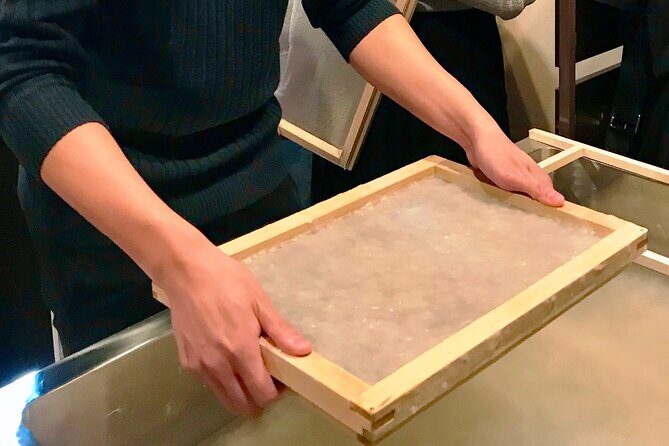
- Real step-by-step craft: You’ll go from raw materials to your own sheet.
- Bilingual teaching (Japanese and English): Helpful even if your Japanese is limited.
- Take-home item, not just a demo: You design and finish a souvenir you can use or display.
- Optional extra making time: Add an additional hour of unlimited paper making at your expense.
Kyoto’s Washi Papermaking Morning: A Calm Creative Reset
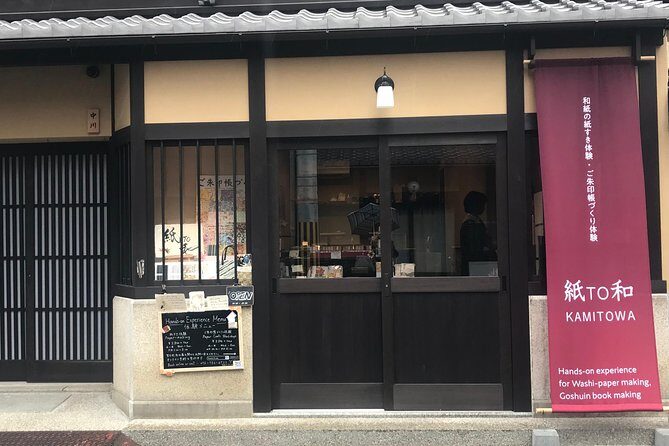
If your Kyoto itinerary is heavy on temples and lines, this class gives you something different: quiet, tactile work with your hands. The setting is a traditional Japanese-style house in central Kyoto, and the vibe is the opposite of hurry-up sightseeing.
What I love most about washi is that it’s not just crafts-for-crafts-sake. You’re learning a real technique—how paper becomes paper—while also having freedom to make it pretty with seasonal plant materials. That combination is why this is such a satisfying morning activity.
One practical consideration: you’re working within an hour-long session. It’s totally doable, but if you want to produce many gifts, you’ll likely want the optional extra time.
A few more Kyoto tours and experiences worth a look

Price and Value: What $33.03 Gets You in a 60-Minute Class
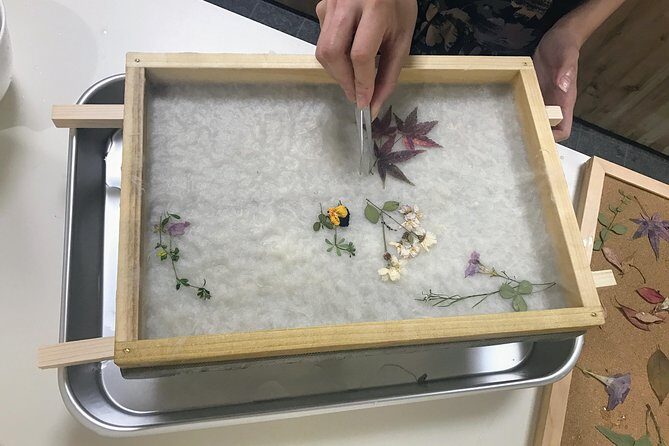
At $33.03 per person for roughly 1 hour, the value comes from two things: you get a hands-on craft process, and you leave with an item you made. That’s a better deal than pay-for-a-photo style activities, especially in Kyoto where souvenirs can get pricey fast.
Also, this isn’t presented as a long museum lecture. You’ll actually create a set such as postcards and/or a finished paper project like a table-mat or lampshade, using washi you help make from scratch.
A note to keep your expectations realistic: some project choices can cost extra. For example, there are options for a lantern with a small supplement, and the class includes a standard set while larger or different items may add cost.
Finding the Workshop Near Shijo and Karasuma Oike Stations
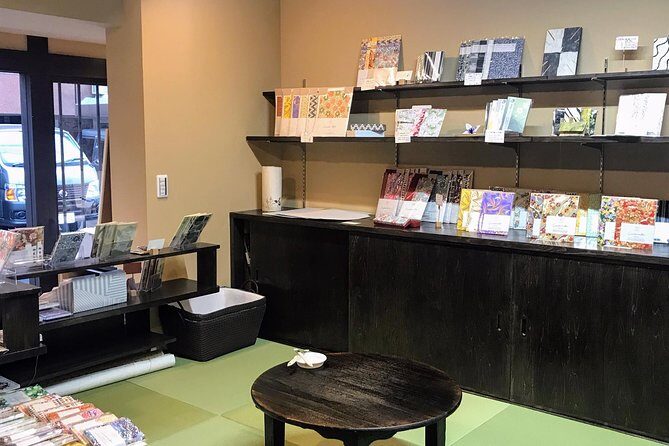
The meeting point is at 345 Sanjōchō, Nakagyo Ward, Kyoto (604-8205). It’s very walkable from public transit, which matters because transportation to and from the workshop isn’t included.
You’ll be close to two station exits:
- Shijo Station (Kyoto Metro Karasuma Line): about a 9-minute walk from exit #24
- Karasuma Oike Station: about a 6-minute walk from exit #6
This location is also convenient if you’re planning a Kyoto morning before lunch. You won’t waste time crossing the city or hunting for a place that’s hard to reach.
Bring your mobile ticket on your phone. That part is straightforward and saves you from last-minute paperwork.
Inside Kamitowa Kyoto: The Small-Group Setup That Feels Personal
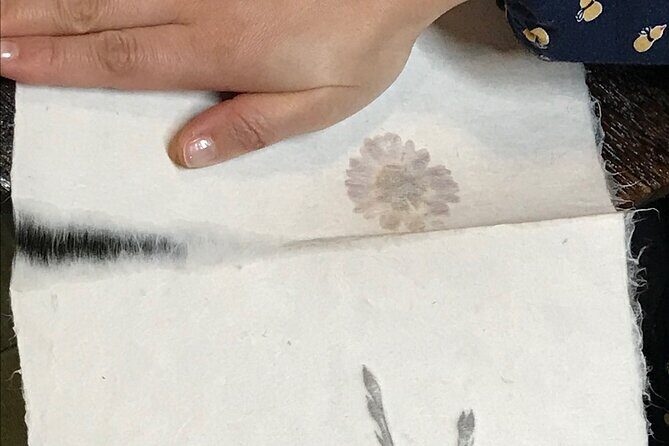
This workshop is capped at a maximum of 4 travelers, which is exactly the kind of group size that makes craft classes work. You can ask questions, get corrections, and move at a comfortable pace without feeling like you’re on a conveyor belt.
The teaching team is bilingual (Japanese and English), and it’s run by a couple who are known for being patient and gentle. Names you’ll hear include Hiro and Junko, and there’s often an assistant helping guide the process.
If you’re coming with kids, that small-group format is a big plus. Several people mention the hosts being accommodating with children, and that matters because paper-making can be fiddly.
From Raw Materials to a Real Sheet of Washi
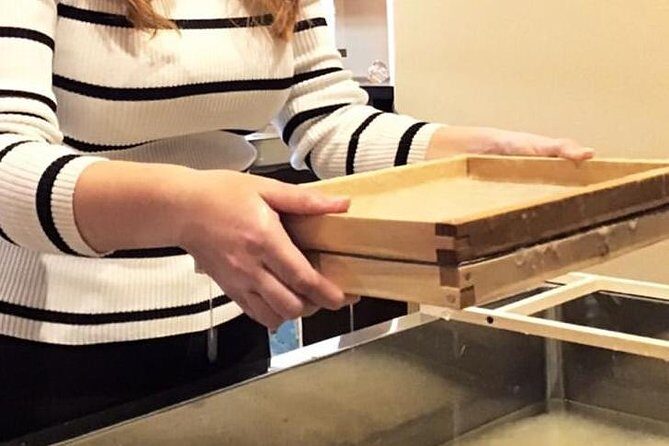
The heart of the experience is making traditional washi paper from raw materials. Your instructor guides you through the process under close supervision, step by step, so you’re not just copying a finished sample.
The process involves multiple stages. One reviewer described it as having around 20 steps, but the workshop keeps it organized so you can complete your sheet and design during the class window.
What makes this valuable is that you’re learning the logic of the craft, not only the end result. You’ll understand how the paper forms, how your botanicals get placed, and how the craft depends on careful handling.




Decorating With Seasonal Botanicals, Cherry Blossoms, Maple Leaves, and Cut-Outs
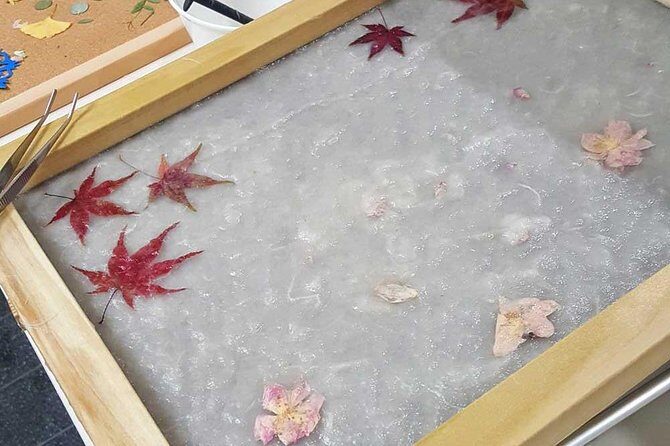
This class lets you add your own seasonal style. You’ll use materials such as cherry blossoms and maple leaves, plus other paper cut-outs, to decorate the washi you’re making.
That’s the part that turns paper-making into personal art. Instead of taking home generic “Kyoto craft,” you’re choosing elements and arranging them for a postcard-sized piece, a table-mat, or a lampshade-style project.
It’s also a great way to feel the seasons in Kyoto without needing perfect weather. You’ll be working indoors in a traditional space, while the seasonal ingredients bring the outside in.
Your Take-Home Project: Postcards, Table-Mat, and Lampshade Options
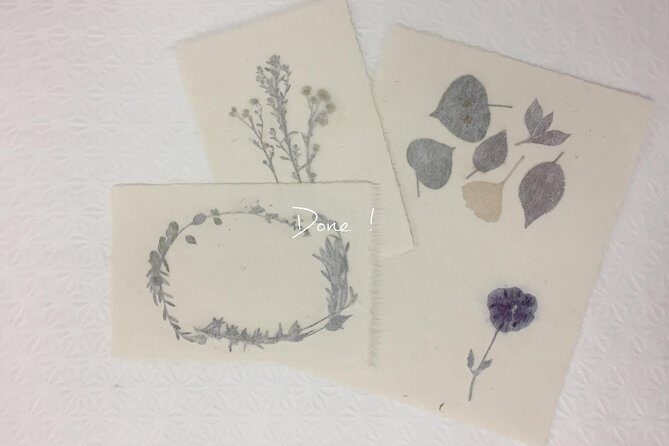
At the end, you take home a finished souvenir based on what you choose to make. Common project options include:
- Postcards
- Table-mat
- Wraparound lampshade
- Tapestry panel (as an option in the class description)
In practice, you’ll spend the session crafting a set and finishing it during the time window. Some people choose lantern-style items and mention a small extra fee for that type of option, so it’s worth considering what you want most before you commit.
A big practical win: your finished items are packaged well. That reduces the stress of carrying fragile paper art on a busy Kyoto day.
Waiting for Drying: The Short Video That Adds Context
Paper needs time to dry, and the workshop uses that waiting period well. One common detail is that instructors show an educational video during drying time, described as roughly 10 minutes.
That video helps connect the hands-on work to the broader process and history. Even if you’re not a lecture person, short context makes the craft feel more meaningful, because you understand what you’re doing rather than treating it like a simple craft step.
The pace is still relaxed. People consistently describe it as calming and a peaceful break from Kyoto crowds.
Group Pace, Timing, and Why 60 Minutes Works
The session is about 1 hour (approx.). For a traditional craft with lots of steps, that timing is actually a strength.
Why? Because it prevents the classic “craft class marathon” problem. You’re guided through the main sequence and end with a tangible item you can take home without needing to schedule your entire day around the workshop.
The small group also helps the timeline feel manageable. You get the support you need quickly, so you’re not left stuck while others catch up.
Add-On Option: The Extra Hour of Unlimited Paper Making
If you’re the type who wants more than one gift (or you want to try more than one design), there’s an add-on.
You can choose to add an additional hour of unlimited paper making, but it’s at your expense. The point is simple: you get more sheets and more possibilities without rushing.
I’d consider the extra hour if:
- You’re making multiple gifts for friends and family
- You want to experiment with several botanical arrangements
- You know you’ll regret not making enough once you see the results
If you only want one souvenir and you’re trying to keep a light schedule, the standard 1-hour session is enough for a satisfying take-home piece.
Where the Workshop Shines for Families, Dates, and Solo Travelers
This is a strong match for almost any travel style.
- Families: Hosts are described as accommodating with kids, and the class is hands-on enough to hold attention.
- Couples or friends: You’ll make something together without needing to chat constantly. It’s a shared creative task with an easy pace.
- Solo travelers: Small group size means you won’t feel lost. Bilingual instruction also helps you follow each stage without guessing.
If you want a meaningful Kyoto experience that doesn’t require advanced planning, this fits well. It’s also a solid option for a rainy day since you’ll be indoors in a traditional house.
Practical Tips for Carrying, Using, and Enjoying Your Paper Art
A washi souvenir is light but can be delicate, and that’s where smart handling matters.
A few practical takeaways to plan for:
- Give yourself time after class to pack your item carefully.
- Keep the finished pieces flat as much as possible while you’re walking around Kyoto.
- If you’re using the souvenir (like a table-mat), handle it gently and follow the packaging’s guidance.
One more reassurance: when someone left an item behind, the hosts helped quickly after the fact. That suggests they run the workshop with care and follow-through, not just for the class hour.
Should You Book This Kyoto Washi Papermaking Class?
If you want a real craft skill, a calming break from crowds, and a take-home souvenir that feels unmistakably Japanese, I’d book this.
Choose it if:
- You want bilingual instruction and patient, hands-on guidance
- You like seasonal details like cherry blossoms and maple leaves
- You’re happy doing a small-group workshop rather than a big group performance
- You want something you can actually bring home and display
Skip it if:
- You only want a quick look and photos. This is a working workshop, not a passive experience.
- You’re counting on someone else to handle transportation. You’ll need to make your own way to the address near Shijo or Karasuma Oike.
FAQ
FAQ
How long is the Kyoto morning washi papermaking class?
It’s about 1 hour (approx.). You can also add an additional hour of unlimited paper making at your expense.
What will I be able to make in the workshop?
You’ll make traditional washi paper and then design a project such as postcards, a table-mat, a wraparound lampshade, or a tapestry panel.
Are the instructors able to speak English?
Yes. The workshop is operated with bilingual instruction in Japanese and English.
Is transportation to the workshop included?
No. Transportation to and from the workshop is not included.
Where is the meeting point in Kyoto?
The start location is 345 Sanjōchō, Nakagyo Ward, Kyoto, 604-8205, Japan. The activity ends back at the meeting point.
How close is the workshop to public transit?
It’s about a 9-minute walk from Shijo Station exit #24 (Kyoto Metro Karasuma Line) and about a 6-minute walk from Karasuma Oike Station exit #6 (Kyoto Metro Karasuma Line). It’s also near Hankyu Karasuma Station.
Is the class limited in size?
Yes. The maximum group size is 4 travelers.
Does the price include taxes and fees?
Yes. All taxes, fees, and handling charges are included.
Is the workshop suitable for children?
Children must be accompanied by an adult, and most travelers can participate.
What is the cancellation policy?
You can cancel for free up to 24 hours in advance for a full refund. If you cancel less than 24 hours before the start time, the amount paid will not be refunded.