REVIEW · TOKYO
Hakone and Mt Fuji Private Custom Tour with English Guide
Book on Viator →Operated by Sakura Tokyo · Bookable on Viator
Hakone and Mt Fuji in one calm day.
This private, custom-feeling tour is built around pickup in central Tokyo and a smooth schedule that lets you flex when you want slower sightseeing. I like the fact that you are not crammed into a large group vibe; you are in a comfy car with a licensed English driver-guide, plus WiFi and bottled water for the ride.
The second thing I like is the balance of big, famous sights with quieter Fuji-lake moments. You also get maps with explanations, which helps you understand what you are looking at instead of just taking pictures and moving on. One possible drawback: this is a packed 10-hour day, and it needs good weather for the best Mt Fuji views, so build in a bit of patience.
In This Review
- Key highlights worth planning around
- Private pickup, a comfy car, and a schedule that gives you room
- Hakone’s volcano zone: black eggs, the ropeway, and Lake Ashi by pirate ship
- From Gotemba foothills to lakeside tradition: villages, waterfalls, and reflections
- Chureito Pagoda and the shrines that anchor the Fuji experience
- Optional cave stops and the glass-and-skywalk choices
- Price and value for a private group up to 3
- What to bring and how to survive a long, photo-heavy day
- Who should book this Hakone–Fuji private day, and who might not
- Should you book it?
- FAQ
- How long is the Hakone and Mt Fuji private custom tour?
- How many people are in a group for this tour?
- Do you get pickup and drop-off in Tokyo?
- Is the tour private?
- Is there an English-speaking guide?
- Is WiFi included during the trip?
- Are bottled water and maps included?
- Are entrance fees included?
- Is food included?
- Is the tour dependent on weather?
Key highlights worth planning around
- Private pickup and drop-off within Tokyo’s 23 wards, so you avoid the train juggling
- English-speaking licensed driver-guide who can adjust the rhythm to your interests
- Hakone volcanic hits: black eggs at Owakudani, ropeway views, and a Lake Ashi pirate ship cruise
- Fuji photo stops with context: Chureito Pagoda, two shrines, and Oshino Hakkai’s eight ponds
- Optional add-ons like Narusawa Ice Cave, Fugaku Wind Cave, and Mishima Skywalk if you want more variety
- All-day comfort perks: WiFi on board, bottled water, and maps with explanations
Private pickup, a comfy car, and a schedule that gives you room
This is the kind of day trip that feels built for real people, not just checkboxes. You start with pickup offered in Tokyo’s 23 wards, then you head out toward Hakone and the Fuji area in an air-conditioned vehicle.
The private format matters. You can usually move at a pace that fits your group, and you can swap focus if someone wants more photos, a longer pause by the water, or less time in shops. The tour is listed at about 10 hours, so you should expect a full day, but it is paced to stay relaxed rather than sprint-like.
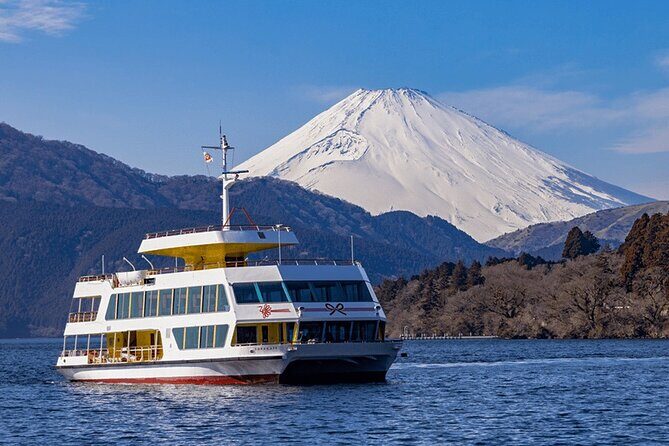
Also, keep an eye on the weather. Mt Fuji is famous for changing the mood fast, and this experience requires good weather, with an alternative date or a full refund if poor conditions cancel it.
You can also read our reviews of more guided tours in Tokyo

Hakone’s volcano zone: black eggs, the ropeway, and Lake Ashi by pirate ship
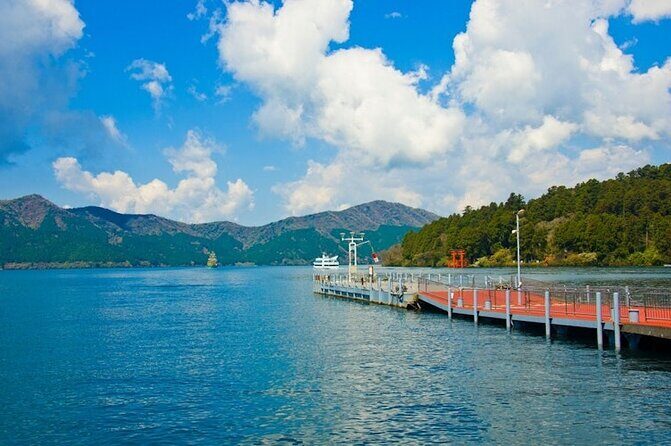
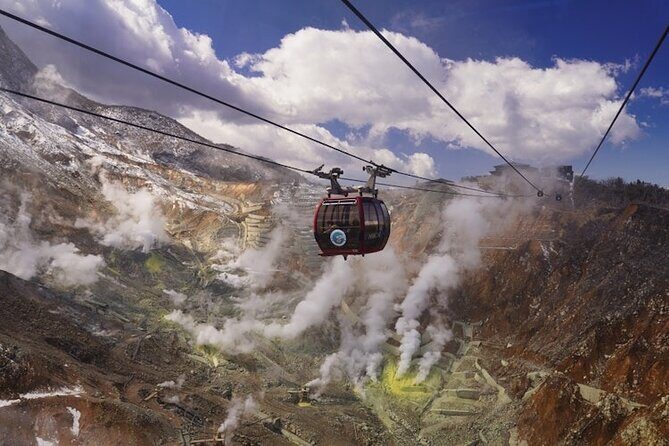
Hakone is where you start to see the geology up close. At Owakudani Valley, you stop for Hakone Black Eggs, hard-boiled eggs cooked in hot spring steam where volcanic sulfur turns the shells black. It is simple, weirdly fun, and very Hakone. You can also use this first stop as a warm-up for the rest of the volcanic area: steam vents, dramatic terrain, and that unmistakable “this is not pretend” feeling.
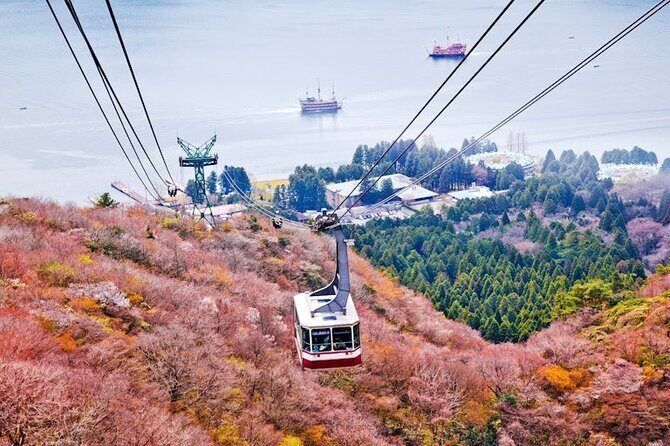
Next comes the Hakone Ropeway, which is the easiest way to get big views without doing a long hike. From the cable car, you get a wide view of the Owakudani volcanic area, with steaming sulfur vents and Lake Ashi far below. The ride also helps you orient yourself for what you will see next, especially if it is your first time in the region.
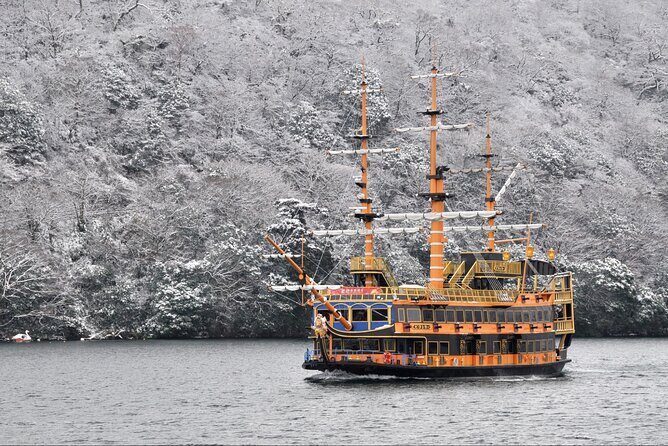
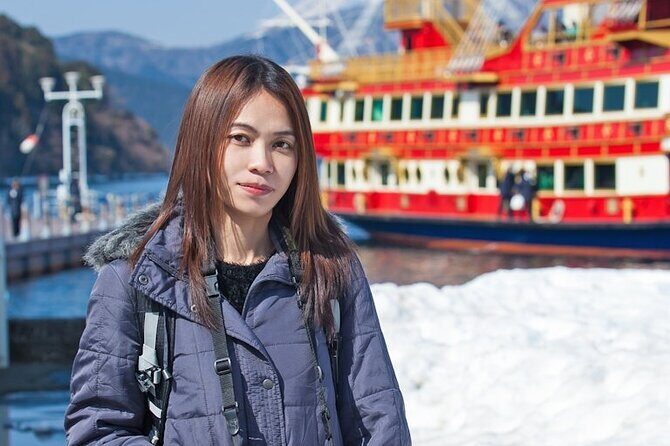
Then you shift from active volcano energy to a calmer, scenic ride on Lake Ashinoko. The 30-minute cruise aboard the Hakone Pirate Ship (from Motohakone Port) is one of the nicest tempo resets in the whole day. You get time to sit, look, and breathe, and it is often a better moment for photos than when you are constantly moving through crowds.
A small consideration: ropeway and cruise schedules can affect how long you wait. With a private driver-guide, you are not stuck helplessly watching the clock, but you should still expect some waiting around transport connections.
From Gotemba foothills to lakeside tradition: villages, waterfalls, and reflections
After Hakone, the day naturally expands into the Fuji foothills and the Fuji Five Lakes region. One optional stop here is Gotemba Premium Outlets. If shopping is a goal, this gives you a structured break after volcano sightseeing. If shopping is not your thing, you can skip it and protect energy for the Fuji-lake views.
Then you can choose (or include) a very Japanese change of pace at Saiko Iyashi no Sato Nemba. This restored traditional village on the shores of Lake Saiko is designed like an open-air museum, so you are not just sightseeing buildings from the outside. It is a good stop when you want something cultural and slower, with the lake nearby to cool off the pace.
Right after that, Shiraito Falls delivers a classic Fuji-area natural scene. The falls are known for their delicate streams that pour down a roughly 20-meter-high, 150-meter-wide cliff. If your group likes photos, this is a strong one; just remember it is a waterfall stop, so it can feel cooler or damp around the viewing areas.
You then keep the rhythm outdoors with Saiko Lake, often described as a place for reflections. It works well as a reset after the falls, especially if the weather cooperates for mountain views. Even when Fuji is not fully visible, the lakeside quiet is still a satisfying break.
Next is Lake Kawaguchi Ishikoro kan, another Fuji-lake viewpoint that is popular because it is easy to access and visitor-friendly. The big idea is that Lake Kawaguchi is one of the best places in the region for seeing Fuji reflected on calm water. If you are trying to get that iconic mirror-like look, this is the kind of stop that justifies spending time instead of rushing through.
Chureito Pagoda and the shrines that anchor the Fuji experience
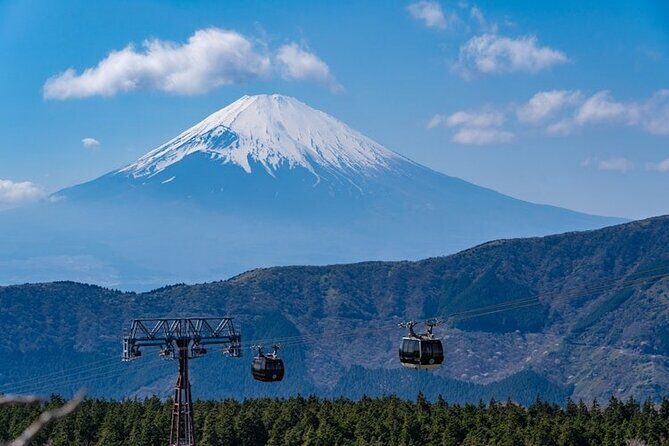
The Fuji area is full of photo angles, but not every one gives you context. That is why I like combining the picture-perfect spots with shrine visits where the setting makes sense.
One major star is Arakura Fuji Sengen Shrine, famous for the Chureito Pagoda photo angle. The views from the hillside are iconic for a reason: the pagoda framed by Fuji makes a clean, memorable image. Expect some walking to reach the best viewpoints, and if you are going during a busy time of day, plan for crowds in the photo spots.
Then you go to Kitaguchi Hongu Fuji Sengen Jinja Shrine, located at the foot of Mt Fuji in Fujiyoshida. This one is less about a single postcard image and more about atmosphere. It is surrounded by centuries-old cedar trees, so it feels more like a place you step into rather than a platform you just pass through.
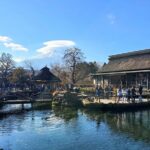
After the shrines, Oshino Hakkai gives you a different kind of Fuji magic. It is known for eight crystal-clear ponds fed by Mount Fuji’s snowmelt, with traditional thatched-roof houses nearby. This is a calmer stroll than the high-photo points, and it is easier to enjoy if you like walking at a gentle pace and looking at details like pond edges and clear water.
A practical tip: in this phase of the day, it helps to pace your photos. If you rush, you miss the small moments that make Oshino feel special.
Optional cave stops and the glass-and-skywalk choices
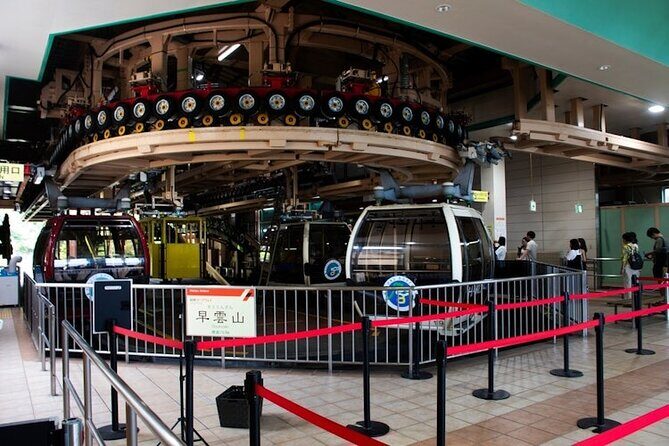
One of the best parts of a customizable private tour is that you can add variety without derailing the whole day. After you have hit the main Fuji icons, you can decide whether you want more “wow” from underground or higher vantage points.
If you like cool environments (and pictures that look like they belong in a sci-fi movie), consider Narusawa Ice Cave. It is naturally cooled by ancient lava flows, and the cave maintains a low temperature around the time it is listed for the experience. You will see ice pillars and frozen walls, so you might want a layer even if the day is warm outside.
Another optional option is Fugaku Wind Cave, a lava cave near Aokigahara Forest. It keeps a cool temperature of around 3°C, which is exactly the kind of contrast that makes the stop feel like a real break. The cave setting also makes it more interesting than another straightforward viewpoint.
If you prefer something indoors with an artistic angle, Hakone Venetian Glass Museum is a good swap. It is described as Japan’s first art museum dedicated to Venetian glass, with gardens and mountain scenery around it. This can work well when weather is poor for outdoor Fuji views, since you still get a structured, enjoyable stop.
For a more active thrill moment, there is Mishima Skywalk. It is the longest pedestrian suspension bridge in Japan, stretching about 400 meters across a deep valley. The appeal is the height and the views during the crossing, so if your group likes a dose of adrenaline, this is a strong add-on.
The drawback with optional stops is simple: you only have so many hours. If you add too many extras, you might cut down time at the places that matter most to your group.
You can also read our reviews of more private tours in Tokyo


Price and value for a private group up to 3
At $430 per group (up to 3), this is not a bargain-tour price. It is a private-driver day, so you are paying for convenience, English support, and a vehicle that carries you between multiple regions in one shot.
Here is where the value shows up. The price includes private transportation in an air-conditioned vehicle, highway and fuel and parking fees, WiFi on board, bottled water, and maps with explanations. You also get the benefit of someone handling the driving while you focus on sightseeing and staying oriented.
Food is not included, and any entrance fees from optional choices are not included either. That means your total day cost can shift depending on what you add. Still, the main stops are listed with admission ticket free, which helps keep the baseline predictable.
If you have 3 people, the per-person cost drops quickly compared with booking separate transport or trying to manage multiple train transfers on a time-sensitive day. If you are solo or a couple, it is still often worth it when you value a no-stress day more than you value saving every yen.
What to bring and how to survive a long, photo-heavy day
This is a 10-hour outing, so you want to set yourself up for comfort. Wear shoes you can walk in because several stops involve stairs or short walking routes to viewpoints and village areas.
Bring a light layer. Even though you are in a day trip leaving Tokyo, the Fuji region can feel cooler, and cave or waterfall stops can be extra chilly. If you plan to do Narusawa Ice Cave or Fugaku Wind Cave, a warmer layer becomes more important because the temperature is noted as very cold.
Also, plan your snack strategy. Food is not included, but bottled water is. If your group has specific dietary needs or you want a picnic vibe, you will be happier if you carry snacks you actually like.
Finally, decide your priority before the day gets moving. This tour can cover many highlights, so it helps to pick your top 2 or 3 must-sees. Everything else becomes flexible support, not pressure.
Who should book this Hakone–Fuji private day, and who might not
This tour fits best if you want a high-hit itinerary without the typical hassle of transit changes. It is ideal for couples, small families, and anyone who wants English-speaking help while moving between Hakone volcanic sights and Fuji Five Lakes photo stops.
It is also a good choice if you like structure but still want freedom. The schedule is built with major anchors like Owakudani, Lake Ashi, Chureito Pagoda, and Oshino Hakkai, yet the private format lets you slow down or swap optional items like ice caves or Mishima Skywalk.
Who might hesitate? If you love deep, slow exploration and do not like long car rides, this may feel like too much in one day. If you are going during uncertain weather or you are chasing only Mt Fuji visibility, keep expectations realistic. Good weather is part of the deal here.
Should you book it?
I would book this tour if you want an organized, English-supported day that stitches together Hakone volcano views and Fuji-area icons without wasting time on logistics. The private pickup, calm pace, and mix of big photo moments with lakeside and shrine stops are a strong combo.
I would skip or rethink it if you want a leisurely multi-day plan, or if you are the type who hates being on the move for 10 hours. If you are flexible, comfortable with a full-day rhythm, and you are hoping for Mt Fuji in clear conditions, this private custom tour is a smart use of your time in the Tokyo region.
FAQ
How long is the Hakone and Mt Fuji private custom tour?
The tour runs for about 10 hours.
How many people are in a group for this tour?
The price is for a group of up to 3 people.
Do you get pickup and drop-off in Tokyo?
Pickup is offered within Tokyo’s 23 wards, and the tour includes pickup and drop-off within the Tokyo area.
Is the tour private?
Yes. It is a private tour, so only your group participates.
Is there an English-speaking guide?
Yes. The tour includes a licensed English-speaking driver-guide.
Is WiFi included during the trip?
Yes. WiFi is provided on board.
Are bottled water and maps included?
Yes. Bottled water and maps with explanations are included.
Are entrance fees included?
Any entrance fees from optional choices are not included. The main listed stops show admission ticket free, but optional attractions may have extra costs.
Is food included?
No. Food is not included.
Is the tour dependent on weather?
Yes. The experience requires good weather, and if it is canceled due to poor weather, you are offered a different date or a full refund.