REVIEW · KYOTO
A Unique Antique Kimono and Tea ceremony Experience in English
Book on Viator →Operated by Miyagawa Tokusaburo Shoten · Bookable on Viator
A tiny room, a slow tea bowl, and you get it. This Kyoto experience pairs a rare antique kimono rental with a calm, small-group tea ceremony in a 100-year-old house near Katsura Imperial Villa. I also love how much hands-on time you get with matcha making plus the manners behind the ritual, not just a quick performance. One possible drawback: if you’re picturing a dramatic, park-like show with flashy costumes, the setting is more “real residence” than staged museum set.
In practice, the value comes from two things: an expert host (over 20 years in tea ceremonies) and a group size capped at six. You’ll learn why the ceremony feels so formal, how etiquette guides the experience, and even the connection between samurai culture and tea. Just go in expecting a quiet, respectful pace, not a checklist sprint.
In This Review
- Key Takeaways Worth Filing Away
- Antique Kimono Meets Matcha Time Near Katsura Imperial Villa
- Where You Meet: Miyagawa Tokusaburo Shoten and How to Find It
- Step-by-Step Flow in 90 Minutes (And What Each Part Teaches)
- 1) Welcome and kimono selection
- 2) Optional styling touches and photo time
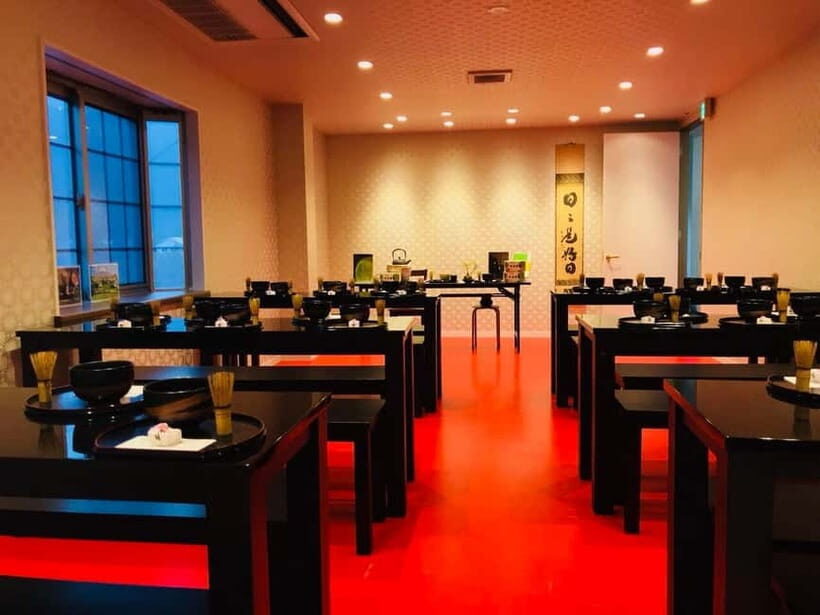
- 3) Moving into the tea space: a quiet, private-house setting
- 4) Learning tea ceremony etiquette and history (including samurai connections)
- 5) Matcha basics: how matcha tea is made
- 6) Taking photos and finishing with the tea experience
- What Makes the Hosting Style Feel Worth It
- Price and Value: Is $99.10 Really Fair?
- Who This Works Best For (And Who Might Want Something Different)
- Potential Pitfall: The Real-Residence Feel vs. Your Expectations
- Should You Book This Antique Kimono and Matcha Experience?
- FAQ
- Is the tea ceremony experience offered in English?
- How long is the experience?
- What’s included in the price?
- How many people are in the group?
- Where do I meet for the tour?
- Is there any food included besides the sweets?
- Is transportation required to reach the meeting point?
- Do I need to bring a ticket?
- Is cancellation free?
- Are service animals allowed?
Key Takeaways Worth Filing Away
- Antique kimono rental included: you don’t need to worry about renting separately or shopping around.
- Small group size (max 6): more time for questions and slower explanations.
- English available: the host can guide you through etiquette and steps without losing the meaning.
- A real private house near Katsura: quieter than the center of Kyoto, with a calmer feel.
- Matcha + sweets included: green tea and Japanese sweets are part of the ceremony fee.
- Family-run, personal hosting: from choosing the kimono to styling help and photos, it’s hands-on.
Antique Kimono Meets Matcha Time Near Katsura Imperial Villa
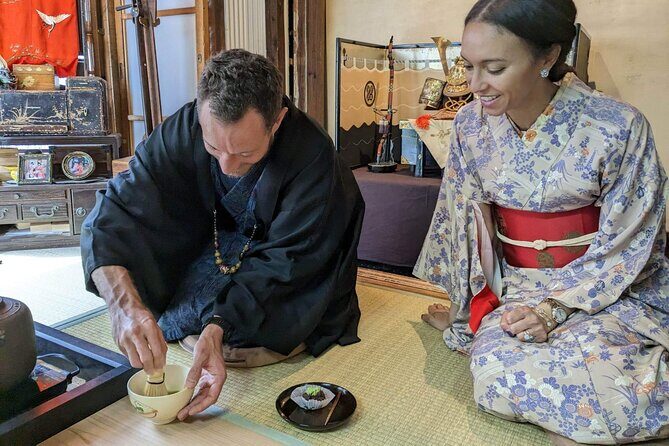
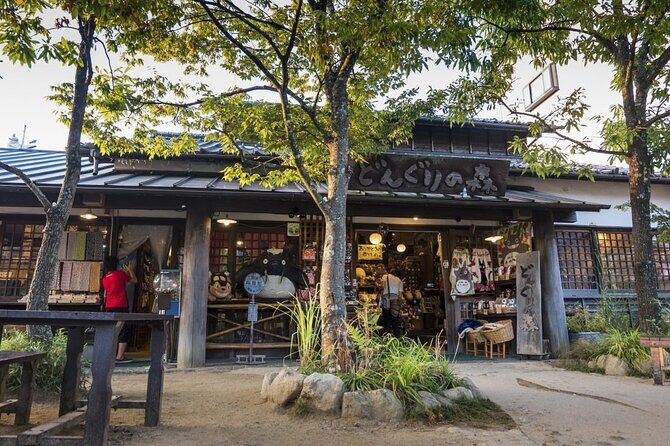
Kyoto can be loud. This experience is the opposite vibe. You meet at Miyagawa Tokusaburo shoten in Nishikyo Ward, and you’ll end the activity back at the meeting point. From there, the focus stays on one thing: taking the tea ceremony seriously enough to slow down—and learn it like a living tradition.
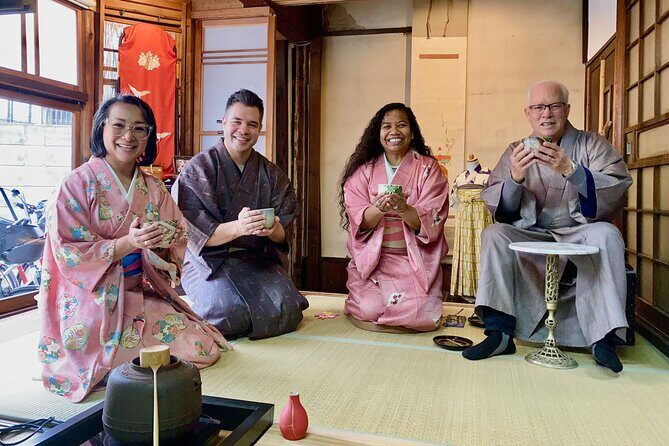
What makes this tour feel special is the pairing. A lot of Kyoto tea experiences give you tea. Fewer give you the clothing and the etiquette context at the same time. Here, the kimono is not an afterthought. You wear a rare antique kimono (over 80 years old, per the experience details) before you sit down for the ceremony.
And that kimono moment isn’t just for photos. Your posture changes. Your movements change. Suddenly the etiquette lessons make sense fast—because you’re practicing them immediately.
One more detail I appreciate: you’re in a part of Kyoto that’s closer to Katsura Imperial Villa, so the experience is described as much quieter and calmer than the city center. If you want a break from crowds and head-spinning schedules, this is a good reset.
You can also read our reviews of more tours and experiences in Kyoto.



Where You Meet: Miyagawa Tokusaburo Shoten and How to Find It
The meeting point is Miyagawa Tokusaburo shoten, 32-4 Katsuranozatochō, Nishikyo Ward, Kyoto, 615-8073, Japan. The tour uses a mobile ticket, and confirmation is handled at booking time (or as soon as possible if you book within one day of travel).
It’s described as near public transportation. Several guests also describe it as easy to reach by taxi—around a short ride from where they were staying and not a long, complicated trek across town. The key point for your planning: don’t treat this like an add-on you can squeeze in during a rushed day. Build in real travel time so you arrive relaxed—because the ceremony itself runs best when you’re not chasing the clock.
Also note: the activity ends where you start, so you’re not dealing with a “now walk across town” finish. That’s a small thing that makes the whole outing feel smoother.
Step-by-Step Flow in 90 Minutes (And What Each Part Teaches)
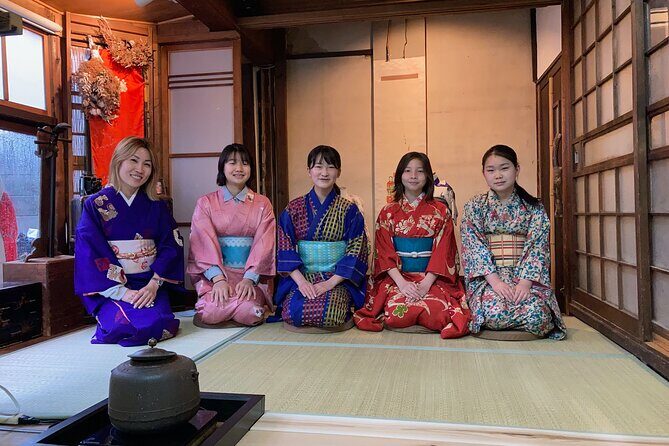
This is an approx. 1 hour 30 minutes experience, capped at six people. Here’s the practical rhythm you can expect.
1) Welcome and kimono selection
You start inside the shop and private-house setting tied to Miyagawa Tokusaburo shoten. The experience includes the antique kimono rental fee, and you’ll get help choosing a kimono you like. Guests highlight that the host (Toku) and his wife help with the styling experience—getting you dressed and fitted correctly, and assisting with details like the obi and comfort.
If you’re nervous about dressing in kimono, this is where you’ll feel the difference. You’re not left to figure it out. You’re guided.
Why it matters: kimono etiquette isn’t just a concept. Wearing the right fit changes your body language, which helps you understand why tea ceremony manners look the way they do.
2) Optional styling touches and photo time
You’ll likely get help with finishing details, including accessories and hair styling. Many guests mention thoughtful photo support—pictures taken during the experience, which is great because you can focus on the moment instead of trying to wrestle a camera in a too-complicated outfit.
One guest also mentioned a sword prop for a photo series, but that may vary by day and setup. If photos are important to you, just ask the host what’s available once you arrive.



3) Moving into the tea space: a quiet, private-house setting
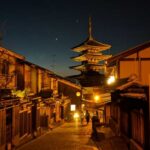
The tea ceremony happens in an old private house over 100 years old. Because the location is near Katsura Imperial Villa, the experience is described as calmer than typical city-center tea rooms.
This part is less about what you see and more about how you’re made to feel: you slow down because the room asks for it. Even if you don’t know the customs yet, the setting guides the mood.
Potential drawback here: if you’re expecting a highly staged, “tour bus” tea room with a blockbuster aesthetic, the private-house vibe can surprise you. More than one guest noted that it’s a real residence feel—sometimes less “showy”—and that’s exactly why it can also feel more authentic.
4) Learning tea ceremony etiquette and history (including samurai connections)
Your host has over 20 years of experience in tea ceremonies. The teaching focuses on etiquette, manners, and history, including the relationship between samurai and the tea ceremony. That samurai angle is interesting because it reframes tea culture as disciplined, intentional, and tied to status and training—not only to aesthetics.
The tone from guests’ accounts is patient and step-by-step. In particular, people mention that explanations are clear even for kids and for guests who can’t kneel easily. If you have mobility concerns, the best move is to be upfront when you arrive. The host’s approach described in the experience notes suggests the ceremony can be adapted.
5) Matcha basics: how matcha tea is made
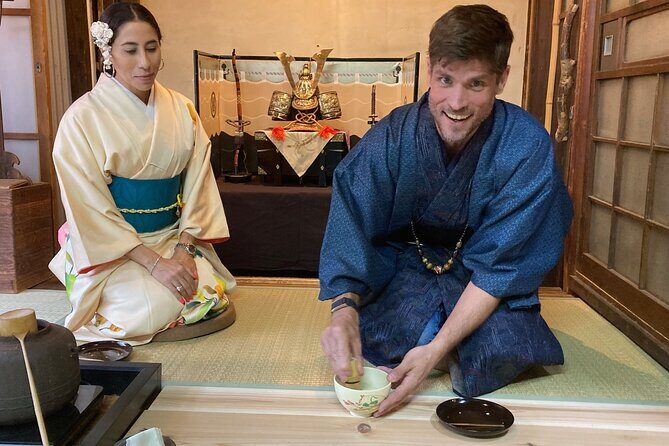
This tour is built around a special opportunity to learn how matcha tea is made. You’ll take part in the ritual steps leading into tasting. The experience includes green tea and Japanese sweets, so you’re not just learning theory—you’re tasting what you helped prepare.
Even if you don’t remember every tool name, you’ll walk away with the practical sequence: how preparation leads to flavor and how the ceremony is designed to keep attention on the moment.
6) Taking photos and finishing with the tea experience
The ceremony is described as calm and slow, with time for photographs. You’ll end back at the meeting point, with a feeling that you didn’t get rushed through something that matters.
Why this pacing is a win: tea ceremony is about timing. If you’re moved through quickly, you miss what the ritual is trying to slow down in you.
What Makes the Hosting Style Feel Worth It
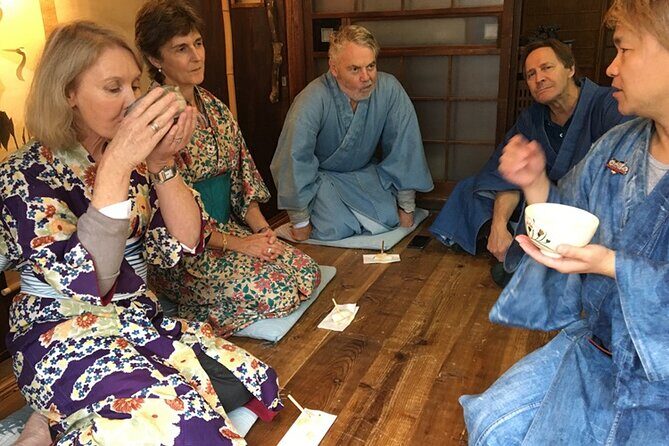
Let’s talk about the human factor. This experience is run by Toku (Miyagawa) and his wife, plus help from an assistant. Guests repeatedly describe them as warm, welcoming, and detailed without being stiff.
Here’s what stands out as “good value” in real life:
- You get help, not instructions from afar. Dressing in kimono is a skill, and you’re not expected to be a pro.
- Explanations match the pace of the room. A tea ceremony shouldn’t feel like a lecture.
- The group cap at six makes you part of it. You can ask questions without talking over each other.
- They handle different needs. One account mentions adapting the ceremony for someone who couldn’t kneel, which is important if you’re traveling with anyone who has limited flexibility.
This kind of hosting is the difference between doing a tea ceremony and learning from one.
Price and Value: Is $99.10 Really Fair?
At $99.10 per person, the price doesn’t look low at first glance. But here’s what you’re actually paying for, based on the included items:
- Antique kimono rental fee
- Tea ceremony experience fee
- Green tea
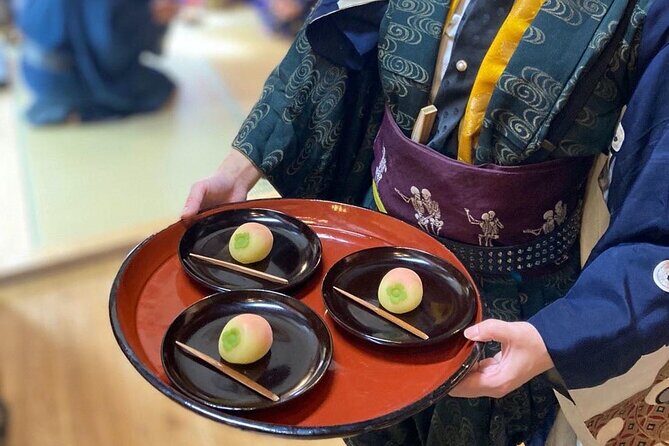
- Japanese sweets
So you’re buying two major experiences in one: an antique kimono you can’t just walk into town and rent for free, and a tea ceremony guided by someone with 20+ years of experience. When a tour includes both, the value is easier to justify.
Where you should be realistic: this isn’t a food tour, and it isn’t built as a full “tea master course” lasting all day. It’s designed to be focused and respectful in 90 minutes. If your goal is to leave with a deep encyclopedia of tea flavors and dozens of tastings, you might find the time amount shorter than you expected. But if your goal is to understand the etiquette and participate properly, it fits well.
Who This Works Best For (And Who Might Want Something Different)
This tour is a strong match if you want:
- A quiet break from Kyoto crowds
- An authentic, hands-on ceremony with slow explanations
- Kimono included without needing extra planning
- A small setting where you can actually pay attention
It can also work for families and kids, since hosts are described as involving young children and adapting instruction so it stays understandable.
On the other hand, you may want to think twice if:
- You only want ultra-glam, city-style kimono photos and a “look at this set” vibe
- You expect multiple special teas beyond what’s included
- You want a fast pace that packs in more tasting variety
The ceremony’s strength is the opposite of rushing.
Potential Pitfall: The Real-Residence Feel vs. Your Expectations
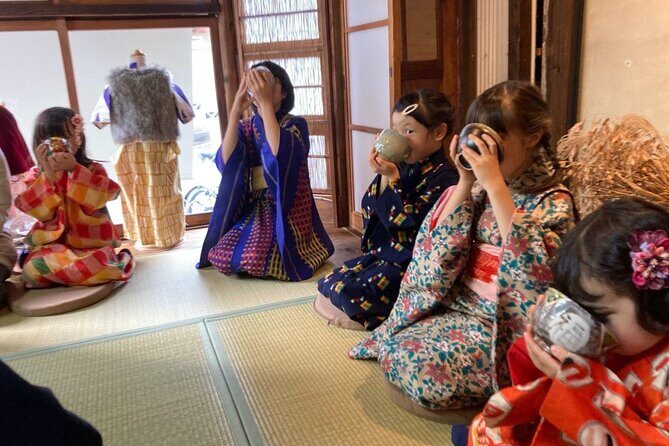
One of the less-loved notes is basically this: the experience happens in a regular residence setting rather than a polished public venue. That means your visuals may not match the idea of a perfect, exotic showroom.
If that’s your worry, don’t ignore it—just adjust what you’re looking for. The value here is the structure of the tradition: antique kimono, etiquette instruction, matcha preparation, and a quiet tea moment in an older home near Katsura Imperial Villa. It’s less about the flash and more about the ritual.
A smart move: arrive ready to appreciate the setting as part of the authenticity. If you want, ask questions about the kimono selection process once you’re there. That’s where the antique collection becomes meaningful, not just decorative.
Should You Book This Antique Kimono and Matcha Experience?
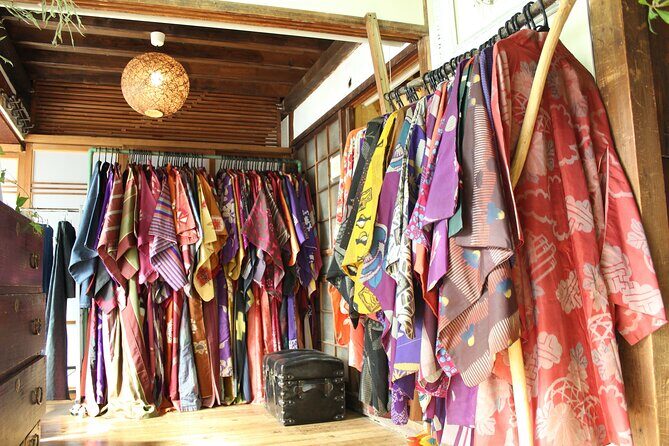
Book it if you want a small-group, English-guided tea ceremony where the kimono is part of the lesson, not a rental sticker. You’ll likely enjoy the calmer setting near Katsura, the patient teaching style from Toku and family, and the hands-on matcha making plus tasting green tea and Japanese sweets.
Skip or rethink it if you’re chasing a big theatrical atmosphere, multiple specialty tea tastings, or a museum-like photo backdrop. This is more “quiet, real, respectful” than “high spectacle.”
If you’re on the fence, here’s my decision shortcut: if you’re excited to slow down for etiquette, wear an antique kimono, and learn matcha step-by-step, this is a yes. If you mainly want maximum visuals and variety in tasting, look at other tea experiences that fit that style better.
FAQ
Is the tea ceremony experience offered in English?
Yes. The experience is available in English.
How long is the experience?
It’s approximately 1 hour 30 minutes.
What’s included in the price?
The price includes the antique kimono rental fee and the tea ceremony experience fee, with green tea and Japanese sweets.
How many people are in the group?
The group is capped at a maximum of six travelers.
Where do I meet for the tour?
You meet at Miyagawa Tokusaburo shoten, 32-4 Katsuranozatochō, Nishikyo Ward, Kyoto, 615-8073, Japan.
Is there any food included besides the sweets?
The included items are green tea and Japanese sweets. Lunch and dinner are not included.
Is transportation required to reach the meeting point?
The activity is near public transportation. The venue is also described as reachable by taxi, but the exact method depends on where you start your day.
Do I need to bring a ticket?
You’ll use a mobile ticket.
Is cancellation free?
Yes, free cancellation is offered. You can cancel up to 24 hours in advance for a full refund.
Are service animals allowed?
Yes, service animals are allowed.