REVIEW · TOKYO
Tokyo: Imperial Palace and Shogun Walking Tour
Book on GetYourGuide →Operated by Traveling Tokyo · Bookable on GetYourGuide
Tokyo slows down inside a fortress. This shogun-era walk across the Imperial Palace grounds turns stone, gates, and moats into a story, and Ninomaru Garden koi ponds make it feel calm instead of grand. I also love how the guide helps you read the stone walls like they once defended power. One heads-up: you’re moving for two hours, so photo breaks and lingering aren’t long at each stop.
The meeting point is easy to find—Starbucks at Kokyo Gaien—and you’ll hit key palace-area spots like Ote-Mon Gate, the Hyakunin Bansho guardhouse, and Fujimi-yagura before you settle into the East Gardens. English-speaking guides such as Tony, Izzy, Blake, and Jim Allen are a big part of the appeal, with clear explanations and lots of room for questions.
In This Review
- Key Highlights You’ll Actually Feel During the Walk
- Why This Imperial Palace Tour Works for First-Time Tokyo Trips
- Meeting at Starbucks Kokyo Gaien and Getting Oriented in Minutes
- Ote-Mon Gate: The Big Gate That Signals Big Power
- Tokyo Imperial Palace Grounds: Turning Edo Castle Remains into a Story
- Hyakunin Bansho Guardhouse: The Practical Detail That Makes It Real
- Fujimi-yagura: Spotting the Tower’s Role Without Needing a Ruins Degree
- Imperial Palace East Gardens: Moats, Foundations, and the Feeling of Stillness
- Ninomaru Garden: Koi Ponds and Seasonal Beauty You Can Feel
- What Your Guide Actually Adds (Names You Might Hear)
- Price and Value: Why $16 for 2 Hours Feels Like a Bargain
- Practical Tips So You Don’t Waste Your Time
- Should You Book the Tokyo Imperial Palace and Shogun Walking Tour?
- FAQ
- How long is the Tokyo: Imperial Palace and Shogun Walking Tour?
- How much does the tour cost?
- Where do I meet the tour group?
- What is included in the tour?
- What stops and sights are covered during the walk?
- Is the tour guided in English?
- Is the tour wheelchair accessible?
- Is there free cancellation?
- Can I reserve without paying right away?
Key Highlights You’ll Actually Feel During the Walk
- Ninomaru Garden’s koi-filled ponds give you that quiet, palace-still feeling fast
- Edo Castle power points like Ote-Mon Gate help you visualize where authority was exercised
- Massive stone walls and foundations turn “pretty history” into something you can read
- Guardhouse and tower details (Hyakunin Bansho and Fujimi-yagura) add structure to the story
- Tranquil East Gardens pacing makes this a reset in the middle of busy Tokyo
Why This Imperial Palace Tour Works for First-Time Tokyo Trips
If you’re new to Tokyo, it’s easy to get stuck in a loop: temples here, crowds there, photos everywhere. This tour gives you a different kind of anchor. You’re walking inside the Imperial Palace East Gardens area, but you’re not just looking at greenery. You’re learning how power was laid out in space—gates, stonework, moats, and guarded zones—then seeing how it became landscaped calm.
I like that the experience doesn’t demand advanced knowledge. The guide sets the context step by step: samurai and shogun rule, the Edo Castle period, and the shift toward modern Japan. That matters because the Imperial Palace grounds can feel vague if you just wander with no map of meaning.
The best part is the contrast. Early on, you’re absorbing the hard-edged geometry of defense. Later, you slow down around ponds where koi glide through soft light. It’s the kind of Tokyo moment that makes you exhale.
You can also read our reviews of more walking tours in Tokyo


Meeting at Starbucks Kokyo Gaien and Getting Oriented in Minutes

You start at Starbucks Coffee – Kokyo Gaien Wadakura Fountain Park (meet in front of Starbucks). The coordinates are listed as 35.6830391, 139.7614181, which is helpful if you’re using a navigation app.
This meeting point is practical for two reasons:
First, it’s a real landmark. Tokyo navigation is easier when your start is obvious.
Second, it keeps you close to the palace-area walk so you don’t burn your best energy commuting. For a two-hour tour, that time discipline is everything.
Once the group gathers, you’ll begin with the first palace gateway and head into the grounds. The pacing is structured (you’re not wandering indefinitely), but it still leaves space for the guide to connect each stop to what came before.
Ote-Mon Gate: The Big Gate That Signals Big Power

The first major stop is the Ote-Mon Gate. You’ll spend about 10 minutes here with a guided look.
Gates like this aren’t just architectural. They’re the boundary between inside and outside, between ordinary movement and controlled entry. Even if you don’t know Japanese history yet, you can feel it in the way the space is designed: straight lines, purposeful placement, and a sense that you’re approaching something official.
What I like about this moment is how it sets expectations for the rest of the tour. After you see Ote-Mon Gate, the stone bases, guard points, and garden layouts stop looking like random parts of a large park. They become a system.
A small consideration: because this is a walking tour with scheduled segments, you may only get a short window for photos at each focal point. If you want a lot of still shots, plan on moving quickly and capturing the essentials.
Tokyo Imperial Palace Grounds: Turning Edo Castle Remains into a Story

Next you visit the Tokyo Imperial Palace area for about 15 minutes with your guide.
This is where the tour starts doing its real work: translating ruins and traces into a coherent timeline. The guide frames the East Gardens as part of the former Edo Castle area—so you’re not just seeing “palace grounds,” you’re seeing a former seat of shogunate power.
You’ll hear how feudal governance operated, then how Japan’s political structure shifted into the modern era. The key is that the guide ties these ideas to what you can see on the ground right now: gate placement, defensive features, and how protection shaped movement.
If you’re the kind of traveler who likes to understand why a place is arranged the way it is, this section is a win.
Hyakunin Bansho Guardhouse: The Practical Detail That Makes It Real

You then stop at the Hyakunin Bansho guardhouse for around 10 minutes.
Guardhouses are the unglamorous parts of history tours, which is exactly why they’re valuable. Big gates get attention. But guard points explain what happens in-between. They show that security wasn’t a single event; it was ongoing, staffed, and embedded in daily movement.
This stop helps you shift from spectacle to mechanics. It’s also a good place to ask your guide questions, because the group is still fresh and you’ll be thinking about how control worked.
If your mind tends to drift to modern Tokyo logistics—crowds, streets, access—this stop is the kind of bridge that keeps the story grounded.






Fujimi-yagura: Spotting the Tower’s Role Without Needing a Ruins Degree
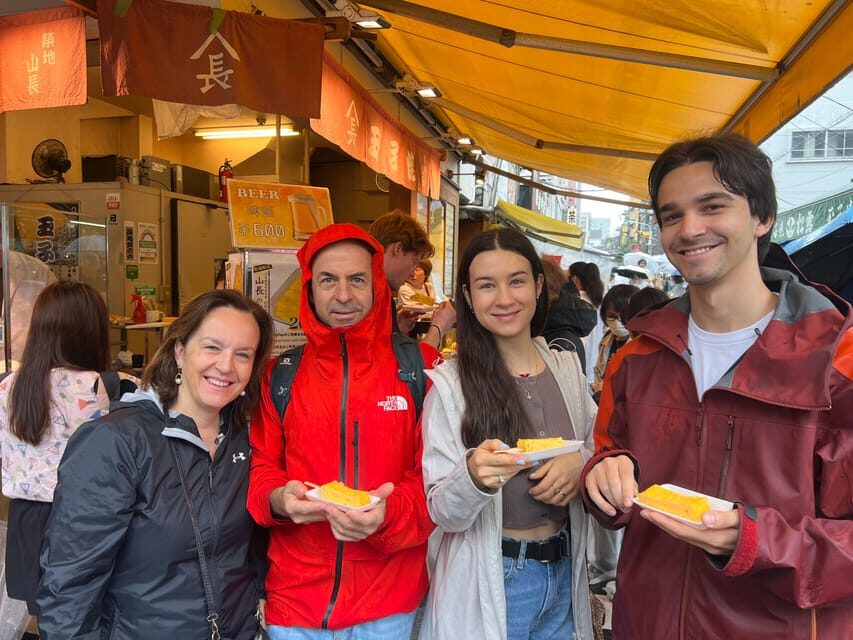
After that, you’ll visit Fujimi-yagura with a guided focus for about 15 minutes.
The term may not mean much before the tour, but that’s fine. The guide’s job here is to make the structure readable. Tower bases and raised points are about observation and coverage—where you could watch, respond, and maintain order.
What I appreciate is how this kind of stop helps you understand the palace grounds as layered. You’re not only seeing gardens. You’re reading the defensive architecture that supported the shogunate system.
One practical tip: wear shoes that let you stop and look without wobbling. Even short segments include uneven footing and quick position changes for sightlines.
Imperial Palace East Gardens: Moats, Foundations, and the Feeling of Stillness
Then you reach the Imperial Palace East Gardens for about 30 minutes.
This is the longer stretch where you really absorb the setting. You’ll walk through landscaped areas that still carry traces of older structures—stone foundations, moats, and the overall layout that once protected leadership and controlled access.
This section is where your brain shifts gears. Early on, you’re mapping defense. Here, you’re letting space and water do their quiet work.
I also like that the tour keeps returning to meaning. Instead of treating the garden like background scenery, the guide connects it to how the grounds evolved over time—turning a fortified castle environment into a place associated with imperial history and everyday calm.
The drawback? If you’re expecting a hands-on, inside-the-buildings experience, this isn’t that. The tour is focused on walking and viewing within the East Gardens and palace grounds. Think exterior and interpretive, not ticket-to-every-room.
Ninomaru Garden: Koi Ponds and Seasonal Beauty You Can Feel
The highlight stretch is Ninomaru Garden, again for about 30 minutes.
This is where the tour earns its “serene escape” reputation. You’ll see koi swimming in tranquil ponds inside the palace grounds. It’s one of those details that instantly changes your mood, because the movement of the fish is steady while the setting around them stays quiet.
This part matters even if you’re not a garden person. The Ninomaru Garden section is basically a payoff: the earlier emphasis on power and defense becomes softened through water, reflections, and seasonal beauty.
Also, this is where the guide’s storytelling can be extra effective. When you’ve heard how the Edo Castle layout worked, the garden feels less like decoration and more like a careful continuation—different purpose, same sense of intention.
One real-world consideration: ponds and light can be very photo-friendly, so if you’re the type who wants to frame everything perfectly, you may want to arrive with energy to move a bit fast.
What Your Guide Actually Adds (Names You Might Hear)

This tour’s score comes from the guide factor. People consistently call out guides like Tony, Izzy, Blake, Thomas, Miguel, Manny, and Jim Allen for explaining the history in a way that stays clear and practical—then sticking around for questions.
I’ve found that what you want from a guide in a place like this is simple:
- Help you link each stone, wall, and gate to a purpose
- Keep the timeline readable (samurai → shogun era → transition → modern context)
- Answer questions without making you feel rushed
And that’s exactly what the guides featured in the tour’s feedback are known for. Some are also great at making the walk feel lighter—one guide even loaned an umbrella, which is the kind of small kindness that turns a weather hiccup into a non-issue.
If you want to get the most out of it, bring one or two questions. For example: what did the palace layout do for security? What changed when power shifted from feudal rule to modern governance? Your guide will likely connect those ideas to what you’re seeing in front of you.
Price and Value: Why $16 for 2 Hours Feels Like a Bargain
The price is $16 per person for a 2-hour guided walking tour in English.
That’s strong value for a few reasons. You’re not just paying for narration. You’re paying for context in a space that’s easy to misunderstand on your own. Imperial Palace grounds can feel enormous and complicated, and the tour organizes it into a sequence you can remember: gates, guard points, garden sections, and the Ninomaru payoff.
The duration also matters. At two hours, it’s long enough to build a story, but not so long that your legs and patience fall apart.
And if you’re traveling with a group, a guided format helps everyone see the same key elements rather than splitting into different interests. That makes it easier to align schedules and still feel like you did something meaningful.
Practical Tips So You Don’t Waste Your Time
This tour is straightforward, but a few small choices will make it smoother:
- Use the Starbucks start as your anchor. Get there early enough to meet without stress.
- Bring comfortable walking shoes. The tour is paced as a walk-through, not a stop-and-start museum experience.
- Dress for outdoor time. You’ll spend plenty of time outside across gates and gardens.
- If you care about photos, be ready to move with the group during key stops.
One more practical point: the tour is listed as wheelchair accessible. If you use a wheelchair or mobility aid, it’s worth confirming the exact walking surfaces with the operator before you go, but accessibility is clearly part of the offering.
Should You Book the Tokyo Imperial Palace and Shogun Walking Tour?
Book it if you want a guided way to understand the Imperial Palace grounds beyond the postcard version. This is especially worth it for first-timers who need the “why” behind what they’re seeing: Edo Castle remnants, shogun-era power, and how Japan’s history shaped this space into today’s palace East Gardens.
Skip it only if you want a long unstructured stroll or a ticket-style visit where you go inside major palace buildings. This experience is built around interpretation while walking through the East Gardens and key points like Ote-Mon Gate, Hyakunin Bansho guardhouse, Fujimi-yagura, and Ninomaru Garden.
If you’re flexible, the offer includes free cancellation up to 24 hours in advance and reserve & pay later options, which makes it easier to fit into a Tokyo schedule you might still be tweaking.
FAQ
How long is the Tokyo: Imperial Palace and Shogun Walking Tour?
It lasts 2 hours.
How much does the tour cost?
The price is $16 per person.
Where do I meet the tour group?
Meet in front of Starbucks Coffee – Kokyo Gaien Wadakura Fountain Park. Coordinates: 35.6830391, 139.7614181.
What is included in the tour?
You get an English-speaking guide and a guided walking tour of the east gardens.
What stops and sights are covered during the walk?
The tour includes Ote-Mon Gate, Tokyo Imperial Palace, Hyakunin Bansho Guardhouse, Fujimi-yagura, Imperial Palace East Gardens, and Ninomaru Garden.
Is the tour guided in English?
Yes, the tour has a live English guide.
Is the tour wheelchair accessible?
Yes, it is listed as wheelchair accessible.
Is there free cancellation?
Yes, you can cancel up to 24 hours in advance for a full refund.
Can I reserve without paying right away?
Yes, the tour offers reserve now & pay later.