REVIEW · TOKYO
Tokyo: Secret Food Walking Tour
Book on GetYourGuide →Operated by Secret Food Tours · Bookable on GetYourGuide
Tokyo food hits different. This 3-hour walking tour strings together some of the city’s most loved bites, with context about food and culture as you move from Ueno Station into nearby streets. I like the way the tour front-loads high-impact food (sushi first, then street food classics) and the way the guide helps you order and understand what you’re eating. One thing to consider: it’s an eating-heavy experience, so come hungry and wear comfortable shoes, because the pace is built around multiple stops.
You’ll also notice the tour keeps it practical. You start inside JR Ueno Station near Hard Rock Cafe, your guide is easy to spot with an orange umbrella, and the route is designed for walking between small local shops rather than wasting time on transit. The food list is clear enough to plan around, but if you’re looking for deep historical storytelling, you may find the context more food-focused than lecture-style.
In This Review
- Key things to know before you go
- Starting at JR Ueno Station: Find the orange umbrella fast
- The walk begins with fresh sushi, not last-minute snacks
- Gyoza in the downtown flow: fried and steamed, with stories
- Yakitori and tachinomiya energy: skewers plus a drink
- Sweet break: manju or seasonal fruit, then matcha ice cream
- The secret dish finale in a cozy environment
- How much you’ll eat (and why starting hungry matters)
- Price and value: is $150 worth it in Tokyo?
- Guides can make or break it, and this one has strong energy
- A quick reality check on timing and pacing
- Who should book this Tokyo food walk?
- Should you book Tokyo Secret Food Walking Tour?
- FAQ
- FAQ
- How long is the Tokyo Secret Food Walking Tour?
- What’s included in the price?
- What food will I try on this tour?
- Is transportation included?
- Where do I meet the guide?
- What language is the tour in?
- What should I bring?
- What if I can’t find the meeting spot?
- Can I book now and pay later?
- What’s the cancellation window?
Key things to know before you go
- Ueno Station meeting point inside the JR building near Hard Rock Cafe (easy to find once you know the exact side)
- English-speaking guides such as Shonan, Natsumi, Kaho, and Kyoko, with an on-the-ground feel for local spots
- A lot of food in 3 to 3 ½ hours, including sushi, gyoza, yakitori, sweets, and a secret dish
- Street-food style stops, including a busy tachinomiya stand-and-eat experience
- Drink options show up alongside savory bites, with some guides offering a drink pairing upgrade
Starting at JR Ueno Station: Find the orange umbrella fast
This tour is anchored at JR Ueno Station. You meet inside the station building, outside the JR Central Gate area, near the entrance of Hard Rock Cafe. The important detail is which entrance: you’re looking for the Hard Rock Cafe entrance on the side across from the bakery named Andersen.
If you want an easy “backup plan” when you’re staring at signs, you can show locals the Japanese text:
JR上野駅 中央改札外のハードロックカフェ入口付近
Your guide will be standing there holding a Secret Tours orange umbrella. It’s the kind of small detail that saves time and stress, especially in a station as busy as Ueno.
One more practical note: this tour starts and ends at the same meeting spot. No awkward transit puzzles. You handle getting yourself there, and the tour handles the rest.
You can also read our reviews of more walking tours in Tokyo
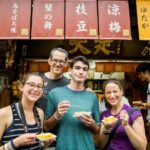
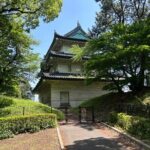
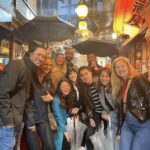
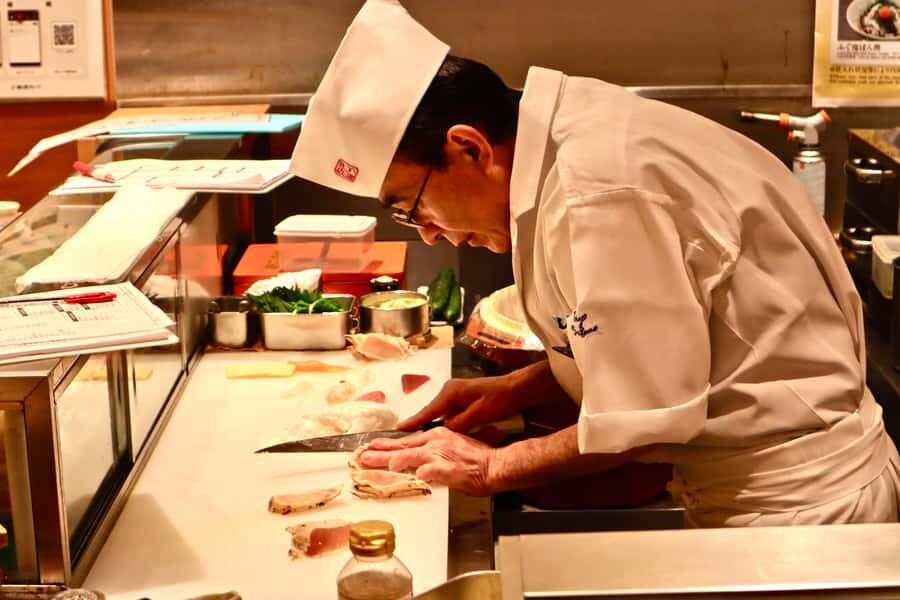
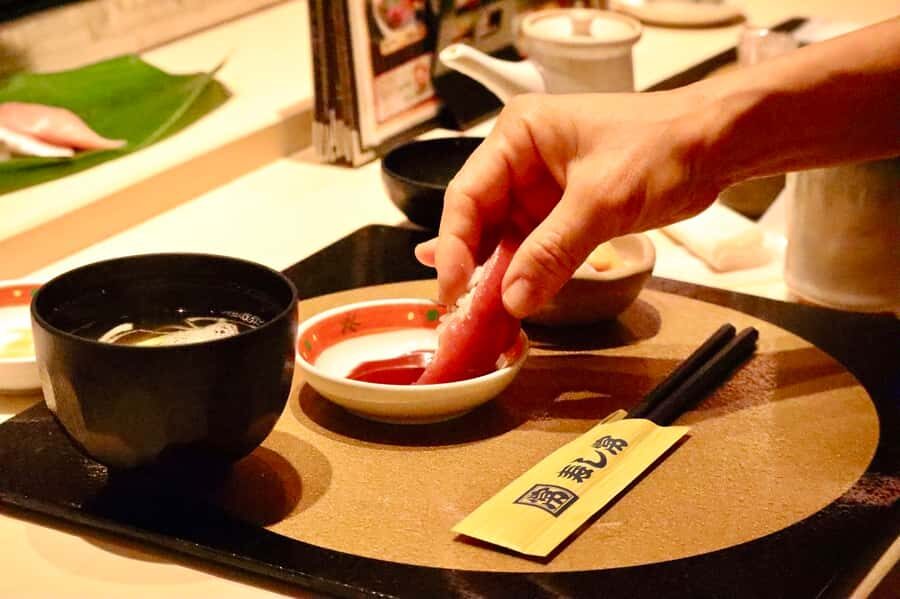
The walk begins with fresh sushi, not last-minute snacks
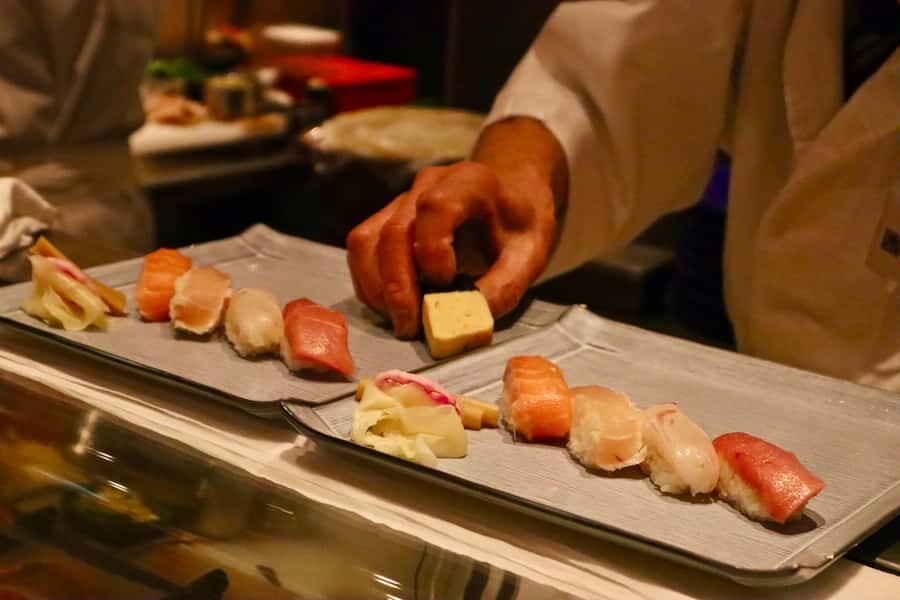
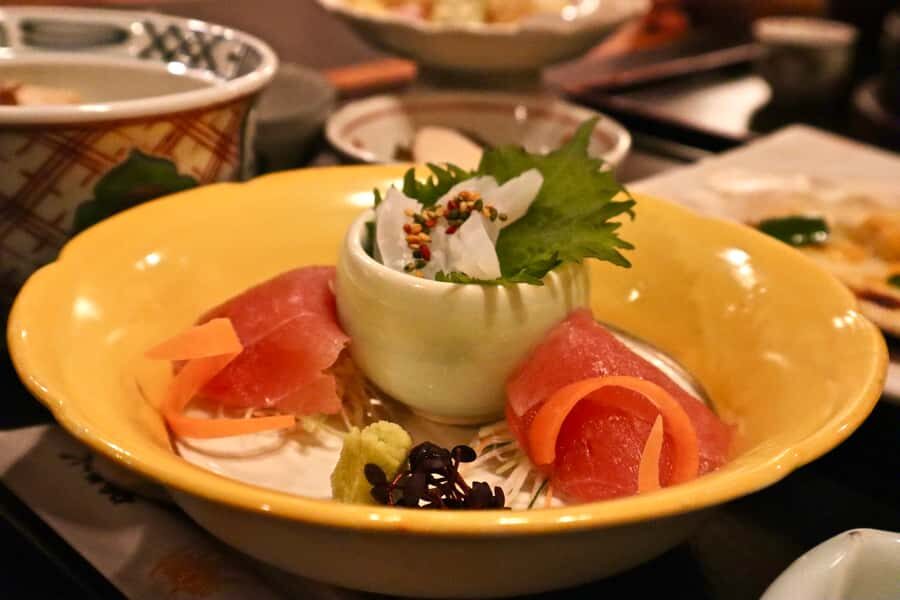
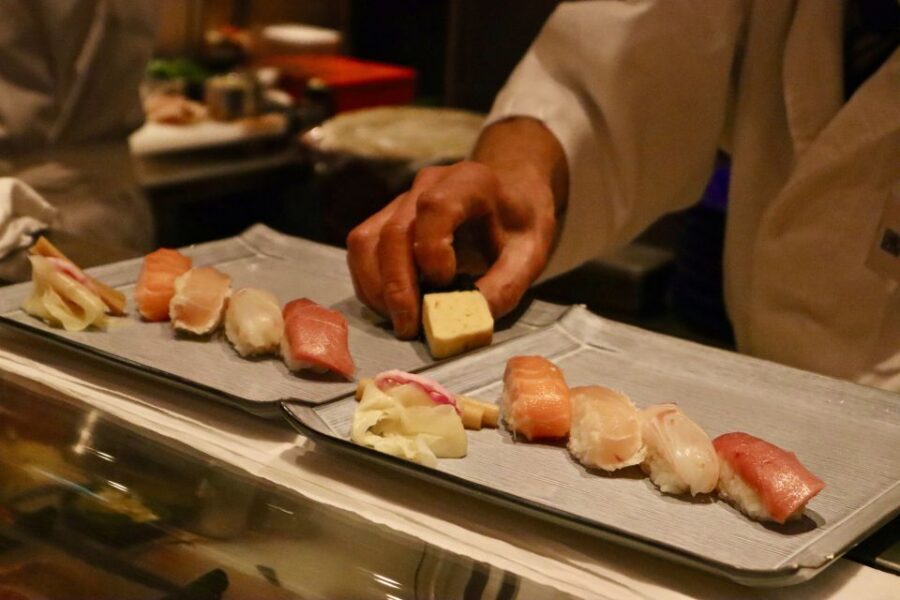
The first real food stop is a popular sushi shop near the station. The idea is smart: sushi is easier to judge early, when your appetite is fully online, and it gives you a clean starting point for the rest of the tasting.
Expect freshly made sushi rather than a plated “tour sampler” vibe. The guide’s job here is more than pointing. They help you understand what you’re seeing and tasting, and why certain shops and styles matter in Tokyo’s food culture.
This is one of the tour’s strengths. You get food that’s genuinely central to Japan, and you’re not stuck eating your first bite after half the tour has already passed.
If you’re the type who usually orders everything “safely,” this stop is where you’ll likely loosen up. With a guide in the loop, you can focus on enjoying rather than deciphering.
Gyoza in the downtown flow: fried and steamed, with stories
After the station-area bustle, you head toward the downtown district for gyoza. This stop is where the tour starts to feel like a Tokyo stroll, not just restaurant hopping.
You’re not only eating dumplings. You’re learning how gyoza fits into daily Japanese eating: quick, comforting, and best when eaten hot. Depending on what’s being served, you may get fried or steamed versions, and the guide can explain the difference in texture and purpose.
This stop also teaches a useful travel lesson. In Japan, the same ingredient can mean different experiences based on cooking method. A tour that shows those differences does more for your food memory than a tour that repeats the same style three times.
And yes, you’ll probably realize you’re learning while you eat, which beats standing around listening to a lecture.
Yakitori and tachinomiya energy: skewers plus a drink
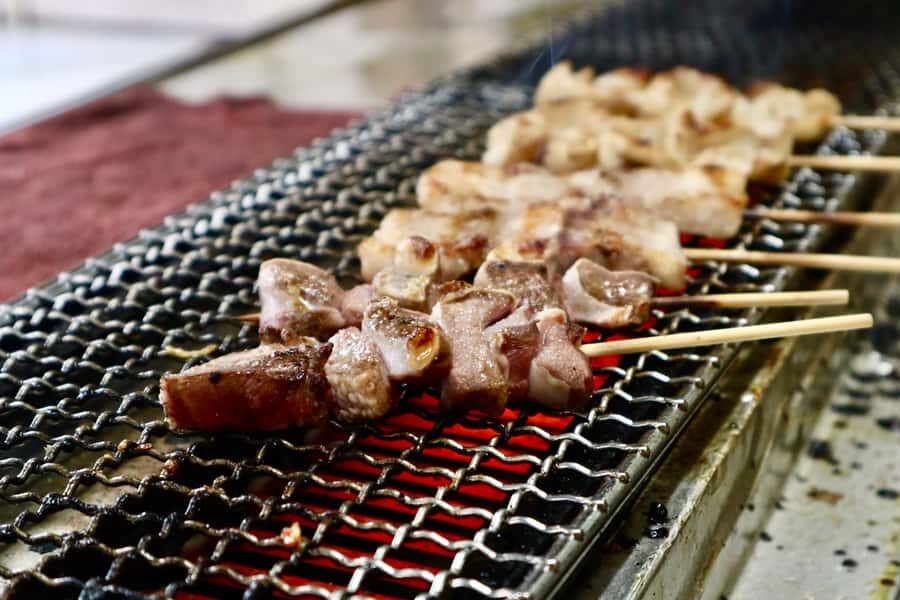
Next comes yakitori, and this part is pure Tokyo street-food rhythm. Yakitori is skewered chicken, usually grilled so the surface gets that smoky-savory hit. You’ll be served in a busy tachinomiya, a stand-up eat-and-drink place.
This stop often includes either a draft beer or a flavored sawa (a classic Japanese drink pairing for casual dining). Even if you’re not a beer drinker, the flavored options keep the pairing fun and not too “one-size-fits-all.”
A tachinomiya setting also changes the vibe. Instead of quiet dining rooms, you get the motion of people coming and going, ordering quickly, and chatting over food. It’s not about luxury. It’s about how locals actually eat when they want something good without a full sit-down plan.
If you like your travel with a bit of energy and noise, this is one of the more memorable stops.
Sweet break: manju or seasonal fruit, then matcha ice cream
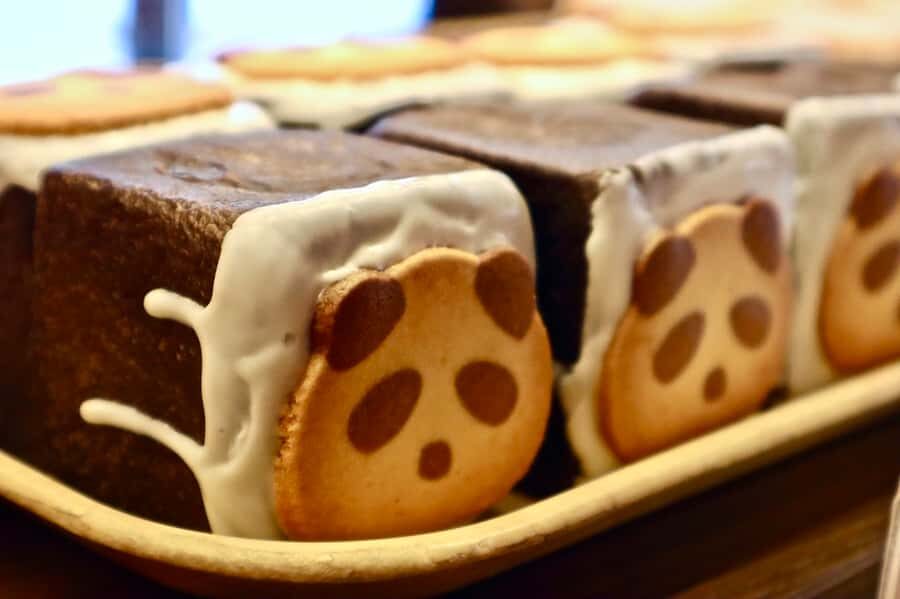
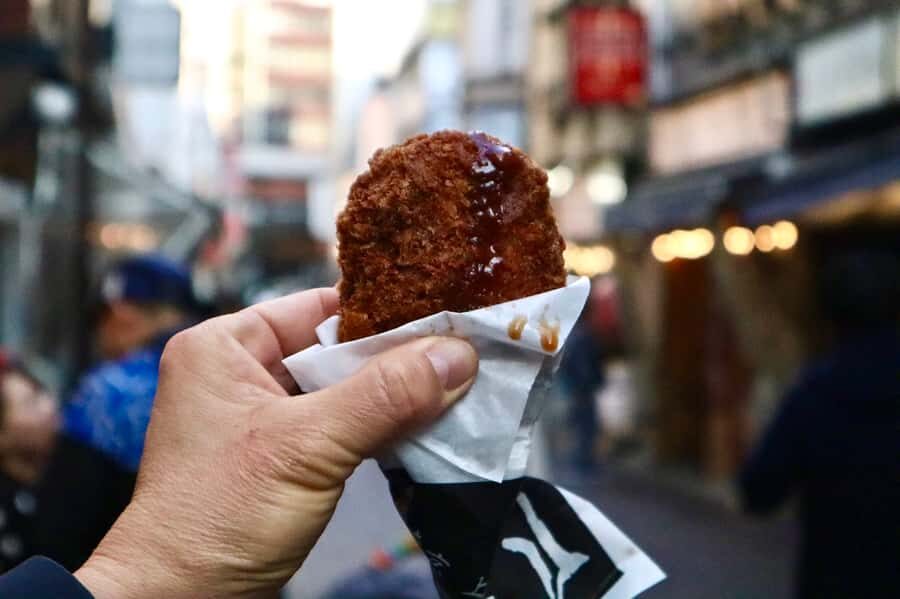
After all the savory hits, the tour switches to sweet. You’ll get a choice of manju, and depending on the season you might have freshly cut fruit. It’s a nice reset for your palate, especially after yakitori and gyoza.
Then comes matcha ice cream, which is basically Tokyo’s “you must try this” flavor moment. Matcha here isn’t an abstract concept. You’re tasting it as dessert, and it’s a great bridge between traditional flavor and modern treat culture.
If you’re someone who thinks matcha tastes like grass, this stop might change your mind. Ice cream format often softens bitterness into something creamy and smooth.
And because this is a walking tour, you’re not ending your day in a food coma. You get the sweet payoff while you’re still moving.
You can also read our reviews of more food & drink experiences in Tokyo


The secret dish finale in a cozy environment
The tour includes a secret dish at the end, served in a cozy environment. That word matters because the format shifts here: you’re no longer sprinting between styles and textures. Instead, you get a final “payoff bite” that ties the tour together.
A secret-dish finale works for two reasons. First, it keeps your taste buds awake. Second, it often highlights a local specialty you couldn’t easily find on your own without someone pointing you toward the right counter, shop, or menu item.
This is where the guide’s influence really shows. You’re not just collecting famous foods. You’re learning which lesser-known dish belongs in the story.
How much you’ll eat (and why starting hungry matters)
This is not a light stroll where you snack once or twice. It’s a 3 to 3 ½ hour guided food tour with food included at multiple stops: sushi, gyoza, yakitori, a sweet component (manju or seasonal fruit), matcha ice cream, and a secret dish.
That’s why the best advice is simple: don’t eat before you come. You’ll get stuffed fast in a good way.
Also, keep in mind what you’re signing up for physically. You’re moving between shops in and around the station area and nearby districts. In Japan, many eateries are compact, and you’ll likely spend time standing at counters. That’s why comfortable shoes are not optional.
If you have a sensitive stomach, plan to go slow during the first few tastings and drink water when you can.
Price and value: is $150 worth it in Tokyo?
At $150 per person, this tour isn’t “cheap,” but it can be good value if you price it by experience rather than by food count.
Here’s what you’re really paying for:
- A tight 3-hour run that stacks multiple Tokyo classics
- A guide who helps you find and order at small local spots
- Food at several dedicated stops, not just one restaurant with extra plates
- Context about the food scene and culture as you walk
Tokyo can make “food wandering” expensive fast. If you try to replicate this on your own, you’d spend time researching, you’d risk ordering the wrong thing, and you’d still be paying restaurant prices at each stop.
The guide also makes the tour feel less touristy. With English support and local know-how, you spend less time guessing and more time eating.
One add-on detail you might consider: there’s mention of a drink upgrade that can enhance flavor combinations. If you like pairing drinks with food, that can turn the experience from good to extra satisfying.
Guides can make or break it, and this one has strong energy
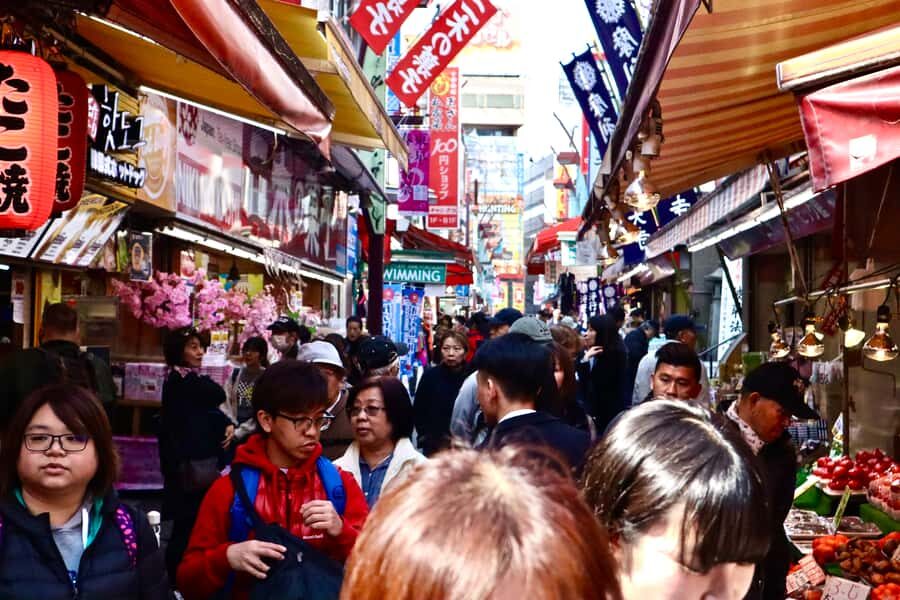
This tour runs with English-speaking guides, and the names you might see include Shonan, Natsumi, Kaho, and Kyoko. Across those different guides, one theme comes through: the host role is friendly, conversational, and focused on helping you enjoy what you’re eating.
If you’re shy about asking questions in Japan, that matters. The guide becomes your translator, your food coach, and your “this is how locals do it” filter.
Just note one balanced consideration: some people feel the tour’s context is more about the food itself than a broader historical lecture. If you want history as a primary theme, you may want to pair this with a museum stop or a walking history tour on a different day.
A quick reality check on timing and pacing
The tour spans about 3 to 3 ½ hours, so it’s meant to fit into a travel day without swallowing your whole afternoon.
One timing detail to keep in mind: the first restaurant stop opens at 11:00, so if your group meets earlier than that, you might wait a bit before the first bite. It’s not a deal-breaker, but it’s better to mentally budget for a short “hang out in the station” stretch rather than assuming every minute is eating time.
Pacing is generally good, with a steady rhythm from sushi to gyoza to yakitori to sweets. If you’re the type who hates rushing, go slow where you can. Take a breath after each stop. You’re going to want it later.
Who should book this Tokyo food walk?
Book it if you want:
- Multiple classic Tokyo foods in one guided route
- A local-host experience around Ueno instead of random restaurant hunting
- English support to help you order and understand what you’re eating
- A finish that includes a mystery dish, matcha ice cream, and sweets
Skip it or rethink it if:
- You’re looking for mostly history and big-picture sightseeing
- You don’t handle lots of food well in one sitting
- You want a very calm, low-pace experience
Also, if this is your first trip to Japan, this tour can act like a high-quality introduction. If you’ve been before, it’s still a good way to see local eating patterns without betting on luck.
Should you book Tokyo Secret Food Walking Tour?
I’d book this tour if you’re spending a day around Ueno and you like food that’s practical, not precious. The value shows up in the number of meaningful stops, the English guidance, and the way the route keeps you moving through Tokyo’s food culture rather than eating in one place and calling it a day.
The main trade-off is also clear: it’s food-forward. If your ideal tour is mostly history lessons, you might feel it doesn’t slow down enough. But if your priority is eating well while learning just enough to make each bite click, this tour hits the sweet spot.
FAQ
FAQ
How long is the Tokyo Secret Food Walking Tour?
The tour runs about 3 to 3 ½ hours.
What’s included in the price?
Food is included, along with a guided tour for the full duration.
What food will I try on this tour?
You’ll sample sushi, gyoza, yakitori, a sweet course that may include manju or seasonal fruit, matcha ice cream, and a secret dish at the end.
Is transportation included?
No. Transportation is not included, and there’s no pick-up or drop-off.
Where do I meet the guide?
Meet inside JR Ueno Station outside the JR Central Gate near the Hard Rock Cafe entrance. Use the Andersen bakery side as your reference point. Your guide will be holding a Secret Tours orange umbrella.
What language is the tour in?
The tour is in English.
What should I bring?
Wear comfortable shoes, since it’s a walking tour with multiple stops.
What if I can’t find the meeting spot?
You can show the local text for the meeting area: JR上野駅 中央改札外のハードロックカフェ入口付近
Can I book now and pay later?
Yes, the tour offers reserve & pay later.
What’s the cancellation window?
You can cancel up to 24 hours in advance for a full refund.