REVIEW · TOKYO
Shinjuku: Golden Gai Food Tour
Book on GetYourGuide →Operated by Arigato Travel KK · Bookable on GetYourGuide
Tokyo lights hit different at night. This small-group Shinjuku Golden Gai Food Tour strings together real food stops and district history, with a guided walk that turns neon alleys into a story you can actually follow. I like that you get a local English guide who brings the area to life, and you can see how Shinjuku’s nightlife works up close with bars like Golden Gai. One thing to consider: it’s very nightlife-and-alcohol focused, so you’ll want to be ready for drinking rules and a busy, walking-paced evening.
I also love the practical side—guides like Alex, Ray, and Daniele are praised for explaining Japanese dining etiquette and giving ordering tips (including simple tricks like how to use ramen vending machines). And I like that the night ends in Golden Gai with a bar visit and included drinks, so you’re not left standing outside figuring out what to do next. The possible drawback is that while you’ll be well fed, a few diners felt some food stops weren’t as standout as they hoped for the price.
If your idea of a great Tokyo night is food first, then culture, then a drink in the kind of place you wouldn’t find on your own, this one can be a strong match. Just go in knowing it’s not a slow, sit-down meal parade—it’s an after-dark crawl with multiple small stops.
In This Review
- Key Takeaways Before You Go
- Shinjuku After Dark: What This 3-Hour Food Crawl Gets Right
- Meeting in Nishishinjuku: Finding the Start and Pacing Your Night
- Yakitori, Ramen, and More: How the Food Stops Work
- Yakitori: the smoky, street-level experience
- Ramen: the one-stop comfort move
- Etiquette and ordering help
- Portion size and the two-drink setup
- Shinjuku Stories You’ll Actually Remember: From Post-War Market to Neon Alleys
- Golden Gai 101: Over 200 Tiny Pubs and a Proper End-of-Tour Drink
- The bar atmosphere: retro, dim, and intimate
- Karaoke energy and the end-cap feeling
- Price and Logistics: Is $170 Worth It?
- Alcohol and the 20+ rule
- Who This Tour Fits Best (and Who Should Skip It)
- Should You Book the Shinjuku Golden Gai Food Tour?
- FAQ
- What is the price of the Shinjuku Golden Gai Food Tour?
- How long is the tour?
- What’s included in the tour price?
- Where do we meet, and how do we get there?
- Are drinks and alcohol included?
- Is the tour suitable for minors?
- What language is the guide?
- Is hotel pickup included?
Key Takeaways Before You Go
- Small group of up to 8 means less waiting and more attention from the guide.
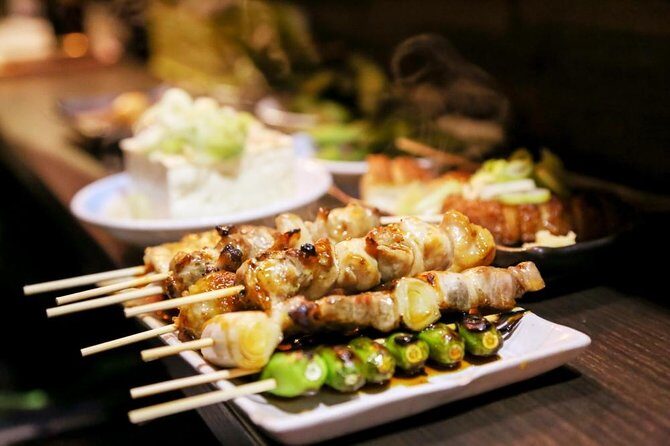
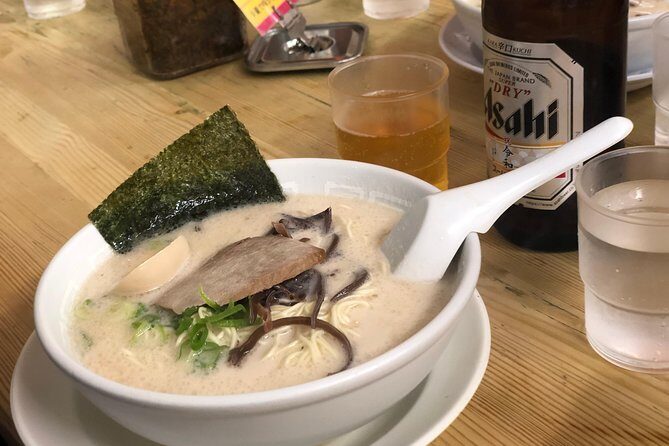
- Yakitori and ramen are core stops, plus other local dishes along the way.
- Two drinks included, with a final Golden Gai drink to cap the night.
- Expect restaurant etiquette tips and ordering guidance that save you from common tourist mistakes.
- The Golden Gai end is special because it’s a maze of tiny bars, including retro-style spaces.
Shinjuku After Dark: What This 3-Hour Food Crawl Gets Right
This is a Tokyo night tour built for people who want their first taste of Shinjuku after sunset to feel guided, not random. Over 3 hours, you’ll walk through neon-lit lanes, eat through multiple food stops, and learn the behind-the-scenes logic of how nightlife neighborhoods work. The result is a route that feels like it has momentum: you’re always moving toward the next bite or the next story.
The biggest win is the mix. You’re not just shown places—you’re fed, then you’re told what makes the area matter. Guides such as Alex and Ray get consistently praised for their energy and for connecting food with culture, including dining etiquette at the table. Another big plus is how the tour ends: Golden Gai is where the district vibe clicks, and the included bar visit lets you step into the space without having to decode it alone.
One more practical advantage: Shinjuku is huge and confusing when you’re new. With a route planned by a local English guide, you spend less time guessing and more time eating.
You can also read our reviews of more food & drink experiences in Tokyo
Meeting in Nishishinjuku: Finding the Start and Pacing Your Night
You meet outside the KISSATEN Tajimaya Coffee House at 1 Chome-2-6 Nishishinjuku, Shinjuku City, Tokyo 160-0023. The directions are specific: follow signs for the West Gate to exit Shinjuku Station, then exit via B15.
This matters because Shinjuku Station can swallow time if you exit wrong. Also note the timing rule: the group can only wait 5 extra minutes after the start time. After that, the tour departs, so plan your arrival with margin.
One more rule that affects your experience: once the tour starts, the guides can’t give directions or be contacted by phone. That’s normal for keeping the evening smooth (and respectful to partner restaurants), but it means you should double-check where you’re meeting before you’re already halfway through the station.
For a fun, low-stress start, I suggest you treat the meeting point like a checkpoint. Confirm you’re at the right exit, grab any water you want before the tour begins, and then settle in—because the walking portion starts promptly.
Yakitori, Ramen, and More: How the Food Stops Work
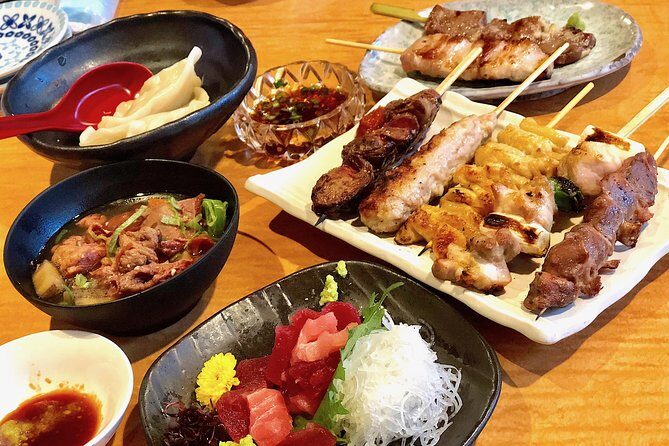
The tour is built around multiple food stops, and the highlights you can count on are yakitori (skewers) and a tasty ramen course. You also get variety—other local dishes show up along the way, and that variety is part of the value. Instead of paying for one big meal, you’re sampling a few different styles of Japanese nightlife food.
Yakitori: the smoky, street-level experience
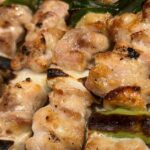
Yakitori is the perfect entry point for Shinjuku nightlife. It’s fast, shareable, and usually served in places that feel small and characterful. In the route, you’ll also experience yakitori in the alley atmosphere that gives Shinjuku its edge. One review mentioned the classic-feeling alley area and the food vibe that comes with it.
Expect skewers that are juicy and crisp, plus the kind of restaurant pace where your table fills up, someone refills, and the conversation moves on fast.
Ramen: the one-stop comfort move
Ramen shows up as part of the crawl, not as a random detour. A standout detail from the tips you receive: you’ll learn an ordering shortcut like using the top-left option on the ramen vending machine (when applicable at the stop). That kind of guidance sounds small, but it’s a big deal when you’re hungry and the menu is in Japanese.
Ramen is also the practical mid-to-late night stabilizer. After eating yakitori and walking, warm broth and noodles keep you comfortable rather than only stimulated by nightlife energy.
A few more Tokyo tours and experiences worth a look

Etiquette and ordering help
A big reason this tour earns strong ratings is the human factor: guides often teach how to order and how to behave at the table. Ray is specifically praised for Japanese etiquette at dining tables, which tells you this isn’t just about feeding you—it’s about helping you navigate places where tourists can accidentally feel awkward.
If you’ve ever worried about doing something wrong in a tiny restaurant, this is where the tour earns its money.
Portion size and the two-drink setup
Two drinks are included. That’s part of the reason the price lands at a higher level than a basic walking tour. In practice, two drinks plus multiple bites usually means you don’t leave hungry. One reviewer even warned it can be too much food, which is often a good sign on a food tour.
Still, there’s a trade-off. Some diners felt that certain food stops were just fine rather than wow-level. The reason can be simple: great tiny spots may not have the space or flexibility for a group. That doesn’t ruin the tour, but it’s the main drawback to keep in mind if you’re chasing top-tier restaurant bragging rights.
Shinjuku Stories You’ll Actually Remember: From Post-War Market to Neon Alleys
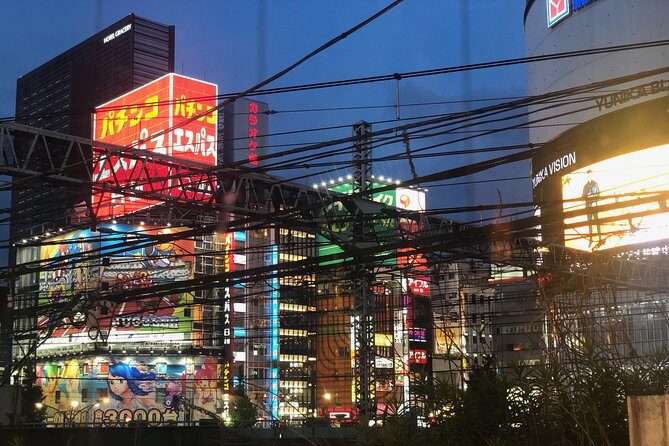
What makes this tour more than a food route is the way the guide connects the neighborhood to history. You’ll hear about Shinjuku as a district that once thrived as a post-war black market, and you’ll learn why certain alleys, street layouts, and bar types became what they are.
This kind of context is useful because it helps you read what you’re seeing. When you understand how a neighborhood evolved—how it shifted from survival-era markets into modern nightlife—you stop treating the streets like scenery and start treating them like a living timeline.
You’ll also get those memorable night details that are hard to assemble on your own. One review mentioned spotting Godzilla during the walk, and others describe how the guide used a portable slide show with historic photos. That combination—street-level walking plus visual context—tends to stick.
Finally, the tour’s pace helps the stories land. Since you’re eating and moving, you’re not stuck listening for long stretches. The guide can explain, then you experience the food or the vibe right after.
Golden Gai 101: Over 200 Tiny Pubs and a Proper End-of-Tour Drink
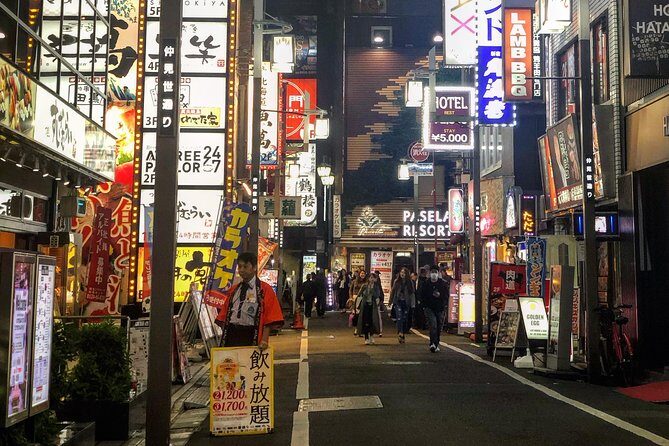
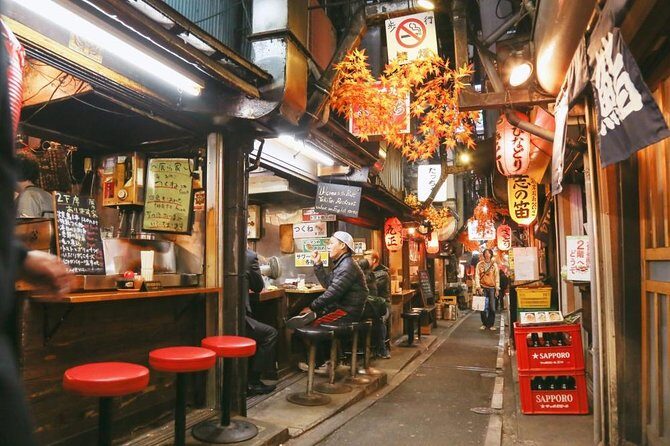
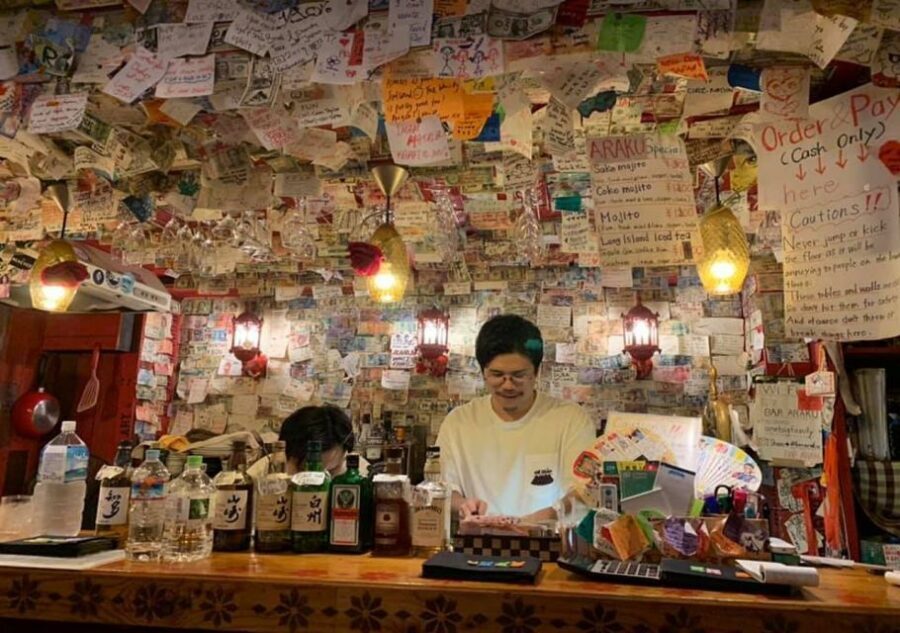
Golden Gai is the reason this tour exists. It’s not one bar. It’s a maze of over 200 cozy pubs, with spaces that feel like they were designed for small groups—sometimes just big enough for a handful of people. That makes it feel intensely local, and it’s also why it can be hard to do solo.
During the tour, you’ll weave your way into Golden Gai and finish with a drink in the district. Several reviews mention that Golden Gai is where the experience becomes real: you’re no longer just walking through Shinjuku—you’re inside the place.
The bar atmosphere: retro, dim, and intimate
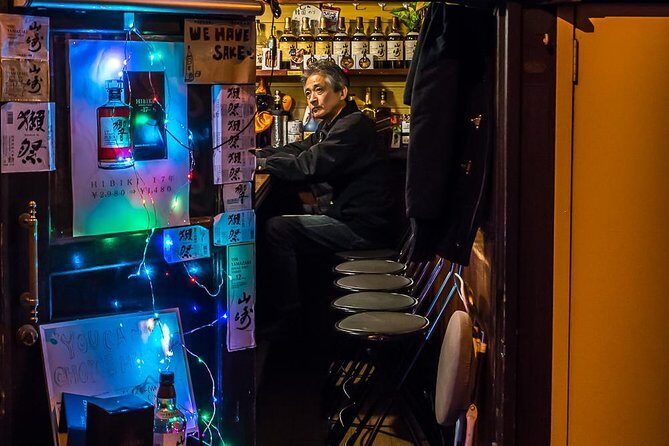
Golden Gai is often described as retro and old-school, with bars that feel like they belong to earlier decades. One review notes 1950s-style retro decor, and the overall vibe is dimly lit and conversation-friendly.
This is where you benefit from the guide again. They handle the entry and help your group settle into the rhythm of the place without turning the night into awkward sightseeing.
Karaoke energy and the end-cap feeling
Some nights may include a stop connected to karaoke-style nightlife. One review called out karaoke as a highlight, describing the atmosphere as a great way to end the night.
Even if karaoke isn’t a major part of your specific evening, the Golden Gai finish still delivers. You’ll leave with a concrete memory of the style of Tokyo nightlife that’s different from what most people expect.
Price and Logistics: Is $170 Worth It?
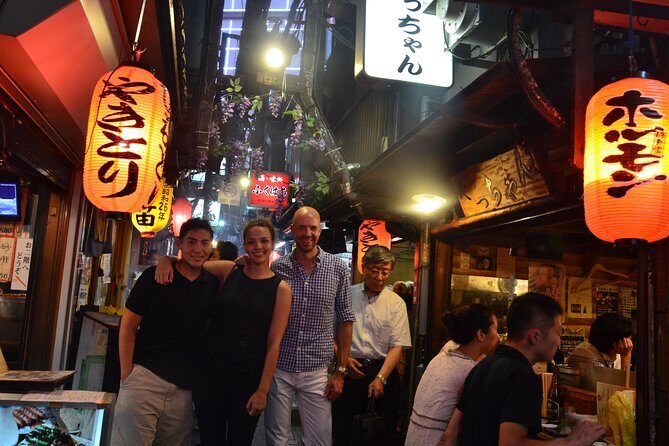
$170 per person for 3 hours is not a bargain price, but it can be fair value when you break down what’s included:
- Multiple food stops (not just one meal)
- Two drinks included
- A bar visit in Golden Gai
- An English-speaking local guide
- Small group size (up to 8)
Here’s how I think about it: if you planned this night yourself, you’d still pay for food and drinks, and you’d likely spend time figuring out where to go and how to order. You might also stumble into places where you don’t feel fully comfortable. Paying for a guide isn’t only about convenience—it’s about access and interpretation.
The other side of the coin is honest: the food quality can vary by stop. Some diners specifically felt that a couple of cafes weren’t the strongest part for the price. So treat this as a neighborhood-and-nightlife experience with food as a major component—not as a guarantee of Michelin-level bites at every single stop.
Alcohol and the 20+ rule
This tour is heavily focused on nightlife and drinking alcohol. The requirement is clear: you and everyone in your group must be 20 years old or older. That matters not just for legality, but for atmosphere. The energy is built for adults who want to enjoy the evening.
Who This Tour Fits Best (and Who Should Skip It)
This is a great match if:
- You want a nightlife introduction to Tokyo without guessing your way through Shinjuku
- You like food that’s snack-sized and varied, not one formal course
- You want guidance on dining etiquette and ordering in small restaurants
- You’d enjoy finishing with a drink in Golden Gai, specifically
It’s less ideal if:
- You only want top-tier restaurant food every stop and feel disappointed by average meals
- You prefer a quieter, daytime-style city tour
- You’re under 20 (this one simply isn’t suitable)
The small group size helps a lot. Reviews mention groups around 6 to 9 people, which usually means better conversation and fewer delays than a giant bus tour.
And if you’re a first-time visitor to Japan, the guidance can be extra valuable. One review even framed it as a strong introduction to Tokyo for a first-timer.
Should You Book the Shinjuku Golden Gai Food Tour?
I’d book it if you want Shinjuku’s after-dark personality in one evening, with food and drinks included, plus a guide who can translate the neighborhood into something you can understand. The combination of yakitori, ramen, etiquette tips, and a Golden Gai finale is exactly the kind of structured night that makes Tokyo feel approachable.
I’d skip it or at least temper expectations if you’re mainly chasing world-class food at every stop. A couple of guests felt some bites were just okay, which can happen on tours where logistics force compromises. Still, most ratings are very strong, and the guide experience—Alex, Ray, Daniele, Wes, Daniel, Sandra, and others—comes up again and again as a big part of what makes the night work.
If your priority is a guided, adult, walk-and-eat Tokyo nightlife evening, this one earns a serious yes.
FAQ
What is the price of the Shinjuku Golden Gai Food Tour?
It costs $170 per person.
How long is the tour?
The tour lasts 3 hours.
What’s included in the tour price?
The tour includes two drinks, a variety of dishes at multiple food stops, a bar visit in Golden Gai, and a local English-speaking guide.
Where do we meet, and how do we get there?
Meet in front of the KISSATEN Tajimaya Coffee House at 1 Chome-2-6 Nishishinjuku, Shinjuku City, Tokyo 160-0023. Follow signs for the West Gate to exit Shinjuku Station, then exit via B15.
Are drinks and alcohol included?
Yes. Two drinks are included, and the tour is focused on nightlife and drinking alcohol.
Is the tour suitable for minors?
No. You and every member of your group must be 20 years old or older.
What language is the guide?
The guide speaks English.
Is hotel pickup included?
No. Hotel pickup is not included, though it can be arranged for an additional charge.