REVIEW · TOKYO
Akihabara: Go-Kart Experience with Local Guide in Tokyo
Book on Viator →Operated by Beauty of Japan · Bookable on Viator
Akihabara in a go-kart feels unreal. You start outside Akihabara Station, get a proper safety briefing, then roll through manga-and-neon streets with a local guide pacing the route for the time you booked. I love the mix of silly fun and real city driving, and I love the night views because Tokyo lights look even better when you’re moving. One catch: you must bring the right driving paperwork, or you won’t be allowed to ride.
This is also one of the easier “do something different” Tokyo activities because everything is handled on-site: kart rental, insurance fee, costume, and a guide. The pacing works for first-timers since you get training before the road. The main drawback is that you may spend a fair chunk of time at red lights, which can make a one-hour option feel a little tighter.
In This Review
- Key Things I’d Focus on Before You Go
- Akihabara by Go-Kart: Neon Streets, Real City Energy
- Driving Rules in Japan: What You Need to Bring
- Meeting at Building Sasage B1F: How to Actually Find It
- Safety Briefing and Training: The 15–20 Minute Reality Check
- What the Route Feels Like: Akihabara First, Then Tokyo Views
- Nighttime Driving: When the City Lights Make It Worth It
- Costumes and Photo Stops: The Guide’s Hidden Superpower
- Group Size and the Solo Kart Detail
- Price and Value: Is $72.66 Worth It?
- Who This Tour Fits Best (and Who Should Skip It)
- Should You Book Akihabara Go-Karting with a Local Guide?
- FAQ
- What driving license or permit do I need?
- Where is the meeting point in Akihabara?
- How early should I arrive?
- What safety training happens before we start driving?
- Do they provide costumes, and is Mario available?
- Is food or hotel pickup included?
Key Things I’d Focus on Before You Go
- Driving documents are everything: you’ll be checked at check-in, and you can’t ride without the approved license/permit setup.
- Night is prime: the neon streets and city views look best after dark, and many people time this for dusk/evening.
- Photo stops are part of the deal: guides take lots of pictures, including at light stops.
- Costume helps more than you think: especially in cooler months; it also turns the ride into a real street spectacle.
- Come early, no waiting: late arrivals lose their slot.
- Each rider drives solo: every kart is for one person, so it’s not a two-person setup.
Akihabara by Go-Kart: Neon Streets, Real City Energy
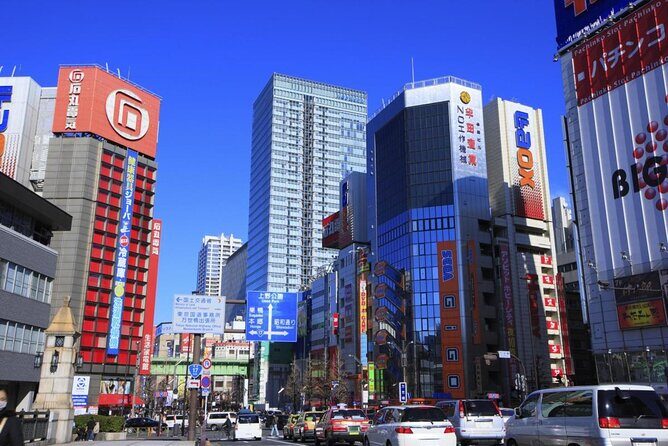
This tour puts you in the middle of Akihabara, where manga shops, electronics, and anime-inspired outfits blend into the street scene. You’re not just walking past storefronts. You’re driving through them.
The biggest reason I’d book this is the feeling of motion. Tokyo at night has this glow that’s hard to capture on foot, and the go-kart angle makes you notice details faster: shop signs, side streets, and the sudden bursts of costumes and character references.
You also get a guide who responds to what you want to see within the time you picked. That matters because Akihabara is easy to oversimplify as one neighborhood. In motion, it reads like a whole system: dense blocks, quick turns, and sudden “wow” views when the route opens up.
A realistic note: a one-hour option can be short. If your goal is one big landmark plus a long photo spree, you’ll probably want to choose a longer time slot when it’s available.
You can also read our reviews of more guided tours in Tokyo

Driving Rules in Japan: What You Need to Bring
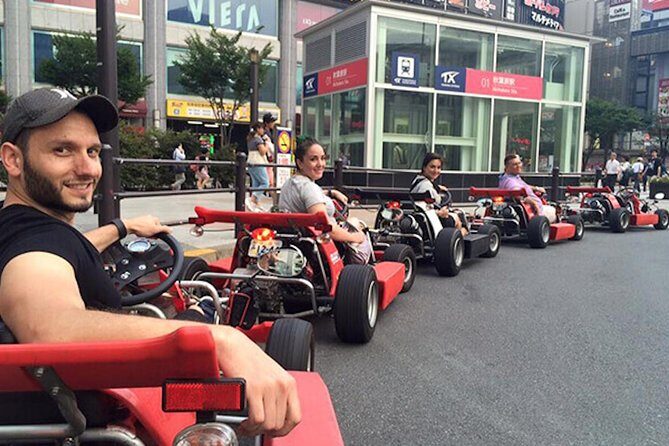
Before you even think about the fun part, plan around the driving paperwork. You must present a Japanese driving license or an International Driving Permit (or one of the other approved document situations). If you can’t show the required documents at check-in, you won’t be able to participate, and there’s no refund.
Here’s the simple breakdown based on the rules you were given:
- Japanese driver’s licenses issued by the public safety commissions in Japan are accepted.
- An International Driving Permit plus your passport is accepted, but only under the Geneva Convention format.
- Some foreign licenses are accepted only from approved countries if you also bring a Japanese translation (issued in Japan by the correct authority).
- SOFA driver’s licenses (USFJ) are accepted, but military driver IDs are not.
Also check the limits:
- Minimum age is 18.
- Height must be 150cm to 185cm.
- Weight must be under 100kg (220lb 7oz).
If you’re worried your permit might not work, send a copy ahead so they can check for you. That small step can save the whole trip.
Meeting at Building Sasage B1F: How to Actually Find It
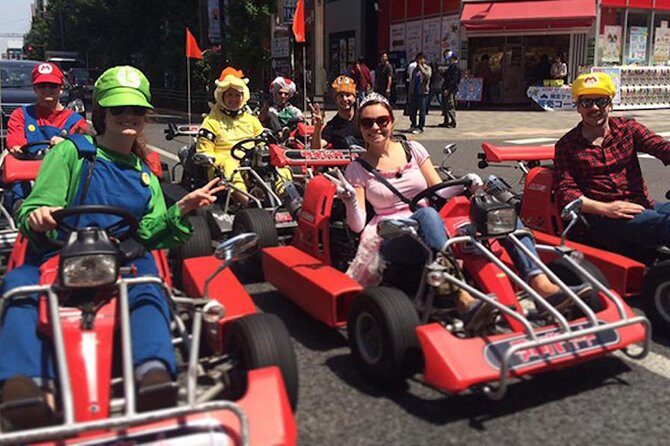
Your meeting point is Akiba CartJapan, Building Sasage B1F, at Sotokanda 2-chome. It’s listed as a short walk from Akihabara Station, so in theory it’s easy.
In practice, I’d treat it like a “get there early” situation. A bunch of people have said the venue can be hard to spot because there’s little visible signage. The practical fix is boring but effective: show up 10 minutes early and use Google Maps rather than relying only on GPS coordinates.
If you roll in at the start time, you’re gambling. This activity doesn’t wait around for late arrivals since another guest is in the next slot. And if the weather is messy, you’ll want that buffer anyway.
Safety Briefing and Training: The 15–20 Minute Reality Check
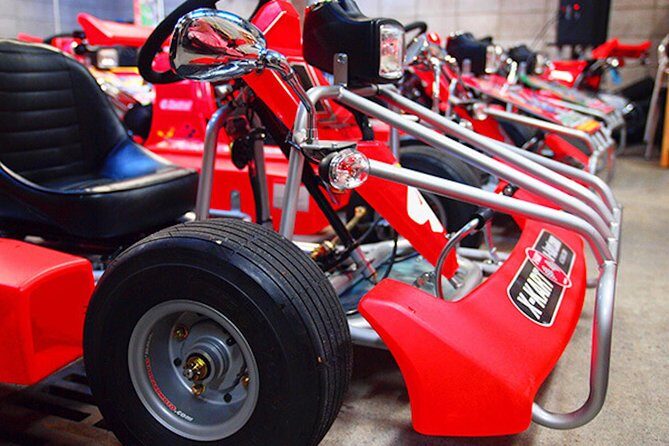
Right after you meet your guide, you’ll get a comprehensive safety briefing. You’ll present your license, then you’ll do a mandatory lecture that runs about 15 to 20 minutes.
This is a good thing, not a delay. Many people walk into this nervous about driving in Japan—especially if you’re used to driving on the opposite side of the road. The training is the part that turns “scary” into “I can do this.”
You’ll also learn how the kart works for steering and braking. Some riders note that the brakes can squeal a bit. That’s worth knowing because it can make you think something is wrong when it’s just a kart characteristic.
The guide is the key safety layer on the road. They ride in control of the group flow, and they’re there to make sure everyone stays safe.
What the Route Feels Like: Akihabara First, Then Tokyo Views
The route is designed to mix classic Akihabara energy with broader Tokyo scenery. You’ll weave through streets lined with neon-lit manga and electronics shops, and you’ll spot residents in costumes that reference anime and manga.
You’re also not stuck in a straight-line circuit. The guide reacts to what you want to see within your time window, so the ride can feel tailored instead of purely mechanical.
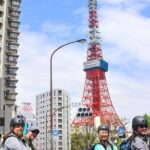
That said, don’t expect the same exact “must-see list” every day. People mention that sometimes the route feels more like driving through streets than hitting a guaranteed set of landmarks. Another person wanted big-name stops like Tokyo Tower, and it didn’t happen on their particular route.
Here’s how to handle that as a planner:
- Treat this as a street experience first.
- If you have a single dream landmark, ask your guide if it’s realistic for your time slot during the planning moment.
- Be open to surprises. The best moments in Akihabara are often the small weird ones: a costume photo moment, a sudden view angle, a quick detour that hits the neon wall at the right time.





Nighttime Driving: When the City Lights Make It Worth It
If you have a choice, I’d pick dusk or nighttime. A consistent theme in the experience is the view of the city at night, with tons of lights and a more cinematic feel than daytime traffic and glare.
Night also changes the driving rhythm. One review specifically praised that it felt like the traffic flow was lighter than in some other big Tokyo districts, which can mean more actual movement and fewer long stops.
Time at traffic lights still happens, though. One common comment is that on a one-hour option, a significant portion can be spent waiting at red lights. That doesn’t break the experience, but it does change how you judge “how much riding” you get.
So if you want the most driving time, go at a time that’s busy enough for the lights but not so congested that the route becomes stop-and-go for most of the ride.
Costumes and Photo Stops: The Guide’s Hidden Superpower
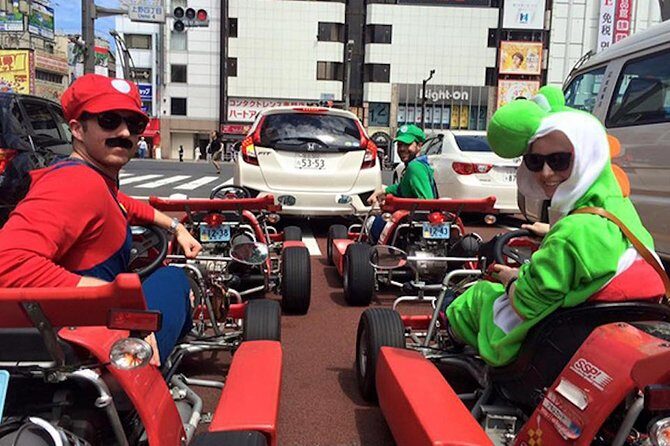
Costume time isn’t just for laughs. It changes how the ride plays on the street.
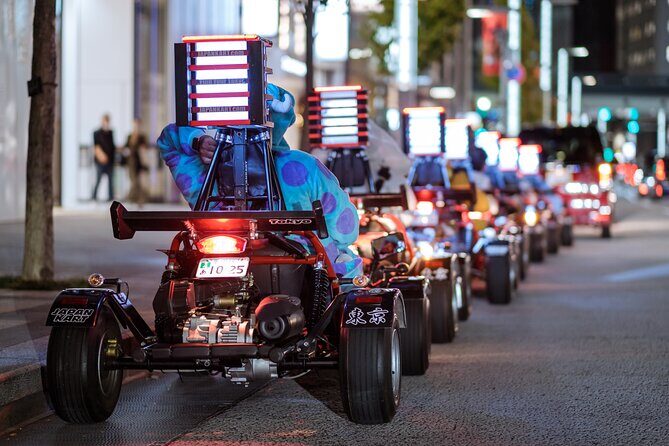
People report picking character costumes like Pikachu, and that can turn you into a recognizable figure on the sidewalks. In one standout story, kids waved because the costume made the moment feel like part of the neighborhood rather than a theme-park activity.
And then there are photos. The guide takes lots of pictures during stops at lights, and some riders say the guide makes sure you get a photo-friendly moment without you having to micromanage your phone.
If you prefer a no-stress photo plan, this part matters. You can focus on driving and let the guide handle the “where should we stop for a good shot” logistics.
Important note on costumes: there’s no Mario costume available. Also, don’t assume a specific costume like Pokemon or Mario is guaranteed. You’ll get a costume to wear while driving, but the exact selection can be limited.
Group Size and the Solo Kart Detail
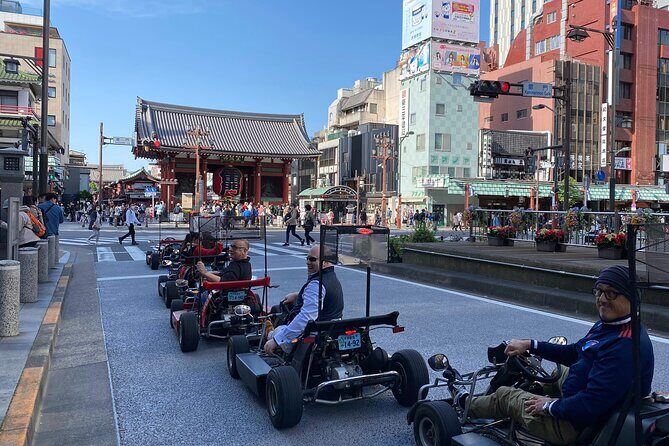
This tour keeps numbers small. There’s a maximum of 7 travelers, and the time slot usually accommodates 5–6 people. Every kart is for one person, with no multi-person karts.
That solo setup can be a plus if you want your own control and your own photo angles, and it removes the “hold on to the second person” problem. One review mentioned getting a solo experience during their slot, and it still felt amazing because the guide could tailor stops and photo spots while keeping the route safe.
If you’re traveling as a couple or small group, you’ll likely each drive your own kart. That’s simple, but plan for watching each other from a distance for the best “watch and smile” moments.
Price and Value: Is $72.66 Worth It?
At $72.66 per person, the price lands in the “experience money” category. What makes it feel fair is what’s included.
You get:
- Go-kart rental for the duration selected
- Insurance fee
- Local guide
- Costume to wear while driving
You don’t get:
- Food and beverages
- Hotel pickup and drop-off
So the real value question isn’t the kart. It’s the combo of guide-led routing, safety briefing, and the city-specific experience in Akihabara. If you’re the kind of traveler who likes active sightseeing—something you feel, not just something you see—this price can work well.
Where it might feel expensive is if you arrive without the correct documents and lose the slot, or if you expected a long “drive without stopping” session. Red lights can eat time. Costumes can be limited. Route emphasis can vary.
The best way to get your money’s worth is to show up prepared, go at a good time of day, and treat this as a street-drive plus photo-moment experience—not a checklist of landmarks.
Who This Tour Fits Best (and Who Should Skip It)
This is a great match if you:
- want an alternative to museum days
- enjoy city lights, neon streets, and quick stops for photos
- are comfortable following instructions closely
- can provide the right driving paperwork
- meet the height/weight rules
It may be a mismatch if:
- you need hotel pickup and full hand-holding beyond the meeting point
- you’re extremely sensitive to waiting at traffic lights
- you’re hoping for guaranteed costumes like Mario
- your driving documents are uncertain
Also, come in with moderate physical fitness. You’re driving, but the setup includes getting through training and staying alert for the ride duration.
Should You Book Akihabara Go-Karting with a Local Guide?
Book it if you want a memorable, Tokyo-specific way to move through Akihabara that also gives you photos without effort. The guide-led safety briefing, the included costume, and the night-city views make this one of those activities that feels different from the usual sightseeing loop.
Skip or rethink if you don’t already have the correct International Driving Permit (or accepted alternative) in hand, because check-in is strict. And if you hate the idea of being stopped at lights for a chunk of the ride, choose your timing carefully.
If you do book, your biggest “success move” is simple: arrive early at Building Sasage B1F, follow the pre-road training, and let the guide steer you through the sights you actually came for.
FAQ
What driving license or permit do I need?
You need a Japanese driver’s license or an international driving permit (plus your passport), or another approved document setup listed in the requirements. Bring the correct documentation for your nationality and present it at check-in.
Where is the meeting point in Akihabara?
You meet outside Building Sasage B1F at Akiba CartJapan. It’s a short walk from Akihabara Station, and the activity ends back at the meeting point.
How early should I arrive?
Come about 10 minutes prior to the starting time. You should expect about 15 to 20 minutes of mandatory safety lecture before you go on the road. If you’re late, they can’t wait and there’s no refund.
What safety training happens before we start driving?
You’ll get a comprehensive safety briefing and then complete a 15 to 20-minute mandatory lecture focused on safety issues before you drive.
Do they provide costumes, and is Mario available?
Yes, a costume is included to wear while driving. However, there are no Mario costumes available.
Is food or hotel pickup included?
Food and beverages are not included, and there’s no hotel pickup or drop-off. You’ll handle your own way to the meeting point.
If weather is poor, the experience requires good weather and can be canceled due to weather conditions, with a different date offered or a full refund.