REVIEW · TOKYO
Tokyo: Traditional Japanese Performing Arts Show and Dinner
Book on GetYourGuide →Operated by SUIGIAN · Bookable on GetYourGuide
This evening is special because you get traditional Japanese performing arts up close and then settle into a seasonal full-course dinner served slowly and thoughtfully. I love that the room is built around Japanese tradition, from the Noh-style stage look to the heritage tableware that traces back more than 350 years in Nagasaki. One thing to consider: the performances are short on purpose, so if you want a long, nonstop show, this won’t feel like that.
The timing is typically 2 to 3 hours, with three brief performances during dinner. The value depends on your comfort with an omakase-style meal (chef-driven choices and seasonal themes), and on having any allergies or dietary needs communicated ahead of time.
In This Review
- Key takeaways before you go
- Finding SUIGIAN Under Fukutoku Shrine in Nihonbashi
- Entering the theater-style restaurant experience
- Seat choices: how close you really want to be
- Kagura or Nihon-buyo: what program you’ll see
- The full-course Japanese dinner: what your meal actually includes
- Heritage dinnerware and why the decor feels more than decorative
- The flow of the evening: how to enjoy the pace
- Price and value: is $140 worth it?
- Who should book SUIGIAN, and who might feel out of place
- Should you book SUIGIAN’s Tokyo dinner show?
- FAQ
- What is the duration of the Tokyo SUIGIAN dinner show?
- Where is SUIGIAN located and what is the meeting point?
- What show will I see: kagura or nihon-buyo?
- How long are the performances during dinner?
- What is included with the experience?
- What does the full-course Japanese dinner include?
- Are there any dietary restrictions I should plan for?
- How do I get to the restaurant by train?
- Is the venue wheelchair accessible?
- Is it suitable for children?
Key takeaways before you go
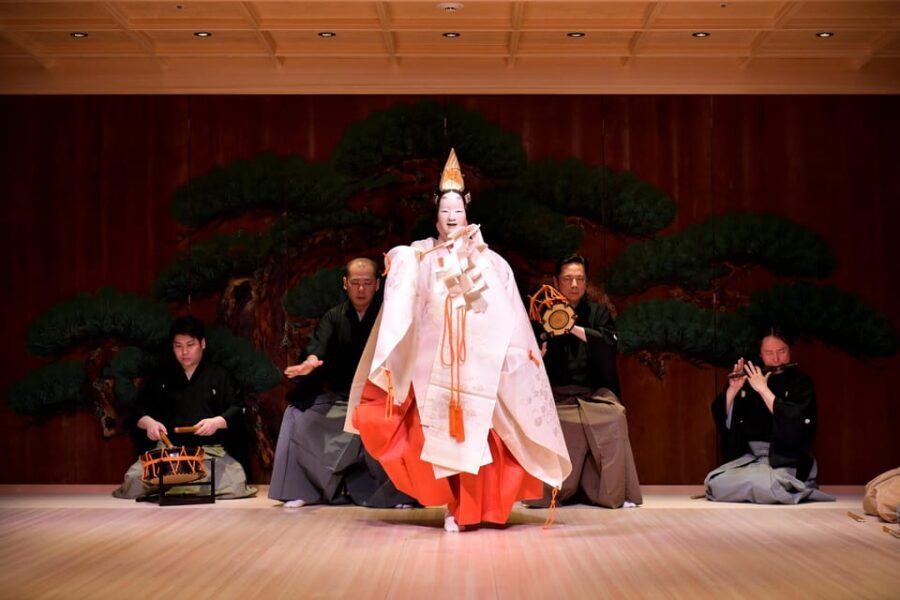
- Noh-style stage design: a Noh look with a backdrop showing an old pine tree.
- Two possible show types: kagura on specific dates, or nihon-buyo on others.
- Three short performances: about 10 minutes each while you dine.
- Heritage dinnerware: trays and dishes with 350+ years of history from Nagasaki.
- Four seat options: choose how close you want to be to the stage.
- A commemorative photo: built into the experience with the performers.
Finding SUIGIAN Under Fukutoku Shrine in Nihonbashi
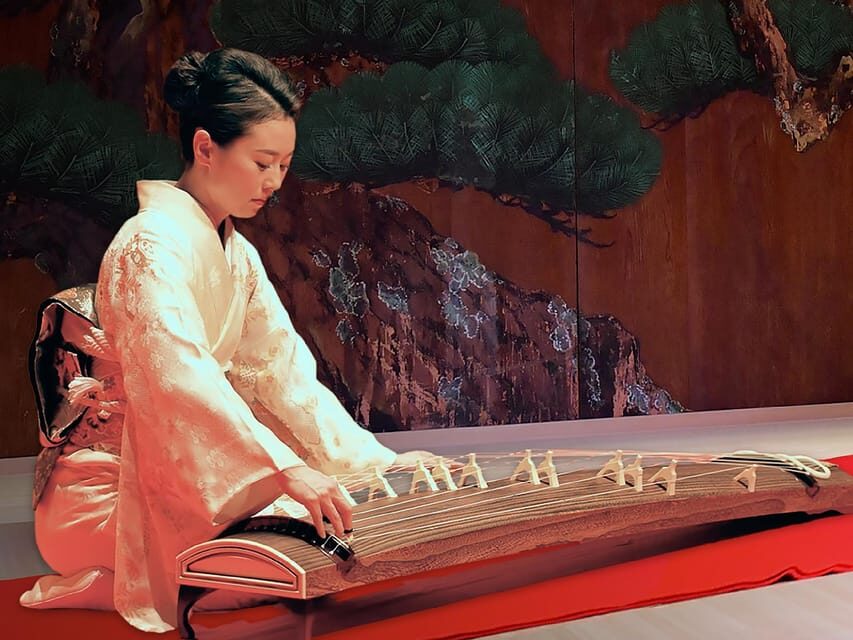
SUIGIAN is one of those Tokyo spots that feels more like a secret you’re lucky to have uncovered. The restaurant sits underground at Fukutoku Garden, tucked under the historic Fukutoku Shrine area. You’ll enter at the edge of the park, then follow the stairs down to the space that’s designed for evening performances and a proper sit-down meal.
This is a big deal in Tokyo. Most evenings end up being rushed dinner plus a quick stop for a show. Here, the location and layout encourage you to slow down. If you want a calmer, more ceremonial night in the middle of the city, this format works.
For directions, you have several easy options:
- Tokyo Station area: about a 10-minute walk from Tokyo Station (Nihombashiguch Exit).
- Shin-Nihonbashi: roughly 6 minutes from JR Sobu line rapid Shin-Nihonbashi Station.
- The cleanest Metro route: Tokyo Metro Ginza Line or Hanzomon Line to Mitsukoshi-mae Station (Exit A6), then a 1-minute walk to Coredo Muromachi 2 B1F.
A taxi is also straightforward if you’re tired: around 6 minutes from Tokyo Station, typically about ¥600.
A few more Tokyo tours and experiences worth a look

Entering the theater-style restaurant experience
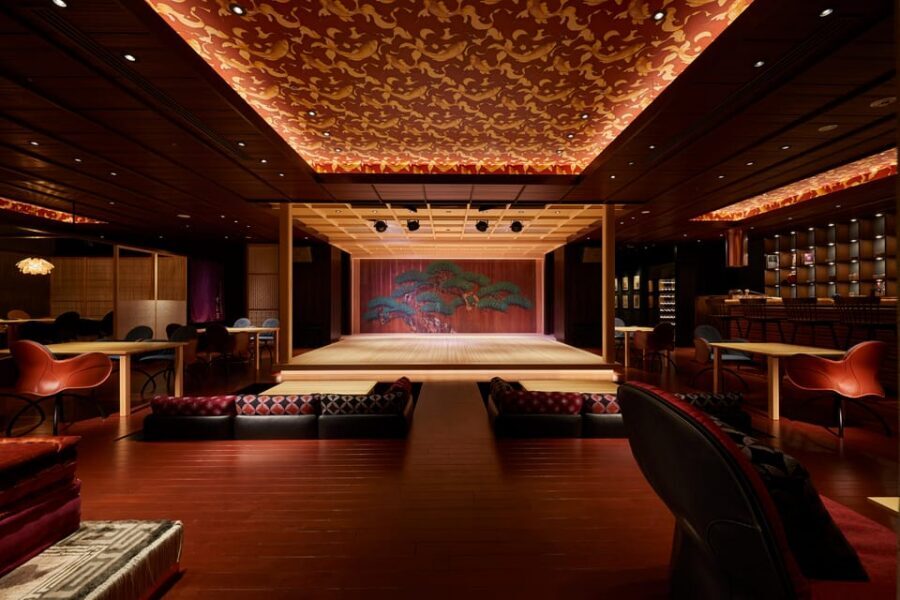
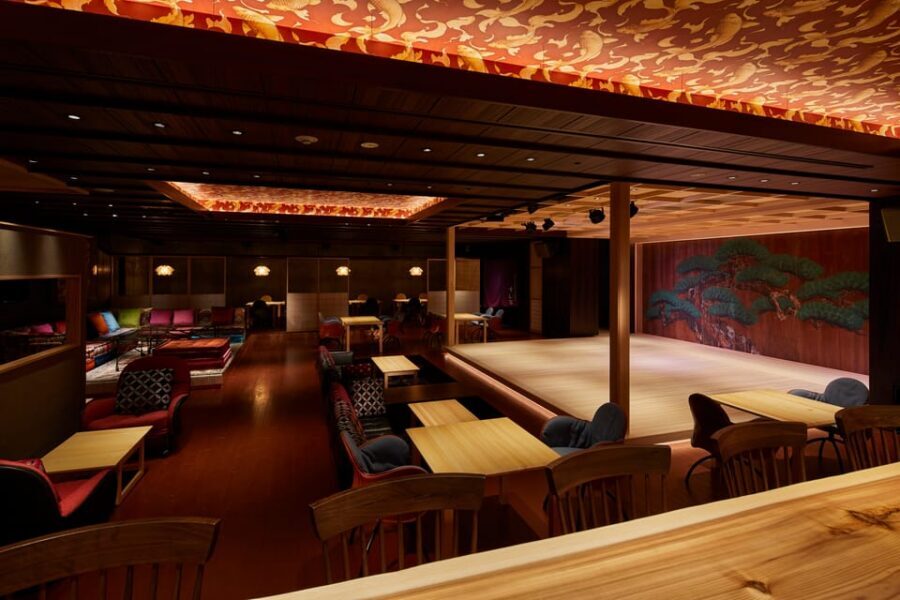
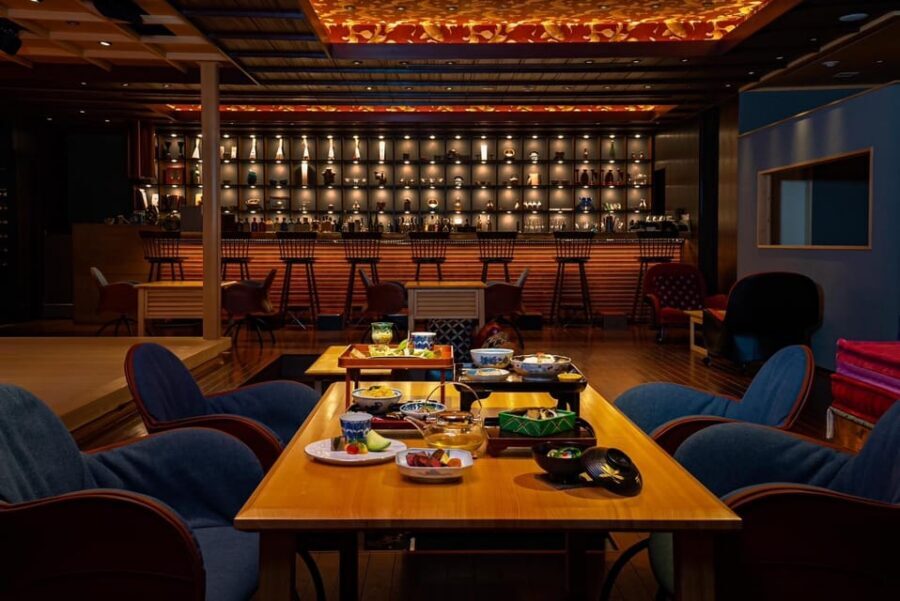
Once you’re inside SUIGIAN, it’s clear this place is designed for atmosphere. The room has that “Japanese tradition with careful comfort” feel: you’re not eating in a noisy hall, and you’re not staring at a distant stage either. It’s a restaurant built for performance, with an actual stage set like you’d see in traditional theater.
You’ll also notice the restaurant decor is part of the show. One of the nicest touches is the way the venue’s elements connect to Japanese heritage, not just generic “Japanese-inspired” styling. The stage backdrop and Noh-style presentation make the evening feel cohesive, as if food and art belong to the same world.
Pacing matters here. You’re not stepping into a quick dinner. Plan to take your time, because courses come out as part of the evening’s rhythm. If you’re the type who eats fast and wants action nonstop, this may feel “gentle.” If you like being guided, it’s exactly right.
Seat choices: how close you really want to be
SUIGIAN gives you four seat options, and the best one is the one that matches your style. If you’re here for details, choose the closest option so you can see performers clearly as they move through the choreography and music. If you prefer comfort and a slightly wider view, a second-best seat still keeps you close enough to enjoy the stage staging without craning your neck.
This is practical, not just preference. With traditional performance, the small things matter: the posture, the timing of gestures, and how the backdrop and stage space frame the movement. Proximity helps you catch these cues even if you don’t know the cultural background yet.
Also, you’ll likely spend a lot of time at the table, so seat comfort matters. The evening is 2 to 3 hours, and the dinner is multi-course. Pick a seat that lets you relax while you watch.
Kagura or Nihon-buyo: what program you’ll see
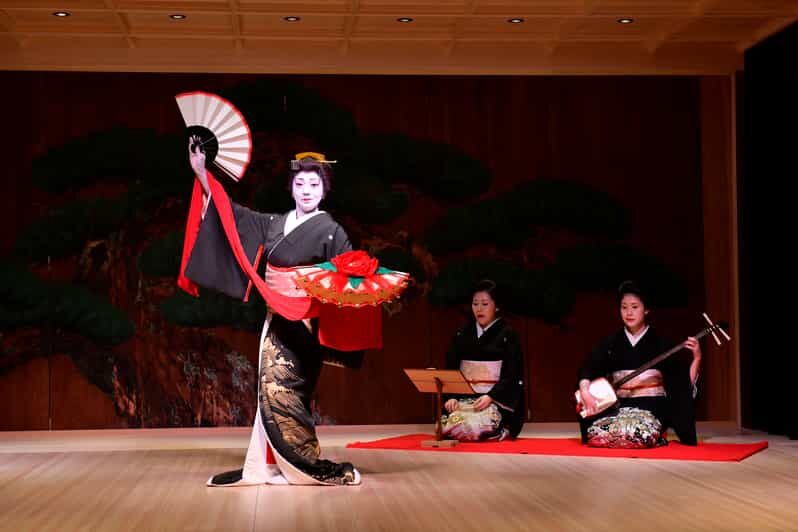
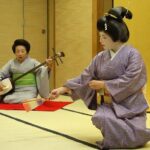
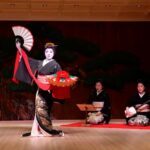
The performance changes based on the day. On several listed dates in February and March, you’ll see kagura, described as ancient Shinto music and dance. On other days during February and March, the program is nihon-buyo, a traditional Japanese dance.
In both formats, you’re not getting one long theatrical sequence. You’re getting three separate performances, each about 10 minutes, woven into the dinner. That structure is a strong fit for people who want a meaningful taste of tradition without committing to an all-night theater run.
If you’re hoping for specific musical instruments or vocal styles, the data points to traditional performance elements, but what you experience can vary by the day’s program. In general, you can expect a clear focus on Japanese music and movement rather than modern staging effects.
Here’s the honest way to plan your expectations: think of this as a traditional arts highlight set paired with kaiseki-style dining. It’s not a full, multi-hour classical theater production. It’s a concentrated experience designed to work with dinner service.
The full-course Japanese dinner: what your meal actually includes
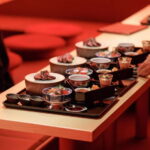
Your meal is a seasonal Japanese full-course, themed to the season and centered around fresh ingredients and bonito broth. The meal is described as full course and is typically an omakase-style course selection, meaning the chef decides what’s served within the seasonal structure.
A full-course meal usually includes:
- an appetizer
- a first seasonal platter
- soup
- a later seasonal platter
- a grilled dish (Japanese beef)
- rice
- dessert for the day
The finale includes matcha green tea and dry sweets.
This matters for value. Many “dinner shows” give you something filling but basic. Here, you’re paying for a full meal designed around tradition and seasonal ingredients, plus a structured night of performing arts. Even if you don’t know the names of each dish, the rhythm is built to guide you from course to course as the performances happen.
Two practical notes:
- If you have allergies, vegetarian requirements, or other restrictions, you need to tell the restaurant when you book. Because courses are seasonal and chef-selected, last-minute changes may be hard.
- Since bonito broth is part of the dinner concept, fish/sea-based ingredients are likely present. If you’re avoiding seafood, double-check with the restaurant directly when making your reservation.
A few more Tokyo tours and experiences worth a look


Heritage dinnerware and why the decor feels more than decorative
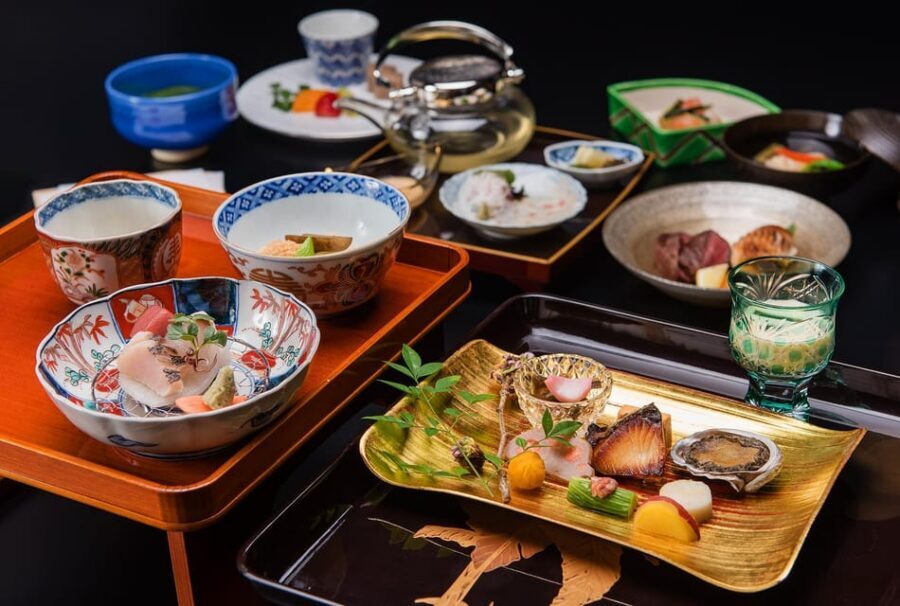
One of the most talked-about elements here is the tableware. The trays and dishes boast a history of more than 350 years in Nagasaki, inherited by the restaurant from another Japanese restaurant. That’s not just a fun fact. It changes how you experience the meal because it signals careful handling and long-form tradition.
In practice, heritage tableware makes the dinner feel ceremonial. The presentation tends to be deliberate, and you’ll likely notice the way each course is placed in a way that supports both flavor and visual detail. It’s a small shift, but it changes dinner from routine to event.
The stage design contributes too. The Noh-style stage set and the old pine tree backdrop create an instant “theater” moment. Instead of switching spaces from dining to a show, you’re dining in the same world where performance is happening.
The flow of the evening: how to enjoy the pace
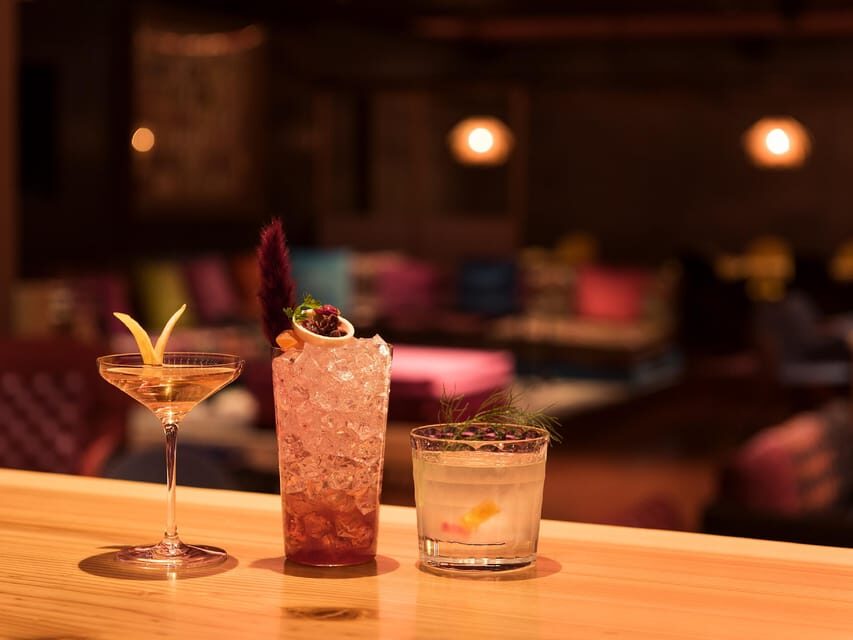
Expect a 2 to 3 hour experience built like a slow evening, not a sprint. Dinner comes out in multiple courses, and the performances land during the meal so you’re not waiting around for long stretches. The short performance format also keeps the night feeling light and varied rather than repetitive.
If you want to make the most of it, I’d treat this as your “one good slow meal” in Tokyo. Before you go, eat lightly elsewhere or plan a day without too many timed tickets. After you arrive, keep your schedule calm, because you’ll likely spend time chatting, watching, and finishing your courses without a rushed timetable.
A nice bonus is the commemorative photo with the performers. That’s the kind of souvenir that actually tells the story of the night, not just a generic group picture.
And yes, English explanations are available. Some visitors highlight that the staff provide English-language support for the food and performances. Even if you don’t speak Japanese, you can still follow what you’re seeing and eating.
Price and value: is $140 worth it?
At $140 per group up to 1, you’re paying for a combination that’s hard to beat in central Tokyo: a full multi-course meal plus a traditional performing arts program in a purpose-built venue.
Here’s how I’d think about the value:
- You’re not paying only for the show. The meal is described as a full-course Japanese dinner with multiple courses plus matcha and dry sweets.
- You’re not paying only for dinner. You’re also paying for seat assignment, proximity to a Noh-style stage, and three performances woven into the meal.
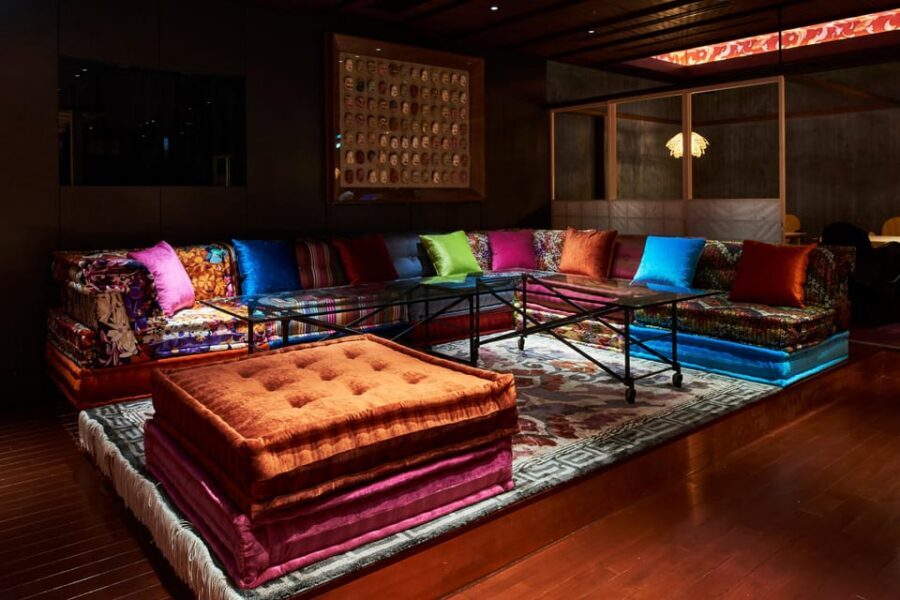
- You’re getting a venue experience. The Japanese decor, heritage tableware history, and the shrine-adjacent setting under Fukutoku Garden give the night a sense of place.
Is it cheaper elsewhere? Sure, if you skip the performance or choose a different style of meal. But for an evening that blends dining craft with cultural performance, this is the kind of price that makes sense when you compare against the cost of two separate experiences.
Who should book SUIGIAN, and who might feel out of place
This is a great choice for:
- adults who want a calm, cultural evening after a busy day
- food lovers who enjoy seasonal dishes and enjoy being guided course by course
- couples and solo travelers who want a memorable experience in Tokyo without complicated logistics
It may be less ideal if:
- you want a nonstop, long theater show rather than three shorter performances
- you need a very specific diet and can’t communicate restrictions in advance
- you’re bringing children under 10, since the experience notes it’s not suitable for that age group
If you’re celebrating something, this kind of evening often lands well because it’s both special and respectful. The food has structure, the performance has meaning, and the photo gives you a clean “we did this” memory to take home.
Should you book SUIGIAN’s Tokyo dinner show?
Yes, if you want a single, well-paced evening that combines traditional Japanese performing arts with a true full-course meal. Book it when you can give it time, not when you’re rushing to hit five more things that night. Tell the restaurant about any dietary needs right away so you’re not stressing once you arrive.
If you’re allergic to fish-based ingredients or you dislike omakase-style chef selections, double-check the menu approach before you commit. And if you’re expecting a long, continuous theater performance, adjust your mindset to a three-moment-per-dinner style program.
FAQ
What is the duration of the Tokyo SUIGIAN dinner show?
The experience is estimated to take 2 to 3 hours.
Where is SUIGIAN located and what is the meeting point?
The meeting point is Theater Style Restaurant&Lounge SUIGIAN, Fukutoku Garden B1F, 2-5-10 Nihonbashi Muromachi, Chuo-ku, Tokyo 103-0022.
What show will I see: kagura or nihon-buyo?
The program depends on the date. On certain listed dates, the regular performance is kagura (ancient Shinto music and dance). On other listed February and March days, the regular performance is nihon-buyo (traditional Japanese dance). Both days feature three performances.
How long are the performances during dinner?
There are three performances, each about 10 minutes.
What is included with the experience?
You get a Japanese full-course dinner, a traditional Japanese performing arts show, and seat assignment based on the seat option you choose. A commemorative photo with the performers is also part of the experience.
What does the full-course Japanese dinner include?
A full-course meal usually includes an appetizer, seasonal platters, soup, a grilled dish (Japanese beef), rice, dessert for the day, plus matcha green tea and dry sweets. The course is themed after the season and is omakase-style.
Are there any dietary restrictions I should plan for?
Yes. Because the dinner is seasonal omakase, you should inform the restaurant in advance about allergies, vegetarian needs, or other restrictions.
How do I get to the restaurant by train?
A convenient route is Tokyo Metro Ginza Line or Hanzomon Line to Mitsukoshi-mae Station (Exit A6), then a short walk to Coredo Muromachi 2 B1F. From Tokyo Station it’s about a 10-minute walk, and from Shin-Nihonbashi Station it’s about 6 minutes.
Is the venue wheelchair accessible?
Yes, the experience notes that it is wheelchair accessible.
Is it suitable for children?
No. It’s not suitable for children under 10.