REVIEW · TOKYO
Professional Ramen & Gyoza with Ramen Chef in a restaurant!
Book on Viator →Operated by Baba Ramen · Bookable on Viator
Ramen class in a real Tokyo kitchen. I love how this one doesn’t hide behind a demo: you get hands-on with fresh ramen noodles and gyoza right in a working restaurant, and you get to choose between two broth options. It’s in Meguro, and the whole morning feels like a pro prep session you’re allowed to join.
Two things I really liked: first, the chefs keep you moving so you learn by doing, not just watching from the sidelines. Second, you leave with an e-book so you can recreate the results at home, not just remember the smell. The one thing to think about is effort: this is not sit-and-snack cooking. Expect hot work, busy stations, and you’ll be using your hands for a good chunk of the class.
In This Review
- Key highlights worth your attention
- Baba Ramen Cooking Meguro: where the class actually happens
- What you make in 4 hours: noodles, gyoza, and broth you choose
- Learning the ramen method, not just the recipe
- The kitchen-grade equipment that makes the difference
- Gyoza time: folding, teamwork, and not panicking
- Dietary options that are actually addressed upfront
- The meal payoff: you eat ramen made by your own hands
- Price and value: is $159 really fair?
- Who this ramen and gyoza class is best for
- Quick practical tips before you go
- Should you book this ramen & gyoza experience?
- FAQ
- What time does the class start?
- Where do I meet for the activity?
- How many people are in the group?
- Do I get to choose a broth?
- Are dietary restrictions accommodated?
- What do I take home after the class?
- Is there weather-dependent cancellation?
Key highlights worth your attention
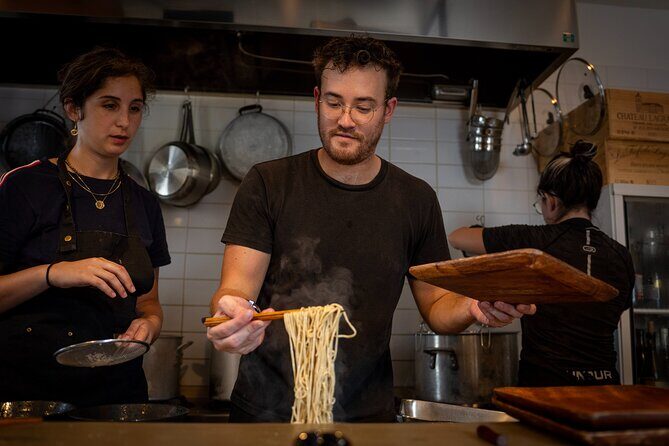
- Restaurant kitchen setup where you learn with real gear, not a home-style counter
- Small group (max 6) so the chefs can correct your noodle and gyoza technique
- Scratch-making ramen noodles and gyoza with a full, step-by-step flow
- Broth choice with two options so you can match your taste
- Take-home e-book so you can practice the recipes after your trip
Baba Ramen Cooking Meguro: where the class actually happens
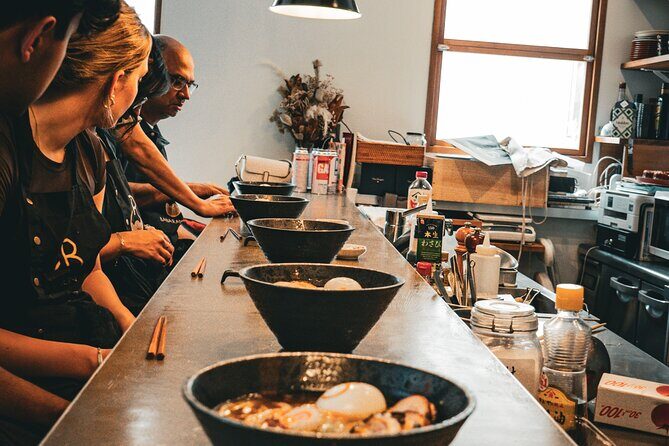
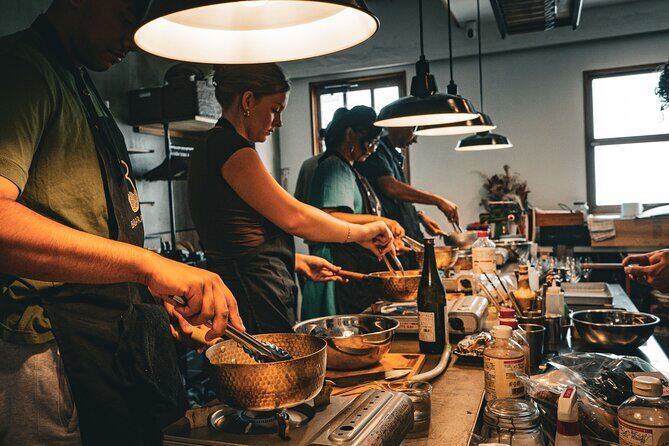
This experience meets at Baba Ramen Cooking Meguro in Meguro City, starting at 9:00 am. The big win here is location: the class takes place in a restaurant setting, not someone’s apartment, not a studio kitchen designed for show.
If you’ve taken cooking classes before, you know the difference right away. In a restaurant kitchen, everything is set up for speed, heat control, and real food workflow. That matters when you’re learning noodles and gyoza, because small timing and texture details are the whole game.
You’ll also end back at the meeting point. That means no long transfers mid-class, no “hunt for the finish line” feeling at the end.
A few more Tokyo tours and experiences worth a look
What you make in 4 hours: noodles, gyoza, and broth you choose
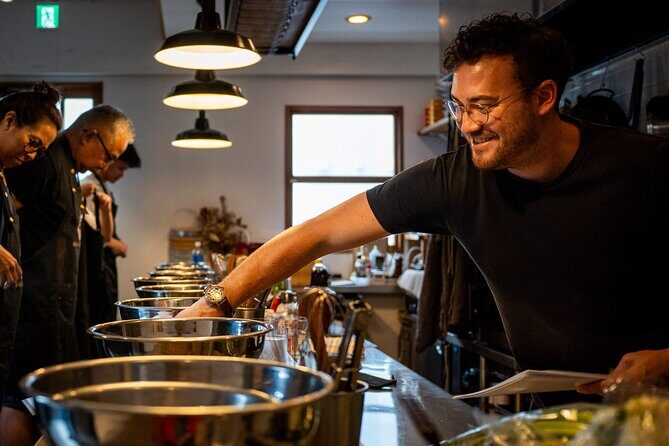
The class runs about 4 hours, and the core is simple to describe: make ramen noodles from scratch, then make gyoza, then eat ramen that’s built from what you worked on.
You start with a broth choice. The format includes two broth options, so you can decide based on what you like in ramen. That choice keeps the experience personal, rather than one-size-fits-all.
Then you get into technique. The rhythm of the session is hands-on from multiple angles: noodle work, gyoza folding, and active kitchen prep that goes beyond simply mixing ingredients in a bowl. One thing I especially appreciated from the overall tone of the experience is that the chefs don’t treat it like a souvenir craft. They teach the process like you’re learning a real skill, including why ramen steps matter.
Time flies because you’re never just waiting around. Hot pans, busy stations, and plenty of turning-and-folding effort keep the morning moving.
Learning the ramen method, not just the recipe
A lot of ramen classes stop at ingredients and shortcuts. This one leans more toward technique and how ramen is supposed to behave at each stage.
You’ll learn ramen etiquette and background, which sounds formal until you realize it’s practical. Knowing how ramen is handled and served changes how you judge texture, portioning, and final assembly. It also makes you feel less like you’re copying steps and more like you understand the logic.
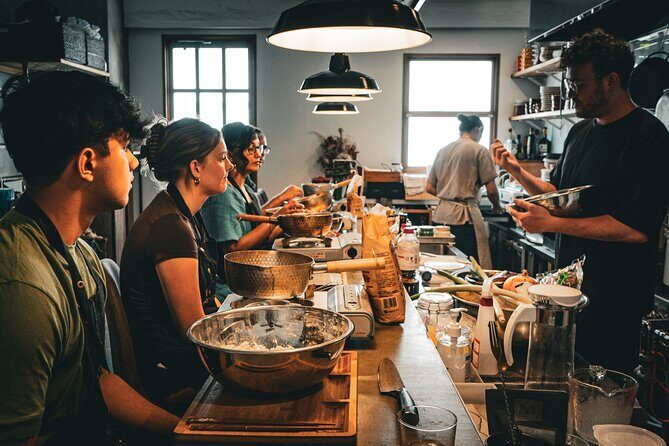
In the kitchen, you’ll get coaching as you go. The class is built for small groups (up to 6), so the chefs can watch your work closely. Names that show up from the teaching team include Andrew plus instructors like Eric, Jae, and Leo. Even when you’re partnered in a workflow, you still get corrections instead of one generic instruction for everyone.
The result is that you leave with the confidence to reproduce at least the core parts at home, not just a memory of how good it tasted in the restaurant.
The kitchen-grade equipment that makes the difference
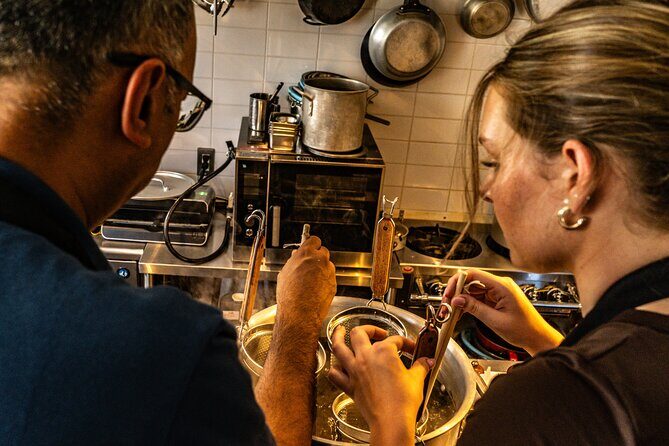
This is one of those Tokyo food experiences where the setting actually changes the outcome. The course uses professional, kitchen-grade equipment, which matters because noodle texture and gyoza results depend on heat control, timing, and consistent handling.
In a restaurant, you also learn how to work like a cook. You can feel the difference between “home cooking pace” and “work-in-a-real-kitchen pace.” That’s partly why people say this class feels hands-on the whole time. You’re not just mixing and waiting; you’re using tools and moving through steps with structure.
If you’re the type who loves the practical side of food—technique, workflow, how heat affects texture—you’ll probably have a great time here. And if you’re not, you still get pulled in because ramen makes you curious fast: why does this stage take longer, why does this texture matter, why does this broth base taste different after certain steps.
Gyoza time: folding, teamwork, and not panicking
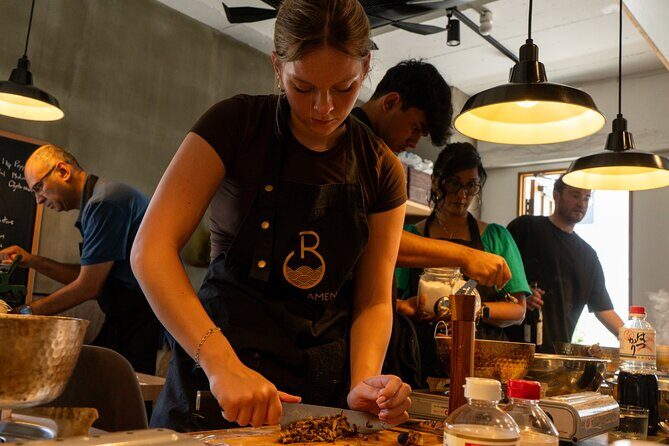
Gyoza is where a lot of cooking classes get a bit too hands-off. Here, you’re expected to participate. Folding takes coordination, and cooking them takes timing, so you’ll feel productive instead of decorative.
The class format makes gyoza a real skill lesson. You learn what you’re aiming for in shape and seal, then you get to put it into practice. If you’ve never folded gyoza before, don’t worry. The small-group setup helps because a chef can adjust what you’re doing before it becomes a mess you have to live with.
One more nice thing: the gyoza part breaks up the noodle intensity. Noodles are chewy, stretchy work; gyoza is repetitive handwork. Together they keep your brain engaged.






Dietary options that are actually addressed upfront
Ramen is an ingredient-heavy dish, so dietary needs can be tricky. This experience states that it can accommodate many dietary restrictions if you provide notice in advance. That’s important because it’s not just a label—it’s the broth and filling choices that affect everything.
You can request:
- Vegetarian and vegan options
- Gluten-free option
- Pork-free option
Also, service animals are allowed, and the meeting point is near public transportation, which makes the start easier.
What I’d suggest: when you book, include your needs clearly and early. If gluten-free or pork-free matters for you, don’t assume it’s handled automatically. The better you communicate the request, the smoother the kitchen planning tends to be.
The meal payoff: you eat ramen made by your own hands
The best part of any cooking class is the end result. Here, you get to eat ramen and gyoza that come from the work you did during the morning.
What makes the meal extra satisfying is the process understanding. When you’ve spent time making noodles and handling gyoza, you taste with more awareness. You start noticing texture, salt balance, and how the broth supports the noodles instead of sitting on top of them.
And because it’s a restaurant kitchen, the final serving feels like a real meal, not a classroom snack. You’ll leave full, with that rare combo of comfort food satisfaction and skill-building pride.
Price and value: is $159 really fair?
At $159.18 per person for about 4 hours, it’s not a budget cooking class. But it also isn’t a generic “make one dish” workshop.
Here’s what you’re paying for:
- A real restaurant kitchen with kitchen-grade equipment
- Small group size (max 6) for hands-on coaching
- Multiple components: ramen noodles from scratch, gyoza, and ramen broth choice
- Bilingual chefs (English and Japanese) plus etiquette and background
- A take-home e-book so the experience doesn’t end when you leave
If you compare this to entry-level cooking tours that feel like demos with a photo, it’s worth paying more for the hands-on structure. If you compare it to a private chef lesson, it becomes more understandable as a group value.
My practical advice: if you love ramen and you want to learn technique you can use again, the price starts to make sense quickly. If you just want a quick bite and a photo, you might feel the cost more than the value.
Who this ramen and gyoza class is best for
This class suits a few types of people really well:
- Ramen fans who want technique, not just flavor
- Food travelers who enjoy hands-on work and don’t mind heat and busy stations
- Small groups and families who want shared progress and a meal at the end
- People with specific dietary needs, as long as you request the option you need ahead of time
If you hate getting your hands dirty, or if you’re expecting a casual walk-through with light stirring, this may feel like too much work. On the other hand, if you like being part of the process, you’ll probably feel proud when you sit down to eat.
Quick practical tips before you go
A few things will make your morning smoother:
- Wear clothes you don’t mind getting food-splashed while working in a kitchen.
- Come with a mindset of learning by doing, not perfection.
- If you have dietary requirements, submit them clearly at booking.
- Expect to be busy from start to finish, since the class structure keeps everyone actively working.
Also, the experience uses a mobile ticket, so keep your phone charged and ready.
Should you book this ramen & gyoza experience?
If you want ramen expertise you can actually carry home, I think this is a strong choice. The restaurant setting, scratch noodle-making, and the small group coaching create an experience that feels more like training than a tour. Add the take-home e-book, and you get something practical for after your trip.
Book it if you’re excited to work with your hands and learn the method behind a great bowl. Consider skipping or choosing a different option if you want something lighter and low-effort, because this class is built to keep you moving.
FAQ
What time does the class start?
The experience starts at 9:00 am and lasts about 4 hours (approx.).
Where do I meet for the activity?
You meet at Baba Ramen Cooking Meguro101 3-chōme-7-32 Shimomeguro, Meguro City, Tokyo 153-0064, Japan. The activity ends back at the meeting point.
How many people are in the group?
The class has a maximum of 6 travelers, so it stays small.
Do I get to choose a broth?
Yes. You choose from two broth options.
Are dietary restrictions accommodated?
Yes. Vegetarian and vegan options are available (subject to availability), and there are also gluten-free and pork-free options if you comment in your request in advance (subject to availability).
What do I take home after the class?
You take home a cooking e-book so you can recreate the recipe at home.
Is there weather-dependent cancellation?
Yes. The experience requires good weather. If canceled due to poor weather, you’ll be offered a different date or a full refund.
If you want, tell me your dietary needs and how much you like hands-on cooking, and I’ll help you decide if this one matches your style.