REVIEW · KYOTO
Kyoto: Local Home Visit and Japanese Calligraphy Class
Book on GetYourGuide →Operated by Kangetsu Kyoto · Bookable on GetYourGuide
A brushstroke can slow your day in Kyoto. This 1-hour experience mixes kanji calligraphy with a visit to a real home near Nijō Castle, guided by a bilingual teacher team.
I like the way Aya breaks down correct brush movements into clear steps you can follow right away. I also love that you’re not just learning a craft; you’re getting a chance to talk with your hosts in a local setting.
The only catch: the lesson is one hour, so it’s not long enough to make you an expert, and being late can shorten or cancel the class.
In This Review
- Key Points to Know Before You Go
- Why This Kyoto Calligraphy Class Starts at a Real Front Door
- Finding the Venue 200 Meters from Nijō Castle (and Avoiding the Wrong Address)
- The Home Conversation Part: Why It Feels More Human Than a Workshop
- The Calligraphy Lesson: What Happens in Your One Hour
- Learning Brush Control: The Secret Is the Strokes, Not the Talent
- Choosing Your Kanji Meaning: Turning a Character into a Message
- Tools and Materials You Actually Need (and What They Mean for Value)
- What You Take Home: Your Wasşi Keepsake (with Your Name)
- Practical Etiquette: Socks-Only Indoors and Shoes-Off Rules
- Who This Fits Best (and Who Might Be Happier Elsewhere)
- Price and Value: Is $66 Fair for a Kyoto Home Visit?
- Should You Book This Kyoto Calligraphy Home Visit?
- FAQ
- How long is the Kyoto local home visit and Japanese calligraphy class?
- How much does it cost per person?
- Where do I meet for the class near Nijō Castle?
- What languages are the instructors?
- Is this a private group?
- What is included in the class?
- Do I need to bring anything?
- Are shoes allowed indoors?
- What happens if I arrive late?
- Is it suitable for children?
- FAQ
- Is wheelchair access available?
- Can I reserve now and pay later?
- What is the cancellation policy?
Key Points to Know Before You Go
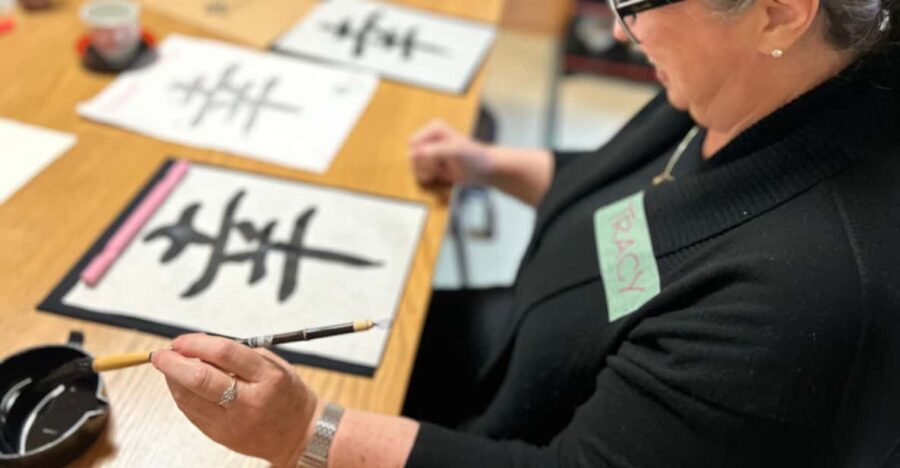
- A home visit near Nijō Castle gives the class context, not just a studio vibe
- Aya teaches stroke-by-stroke using guidance that works for first-timers
- You choose a kanji with meaning like love, peace, strength, or wisdom
- Your final piece is real keepsake material on washi paper, plus you can add your Japanese name
- Socks-only indoors keeps the experience comfortable and respectful of the home setting
- Private group teaching can feel extra personal, especially if you’re the only students
Why This Kyoto Calligraphy Class Starts at a Real Front Door
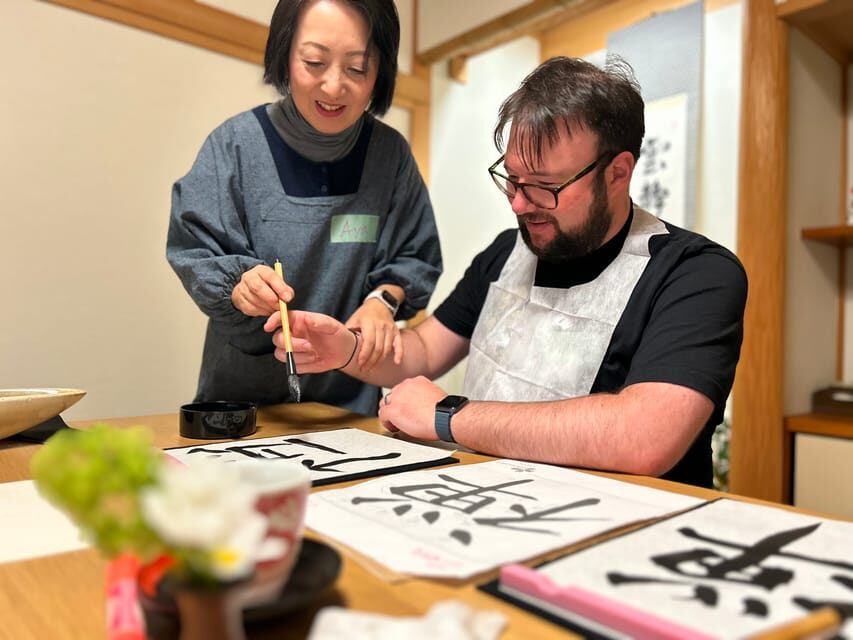
Most Kyoto activities feel like you step in, do the thing, and step out. This one starts with something different: you visit a local home near Nijō Castle, not a museum room. That matters, because calligraphy is personal in Japan. It’s not only about getting characters right; it’s about intention, control, and calm.
You’ll feel that tone the moment you’re in the right place and in the right mindset. The setup encourages patience. People often rush their own handwriting at home. Here, you’re nudged to slow down and pay attention to the brush, the ink, and how each stroke lands on the page.
And because it’s a private group, the mood stays relaxed. You’re not fighting through crowds or wondering when it’s your turn. You’re there to practice.
A few more Kyoto tours and experiences worth a look

Finding the Venue 200 Meters from Nijō Castle (and Avoiding the Wrong Address)
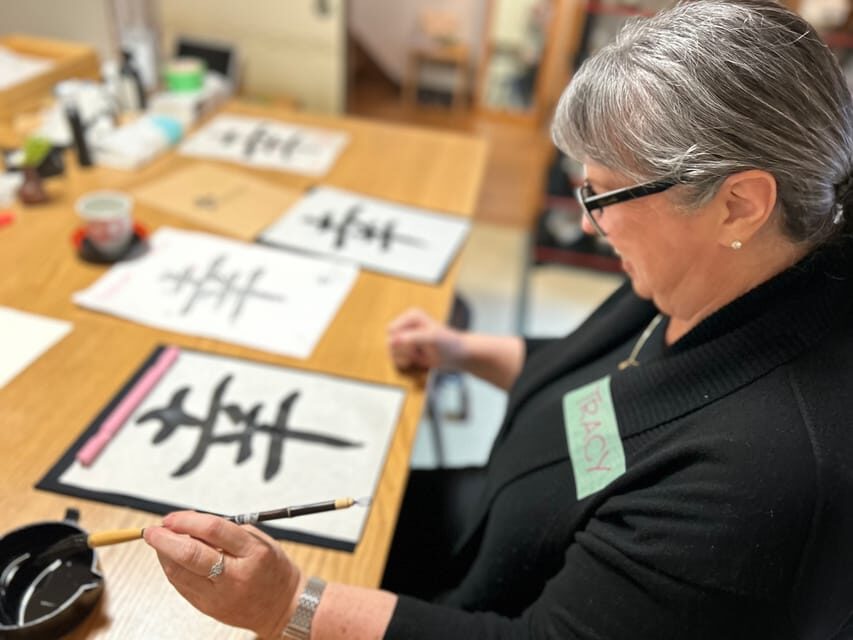
The meeting point is very specific, because Kyoto has repeats—lots of streets, lots of similar building names. You’ll want to enter the venue name in your map app, not just the address.
Here’s what to use as your visual anchors:
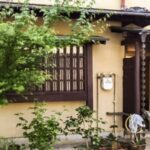
- The location is about 200 meters west of Nijō Castle (UNESCO)
- It’s on the north side of Ebisugawa Street, just west of Nishinotoin Street
- Across the street on the south side, you’ll see the Lions Mansion building
If you’re arriving by taxi, give the driver the phone number so you don’t get sent to a look-alike address. This is one of those small things that saves a lot of stress—especially when you’re trying to get there with time to settle in.
The Home Conversation Part: Why It Feels More Human Than a Workshop
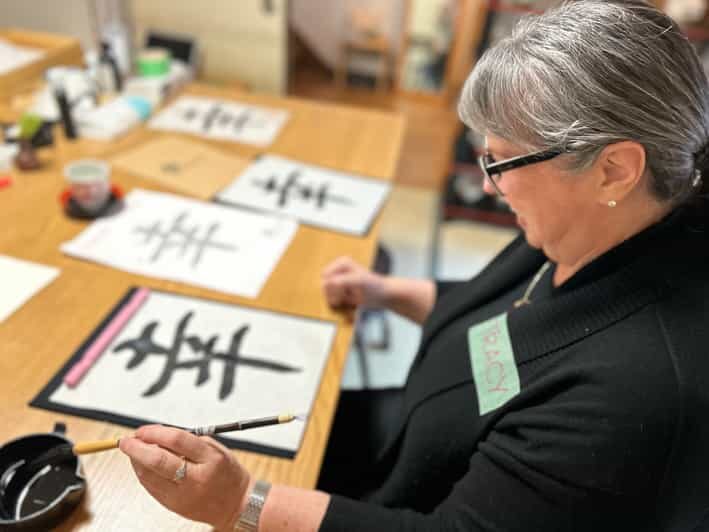
Before (or alongside) the writing, you’ll spend time in a real residential setting. That’s where the experience becomes more than a class.
In the reviews, people really valued the chance to have a conversation with the hosts. That’s the key. You get context for why calligraphy is still practiced, still taught, and still treated like a form of expression—not just a cultural activity for tourists.
It also changes how you view the finished artwork. When you create something in someone else’s space, it tends to feel more meaningful. You’re carrying home not just paper and ink, but a memory tied to a person and a place.
The Calligraphy Lesson: What Happens in Your One Hour
This activity is 1 hour, and it’s structured so you can get something satisfying even as a beginner.
A typical flow looks like this:
- The teacher explains what Japanese calligraphy is about and how the practice works
- You learn the correct brush movements and basic stroke logic
- You practice selected kanji patterns with guidance
- You choose a kanji that connects to you personally (think love, peace, strength, wisdom)
- You add your own name in Japanese so the piece becomes yours
- You finish with a final artwork you can bring home
Even if you’ve never held a brush before, the teaching style is designed to be practical. Reviews mention that you get the basics and you can feel the relaxing effect quickly—like your attention narrows in a good way.
Learning Brush Control: The Secret Is the Strokes, Not the Talent
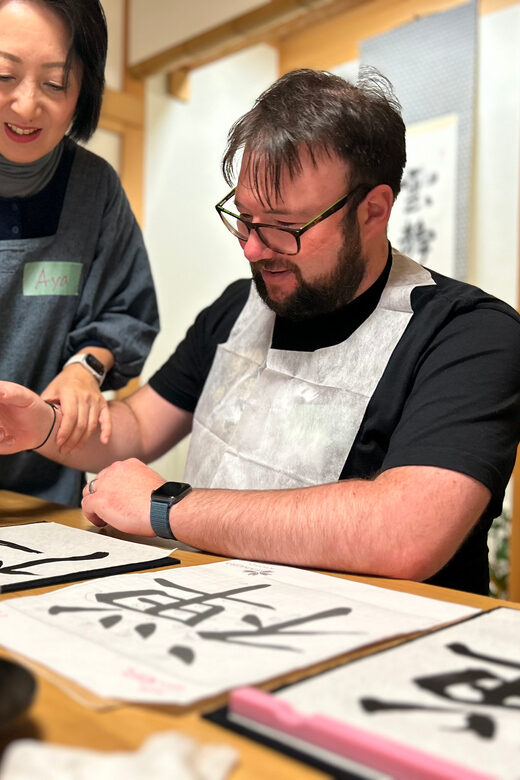
In calligraphy, most people think the goal is perfect beauty. In a good beginner class, the real goal is control.
Aya’s teaching approach (and the way the team supports you) focuses on:
- Brush angle and movement direction
- Stroke order and how strokes connect or separate
- How much pressure to use so the ink line looks intentional
- Spacing so the character doesn’t look crowded or lopsided
You’re not expected to become a master during an hour. But you are guided toward the correct motions. That’s why beginners often end up with a better final character than they thought possible.
Also, the team includes assistance when needed. Some classes are effectively one-on-one when the group is small, and that kind of attention makes your practice faster. You get quick corrections instead of vague advice.




Choosing Your Kanji Meaning: Turning a Character into a Message
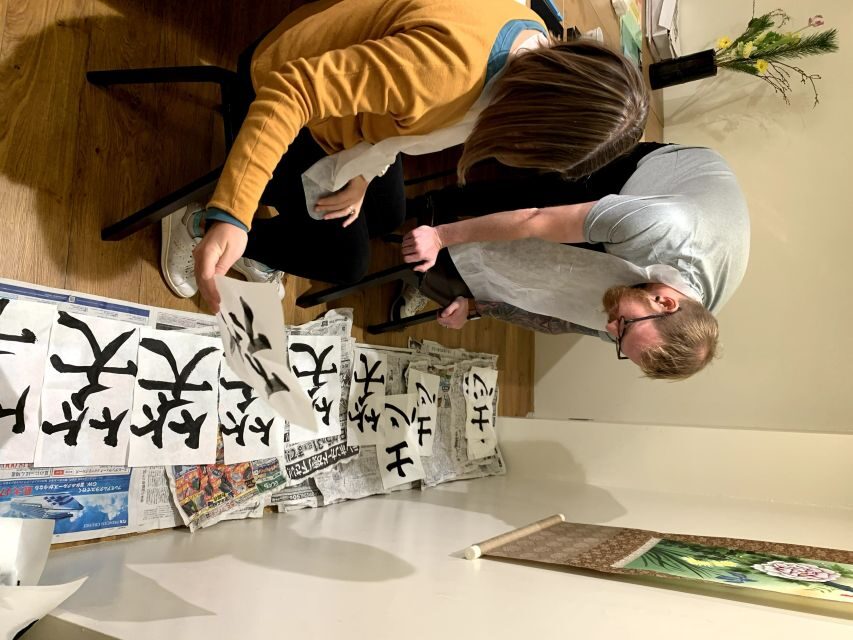
One of the most fun parts is choosing the kanji. Instead of writing random symbols, you pick something that feels personal.
The idea is simple: the character you choose reflects a value or emotion you want to carry with you. The notes mention options like:
- love
- peace
- strength
- wisdom
That choice changes your relationship to the writing. You’re not just copying shapes. You’re setting intention. And when you add your name in Japanese, your final piece becomes both cultural and personal—something you can show at home without it feeling generic.
Tools and Materials You Actually Need (and What They Mean for Value)
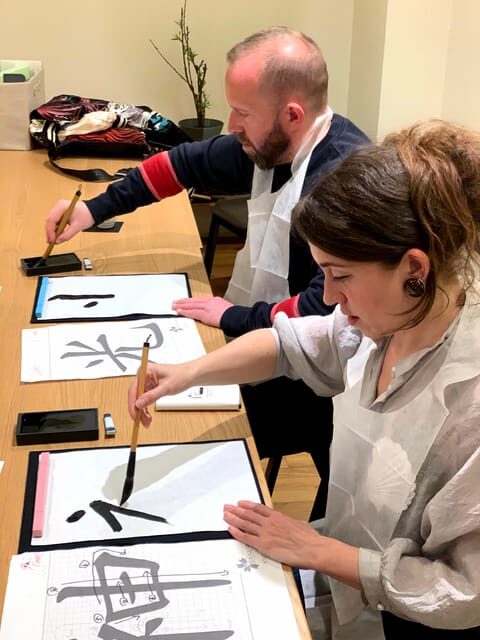
You don’t show up empty-handed. The class includes the calligraphy basics you’d otherwise have to buy or hunt down:
- Japanese paper (washi)
- ink
- calligraphy tools rental
- instruction and explanations about Japanese calligraphy
This matters for two reasons.
First, you avoid the classic souvenir trap: buying a cheap brush and ink kit that you never use again. Here, you use the real materials designed for the writing style.
Second, it makes the experience fair for the price. At $66 per person, you’re paying for teaching time, a guided lesson, and actual finished artwork created with proper supplies—rather than just a cultural photo-op.
What You Take Home: Your Wasşi Keepsake (with Your Name)
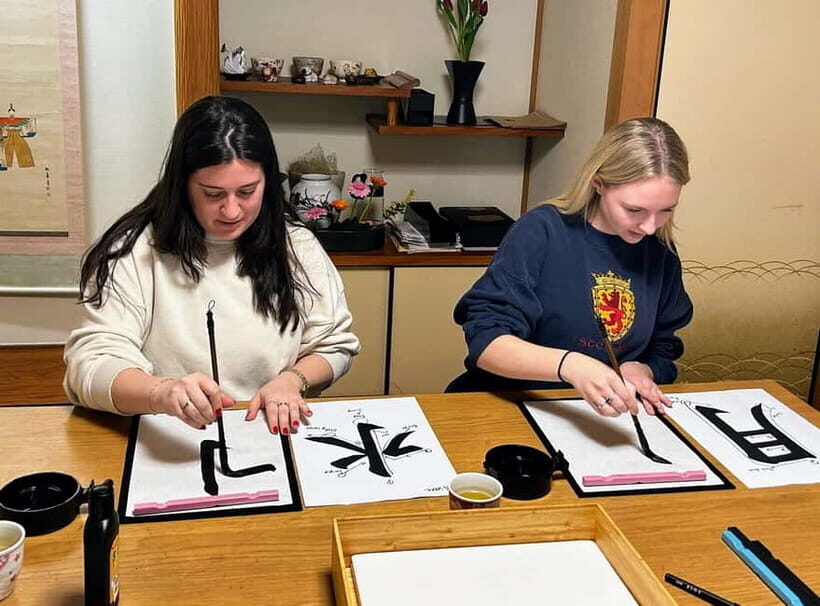
The final output is the best kind of souvenir: something you made with your own hands.
You’ll bring home your calligraphy art on washi paper, and many people also add their Japanese name. That makes it feel like a personal passport stamp, but on paper you can display.
In the reviews, people were genuinely surprised by how good the finished piece looked. When your teacher corrects the brush motions in the moment, it’s not magic—it’s coaching. And the moment you finish, you get quiet pride. It’s one of those rare activities where you can visibly track your improvement.
Also, the instructor team can take photos and video. That’s helpful because you may be focused on writing and don’t want to remember to document everything yourself.
Practical Etiquette: Socks-Only Indoors and Shoes-Off Rules
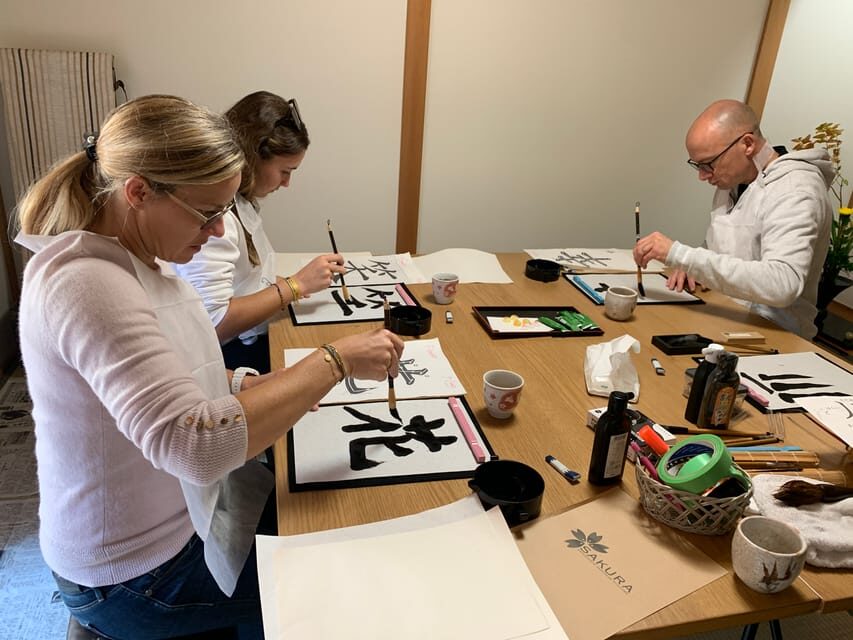
Japan home visits come with home rules, and this one is clear about them. Here’s what you should plan for:
- Bring socks. Bare feet aren’t acceptable indoors.
- No shoes indoors
- No smoking or vaping
- No alcohol or drugs
- Avoid strong fragrances
- Socks are available for purchase if you forget
This isn’t just fussiness. It’s part of how you respect the space. It also makes you feel more comfortable because you know exactly what the expectations are before you arrive.
A small timing note helps too: you’re asked to arrive about 5 minutes early. There’s also no waiting space if you arrive too early, so don’t show up 30 minutes before and wander like a detective. Aim for that sweet spot, then settle.
Who This Fits Best (and Who Might Be Happier Elsewhere)
This experience is not suitable for children under 13, so it’s mainly a good fit for teens and adults.
It’s especially good if you:
- Want a hands-on cultural activity that’s not exhausting
- Appreciate technique, not just sightseeing
- Like meaningful souvenirs you can display
- Prefer small, personal instruction over group chaos
If you’re expecting an hour-long crash course to make you a lifelong calligrapher, you’ll be disappointed. If you want a calm, guided introduction with a real keepsake at the end, it fits well.
Price and Value: Is $66 Fair for a Kyoto Home Visit?
Let’s be honest: $66 isn’t nothing. But in this case, you’re paying for three things that usually add up fast:
- Private-group teaching (including corrections while you write)
- Included tools and materials (washi, ink, brush tools)
- Access to a home setting near Nijō Castle plus a language-capable instructor team
You’re also getting time with the teacher’s explanations about calligraphy history and learning. Reviews mention that Aya shared details about the tradition and how she learned it herself. That’s not filler. It gives your strokes context.
So the value works best when you actually want instruction and a finished result. If your goal is only to take a quick look and move on, you might feel it’s too structured. If you want to slow down and make something, it’s money well spent.
Should You Book This Kyoto Calligraphy Home Visit?
Book it if you want an activity that feels personal, not staged. The combination of a local home visit near Nijō Castle and a guided calligraphy lesson gives you both cultural context and a take-home piece you’ll remember.
Skip it only if:
- you’re uncomfortable following home etiquette like socks-only indoors and shoes-off rules
- you arrive late often (the schedule is strict, and lateness can shorten or cancel the class)
- you need something suitable for kids under 13
If those don’t apply, this is the kind of Kyoto experience that turns into a story you can tell for years: a character you chose, a name you added, and the brush control you never expected to learn in one hour.
FAQ
How long is the Kyoto local home visit and Japanese calligraphy class?
The class lasts 1 hour.
How much does it cost per person?
The price is $66 per person.
Where do I meet for the class near Nijō Castle?
The location is about 200 meters west of Nijō Castle. It’s on the north side of Ebisugawa Street, just west of Nishinotoin Street. Across the street on the south side, you can see the Lions Mansion building. Use the venue name in your map app to find the right place.
What languages are the instructors?
The instructor team speaks English and Japanese.
Is this a private group?
Yes, it’s a private group.
What is included in the class?
It includes instruction, calligraphy tools rental, ink, and Japanese paper (washi).
Do I need to bring anything?
You should bring socks. Socks can be available to purchase if you don’t have them.
Are shoes allowed indoors?
No. Shoes are not allowed indoors, and bare feet are not acceptable.
What happens if I arrive late?
If you arrive late, your lesson time will be shortened accordingly. The class may not be offered if you are late by more than 15 minutes.
Is it suitable for children?
It is not suitable for children under 13.
FAQ
Is wheelchair access available?
Yes, the experience is wheelchair accessible.
Can I reserve now and pay later?
Yes, reserve now and pay later is offered.
What is the cancellation policy?
You can cancel up to 24 hours in advance for a full refund.