REVIEW · TOKYO
Asakusa: 3.5-hour Big-picture History Walk
Book on GetYourGuide →Operated by Arumachi, Inc. · Bookable on GetYourGuide
Asakusa can explain Japan fast. In this 3.5-hour big-picture walk, you connect temple gates, neighborhood streets, and modern Tokyo through the real turning points that reshaped the country. I love the big-picture storytelling that keeps history from feeling like random dates, and I also like that the group stays small (up to 8), with headsets when needed so you don’t miss details.
One possible drawback: you’re on your feet for a while in all weather, so wear shoes you trust and be ready for crowd pressure around the big temple areas.
In This Review
- Key takeaways before you go
- Start at Asakusa Station, then follow the river’s pull
- The isolation-to-reopening story that ties everything together
- Kaminarimon, Nakamise, and Hōzōmon: gates that mean something
- Sensō-ji and Asakusa’s shrine area: where belief turns visible
- Two religions, one shared everyday life
- Yōgō-dō Pavilion and the “sacred vs. secular” lesson
- Old streets, old pubs, and the postwar working-class vibe
- Asakusa Culture Tourist Information Center and the Edo-to-modern connection
- Price and value: what $88 buys you in real terms
- Who should book this walk, and who should skip it
- Should you book this Asakusa big-picture history walk?
- FAQ
- How long is the Asakusa big-picture history walk?
- What’s the group size?
- Is the tour in English?
- Where is the meeting point?
- Does the tour include snacks?
- Is hotel pickup or drop-off included?
- What should I bring?
- Is it suitable for people with mobility impairments?
- Can children join?
Key takeaways before you go
- Isolation, reopening, and one famous trade partner: You’ll get the why behind Japan’s long closure and how reopening led to global ripple effects, including art links to French Impressionism.
- Two religions, shared worshipers: You’ll see how Shinto and Buddhism work side-by-side in daily life, not as rival systems.
- East-meets-West parallels you can actually picture: Dragons, symbols, and old ways of thinking line up across cultures more than you’d expect.
- Sacred temple energy next to “secular” street life: You move from reverence to entertainment history in the same day and often within walking distance.
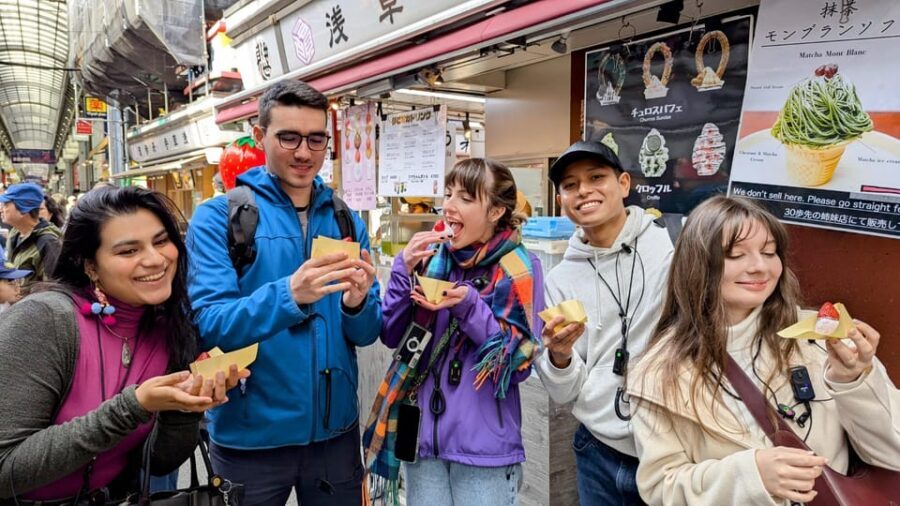
- Pacing that includes real breaks and snacks: Fresh traditional sweets and small bites keep the tour from feeling like a nonstop march.
- Guides who handle the crowd and your questions: Past groups have praised guides like Ai, Yasu, Taka, Jun Chan, and Yoko for calm crowd management and patient answers.
Start at Asakusa Station, then follow the river’s pull
Your day starts at a very practical spot: outside Exit 4 of Asakusa Station on the Ginza line (G19), right by a Burger King. From there, you head into Asakusa with a guide who frames the neighborhood like a map of ideas, not a list of sights. The group stays tight (max 8), which means you can hear the story and keep moving without feeling lost.
A short early segment near the Tokyo Cruise Asakusa Pier helps you “place” the area. You’re not just learning what’s on the streets; you’re learning why this part of Tokyo mattered. In a neighborhood this layered, that geography matters, because Asakusa’s history is tied to waterways, travel routes, and outside contact that later became so important.
Practical note: if you’re coming from elsewhere in Tokyo, build in a little buffer. The meeting spot is easy once you’re at Exit 4, but Tokyo stations can still play tricks with exits and signage.
You can also read our reviews of more walking tours in Tokyo
The isolation-to-reopening story that ties everything together
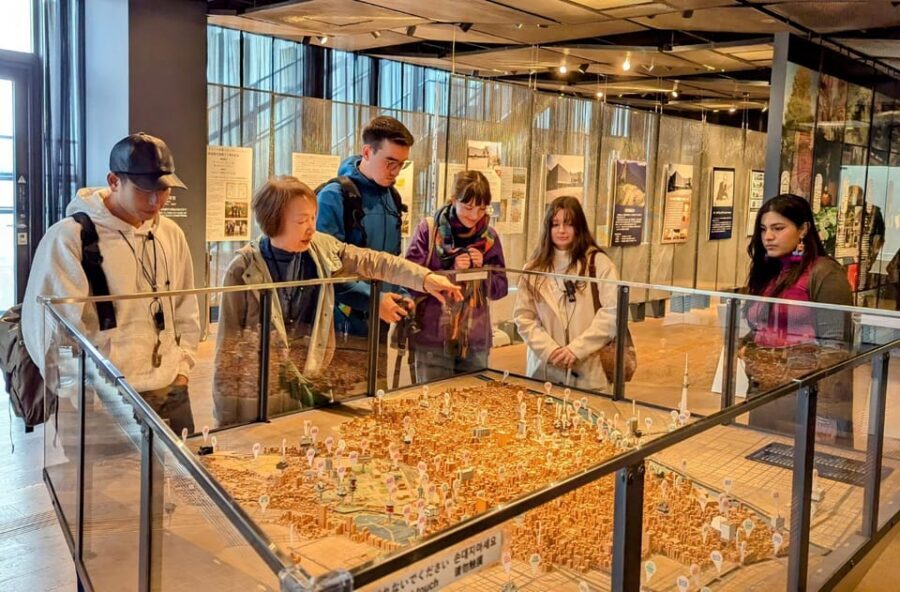
This walk has a backbone: Japan’s dramatic shift from long isolation to opening to the world. The guide doesn’t treat it like a history trivia topic. Instead, you use it as a lens to understand what you’re seeing around you.
Here’s what you’ll be unpacking as you move:
- Why Japan closed itself for so long
- Why the Netherlands became the key trading partner during isolation
- How symbols in the area can mark the country’s transition from closed to open
- How 19th-century Japanese art influenced the world, including the French Impressionists
This is the part I like most. You’ll end the tour with the big reason behind Japan’s global connection, not just a timeline. And once you have that framework, the rest of Asakusa makes more sense: gates feel less random, religion feels more lived-in, and even the “Japan vs. West” theme becomes something you can compare without stereotypes.
If you want history that actually helps you read the place, this is built for you.
Kaminarimon, Nakamise, and Hōzōmon: gates that mean something
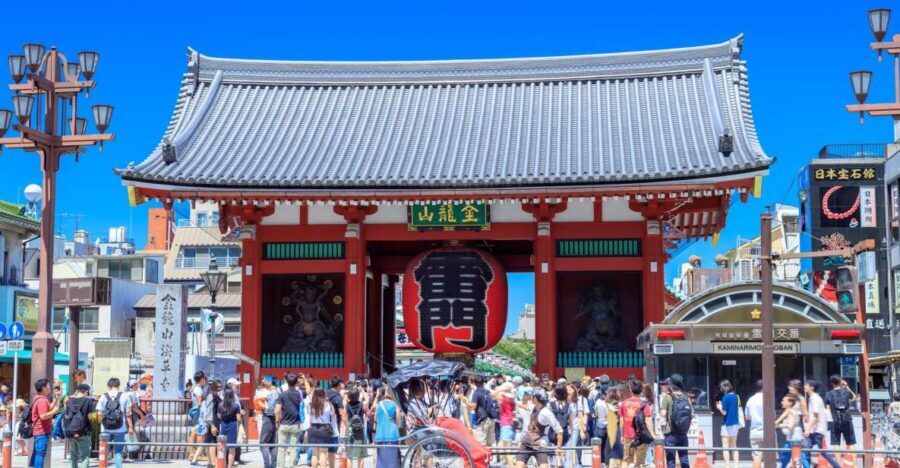
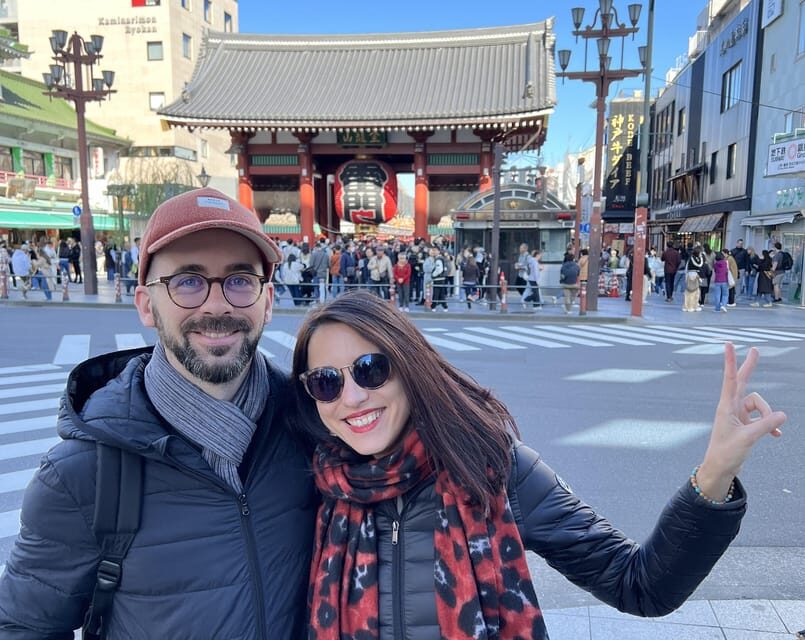
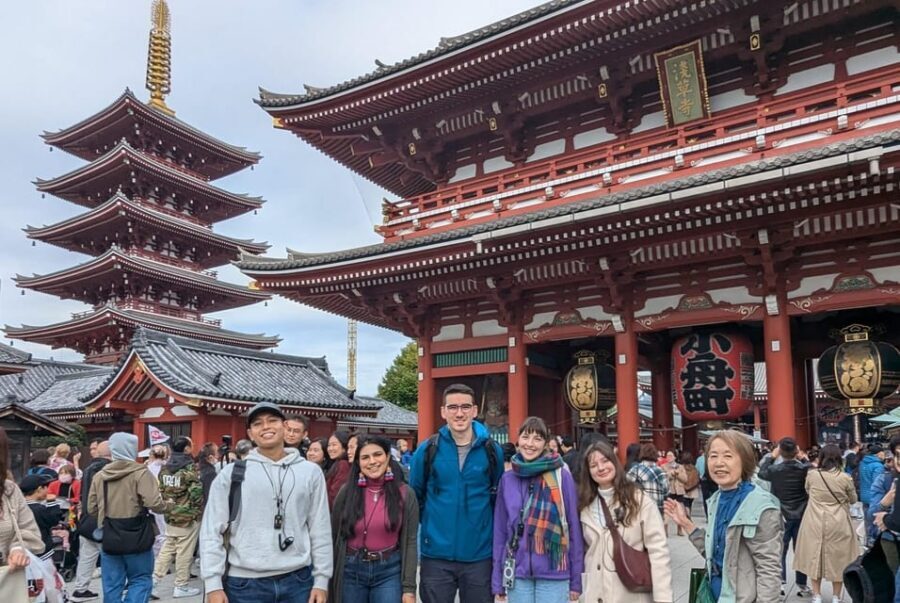
The route climbs through the iconic Asakusa approach—Kaminarimon, then Nakamise Shopping Street, then Hōzōmon Gate. These are the postcard steps, yes. But the payoff is that the guide explains why the gates and shopping street exist in the same space.
At Kaminarimon, you’re not just looking up; you’re learning how entry points function as social signals. In Japan, the way you move into sacred space often mirrors how a community understands itself. Then Nakamise gives you the everyday layer: a long shopping street where tradition and commerce sit side by side.
Next comes Hōzōmon Gate, which helps you “zoom in” from the neighborhood scale to the temple scale. It’s a classic visual threshold. The guide’s job is to make sure it doesn’t feel like scenery. You get context for what you’re crossing and why it matters historically and culturally.
Crowd reality check: this stretch can get busy. Your small group size and headset support help, but you’ll still be moving with other people near the main temple approaches. Give yourself patience, and keep your camera ready but not glued to your hands.
Sensō-ji and Asakusa’s shrine area: where belief turns visible
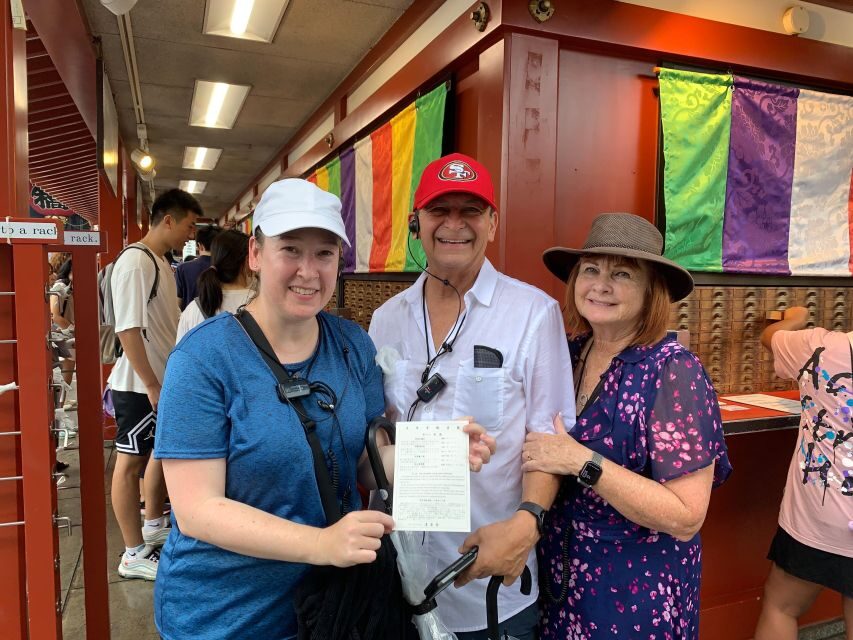
Sensō-ji is the centerpiece, and you spend enough time there (about 45 minutes) to actually absorb the space instead of just rushing through it. The guide uses the temple to explain beliefs that have shaped Japan for over a millennium.
What you’re getting here is practical context:
- What people worship, and why
- How the sacred isn’t only inside a building
- Why this area has both worship and street-life energy
Then you continue toward Asakusa Shrine for a shorter, focused stop. This is where the tour’s two-religion theme becomes tangible.
This matters for two reasons. First, you stop thinking of Japan as having one belief system dominating everything. Second, you learn that many people comfortably move between practices without treating it like a contradiction.
Two religions, one shared everyday life
One of the tour’s strongest themes is the way Japan’s major religions complement each other while sharing many of the same worshipers. In this neighborhood, that idea becomes easy to grasp.
You’ll hear how Shinto and Buddhism have worked together for a long time, not as a clean split between tribes. The guide explains why they can coexist peacefully, and how that shows up in ordinary life—at shrines, at temple grounds, and in the habits people carry without even thinking about it.
It’s also a lesson in human nature. Over and over, you’ll see that people don’t live only for the sacred or only for the secular. They vacillate. And Asakusa is a textbook example, because the temple energy sits next to entertainment history and everyday hustle.
You can also read our reviews of more historical tours in Tokyo
Yōgō-dō Pavilion and the “sacred vs. secular” lesson
The Yōgō-dō Pavilion stop is short, but it fits a bigger point. This tour keeps reminding you that sacred spaces in Japan are rarely isolated from daily life. Even when you’re standing near something spiritual, the neighborhood around you carries a real human story—work, leisure, ritual, and resilience.
From there, the route shifts toward street-level history. You’ll walk on lanes tied to older entertainment patterns, and the guide explains how this used to be a major fun district before places like Shinjuku and Shibuya took over that role. That contrast is the whole game: the same city can feel reverent in one direction and loud in the next, sometimes within a few minutes.
If you like your travel with meaning, this is where the tour feels most Japan-specific and most satisfying. You’re not just seeing what’s old. You’re learning how people used to spend their time—and what that says about the society that produced the city.
Old streets, old pubs, and the postwar working-class vibe
The later part of the walk leans into neighborhood detail. You’ll move through the kinds of streets that feel like they’re still speaking in the language of everyday life.
You’ll visit:
- Asakusa Nishi-sandō Shopping Street (a quieter, nostalgic shopping street feeling)
- Asakusa Mokubakan (time to stop, see, and learn)
- Hoppy Street (where the postwar working-class energy comes through)
The Hoppy Street vibe is the kind of detail I think makes tours memorable. It’s not museum-only Japan. It’s the Japan that fed people through real daily rhythms, with narrow lanes and old-style pubs that feel purposeful, not staged.
And here’s where the guide style really matters. Past groups have praised guides like Taka for paying attention to what you care about—architecture, history, even gardening—while avoiding pressure to shop. That’s a big deal in a shopping-heavy neighborhood. You get the cultural context without feeling shoved into purchases.
Tip for you: if you want photos, slow down. These lanes are easy to speed past when you’re focused on the next landmark. Give them a moment. That’s where the tour’s “nostalgia and beyond” theme actually lands.
Asakusa Culture Tourist Information Center and the Edo-to-modern connection
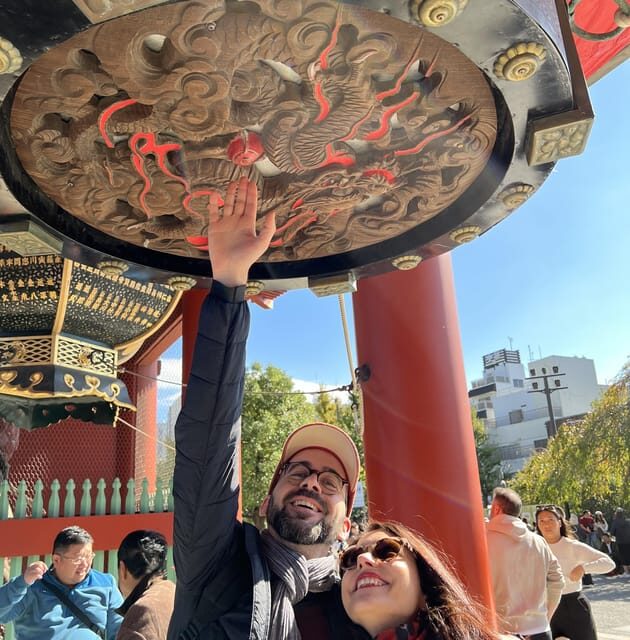
One stop I’d call out for its usefulness is the Asakusa Culture Tourist Information Center. It’s not just paperwork and maps. It’s the place where you often get a higher-level view of the area and how it fits into Tokyo.
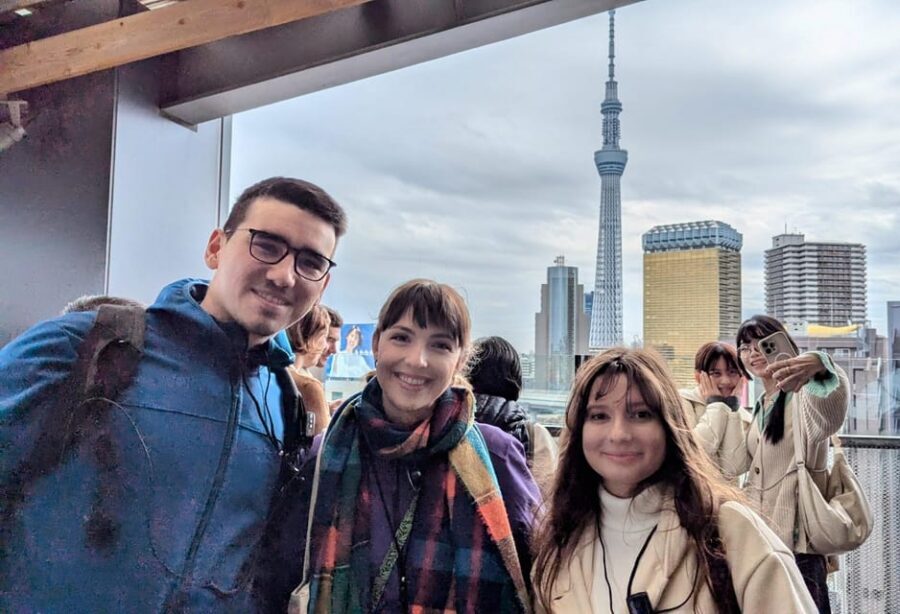
In particular, one guide’s explanations have included a fun detail about the Tokyo Skytree: the way its height is read as 634 meters, which can be interpreted as roku-san-yon (six-three-four). You might hear something like that while you’re there, especially if your guide is the type to connect local landmarks to language and pattern thinking.
Even without that specific wordplay, the center helps you bridge two ideas at once: Edo-era nostalgia and the fact that Tokyo keeps rewriting itself. The tour doesn’t just romanticize the past. It shows how the present grew out of those shifts.
Price and value: what $88 buys you in real terms
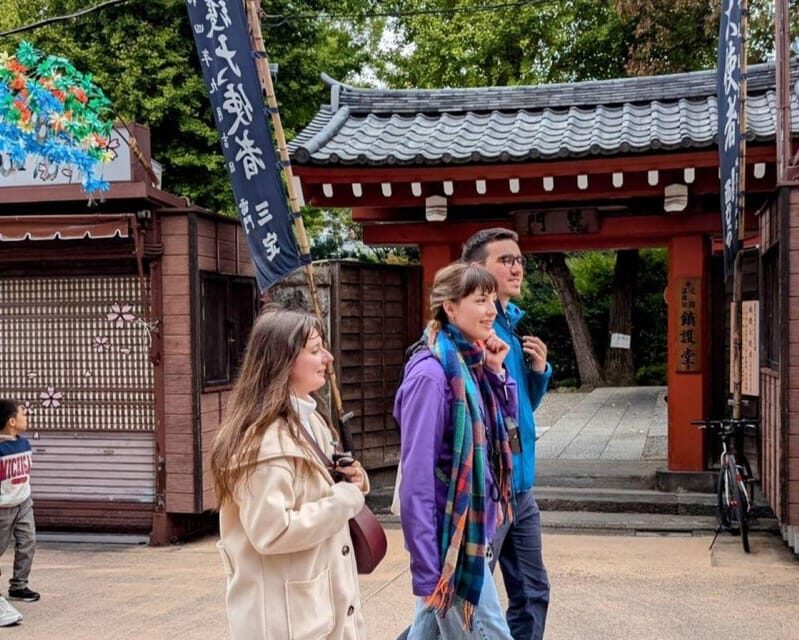
At $88 per person for about 210 minutes, you’re paying for more than walking. You’re paying for guided interpretation, a small group size, audio support, and included food.
Here’s the value breakdown in plain language:
- Certified English-speaking guide: You’re not relying on your own guesswork to connect religion, politics, and daily life.
- Small group (max 8): Less crowd frustration, more chance to hear key points.
- Headsets for groups of 3+: This matters around Sensō-ji where wind, noise, and traffic can swallow normal conversation.
- Fresh traditional snacks and sweets: This turns the route into an actual experience, not just a history lecture on the move.
What you won’t get is hotel pickup and drop-off. You meet in Asakusa and handle your own way there, which is fine because the meeting spot is clear and central to the area you’re exploring.
I’d call this a good value if you want context. If you only want photos and you already know Japanese history basics, you might question the price. But if you want a framework that makes the neighborhood click, $88 starts to look fair.
Who should book this walk, and who should skip it
This is a strong fit if you want:
- A big-picture history explanation that links isolation, reopening, and global influence to the streets you walk
- Clear, practical understanding of Shinto and Buddhism living side-by-side
- A guided route that balances temple time with street-life context
It may not fit if you:
- Need a tour with minimal walking. The route involves moderate walking and uneven urban surfaces.
- Rely on mobility accommodations. This experience is not suitable for people with mobility impairments.
- Prefer museum-only pacing. This is active, outdoors, and built around neighborhoods.
Families are welcome, and children younger than 6 may join without charge, but the historical focus is recommended more for adults.
Should you book this Asakusa big-picture history walk?
Yes—if you’re the type of traveler who hates memorizing dates but loves learning why a place feels the way it does. This tour gives you a structure to understand Japan’s shifts from closed feudal life to a global-facing country, and it does it in the one neighborhood that makes those themes feel real.
Skip it if you only want the highlights and you’re okay doing guesswork on context. You’ll still see famous spots, but the real payoff here is the interpretation: the religious coexistence, the sacred vs. secular rhythm, and the cultural links that reach well past Tokyo.
If you do book, show up with comfortable shoes and a calm attitude about crowds. Bring water. Then let the guide do what guides do best: connect the dots before you leave the neighborhood.
FAQ
How long is the Asakusa big-picture history walk?
It lasts about 210 minutes, or roughly 3.5 hours.
What’s the group size?
The tour is limited to a small group, with a maximum of 8 participants.
Is the tour in English?
Yes. The tour includes an English-speaking certified guide, and English audio is also included.
Where is the meeting point?
Meet in front of a Burger King restaurant next to Exit 4 of Asakusa subway station (Ginza line, G19).
Does the tour include snacks?
Yes. You get a selection of freshly made Japanese traditional snacks and sweets.
Is hotel pickup or drop-off included?
No. You’ll handle your own transportation to and from the meeting point.
What should I bring?
Wear comfortable shoes and bring water. Bottled water is recommended, though vending machines are available.
Is it suitable for people with mobility impairments?
No. The tour is not suitable for people with mobility impairments.
Can children join?
Children younger than 6 may join without charge. The historical focus is recommended for adults, but families are welcome.