REVIEW · OSAKA
Authentic SUSHI Course Cooking Class
Book on Viator →Operated by Sakura Cook · Bookable on Viator
Osaka has a special kind of food class energy, and this one starts with sushi rice—right away. I love that you get hands-on practice with your own rice setup, and I also like the full meal feel: miso soup, sushi, and yakitori chicken all in one sitting. One thing to think about: the class is fast-paced, and one note from past guests was that the recipe handout can feel a little light and instructions not always detailed step-by-step.
For the price of $99.08, you’re not just watching. You’re cooking with included ingredients, eating what you make, and leaving with skills you can repeat at home. The group stays small, so the instructor can check your technique and keep everyone involved.
In This Review
- Key Points You’ll Care About
- Price and What You Really Get for $99.08
- Where You Meet in Kitahorie (and Why That Area Helps)
- The Small-Group Advantage: Staying Under 14 (and Sometimes Under 8)
- Step 1: Sushi Rice From Scratch (Wooden Tub, Paddle, and Hand Skills)
- Step 2: Rolled Egg Sushi With a Rectangle Pan (Tamagoyaki Basics)
- Step 3: Dashi and Miso Soup With Fancy-Shaped Vegetables
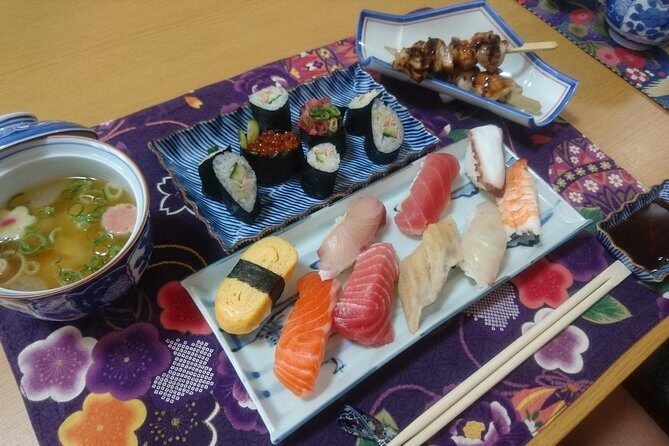
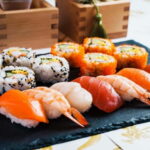
- The Sushi Course Menu: Nigiri, Gunkan-Maki, and One Rolled Sushi
- Yakitori Chicken: Skewer, Marinade, Grill
- What Happens at the Table: Itadakimasu and Seasonal Dessert
- Instruction Style: Fumi and Sakura-Like Detail, Step-By-Step Support
- Timing: An Evening Class That Still Feels Like a Meal, Not a Grind
- A Balanced Take: The One-Letter Grade I’d Watch For
- Who This Class Is Best For (and Who Might Be Happier Elsewhere)
- Should You Book This Osaka Sushi Course Cooking Class?
- FAQ
- How long is the sushi course cooking class?
- Where does the class start?
- What time does it start?
- Is it lunch or dinner?
- What dishes will we make?
- How many people are in the group?
- Are ingredients included?
- Do we eat what we cook?
- Can children join?
- Are there dietary accommodations?
- How does confirmation work?
Key Points You’ll Care About
- Your own sushi rice station first: each participant gets a wooden tub and paddle to start shaping and seasoning.
- A real course menu, not just one sushi roll: nigiri, gunkan-maki, plus a rolled sushi, along with miso soup and yakitori.
- Tamagoyaki made with a rectangle pan: learning the layered egg technique with an easier-to-control tool.
- Umami basics built in: you’ll get background on things like umami and bonito as you cook.
- Small group size: listed as up to 14, with a booking cap that can be as low as 8, so you get attention.
- You eat your own work: chopsticks, a full plate moment, and a complimentary seasonal dessert.
Price and What You Really Get for $99.08
At $99.08 per person for about 2 hours 30 minutes, the value here is mainly about input and output. The inputs are everything included: ingredients for multiple dishes, plus the tools and guidance you need to actually make them. The output is the key: you don’t leave with a snack. You sit down and eat what you made, and you get a seasonal dessert afterward.
If you’ve done cooking classes where you spend most of the time waiting for instructions, this setup feels different. The early rice station means you begin doing the core technique quickly, and then you build from there into dashi, miso soup, and the full sushi course.
One more practical point: because the class ends back at the meeting spot, you’re not stuck figuring out a second destination for dinner. That matters on an evening in Osaka when you might already be tired from sightseeing.
You can also read our reviews of more cooking classes in Osaka
Where You Meet in Kitahorie (and Why That Area Helps)
The meeting point is Banix北堀江 Japan, at 550-0014 Osaka, Nishi Ward, Kitahorie, 3-chōme62 システマギャラリー. The listed start time is 5:30 pm, and the activity ends back at the meeting point.
This matters because Kitahorie is the kind of neighborhood where you can usually keep your evening simple. You can pair this with dinner plans before or after nearby, without building a whole transit route around the class. The tour also notes it’s near public transportation, so getting there is usually straightforward.
You’ll also use a mobile ticket, so don’t forget to have your phone charged and ready. Confirmation is handled within 48 hours, depending on availability.
The Small-Group Advantage: Staying Under 14 (and Sometimes Under 8)
This is a class designed for a small group. The experience is described as maximum 14 participants, and booking information also notes a maximum of 8 travelers. Either way, you’re not in a big studio with a dozen strangers all trying to do sushi at once.
In a hands-on class, attention is everything: how you handle rice, how you season it, and how you roll or shape things matters. The instructor’s role here is very active—checking your steps and making sure you can finish with confidence. Past guests also highlighted instructors who involve every person, not just the loud talkers.
For you, that means fewer awkward moments like, What am I doing next? You’ll still move at a cooking pace, but you’re less likely to fall behind.
Step 1: Sushi Rice From Scratch (Wooden Tub, Paddle, and Hand Skills)
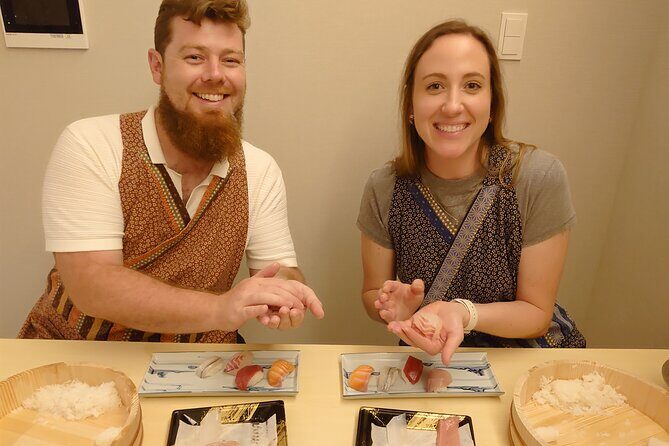
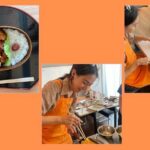
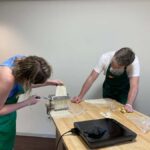
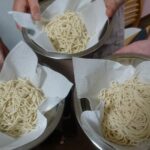
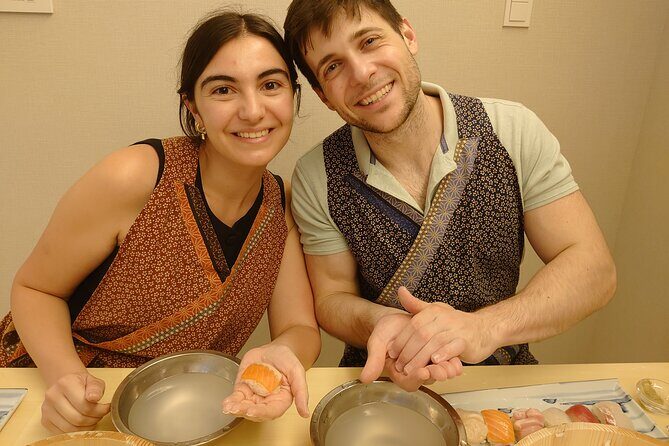
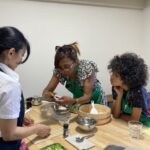
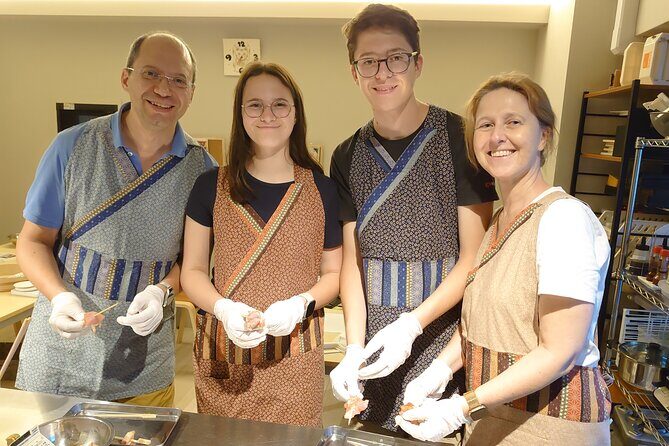
The class begins with a core idea: sushi starts with the rice, not the fish. Everyone puts on an apron and starts making sushi rice at the same time—but with a twist. Each participant gets their own setup: a wooden tub and paddle, so you make your rice separately.
This is where the learning becomes practical. Rice isn’t just ingredients. It’s texture and temperature and how you treat it while seasoning. You’ll learn the process of shaping and seasoning the rice properly, including using your hands during key steps.
One thing I’d watch for if you’re the type who likes neatness: sushi rice can be sticky and a little messy at first. That’s normal. If you’ve ever been nervous about working with your hands, this is still manageable because you’re doing it in a guided, step-by-step way.
Step 2: Rolled Egg Sushi With a Rectangle Pan (Tamagoyaki Basics)
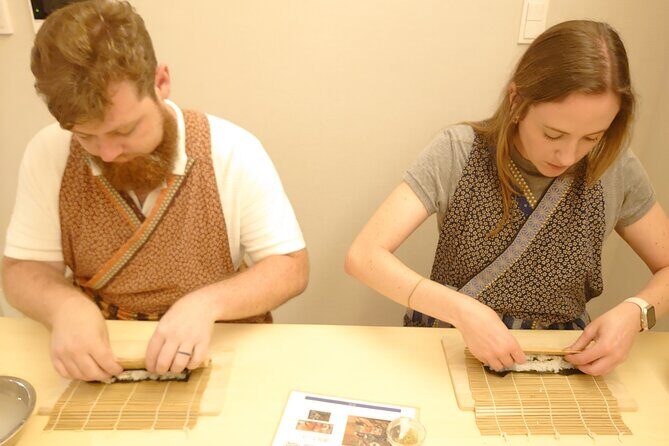
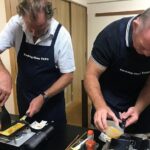
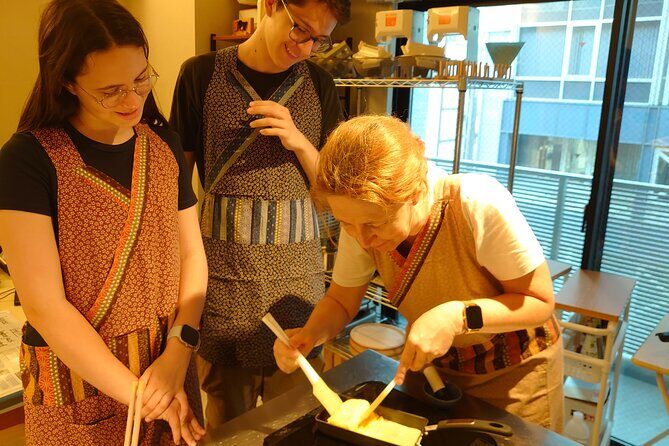
After rice, the group moves together into making rolled egg sushi. You’ll use a rectangle-shaped frying pan to make rolled eggs—tamagoyaki style—and then use that technique for egg sushi.
This is one of the clever parts of the menu. A rectangle pan makes it easier to control the roll and layer the omelet consistently. Even if you’ve never made tamagoyaki before, the tool and method reduce frustration.
And it’s not just egg for filler. The egg component helps balance the meal. It also gives you a different kind of technique—rolling and layering—so you’re not stuck doing only shaping work with the rice.
A few more Osaka tours and experiences worth a look
Step 3: Dashi and Miso Soup With Fancy-Shaped Vegetables
Next comes broth and soup. You’ll make dashi, then turn it into miso soup. The class includes miso soup details like tofu and vegetables that are described as fancy-shaped.
Why this is worth your time: miso soup is not just a side dish in Japan. It’s one of those everyday foods that teaches you how flavor builds—especially the umami side of Japanese cooking. Past guests specifically called out getting background knowledge around concepts like umami and bonito while cooking, which makes the meal feel more intentional.
If you’re trying to understand Japanese flavor instead of memorizing recipes, this part helps you connect the dots. You’ll taste the result, and you’ll know what went into it.
The Sushi Course Menu: Nigiri, Gunkan-Maki, and One Rolled Sushi
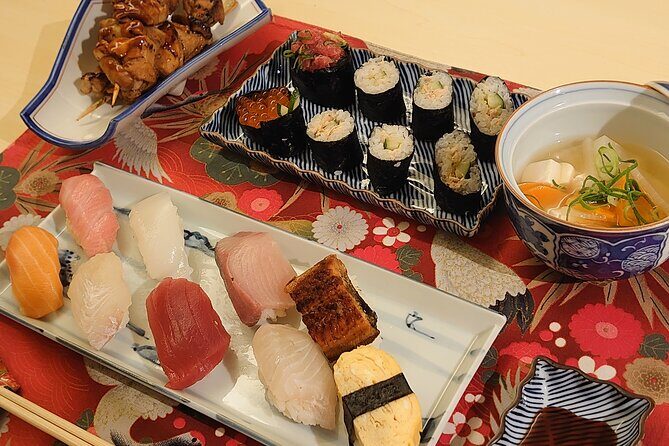
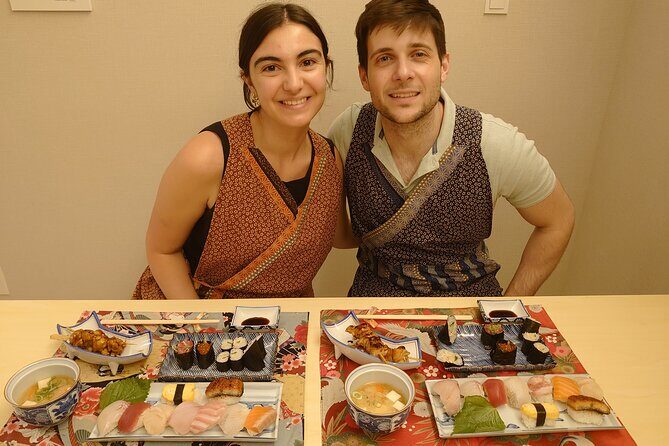
This isn’t a class that stops at a single roll. You’ll make three kinds of sushi, with a pretty clear quantity plan:
- 9 nigiri sushi
- 2 gunkan-maki
- 1 rolled sushi
That menu distribution matters because each sushi type teaches a different skill. Nigiri is about shaping and balance. Gunkan-maki is about holding toppings and getting the form right. The rolled sushi adds the technique of rolling and portioning, which is usually where people either learn fast or get stuck—so getting guided help here is a real win.
Also, everything you need is included. You’re not paying and then running out to buy ingredients right after class.
One practical tip for you: if you want to take pictures, do it quickly during the plating step. Cooking creates steam and movement, and the best photo moment is usually right before you sit down.
Yakitori Chicken: Skewer, Marinade, Grill
Alongside the sushi and soup work, you also make yakitori chicken. The class includes skewering and grilling, and the cooking process includes marinating the chicken first.
This part changes the texture of the experience. Sushi rice and rolling can feel delicate. Yakitori feels more direct: the chicken changes as it grills, and you get that satisfying heat-driven progress.
If you like Japanese comfort food beyond sushi, this yakitori addition is a big reason the class feels like a real dinner rather than a sushi-only demo.
What Happens at the Table: Itadakimasu and Seasonal Dessert
At the end, you place your dishes, set out chopsticks, and enjoy the meal you cooked. You’ll start with the Japanese meal phrase Itadakimasu, then dig in.
You also get a complimentary seasonal dessert. Past guests mentioned sweets and a dessert they enjoyed right after class, and one person even took a dessert along for travel.
This ending is more than a feel-good finish. It’s also how you confirm the technique worked. If the rice seasoning is right, you taste it immediately. If miso soup balance is good, it stands out as comfort food, not just instructional material.
Instruction Style: Fumi and Sakura-Like Detail, Step-By-Step Support
The instructor is described as a professional guidance role, and review feedback puts real emphasis on teaching that’s clear, encouraging, and detail-focused. Two guide names showed up in past experiences: Fumi and Sakura.
What you should look for in this class style:
- Step-by-step coaching so you don’t feel lost
- Patience with hand skills like rice handling and shaping
- A chance for you to interact, not just follow
- Background context tied to the dishes (like umami)
If you’re traveling solo, this class can also work well. One solo guest noted the experience felt unique and still very supportive, which is what you’d want from a small cooking class.
Timing: An Evening Class That Still Feels Like a Meal, Not a Grind
The duration is about 2 hours 30 minutes. With the start time at 5:30 pm, it’s positioned as an early dinner plan.
For you, that’s great if:
- you want dinner handled
- you prefer an activity that has a built-in payoff
- you don’t want to spend the night doing paperwork-style instructions in a kitchen
For families too, it tends to fit well with teens who are interested in food. One family with two teenagers reported enjoying the experience together.
One note to consider: you’re going to be doing multiple steps, so bring your energy. If you’re already running on fumes from a full day, you might feel the pace more than the fun. A class this short still needs focus.
A Balanced Take: The One-Letter Grade I’d Watch For
Even with the strong overall rating, there are a couple of considerations.
One past guest felt the recipe provided afterward was a bit light, and that not every step was fully spelled out. That doesn’t mean you won’t learn. It means if you want a very detailed written recipe you can follow word-for-word later, you may want to treat this class as skills-first, not document-first.
So for your planning: take notes during the most important steps—rice seasoning and shaping, and the roll technique. If you do that, you’ll get the best long-term value.
Who This Class Is Best For (and Who Might Be Happier Elsewhere)
This class suits you if you want:
- real hand-on sushi practice, not just tasting
- a menu that includes sushi, miso soup, and yakitori
- a small group where you can ask questions
- a professional instructor guiding technique
It’s also a strong fit if you’re in Osaka for a short time and want a high-impact cultural food activity in one evening.
If you’re a total sushi beginner who only wants one simple roll, you might find the full course menu ambitious. But if you enjoy learning a sequence, it’s a great way to level up fast.
Should You Book This Osaka Sushi Course Cooking Class?
Yes, you should book it if you’re ready to cook and eat a full Japanese meal in about 2.5 hours. The value comes from the combination of small-group attention, hands-on technique (especially the sushi rice start), and a complete dish lineup that ends with your own plated meal plus dessert.
I’d especially lean toward booking if you want to understand sushi at a fundamentals level—rice, broth, miso, and shaping—because that’s exactly what this class builds toward.
If you’re the type who needs extremely detailed written instructions afterward, ask yourself whether you’ll be satisfied with learning skills in the moment and using your own notes later. If yes, this is an excellent choice.
FAQ
How long is the sushi course cooking class?
The class runs about 2 hours 30 minutes (approximately).
Where does the class start?
You meet at Banix北堀江 Japan, 550-0014 Osaka, Nishi Ward, Kitahorie, 3-chōme62 システマギャラリー.
What time does it start?
The listed start time is 5:30 pm.
Is it lunch or dinner?
The class offers a choice of lunch- or dinnertime to match your schedule.
What dishes will we make?
You’ll make sushi and other Japanese dishes including miso soup and yakitori chicken. The sushi course includes 9 nigiri, 2 gunkan-maki, and 1 rolled sushi.
How many people are in the group?
It’s described as a small-group experience with a maximum of 14, and the booking info also states a maximum of 8 travelers.
Are ingredients included?
Yes. The class includes all ingredients, plus some sweets to enjoy afterward.
Do we eat what we cook?
Yes. After cooking, you’ll place the dishes, use chopsticks, and enjoy the meal you made, served with a complimentary seasonal dessert.
Can children join?
Children must be accompanied by an adult.
Are there dietary accommodations?
If you have specific dietary requirements, you should advise them at the time of booking.
How does confirmation work?
Confirmation is received within 48 hours of booking, subject to availability.