REVIEW · KYOTO
Kyoto: Gion & Geisha District Night Time Walking Tour
Book on GetYourGuide →Operated by Traveling Tokyo · Bookable on GetYourGuide
Gion changes after dark, fast. You get the lantern-lit Kyoto many postcards miss: Yasaka Shrine, quiet lanes, and the formal hush of Hanamikoji Street. At a budget-friendly $20, it’s an efficient way to understand why this neighborhood matters in Japanese life.
I love two things most. First, the tour is led in fluent English, with guides like Pedro, Majo, Nay, Yuvia, Wilber, and Bell getting praised for being friendly and detail-forward. Second, the route mixes big-name sights with culturally specific stops, including the Power Stone ritual at Yasui-Konpiragu and the stories behind the geiko/maiko world.
One heads-up: it’s not suitable for wheelchair users. Also, since it’s only 2 hours, you’ll keep moving, so this isn’t the best fit if you want to linger for long periods in one place.
In This Review
- Key things that make this Gion night walk worth your time
- Why Gion at night feels like a different Kyoto
- Meeting at Starbucks by Kyoto Gion Hotel: quick orientation, easy start
- Yasaka Shrine after dark: the festival connection you don’t get from photos
- Maruyama Park: a calm pause that keeps the walk enjoyable
- Nene no Michi to Ninenzaka: stone lane to photogenic slope
- Yasui-Konpiragu’s Power Stone archway: a ritual moment to respect
- Hanamikoji Street: where the geiko world becomes understandable
- Price and value: why $20 for 2 hours can make sense in Kyoto
- Who should book, and who might skip it
- Quick tips to get better photos and a smoother walk
- Should you book the Kyoto Gion and Geisha District Night Walk?
- FAQ
- How long is the Kyoto Gion night walking tour?
- Where do I meet the guide?
- Is the tour available in English?
- Are photos included?
- Is this tour wheelchair accessible?
- Can I cancel and pay later?
Key things that make this Gion night walk worth your time
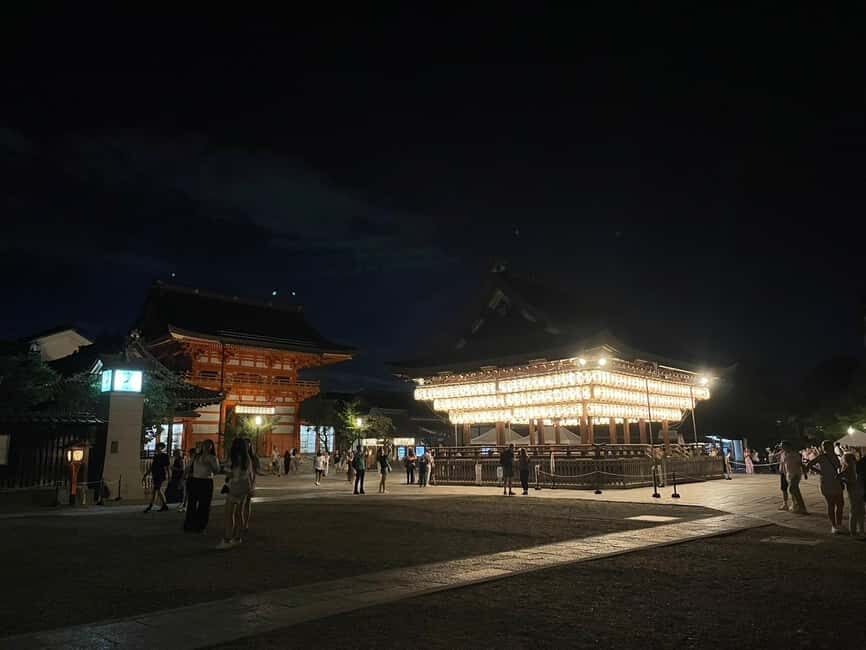
- Yasaka Shrine at night ties festivals, spirituality, and Kyoto tradition into one story
- Maruyama Park break gives you a calm pause before the photo lanes
- Nene no Michi and Ninenzaka let you walk old-town streets that feel like another era
- Yasui-Konpiragu’s Power Stone archway adds a hands-on ritual moment (watch respectfully)
- Hanamikoji Street focus connects the architecture you see with the geiko/maiko culture behind it
- Photos plus an English guide means you spend less time figuring things out and more time looking
Why Gion at night feels like a different Kyoto
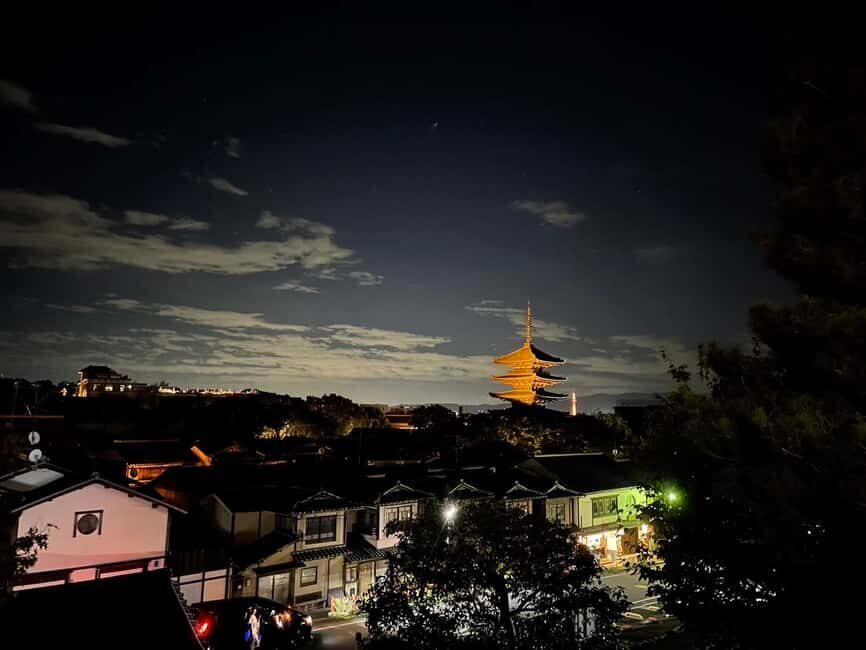
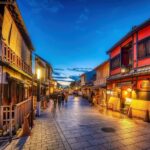
Daytime Gion is pretty, but it’s also crowded and busy. At night, the mood shifts. The street textures—wood storefronts, stone lanes, shrine paths—show up better under soft lighting. And because you’re walking in the evening, you get a calmer rhythm than the midday crush.
This is also when the neighborhood’s “layers” make more sense. You start with a major spiritual landmark, then you move into garden quiet, historic slopes, and finally the geiko streets. By the time you reach Hanamikoji, you’re not just sightseeing. You’re connecting the dots between sacred space, community life, and the refined arts practiced in Gion.
From what people liked most in their experiences, guides do a good job keeping the stories practical, not just academic. Expect conversation, question time, and explanations that help you read the area instead of simply walking through it. If you’ve ever felt lost in Gion—like you’re seeing beautiful streets but not understanding why—this evening structure helps.
And yes, there’s a chance to see geiko or maiko briefly, which is one reason many people choose the night. It’s not guaranteed, but it does happen enough that guides are ready for it.
You can also read our reviews of more walking tours in Kyoto

Meeting at Starbucks by Kyoto Gion Hotel: quick orientation, easy start
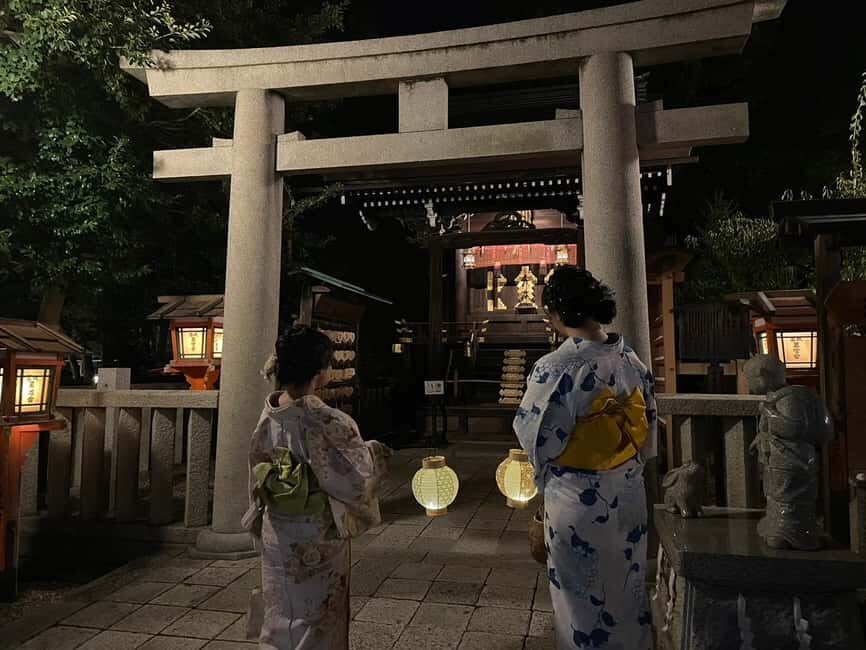
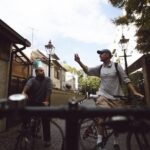
You meet in front of Starbucks located next to Kyoto Gion Hotel (walking distance from the Western Tower Gate entrance of Yasaka Shrine). Using that well-known landmark helps you arrive without stress, even if you’re not fluent in Japanese.
The tour runs for about 2 hours, which is the sweet spot for an evening walk. You’ll cover several stops without burning your night. It also means the guide keeps the pace moving. You’re there for atmosphere and meaning, not for hours of sitting around.
Since English is provided, you’re not stuck translating signs or guessing at details. Guides are praised for answering questions and helping people who are traveling solo with photos. That matters in Gion, where your best shots often depend on timing and angle—not just having a good camera.
One more practical thought: winter evenings can be cold. If you’re walking in December or similar weather, pack warm layers. Night photos look great, but chilly legs don’t.
Finally, this isn’t for wheelchair users. The route includes walking on older streets and shrine/garden areas that aren’t described as step-free.
Yasaka Shrine after dark: the festival connection you don’t get from photos
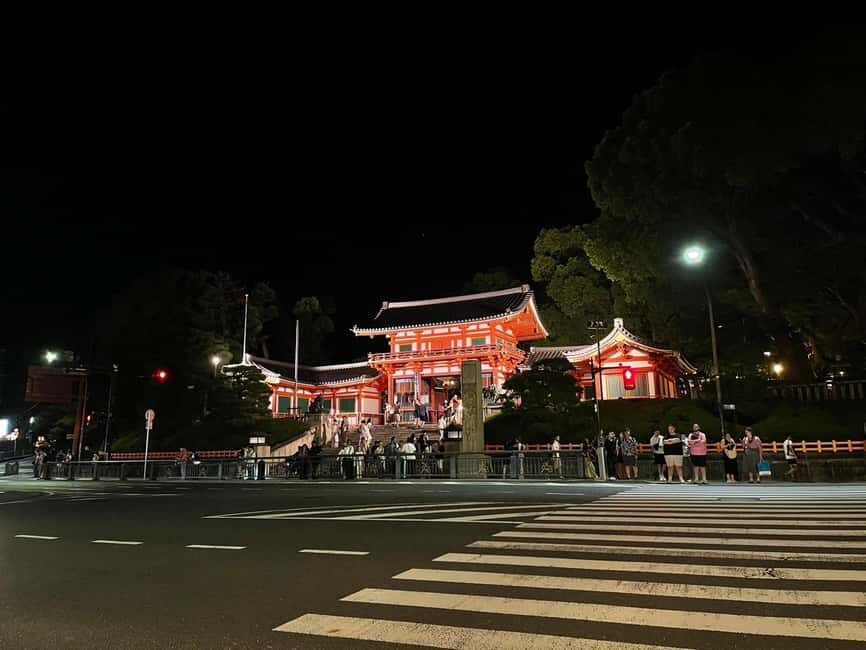
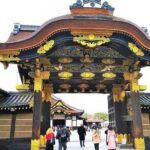
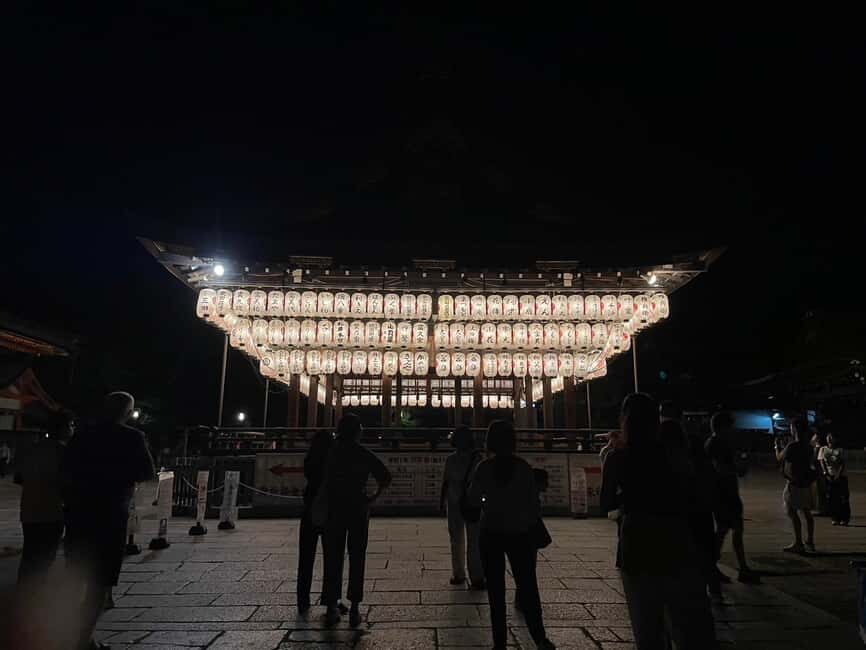
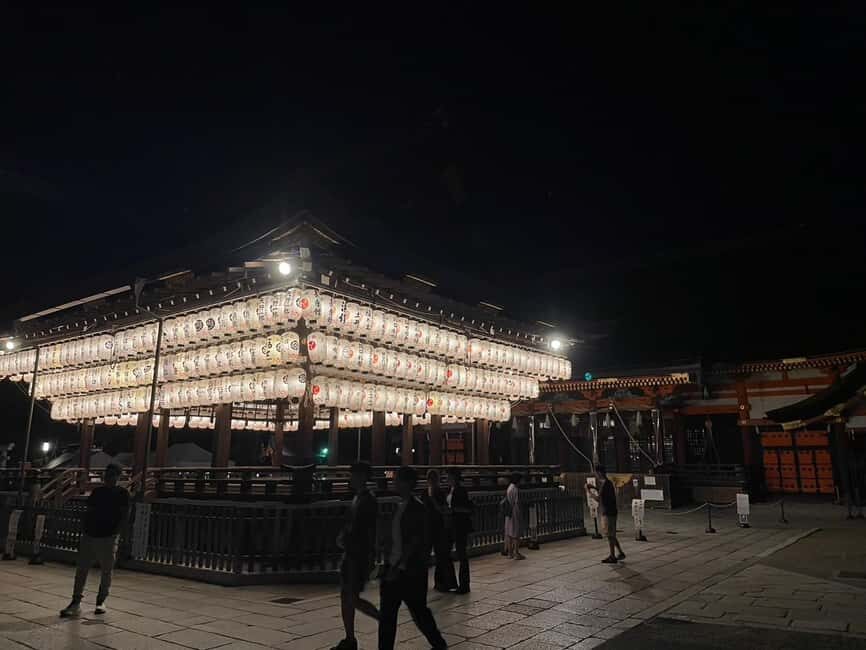
Yasaka Shrine is the emotional starting point. It’s one of Kyoto’s most treasured spiritual landmarks, and your guide focuses on why it matters—especially its ties to Kyoto’s festivals and the traditions that swirl around this part of town.
At night, shrines feel less like a checklist item and more like a living space. You can better sense the solemn rhythm. That’s where the guide’s context helps. Instead of only seeing a gate and hall, you learn what the place represents and how it connects to the neighborhood identity.
You’ll likely get guided time here (about 20 minutes), long enough to understand the basics and orient yourself before you move on. It also sets up the rest of the walk. When later you’re on historic lanes and near geiko culture, the shrine stop makes the whole evening feel cohesive.
If you’re the type who likes asking questions, this is a good moment. People frequently get more from a guided tour when they can ask, Why does this look this way? What does it symbolize? Yasaka is full of those answers.
Maruyama Park: a calm pause that keeps the walk enjoyable
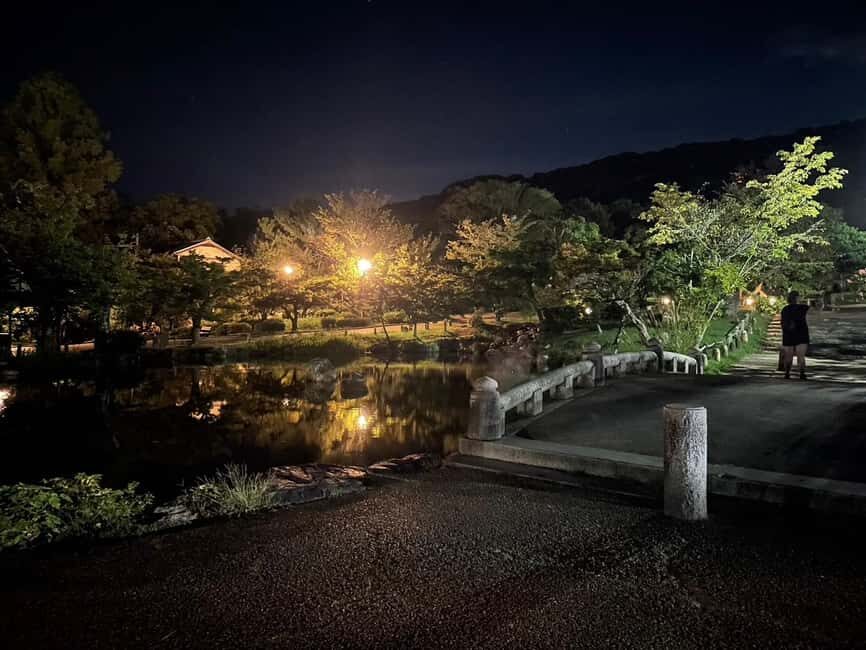
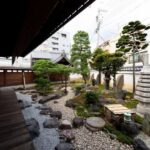
Right after the shrine, you head toward Maruyama Park, Kyoto’s oldest public garden. This isn’t just a scenic break. It’s a change in pace, a chance to absorb the softer side of Kyoto before you hit the tighter old-town lanes.
In a tour that’s already packed with lanes, slopes, and shrines, a garden stop is smart. It gives your brain somewhere to rest. You’ll be walking through small spaces later, so having a quieter “reset” makes the whole evening feel less rushed.
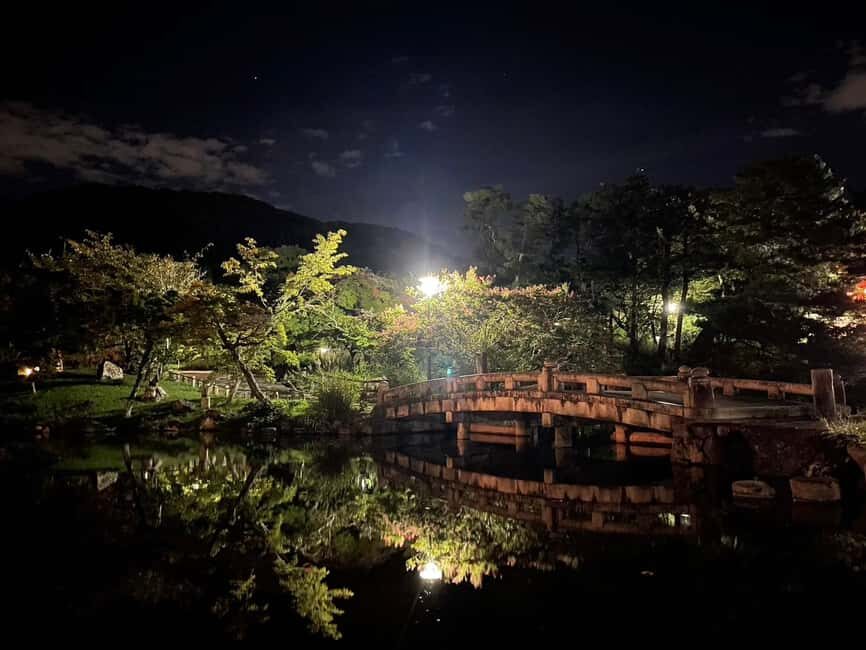
Also, parks at night help you see Kyoto’s blend of nature and culture. Even when you’re in a historic district, Kyoto isn’t only about buildings. It’s about how people move through seasons and space.
If you’re traveling in a busy travel season, Maruyama can be a relief. You get breathing room while still staying inside the Kyoto feel.
Nene no Michi to Ninenzaka: stone lane to photogenic slope
Next up are the old-town walkways that most people recognize but don’t fully understand. Nene no Michi is a charming stone-paved lane named after Nene, the wife of samurai leader Toyotomi Hideyoshi. Knowing that name changes how you experience the lane. It’s not just cute and Instagram-friendly; it’s tied to real historical figures.
Your route also passes traditional townhouses, cozy teahouses, and artisan shops. That mix is what makes this stretch feel authentically Higashiyama. You’ll likely notice more local-scale details here than you do on bigger streets.
Then you continue to Ninenzaka, a photogenic slope lined with historic wooden buildings and quaint storefronts. This is one of those Kyoto places where the street shape matters. The grade forces a slow walk, which naturally helps you notice the architecture and storefront style.
The biggest “how to get the most out of this part” tip is simple: take your time between photo stops. The guide’s job is history and interpretation, but your job is slowing down enough to see the little things that the guide points out.
Also, since this is at night, lighting can be tricky. Don’t fight your camera. Use the guide moments to set up your shot, then enjoy the walk without constantly stopping.
You can also read our reviews of more evening experiences in Kyoto


Yasui-Konpiragu’s Power Stone archway: a ritual moment to respect
After Ninenzaka, you visit Yasui-Konpiragu Shrine, known for its symbolic Power Stone archway. This is the most memorable “ritual you can see” part of the walk.
The practice is specific: locals and visitors crawl through the archway. People use it to pray for strong bonds or to leave unwanted ties behind. Even if you’re not participating, watching from a respectful distance gives you a real sense of how religion works in everyday life—less like distant ceremony, more like personal intention.
The cultural value here is huge because you’re not only learning architecture. You’re learning how people use sacred spaces to handle relationships and life concerns.
A couple tips so you don’t accidentally ruin the vibe:
- Keep your voice low.
- Don’t block the flow around the arch.
- Follow your guide’s cues on where to stand and when to move on.
This stop also helps you understand why Gion’s story isn’t only about art and elegance. It’s also about community, comfort, and practical hopes.
Hanamikoji Street: where the geiko world becomes understandable
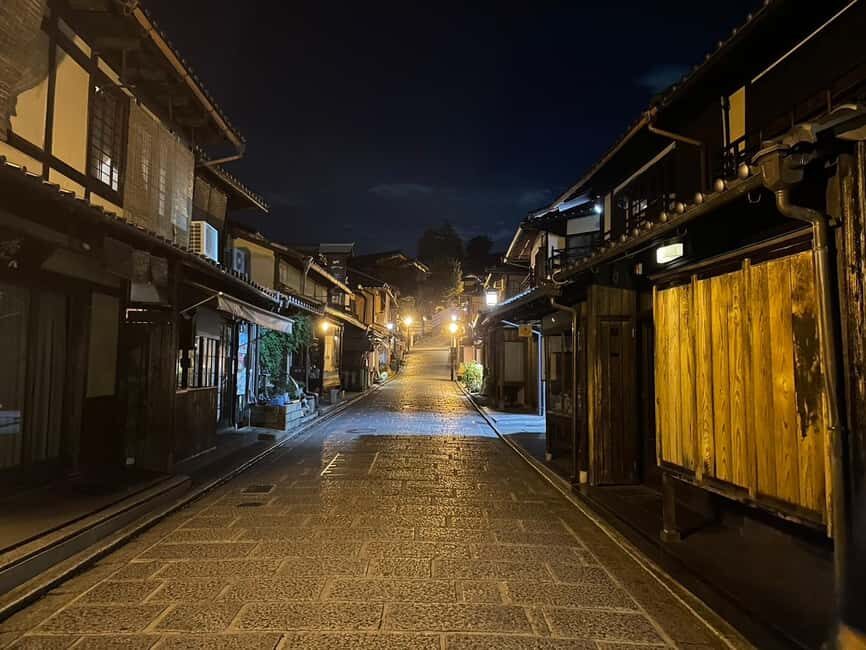
The tour finishes in the heart of Gion along Hanamikoji Street. This is where the preserved wooden teahouses line the road, and where Kyoto’s geiko (often called Kyoto geisha) culture is centered.
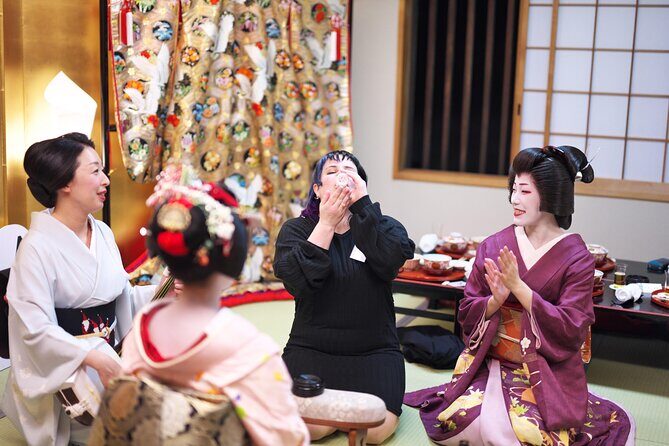
What makes this more valuable than a self-guided stroll is what your guide explains. You’ll hear about the lives, training, and artistry of geiko and maiko—not just vague facts, but the way the system works and why it’s treated with such care.
This matters because Hanamikoji can feel mysterious if you only look from the sidewalk. When you understand the cultural role and the effort behind the performance arts, the street reads differently. You don’t treat it like a theme park. You treat it like a place with real tradition and real discipline.
People also note that they sometimes spot geiko briefly. That’s a bonus. Don’t plan your expectations around it. Instead, plan on the meaning behind what you see.
Finally, because this is an evening walk, you’ll get a calmer look at the streets than daytime touring. That’s a big deal in Gion, where the crowd level changes your experience more than you’d think.
Price and value: why $20 for 2 hours can make sense in Kyoto
$20 for two hours sounds almost too good—until you break down what you’re actually buying.
You’re paying for:
- An English-speaking guide
- Guided time at multiple high-impact stops (shrines, lanes, park, and geisha district streets)
- Historical context that would otherwise take serious effort to piece together
- Photos during the tour
If you were to do this alone, you’d still spend time walking between sights. The difference is you’d spend more time figuring out what you’re looking at. In a place like Kyoto, that “what am I seeing and why” gap is where guided value shows up.
Also, with a 4.8 rating from 56 reviews, the consistency of the experience seems strong. The best praise centers on how guides make the information feel personal: answers to questions, helpful photo moments, friendly energy, and stories that connect places.
Could you do Gion without a tour? Sure. But if you want to maximize understanding per hour, this pricing is a rare case where a guided walk can be a smart move.
Who should book, and who might skip it
This tour fits you best if:
- You want a structured evening route that connects shrines to Gion’s cultural identity
- You like asking questions rather than only reading signs
- You’d rather have someone guide your eyes at night than do all the research yourself
- You want better odds of calm atmosphere than typical daytime wandering
You might skip it if:
- You need wheelchair-friendly routing (it’s not suitable for wheelchair users)
- You want long stays at one location instead of covering several stops
- You dislike walking in the cold (winter nights can feel cold, so dress for it)
It’s also good for first-time Kyoto visitors. If you’ve only seen Kyoto from train-station distance, this gives you a readable overview of a famous neighborhood in a way that sticks.
Quick tips to get better photos and a smoother walk
A night walk rewards preparation. Here’s what helps most:
- Wear warm layers. You’ll walk outside for the whole experience.
- Bring a charged phone or camera, but don’t obsess about getting every shot.
- Use guide photo moments if they’re offered during the tour, especially if you’re traveling solo.
- Ask questions while you’re at a stop, not after you’ve moved on.
- Be polite around ritual areas like the Power Stone archway. Follow your guide’s cues.
One small perk from guide behavior that people noticed: guides sometimes help with practical next steps, like where to eat after the tour. If that matters to you, it’s worth asking.
Should you book the Kyoto Gion and Geisha District Night Walk?
I think you should book if you want a focused evening in Gion with the right mix of sacred sites, historic lanes, and geiko culture context. The $20 price for an English-guided, multi-stop walk is strong value, especially because the guide’s explanations turn pretty streets into understandable stories.
I’d hesitate only if mobility access is an issue for you. Otherwise, this is a smart, low-stress way to experience Gion at the hour when it feels most like itself.
FAQ
How long is the Kyoto Gion night walking tour?
The tour lasts 2 hours.
Where do I meet the guide?
Meet in front of Starbucks located next to Kyoto Gion Hotel (walking distance from the Yasaka Shrine Western Tower Gate entrance). Coordinates: 35.0036732, 135.7760837.
Is the tour available in English?
Yes, the tour is in English.
Are photos included?
Yes. Photos during the tour are included.
Is this tour wheelchair accessible?
No, it is not suitable for wheelchair users.
Can I cancel and pay later?
You can cancel up to 24 hours in advance for a full refund. You can also reserve now and pay later.