REVIEW · KYOTO
Kyoto: Gion Sunset Walking Tour with Local Guide
Book on GetYourGuide →Operated by TripGuru Japan · Bookable on GetYourGuide
Gion at night hits different. This Kyoto sunset walking tour turns the famous geisha district into a real stroll: lanterns up, alleys quieting, and your guide filling in what you’re actually looking at. It’s short on time, strong on atmosphere, and built for people who want to see Kyoto without spending half a day getting there.
I love two things most: the small group feel (up to 9 people) and the fact that you get a guide who can answer the questions that pop up while you’re walking. Jasmine and Raphael are just two examples of the kind of guides you might be matched with, and the common thread is the same, clear explanations plus room for questions.
The main drawback is simple: this is a walking tour, and you need to be comfortable on your feet for about three hours. Also, geiko or maiko sightings are possible but not guaranteed, so go for the streets and the stories, not for a certainty.
In This Review
- Key takeaways before you go
- The $22 Value: Three Hours of Gion After Dark With a Real Guide
- Start at Kyoto Kawaramachi Garden and Learn the Walking Rhythm
- Kyoto Minami-za to Hanamikoji Street: From Theater District to Lantern Alley
- Maruyama Park and Yasaka Shrine When the Crowd Thins Out
- Backstreets, Small Shrines, and the Etiquette of Geiko and Maiko Photos
- Snack Break in the Neighborhood: A Pause That Keeps the Evening Moving
- Pontocho at Night to Sanjo Bridge: Finishing With River-Spot Energy
- Who Should Book This Gion Sunset Walk
- Should You Book This Tour?
- FAQ
- How long is the Kyoto Gion sunset walking tour?
- How much does the tour cost?
- Where do I meet the guide?
- What stops are included during the walk?
- What’s included in the ticket price?
- Is geiko or maiko spotting guaranteed?
- What should I bring?
- What if I’m late to the meeting point?
- FAQ
- What languages are available for the live guide?
- Is the tour cancellable, and can I reserve without paying right away?
Key takeaways before you go
- Three hours in Gion after dark lets you see the district transition from day-to-evening.
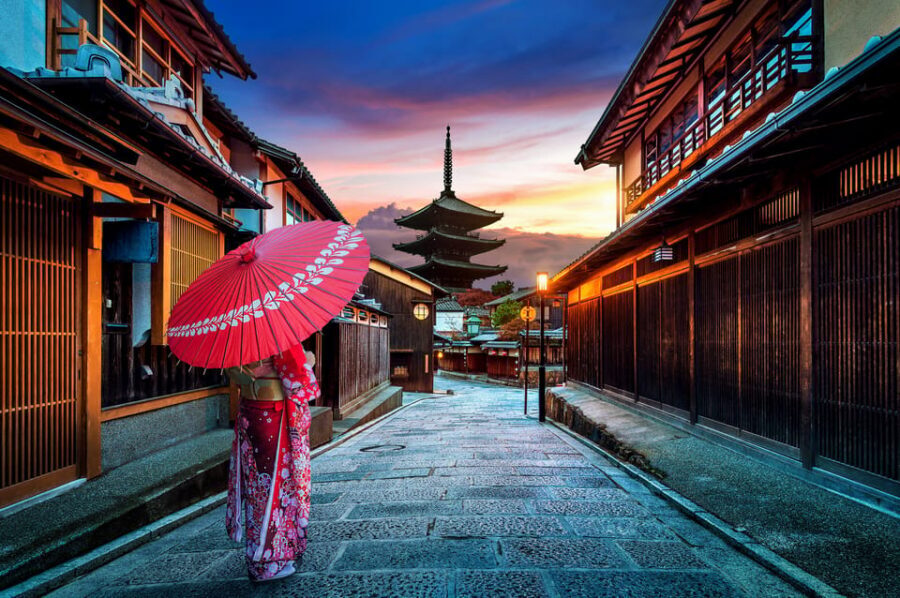
- Hanamikoji Street + Yasaka Shrine are anchor stops, with extra side streets in between.
- Small group (max 9) keeps the pacing relaxed and questions actually get answered.
- Snack included gives you a built-in break instead of hunting for food mid-walk.
- Geiko/maiko photos are optional and come with etiquette: keep distance, use a longer lens, and don’t block paths.
The $22 Value: Three Hours of Gion After Dark With a Real Guide
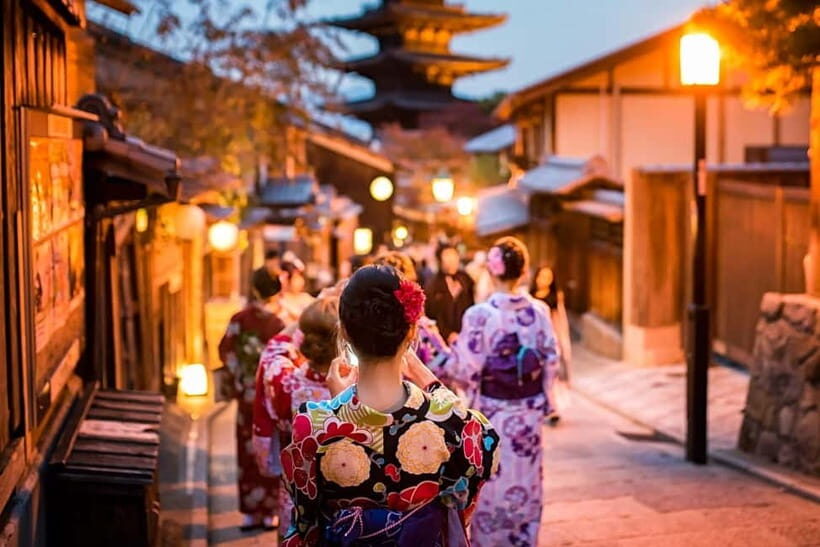
At $22 for a three-hour guided walk, this is one of those Kyoto deals where the price feels almost too reasonable. You’re paying for an English-speaking guide plus a structured route through some of Gion’s most recognizable spots, and you also get a snack included.
Here’s why that matters: in Gion, it’s easy to feel like you’re just walking from postcard view to postcard view. A good guide changes that. You stop noticing only what’s pretty and start noticing what it means—architecture, religious spaces, and the customs around the geiko and maiko world.
The small-group limit (no more than 9) is also part of the value. With fewer people, the guide can adjust pace, and you’re less likely to lose the group in tight alleys or at photo stops.
You can also read our reviews of more walking tours in Kyoto


Start at Kyoto Kawaramachi Garden and Learn the Walking Rhythm
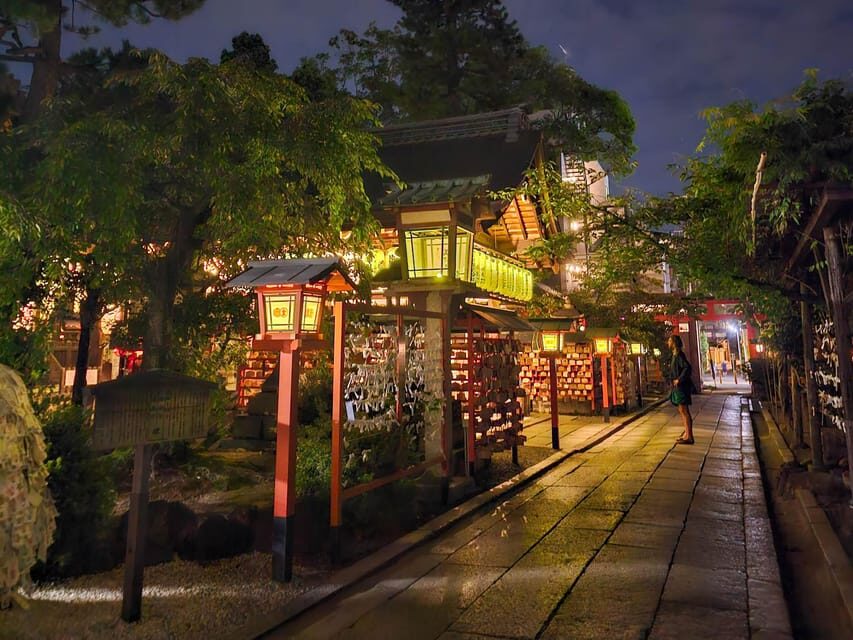
Your meeting point is Kyoto Kawaramachi Garden, corner area, in front of the big black world map. The guide will be wearing a TripGuru shirt or holding a TripGuru sign, so you can match faces quickly instead of scanning for a logo-less person in the crowd.
Plan to arrive at least 10 minutes early. Guides only wait up to 10 minutes past the stated time before moving on, which makes punctuality more important than usual. And if you’re heading to the meeting point, remember that morning traffic can be chaotic compared with navigation apps—leave yourself breathing room.
What to bring is refreshingly practical: comfortable shoes for night walking, a camera if you want lantern-and-street photos, and cash for personal expenses. No special gear is required, but if you’re serious about photos of geiko or maiko, a longer lens helps you keep your distance and still get a great shot.
Kyoto Minami-za to Hanamikoji Street: From Theater District to Lantern Alley
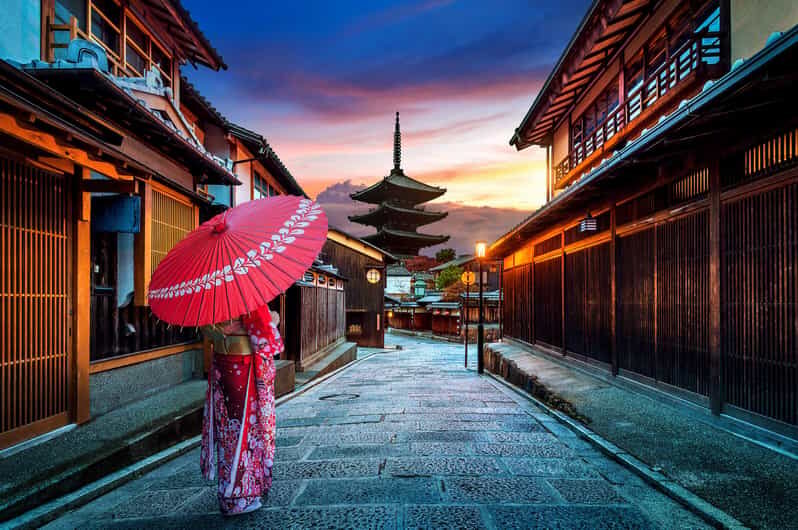
The tour starts by passing Kyōto Minami-za for about 10 minutes. Even though it’s a pass-by, it’s a smart opener because it hints at the entertainment history wrapped into this part of town. You’re not just walking into Gion; you’re walking into the wider cultural neighborhood around it.
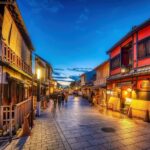
Then the heart of the famous streets begins at Hanamikoji Street for about 30 minutes. This is the kind of street where the details matter: narrow lanes, old-style facades, and the feeling that time slows down as daylight fades. At sunset and after, lanterns and lighting change everything—shadows get longer, alley corners look deeper, and the street stops feeling staged.
A guided walk helps here because you’re not guessing what you’re seeing. Your guide’s explanations can turn simple sight-seeing into something you remember, especially when you learn how traditions live in everyday streets.
Maruyama Park and Yasaka Shrine When the Crowd Thins Out
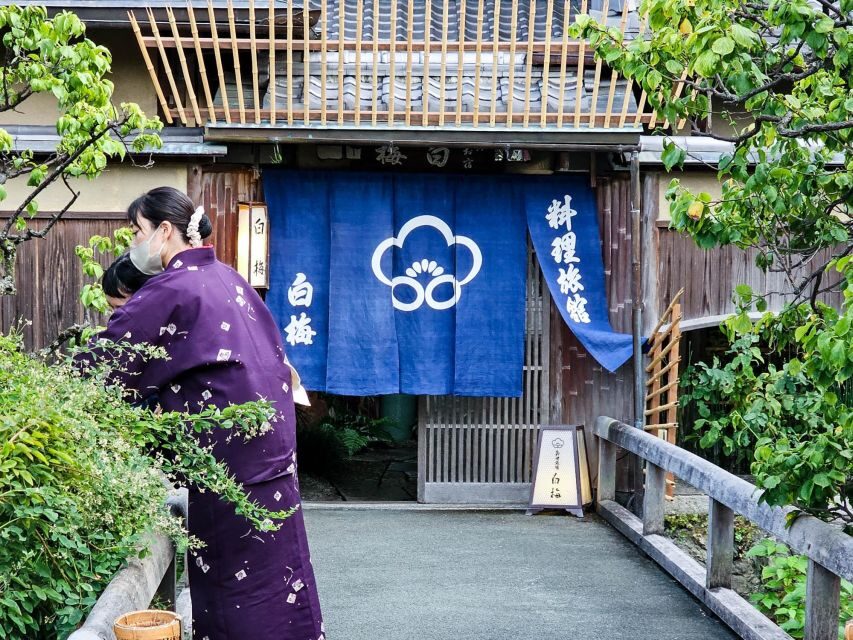
Next up is Maruyama Park for about 15 minutes. Parks in Kyoto can feel like breathing space, and this stop is timed so you catch a shift in mood—less shopping energy, more open-air calm.
From there, you head to Yasaka Shrine for about 20 minutes. This is one of the key places where the tour’s culture angle becomes real. It’s not just a photo stop. You’re in a religious space, so you learn what to look for and how to behave respectfully while you walk and observe.
The night timing is part of why this works. Daytime in Kyoto can be crowded and fast. Evening gives you a better chance to notice patterns—how people move, how spaces are used, and why the shrine and surrounding areas matter beyond the look of the buildings.
Backstreets, Small Shrines, and the Etiquette of Geiko and Maiko Photos
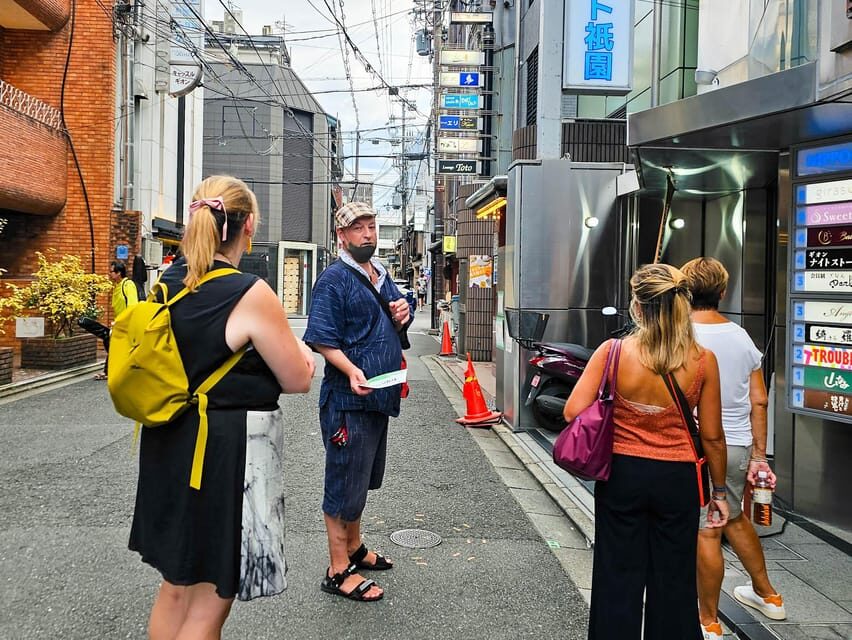
One of the best parts of this tour is that it doesn’t lock you only onto the biggest names. You’ll wander traditional backstreets and visit offbeat temples and shrines along the way. Even when you’re not stepping inside every stop, the guided context makes the detours worthwhile.
Now for the geiko and maiko part, because it’s a big reason people book Gion. The tour may help you catch a glimpse, but it’s not guaranteed. That’s exactly how you should approach it: treat it as a lucky bonus, not the goal.
The etiquette tips are clear and useful. If you see geiko or maiko, be respectful and keep a distance. Use a longer lens rather than walking up close, and don’t interrupt their daily routines. If someone comes near, step out of their path, offer a smile, and give a quick bow and a thank you. It’s polite and it protects the moment for everyone.
You can also read our reviews of more guided tours in Kyoto


Snack Break in the Neighborhood: A Pause That Keeps the Evening Moving
About two-thirds of the way through, you get local snacks for around 20 minutes. This is more than a “nice to have.” It keeps energy stable, especially when you’re walking Kyoto evenings that can feel chilly depending on the season.
In some runs, the snack stop has included a cafe break with things like matcha desserts and tea, which gives you a warm reset while you’re still in the neighborhood vibe. The point is: you’re not forced to stop at a random convenience store or hunt for a meal alone while you’re tired.
One more practical note: the tour includes the snack, but meals and other drinks are not included. Bring cash for anything extra you want, and think of the snack as the built-in fix, not a full dinner.
Pontocho at Night to Sanjo Bridge: Finishing With River-Spot Energy
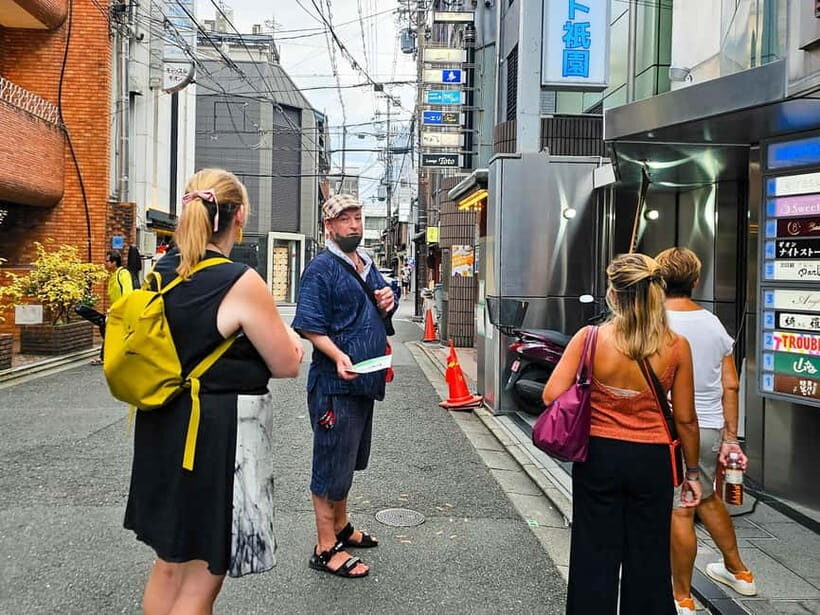
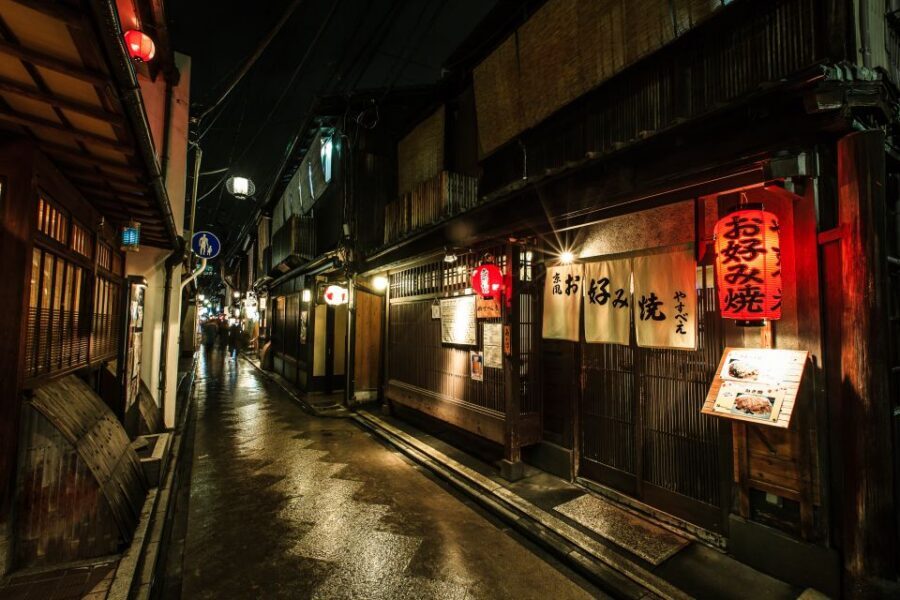
After the snack, you head to Pontocho for about 20 minutes of guided sightseeing. Pontocho is one of those Kyoto areas that feels special at night because the street character comes through—narrow walkways, lighting that flatters the old buildings, and the feeling that you’re seeing how the city relaxes after dark.
There are also “scenic views on the way” segments in the route, including a final stretch of about 25 minutes before Pontocho. That extra walking time matters because it gives your brain a chance to connect dots between stops rather than feeling like a checklist.
The tour finishes at Sanjo Bridge. That ending is handy because it puts you near major evening routes for onward plans. If you want to keep exploring, you’re not trapped miles away from transit; you’re in a central spot that makes it easier to continue under your own steam.
Who Should Book This Gion Sunset Walk
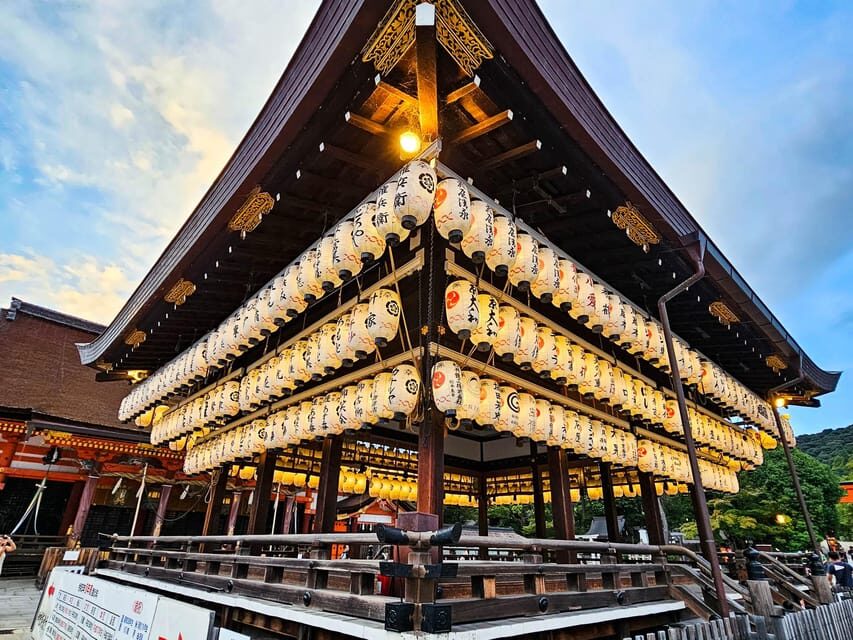
This tour fits best if you want an evening introduction to Kyoto that isn’t overly long. Three hours is long enough to feel you’ve actually wandered, but short enough to pair with dinner plans without stress.
I’d also say it’s a strong choice for people who like structure. You get clear stop points—Hanamikoji Street, Maruyama Park, Yasaka Shrine, Pontocho—plus the in-between backstreets that make it feel like Kyoto instead of a theme park map.
It’s especially worth it for first-timers because the guide can explain what you’re seeing as you go, including the cultural role of Gion. And because the group stays small, you’re less likely to lose context in a crowd.
That said, it’s not suitable if you have mobility impairments, are pregnant, have heart problems, or have respiratory issues. It’s also just plain hard if you hate night walking. You’ll want comfortable shoes and a calm attitude about street-level crowding.
Should You Book This Tour?
Book it if:
- You have a couple of hours and want Gion at dusk rather than only daytime photos.
- You’d rather understand the place than just check boxes.
- You like small groups and a guide who can answer questions as you walk.
- You want a built-in snack stop so the evening doesn’t fall apart on your feet.
Skip it if:
- You can’t manage a three-hour walking route at night.
- You’re only interested in guaranteed sightings of geiko or maiko.
- You prefer totally self-guided exploration with no scheduled stops.
If you’re weighing cost, $22 for guided time plus a snack is a fair deal. The real reason to book is the pacing: lantern-lit streets, shrine context, and an ending near Sanjo Bridge so the evening stays fluid.
FAQ
How long is the Kyoto Gion sunset walking tour?
It lasts about 3 hours.
How much does the tour cost?
The price is $22 per person.
Where do I meet the guide?
Meet at Kyoto Kawaramachi Garden corner, in front of the big black world map. The guide will be wearing a TripGuru shirt or holding a TripGuru sign.
What stops are included during the walk?
You pass Kyōto Minami-za, visit Hanamikoji Street, Maruyama Park, Yasaka Shrine, have a snack stop, then visit Pontocho, and finish at Sanjo Bridge.
What’s included in the ticket price?
Included: an English-speaking tour guide, a walking tour, and a snack.
Is geiko or maiko spotting guaranteed?
No. You may get a glimpse, but it’s not guaranteed.
What should I bring?
Bring comfortable shoes, a camera, and cash.
What if I’m late to the meeting point?
Be there at least 10 minutes early. The guide waits a maximum of 10 minutes before proceeding.
FAQ
What languages are available for the live guide?
The tour is offered with live guides in English, Spanish, and French.
Is the tour cancellable, and can I reserve without paying right away?
Yes. You can cancel up to 24 hours in advance for a full refund, and there’s also a reserve now & pay later option.
If you want, tell me what time of day you’re arriving in Kyoto and what you like most (temples, street photos, or geisha culture). I can help you decide whether this is the right evening plan or a better match for another day.