REVIEW · TOKYO
Official Japan Go-Kart Through Tokyo Bay / Ginza (IDP Required)
Book on Viator →Operated by JAPANKART · Bookable on Viator
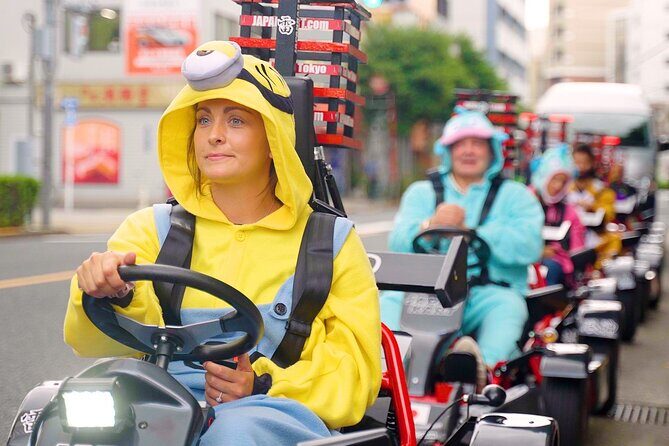
Street go-karts beat Tokyo bus tours hands down. This JapanKart ride is built for public-road sightseeing with costumes and photo breaks—but the big catch is you must bring the right International Driving Permit (IDP) or you’ll be turned away. The whole experience is also paced by the staff so you’re not guessing where to go, which matters a lot in busy Tokyo.
What makes it special is how it feels like moving through Tokyo at street level, not just watching it from a seat. You’ll get a thorough briefing first, then roll out with lead-and-follow support (two vans keep you together and help manage traffic flow). One more thing I like: they keep it structured enough that even first-timers can focus on driving, not stress.
One consideration: this is not a casual “walk in and have fun” activity. You’re driving on the left side, you’re expected to arrive on time, and you’ll be in costume (no long skirts or unsafe footwear). If you’re even slightly unsure about documents, sort it before you leave home.
In This Review
- Key things I’d plan around
- Price and What Your $85.89 Buys in Tokyo
- IDP Rules: The Part That Can Ruin Your Day (So Don’t Wing It)
- Safety Briefing and the Costumes: Fun Rules, Real Order
- Route Walkthrough: Toyosu to Skytree via Ginza, Nihonbashi, Akihabara, Ueno, Asakusa
- Stop 1: Toyosu (Waterfront, modern Tokyo energy)
- Ginza (Luxury lights and fast-moving Tokyo)
- Nihonbashi Bridge (Where the city’s road story starts)
- Akihabara (Anime, gaming, tech street energy)
- Ueno (Parks, museums, and classic Tokyo walking vibes)
- Asakusa (Senso-ji area and traditional street food energy)
- Skytree area (Nearby views, big city skyline payoff)
- How the Vans and Traffic Management Keep You Together
- What the “2 Hours 30 Minutes” Feels Like in Real Life
- Who Should Book This (and Who Might Be Happier Elsewhere)
- Should You Book JapanKart Through Tokyo Bay and Ginza?
- FAQ
- Do I need an International Driving Permit for this tour?
- What kind of IDP is accepted in Japan for this experience?
- Are Vienna Convention (1968) IDPs accepted?
- What should I do if my license is from a listed country like Germany or France?
- What about alcohol before the tour?
- What time should I arrive at the meeting point?
- Where does the tour start and end?
- What’s included in the price?
- What safety support should I expect while driving?
- What happens if weather cancels the tour?
Key things I’d plan around
- IDP must be booklet-format (1949 Geneva), Vienna-style IDPs aren’t accepted
- Lead and follow vans help you stay together through real traffic
- You’ll stop briefly for photos and a rest, not just zip by everything
- Costumes are part of the fun (and part of the rules)
- Route covers major stops: Toyosu, Ginza, Nihonbashi, Akihabara, Ueno, Asakusa, plus Skytree nearby
- Max group size is 20, which helps the experience feel controlled
Price and What Your $85.89 Buys in Tokyo
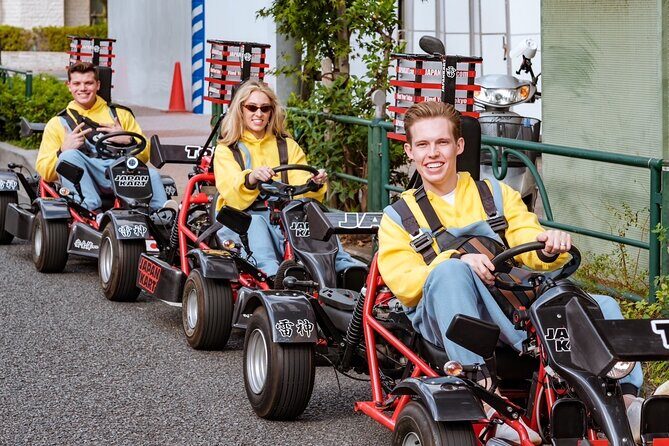
At $85.89 per person for about 2.5 hours, you’re paying for three things most Tokyo activities don’t combine well: active driving time, a route that hits multiple neighborhoods, and staff support that keeps you from getting separated.
If you’ve priced out “see Tokyo highlights” tours, the going rates often swing wildly depending on transport and guide time. Here, the value is that you’re not just passively viewing Ginza neon or old-meets-new areas—you’re physically moving through them at kart speed. Plus, the package includes go-karts, gas, costumes, and photos from the tour, so you’re not nickel-and-diming every small add-on.
Is it expensive compared with a museum ticket? Sure. But compared with other “big experience” days in Tokyo, it’s one of the more direct ways to spend two hours that feels like doing something, not only seeing something.
You can also read our reviews of more tours and experiences in Tokyo.



IDP Rules: The Part That Can Ruin Your Day (So Don’t Wing It)
This tour requires you to show both:
- your driver’s license, and
- an International Driving Permit in booklet form
The IDP must be issued in the format of the 1949 Geneva Convention. IDPs issued under the Vienna Convention 1968 are not accepted in Japan. That one detail is huge—make sure you’re not relying on an IDP you got for use elsewhere.
Also, the tour specifically notes that IDPs must be issued by your country’s approved issuer, with examples like:
- USA: AAA or AATA
- UK: AA or RAC
- Canada: CAA
- Australia: AAA
There’s also an exception list where a standard IDP path may differ (licenses issued in Switzerland, Germany, France, Taiwan, Belgium, or Monaco). In those cases, you’ll need a Japanese translation through JAF (Japan Automobile Federation), not just a generic translation you print at home.
Finally, alcohol is off-limits before the tour. If you’re the type to “celebrate first, drive later,” don’t. Tokyo can already be a sensory overload; add kart traffic and you want a clear head.
Bottom line: before you book (or before your confirmation day), double-check the format of your IDP and that it’s booklet style. People have lost money simply because the requirement wasn’t understood in time.
Safety Briefing and the Costumes: Fun Rules, Real Order
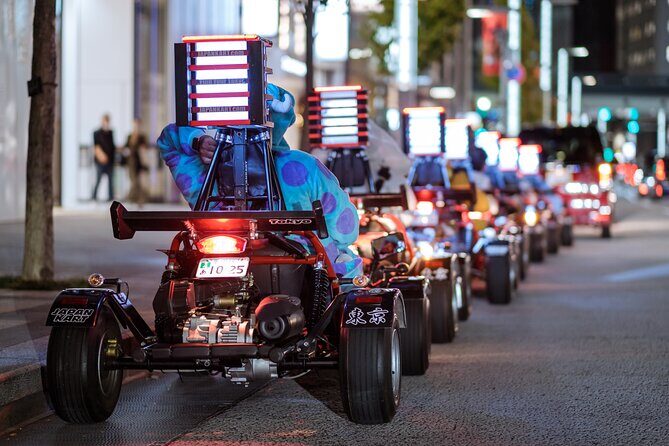
This ride is loud fun, but it’s not chaotic. You’ll get a thorough briefing before you set off, and the whole setup is designed around controlled driving on public roads.
Expect a rhythm like this:
1) Check in and get set up with your kart
2) Safety and road-rule briefing (how to operate the kart, how to handle the left-side driving, what the staff expects)
3) Then you roll out with guidance from the team
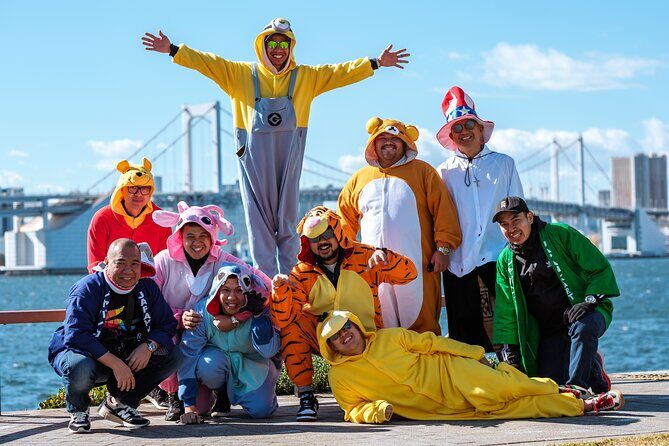
Costumes are included, which is half the charm. You’ll dress in an eye-catching outfit, and it turns the streets into a photo-friendly stage. Just remember the footwear and clothing restrictions: don’t wear long skirts, high heels, or sandals.
One small practical tip if you like taking pics: a recent group mentioned that phone mounts were included. If you’re planning to film or snap while rolling, bring what you can safely secure to the mount they provide.
Route Walkthrough: Toyosu to Skytree via Ginza, Nihonbashi, Akihabara, Ueno, Asakusa
The route is designed to string together very different Tokyo moods in one afternoon—modern waterfront, luxury shopping glare, older city cores, and then the “street energy” areas.
Here’s what you can expect from the major stops and the vibe of each:
Stop 1: Toyosu (Waterfront, modern Tokyo energy)
Toyosu is a sleek waterfront district, and it’s strongly associated with seafood culture through the fish market area. Even if you’re not there at dawn, this part of the route gives you that polished, newer-Tokyo feeling right at the start—good for shaking off jet lag and building excitement.
Potential drawback: Toyosu can feel more “business modern” than “old Tokyo,” so if you want temples and lantern streets immediately, you’ll have to wait a bit for Asakusa.





Ginza (Luxury lights and fast-moving Tokyo)
Ginza is Tokyo’s go-to for high-end shopping and bright city spectacle. This is where the kart route feels most like a movie: wide roads, polished storefronts, and that signature Ginza glow.
What you’ll like: It’s an easy place to “feel Tokyo” because the visuals do the work. Driving through it turns the neon and storefront shine into something you experience, not just photograph.
Nihonbashi Bridge (Where the city’s road story starts)
Nihonbashi Bridge is an old civic anchor point—historic roads once began here, and you still get that Edo-era charm mixed with the modern skyline around it.
Practical note: This stop is more about atmosphere than “big ticket sights.” If you like how Tokyo stacks time layers, it’s a nice contrast after Ginza.
Akihabara (Anime, gaming, tech street energy)
Akihabara is the district for arcade culture, collectibles, tech shops, and everything pop-culture related. This is where the route shifts from sleek luxury to playful chaos.
If you’re the type who wants a Tokyo day that includes a little fandom, this part of the drive tends to land well.
Ueno (Parks, museums, and classic Tokyo walking vibes)
Ueno is where nature and culture rub shoulders. You’ll be in an area known for Ueno Park and top museums, plus calmer scenes that feel more human-scale than the mega shopping corridors.
What to watch for: During busier times, you may see crowds around the park/museum areas. From the kart you get the broad view without walking through every pinch point.
Asakusa (Senso-ji area and traditional street food energy)
Asakusa is the gateway to older Tokyo, anchored by Senso-ji Temple and the snack-and-stalls energy on nearby Nakamise-style streets. Even if you don’t hop out to wander deeply, it’s one of those places where you instantly recognize the vibe.
What I like about this stop: It’s the perfect “soft landing” after Akihabara. The contrast keeps the day from feeling one-note.
Skytree area (Nearby views, big city skyline payoff)
You’ll drive nearby Tokyo Skytree. Even if you can’t spend long staring up at it, the moment you see it from the road is the kind of skyline punctuation that makes the whole route feel complete.
One tip: if your tour time lines up with sunset into night, Tokyo’s light show adds a lot. A recent group noted their departure around 5pm made the experience shift from daylight city to nighttime glow.
How the Vans and Traffic Management Keep You Together
A lot of go-kart experiences sound fun until you picture a pileup of confused carts at the first red light. This one avoids that problem with real structure.
The staff uses lead and follow vans:
- one up front
- one behind
This helps manage pace and keeps the group from splitting when traffic lights and road conditions change. Several people highlighted feeling safe because the team actively controlled the flow, not because everyone magically knew what they were doing.
If you’re not used to left-side driving, you may feel a little awkward at first. The briefing and the follow-the-lead setup are what make it manageable. You’re not out there alone navigating Tokyo like a secret agent.
What the “2 Hours 30 Minutes” Feels Like in Real Life
The total time is listed as about 2 hours 30 minutes. In practice, you should think of it as “getting set up + driving time + a short rest/photo stop.”
There is a rest and photo break en route. One feedback detail mentioned a short pause around 5 minutes, plus plenty of photos. The photo part matters: part of the fun is looking back and realizing you actually did drive through Ginza and the other big names, not only stand near them.
Also note: this isn’t presented as a commentary-heavy tour. One person described it as not really a talk-style tour. So if you want a guide explaining every intersection like a textbook, you might prefer a walking or bus tour on the side. Here, the main show is driving.
Who Should Book This (and Who Might Be Happier Elsewhere)
This experience fits best if you want:
- an active Tokyo day
- a real public-roads route
- a costume-and-photos kind of memory
- staff-led safety and pace control
It also tends to work well for couples, groups, and people who like an “everyone participates” activity. The max group size is capped at 20 travelers, which helps keep things organized.
You might skip it if:
- you’re not confident you can produce the correct IDP format in time
- you don’t drive (and don’t want to deal with road-rule learning first)
- you need a quiet, low-effort sightseeing day
- you’re coming in expecting a lot of guided narration
Should You Book JapanKart Through Tokyo Bay and Ginza?
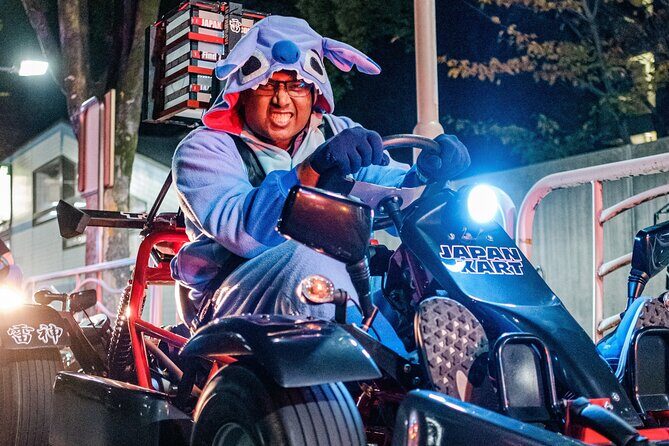
I’d book it if you’ve already got your IDP in the correct 1949 Geneva, booklet format, and you want a two-and-a-half-hour Tokyo day that feels bold and different. It’s one of those rare tours where the “value” isn’t just the route—it’s the fact that you’re actually part of the city’s motion, with lead-and-follow vans keeping you safe and on track.
I would not book it if your IDP situation is fuzzy. One surprise document problem is all it takes to turn a fun day into wasted time and lost money. If your paperwork is solid, though, this is an easy “yes” for a memorable Tokyo highlight day.
FAQ
Do I need an International Driving Permit for this tour?
Yes. You must present both your driver’s license and an International Driving Permit to participate.
What kind of IDP is accepted in Japan for this experience?
The IDP must be issued in the format of the 1949 Geneva Convention, and it must be in booklet form (not paper/A4).
Are Vienna Convention (1968) IDPs accepted?
No. International Driving Permits issued under the Vienna Convention 1968 are not accepted in Japan for this activity.
What should I do if my license is from a listed country like Germany or France?
If your license is from Switzerland, Germany, France, Taiwan, Belgium, or Monaco, you’ll need a Japanese translation of your license from JAF, along with your own driving license.
What about alcohol before the tour?
Alcohol consumption before the tour is prohibited. Please be responsible.
What time should I arrive at the meeting point?
Arrive 15 minutes before your booking time. The team can wait a maximum of 10 minutes after the reserved time.
Where does the tour start and end?
It starts at JapanKart2, 2-chōme-18-15 Azumabashi, Sumida City, Tokyo 130-0001, Japan, and ends back at the meeting point.
What’s included in the price?
Go-karts, gas, costumes, and photos from the tour are included, and the tour uses a mobile ticket.
What safety support should I expect while driving?
You’ll receive a thorough briefing before you set off, and you drive on public roads with guidance to keep you going the right way.
What happens if weather cancels the tour?
If the tour is canceled due to bad weather, you’ll be eligible for a full refund or you can reschedule depending on availability.