REVIEW · KYOTO
From Kyoto / Osaka: Kyoto Must-see Spots & Nara Park One Day Tour
Book on Viator →Operated by F Trip · Bookable on Viator
One day, deer and torii. This tour strings together Nara Park and Fushimi Inari Taisha with an easy plan that saves you from route headaches. I especially like the Nara deer moment—those free-roaming deer are famously bold, and they’ll come right up in hopes of a treat.
I also like how the Arashiyama block hits different moods in a single stretch. With guides such as Fiona and Mia steering the timing, you get the bamboo forest classic, a UNESCO stop at Tenryu-ji, and even a pop of fun at the Rilakkuma café and shop.
The trade-off is pace. This is a highlight run through crowded areas, so if you want long, slow temple time, you may wish you had more minutes at your favorite stop.
In This Review
- Key Things I’d Circle Before You Go
- How to Fit Kyoto and Nara Highlights Into One Long Day
- Price and What You Really Get for $60
- Nara Park: Deer Encounters in a Massive Classic Park
- Fushimi Inari Taisha’s Senbon Torii: One Hour That Feels Longer
- Arashiyama Bamboo Forest: The Kyoto Photo Classic, Planned for Walking Time
- Nonomiya Shrine and the Kimono Forest Photo Installation
- Tenryu-ji Temple (UNESCO) and the 500 Yen Ticket Reality
- Rilakkuma Tea House and Togetsukyo Bridge: Fun Breaks With Timing
- Group Size, Comfort, and the Pace You Should Expect
- Who This Tour Best Suits (and Who Should Skip It)
- Should You Book This Kyoto and Nara One-Day Tour?
- FAQ
- How long is the Kyoto and Nara day tour?
- How much does the tour cost?
- Does the tour include a guide and transportation?
- Is lunch included?
- Is there an entry fee for Tenryu-ji Temple?
- Are Fushimi Inari Taisha and Nara Park free to enter?
- Does this tour start in Kyoto or Osaka?
- Is the Todai-ji Great Buddha included in this itinerary?
Key Things I’d Circle Before You Go
- Deer at Nara Park up close, on a big 660-hectare green stage with classic temple views nearby
- Senbon Torii at Fushimi Inari with a one-hour window that’s enough to feel the gates without exhausting yourself
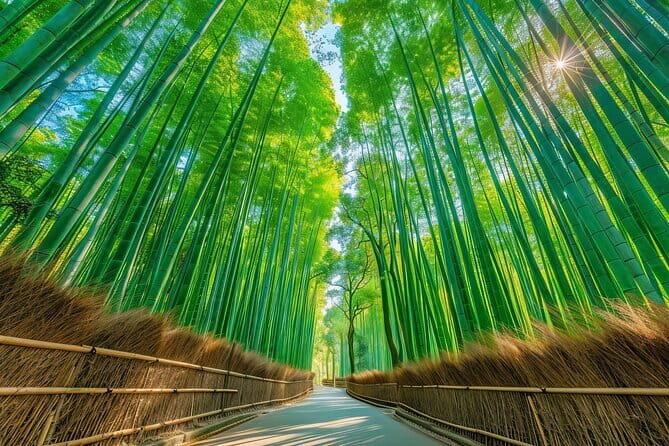
- Arashiyama Bamboo Forest timed for a calmer walk through the most photographed stretch
- Tenryu-ji is UNESCO, and you’ll need to plan for the 500 yen ticket since it’s not included
- A fun mix of traditional + quirky, including Nonomiya Shrine, the Kimono Forest photo installation, Rilakkuma, and Togetsukyo Bridge
How to Fit Kyoto and Nara Highlights Into One Long Day
Kyoto and Nara can eat your whole itinerary if you try to DIY every leg. This tour is built for people who want the headline sights—without spending your day chained to station maps.
The route works because it clusters big locations: Nara first, then Fushimi Inari, then Arashiyama. That means you’re not bouncing back and forth across the Kansai region all day.
You’ll be out about 9 hours total, with an air-conditioned vehicle and a guide in charge of the flow. The company caps the group at 45, which helps, even though the famous spots themselves are still crowded.
A few more Kyoto tours and experiences worth a look

Price and What You Really Get for $60
At $60 per person, this is strong value if you compare what’s actually included. You’re getting transportation (air-conditioned vehicle) plus a guide for the whole day—two things that are usually the biggest costs when you hire them separately.
Most admissions on the route are free, including Nara Park and Fushimi Inari. That matters because it keeps the day predictable, and it leaves your money for food and any extras you want to add.
Two costs to keep in mind: lunch is not included, and Tenryu-ji Temple has a 500 yen ticket that’s not part of the tour price. If you budget yen for that one stop, the rest stays easy.
If you’re coming from Osaka or Kyoto, this can also function like a guided transfer with built-in sightseeing, which is handy when your Japan schedule is tight.
Nara Park: Deer Encounters in a Massive Classic Park
Nara Park is one of the oldest and best-known park areas in Japan, spanning about 660 hectares. You’re not just visiting a lawn and leaving—you’re walking through a big, temple-adjacent green space built for wandering.
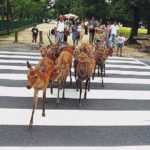
The headline draw is the free-roaming deer. They’re tame enough to approach, and the “bowing” behavior is part of the experience. You’ll want to keep an eye on your pockets and bags, because deer treat curiosity like a sport.
Even if you don’t plan to do anything else, this stop gives you the Kyoto/Nara contrast in one breath. You go from temple shrines and city energy to open space and animals that feel like they belong to the park itself.
One consideration: the day is organized for multiple stops, so your time here is about an hour. That’s usually enough to see the deer and get your bearings, but don’t expect a long, deep park ramble.
Fushimi Inari Taisha’s Senbon Torii: One Hour That Feels Longer
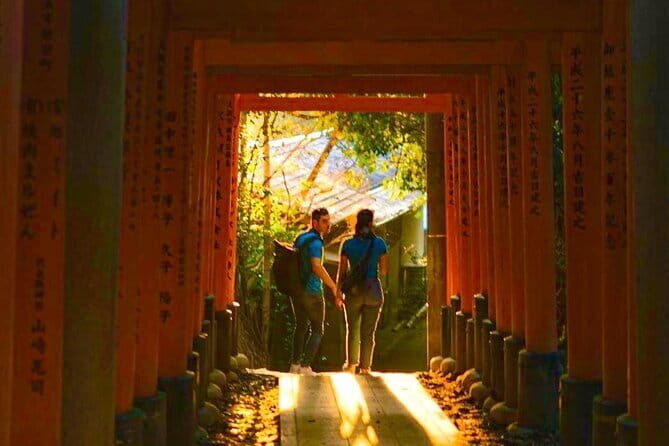
Fushimi Inari Taisha is the head shrine for Inari, the Shinto god associated with rice. The reason everyone remembers it is the Senbon Torii—thousands of vermilion red torii gates that form a tunnel-like walk.
This stop is scheduled for about 1 hour 10 minutes, and that timing is realistic. Inari is popular, and it’s easy to lose track of time when the gates start stacking up in every direction.
Here’s the practical way to use your time: treat it like a choose-your-own-adventure. Walk at a pace you can sustain, pause when you hit a viewpoint you like, and don’t feel pressured to keep going “just because others are.”
A guide helps a lot at places like this because you can focus on the gates, not on where to head next. Also, an organized group pickup moment later in the day means less stress when you’re dealing with crowds.
A small drawback to expect: if you personally love shrines and want longer quiet time, this tour may feel a little fast here compared with your ideal pace.
Arashiyama Bamboo Forest: The Kyoto Photo Classic, Planned for Walking Time
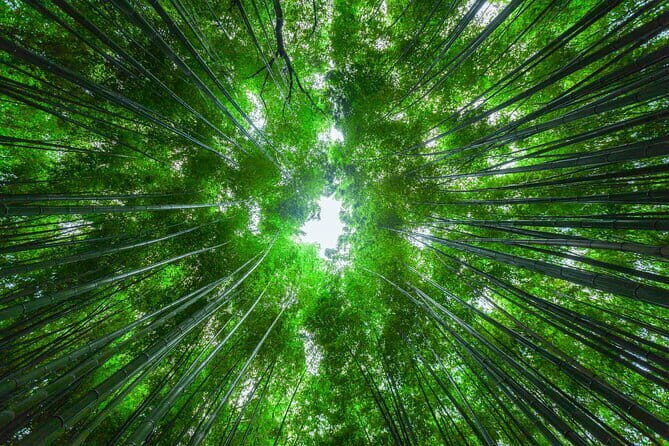
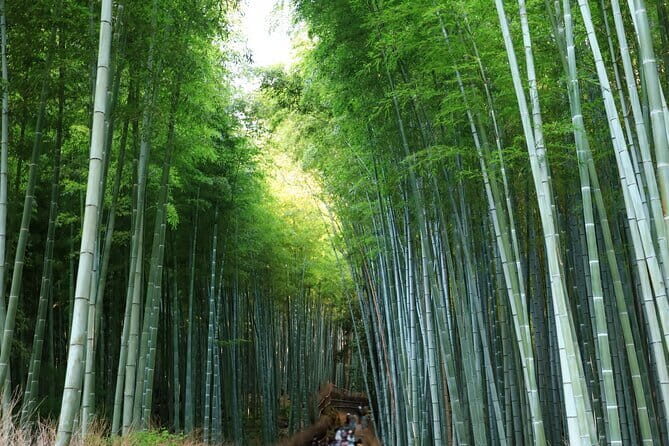
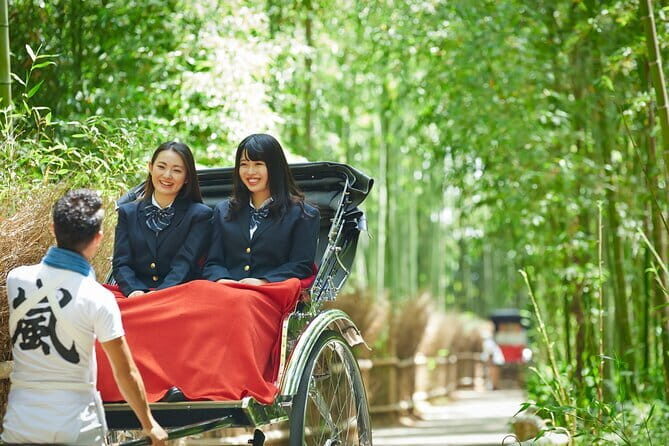
Arashiyama is famous for natural beauty and historic sites—and the Bamboo Forest is the centerpiece most people picture when they think of Arashiyama. In this tour, the bamboo stop is about 50 minutes, which is enough to feel the space rather than just pass through.
The best part about a guided visit in a place like this is flow. When you’re surrounded by lots of people, even a simple route decision matters. A guide helps you get moving without turning the forest into a stop-and-start struggle.
Still, the Bamboo Forest is the Bamboo Forest: crowds are part of the deal. If you hate busy photo crushes, go slow on your stroll and focus on the texture of the stalks overhead rather than trying to “win” the best angle.
This is also where you’ll start to notice the tour’s overall style: quick, concentrated highlights. Many people like that energy. Others prefer to linger. If you’re in the linger camp, plan to return to Arashiyama on a separate day.



Nonomiya Shrine and the Kimono Forest Photo Installation
After bamboo, you move into smaller, more specific stops that add variety.
Nonomiya Shrine is known for having a black torii gate—a different look from the common vermilion gates most people expect. It’s a good breather after the bamboo crush because it’s easier to slow down, absorb details, and reset.
Then comes the Arashiyama Kimono Forest, an installation made of 600 clear acrylic cylinders, each about 2 meters tall, decorated with kimono fabric designs. It’s not a temple in the traditional sense, but it’s fun in a different way: it’s visual, modern, and very photogenic.
This combo is smart for a one-day itinerary. One stop gives you a shrine detail that feels traditional and local. The other gives you a modern arts-and-fashion moment you’ll remember even if you forget every spoken fact later.
Timing here is around 20 minutes per stop, so you’re not meant to “study” either place. You’re meant to see them, enjoy them, and keep the day moving.
Tenryu-ji Temple (UNESCO) and the 500 Yen Ticket Reality
Tenryu-ji is one of Arashiyama’s major temples and a UNESCO World Heritage Site. It’s ranked among the top five great Zen temples in Kyoto, so you’re visiting a place that carries real weight in the city’s temple world.
Your time at Tenryu-ji is about 20 minutes on this itinerary. For many people, that’s a fair amount—enough to step inside the temple setting, notice the atmosphere, and tick off the UNESCO box without needing an all-day commitment.
The key detail: the 500 yen ticket is not included. So budget yen ahead of time (or plan to handle it onsite). This is one of the few moments in the day where you’ll pay an entry fee.
One more practical point: if you’re the type who wants to do temple research, read everything, and go deep, this may feel short. But for a first-timer highlight day, it’s a reasonable trade.
Also, if your dream Nara add-on is the Great Buddha at Todai-ji, this tour route doesn’t list it. This day is built around Nara Park and Kyoto highlights, not that separate Nara temple complex.
Rilakkuma Tea House and Togetsukyo Bridge: Fun Breaks With Timing
Not every part of the day has to be sacred. You get a stop at the Arashiyama Rilakkuma Tea House, based on the character “Rilakkuma,” which means bear in a relaxed mood. It’s a cute break from temple pacing, and the café/shop setup gives you a chance to buy small souvenirs or just recharge.
The time here is around 15 minutes. Treat it as a quick comfort stop, not a destination you need to plan your whole afternoon around.
Then you end the Arashiyama run with the Togetsukyo Bridge, the iconic bridge spanning the Katsura River. It dates to the Heian Period and was reconstructed as recently as the 1930s, which is a neat reminder that even old landmarks get rebuilt over time.
Your bridge time is about 15 minutes, which is enough to walk for photos and enjoy the river view without turning the day into an endless wandering session.
Together, these last stops round off the day with different textures: modern cuteness, then a classic scenic landmark.
Group Size, Comfort, and the Pace You Should Expect
This tour maxes out at 45 people, and it runs in an air-conditioned vehicle. That’s a good setup for Japan day trips when weather can swing or when you want to avoid standing-room-only public transport stress.
Still, long days have physical realities. One practical note from people who rode similar-style group days: bus seats can feel narrow, especially for taller passengers. If you’re even slightly height-sensitive, consider packing a small travel cushion and wearing shoes that keep your feet happy.
The other pacing reality is that famous sites are crowded. A guide can help you move efficiently, but you can’t control how many people are already in front of you at Fushimi Inari or in the bamboo corridor.
On the plus side, many guides on this kind of route focus on structure. People reported clear coordination and even added engagement like games during the day. You’ll also get practical tips—how to buy, where to go next, and how to not waste time at crowded entry points.
One extra local insight worth calling out: at least one guide shared information about why Japan often has fewer public trash cans. It’s the kind of detail that helps you behave like a local and keeps your day smoother.
Who This Tour Best Suits (and Who Should Skip It)
This tour is ideal if you:
- Want a first-timer highlights day without needing to plan every train change
- Like a mix of Nara deer + Kyoto shrines + Arashiyama sights
- Prefer a guided pace over figuring it out yourself, especially in crowds
It’s less ideal if you:
- Love temples and want long, slow time inside each one
- Specifically came for the Great Buddha at Todai-ji, since that isn’t part of this route
- Want minimal “photo installation” stops; the Kimono Forest is included, and it’s designed for pictures
If your main goal is deep sightseeing, you may be happier splitting your days: one day focused on Kyoto temples, another day focused on Nara’s big-ticket temple complex.
Should You Book This Kyoto and Nara One-Day Tour?
If you want a clean, efficient way to hit the big names—Nara Park deer, Fushimi Inari torii, and Arashiyama bamboo + UNESCO Tenryu-ji—this is a strong pick for the money. The guided structure and mostly free admissions make it easy to budget, with only a couple of predictable extra costs.
Book it if your schedule is tight and you’re okay with a fast-highlight style day. Skip it if your dream is slow temple time or if you’re specifically chasing the Great Buddha at Todai-ji.
FAQ
How long is the Kyoto and Nara day tour?
It runs for about 9 hours (approximately).
How much does the tour cost?
The price is $60.00 per person.
Does the tour include a guide and transportation?
Yes. It includes a guide and an air-conditioned vehicle.
Is lunch included?
No, lunch is not included.
Is there an entry fee for Tenryu-ji Temple?
Yes. Tenryu-ji Temple’s ticket is listed as 500 yen and is not included.
Are Fushimi Inari Taisha and Nara Park free to enter?
Yes. Admission at both Nara Park and Fushimi Inari Taisha is listed as free.
Does this tour start in Kyoto or Osaka?
It departs from either Osaka or Kyoto.
Is the Todai-ji Great Buddha included in this itinerary?
No. The tour does not include the Great Buddha at Todai-ji.