REVIEW · TOKYO
Tokyo Sumo Experience: Chanko & Mochi with a Former Pro
Book on GetYourGuide →Operated by Japanticket Inc. · Bookable on GetYourGuide
Sumo feels bigger when you’re this close. In Ryogoku, you get a front-row seat to the dohyo action, then you go from watching to trying things hands-on. The former-pro instruction keeps it lively and understandable, while the meal and mochi activity give you a real taste of sumo life beyond the match.
I love the chanko nabe because it’s hearty, warming, and clearly built for training bodies. I also love that you’re not stuck as a spectator; you’ll get time on the dohyo and help make mochi. One possible drawback: seating is assigned, and standard seats aren’t considered safe for holding a child on your lap, unless you choose the safer box-seat option.
In This Review
- Key things that make this Tokyo sumo experience different
- Ryogoku is the best backdrop for a sumo night
- Your 2-hour plan: chanko, mochi, and wrestling on the dohyo
- Chanko nabe: the meal that makes sumo feel real
- Mochi pounding: the fun tradition you actually do
- Trying sumo on the dohyo: what you learn in real time
- Price and value: why $103 can make sense
- Food options, allergies, and what you can bring
- Seating rules: the one practical gotcha
- Who should book this sumo chanko and mochi experience
- Quick tips to enjoy it more (and get better photos)
- Should you book this Tokyo sumo experience?
- FAQ
- How long is the Tokyo Sumo Chanko & Mochi experience?
- Where is the meeting point?
- What languages are available during the experience?
- Is the chanko nabe meal vegetarian or vegan friendly?
- Can the provider accommodate halal diets?
- Can I choose my seat location?
- Is this experience wheelchair accessible?
Key things that make this Tokyo sumo experience different
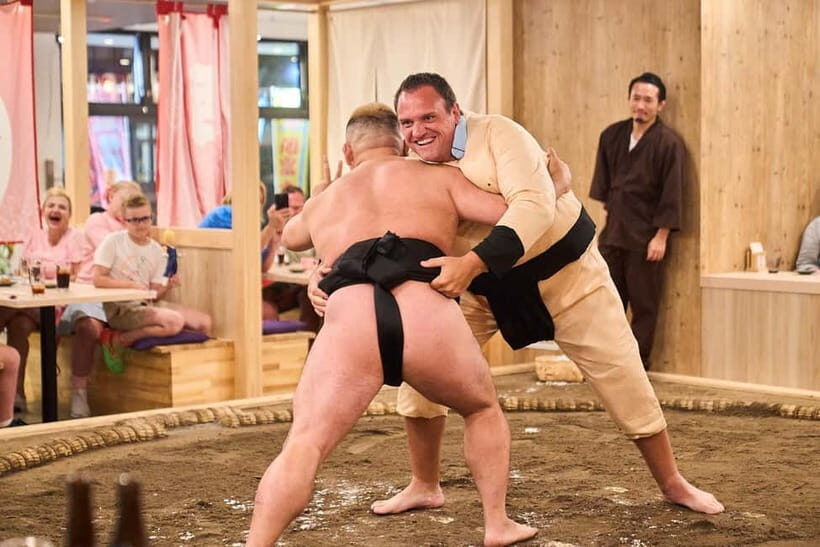
- Ryogoku dohyo close-up: you’re positioned to feel how physical sumo is.
- Chanko nabe with wrestler-led flavor focus: you eat a hot pot built around sumo’s training culture.
- Hands-on sumo time: you try techniques and do wrestling-style participation with the performers.
- Mochi pounding and making: you do the process, then eat the results.
- Interactive MC + audience participation: expect encouragement, laughs, and lots of camera moments.
- Entertainment, not morning training: this is designed for fun for both kids and adults.
Ryogoku is the best backdrop for a sumo night
Ryogoku is the sumo heartland of Tokyo. It’s the area where the sport feels less like a stage show and more like part of everyday culture. You’ll meet and start your experience in the immediate Ryogoku Station area, so it’s easy to plug into a day that also includes places like Asakusa, Akihabara, Nihonbashi, or Tokyo Skytree.
The vibe here matters. This isn’t a distant, formal museum-style viewing. You’re inside the action space, seated around the dohyo, where the size, stance, and speed of sumo hits you fast.
And yes, it’s child-friendly in a smart way. This experience is different from the serious morning training tours. It’s built as entertaining sumo for all ages, not a strict, early-morning grind.
You can also read our reviews of more tours and experiences in Tokyo.



Your 2-hour plan: chanko, mochi, and wrestling on the dohyo
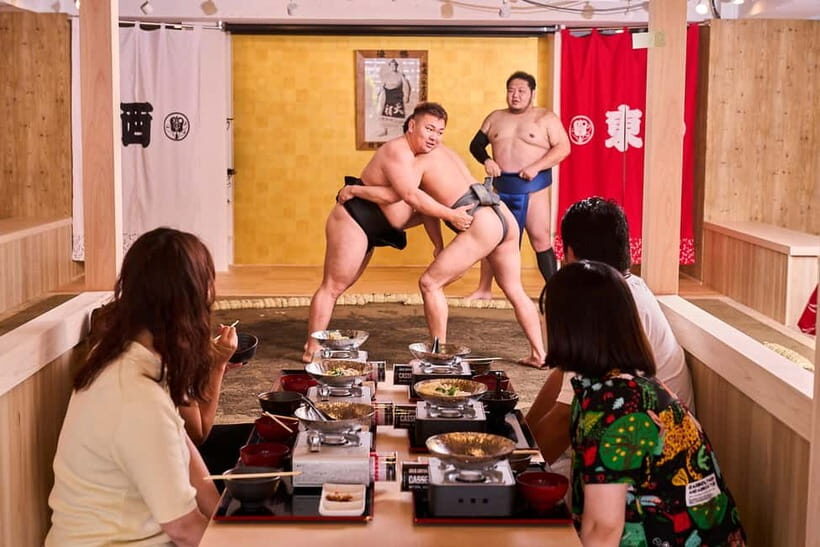
This is a tight, 2-hour format, so nothing drags. You’ll move through the big components: the meal, mochi pounding/making, and then sumo participation. Expect a steady rhythm: watch a bit, then do a bit, then repeat.
Here’s what the flow feels like in practice:
First, you settle into your assigned seating around the dohyo. From there, you can see the wrestlers right in front of you while the program builds. The MC keeps things moving and helps translate what you’re seeing into something you can actually try.
Next comes the meal: chanko nabe. It’s served as the classic sumo hot pot, and the wrestlers supervise the overall flavor and delivery of the food. This part isn’t just eating; it connects sumo performance with diet and everyday training life.
Then you move into the mochi segment. You’ll watch a mochi pounding demonstration and also get to pound mochi with the wrestlers. After that, you’ll enjoy sweet mochi as dessert.
Finally, you get the main active payoff: sumo wrestling participation. You’ll get on the dohyo area and try sumo techniques, and you’ll experience wrestling-style action with the wrestlers themselves. For many people, this is the moment you realize sumo isn’t just big bodies; it’s footwork, balance, and leverage.
Chanko nabe: the meal that makes sumo feel real
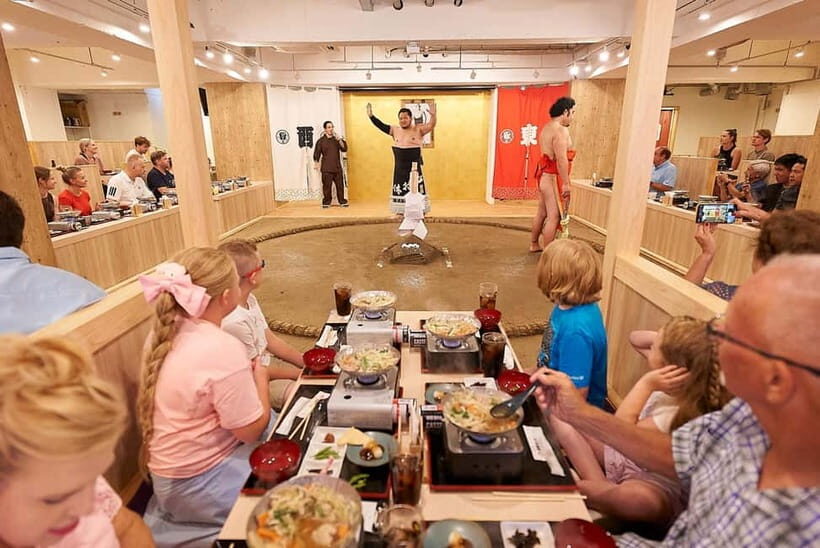
Chanko nabe is the sumo-food headline for a reason. It’s filling, warm, and designed for athletes who burn energy at a serious level. Here, you’re not just eating a random Japanese hot pot. You’re eating the sumo version, and the wrestlers supervise it, which makes the meal feel connected to training rather than tourist entertainment.
The hot pot also works well during the show. Between demonstrations and hands-on moments, you get a steady comfort food break. It keeps the energy up and makes the experience feel like you’re part of the stable routine, even if it’s packaged for visitors.
Practical tip: wear comfortable clothes you can sit in for a while and move in after. If you’re sensitive to spice or rich broth, you might want to mention dietary needs when you book, since special meals can be provided with enough notice.
Mochi pounding: the fun tradition you actually do
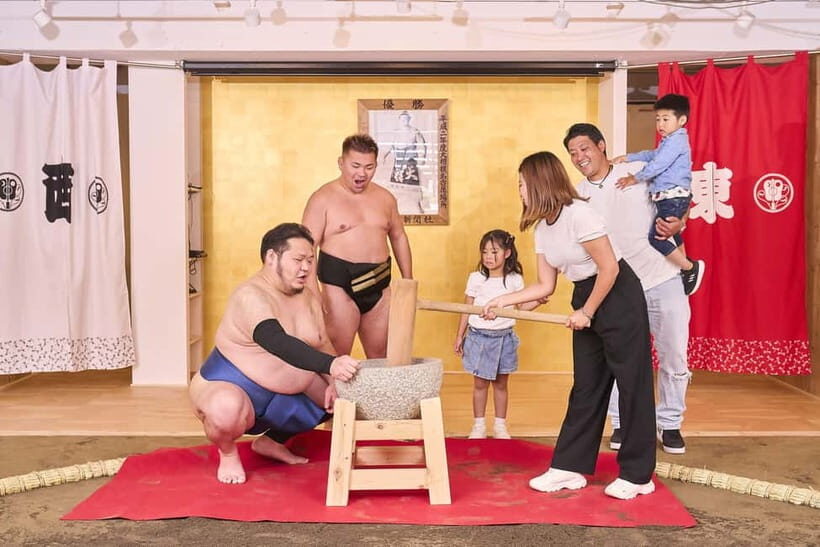
Mochi in Japan sounds simple until you try it. This experience starts with a mochi pounding demonstration, so you see the process before you’re asked to participate. Then you’ll pound mochi with the wrestlers and help bring it together.
Why this matters: pounding isn’t just for show. You learn how much effort goes into shaping mochi, and you get that small thrill of doing a traditional food ritual in the presence of people who do it with confidence. It turns a dessert into a moment with motion and noise and teamwork.
After the pounding, you get to eat sweet mochi for dessert. It’s one of those rare travel activities where the payoff is immediate and edible. You go from hands-on work to a reward you can taste right away, which is a big reason people call this a highlight.
If you’re traveling with kids, this part lands well. It’s active, but it’s also safe and structured. Adults like it too, especially if you’ve ever wanted a hands-on cultural experience that doesn’t require long lessons or complicated tools.
Trying sumo on the dohyo: what you learn in real time
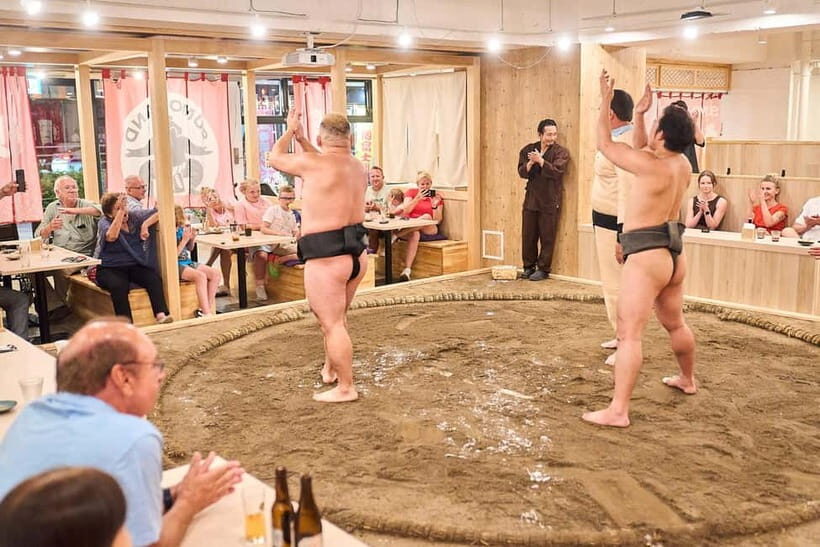
The best part of sumo for most first-timers is proximity. Sitting around the dohyo means you’re close enough to see how wrestlers control distance and posture. When you watch from far away, sumo can look like a slow grapple. Up close, you notice how fast setup happens and how much technique goes into even basic movements.
In this experience, you don’t only watch. You try your hand at sumo techniques and wrestling-style participation with the wrestlers. The goal is fun and encouragement, not a “win” for you. You’re going to feel how heavy footing is and how important balance becomes the second someone leans into you.
That’s also why this is rated so highly. People consistently highlight that the MC and sumo wrestlers actively include the audience. You’re not left standing there unsure what to do. You get coached in a way that fits an entertaining format, which keeps the mood light and makes participation feel doable.
One more important detail: don’t expect this to feel like the serious, strict sumo training culture you might see in early-morning sessions. This is designed as an entertaining sumo experience for adults and children. So if you want strict training drills, you’ll need a different kind of tour.






Price and value: why $103 can make sense
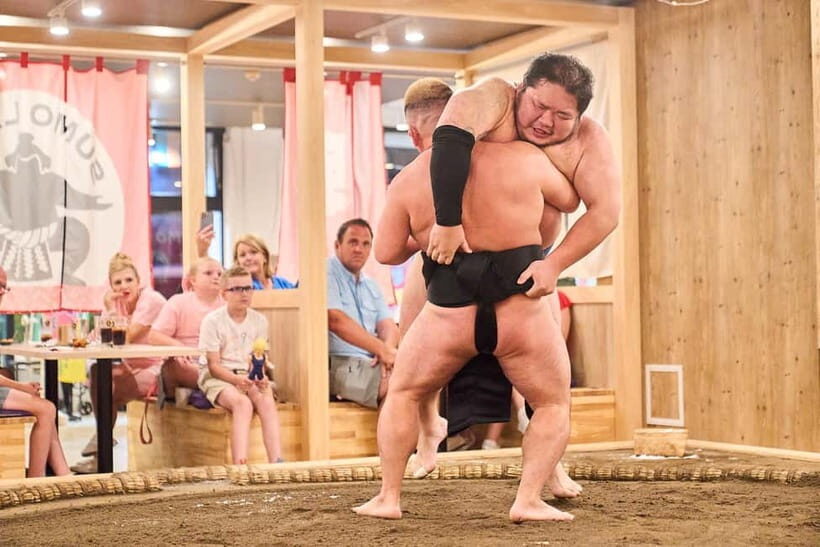
$103 per person sounds like a splurge until you break down what’s included. You’re paying for more than a show ticket.
You get:
- a real chanko nabe meal
- mochi pounding/making plus sweet mochi dessert
- hands-on sumo participation with wrestlers
- time seated around the dohyo with an MC-guided program
In Tokyo, lots of activities either give you a performance with no real interaction, or they give you a workshop with no big cultural context. This combines both. The meal and dessert make it feel like an event dinner, not an add-on. The participation makes it memorable in a way photos alone can’t.
Is it the best deal for everyone? If you only want to watch from the sidelines and you’re not interested in food or hands-on activities, you might prefer a simpler viewing option. But if you want to leave with stories and a fresh sense of sumo culture, the value is easier to justify.
Food options, allergies, and what you can bring
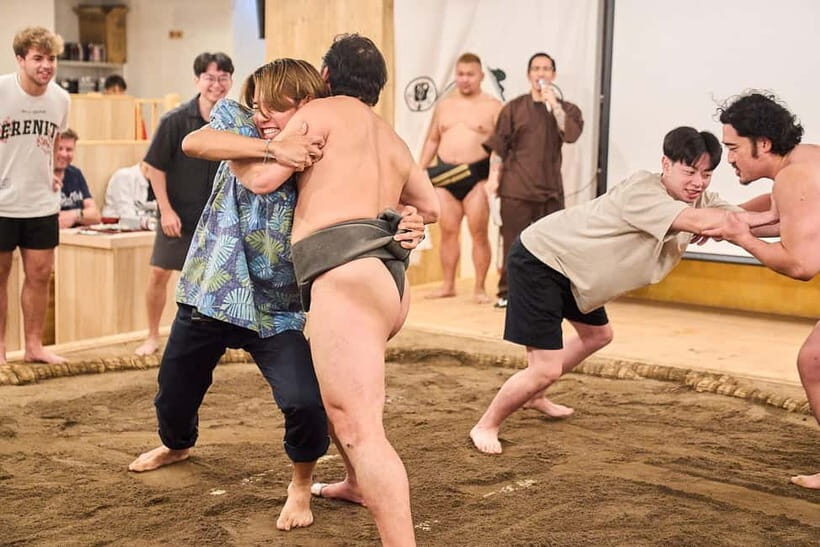
This is a meal-based experience, so it’s worth planning ahead.
- Vegetarian and vegan meals and gluten-free can be provided if you notify the team at least two days before your reservation.
- Halal meals cannot be provided. You are allowed to bring your own food.
If you have allergies, double-check what you need to know ahead of time. One review specifically calls out a sour plum drink issue tied to an alcohol allergy. Since that drink isn’t listed in the essentials here, treat it as something to confirm with the provider when you book, especially if allergies or dietary restrictions are serious.
What to bring:
- a camera
- comfortable clothes
Not allowed: smoking.
Simple advice: arrive with a light layer if you get cold easily. A hot pot meal plus sitting for a while is great, but temperatures can vary inside small venues.
Seating rules: the one practical gotcha
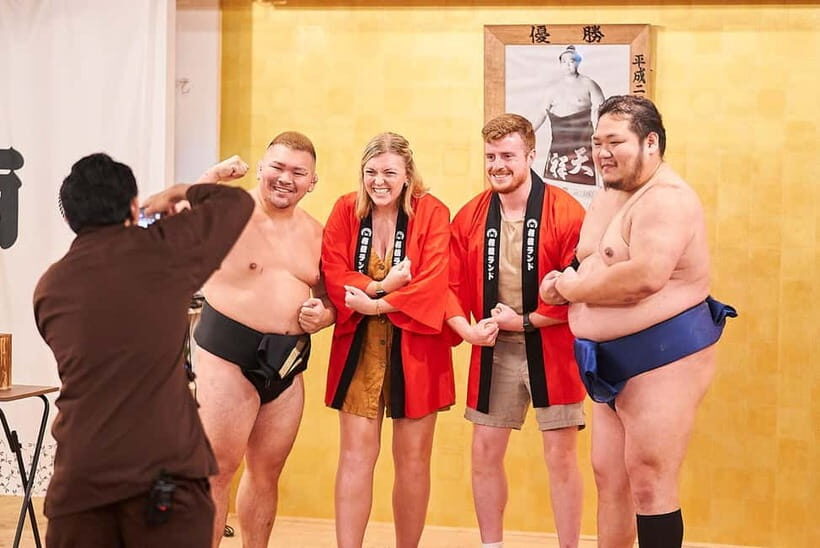
Seating is assigned by the venue. You can’t pick or request specific seats. That’s normal for many Japanese attractions, but it matters here because the program has an active dohyo component.
Also pay attention to the child-on-lap safety note. For standard seats, it can be dangerous to sit while holding a child on your lap. If you’re traveling with small kids, reserve the exact number of people and consider the box seats, which are described as safe and can seat up to six people while allowing a child to sit on a lap.
If you’re traveling as a family, this is the time to be strategic. Box seats can reduce stress and let you focus on enjoying the show instead of worrying about fit and movement.
Who should book this sumo chanko and mochi experience
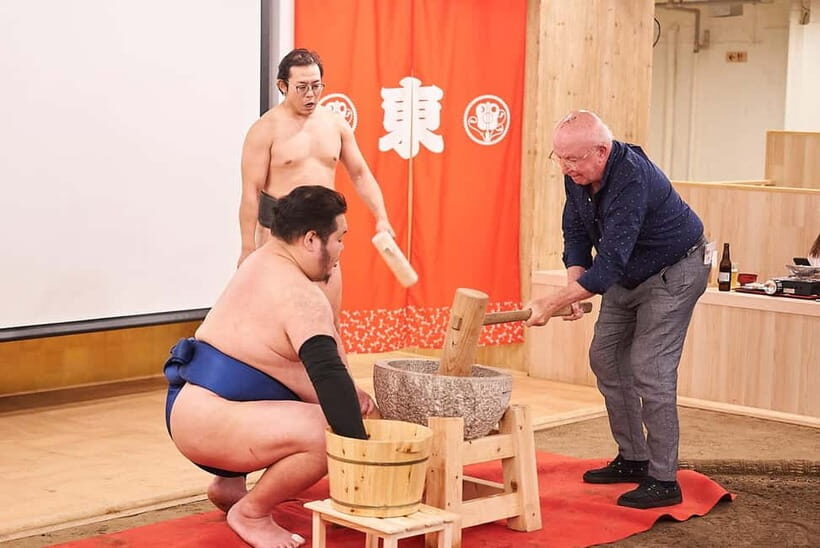
Book it if you want:
- a hands-on sumo experience, not just watching from a distance
- a cultural food centerpiece with chanko nabe
- a traditional food ritual you do yourself: mochi pounding
- fun that works for mixed ages
This is also a strong pick if your trip includes a lot of self-guided sightseeing and you want one organized evening with built-in laughs and structure. Reviews repeatedly mention the MC and wrestlers being attentive and encouraging, which makes a huge difference for first-timers who don’t know what to do with their hands.
What about you if you should skip? If you require wheelchair access, this isn’t suitable. If you only want a quiet, observation-focused experience, the active participation format may feel too “hands-on” for your style.
Quick tips to enjoy it more (and get better photos)
A few small choices make a big difference:
- Bring your camera, but also remember you’ll be moving during mochi pounding and participation. Make sure your settings are ready before the action starts.
- Wear clothes that handle heat from the hot pot and movement from the dohyo. Comfortable shoes help for standing and shifting.
- Don’t overthink the schedule. With a 2-hour runtime, you’ll go step-by-step without long waits.
- If you’re arriving from Ryogoku Station, go early enough to find the storefront. The venue is marked with a large sumo wrestler sign and flags and sits on the first floor.
Should you book this Tokyo sumo experience?
I’d book it if you want the classic Tokyo combo: food plus culture plus an activity you can’t copy at home. The value comes from the mix of chanko nabe, mochi making, and real dohyo participation with former pros. If you’re the type who enjoys doing rather than just watching, this is built for you.
I’d hesitate only if your group is mainly interested in quiet spectating, you need wheelchair access, or you don’t want a meal included in the ticket price. Otherwise, it’s a high-energy, practical way to experience sumo in Tokyo without needing special training, special gear, or patience for a long day.
If you’re in Ryogoku anyway, this is one of the rare experiences that makes the neighborhood feel like its sport lives here year-round.
FAQ
How long is the Tokyo Sumo Chanko & Mochi experience?
It lasts 2 hours.
Where is the meeting point?
The store is on the first floor, a short walk from Ryogoku Station. It’s marked by a large sumo wrestler sign and flags.
What languages are available during the experience?
The instructor/MC speaks English and Japanese.
Is the chanko nabe meal vegetarian or vegan friendly?
Vegetarian and vegan meals (as well as gluten-free options) can be provided if you notify the provider at least two days before your reservation.
Can the provider accommodate halal diets?
Halal meals cannot be provided, but you’re allowed to bring your own food.
Can I choose my seat location?
No. Seat locations are assigned by the venue, and you can’t request specific seats.
Is this experience wheelchair accessible?
No, it is not suitable for wheelchair users.