REVIEW · TOKYO
Tokyo: Meiji Shrine Walking Tour — Shintoism & Imperial System
Book on Viator →Operated by Local Guide Stars · Bookable on Viator
Meiji Shrine feels like a reset button. This guided walk is interesting because you get both the calm forest setting and the meaning behind Shinto rituals, plus context on Japan’s Imperial system. I really like how the guide helps you slow down in the middle of Tokyo, so the shrine feels understandable, not just scenic.
Second, I love the route details: you pass one of the biggest wooden torii gates in Japan and you learn what to do at the main shrine, from prayers to omikuji and ema. The main potential drawback is time. At about 1 hour 30 minutes, you’ll get a focused overview, not a long, slow cultural seminar.
In This Review
- Key Points You’ll Care About
- A 90-Minute Escape to Meiji Jingu’s Calm
- Finding the Start: Harajuku Gate and the Meeting Point Rhythm
- Through the Forest Path: Torii Gates, Sake Barrels, and Purification
- Big Torii Stop: The Giant Wooden Gate from Ancient Cypress
- At the Main Shrine: Prayer, Omikuji, Ema, and Omamori
- Café Mori no Terrace: Light Meals, Quiet Atmosphere, and Shop Time
- Price and Value: Why About $21.22 Feels Fair
- Who This Tour Best Fits (and Who Might Want Something Else)
- Practical Tips to Make Your Walk Smoother
- Should You Book This Meiji Shrine Walking Tour?
- FAQ
- How long is the Tokyo Meiji Shrine walking tour?
- What is the price of the tour?
- What does the tour include?
- Where does the tour start?
- How many people are in the group?
- Do I need to print a ticket?
- Can I get a full refund if my plans change?
Key Points You’ll Care About
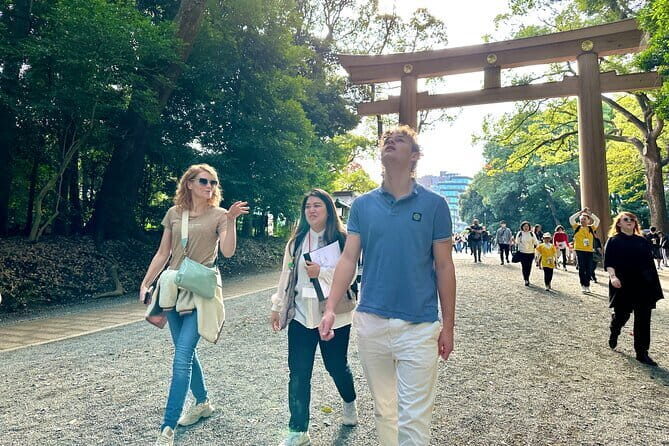
- Small group, up to 15 people, so questions don’t disappear into the crowd
- Meiji Shrine garden admission is included, saving hassle once you arrive
- A giant wooden torii made of ancient cypress (brought from Taiwan) that you’ll remember
- Hands-on shrine moments like prayer, omikuji, ema, and omamori guidance
- Stops stay paced and practical, ending near a cafe and shop if you want a snack
A 90-Minute Escape to Meiji Jingu’s Calm
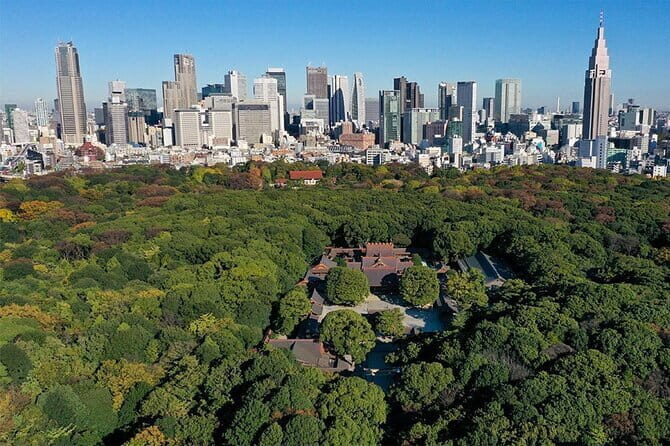
Tokyo can run hot and fast. This tour is built to slow your body down and fix your mental map. In a little over an hour and a half, you move from the built-up Harajuku area into a shaded, quiet shrine landscape, where the sounds change and your eyes start looking for details instead of landmarks.
I like that the experience isn’t only sightseeing. You’re not just taking photos of old wood and big gates. Your guide explains what you’re seeing and what people do there. That matters because the shrine world can feel mysterious if you only know the basics. With a bit of context, you’ll feel like you understand the rhythm: approach, purification, prayer, and wishes.
Also, your group stays small. With a max of 15, it’s easier to ask questions and get answers that actually fit what you’re curious about. In reviews, guides such as Yuuki A, Nana, Keiko, Nonoka, and Nanami show up repeatedly for being friendly, patient, and strong in English.
You can also read our reviews of more walking tours in Tokyo

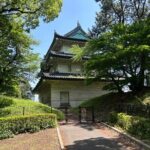

Finding the Start: Harajuku Gate and the Meeting Point Rhythm
The meeting point is near Harajuku Station, at 1 Chome-18 Jingumae in Shibuya. The tour ends back at the meeting point, which makes planning simple. If you like to keep your day tidy, this helps: you don’t need to worry about transit tricks afterward.
You should arrive with a little time buffer. Even though it’s close to public transit, this is one of those walks where you’ll want to start as the guide intends. The first part sets the tone: you’ll walk wide paths under trees, and you’ll want to be present for it, not rushing like you’re late for the next train.
Through the Forest Path: Torii Gates, Sake Barrels, and Purification
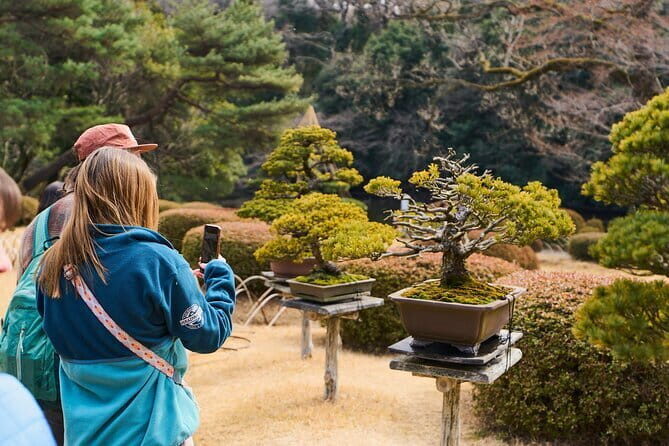
The walking part begins as you enter through the Harajuku gate. From there, you follow a broad path into the grounds. One of the best feelings here is the gradual shift: city noise fades, and the shrine grounds start acting like their own micro-world.
Along the way, you’ll spot major torii gates and other traditional features, including sake barrel displays. Sake offerings at shrines are one of those cultural touches that can look decorative if nobody explains them. With guidance, you’ll understand them as part of the shrine relationship with worshippers and supporters.
Then comes a key moment: the purification fountain (the temizu ritual area). Even if you’ve never done anything like this, your guide will help you understand what it’s for and what the ritual signals. It’s not about turning into a monk for five minutes. It’s about setting a respectful mindset before you approach the main area.
One practical note: expect to walk on uneven but manageable ground paths. The tour says most people can participate, but you’ll still be on your feet for a while, in a gentle “stroll plus learning” rhythm.
Big Torii Stop: The Giant Wooden Gate from Ancient Cypress

A standout photo moment is also a meaningful moment. On the path, you pass a large wooden torii gate that’s described as one of Japan’s biggest, made from ancient cypress brought from Taiwan.
Why does this matter beyond the wow-factor? Because the gate is a physical reminder of the shrine’s idea of connection—community, materials, and dedication moving across time. Your guide’s job here is to help you see the gate as more than scale. When someone explains the size and background, your brain switches from just “cool structure” to “this has story.”
The gate also works as a mental checkpoint. After the forest walk and purification area, this stop lets you pause and absorb the shift in space. You’ll feel the power of the setting even if you’re not religious. It’s one of those places where quiet is part of the experience.
At the Main Shrine: Prayer, Omikuji, Ema, and Omamori
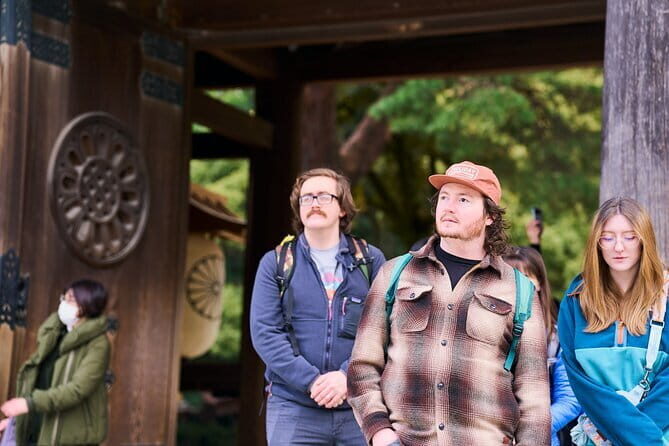
Now you reach the core event: the main shrine area. This is where the tour turns into something you can actively participate in, not just watch.
You’ll have time to:
- Offer a prayer
- Draw omikuji (a fortune paper)
- Write a wish on ema (wooden plaques)
- Browse omamori (protective charms)
Each item answers a different question your brain might have while you’re standing there. If you’re wondering what to do, the prayer guidance handles that. If you’re curious about why people love omikuji, the guide helps you understand how it fits into the shrine experience. And if you like the idea of leaving something personal, ema gives you a place to focus your wish.
Omamori is a great souvenir if you want meaning, not just a postcard. Since the tour includes time around the shrine area, you’re not forced to rush through a shop line. You can look, compare, and understand what you’re buying—at least at a basic level—so it feels intentional.
In reviews, the guides are repeatedly praised for answering questions clearly and patiently. That’s important here. The main shrine area can feel intimidating at first, especially if you’re unsure about etiquette. With a guide nearby, you can move at your pace.






Café Mori no Terrace: Light Meals, Quiet Atmosphere, and Shop Time
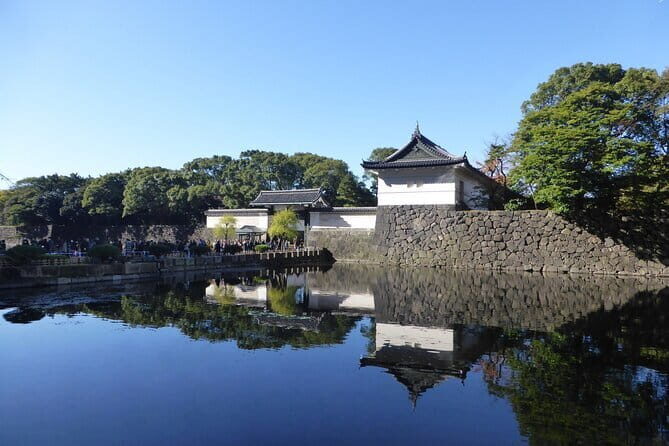
The tour wraps with time at CAFÉ Mori no Terrace, near the shrine grounds. This stop is practical. You’ve walked, you’ve stood, you’ve learned. A quiet cafe gives you an easy way to continue your day without hunting for food in a hurry.
The cafe offers light meals and drinks, and the setting is described as calm and forest-like. If you’re someone who likes to sit down after cultural walking tours, this is a nice payoff.
There’s also a gift shop nearby. The shop sells charms and traditional items, including Meiji Jingu–exclusive items. You’ll probably find something worth bringing home here—especially charms—because it’s connected to the place you just visited, not a random souvenir stop.
If you’re trying to keep your Tokyo budget controlled, use this stop like a menu tasting. Decide on a small snack first. You’ll have plenty of time later in the city to spend more if you still want to.
Price and Value: Why About $21.22 Feels Fair

At $21.22 per person for roughly 1 hour 30 minutes, this tour lands in the value zone for Tokyo. The biggest value lever is that the experience includes admission fees for the Meiji Shrine Garden. That can make the price feel less like paying only for the guide and more like paying for the full, usable package.
You’re also getting structure. A shrine visit can be self-guided, sure. But this tour saves you from the most common problem: walking around without knowing what you’re looking at or what rituals mean. That’s where guide time becomes real value, because it turns a collection of sights into a coherent experience.
Small group size matters too. Up to 15 people is the difference between a guided moment and a lecture you can’t interrupt. Based on the consistently high ratings and repeated praise for guides like Yuuki A and Nana, you’re likely to get explanations that stick.
Who This Tour Best Fits (and Who Might Want Something Else)

This is a great fit if you want:
- A calm Meiji Shrine walk with meaning, not just photos
- Clear guidance on common shrine actions like prayer and omikuji
- A short format that still covers Shintoism and the Imperial system in an understandable way
It’s also a good option if you don’t want to plan your shrine etiquette from scratch. A guide gives you confidence quickly, so you can enjoy the atmosphere instead of second-guessing everything.
If you want a longer, more academic course, this may feel brief. At 90 minutes, you get the essentials and the key moments, but you won’t have hours to keep asking questions in every direction. Think of it as a smart starter course, not a final exam.
Practical Tips to Make Your Walk Smoother
Since this is a shrine-and-ritual type tour, a little prep helps.
- Wear comfortable shoes. You’ll do walking on paths and spend time standing near shrine spaces.
- Dress for the weather. The grounds can feel cooler under trees in some seasons, but you still feel outdoor temperatures.
- Bring a simple question list. Things like how omikuji works, what ema represent, or what the Imperial system context means—your guide can likely help.
- If you plan to do omikuji or ema, give yourself a calm moment. It’s easy to rush in tourist mode.
Should You Book This Meiji Shrine Walking Tour?
Yes, I’d book it if you want a short, guided way to experience Meiji Shrine with context you can actually use. The combination of forest atmosphere, a giant torii gate stop, and hands-on guidance at the main shrine makes it more than a quick attraction check.
Skip it only if your priority is a long independent wander with zero structure. If you prefer to wander at your own pace without any ritual coaching, you might do fine on your own. But for most people, the guide time plus included garden admission makes this feel like a smart deal for Tokyo.
FAQ
How long is the Tokyo Meiji Shrine walking tour?
The tour is about 1 hour 30 minutes.
What is the price of the tour?
The price is $21.22 per person.
What does the tour include?
You’ll visit Meiji Shrine and the garden with a local guide. Admission fees for the Meiji Shrine Garden are included, and you also get shrine time for activities like prayer and omikuji/ema/omamori.
Where does the tour start?
The tour starts near Harajuku Station, at 1 Chome-18 Jingumae, Shibuya, Tokyo 150-0001, Japan.
How many people are in the group?
The tour has a maximum of 15 travelers.
Do I need to print a ticket?
No. It’s a mobile ticket.
Can I get a full refund if my plans change?
Yes. You can cancel up to 24 hours in advance for a full refund. Canceling within 24 hours doesn’t get refunded.