REVIEW · KYOTO
Ninja 2-hour Hands-on Lesson by Japanese master in Kyoto -Medium
Book on Viator →Operated by NINJA DOJO and STORE · Bookable on Viator
Ninja training, minus the movie fantasy. What I like most is that it’s a small class (up to 6 people), and you get direct, English-led guidance from the dojo sensei while you practice. I also love the full setup: ninja clothing rental and real weapon drills, starting with Kuji-In meditation and ninja breathing before you touch any tools. The main drawback to consider is simple: it’s an active, hands-on workshop, so you’ll want to wear comfortable clothes and be ready to stand, move, and focus for the full 2 hours.
This lesson takes place at the NINJA DOJO and STORE KYOTO area in Shimogyo Ward, with a clear start point and a tight time window. If you’re in Kyoto for temples and food tours, this is a fun change of pace that still feels grounded in technique and discipline, not just costumed theatrics.
For families and beginners, it tends to land well. I’ve seen it work for kids, teens, and adults, including people who don’t feel athletic. Just keep expectations realistic: it’s “Ninja training for the day,” not a lifetime martial-arts apprenticeship.
In This Review
- Key Things I’d Mark on Your Itinerary
- Where The Lesson Starts (And How To Be Ready)
- The “2-Hour Ninja Training” Flow You Can Expect
- Kuji-In Meditation: The Calm Start Before The Chaos
- Ninja Breathing and Walking: How They Teach Control
- The Ninja Trick House Moment (Gimmick and Trap)
- Weapons Training That Actually Gets Hands-On
- Sword, Shuriken, and Throws: What the Drills Teach
- Blowgun Practice: The Skill That Feels Different
- Costume Rental, Photos, and The Dojo Store
- Price and Value: Is $95.51 Worth It?
- Who This Is Best For (And Who Might Want to Skip)
- Timing, Planning, and What to Bring
- Should You Book This Ninja Lesson in Kyoto?
- FAQ
- How long is the Ninja 2-hour hands-on lesson?
- What is the group size limit?
- Where do I meet, and what time does it start?
- Is hotel pickup or drop-off included?
- What is included in the ticket price?
- Is food or drink included?
- What techniques and activities are taught?
- Do I need to speak Japanese?
- Does it run only in certain weather?
- Can I cancel and still get a refund?
Key Things I’d Mark on Your Itinerary
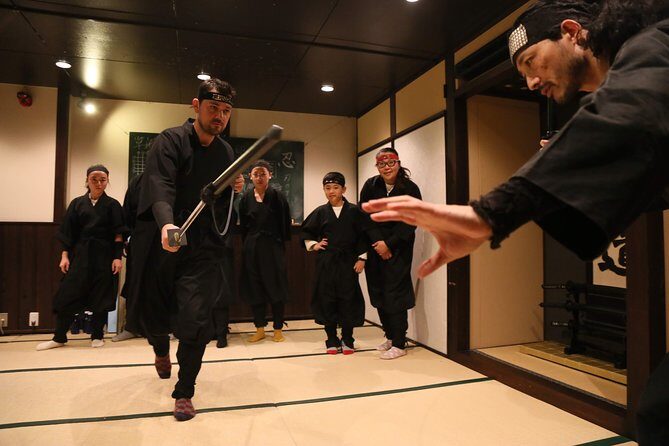
- Small-group class (max 6) so your instructor can correct your form
- Kuji-In meditation + ninja breathing right at the start, before weapon practice
- Hands-on weapon time with tools like kunai, kusarigama, shuriken, and a blowgun
- Ninja costume rental included, with photo-friendly presentation
- English instruction from a Japanese sensei for beginners and non-Japanese speakers
- 2 hours, entry-level pace, plus extra techniques layered in
Where The Lesson Starts (And How To Be Ready)
The class meets at NINJA DOJO and STORE KYOTO Japan, 600-8422 Kyoto, Shimogyo Ward, Hakurakutenchō, 528 2F, with a 10:00 am start. There’s no hotel pickup or drop-off, so plan to make your own way there using public transportation.
Inside, expect dojo-style rules. One common detail from people who’ve taken the lesson: you’ll remove your shoes and switch to slippers, so wear socks you’re happy to keep on. If you arrive a little early, you’ll likely get a smoother transition into the space, including time for getting dressed.
You’ll also want to think about comfort. This is a training workshop, so choose clothes that let you move—think flexible pants over anything restrictive. And because food and drinks aren’t included, grab water before you go. (Yes, the experience is short—but you’ll still work up some effort.)
A few more Kyoto tours and experiences worth a look



The “2-Hour Ninja Training” Flow You Can Expect
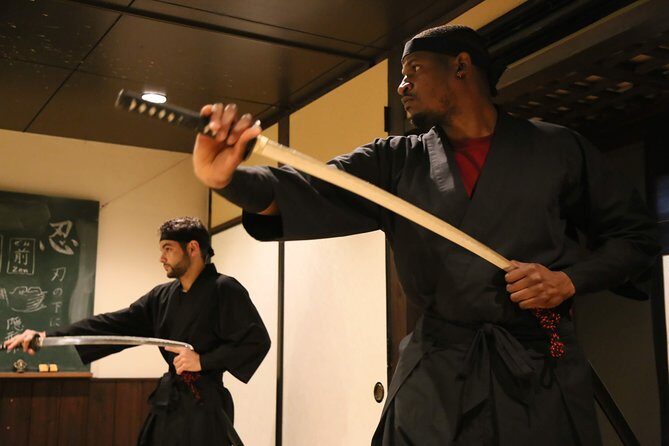
This is built as an entry-level lesson that covers the basics and then adds more technique practice. In other words, it’s not just watching. You’ll learn and repeat patterns, movements, and methods designed for beginners, then progress through additional techniques during the same 2-hour session.
The workshop is structured like a chain: first mindset and breath, then movement, then tools. That order matters. When you practice ninja walking and basic control, it helps your throwing and handling later feel less like random motions and more like coordinated drills.
The class also keeps a good rhythm for mixed groups. In past groups, adults and kids have done it side-by-side, and the teaching style is designed to be accessible while still feeling legitimate. You’ll feel like you’re in a real dojo, not a themed show.
Kuji-In Meditation: The Calm Start Before The Chaos
The lesson begins with Kuji-In meditation, a technique that helps center your mind and body. You’re not expected to be “good at meditation” right away. Instead, the instructor walks you through it step-by-step and turns it into something you can physically practice—so even first-timers can follow.
You’ll also work on the hand-sign element associated with this training. People have specifically mentioned practicing meditation hand signs sometimes described as Kuji-kiri alongside Kuji-In. Either way, you’ll leave with something concrete: a short sequence you can remember and repeat later.
Why I think this part is valuable: it changes the vibe of the whole session. Once you’ve done the breathing and focusing drills, the rest of the class doesn’t feel like pure adrenaline. It feels controlled. That control is exactly what makes the later weapon drills seem safer and more manageable for beginners.
Ninja Breathing and Walking: How They Teach Control
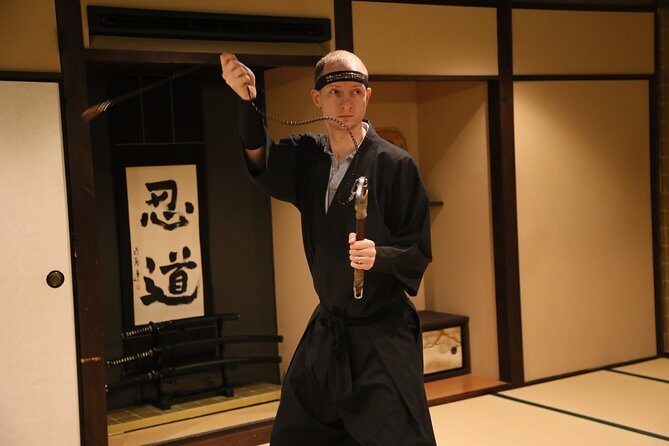
After Kuji-In comes ninja breathing and ninja walking. This is where a lot of people realize the “ninja” label is less about costumes and more about body mechanics.
Breathing drills are practical. They’re designed to help you control tension—especially your shoulders and posture—so your movements stay stable. Ninja walking then turns that stability into motion, using specific patterns you can feel in your feet and balance.
This is also where the teaching tends to feel playful. In the experiences I read about, instructors balance humor with discipline. That matters if you’re traveling with kids or you’re self-conscious as a beginner. You’ll still get corrected, but it won’t feel harsh.
The Ninja Trick House Moment (Gimmick and Trap)
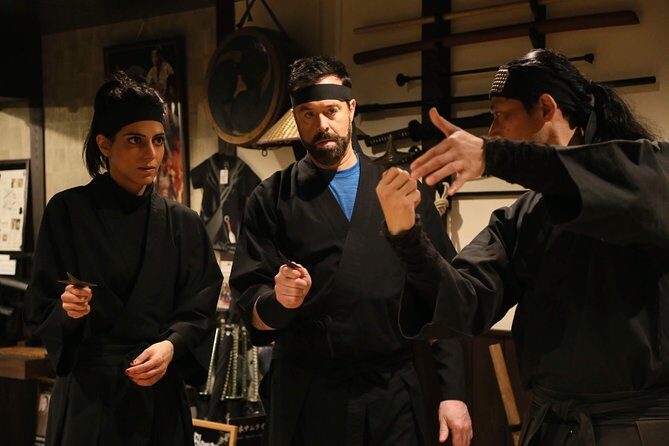
Partway through, you’ll encounter an introduction gimmick and trap at a ninja trick house. Without turning it into a spoiler, this portion adds a “task” element to the training. You’re not only practicing form—you’re practicing attention and reaction inside a set scenario.
This part is usually where the lesson shifts from “class” to “story you’re in.” It also helps groups bond fast because everyone is doing the same challenge at the same time.
If you don’t love surprise elements, you can still handle it. The good news is that it’s built as part of an entry-level workshop, not a high-risk stunt. You’re learning presence and focus, not performing for a spotlight.
A few more Kyoto tours and experiences worth a look



Weapons Training That Actually Gets Hands-On
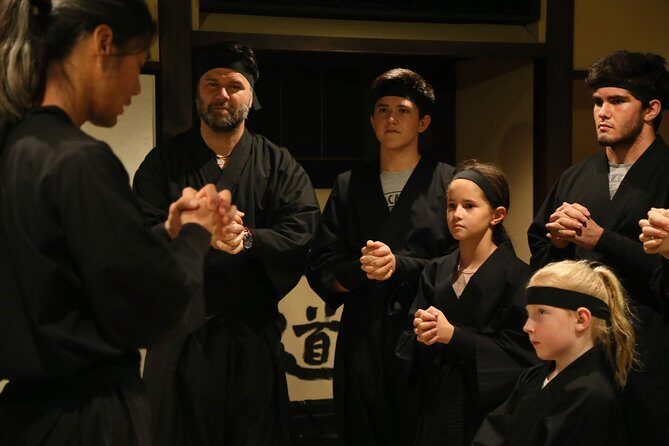
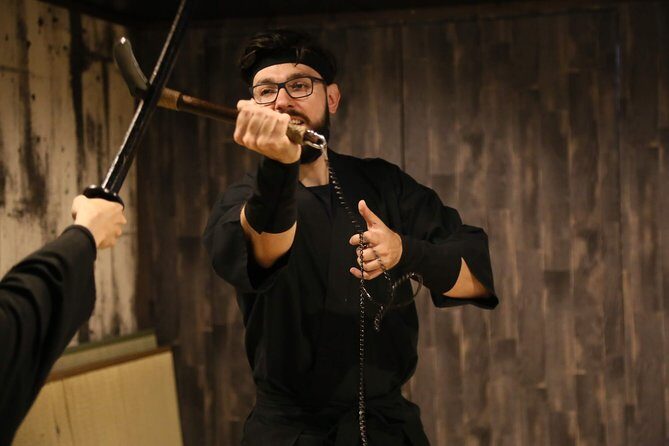
This is the biggest reason people book the session, and the content is broad. You’ll train with:
- Ninja sword (including sword training combined with additional techniques like shuriken use)
- Kunai (dagger)
- Kusarigama (sickle with chain)
- Rope techniques
- Kunai with rope
- Shuriken (ninja star)
- Ninja sword with shuriken
- Stick type shuriken
- Ninja blowgun (blow darts)
What stands out is the range. Many “ninja experiences” offer one prop and a few photos. Here, the workshop teaches multiple tool categories, and you practice how they work in a training context.
Even better, people describe being allowed to try each weapon themselves on targets, not just watch from the sidelines. That’s where the value becomes obvious. Your time is spent building muscle memory and understanding angles—things you can’t learn by reading about ninja weapons.
Safety-wise, it stays within the structure of a dojo lesson. If you follow the instructor’s cues and keep your attention on the drills, the experience is meant to be manageable for beginners.
Sword, Shuriken, and Throws: What the Drills Teach
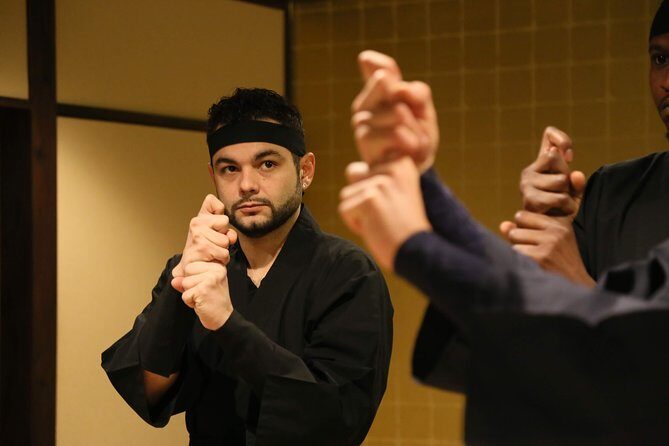
Sword work plus throwing is a clever pairing. When you practice sword motions and then link them with shuriken-style techniques, it forces you to coordinate timing, distance, and body position.
You’ll likely start simpler and then move toward the combined drills listed in the workshop flow, such as ninja sword with shuriken. The “stick type shuriken” is another element that helps you learn without needing advanced technique immediately.
Why this matters for you as a visitor: it’s not just “cool.” It’s a structured way to learn range and control quickly. And because it’s hands-on, you’ll remember it longer than a passive museum stop.
Blowgun Practice: The Skill That Feels Different
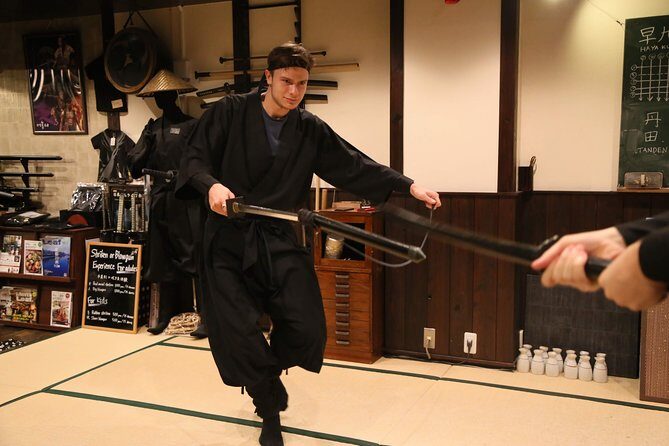
The workshop also includes ninja blowgun practice with darts. Blowgun drills tend to feel distinct from throwing shuriken. Your control comes from breathing, stance, and fine aim rather than arm swing alone.
If you’re the type of traveler who likes “one thing you can do well by the end,” blowgun training can deliver that. It also adds variety to keep the 2 hours from feeling like one long repetition.
From what’s been described, the lesson doesn’t treat the tools like toys. You’ll practice them in a real training format, with the instructor guiding you on how to hold and use them correctly.
Costume Rental, Photos, and The Dojo Store
One included perk is ninja clothing rental during training. You’ll put on the outfit for the workshop, and it makes the experience feel instantly more immersive in a practical way: you’re not just learning—you’re participating. It’s also a big help for photos, since you’ll be dressed for the part the whole time.
In addition, I’ve seen comments about photos and videos captured during the class on a professional camera and sent to you via email the same day (often through services like Google Photos). That’s not something you should count on blindly, but it’s a real bonus that shows up for many groups.
Don’t ignore the shop side of the visit. The meeting point is a “Dojo and Store” setup, and some people enjoy browsing ninja-related items after training. If you want to bring home something beyond a postcard, this is where you can.
Price and Value: Is $95.51 Worth It?
At $95.51 per person, this class is priced like an experience, not a budget activity. The value comes from what’s bundled:
- small-group limit (max 6)
- a Japanese sensei teaching in English
- admission included
- ninja clothing rental
- a full 2-hour hands-on sequence covering multiple techniques and multiple weapon categories
If you’re comparing it to a typical museum ticket, it’s obvious it’s pricier. But you’re also buying active participation: you’ll learn, practice, and handle tools with instructor guidance. For families, that often becomes worth it quickly because kids get a clear “I did this” memory—not just “we watched something.”
If you’re only mildly interested in ninja culture and you hate workshops where you must move, you might feel the cost more than the benefit. But if you want a memorable Kyoto stop that isn’t another temple photo line, this delivers.
Who This Is Best For (And Who Might Want to Skip)
I’d point you toward this lesson if you fit one of these categories:
- You want a short, high-participation activity between Kyoto sights
- Your group includes kids or teens who need hands-on entertainment
- You’re a beginner curious about “how it works,” not just “what it looks like”
- You like structured practice, including meditation and breathing basics
I’d pause if you have limited ability to stand and move for the full 2 hours, since the workshop is physical. It’s also not a “slow cultural talk” experience. It’s training, with a clear action rhythm.
One more practical note: the workshop requires good weather. That doesn’t mean you’ll be outside the entire time, but it does mean the operator will watch conditions and adjust if needed.
Timing, Planning, and What to Bring
Start time is 10:00 am, and the experience ends back at the meeting point. That makes it easy to place into a morning plan, then continue your Kyoto day afterward.
Because food and drink aren’t included, I recommend you treat this like a workout stop: eat beforehand or plan a meal right after, and bring water. If you get dehydrated easily, you’ll feel it more during the active parts.
Also, plan your arrival. Being early gives you time to settle into the dojo routine and dressing process without rushing.
Should You Book This Ninja Lesson in Kyoto?
If you want one unforgettable, hands-on Kyoto experience that works for beginners and mixed ages, I’d book it. The small group size, English instruction from the sensei, the costume rental, and the wide weapon lineup are exactly the ingredients that make a 2-hour workshop feel complete.
You should especially consider it if you’re traveling with kids or if you’re tired of activities where you mostly watch. Here, you actually practice breathing, walking, and technique—then you handle and try a range of ninja tools.
Just be honest about your comfort level with movement. If you’re okay with standing and learning basic physical drills, this is a strong value for the amount you do in such a short time.
FAQ
How long is the Ninja 2-hour hands-on lesson?
It lasts about 2 hours.
What is the group size limit?
The class has a maximum of 6 travelers, which keeps it more personal.
Where do I meet, and what time does it start?
Meet at NINJA DOJO and STORE KYOTO Japan (Shimogyo Ward, Hakurakutenchō, 528 2F). The listed start time is 10:00 am.
Is hotel pickup or drop-off included?
No, hotel pickup and drop-off are not included.
What is included in the ticket price?
The ticket includes the Japanese sensei instructor teaching in English, ninja clothes rental during training, and admission fee.
Is food or drink included?
No. Food and drink are not included.
What techniques and activities are taught?
You’ll cover an entry-level lesson plus additional techniques, including Kuji-In ninja meditation, ninja breathing, ninja walking, a gimmick and trap at a ninja trick house, ninja sword training, and weapon practices such as kunai, kusarigama, rope techniques, shuriken, and ninja blowgun (blow darts).
Do I need to speak Japanese?
No. The instructor teaches in English.
Does it run only in certain weather?
The experience requires good weather. If it’s canceled due to poor weather, you’ll be offered another date or a full refund.
Can I cancel and still get a refund?
You can cancel up to 24 hours in advance for a full refund. If you cancel less than 24 hours before the start time, the amount paid isn’t refunded.