REVIEW · OSAKA
Osaka Dotonbori: Sushi Making Experience
Book on GetYourGuide →Operated by 株式会社SALTE · Bookable on GetYourGuide
Make sushi, then toast in Osaka.
This popular Osaka Dotonbori sushi making experience turns dinner into a hands-on lesson where you shape sushi step-by-step and then eat what you made. You’ll get English instruction, make 12 pieces, and finish with Japanese sake plus fun extras like sushi cosplay and photos.
What I like most is how practical the coaching feels, from preparing the shari (rice) to shaping each piece. You also get the full performance side, including sushi cosplay, a photo session, and an official-style sushi master certificate that gives the experience an easy sense of closure.
One consideration: if you’re very picky about seafood freshness, a small number of people have noted the seafood was good but not extremely fresh.
In This Review
- Key highlights you should know
- Why This Osaka Dotonbori Class Feels Different Than Just Eating Sushi
- The 90-Minute Flow: From Shari to Your Last Bite
- 1) Start with shari (the sushi rice)
- 2) Shape the rice ball
- 3) Add neta (topping) and a touch of wasabi
- 4) Final shaping with your fingers
- What You Actually Learn: Rice, Pressure, and the Sushi Logic
- Sushi rice is about texture control
- Your fingers matter more than you’d think
- You’ll likely get culture in the middle, not just at the end
- Ingredients Quality and Variety: What’s Included in Your 12 Pieces
- Vegan, Halal, and Allergy-Friendly Without Making It Weird
- Sake With Your Sushi: A Simple Pairing That Changes the Mood
- Sushi Cosplay and the Photo Session: Silly Fun, Actually Useful
- The Sushi Master Certificate: Why That Piece of Paper Counts
- Price and Value: Is $45 Fair for 90 Minutes?
- Logistics You Can Plan Around Without Stress
- Who Should Book This Sushi Making Experience
- Should You Book This Osaka Sushi Class?
- FAQ
- How long is the Osaka Dotonbori sushi making experience?
- How many pieces of sushi will I make?
- Is the instructor teaching in English?
- Is sake included?
- Are vegan or halal sushi options available?
- Is free cancellation offered?
Key highlights you should know
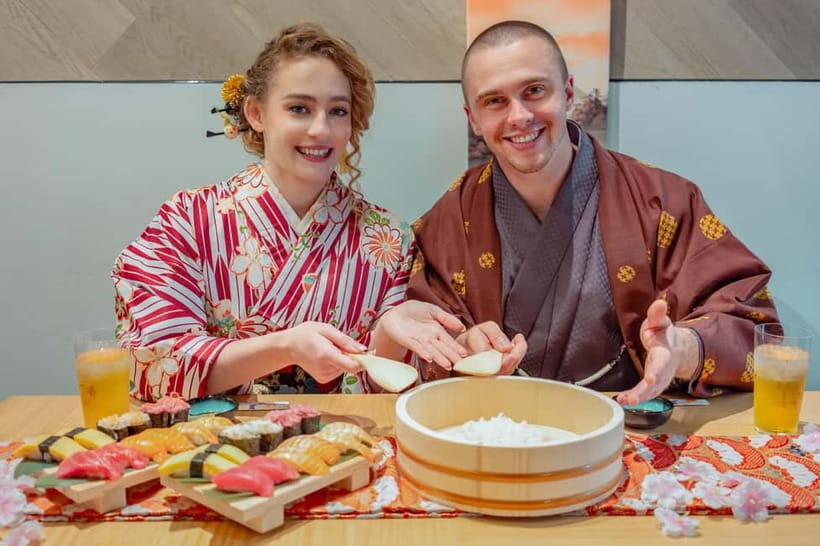
- 12 pieces in 90 minutes: you leave with a full, satisfying amount of sushi you personally shaped
- Clear, step-by-step technique: shari vinegar seasoning, rice shaping, topping prep, then final hand-forming
- Sake included: Japanese sake is part of the experience, paired with the sushi you make
- Cosplay and photos: you don’t just learn, you also dress up and get a picture moment
- Diet-friendly options: vegan and halal sushi are available, and gluten-free soy sauce has been mentioned for gluten allergies
- English instruction plus multiple instructor styles: you might work with hosts like Mako, Saki, Mika, Yui, Yumiko, Kosei, or Marko
Why This Osaka Dotonbori Class Feels Different Than Just Eating Sushi
Osaka Dotonbori is one of those places where food culture is easy to find on every corner. The real win here is that you don’t just order sushi and move on. You build it. That simple shift changes everything: sushi becomes a skill you understand, not just a dish you taste.
The class is designed around a tight loop: learn what goes into sushi, practice the hands-on steps, and then eat it immediately. That timing matters. When the vinegar hits the rice, when the topping meets the rice, and when your final shape holds together at the table, the lessons click fast.
I also like that the experience doesn’t treat beginners like a problem. In multiple sessions, instructors were described as fun and good at explaining what to do in plain English. Some people even said the class felt close to private when the time slot had fewer bookings, which is a nice bonus if you prefer less crowd noise.
You can also read our reviews of more tours and experiences in Osaka.



The 90-Minute Flow: From Shari to Your Last Bite
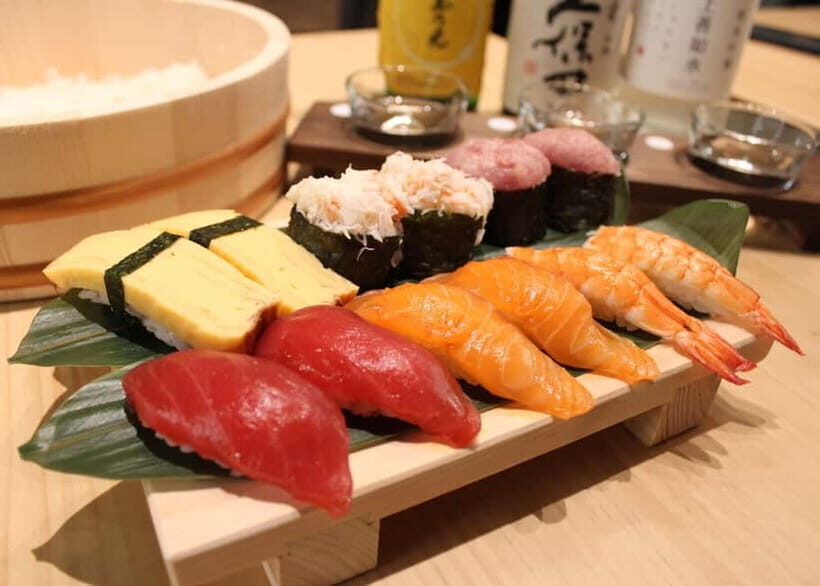
The class runs about 90 minutes, and the structure is simple on purpose. It helps you avoid the most common sushi-making trap: getting overwhelmed before you ever pick up your hands.
Here’s the typical flow you’ll follow.
1) Start with shari (the sushi rice)
You’ll learn the base of sushi: shari. The core step is seasoning the rice with sushi vinegar and distributing it evenly. Even if you’ve never cooked sushi rice before, this part is where you see the big difference between plain rice and sushi rice.
2) Shape the rice ball
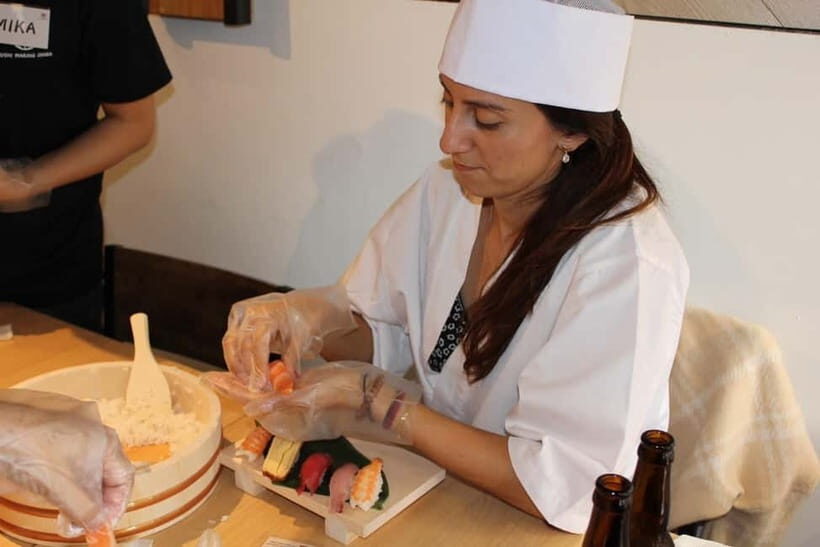
Next comes rice shaping. You’ll form a rice ball and start learning the right feel for pressure and texture. This is where your instructor’s guidance helps most, because sushi rice isn’t just food—it’s a structure. If you pack it wrong, it won’t form neatly.
3) Add neta (topping) and a touch of wasabi
Then you build the “top” portion. You’ll bring neta together and add wasabi on the topping before pairing it with the shari. The point isn’t just taste. It’s about balance: where the wasabi goes, how much is enough, and how the pieces stay together.




4) Final shaping with your fingers
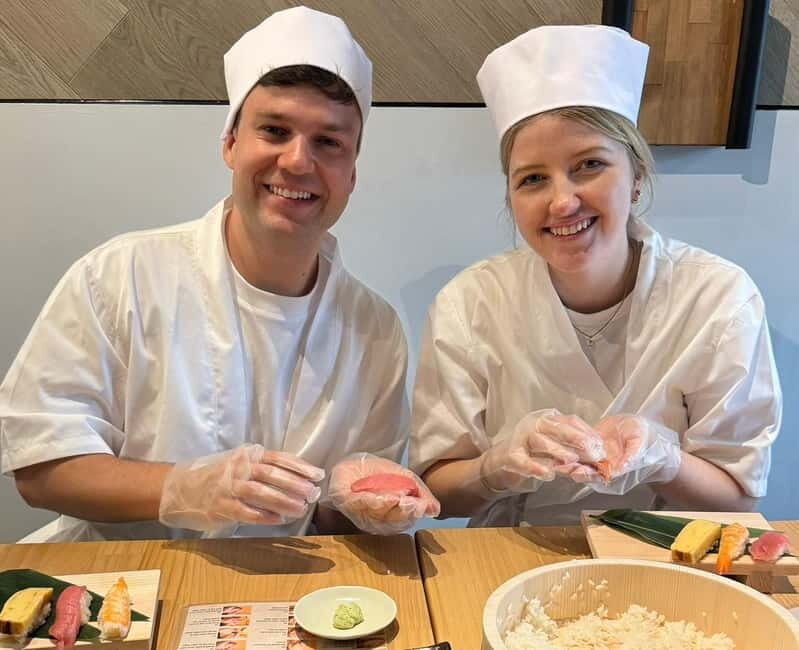
Finally, you’ll shape the sushi using your fingers. This step is surprisingly satisfying. You go from raw rice to a finished piece that looks and eats like sushi shop work, not school craft.
By the end, you make 12 pieces of sushi, and those are yours to eat right there.
What You Actually Learn: Rice, Pressure, and the Sushi Logic
Lots of classes teach you recipes. This one teaches you technique, which is why the results feel confident even for first-timers.
Sushi rice is about texture control
The shari step is all about consistency. Sushi vinegar changes the rice, but your hands change it too. If you spread the seasoning well and shape with the right pressure, the rice stays workable. That’s what allows the toppings to sit correctly and not slide around.
Your fingers matter more than you’d think
The class uses your hands as the tool, not a gadget. Finger shaping is how you learn the feel of a sushi piece: compact enough to hold, not so tight it becomes paste. This is also where instructors can correct micro-mistakes quickly.
Some people said the hosts simplified steps so it was easy to follow, while also teaching small accuracy points like how to tell whether you did it correctly. If you like coaching that turns confusion into clarity, you’ll probably feel right at home.
You’ll likely get culture in the middle, not just at the end
The experience is framed as learning Japanese culture through sushi-making. That can sound fluffy, but in practice it showed up as short explanations about what sushi is, what the ingredients do, and how different elements fit together. That kind of context helps you taste with more attention instead of eating on autopilot.
Ingredients Quality and Variety: What’s Included in Your 12 Pieces
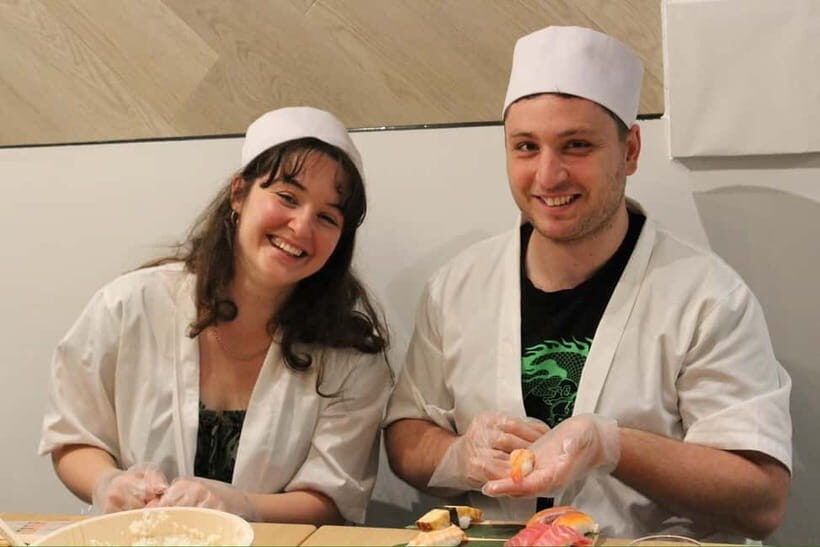
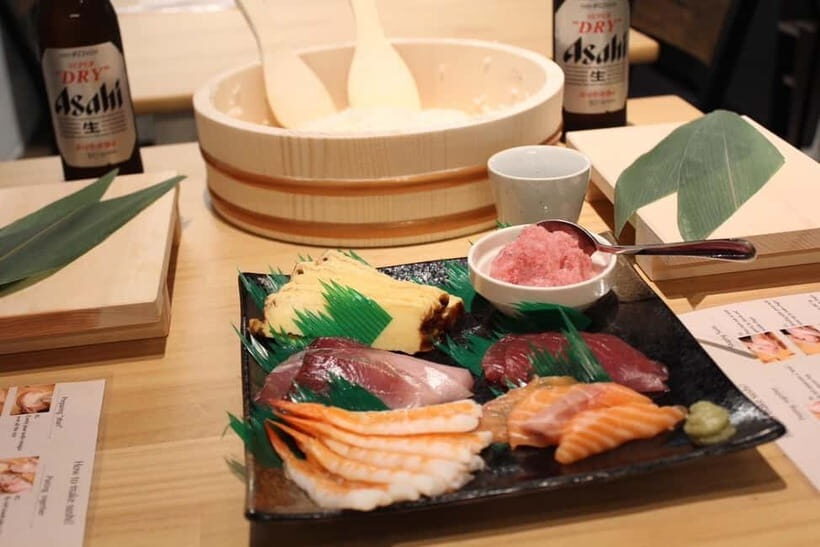
You’re not left shopping or improvising. The class includes all ingredients for your 12 pieces, so you can focus on learning.
A couple details from participant notes are worth keeping in mind:
- Some people mentioned the ingredients felt high quality and that ingredients are sourced from markets daily.
- One participant specifically called out an egg-based sushi option (Japanese omelette style) as a highlight.
You also get variety in the topping-building process because neta assembly and wasabi placement are part of the learning sequence. Even if you end up preferring one style over another, you’ll still understand what makes each piece work.
One more practical note: if you have dietary restrictions, you’re not stuck with a single “default” version. Vegan and halal sushi are available, and gluten-free soy sauce has been provided in at least one documented case. If you have a specific allergy, it’s smart to mention it clearly before you go.
Vegan, Halal, and Allergy-Friendly Without Making It Weird
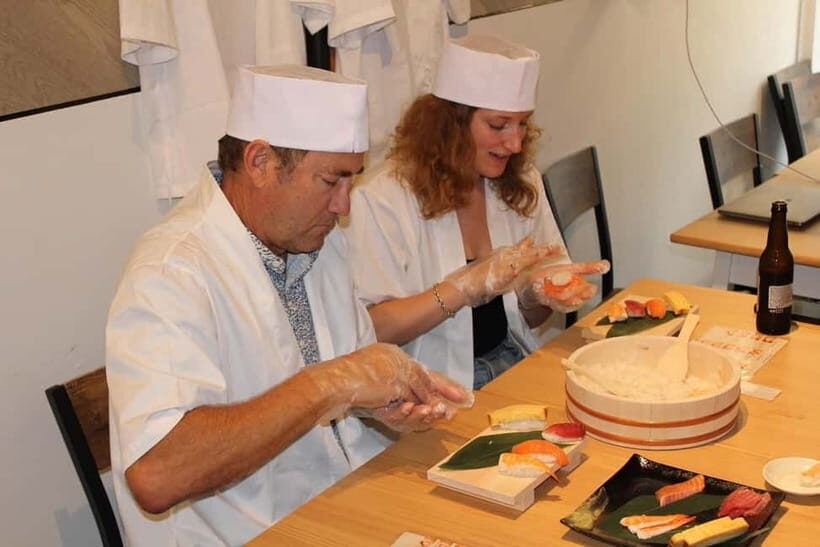
This is an area where the class earns its keep. Vegan and halal sushi are available, which means the experience isn’t only built around one ingredient set.
Also, since sushi often involves sauces and condiments, it helps that the class has dealt with at least one gluten issue by providing gluten-free soy sauce. That’s not universal for every provider, so it’s a good sign here that they take substitutions seriously.
How to think about it as a reader:
- You’re still learning the same core mechanics: shari, shaping, topping assembly, and final form.
- The swap is usually the ingredient set, not the overall structure of the class.
If you’re traveling with dietary needs, this class is a strong candidate because it keeps you in the action.
Sake With Your Sushi: A Simple Pairing That Changes the Mood
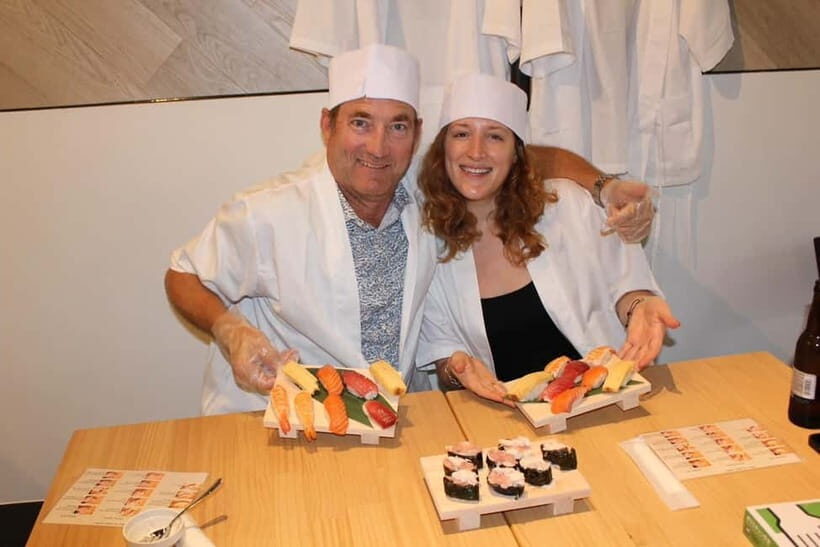
Japanese sake is included with your meal. This isn’t just a random extra drink. It reinforces the idea that sushi culture isn’t isolated from the rest of Japanese eating habits.
A practical tip: if you’re not sure about sake, pace yourself. You’re there for technique, then you’ll want to fully taste what your pieces were supposed to be. Sake also works like a warm-up for social chatting in the class, since it signals that you’re done learning and ready to enjoy.
Sushi Cosplay and the Photo Session: Silly Fun, Actually Useful
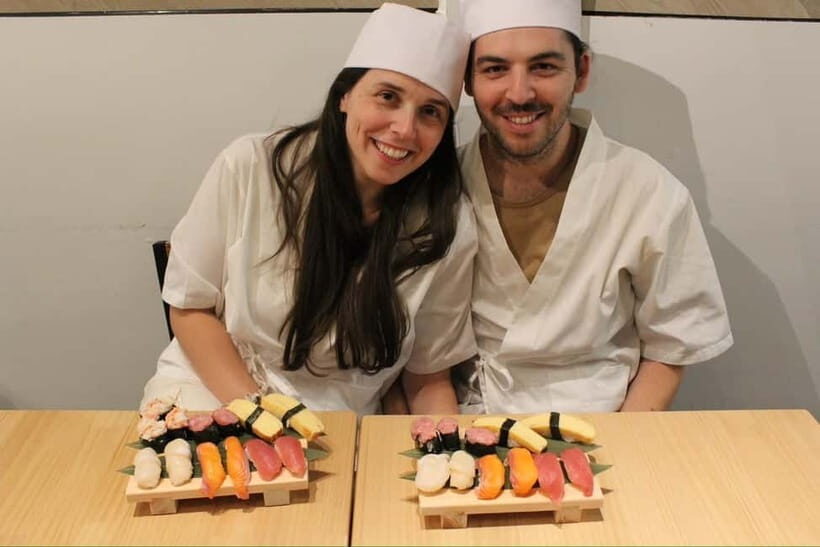
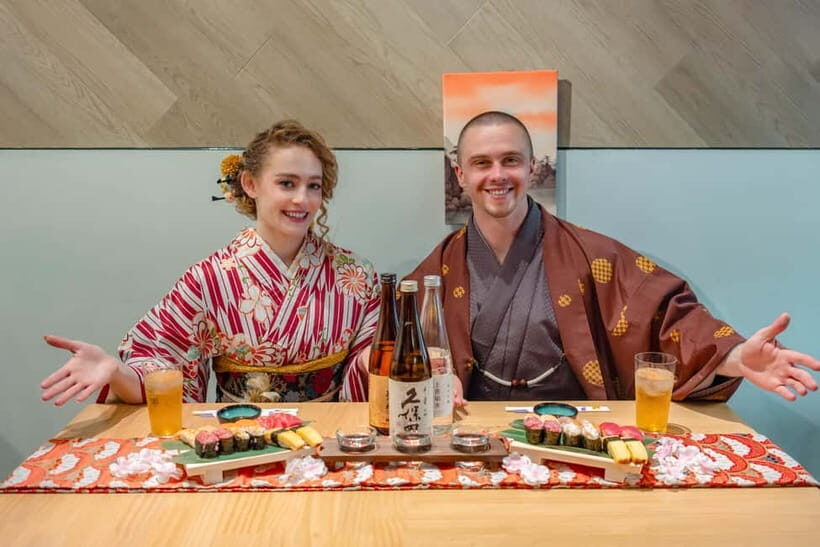
This is one of the more memorable add-ons. You get sushi cosplay and a photo session, plus a special gift at the end.
Why this matters beyond laughs:
- It breaks the ice if you’re traveling solo.
- It gives you a moment to capture the experience while it’s still fresh.
- It turns a skills class into something you’ll remember next time you crave sushi.
If you like playful experiences but still want substance, this is a nice balance. If you want purely serious instruction with no entertainment component, you might find the cosplay a bit much. But based on the overall tone described in participant notes, it doesn’t derail the teaching.
The Sushi Master Certificate: Why That Piece of Paper Counts
You’ll receive a certification for a sushi master. That may sound symbolic, but it’s a satisfying part of the arc: you practice, you finish, and then you get something official at the end.
It also helps if you’re the kind of person who likes tracking progress while traveling. You won’t just think, I ate sushi. You’ll think, I made sushi, and I got the certificate to prove it.
Price and Value: Is $45 Fair for 90 Minutes?
At $45 per person for about 90 minutes, the value comes from what’s bundled in the price:
- ingredients for 12 pieces
- Japanese sake
- English instruction
- sushi cosplay and a photo session
- a sushi master certificate
If you’ve tried booking food experiences in Japan, you know the going rate for a guided meal can get steep fast. This class hits a better match: you’re paying for hands-on instruction plus the finished product plus extras.
You should expect to spend the entire time actually making, not just watching. Some people also noted it can feel like a smaller-group session at certain times, which makes the instruction-to-attendance ratio better.
That said, if you’re only chasing the cheapest meal, this isn’t the budget play. It’s a fun, structured activity where you’re paying for the learning and the experience package.
Logistics You Can Plan Around Without Stress
Here are the practical bits that affect how smooth your day feels.
- Instructor language: instruction is in English.
- No ticket line friction: the experience includes skipping the ticket line.
- Timing: the class runs 90 minutes, and you’ll choose a starting time based on availability.
- Mobility access: the venue is wheelchair accessible.
- Location: it’s in the Dotonbori area, and some people specifically called it a prime location.
If you like travel efficiency, a central-feeling spot in Dotonbori plus a short, scheduled class is a good combo.
One caution: the class location can be a bit tricky to navigate on maps. If you’re relying on your phone for the exact entrance, it’s worth double-checking directions a little early.
Who Should Book This Sushi Making Experience
I’d point you toward this class if:
- you’re in Osaka and want a hands-on food activity, not just another meal
- you enjoy learning techniques you can repeat later
- you’re traveling with friends, family, or a teen who needs an active option (a family of three with a 15-year-old was a good fit in one note)
- you want a fun vibe with structure: teaching plus cosplay plus photos
You might consider skipping or comparing if:
- you only want pure, high-end restaurant-level sushi ingredients and expect that to be the main story
- you dislike playful themes and would rather have a quiet cooking session
Should You Book This Osaka Sushi Class?
If you’re deciding between simply eating sushi and doing a sushi-making lesson, I’d book this one. The reason is straightforward: it teaches you the core mechanics of sushi in a short time, then rewards you with exactly what you made—12 pieces, plus sake, plus a certificate.
The class also scores well for food needs because vegan and halal sushi are available, and there’s evidence of gluten-free soy sauce support. Add the English instruction and wheelchair accessibility, and it’s easier to recommend without caveats.
If your priorities are price-only, pick a cheaper meal. If your priorities are memory, skill, and a full 90-minute experience that feels like you did something in Osaka, this is a strong call.
If you book, do one thing that will pay off: go in ready to learn how rice texture and shaping pressure affect the final piece. That’s the difference between watching sushi get made and actually understanding sushi.
FAQ
How long is the Osaka Dotonbori sushi making experience?
The class lasts about 90 minutes.
How many pieces of sushi will I make?
You’ll make 12 pieces of sushi.
Is the instructor teaching in English?
Yes. The instructor provides instruction in English.
Is sake included?
Yes. Japanese sake is included with the experience.
Are vegan or halal sushi options available?
Yes. Vegan and halal sushi are available.
Is free cancellation offered?
Yes. You can cancel up to 24 hours in advance for a full refund.