REVIEW · OSAKA
Osaka: Japanese Traditional Sweets Making and Tea Ceremony
Book on GetYourGuide →Operated by B.B.Advisors Inc. AN OSAKA · Bookable on GetYourGuide
Two sweets, one calm tea ritual. This Osaka class is all about making Nerikiri wagashi from colored bean paste, then switching gears into an Uji Matcha tea ceremony where you’ll grind, whisk, and sip. It’s hands-on food craft, not just watching.
I love that the bean paste you work with is made in Kyoto by long-established shops. I also love that you don’t leave with just a demo—you make two season-matching sweets and then get to enjoy them with your own matcha.
One thing to consider: the building has no elevator, so you’ll be on stairs between areas. Also, the class language is Japanese, and English support is provided as much as possible, so if you want more language help, message ahead.
In This Review
- Quick Hits
- Price and What You Actually Get for $18
- Nerikiri Coloring: Turning Bean Paste into Seasonal Shapes
- Why the Bean Paste From Kyoto Is a Big Deal
- A Short Break You Actually Use (Because Your Hands Need It)
- Uji Matcha: Grinding, Then the Tea Ceremony Steps
- Making and Drinking Your Own Matcha With Your Own Sweets
- Instructor Energy, Language Support, and Real-Life Class Feel
- Getting There in Osaka: Higobashi, Watanabebashi, Yodoyabashi, and More
- Who This Workshop Suits (and Who Might Want a Different Option)
- Should You Book This Osaka Wagashi and Tea Workshop?
- FAQ
- How long is the Osaka Japanese Traditional Sweets Making and Tea Ceremony experience?
- What will I make during the class?
- Is matcha included, and do I make it myself?
- How much does it cost, and what’s included in the price?
- Are there any extra costs during the workshop?
- Where is the meeting point?
- Can I cancel for a full refund?
- Is there elevator access to the venues?
Quick Hits
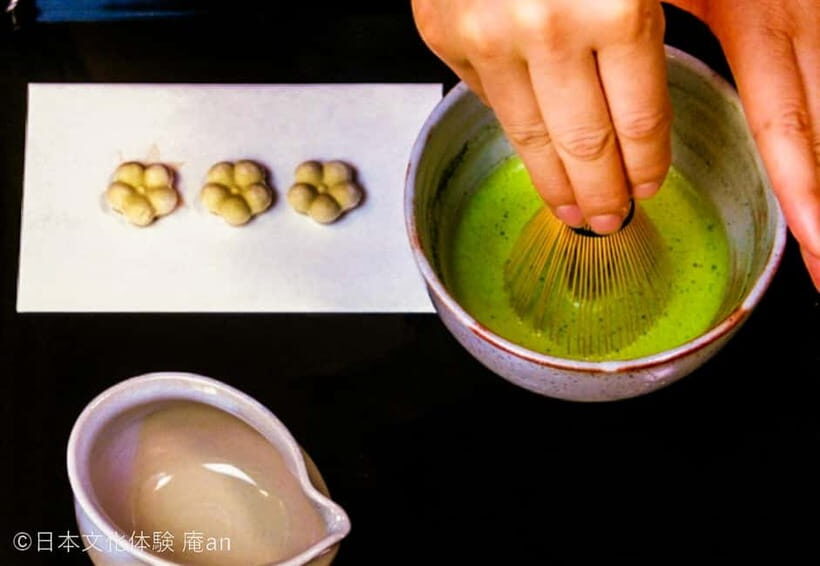
- Kyoto-sourced white/red bean paste used for the wagashi you shape
- Two season-matching Nerikiri sweets you make with your own hands
- Uji Matcha used for the tea ceremony portion
- Matcha grinding demonstration before you make and drink your tea
- Instructor-led guidance in Japanese with English translation as available
- You finish by eating and drinking what you prepared, plus time for photos
Price and What You Actually Get for $18
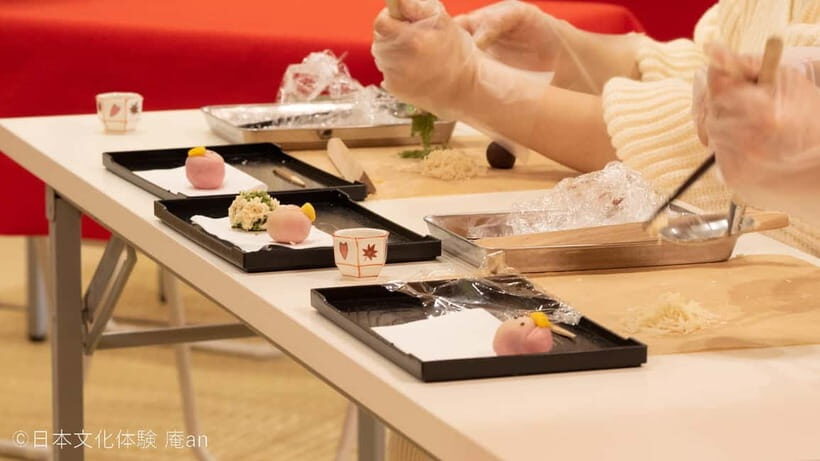
At $18 per person for a 95-minute session, this workshop is priced like a “real experience,” not a quick tasting. You’re paying for technique: kneading and coloring bean paste, molding Nerikiri into seasonal shapes, and then going through a structured tea ceremony with matcha.
What’s included is straightforward: the experience itself and the tools you need. What’s not included is also clear. If you want a take-out box, it costs 100 JPY, and if you want a completion certificate, it costs 300 JPY. For me, that’s actually good—no surprise add-ons unless you decide you want souvenirs.
A few more Osaka tours and experiences worth a look
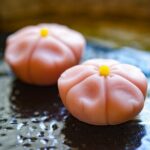
Nerikiri Coloring: Turning Bean Paste into Seasonal Shapes
The class starts with your wagashi foundation: Nerikiri. This is a high-grade Japanese sweet made using colored white bean paste, often shaped like seasonal flowers or fruits. Here, you begin with coloring the bean paste, which sounds simple until you realize how much your hands control the final look.
You’ll work toward making two sweets that match the season. That seasonal match matters because Nerikiri is supposed to feel like a little slice of time—spring petals, summer fruit, autumn tones, winter themes—made edible. You’re not just forming “a dessert,” you’re making a themed object.
Expect a guided flow. First, you’ll get an explanation about the sweets, then move into flower-shaped Nerikiri making. The schedule also mentions Kinton Nerikiri, so you can expect at least one sweet shaped or styled around that approach. The key point for you: your instructor won’t rush you. The goal is that you finish with two sweets you can be genuinely proud of.
Practical note: Nerikiri is all fine motor control and patience. If you like crafts—paper art, ceramics, cake decorating—you’ll probably enjoy this more than you expect. If you’re the type who gets stressed by precision, take a breath. The process is meant to slow you down.
Why the Bean Paste From Kyoto Is a Big Deal
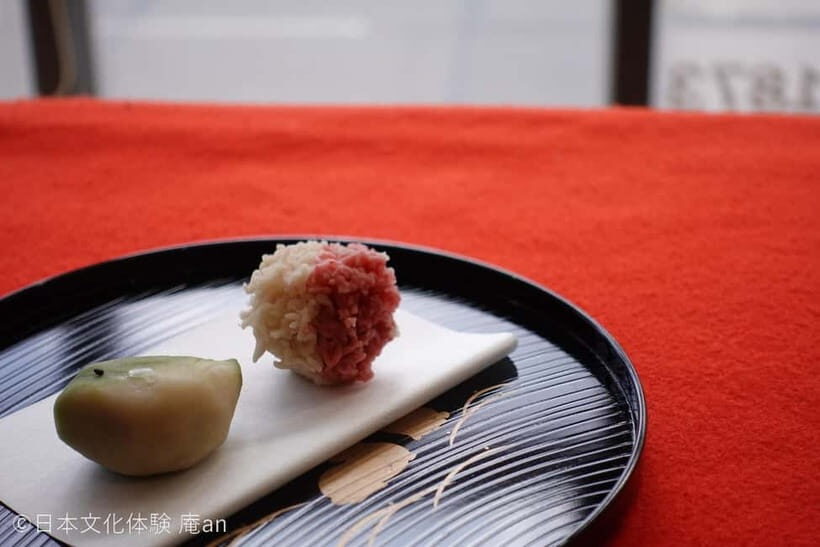
This is one of the best parts of the experience. The white/red bean paste comes from Kyoto’s long-established shops. That’s not trivia—it affects everything.
First, better bean paste is easier to work with. When the paste has the right texture and sweetness balance, coloring and shaping feel more predictable. Second, it affects flavor at the end. You’re tasting what you made, and the class is built around that final match between sweet and tea.
I like that the workshop sets you up for success. You’re using ingredients with a reputation, not generic filler. It makes the whole thing feel more “grown-up,” more like a real wagashi atelier lesson rather than a one-off novelty activity.
A Short Break You Actually Use (Because Your Hands Need It)
After you finish the wagashi-making segment, you get a break. The timing is built into the flow: the class schedules a break around the 55-minute mark, then resumes with the tea portion.
Why should you care? Because the tea part is calmer, but your attention still matters. Taking a short reset after kneading and shaping helps you stay focused for what comes next: the matcha explanation, grinding demo, and tea ceremony steps.
Also, there’s a practical reality here. You’ll be working with your hands, and even if you’re fast, it’s normal to feel a bit warm and tired. Use the break to drink water, double-check your table setup, and just give your brain a moment to switch gears.
Uji Matcha: Grinding, Then the Tea Ceremony Steps
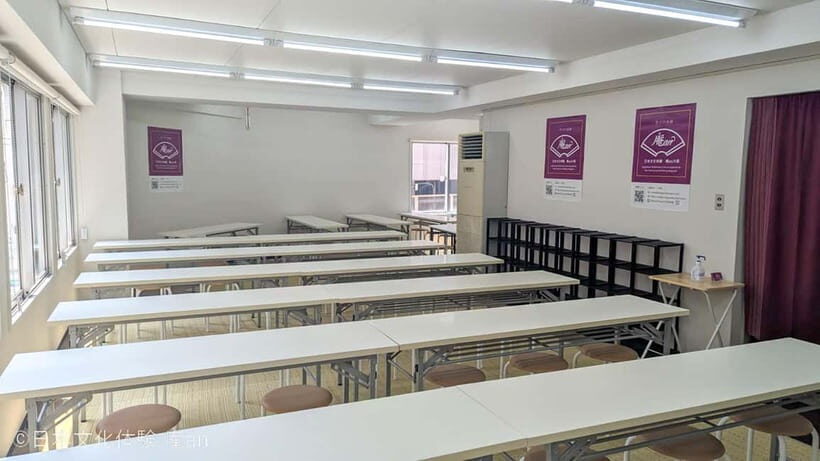
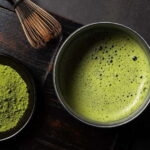
At around the 65-minute mark, the class shifts fully into tea. You’ll get an explanation about the tea, then see a matcha grinding demonstration. This matters because matcha isn’t just “green tea powder.” It’s made by grinding tea leaves into a fine powder, and the workshop connects that process to how the drink should taste and feel.
After the demo, you’ll move into the tea ceremony experience. The vibe here is practical and guided rather than overly stiff. You’ll learn how to prepare matcha and how to enjoy it as part of Japanese tea culture.
One detail I really appreciate from how this experience is described: it teaches appreciation. You’re not just drinking something green—you’re learning the “how” and the “why” behind the ritual. That’s where the ceremony becomes cultural, not performative.




Making and Drinking Your Own Matcha With Your Own Sweets
Near the end, it’s time for what you came for: eating and drinking. The schedule shows eating/ drinking time toward the final stretch, after picture time.
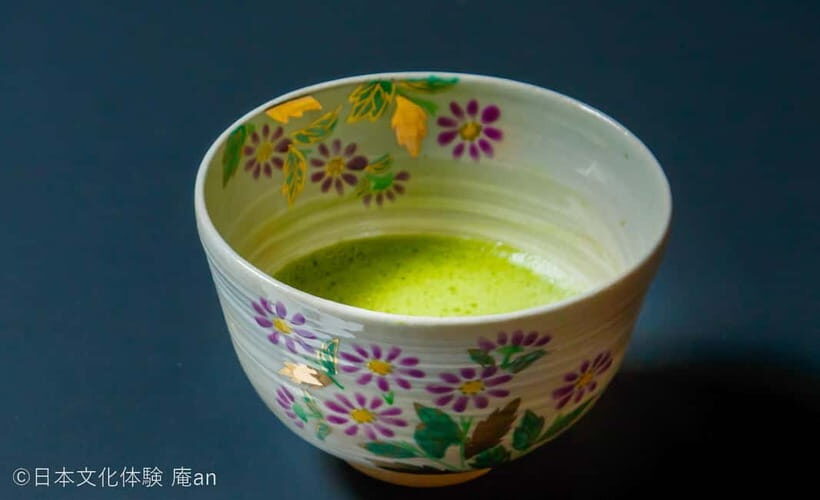
Your matcha is served alongside the Nerikiri sweets you prepared. And this is where the quality bean paste really shows up. The workshop specifically highlights that the sweetness of the high-quality white/red bean paste balances the taste of matcha. That balance is the point: matcha brings bitterness and grassy depth, while Nerikiri brings sweetness and soft texture.
If you like food pairings, this is satisfying. You’ll taste the difference between homemade wagashi sweetness and the sharper edges of fresh matcha. If you’re new to matcha, you’ll get a friendly on-ramp—structured enough to understand, relaxed enough to enjoy.
There’s also time for photos. Not just “stand there and smile” photos—more like the moment where your finished sweets are actually worth documenting.
Instructor Energy, Language Support, and Real-Life Class Feel
The instructor is Japanese, and you should expect instructions to be delivered in Japanese, with English translation provided as much as possible. Some sessions may offer very strong English support, and you can request additional help if you want more.
From the types of classes people report, the most praised element is how patient the instructor is. Many people highlight the friendly, calm teaching style and clear explanations—especially when shaping Nerikiri takes a little trial and error. Names that have appeared in instruction roles include Maiko, Mihiko, and Jun, which hints at how different instructors can bring different personalities, while keeping the structure.
Here’s my advice so you get your money’s worth: ask questions during the explanation parts. Even if you’re not fluent, you’ll usually get something back—an explanation of what you’re doing, why matcha matters, and what makes a wagashi look “right” for the season.
Also, pay attention to the pace. This is a finesse workshop. Rushing usually makes the shapes messier, and then you spend the last 10 minutes fixing what you could have shaped slowly in the first place.
Getting There in Osaka: Higobashi, Watanabebashi, Yodoyabashi, and More
Location is near multiple train lines, so you’re not stuck with one route. The meeting point is about:
- 1 minute walk from Exit 10 of Osaka Metro Yotsubashi Line Higobashi Station
- 5 minutes walk from Exit 7 of Keihan Nakanoshima Line Watanabebashi Station
- 7 minutes walk from Exit 10 of Osaka Metro/Keihan Line Yodoyabashi Station
- 10 minutes walk from Exit 11-5 of JR Tozai Line Kitashinchi Station
- 15 minutes walk from the South Central Gate of Osaka Station
If you’re driving, there’s coin parking nearby.
Two practical tips:
1) Arrive on time. The event can’t be adjusted for delays.
2) Plan for stairs. There’s no elevator in the building, and you’ll take stairs to reach each venue.
One more thing: the meeting area can be easy to miss if you’re relying on a quick glance. Use the provided Google map link and take an extra minute to confirm you’re at the right building before you call it close enough.
Who This Workshop Suits (and Who Might Want a Different Option)
This is a great fit if you want hands-on Japan food culture in a short window. You’ll learn wagashi basics, shape Nerikiri, and practice tea steps with matcha you grind yourself.
I also think it suits:
- Food lovers who don’t just want to eat, but want to understand technique
- Tea fans who want the process, not just a cup
- Families with kids who enjoy making things (the class notes that children under 2 who sit on a parent’s lap are free)
If you’re looking for an ultra-luxury, silent tea performance, you might find this more casual and activity-based. The focus is craft and participation, not long ceremonial formality.
Finally, if you need full English instruction the whole way, be proactive. English translation is provided as much as possible, but the class language is Japanese—so requesting extra English support in advance can help.
Should You Book This Osaka Wagashi and Tea Workshop?
I’d book it if you want a memorable, skill-based activity that ends with actual tastings you made yourself. The value feels strong because you get ingredient quality (Kyoto bean paste), two finished sweets, and a full matcha experience—including the grinding demonstration—within 95 minutes.
Skip it only if stairs are a deal-breaker for you or if you strongly need a fully English-led class with no Japanese language support. Otherwise, this is one of those Osaka experiences that turns “I tried matcha” into “I learned how it’s made and why it’s paired this way.”
If you’re in the mood for calm craft, seasonal food, and a tea ritual you can actually repeat at home, this one earns a spot on your list.
FAQ
How long is the Osaka Japanese Traditional Sweets Making and Tea Ceremony experience?
The experience lasts 95 minutes.
What will I make during the class?
You’ll make two Japanese traditional sweets for the season. You’ll start by making Nerikiri, and the schedule includes flower-shaped Nerikiri making.
Is matcha included, and do I make it myself?
Yes. The class includes a tea ceremony experience using Uji Matcha, with a matcha grinding demonstration. You’ll prepare matcha and then enjoy it with the sweets you made.
How much does it cost, and what’s included in the price?
The price is $18 per person. It includes the experience and the use of required tools.
Are there any extra costs during the workshop?
A sweets take-out box costs 100 JPY, and an experience completion certificate costs 300 JPY.
Where is the meeting point?
You’ll meet near Higobashi Station (1 minute walk from Exit 10), Watanabebashi Station (5 minutes from Exit 7), Yodoyabashi Station (7 minutes from Exit 10), Kitashinchi Station (10 minutes from Exit 11-5), or Osaka Station South Central Gate (about 15 minutes on foot). A Google map link and coordinates are provided.
Can I cancel for a full refund?
Yes. You can cancel up to 24 hours in advance for a full refund.
Is there elevator access to the venues?
No. There is no elevator in the building, and you’ll need to take stairs to reach each venue.