REVIEW · KYOTO
Kyoto: Japanese Washoku Bento Small Group Cooking Class
Book on GetYourGuide →Operated by Yamamoto Rie · Bookable on GetYourGuide
Bento making beats a museum tour any day. In Kyoto, this small-group class turns washoku principles into real, edible results: you’ll learn how to make dashi and fry tempura, then build a proper portable lunch box.
I like two things most here. First, the teaching is practical—knife skills, dashi stock, and frying technique get explained in a way you can actually use again at home. Second, you’re not just tasting; you’re producing a full bento with several classic components, then sitting down together to eat.
One thing to consider: the meeting point is specific (Kyoto Laundry Cafe), and if you show up more than 15 minutes late, your reservation can be canceled automatically. That’s not a vibe-killer, but it does mean you should plan to arrive early.
In This Review
- Key highlights you’ll feel in the room
- Washoku Bento: A Kyoto Meal You Can Recreate
- Kyoto Laundry Cafe: Getting There and Starting on Time
- The 150-Minute Plan: What You Do in Each Phase
- 1) Welcome, bento overview, and what you’re making
- 2) Core technique: knife skills and prep work
- 3) Dashi stock: the base flavor that ties everything together
- 4) Tempura frying practice
- 5) Make and shape the bento components
- 6) Sit down, chat, and eat your bento
- Knife Skills in a Real Kitchen: Small Moves, Big Results
- Dashi Stock: The Flavor Foundation You’ll Use Again
- Tempura Frying: Crisp Texture Without the Guesswork
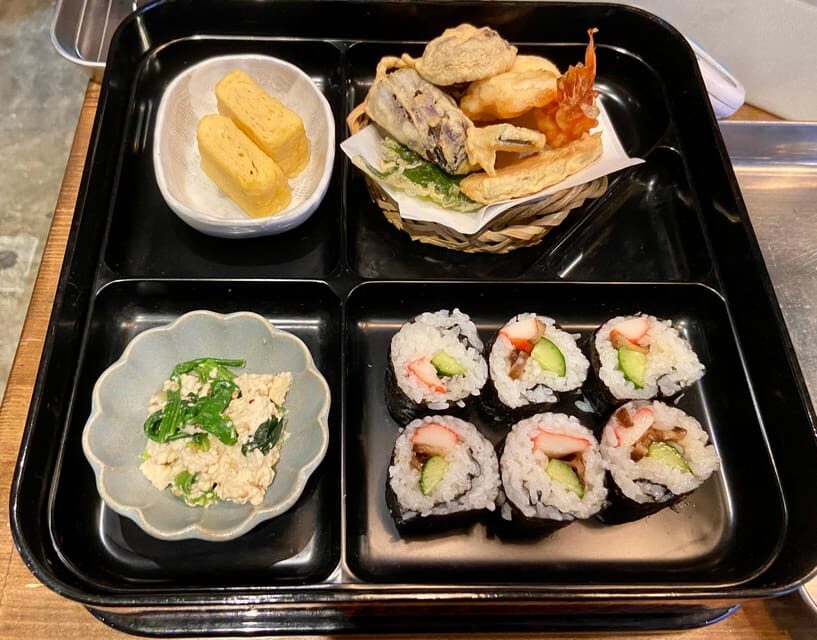
- Your Bento Components: Sushi Rolls, Tempura, Tofu Salad, and Rolled Omelette
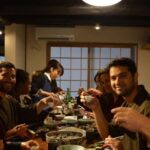
- Eating Together: The Part That Makes It Click
- Price and Value: Why $58 Can Be a Bargain
- Who Should Book This Bento Class (and Who Should Skip It)
- Should You Book This Kyoto Washoku Bento Class?
- FAQ
- How long is the cooking class?
- How many people are in the group?
- Where do I meet for the class?
- What dishes will I cook in the class?
- What languages does the instructor speak?
- Is there free cancellation?
Key highlights you’ll feel in the room
- Hands-on bento building: you cook multiple components, not just one dish
- Dashi from scratch: learn the basics of stock-making, not shortcuts
- Tempura frying technique: how to fry properly and get a good result
- Japanese knife skills approach: guidance on how to handle and work with a knife
- Small group size (max 5): more attention while you’re cooking
Washoku Bento: A Kyoto Meal You Can Recreate
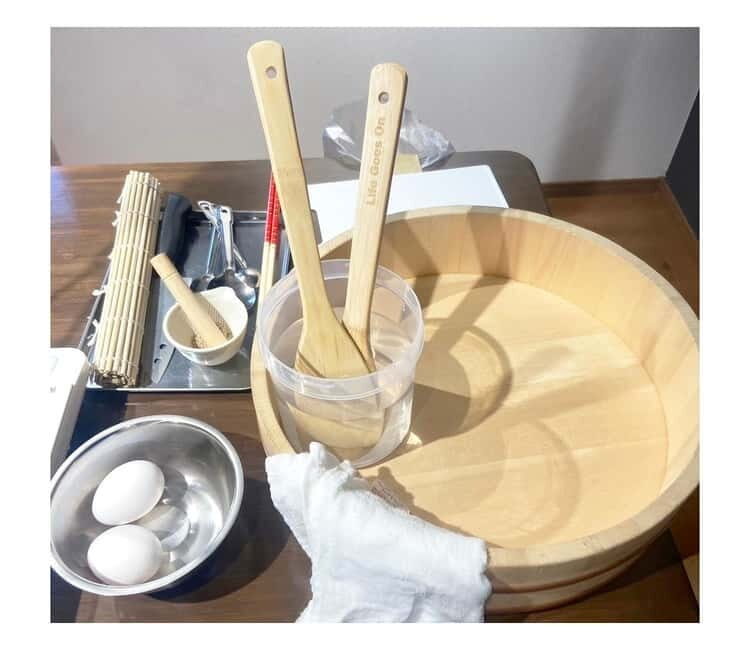
A bento is simple on the surface: separate foods, packed neatly, eaten as a complete lunch. But washoku goes further. It’s about seasonal ingredients, balanced flavors, and the way textures and colors play together. This class leans hard into that mindset while keeping it doable.
You’ll make a portable meal that Japanese people recognize instantly. And you’ll understand why those pieces belong together. That matters, because after the class you’re not only thinking, I can cook tempura once. You’re thinking, I know how to plan a small menu, then execute it cleanly.
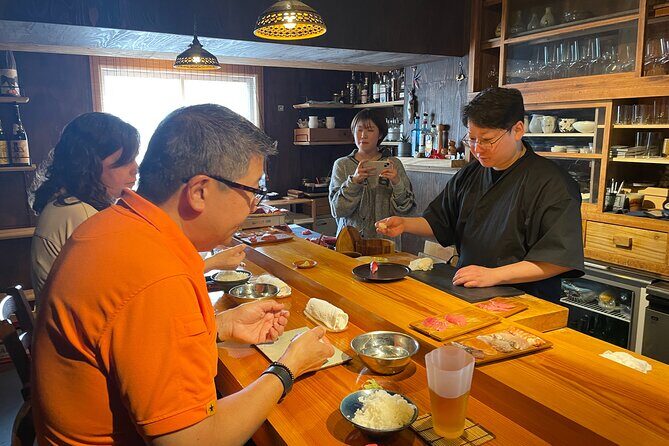
Also, this is not a “watch and clap” experience. The format is interactive, and the pace is built around you learning techniques step-by-step. In the same kitchen environment, instructors like Ai, Miyu, and Chef Rie are praised for clarity and encouragement, which is the difference between fumbling through and learning something repeatable.
You can also read our reviews of more cooking classes in Kyoto
Kyoto Laundry Cafe: Getting There and Starting on Time
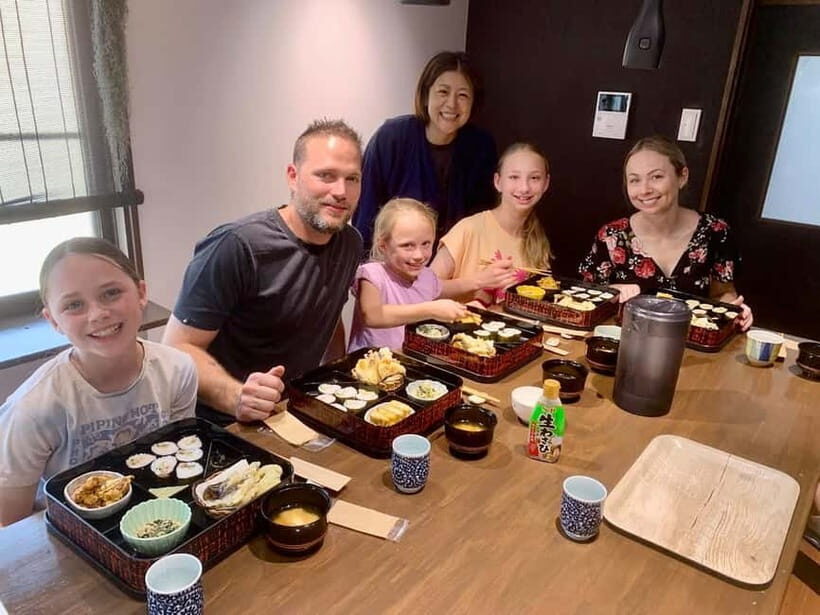
You meet at Kyoto Laundry Cafe (京都ランドリーカフェ), near Saiin Station on the Hankyu Railway line. The cafe is about five minutes from the station, and the chef/instructor will come to pick you up from that location.
Do this part like a local: arrive a little early, get your bearings fast, and skip the distraction of figuring things out on the fly. The class runs for 150 minutes, and if you arrive over 15 minutes after the scheduled meeting time, your reservation can be automatically canceled. In other words, build in buffer time.
One small practical tip: you’ll be asked not to rely on Instagram Maps. Use Google Maps so you land at the right place.
The 150-Minute Plan: What You Do in Each Phase
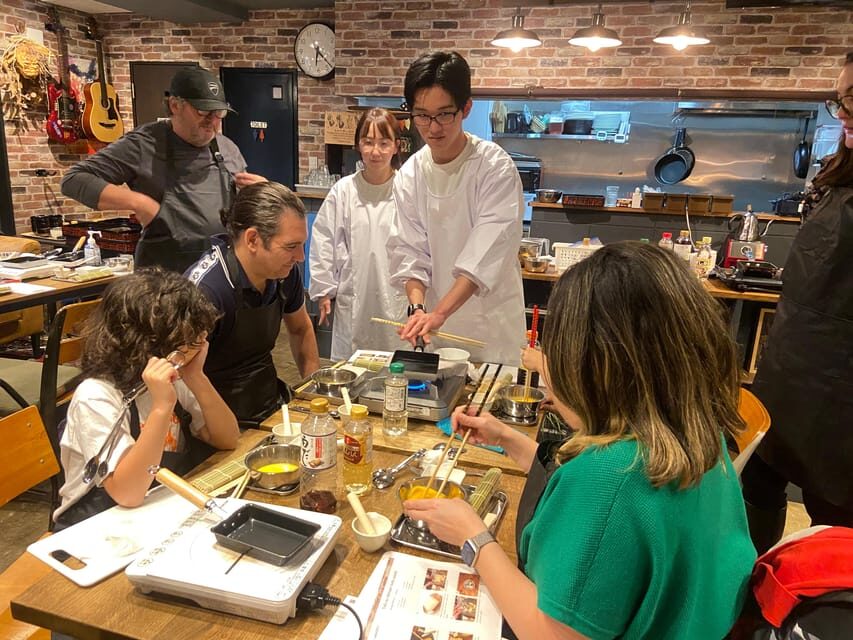
This is a tight, satisfying stretch of time. You’ll cook, learn technique, then eat what you make—together.
Here’s the flow you should expect:
1) Welcome, bento overview, and what you’re making
You start by setting context: what bento is, why the layout matters, and how washoku thinks about harmony. This isn’t just trivia. It helps you assemble your box with intention instead of random pile-on.
2) Core technique: knife skills and prep work
A big chunk of the class is about fundamentals. You’ll practice a more Japanese approach to knife handling and work. Even if you’re not confident, this is the kind of coaching that helps you avoid the common beginner mistakes—rushing, uneven cuts, or treating the knife like a blunt tool.
If you like learning by doing, this part is where you’ll feel the “I’m getting it” moment.
A few more Kyoto tours and experiences worth a look
3) Dashi stock: the base flavor that ties everything together
You’ll also learn to make dashi. This matters because dashi isn’t just one ingredient—it’s the background music for many Japanese dishes. When you understand how stock is made, you start noticing how flavors build in Japanese cooking.
4) Tempura frying practice
Then comes tempura: frying technique, timing, and how to handle the process without overthinking it. Tempura is often seen as “hard,” but when you’re guided step-by-step, it becomes a technique you can recreate.
5) Make and shape the bento components
The class finishes with you creating the finished components that go into your lunch box—then eating it as a group.
6) Sit down, chat, and eat your bento
At the end, you eat together. This is more than a payoff. It’s how you learn: you can taste how your choices in preparation show up in flavor and texture.
Knife Skills in a Real Kitchen: Small Moves, Big Results
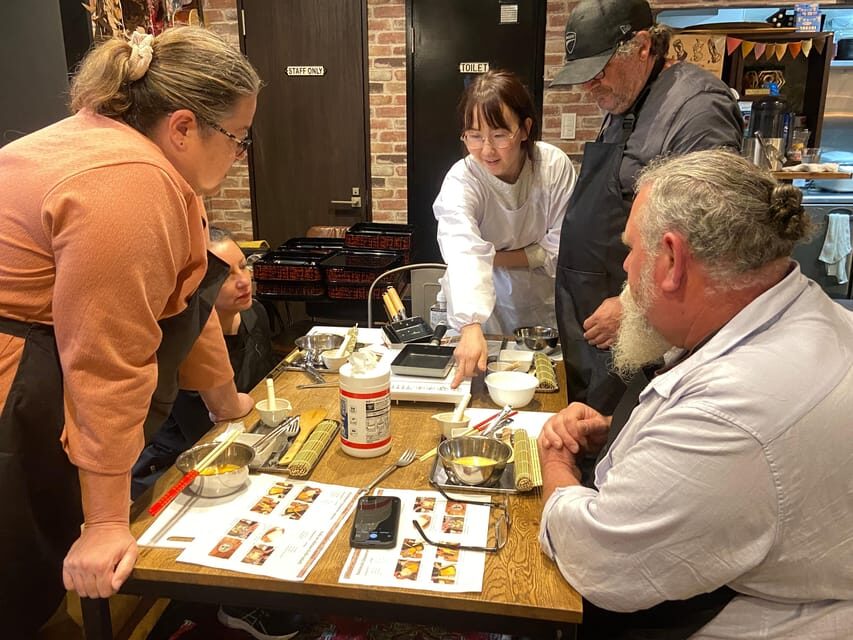
Knife work is one of those topics that sounds boring until someone corrects your grip and suddenly everything makes sense. In this class, the emphasis is on a Japanese approach to handling the knife and working steadily.
What I like about this is that you’re practicing with purpose. You’re not chopping random ingredients for the sake of chopping. You’re prepping things that will end up in your bento—so you learn how technique connects to outcome.
You’ll also get the kind of practical instruction that helps you avoid two common problems:
- uneven pieces that cook at different speeds
- careless slicing that makes plating harder later
Even if you’re comfortable at home, you may pick up small adjustments that make your cooking cleaner and faster.
Dashi Stock: The Flavor Foundation You’ll Use Again
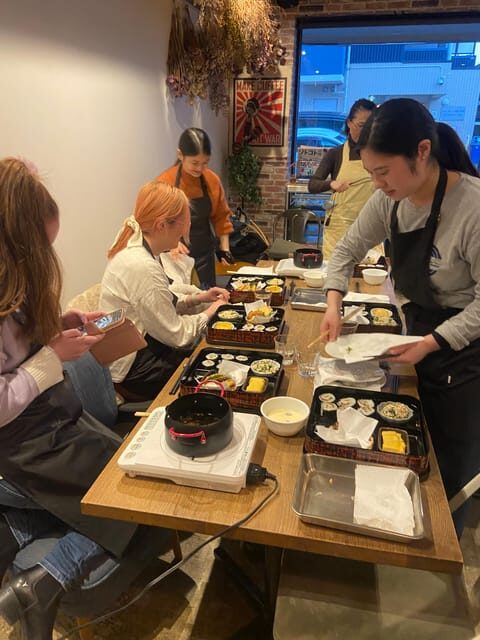
If you remember one skill from this class, make it dashi.
Dashi is the base that brings comfort and clarity to Japanese cooking. In a washoku menu, it helps unify flavors without overpowering them. When you learn it here, you’re learning a technique with a long shelf life—because you can use dashi for future lunches, soups, or sauces.
And the class teaches it in context. You’re not just making stock and walking away. You’ll connect it to how the finished bento tastes and why that matters.
English instruction is available, and many guests mention the chef explains both the process and the role of the ingredients clearly. That combination—how to do it plus why it works—is what turns a cooking class into something you can carry forward.
Tempura Frying: Crisp Texture Without the Guesswork
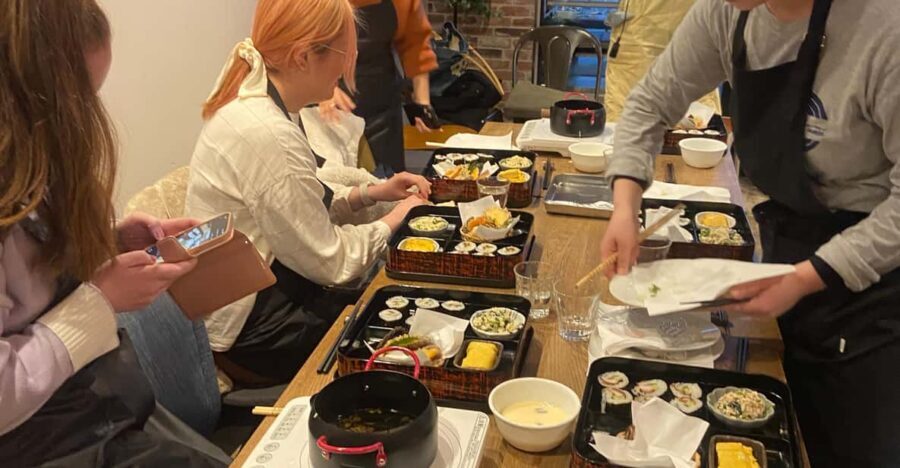
Tempura is where people often get nervous, because frying can feel like a black box. This class treats it like a technique you can learn.
You’ll learn proper frying approach for tempura—how to handle the process and get the right result. You’ll also work with the utensils and tools used for each step. Guests frequently point out that each dish comes with its own techniques and appropriate equipment, which helps you focus on what matters rather than improvising.
The end goal isn’t just eating tempura. It’s understanding the technique so you can do something similar at home with less fear and more control.
Also, tempura fits bento life well: it’s one of those pieces that gives you contrast—crunch against softer components.
Your Bento Components: Sushi Rolls, Tempura, Tofu Salad, and Rolled Omelette
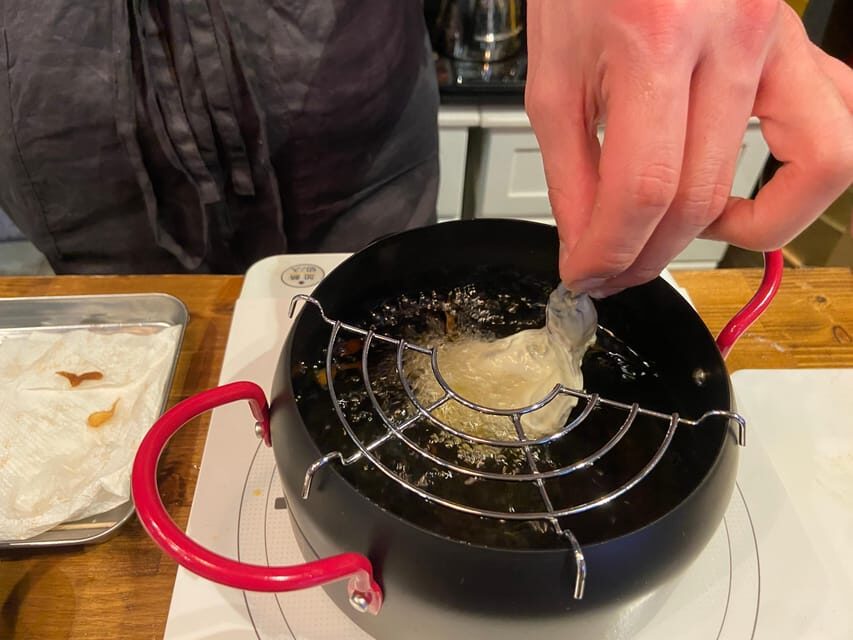
The class centers on 4 dishes that build into your personal bento box. Based on the described course content, you’ll make:
- Sushi rolls
- Tempura
- Tofu salad (a Japanese-style component)
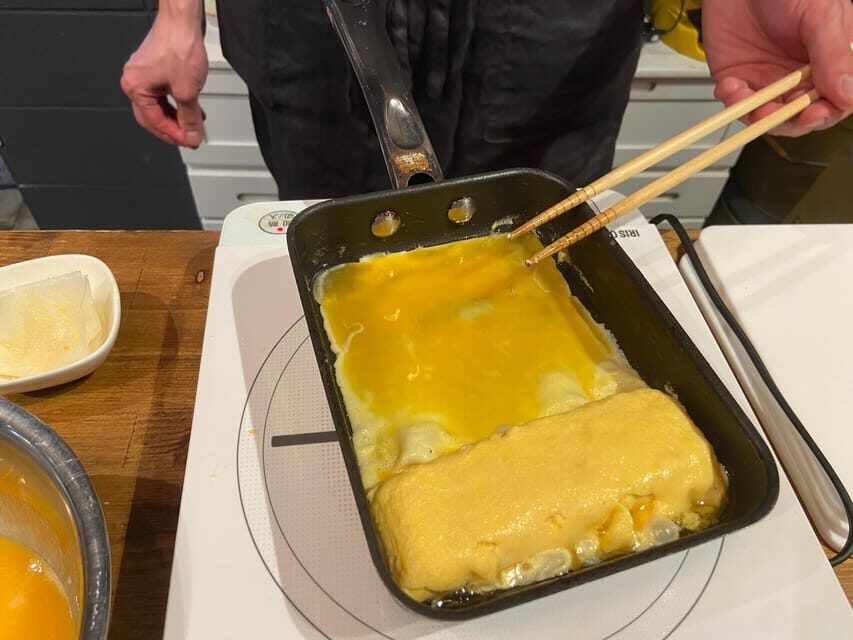
- Japanese rolled omelette (often associated with dashimaki-style preparation)
What makes this lineup smart is variety. Your box won’t taste flat. You get:
- savory depth (through things like dashi-based flavor work)
- crisp texture (tempura)
- a soft, comforting bite (rolled omelette)
- freshness and balance (the tofu salad component)
- a “signature lunch” element (sushi rolls)
And the plating experience is part of the learning. Bento is built for separation—each component stays its own character, but together they form a complete meal.
You’ll also get aprons and other equipment, so you can focus on cooking rather than bringing gear. Some guests note the utensils and techniques are demonstrated clearly, and that makes a difference when you’re learning multiple items in one sitting.
Eating Together: The Part That Makes It Click
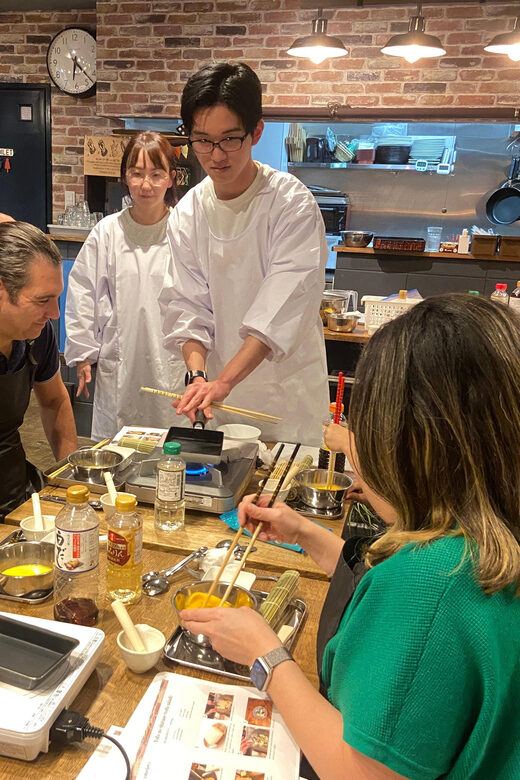
After cooking, you sit down and eat your bento together with the group. This is a big deal for two reasons.
First, you get immediate feedback through taste. You can judge seasoning, texture, and balance right away. That helps the lessons stick.
Second, you get context through conversation. In a small group (up to 5 participants), chatting isn’t forced. It just happens because everyone’s in the same process phase—everyone wants to ask, What did we do differently? What makes dashi taste like that?
It’s also a nice change of pace in Kyoto. Instead of racing from temple to temple, you’re experiencing another side of Japanese daily life.
Price and Value: Why $58 Can Be a Bargain
At $58 per person for 150 minutes, this class can feel like a steal—if your goal is hands-on learning.
Here’s the value breakdown that matters:
- Small group size (max 5) means more instructor time per person
- Ingredients and equipment are included, so you’re not paying extra for basics
- You learn multiple techniques (knife skills, dashi, tempura frying), not just one recipe
- You leave with a full bento you made, which is the practical payoff
- You’re likely to walk away with a repeatable routine for lunch planning, not just a one-off meal
Cooking classes can be expensive when you’re paying for entertainment. This one is focused on technique and producing food you can recognize and recreate.
If you’ve got limited time in Kyoto and want one activity that feels both authentic and useful, this hits the sweet spot.
Who Should Book This Bento Class (and Who Should Skip It)
This class is ideal if you:
- love Japanese food and want to understand the mechanics behind flavors
- want a hands-on experience rather than a sightseeing-only day
- enjoy learning knife work and everyday cooking skills
- like small-group formats where you can ask questions
It’s less ideal if you:
- need wheelchair access (the activity lists wheelchair users as not suitable)
- manage diabetes (also listed as not suitable)
- are traveling with very young children; the listing specifies not suitable for children under certain ages (under 2, 3, and 4 in the provided info)
If you’re coming as a couple or solo traveler, the small group can feel calm and personal. If you come hungry, you’ll fit right in—this is a “cook a lot, eat a lot” type of class.
Should You Book This Kyoto Washoku Bento Class?
I’d book it if you want something more practical than another photo stop. This is one of the better Kyoto experiences for turning Japanese cooking into real skills: dashi, tempura technique, and a cleaner way to handle a knife. Then you eat what you made, in a small group, like it’s your lunch break—just with better instruction.
You should think twice if you hate cooking, are running late to everything, or need special accessibility support. Otherwise, it’s a very strong way to spend a couple of hours in Kyoto and come away with knowledge you’ll actually use.
If you’re on the fence, here’s the simple test: if you’d enjoy learning how Japanese people build lunch, not just trying Japanese food once, this class is a good match.
FAQ
How long is the cooking class?
The class lasts 150 minutes (about 2.5 hours).
How many people are in the group?
It’s a small group limited to 5 participants.
Where do I meet for the class?
You meet at Kyoto Laundry Cafe (京都ランドリーカフェ), near Saiin Station on the Hankyu Railway line. The chef will come to pick you up at this location.
What dishes will I cook in the class?
You cook 4 dishes: sushi rolls, tempura, tofu salad, and a Japanese rolled omelette.
What languages does the instructor speak?
The instructor speaks English and Japanese.
Is there free cancellation?
Yes. You can cancel up to 24 hours in advance for a full refund.