REVIEW · KYOTO
Arashiyama Bamboo, Temple, Monkeys, or Secret Sake Brewery
Book on GetYourGuide →Operated by Japan Tour Adventure · Bookable on GetYourGuide
Bamboo here feels like a tunnel of light. This Arashiyama tour strings together the big postcard moments and the calmer, more personal ones: Arashiyama Bamboo Grove photos, the koi-filled Tenryuji Temple pond, and a hilltop monkey viewpoint over the Katsura River. I especially liked the private-feeling Okochi Sanso Garden, because it slows you down and feels like you’re stepping away from the crowds. I also liked the mix of culture and nature, from shrine etiquette to macaques in their own park habitat.
The main drawback is physical: it’s a true walking tour, and the climb to Iwatayama Monkey Park is steep enough that you’ll want comfortable shoes and a reasonable fitness level. If you’re sensitive to heat or steep paths, plan smart breaks and go at a steady pace.
In This Review
- Key things I’d circle before you go
- Arashiyama Bamboo, Temple Gardens, and Monkeys: How the Day Flows
- Meeting at Saga-Arashiyama Station (and why “north side” matters)
- Arashiyama Bamboo Grove: The stop that turns into your favorite photo
- Nonomiya Shrine: A quick cultural reset
- Okochi Sanso Garden: Private-feeling calm with a drink break
- Tenryuji Temple: Koi, grounds time, and a slower kind of wow
- Arashiyama Shopping Street and the Kimono Forest photo stop
- Togetsukyo Bridge: Panoramic views without turning the day into a sprint
- Iwatayama Monkey Park: The steep hike, the macaques, and the big view over Kyoto
- Option A vs Option B: What changes in your Kyoto day
- Option A: Shopping street, Kimono Forest, Togetsukyo Bridge, and then monkeys
- Option B: Train ride through the mountain and lunch among locals, plus Tanzan Brewery
- Price and value: What $87 buys you (and why it’s not just a walking loop)
- Guide quality is the secret ingredient (and it shows in small ways)
- What to bring and how to handle the walk like a pro
- Who this Kyoto tour is best for
- Should you book this Arashiyama walking tour?
- FAQ
- Where is the meeting point?
- How long is the tour?
- Is this tour mostly walking or does it use a bus?
- Is the monkey park climb steep?
- What tickets and extras are included?
- What’s the difference between Option A and Option B?
- When does the tour end?
- What should I bring?
- What languages are available, and can you guarantee them?
Key things I’d circle before you go
- Bamboo Grove photo stop plus time to look up, not just walk through
- Okochi Sanso Garden entry and a free drink at a former tea-house rest area
- Tenryuji Temple grounds with a koi pond and a self-paced moment inside
- Iwatayama Monkey Park: steep hike up, famous macaques, plus top views over the Katsura River
- Two route styles: Option A (shopping street + Kimono Forest + Togetsukyo Bridge) or Option B (lunch with locals + Tanzan Brewery sake tasting)
Arashiyama Bamboo, Temple Gardens, and Monkeys: How the Day Flows
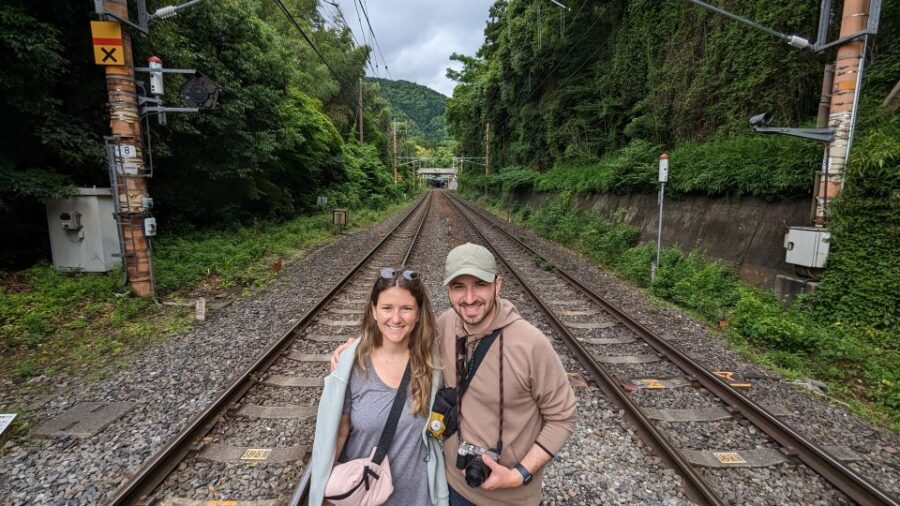
This is one of those Kyoto days where the highlights aren’t just sitting in a lineup. They’re connected by small, practical choices: where you pause, where you snack, and where you get a breather. You meet at Saga-Arashiyama Station and spend the day moving on foot through Arashiyama’s top sights.
What makes this tour work is the rhythm. You start with the main “wow,” then you shift into quieter spaces—like a private garden and temple grounds—before ending with the monkey park climb and its payoff. It also helps that the guides you might meet—names like Karim, Francis, Tom, Toru, and Kevin come up repeatedly—are praised for being energetic, organized, and good at handling questions without rushing people.
If you like structure but still want time to breathe, this schedule is a good fit. Expect breaks for photos and facilities, plus room to grab something to drink or eat along the way (lunch is not included, but stops are built in).
You can also read our reviews of more food & drink experiences in Kyoto
Meeting at Saga-Arashiyama Station (and why “north side” matters)
Your day starts by getting your bearings fast. Meet by the map down the stairs on the north side of JR Saga-Arashiyama Station. When you exit the train, you pass the gates, turn right, go downstairs, and look near the vending machines by the map.
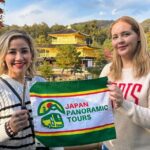
Look for your guide in a red polo shirt or jacket with the company logo “JTA.” Arrive about 15 minutes early, because if you show up late you’ll be treated as a no-show.
This little detail matters in Arashiyama because it’s easy to wander the station area, then lose time before the real start. Once you’re with the group, the walking pace is managed so you don’t feel dragged—just guided.
Arashiyama Bamboo Grove: The stop that turns into your favorite photo
The first major stop is the Arashiyama Bamboo Forest, and the photo stop isn’t meant to be a quick walk-by. You get time to look up—really look up. The bamboo canopy changes how the light hits the paths, and that’s where most of the best shots come from: higher angles, narrow paths, and layered stalks that frame the sky.
In real life, the bamboo grove can feel louder than you expect, because people instinctively stop in the same places. The guide factor here is simple: you don’t just know where to stand—you know where to stand next. That makes a difference if you care about getting more than one generic photo.
Also, bamboo doesn’t just mean “pretty.” It’s a symbol of the area and a big reason people come. Seeing it early in the day helps you avoid the feeling that you’ve already lost your time before you even started.
Nonomiya Shrine: A quick cultural reset
After the bamboo, you head toward Nonomiya Shrine. This isn’t included for its size. It’s included because it gives you a different kind of Kyoto moment—one rooted in local practice rather than just scenic views.
You’ll get a photo stop and time to visit, and this kind of stop is useful mid-route. It breaks the day into chunks and gives your legs a change of pace: less continuous walking, more standing, looking, and learning what the ritual space means.
You don’t need to memorize everything. Just use it as a pause to recalibrate—especially if you’re taking the tour in hot weather.
Okochi Sanso Garden: Private-feeling calm with a drink break
Then comes one of the best “value-per-minute” parts of the day: Okochi Sanso Garden.
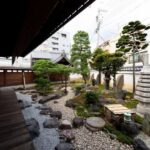
This garden is not just another temple photo spot. It’s described as private, and you can feel it in how the grounds are laid out. You walk scenic paths within the garden, with built-in opportunities for photos along the way. And yes—you’ll also have free time here, which is key. Without that window, gardens turn into a blur.
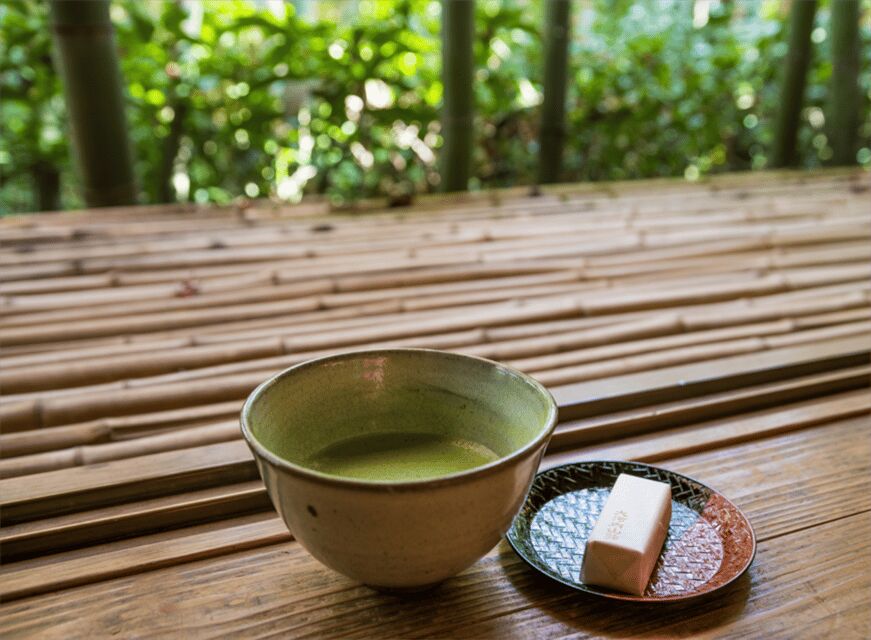
The bonus is the rest area: you can enjoy a free beverage from the drink bar at a former tea house setting. That matters more than it sounds. A walking tour can turn into a hydration puzzle, and this gives you a built-in checkpoint to reset.
You can also read our reviews of more drinking tours in Kyoto


Tenryuji Temple: Koi, grounds time, and a slower kind of wow
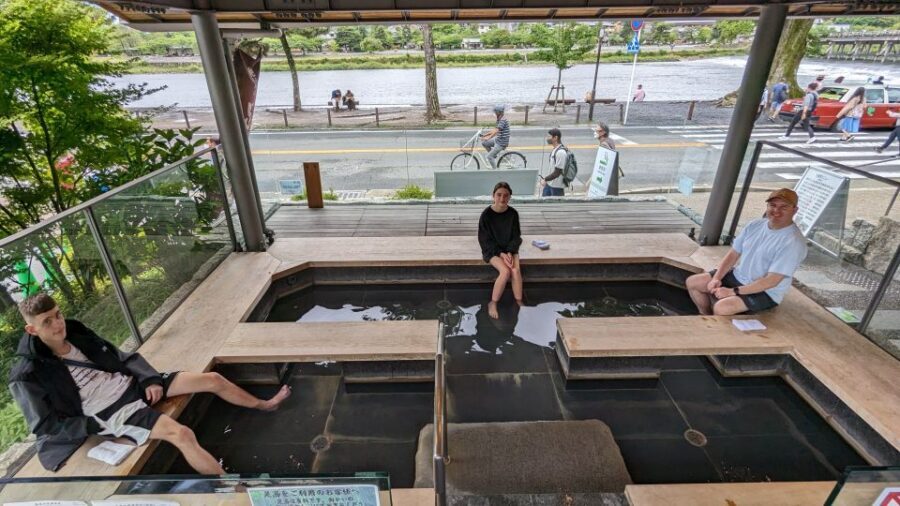
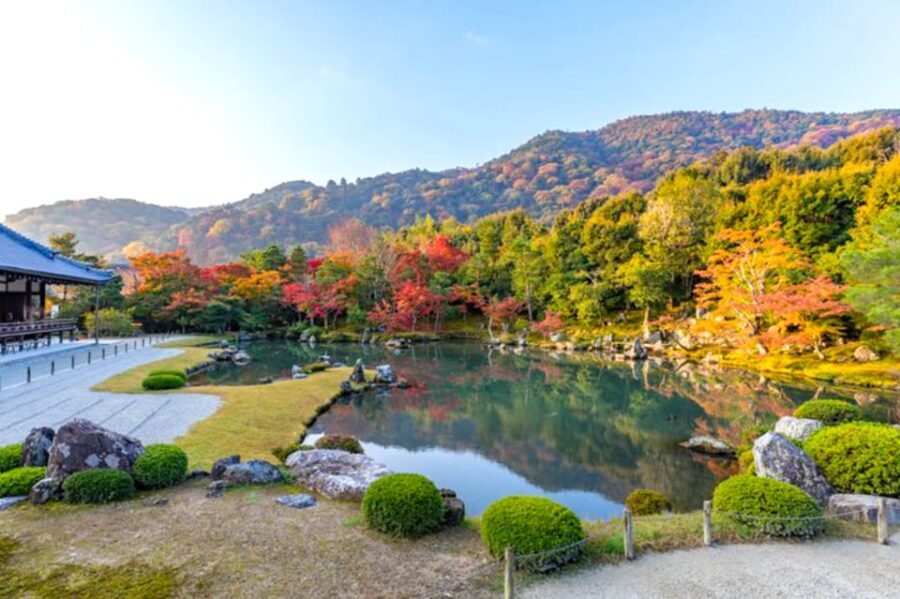
At Tenryuji Temple, you’re in classic Arashiyama territory—temple grounds, pond views, and a calmer tempo. You’ll admire the koi fish in the pond, then you’ll have free time in the area to wander at your own speed.
This stop is valuable for two reasons. First, it balances your day. After bamboo and garden paths, the temple grounds are open enough to breathe, but still structured enough that you won’t feel lost. Second, the koi pond gives you something Kyoto does well: water and stillness inside a busy destination.
Some guides also share temple-linked stories you might remember later—people mention things like the dragon story in connection with the Tenryuji experience—so ask questions if your guide brings it up. If you’re into religion, literature, or how Kyoto layers meaning onto everyday places, this is where that interest gets rewarded.
Arashiyama Shopping Street and the Kimono Forest photo stop
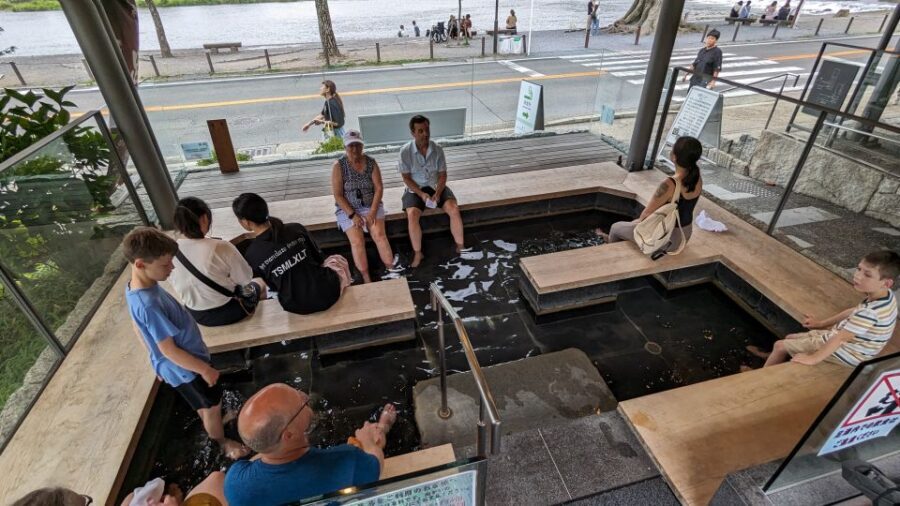
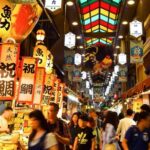
Between the temple and the bridge area (depending on your option), you’ll get time around Arashiyama Shopping Street. You’ll have a chance to grab a snack and browse.
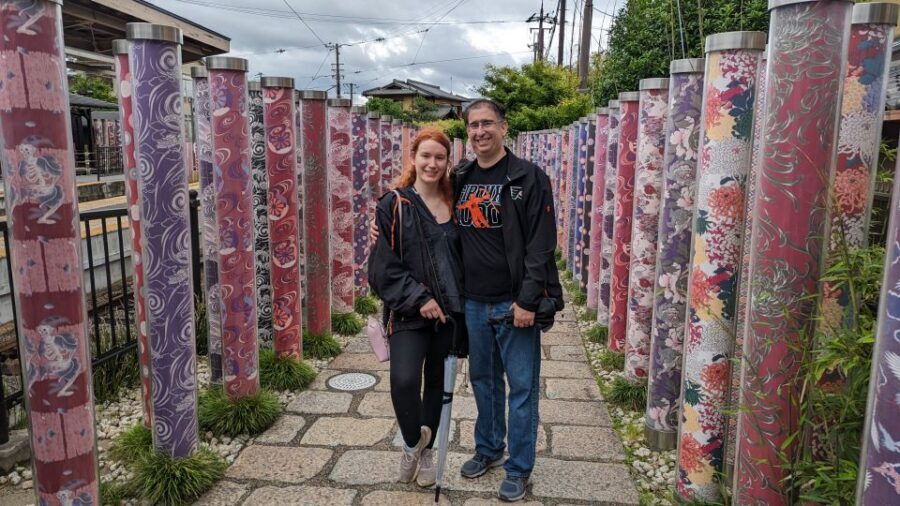
This is also where the tour leans into a fun, recognizable photo spot: the Kimono Forest. It’s short, but it works because it’s designed for pictures. If you want a quick “I was here” moment that still looks like Kyoto, this is the kind of stop you shouldn’t skip.
Also, the shopping street timing helps. Your legs have walked enough that you’ll appreciate the chance to sit for a bit, and you’ll likely be ready for a snack or drink.
Togetsukyo Bridge: Panoramic views without turning the day into a sprint
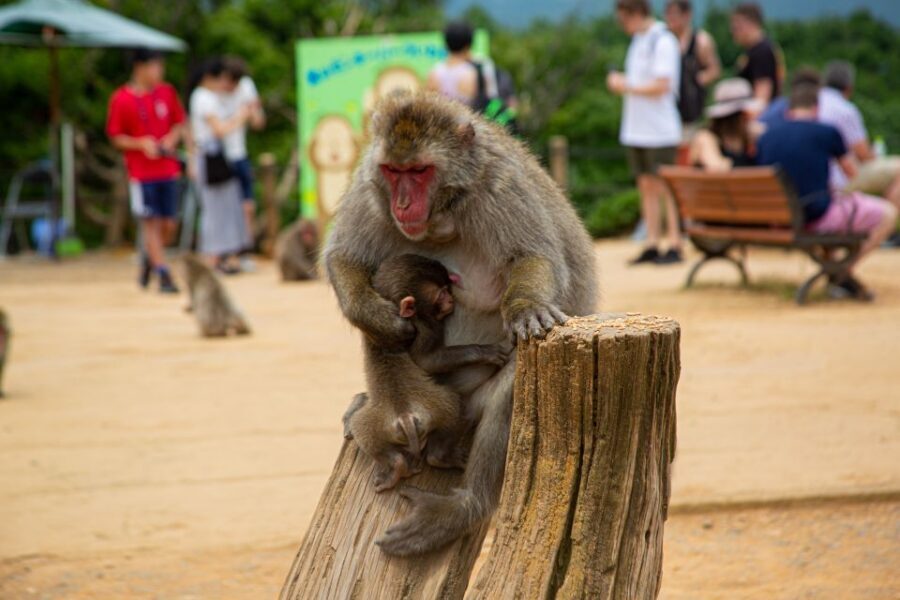
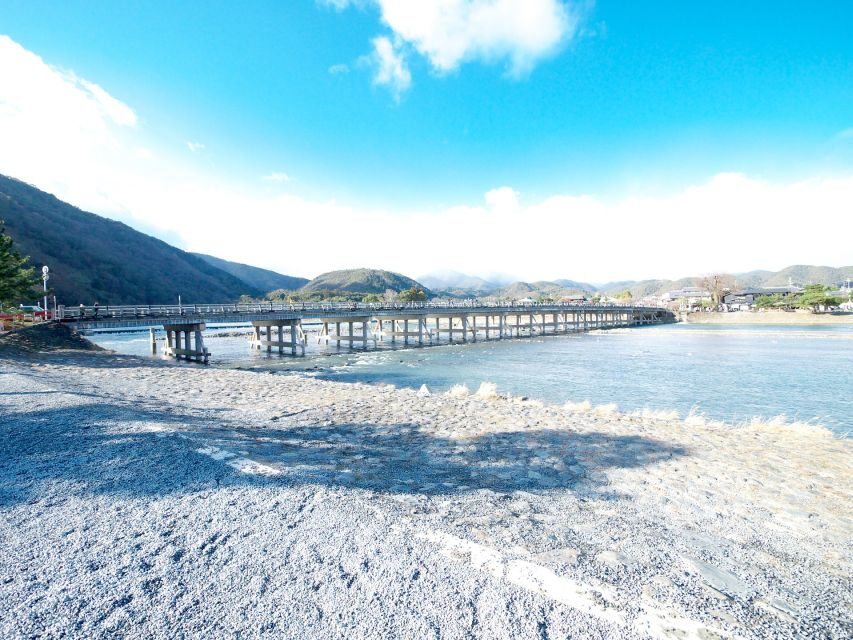
If you choose Option A, you’ll cross the iconic Togetsukyo Bridge and take in panoramic views. This is one of those places where your best experience might not be a single perfect photo.
Instead, think of it as a viewpoint reset. The bridge gives you scale: the river, the width of Arashiyama, and the sense of where everything sits in relation to each other. You also get the visual payoff before the monkey park hike, which makes the climb feel like the “final act,” not an abrupt ending.
Try not to block others. Step aside, let the flow happen, and take photos from angles that don’t trap you in the densest crowd points.
Iwatayama Monkey Park: The steep hike, the macaques, and the big view over Kyoto
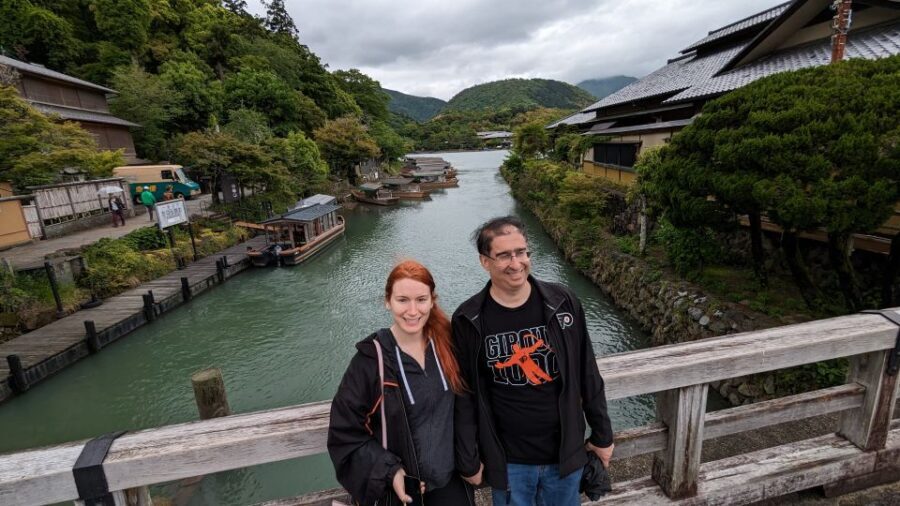
This is the star ending. The tour includes Iwatayama Monkey Park, and the instructions are clear: you’ll hike up for about 15–20 minutes on a steep path. This is the spot to take seriously.
Bring comfortable shoes and take it slow. The goal is not athletic accomplishment. It’s reaching the viewpoint with enough energy left to actually watch the macaques.
Once you’re up, you get to see famous Japanese macaque monkeys in their habitat and soak in one of the best views over the Katsura River area. Even if you’re not a “monkeys fan,” the park view alone makes it memorable.
Important practical note: the tour officially ends at Monkey Park, and you can take all the time you need there. That means you don’t have to feel like you’re being hurried out before you get your bearings.
Option A vs Option B: What changes in your Kyoto day
Here’s the real fork in the road. You’ll choose between two styles.
Option A: Shopping street, Kimono Forest, Togetsukyo Bridge, and then monkeys
Option A leans “classic Arashiyama.” You stroll through the Arashiyama Shopping Street, stop for the Kimono Forest photo area, cross Togetsukyo Bridge, and then head toward the Iwatayama Monkey Park for the big finale.
Choose this if you want more iconic sights and don’t mind mixing in some busier, more photogenic zones. It also tends to feel like a smooth sightseeing circuit.
Option B: Train ride through the mountain and lunch among locals, plus Tanzan Brewery
Option B is designed to shift you away from the most tourist-heavy segments. You’ll return to the train station for a short ride through the mountains, then go for lunch among locals with zero tourists (that’s the intent), and visit the Tanzan Brewery.
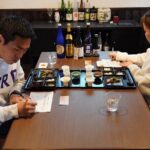
Sake tasting is included with Tanzan Brewery on this option, so it’s a great fit if you want a clear “food and drink” moment in the middle of the day instead of more street sightseeing.
Choose this if you like the idea of adding a culinary break with local flavor and a tasting component.
Price and value: What $87 buys you (and why it’s not just a walking loop)
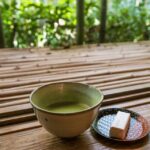
At about $87 per person, you’re paying for a lot more than a guide walking you around. The tour includes entry tickets to Okochi Sanso Garden, Tenryuji Temple, and the Monkey Park. On top of that, you get a bilingual local guide, green tea, and souvenir pictures.
That matters because Arashiyama’s top sights often have separate admission fees. If you were to DIY the day, you’d still need to pay those entries, and you’d also lose the time-savings of having someone help you move efficiently between spots.
Also, the Okochi Sanso beverage stop isn’t just a perk. It’s a practical “fuel moment” that can make the difference on a long walking day.
So yes, it’s not the cheapest thing in Kyoto. But for 5 hours of guided time plus multiple paid entrances, it’s priced like a “don’t-waste-your-morning” experience.
Guide quality is the secret ingredient (and it shows in small ways)
The strongest pattern across the feedback is not just enthusiasm. It’s how the guides handle pacing and clarity.
People describe guides like Karim and Francis as fun, energetic, and good at answering questions. Others like Tom and Toru get praised for deep cultural storytelling and making everyone feel included. Alice is mentioned for practical knowledge—like where to buy water and where to find bathrooms—those small details that keep a walking day from turning stressful.
You’ll also notice the same theme: guides are attentive to breaks. Even with heat, people report that shade and drink breaks were built in. That’s a big deal when your day includes an uphill monkey park hike.
If you care about getting real context—why a shrine matters, how temple spaces are used, what the bamboo area represents—this tour is a strong match because the guides don’t treat it like a checklist.
What to bring and how to handle the walk like a pro
This is a walking tour, rain or shine. You’ll want to plan for weather and for your feet.
Bring:
- Comfortable shoes (seriously, for the monkey park climb)
- An ID or passport (required)
- Cash (useful for snacks and extras)
Also plan for:
- Hydration needs, especially in warm weather
- A light umbrella for rain—since the tour runs in bad weather too
- Patience: you’re walking between stops, and the day’s best moments come when you slow down at the right times
A final tip: if you’re deciding between Options A and B, think about what you need most that day. If you want iconic scenery, go Option A. If you want a tasting and a break that feels more local, go Option B.
Who this Kyoto tour is best for
This tour is a great fit if:
- You want Arashiyama highlights in one efficient morning-to-afternoon format
- You like a guide who explains meaning, not just locations
- You enjoy mixing gardens, temples, and nature in the same day
- You’re okay with walking and a short steep climb
It may be less ideal if:
- You have major mobility limitations, since the monkey park climb is steep
- You hate being on your feet for about 5 hours, even with breaks
Should you book this Arashiyama walking tour?
If you’re doing Kyoto and you want the Arashiyama story told in a way that feels efficient and not rushed, I’d book it. The best reasons are practical: multiple major sites with separate admission, plus a private garden moment and a monkey park finale with top views.
Choose Option A if bridge-and-bamboo sightseeing sounds like your ideal Kyoto. Choose Option B if you want a lunch break among locals and a Tanzan Brewery stop with sake tasting.
Just be honest with yourself about the hike. Comfortable shoes and a calm pace turn the climb into the day’s payoff instead of a problem.
FAQ
Where is the meeting point?
Meet by the map down the stairs on the north side of JR Saga-Arashiyama Station. After you get off the train, go through the gates, turn right, go downstairs, and meet your guide near the map by the vending machines. Look for a guide wearing a red polo shirt or jacket with the JTA logo.
How long is the tour?
The tour runs about 5 hours (listed as 330 minutes). It’s scheduled as a walking tour, rain or shine.
Is this tour mostly walking or does it use a bus?
It’s a walking tour. There is no bus component.
Is the monkey park climb steep?
Yes. Access to the top of the Monkey Park involves a short hike on a steep path, about 15–20 minutes. Comfortable shoes and reasonable physical condition are important.
What tickets and extras are included?
Included are entry tickets to Okochi Sanso Garden, Tenryuji Temple, and the Monkey Park, plus green tea, souvenir pictures, and a bilingual local guide.
What’s the difference between Option A and Option B?
Option A focuses on Arashiyama Shopping Street, the Kimono Forest photo stop, crossing Togetsukyo Bridge, and reaching the monkey park for the views. Option B includes a short train ride through the mountain, lunch among locals with fewer tourists, and a stop at Tanzan Brewery with sake tasting included.
When does the tour end?
The tour officially ends at the Monkey Park (Iwatayama). There are also two drop-off locations listed: Monkey Park Iwatayama and Saga-Arashiyama Station.
What should I bring?
Bring passport or an ID card, comfortable shoes, and cash.
What languages are available, and can you guarantee them?
The tour is available with live guides in English, and other languages may be available (French, German, Spanish). The information provided notes you can contact them to confirm language availability for your date, especially on shared tours.