REVIEW · TOKYO
Tokyo Asakusa Rickshaw Tour
Book on Viator →Operated by Ebisuya · Bookable on Viator
A rickshaw turns Asakusa into your own walking loop. This tour is built for the small stuff and big views at the same time: you’ll move through old laneways, Japanese gardens, and Edo-era streets, while your guide shapes the customizable route around what you want most. I especially like the calm pause in the Japanese garden at the Lucky Fortune Cow shrine, and the chance to learn why places look the way they do, like the odd, specific details at shrines on the Sensoji grounds.
A small heads-up: there’s a Sensoji no-rickshaw zone, so you won’t ride through the temple buildings and the Nakamise shopping street. You’ll hop off and walk for at least part of that area, which changes the pace from ride-only sightseeing.
In This Review
- Key things to know before you go
- First impressions: Asakusa feels old and new at the same time
- Price and time: does $42.90 feel fair for this kind of sightseeing?
- Where you start and how the day flows
- Your rickshaw ride setup: privacy, capacity, and comfort reality
- Shrine highlights: what you learn at Ushijima, Honryuin, and Imado
- Ushijima Shrine stop
- Honryuin Matsuchiyama Shoden stop
- Imado Shrine stop
- Sensoji and Asakusa Shrine gates: great photos, then a short walk
- Asahi Beer headquarters and the contrast with old Asakusa
- Old entertainment district clues: Rokku Street and an old amusement park
- The quirky side: raccoon street and a neighborhood that plays
- Sumida Park breaks and the Tokyo Skytree view across the river
- How to personalize it without overthinking
- Should you book the Tokyo Asakusa Rickshaw Tour?
- FAQ
- How long is the Tokyo Asakusa Rickshaw Tour?
- Where do I meet the guide?
- Is hotel pickup included?
- What’s included in the tour price?
- Can I customize where we go in Asakusa?
- Are temple or shrine admission tickets included?
- Can the rickshaw go inside Sensoji Temple and Nakamise?
- How many people can ride per rickshaw, and what about kids?
- Is there free cancellation, and what if the weather is bad?
- Is English available with the guide/driver?
Key things to know before you go
- Lucky Fortune Cow garden stop: a breather with photo-friendly scenery before you move back into the crowds.
- Ushijima Shrine’s three-entry gate: a detail you’ll actually understand after your stop, not just glance at.
- Cat and raccoon detours: Asakusa has a playful side, with Imado’s cat figurines and raccoon figurines on one quirky street.
- Asahi Beer headquarters flame: a landmark contrast against the older streets around it.
- Sumida Park + Skytree views: you get a clear river-side photo angle and a place to pause.
- Warm, comfy ride vibes: feedback often points to seatwarmers and rugs, plus guides who keep the experience fun and safe.
First impressions: Asakusa feels old and new at the same time
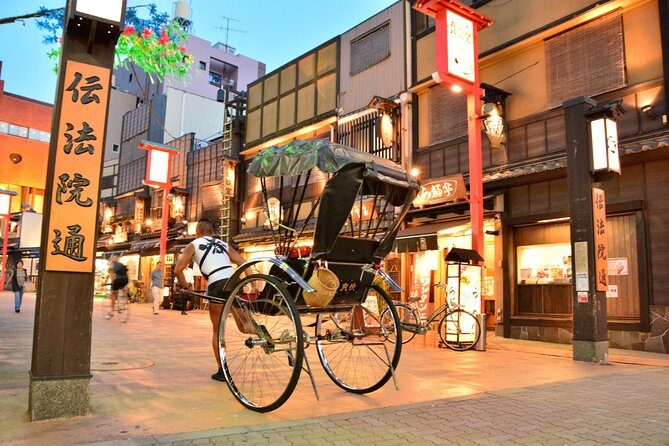
Asakusa is the kind of Tokyo neighborhood where you can look left and right and see two different centuries. One street can feel straight out of Edo-era life, with old facades and small storefronts, while another view drops you right back into modern Tokyo energy.
What makes this rickshaw tour work is that you’re not just rushing from landmark to landmark. You’re gliding at human speed through streets lined with trees—maples and cherry trees show up depending on the season—and you get background context when you stop. Your guide can also steer the ride toward what interests you most, so your “overview” doesn’t feel generic.
You can also read our reviews of more tours and experiences in Tokyo.



Price and time: does $42.90 feel fair for this kind of sightseeing?
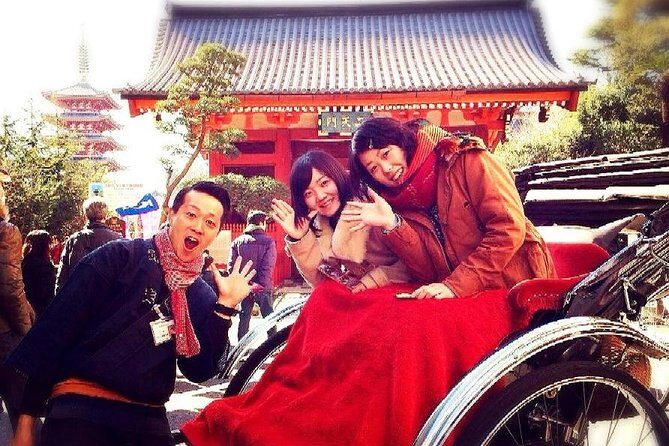
The price is listed as $42.90 per person, with tours running about 30 minutes to 3 hours. That range matters, because rickshaws are time-intensive to coordinate in a neighborhood like Asakusa. If you go for the longer end, you’re paying for more stops, more Q&A, and more chances to slow down for photos.
You also pay for a guided experience, not just a vehicle. The tour includes a local rickshaw driver and the ride itself, while food and drinks are on you. If you’re spending half a day in Asakusa anyway, this can be a smart way to get your bearings fast, especially if you want shrines plus a few curveballs like the raccoon street.
Where you start and how the day flows
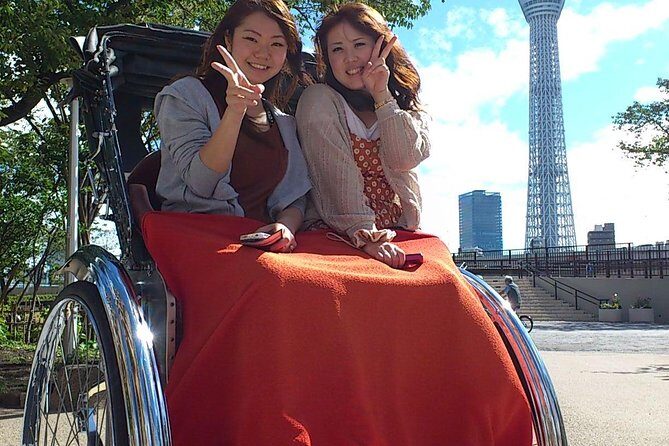
You’ll make your own way to the meetup point outside Asakusa Station. The start location is listed as 1-chōme-1-4 Asakusa, Taito City, Tokyo. Once you meet your guide, you jump on the rickshaw, tell them what you care about, and then you follow a route built around those interests.
The tour end point is flexible: you finish at a nearby location of your choosing. Your guide decides the exact finishing spot on the day of the tour, and if you want to end somewhere else, there could be an added drop-off fee you pay on the spot.
One more practical note: the rickshaw ride isn’t allowed inside the Sensoji/Asakusa Temple area (including the temple buildings and Nakamise shopping street). That means your day’s flow includes a mix of riding and walking, even if you choose a shorter duration.
Your rickshaw ride setup: privacy, capacity, and comfort reality
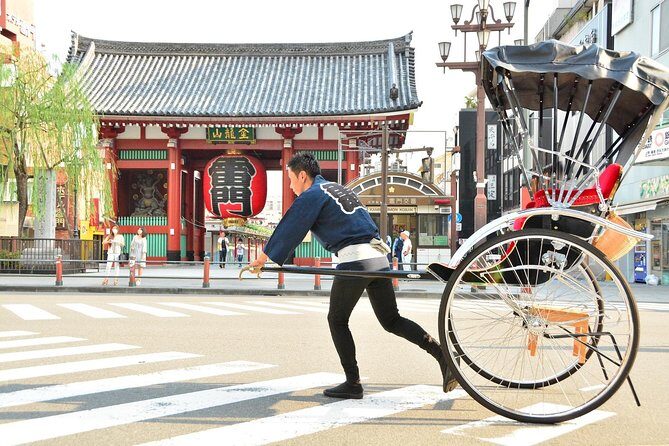
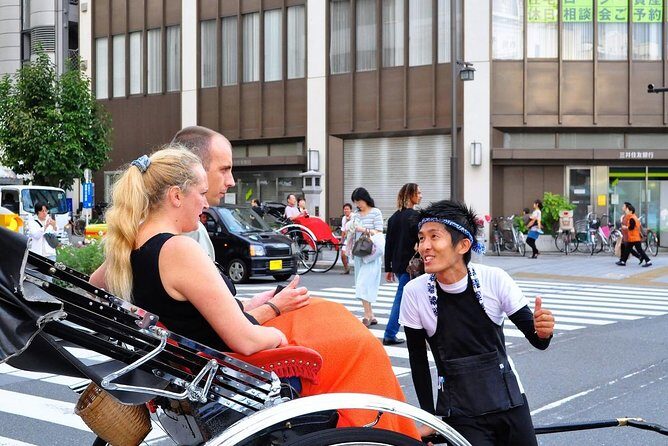
This is a private activity, meaning only your group participates. That’s a big deal for a rickshaw tour because you’re sharing narrow streets at slower speed, and you’ll want room to ask questions or tweak the plan.
Capacity is straightforward but important:
- A maximum of 2 adults per rickshaw.
- You can bring up to 2 children aged 5 and under, but they must ride on an adult’s lap.
- If a child 5 and under needs one of the two seats, they must be booked as an adult.
The rickshaw is only 29.1 inches (74 cm) wide, which can make it snug. If you and your travel partner are larger in size, it’s often more comfortable to book separate rickshaws so you’re not fighting for space. The experience recommends booking individually for comfort.
On the feel-good side, feedback frequently highlights that rides are kept comfortable—think seatwarmers and rugs—so the experience doesn’t turn into a cold, cramped struggle in cooler months.
Shrine highlights: what you learn at Ushijima, Honryuin, and Imado
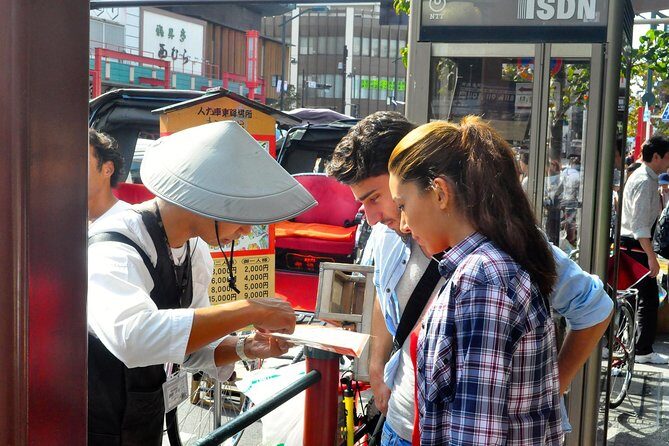
The tour leans into religion and symbolism in a way that’s actually useful. You’re not just taking pictures; you’re learning why certain details exist.






Ushijima Shrine stop
You’ll visit Ushijima Shrine, a Shinto shrine. One standout detail you’ll hear about is that its gate has three entrances instead of the standard one. It’s the kind of thing you’d normally miss if you were just sightseeing on your own, because your eyes are busy with the larger scene.
You’ll spend about 15 minutes here. Admission tickets aren’t included for this stop.
Honryuin Matsuchiyama Shoden stop
Next is Honryuin Matsuchiyama Shoden, a Buddhist temple and one of the constituent temples of Sensoji. This stop comes with a specific visual theme: you’ll learn why there are so many radishes, including radishes painted on lanterns. It turns the place from “pretty temple” into “symbolic place,” which is what makes the stop memorable.
This is also listed as about 15 minutes, with admission tickets not included.
Imado Shrine stop
You’ll then go to Imado Shrine, another Shinto shrine. Here, the famous visual focus is the cat figurines—especially the manekineko style, the beckoning-cat pose with its raised paw. The fun part is that your guide ties that imagery to how the shrine is experienced, not just what it looks like.
Plan around 15 minutes, and admission tickets aren’t included for this stop either.
Sensoji and Asakusa Shrine gates: great photos, then a short walk
Sensoji is the headline, even if your rickshaw can’t go inside. You’ll see the colourful, bright gate leading to the Sensoji Temple and Asakusa Shrine, which is a strong photo moment and a good way to orient yourself.
A key point: you can’t ride through the temple buildings, temple grounds, or the Nakamise shopping street. So even though the tour brings you right to the doorstep, you’ll still need to walk for that part of the experience.
If you’re trying to understand how Shinto and Buddhism coexist in Japan, the tour’s stops help with that. There’s a Shinto shrine located on the temple grounds of Sensoji, and your guide explains the difference between the two religions and how they work side-by-side here.
Asahi Beer headquarters and the contrast with old Asakusa
Not every stop is a shrine or temple. You’ll also visit the Asahi Beer headquarters, known for the iconic golden flame on top of the building. It’s a useful contrast, because it reminds you you’re in Tokyo, not a time capsule.
This is also a nice “breather” stop in the middle of more religious sites. You get a modern landmark that still feels tied to place, and it helps your brain switch gears from symbolism and incense to architecture and city-scale signage.
Old entertainment district clues: Rokku Street and an old amusement park
Asakusa has long been an entertainment zone, and you’ll get hints of that. The tour includes a stop at a venue that was and still is part of the heart of Asakusa’s entertainment district, with Japanese comedy and shows.
You’ll also pass through Rokku Street, now part of the retro district. This street used to be one of Tokyo’s most popular entertainment areas before the war, with cinemas and theatres clustered here. Even if you don’t catch a show on your visit, the story gives meaning to the storefronts and facades you see.
One other stop ties into that same theme: you’ll visit one of Japan’s oldest amusement parks that’s still operating. It’s a subtle way to feel the neighborhood’s continuity. You’re not just seeing history; you’re seeing something that still runs on today.
The quirky side: raccoon street and a neighborhood that plays
If you’ve been to Tokyo before, you know how efficient the city can be. Asakusa adds something different: weird little joy. The tour includes a quirky street where the theme is raccoons, with raccoon figurines placed every few meters. It’s the kind of detail your guide can point out with a smile, and it makes your photos more fun than standard temple shots.
Put that next to Imado’s cat figurines and you start to see a pattern: Asakusa is comfortable mixing the sacred with the playful. That balance is part of why the streets feel enchanting as you ride through.
Sumida Park breaks and the Tokyo Skytree view across the river
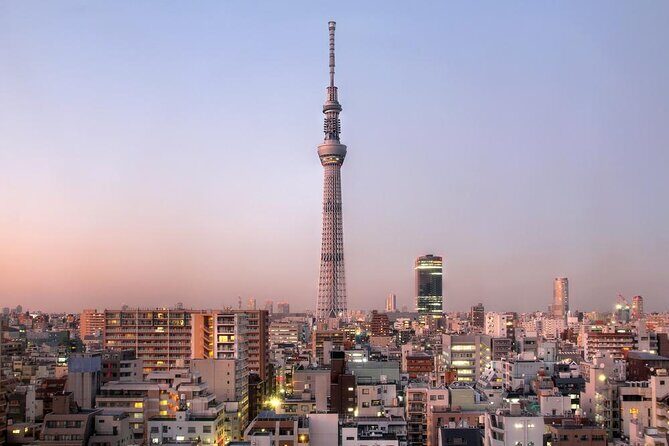
The tour makes time for views, not just stops. One of the best spots comes from the Sumida River area, with an excellent view of the Tokyo Skytree from across the river. It’s a good photo angle, and it also gives you a mental “reset” between denser temple areas.
You may also spend time near Sumida Park, a long park lining the river. In spring, it’s a great place for cherry blossoms, and even outside blossom season it works as a calm break between activities. This is the kind of stop where you actually sit for a moment instead of just moving.
How to personalize it without overthinking
The tour is customizable, and that’s where you can get the biggest value. When you meet the guide, tell them your priorities in plain terms:
- Are you shrine-heavy or view-heavy?
- Do you want more photo stops or more explanations?
- Are you into food sights, old entertainment history, or modern landmarks like Asahi?
You’ll also want to match your duration to your pace. A shorter ride is best for first-time orientation and quick highlights. A longer ride is better if you want extra time at places like the shrine stops and also want the river view and park break.
One practical tip: if you have strong photo goals—like catching the Skytree view—mention it early. Guides can shape timing so you’re not rushing for the best angle.
Should you book the Tokyo Asakusa Rickshaw Tour?
Book it if you want a fast, friendly way to get oriented in Asakusa, and you like tours that explain small details like three-entry shrine gates, radish symbolism, and the cat-and-raccoon side of the neighborhood. It’s also a good pick if you’re traveling as a pair or family and want a private setup where you can ask questions without feeling rushed.
Skip or think twice if you want a pure, rickshaw-only ride through the Sensoji/Asakusa Temple complex. You’ll walk there, since rickshaw rides aren’t allowed inside the temple area and Nakamise street. Also consider rickshaw width if you’re concerned about comfort—booking separate rickshaws may be worth it.
If you like planning smart: reserve ahead. This tour is often booked about 54 days in advance on average, so earlier booking can help you lock in the timing and length you want.
FAQ
How long is the Tokyo Asakusa Rickshaw Tour?
The duration is listed as approximately 30 minutes to 3 hours, depending on the option you choose.
Where do I meet the guide?
Meet outside Tokyo’s Asakusa Station at 1-chōme-1-4 Asakusa, Taito City, Tokyo 111-0032.
Is hotel pickup included?
No. Hotel pickup and drop-off aren’t included.
What’s included in the tour price?
Included are the local rickshaw driver and the rickshaw ride. Food and drinks are not included.
Can I customize where we go in Asakusa?
Yes. The tour is customizable based on your interests, and you’ll tell your guide what you want to see.
Are temple or shrine admission tickets included?
Admission tickets are not included for the listed stops such as Ushijima Shrine, Honryuin Matsuchiyama Shoden, and Imado Shrine.
Can the rickshaw go inside Sensoji Temple and Nakamise?
No. No rickshaw ride is allowed in the Sensoji Temple/Asakusa Temple area, including the temple buildings, temple grounds, and Nakamise shopping street.
How many people can ride per rickshaw, and what about kids?
The maximum is 2 adults per rickshaw. Children aged 5 and under may ride free of charge if they sit on an adult’s lap. If a child 5 and under uses one of the two seats, they must be booked as an adult.
Is there free cancellation, and what if the weather is bad?
Cancellation is free up to 24 hours in advance for a full refund. If the experience is canceled due to poor weather, you’ll be offered a different date or a full refund.
Is English available with the guide/driver?
English and Japanese-speaking driver/guide are available, subject to availability. You should specify your preferred language at checkout.