REVIEW · KYOTO
Kyoto: Local Food Tasting Tour at the Nishiki Market
Book on GetYourGuide →Operated by Japan Wonder Travel · Bookable on GetYourGuide
Kyoto’s food scene starts here. Walking Nishiki Market with a local guide turns a crowded street into a clear plan: you get 5 carefully chosen tastings and the context to understand why each bite matters. I like that the focus stays on local flavors rather than pushing a set restaurant meal, and I also like the small-group pace. One thing to consider: this is a walking tour with fixed tastings, and the operator can’t accommodate dietary restrictions.
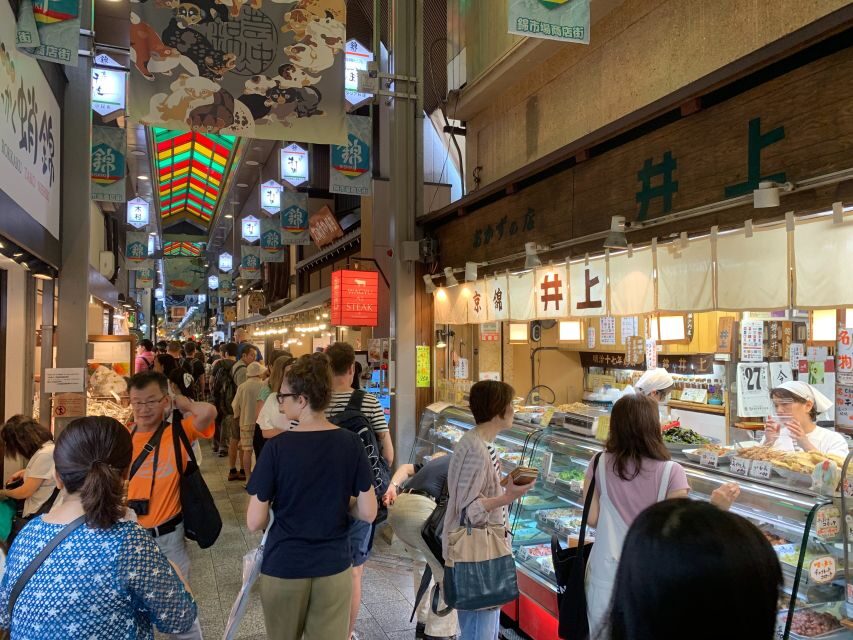
The route is built for real Kyoto wandering—think a 400-year-old market with around 130 stalls, plus short stops that connect food to place. In multiple bookings, guides such as Takuna, Hide, Yume, Ayu, and Toshi were praised for calm direction, strong English, and story-driven explanations that help you ask better questions as you go. Still, it’s not for people who need step-free access; you’ll be on your feet most of the time.
If you choose the add-on, the tour can roll directly into a traditional tea ceremony at 2:00 PM. You’ll need to make your own way afterward to a venue near Nishiki Market, so I’d plan your afternoon around that timing from the start.
In This Review
- Key highlights worth showing up for
- Nishiki Market: Kyoto’s Kitchen in a 400-Year Walk
- What You Actually Eat: 5 Kyoto Specialties Plus Snack-Stop Extras
- Why the selection feels smarter than “random sampling”
- A note on dietary limits
- Inside the Walk: How the Tour Keeps the Crowd From Taking Over
- What you’ll notice on the ground
- The one downside of the crowd advantage
- Nishiki-Tenmangu Shrine and Shopping Arcades: Why the Stops Aren’t Random
- What these shopping segments add (beyond photos)
- Watch-outs for timing and comfort
- Optional Tea Ceremony at 2:00 PM: A Classic Cultural Follow-Up
- Why this works well after the market
- What to plan
- Price and Value at $78 for a 3-Hour Local-Led Taste
- Who feels the value the most
- Who This Works For and Who Should Skip It
- My Booking Checklist for Nishiki Market Food Tours
- Should You Book This Nishiki Market Food Tour?
- FAQ
- How long is the Nishiki Market food tasting tour?
- Where does the tour meet?
- How many people are in the group?
- What food tastings are included?
- Is there an optional tea ceremony add-on?
- Is the tour vegetarian or halal friendly?
- What should I bring?
- Are pets or large bags allowed?
- Is the tour wheelchair accessible?
Key highlights worth showing up for
- 400-year-old Nishiki Market (about 130 stalls): you’ll get your bearings fast in a place that can feel overwhelming solo.
- Five set Kyoto specialties: including Hamo tempura and WAGYU steak skewers plus staples like yuba and obanzai.
- Local culture through food: your guide’s stories connect what you eat to daily life and tradition.
- Shrink-to-fit pace: small group size (up to 6) means more questions and less waiting around.
- More than food stops: a quick shrine visit plus shopping arcades that show Kyoto beyond the market.
- Optional tea ceremony at 2:00 PM: a classic cultural follow-up if you want more than snacks.
Nishiki Market: Kyoto’s Kitchen in a 400-Year Walk
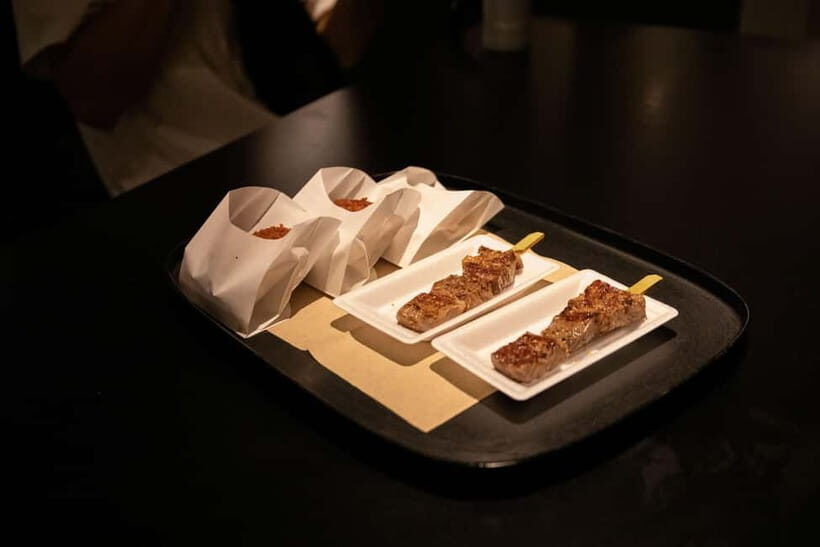
Nishiki Market is often called Kyoto’s kitchen, and that nickname makes sense the moment you see the shelves, signs, and packed lanes. This tour gets you into the market in a structured way, so you spend less time guessing and more time tasting.
The big win here is that the market is old—around 400 years old—and it’s packed with commerce from about 130 food stalls. If you explore alone, you can absolutely find food, but it’s easy to miss what’s truly Kyoto and harder to know the difference between a decent snack and a standout specialty. With a local guide leading, you’re not just walking; you’re learning how people in Kyoto actually shop and snack.
You’ll start at one of three possible meeting points (the exact one depends on your booking). Expect a brief lead-in from your guide before you hit the market lanes. From there, the tour’s first segment is intentionally concentrated: a guided experience through Nishiki Market with time for tastings along the way.
Practical tip: bring your “walk-ready” shoes. The pace is relaxed for a food tour, but you are still moving through compact spaces.
You can also read our reviews of more food & drink experiences in Kyoto
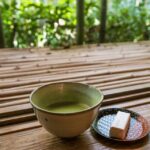
What You Actually Eat: 5 Kyoto Specialties Plus Snack-Stop Extras
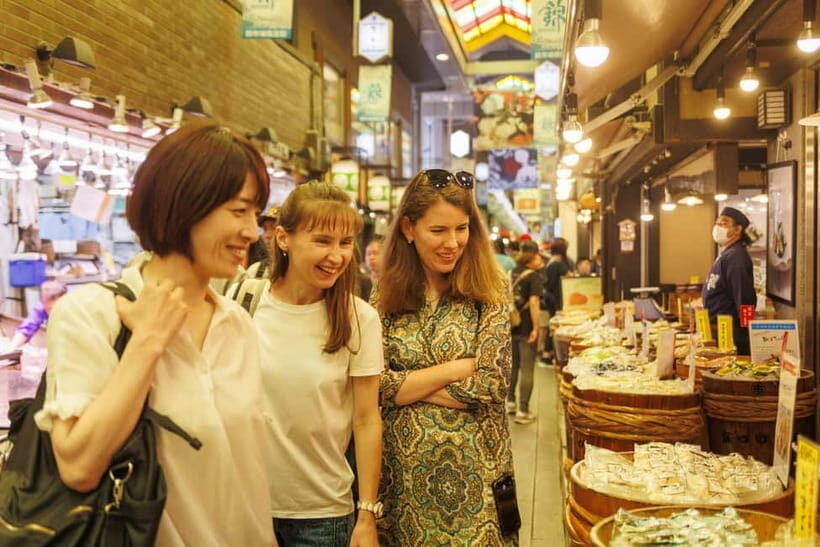
This isn’t a one-bite-and-done tour. It’s built around five carefully selected foods, plus additional tasting-style nibbles that round out the flavors of the area.
Here’s what’s clearly included:
- Yuba (tofu skin)
- Obanzai (local home cooking)
- Hamo tempura (a seasonal specialty)
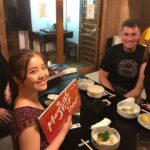
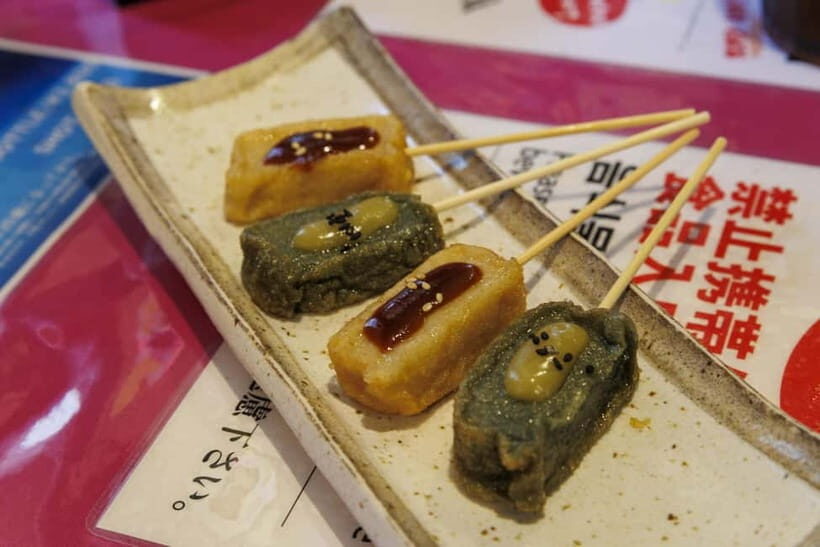
- WAGYU steak skewers
- And more from the market’s lineup of Kyoto-flavored bites
On top of the five main specialties, you should expect extra tastings such as seasonings, cracker, and things like Japanese flavored honey. That matters because market food in Kyoto isn’t only about one signature dish—it’s also about the supporting players: sauces, dips, sweet profiles, and the way flavors are built in layers.
Why the selection feels smarter than “random sampling”
A solo market visit often turns into: pick what looks good, pay for whatever the line likes, and hope it matches your taste. This tour does the thinking for you. Your guide’s job is to steer you toward Kyoto-specific favorites and to translate the why behind each item—what it’s made from, when it’s eaten, and how it fits local habits.
That’s also why guides in the feedback stood out for being patient and explanatory. People praised guides for taking time to explain dishes and for matching the experience to what the group likes. If you’ve never eaten Kyoto-style foods before, that context makes the bites more satisfying, not less.
A note on dietary limits
This tour includes food tastings and the operator is unable to accommodate dietary restrictions, including vegetarian, halal, kosher, gluten-free, and allergy-related requests. So if you have strict dietary needs, you’ll want to plan an alternative Kyoto food experience instead.
Practical tip: if you’re unsure about how “obanzai” or yuba will land for you, remember that the tour is built around sampling Kyoto classics, not customizing menus.
Inside the Walk: How the Tour Keeps the Crowd From Taking Over
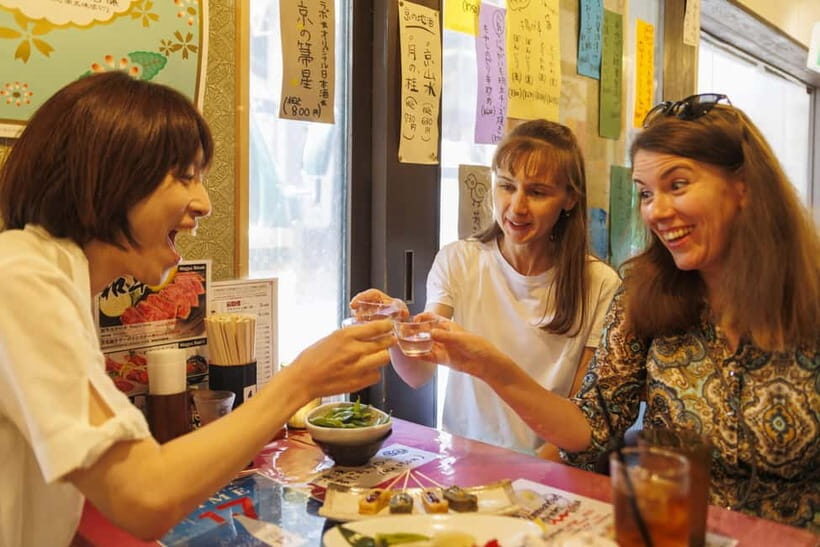
Nishiki Market can be chaotic in a good way—busy lanes, lots of displays, and constant movement. The tour is designed so you don’t fight the crowd; you ride it with purpose.
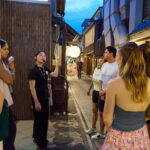
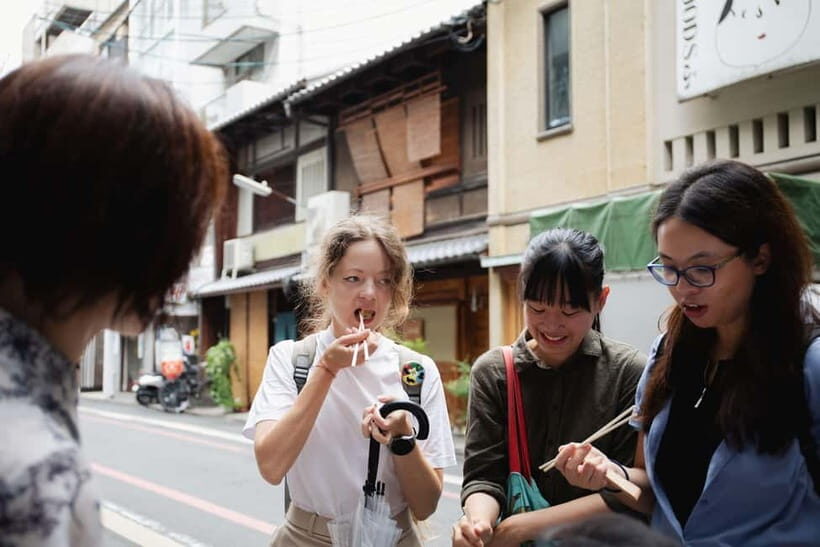
The small-group size (limited to 6 participants) is a practical detail, not just a marketing line. It changes the feel of the tour: your guide can stop where you can actually see, ask-and-answer without rushing, and adjust pace when someone wants a question translated or a longer look at a stall.
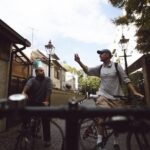
In the feedback, guides like Hide and Miho were specifically praised for calm guidance through dense market traffic. Some guides even helped with the “life stuff” moments—like waiting at the meeting point when it was confusing to locate—because the tour runs on timing and clear handoffs.
A few more Kyoto tours and experiences worth a look

What you’ll notice on the ground
- You’ll spend your time between stalls rather than scanning menus in every window.
- You’ll learn what to look for in product displays and how vendors expect you to order or taste.
- You’ll get short cultural stories tied to what you’re eating, which keeps the tour from feeling like a snack conveyor belt.
The one downside of the crowd advantage
Because the tour has a plan and included tastings, you’re not always free to follow your nose into every alley stall. If you love total spontaneity, you may still want to add extra independent time to revisit the market later with confidence.
Nishiki-Tenmangu Shrine and Shopping Arcades: Why the Stops Aren’t Random
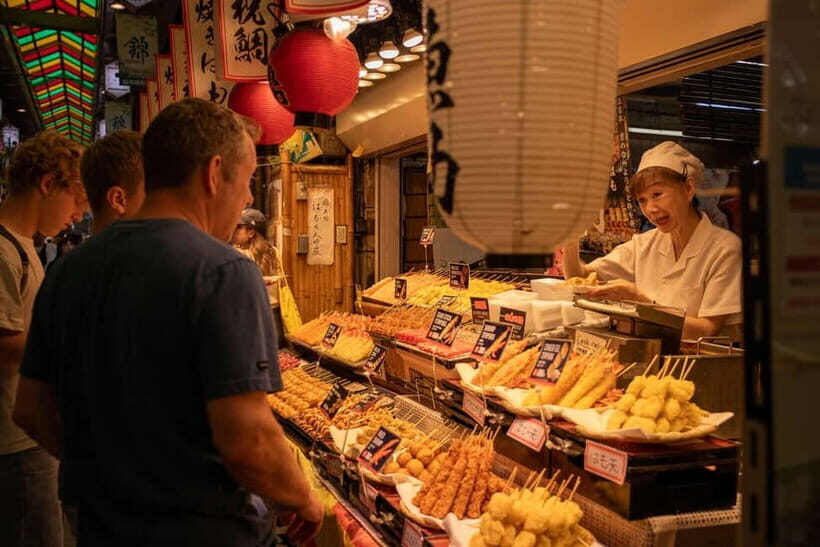
Food tours sometimes treat everything outside the plate as filler. This one uses short stops to connect Kyoto food to the city’s daily texture.
After the market tastings, you’ll visit Nishiki-Tenmangu Shrine for a brief guided stop (about 10 minutes). Even though it’s short, it gives you a pause between snack waves. It also frames the idea that food culture in Japan isn’t isolated; it’s tied to neighborhoods, routines, and sacred calendar rhythms.
Then the tour continues into:
- Shinkyogoku Shopping Arcade (about 45 minutes) with guided sightseeing and shopping time
- A hidden gem stop (about 10 minutes)—short, focused, and meant to add flavor to the route beyond the biggest names
- Teramachi Street Shopping District (about 30 minutes) for guided visit time
What these shopping segments add (beyond photos)
Shopping arcades and street districts aren’t just for souvenirs. They show how Kyoto locals browse, snack, and move through commerce. When you’ve just finished eating yuba, tempura, and skewers, you start noticing the city’s flavor logic—what products pair well, what sweets are common, and what casual goods people carry home.
Practical tip: use this time to buy small edible gifts if you want. If you wait until the end of the day, you’ll be tired and more likely to grab something generic.
Watch-outs for timing and comfort
These sections keep you walking. Bring rain gear because weather can change fast, and the market lanes and arcades won’t always slow down for bad conditions.
Also, there’s no mention of luggage-friendly handling. If you’re traveling light, great. If you’re carrying a large bag, you’ll want to rethink your plan because luggage or large bags aren’t allowed.
Optional Tea Ceremony at 2:00 PM: A Classic Cultural Follow-Up
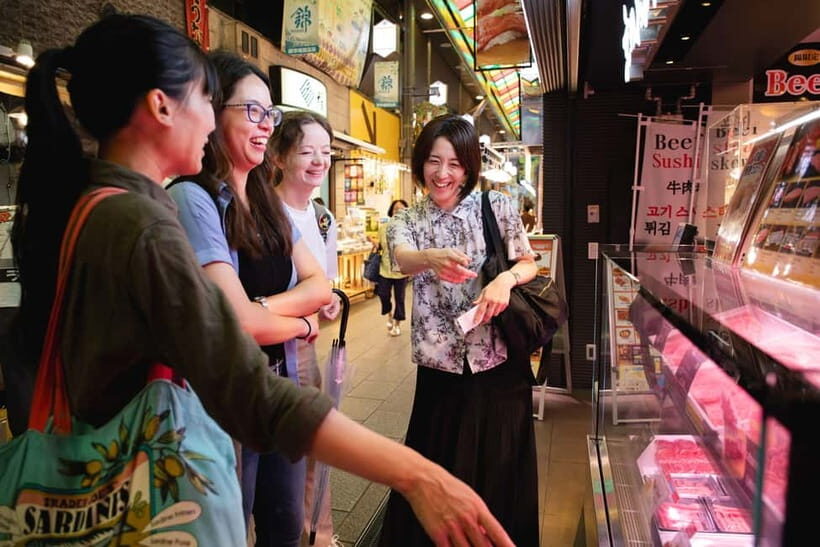
The tea ceremony option is one of those add-ons that can make your Kyoto day feel more complete—if you plan it right.
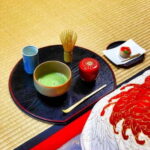
If you select it, the tea ceremony starts at 2:00 PM and runs about 90 minutes. After your Nishiki Market tour, you’ll need to make your own way to the tea ceremony venue near Nishiki Market. You’ll be dressed in kimono by professionals, then led by a seasoned tea master through the ritual and meaning behind each movement and gesture. There’s also time for commemorative photos in a traditional setting.
Why this works well after the market
Tea ceremonies and market food share a theme: attention to detail. After snack tastings, the ceremony can slow your senses down. You’re no longer eating constantly—you’re learning how Japanese culture treats ritual as part of everyday life.
What to plan
Because you’re responsible for getting to the venue after the tour, I’d schedule your other afternoon commitments around that 2:00 PM start. Leaving extra buffer time helps, especially if you’re trying to manage directions while wearing kimono attire later.
Price and Value at $78 for a 3-Hour Local-Led Taste
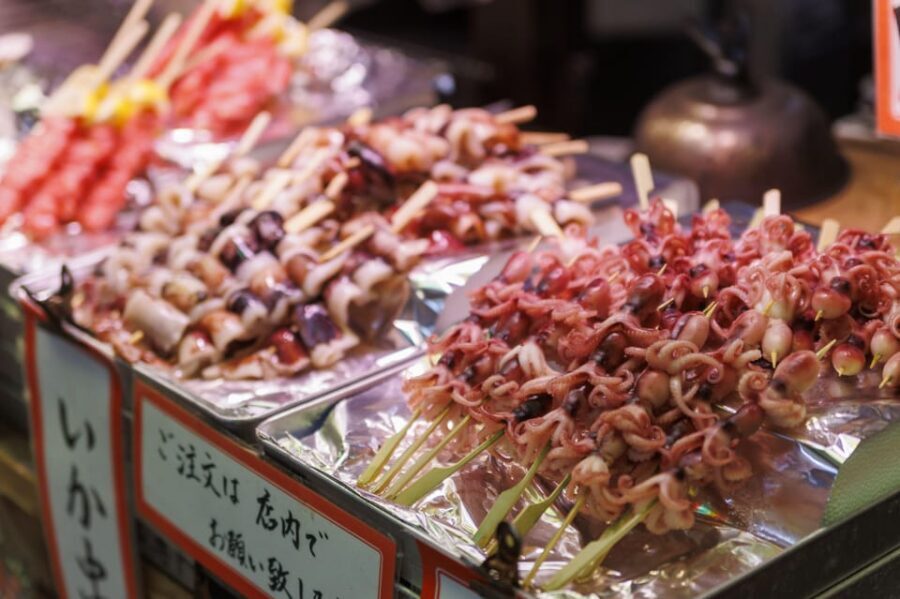
At $78 per person for a 3-hour tour, this is positioned as a value-focused food experience rather than a single big meal.
Here’s why the math starts to make sense:
- You get five main specialties (not just a couple of bites)
- You also get extra tastings like seasonings, cracker, and flavored honey
- You receive guided storytelling throughout, which is hard to replicate alone when the market is crowded
- The route includes more than Nishiki Market: shrine time and shopping arcade segments add extra structure to the visit
If you’ve ever tried to recreate a market tasting alone, you’ll likely pay for multiple separate purchases—some good, some not your favorite—without the context that helps you choose well in the first place. This tour reduces that guesswork by bundling the selection and guiding you to Kyoto-specific bites.
Who feels the value the most
- First-time visitors who want to learn quickly
- People who enjoy street food but don’t want to spend the whole day figuring it out
- Couples or small groups who can handle a walking schedule and want a guided flow
Practical tip: eat lightly before this tour. People do end up tasting a lot, and you don’t want your stomach to be too full to enjoy the later specialties.
Who This Works For and Who Should Skip It
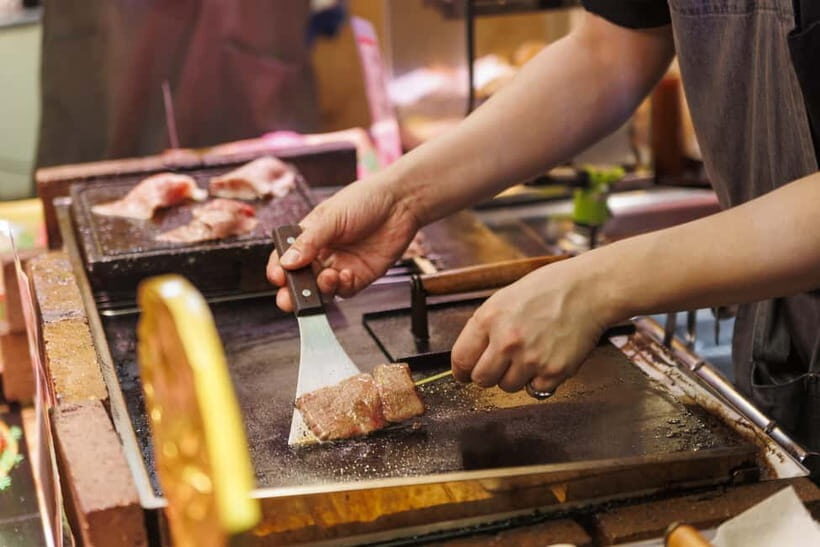
This tour is a strong fit if you want structured, tastier Kyoto. It’s also a great match for curious food lovers who don’t just want names—they want reasons.
It suits:
- First-time visitors who want a confidence boost in Nishiki Market
- People who like small-group pacing and Q&A
- Anyone comfortable walking through markets, arcades, and shopping streets
It’s not a good fit if:
- You use a wheelchair or have mobility impairments (the tour is not suitable for wheelchair users)
- You need dietary customization, because the operator can’t accommodate major restriction categories and allergy-related requests
- You want a fully flexible itinerary with no fixed tastings
- You need to bring pets or large bags (pets aren’t allowed; luggage or large bags aren’t allowed)
My Booking Checklist for Nishiki Market Food Tours
Before you book, I’d check these boxes so the experience stays fun, not stressful.
- Shoes first: comfortable shoes are non-negotiable for market walking.
- Rain gear: weather changes happen; keep a light rain layer handy.
- Diet reality check: if you have restrictions, this tour may not be workable because customization isn’t available.
- Plan your afternoon if doing tea: the tea ceremony starts at 2:00 PM, and you’ll travel to the venue on your own.
- Meet-up patience: meeting points can vary, so double-check the location you’re given and arrive a few minutes early.
Should You Book This Nishiki Market Food Tour?
If your goal is to eat your way through Kyoto with confidence, I’d book it. The best reason is simple: you’re not just sampling food—you’re learning how Kyoto flavors work, with a local guide leading the choices in a place that’s hard to navigate solo.
Choose it especially if:
- You want five Kyoto specialties plus extra tastings
- You like small-group tours and solid English guidance
- You want a day plan that includes market + shrine + shopping arcades
Skip it if you need dietary accommodations, mobility support, or a more freeform self-guided market adventure. In those cases, you’ll spend too much energy managing limitations that this tour can’t solve.
FAQ
How long is the Nishiki Market food tasting tour?
The tour runs about 3 hours (listed as 3 hours / 270 minutes).
Where does the tour meet?
The meeting point may vary depending on which starting option you book.
How many people are in the group?
It’s a small group limited to 6 participants.
What food tastings are included?
The tour includes tastings of five special foods, including yuba, obanzai, hamo tempura, and WAGYU steak skewers, plus additional tastings such as seasonings, cracker, and Japanese flavored honey.
Is there an optional tea ceremony add-on?
Yes. There’s an optional traditional Japanese tea ceremony that begins at 2:00 PM, and it lasts about 90 minutes. You’ll need to make your own way to the venue near Nishiki Market after the tour.
Is the tour vegetarian or halal friendly?
No. Dietary restrictions (including vegetarian, halal, kosher, gluten-free, or allergy-related requests) are not accommodated.
What should I bring?
Bring comfortable shoes and rain gear.
Are pets or large bags allowed?
No. Pets are not allowed, and luggage or large bags are not allowed.
Is the tour wheelchair accessible?
No. It’s not suitable for wheelchair users or people with mobility impairments.