REVIEW · KYOTO
Kyoto Early Bird English Tour: Fushimi Inari & Gion(Private opt)
Book on Viator →Operated by OTAKU hopper · Bookable on Viator
Kyoto before the crowds is a real thing. This early bird English tour lines up big hitters—Fushimi Inari, Kiyomizu-dera, and Gion—so you spend less time figuring out where to go and more time seeing Kyoto’s icons. You’ll also get help with the story behind the shrines and temples, plus lots of photo time.
What I love most is the guide-led pacing. The stops are structured but not chaotic, and the English explanations make the sites click fast. Second, the tour includes professional photos taken during the walk, which is a huge practical win in places like Fushimi Inari where it’s hard to hand your phone to a stranger.
One thing to consider: it’s a walking-and-transit experience. You’ll cover a lot of ground, and while the duration is listed as 4–5 hours, some people note it can feel closer to about half that depending on how the group moves.
In This Review
- Key Highlights You’ll Care About
- Why This Early Kyoto Route Feels Easier Than DIY
- Fushimi Inari-taisha: Torii Gates and Quiet Steps Up the Mountain
- Kiyomizu-dera Temple: Plan the Extra Cost and the Big View
- Sannenzaka and Ninenzaka: Old Streets, Shops, and Easy Wandering
- Yasaka Pagoda (Hokanji Temple): A Nail-Less Legend and a Quick Win
- Yasaka Koshin-Do and Yasaka Shrine: Color, Symbols, and the Meaning Behind the Prayers
- Gion: The Geisha District Walk That’s Actually Time-Wise
- Photo Taking That Makes the Morning Worth It
- Price and Value: How $99.10 Really Breaks Down
- Logistics That Affect Your Day (More Than You Think)
- Who This Tour Is Best For
- Should You Book This Kyoto Early Bird English Tour?
- FAQ
- How long is the Kyoto Early Bird English tour?
- What does the tour cost?
- What’s included in the price?
- What extra costs should I expect?
- Is the tour free at Fushimi Inari?
- Where do I meet the guide?
- Where does the tour end?
- Is it a walking tour?
- Is this tour private?
- Is there free cancellation?
Key Highlights You’ll Care About
- Fushimi Inari early start to make the torii paths more manageable and photo-friendly
- English-speaking local guide who connects each stop to Kyoto’s culture and traditions
- Guided photo taking so you’re not stuck doing awkward selfie math
- Short, efficient route that hits major sights without turning the day into a marathon
- Kiyomizu-dera admission is extra but the view payoff is worth planning for
- Private format (just your group) for a calmer pace and easier questions
Why This Early Kyoto Route Feels Easier Than DIY
Kyoto is beautiful, and it’s also popular. When you arrive later, you get crowds, long lines, and that fun-but-frustrating feeling of watching the best spots fill up while you’re still trying to find the right entrance.
This tour’s biggest advantage is timing. Starting with Fushimi Inari early means you’re walking the famous torii gate paths before they become a slow-moving human parade. Then you move toward eastern Kyoto for the temple-y hills and the old-street vibe, with enough stops to feel full without exhausting you.
It’s also built around guidance. At these sites, details matter—where to look, how to read the symbolism, and what you’re actually seeing when you think you’re just taking pictures. An English local guide helps you get the meaning quickly, instead of guessing.
You can also read our reviews of more private tours in Kyoto
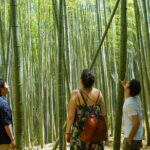


Fushimi Inari-taisha: Torii Gates and Quiet Steps Up the Mountain
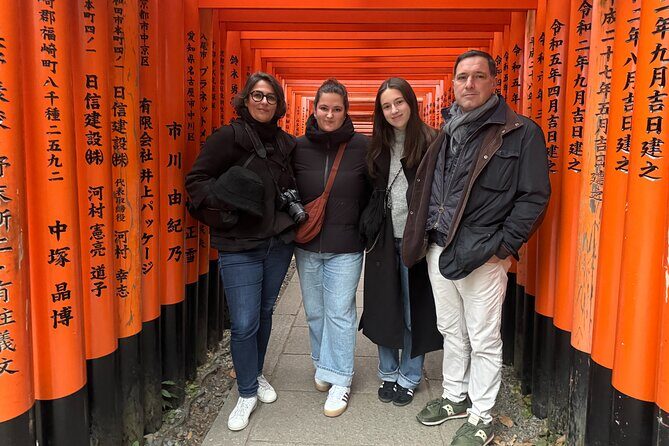
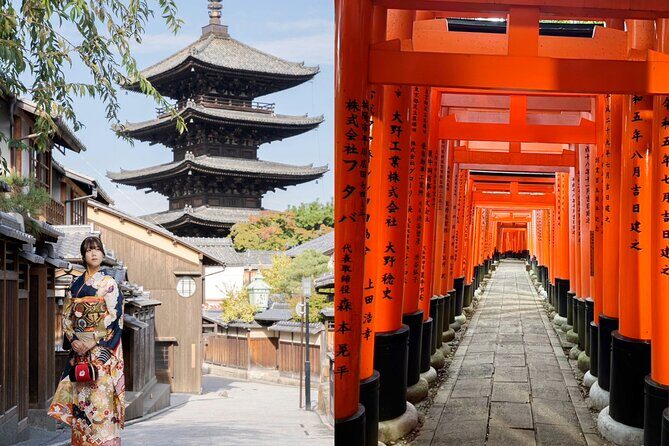
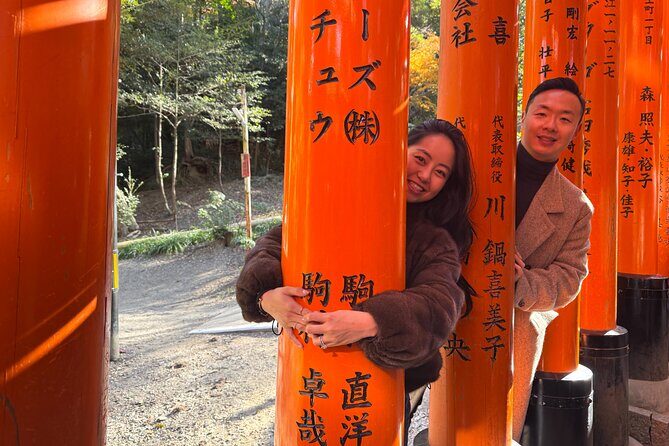
Fushimi Inari is one of Kyoto’s most recognizable shrines, and it’s famous for a simple reason: the thousands of red torii gates form pathways up Mount Inari. You’ll see the shrine dedicated to Inari, associated with rice and prosperity, and you’ll be walking through the famous gate tunnel effect for about an hour.
What makes an early start matter here is how the torii-gate maze feels. Early, you can actually see the depth of the pathways and notice smaller details—like how the gates stack, how the lighting changes, and how people move through space. Later in the day, it’s harder to slow down, and photos often come out with crowds in every frame.
Practical note: this is a lot of uphill walking. Even if the route is scenic, you’ll want decent shoes. You don’t have to race toward the top, but you should be ready for steps and uneven terrain.
Kiyomizu-dera Temple: Plan the Extra Cost and the Big View

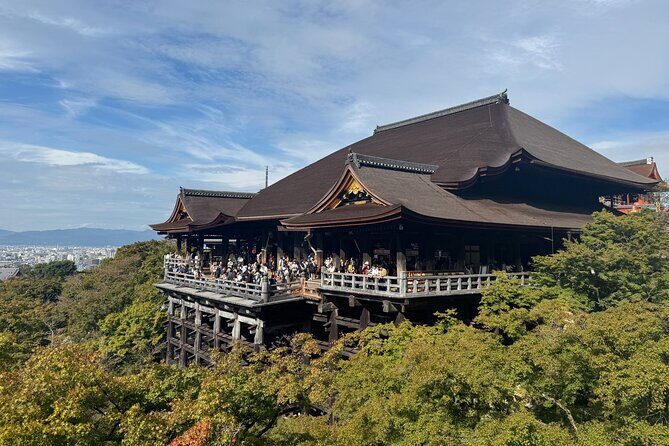
Kiyomizu-dera is the stop most people think about when they picture Kyoto temples. You’ll spend about an hour here, and it includes the iconic hillside setting with city views. The admission is ¥500 per person, and it’s not included in the tour price, so it’s one of the few true “add-ons” you’ll budget for.
Why this is worth factoring in: the ticketed area is part of what makes Kiyomizu-dera feel like a special destination instead of just another viewpoint. This place is popular for a reason, and being here as part of an early route helps you manage the energy of the day.
If you’re hoping for photos, think about timing and patience. The viewpoint areas can get busy, but a guided schedule keeps you from wandering at the wrong moment. Also, the tour includes photo help, which helps a lot when you’re dealing with stairs, railings, and crowds.
Sannenzaka and Ninenzaka: Old Streets, Shops, and Easy Wandering
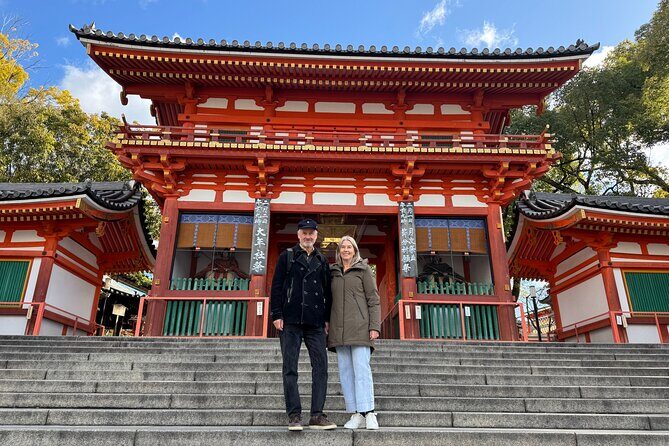
After the temples, you shift into atmosphere mode with Sannenzaka and Ninenzaka—two historic lanes known for stone-paved paths and preserved wooden buildings. This stop is short (about 15 minutes), and that brevity is both a strength and a limitation.
The strength is you get the look and feel fast: traditional street scenery, small shops, snack smells, and that “I’m in old Kyoto” walking vibe. The limitation is you won’t have time to do full browsing or turn it into an hour-long shopping loop.
If you’re the kind of person who likes to browse slowly, treat this as a chance to orient yourself. You can come back later on your own if something catches your eye. For most first-timers, it’s a good taste.
Yasaka Pagoda (Hokanji Temple): A Nail-Less Legend and a Quick Win
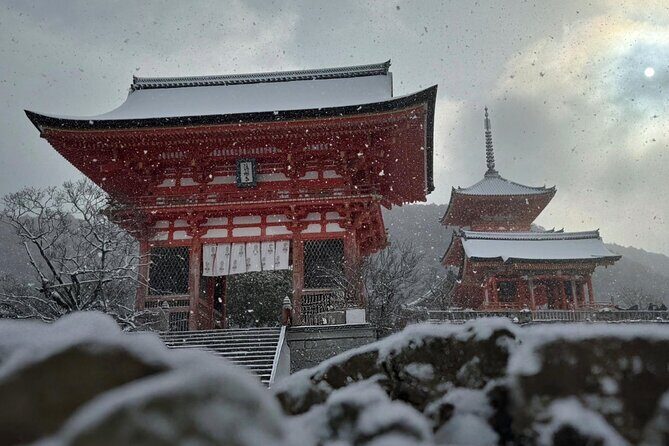
Next comes Yasaka Pagoda, part of Hokanji Temple. You’ll have about 15 minutes here. This stop is known for an old wooden structure that’s said to have been built without nails, and it’s also valued for scale—something you feel even in a short visit.
The practical takeaway: don’t rush this one with tunnel vision for photos. The value here is noticing how the structure sits within the space around it. With a short stop, you get the highlight and the context, then you move on while your energy is still high.
If you love architecture or woodwork, this is one of those “quick but meaningful” stops that won’t waste your morning.






Yasaka Koshin-Do and Yasaka Shrine: Color, Symbols, and the Meaning Behind the Prayers
Two more brief temple/shrine stops follow, each about 15 minutes for Yasaka Koshin-Do, then about 30 minutes for Yasaka Shrine.
Yasaka Koshindo is known for colorful decorations. In Kyoto, many religious spaces are more subdued, so color here makes an immediate visual impression. You’ll also get a sense that each site has a purpose, and that the details aren’t just decoration—they’re part of how people connect to the sacred.
Then you finish at Yasaka Shrine, described as the headquarters of 2,300 related shrines across Japan. This stop is longer (about 30 minutes), which helps because by this point, you’re transitioning from “tour mode” into “linger and absorb” mode.
A smart move: at the end of the day’s sightseeing run, I like having a destination that lets you slow down a bit. Yasaka Shrine gives you that.
Gion: The Geisha District Walk That’s Actually Time-Wise
Gion is Kyoto’s best-known geisha district, and you’ll spend about 15 minutes walking through it. The focus is the traditional streets and old machiya houses, plus preserved teahouse culture.
This is a short stop, so manage expectations. You’re not going to see a full, long-form slice of Gion life in 15 minutes. What you can do is get your bearings. You can understand why the district is famous, spot the types of historic buildings, and soak up the atmosphere without feeling like you’re locked into a long detour.
Also, the tour’s structure matters here. If you arrive mid-morning without a plan, you might spend your time on the wrong blocks. Guided pacing helps you land in the right places while keeping your schedule intact.
Photo Taking That Makes the Morning Worth It
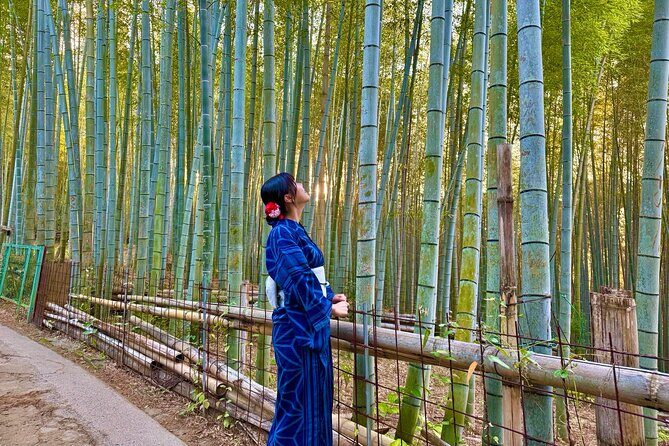
One of the most appreciated parts is that the tour includes professional photos taken during the walk. In practice, this is a big deal in Kyoto’s top sights because:
- Handing your phone to someone awkwardly is not a real plan.
- Many sites have lots of people and complicated angles.
- Lighting changes fast, especially in early hours.
On top of that, guides highlighted in feedback often provide helpful details and a structured way to move and pose, so you actually get usable photos instead of five blurry near-duplicates. I’d treat this as part of your value calculation, not an extra perk.
Price and Value: How $99.10 Really Breaks Down
The tour price is listed at $99.10 per person, and that’s for the guide experience, included photo taking, and the overall route. But two costs matter for budgeting:
- Public transportation fare: ¥390 per person
- Kiyomizu-dera admission: ¥500 per person
Food and drinks aren’t included either, so you should plan a breakfast or a snack stop on your own. The tour’s timing is designed for an early start, which can make food feel optional at first—until you notice you haven’t eaten since sunrise.
So is $99.10 good value? For most first-timers, yes, because you’re paying for three things at once:
- A tight route across major sights
- Meaning and context in English
- Photo assistance when you’d otherwise be stuck DIY-ing
If you’re comfortable using transit on your own and don’t care much about guided context or photos, you could DIY this. But if you want your Kyoto morning to run like a well-timed set list, the math tends to work.
One more note from timing expectations: the tour is listed as 4–5 hours, but some people report a shorter-feeling experience (around 2.5 hours). I’d plan with flexibility. If you’re starting your day with other reservations, keep buffer time.
Logistics That Affect Your Day (More Than You Think)
The meeting point is at Kyoto Station, specifically Kyoto Station Higashishiokoji Kamadonocho, Shimogyo Ward. The tour ends at Yasaka Shrine in the Gion area.
This ending matters. After you wrap, you’re already dropped into a good position for more eastern-hills exploring or casual wandering in the historic district. It’s also a smoother way to transition to lunch since you’re in the area with lots of options.
The tour uses public transportation plus walking, and it asks for moderate physical fitness. Translation: you don’t need to be an athlete, but you should be ready for stairs, uneven paths, and some uphill movement at Fushimi Inari.
It’s also set up as a private tour, meaning only your group participates. That typically leads to fewer “herding cats” moments and easier pacing.
Who This Tour Is Best For
This tour fits best if you:
- Are in Kyoto for the first time and want major sights without decision fatigue
- Prefer an English guide who explains what you’re seeing
- Want photo support so you leave with real memories
- Like early starts and can handle morning walking
It might be less ideal if you:
- Want long, slow museum-style visits (some stops are short)
- Hate uphill walking or stairs
- Plan to spend lots of time shopping on every street (the old lanes and Gion are brief)
For families, it also has a clear advantage: guided explanations and photo moments can keep kids (and teens) engaged more than self-guided wandering.
Should You Book This Kyoto Early Bird English Tour?
Book it if you want a smart, time-efficient morning that covers Kyoto’s big icons with less stress. The early start at Fushimi Inari plus the guided context is a strong combo, and the included professional photo taking is the kind of value that’s hard to replicate on your own.
Skip it (or adjust expectations) if you’re the type who needs hours at each stop. This route is designed to be efficient, not leisurely. In that case, you might prefer a longer, single-site deep plan for Kiyomizu-dera or a slower neighborhood walk day.
FAQ
How long is the Kyoto Early Bird English tour?
The tour duration is listed as about 4 to 5 hours.
What does the tour cost?
The price is $99.10 per person.
What’s included in the price?
A passionate local English-speaking guide and professional photos taken during the tour are included.
What extra costs should I expect?
Public transportation fare is ¥390 per person, and Kiyomizu-dera admission is ¥500 per person. Food and drinks are not included.
Is the tour free at Fushimi Inari?
Admission ticket for Fushimi Inari-taisha Shrine is listed as free.
Where do I meet the guide?
You meet at Kyoto Station Higashishiokoji Kamadonocho, Shimogyo Ward, Kyoto.
Where does the tour end?
The tour ends at Yasaka Shrine in the Gion area, at 625 Gionmachi Kitagawa, Higashiyama Ward, Kyoto.
Is it a walking tour?
Yes. It’s designed as a walking experience with public transportation and plenty of time on foot.
Is this tour private?
Yes, it’s a private tour/activity, and only your group participates.
Is there free cancellation?
Free cancellation is available, and you can cancel up to 24 hours in advance for a full refund.