REVIEW · KYOTO
Kyoto: Gion Magical Night Walking Tour
Book on Viator →Operated by TravelinGood!! · Bookable on Viator
Gion feels different after sunset. This early night walk is timed to help you see Kyoto’s geisha streets before the daytime crush, with a guide who explains geisha culture and etiquette as you wander. I also like how the route mixes famous scenes with calmer corners most groups miss.
The only real heads-up is physical: the walk includes slopes and stairs, so it’s not ideal if your legs or knees aren’t happy with uphill stretches.
In This Review
- Key Things You’ll Notice on This Gion Night Tour
- Why a Kyoto Gion Night Walk Feels Like a New Neighborhood
- Price and Value: What $29.60 Buys You in Kyoto
- Small Group Means Less Noise and More Questions
- Start at Minamiza Theater: Finding Your Way Without Stress
- Stop 1: Gionmachi Minamigawa and How to Greet a Maiko or Geiko
- Stop 2: Yasui-Konpiragu Shrine for Relationship Prayers
- Stop 3: Sannenzaka Ninenzaka for Old Street Atmosphere and Yasaka Pagoda Views
- The WWII Kannon Statue Stop for a Moment of Real Reflection
- A 400-Year-Old Mourning Site: Garden, Tea House, and Bamboo Grove
- Stop 4: Yasaka Shrine, Gion-san, and Luck-Blessing Traditions
- Walking Logistics: Slopes, Stairs, and the Best Shoes You Own
- How This Fits Into Your Kyoto Plan
- What to Expect From the Guide Experience
- Should You Book This Kyoto Gion Magical Night Walking Tour?
- FAQ
- How long is the Kyoto Gion Magical Night Walking Tour?
- What is the price of the tour?
- Where do we meet, and where does the tour end?
- How many people are on the tour?
- Are there entrance fees at the stops?
- What should I do if I see a maiko or geiko?
- What happens if the weather isn’t good?
Key Things You’ll Notice on This Gion Night Tour
- Small-group vibe: capped at a maximum of eight, with a listed maximum of 10 travelers.
- Before-the-crowds timing: you’ll be in Gion while it’s quieter and better lit for photos.
- Geisha etiquette in context: you’ll learn how to behave if you encounter a maiko or geiko.
- A shrine-and-streets mix: lantern-lit spirituality plus old Kyoto lanes like Sannenzaka and Ninenzaka.
- Photo-friendly stops: short pauses built into the route let you capture the night atmosphere.
- A reflective rhythm: the walk includes a WWII memorial stop and other calmer garden moments.
Why a Kyoto Gion Night Walk Feels Like a New Neighborhood
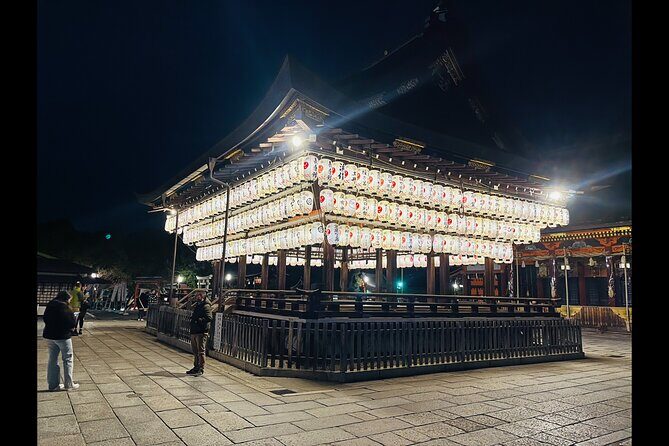
Daytime Gion can feel like a parade route: lots of people, lots of noise, and not much space to actually look at the buildings. This tour aims for the opposite. You go out when streetlights are doing the work, when the lanes look softer, and when the atmosphere in Gion feels more like a neighborhood than a postcard.
What makes it work is the pace and the guiding. The walk is about 1 hour 40 minutes, and the stops are timed so you can actually notice details—signs, lanterns, shrine grounds, and small street turns—without the sensation of being swept along by a crowd. I also like the cultural angle. Your guide doesn’t just point and move on. They explain geisha history, culture, and etiquette, so what you’re seeing has meaning.
You can also read our reviews of more walking tours in Kyoto



Price and Value: What $29.60 Buys You in Kyoto
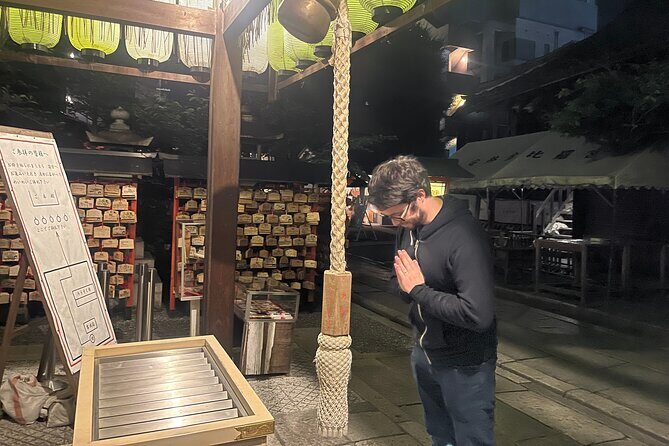
At $29.60 per person for about 1 hour 40 minutes, this isn’t about “one big attraction.” It’s about getting a guided route that stitches together several key corners of Gion and nearby areas—plus the explanations that help it click.
A strong value point here: multiple stops list admission as free. So your money is mainly paying for the guide and the structured walking route (not extra ticket fees piling up). And with the small-group limit, you’re more likely to get real answers to questions instead of hearing only the highlights from far away.
In short: if you want to leave Kyoto with better context for what you saw, and you’d rather pay a modest sum than spend hours just trying to figure out where to go next, this is good value.
Small Group Means Less Noise and More Questions
The tour is described as a small-group tour (maximum eight), and the activity also lists a maximum of 10 travelers. Either way, the goal is the same: a manageable group that doesn’t clog the street.
From the way the tour is talked about, the biggest benefit is the interaction. Guides keep the group moving, but you’re not swallowed by a mass of people. That matters in Gion, where stopping to take a photo, step aside to look at a shrine, or ask a question can be tricky. A smaller group makes those micro-moments easier—and it helps you feel like you’re walking with a local, not just following a conveyor belt.
Start at Minamiza Theater: Finding Your Way Without Stress
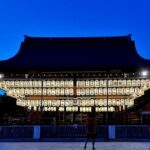
Your meeting point is at Minamiza Theater (2F, west lobby) in Kyoto’s Higashiyama Ward. The full address listed is: 198 Matsutake Minamiza, 2F West Lobby, Kyoto, Higashiyama Ward, Nakanochō, 605-0075.
This is a helpful meeting spot for two reasons:
- It’s in the area you’ll be exploring, so you’re not commuting across town.
- It’s listed as near public transportation, so you can build your day around it without needing a taxi.
You’ll end at 625 Gionmachi Kitagawa, Higashiyama Ward, Kyoto, 605-0073. Ending in Gion is handy if you want to keep walking afterward on your own—especially because the route is designed for evening calm, not frantic sprinting.
Stop 1: Gionmachi Minamigawa and How to Greet a Maiko or Geiko
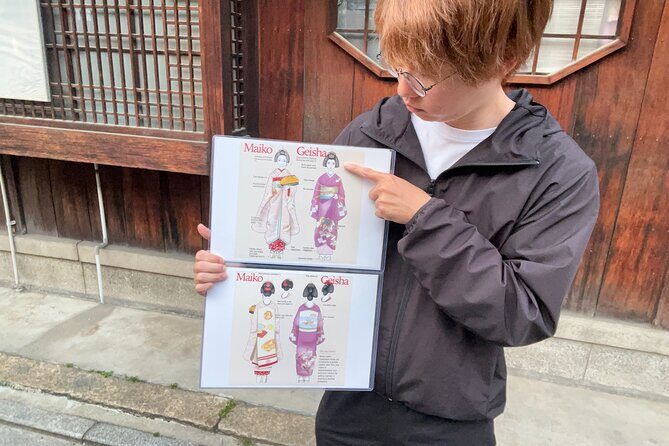
Gionmachi Minamigawa is one of the most famous streets in Kyoto, and your tour starts here (about 10 minutes). This is where you get a real chance to spot a maiko or geiko if you’re lucky.
If you do see one, the etiquette note is simple and worth remembering:
- Greet with a smile.
- Say Konnichiwa.
That guidance is valuable because it keeps you respectful. The streets are narrow, and the people you see are part of living culture, not just characters in a photo shoot. A gentle greeting is exactly the kind of behavior your guide wants you to get right.
What to watch for: look up and across. In Gion, the street experience isn’t only about what’s in front of you. Pay attention to signage, traditional building facades, and the flow of lantern light across the walkway.
You can also read our reviews of more evening experiences in Kyoto


Stop 2: Yasui-Konpiragu Shrine for Relationship Prayers
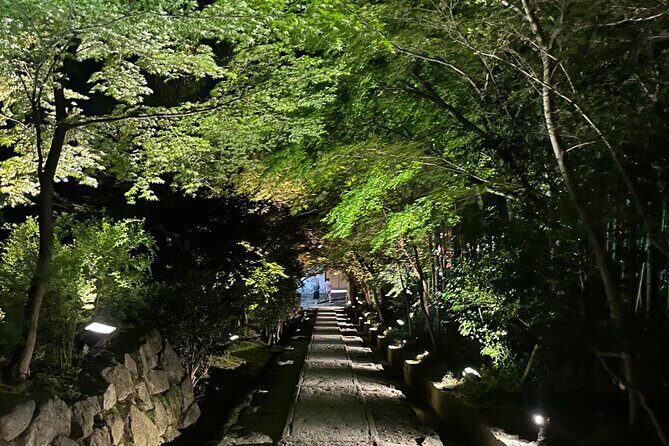
Next is Yasui-Konpiragu (about 10 minutes). This shrine is connected to prayers for meeting people and for cutting off bad relationships.
The tour’s framing is practical: it mentions strengthening bonds for married couples and couples. Even if you’re not praying for romance, the bigger point is learning how local spiritual traditions tie into daily human hopes—connection, stability, and moving past negativity.
How to experience this stop well:
- Take the time to notice the shrine setting at night. Lantern lighting can change the mood fast.
- Listen for what your guide emphasizes about etiquette and respectful behavior in shrine spaces.
If you tend to rush through religious sites, this is a nice moment to slow down.
Stop 3: Sannenzaka Ninenzaka for Old Street Atmosphere and Yasaka Pagoda Views
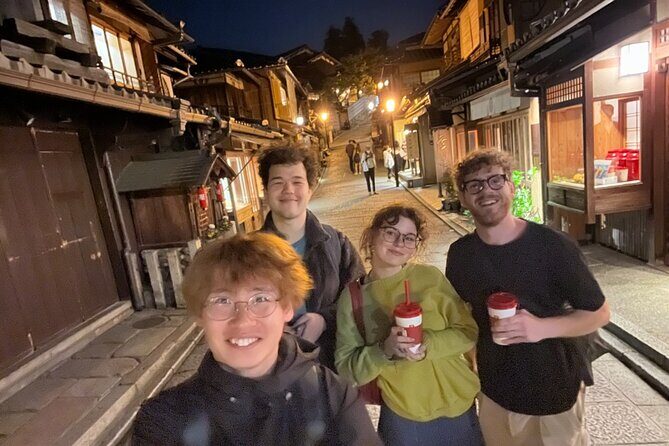
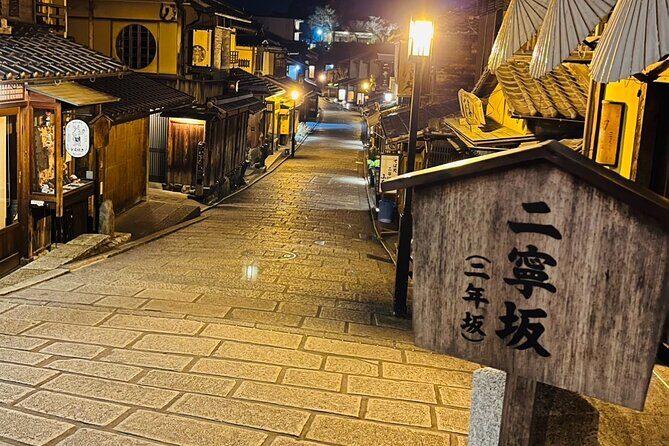
Then you move to Sannenzaka Ninenzaka (about 20 minutes). This is an area that leads near Kiyomizu-dera Temple, and it’s known for traditional Kyoto streetscape.
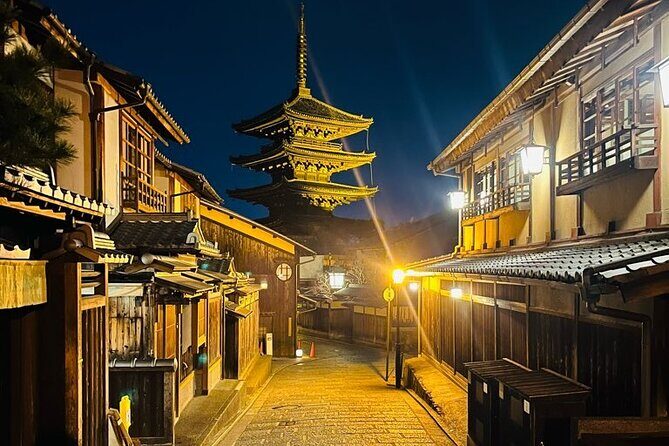
One specific highlight mentioned is Yasaka-no-to (Yasaka Pagoda), a popular view point in the area. At night, those viewpoints feel less pressured. You still get the classic Kyoto scene, but with fewer people pushing for the same angle.
Why I like this stop: it’s a change in rhythm. You go from shrine cues and spiritual context to a street scene where architecture and atmosphere do the storytelling. If you’re a photography person, this is also where the evening light tends to work best.
Small drawback: because this is a traditional slope-and-stair area, your legs will feel it more here than on flat city streets. Wear shoes you can trust.
The WWII Kannon Statue Stop for a Moment of Real Reflection
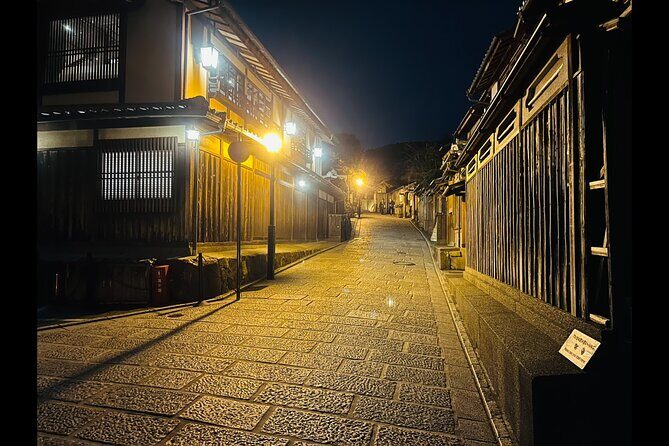
The route includes a stop built in 1955 to pray for the repose of the souls of World War II victims. There’s also a very large statue of Kannon.
This is one of those “wait, we’re here?” moments that changes how the whole walk feels. Gion night tours can sometimes feel purely decorative—pretty streets, pretty lanterns. This stop adds weight. It reminds you that Kyoto’s layers include remembrance and compassion, not only aesthetics.
Even if you don’t speak the language, you can experience the stop through:
- the atmosphere of the memorial space,
- the scale of the statue,
- the silence (nighttime tends to make that more noticeable).
If you need a short mental reset during your trip, this is the place to get it.
A 400-Year-Old Mourning Site: Garden, Tea House, and Bamboo Grove
Another stop in the walk is tied to mourning and loss. It was built about 400 years ago by the wife of a shogun to mourn the death of her husband.
The tour highlights what you can enjoy here:
- the garden,
- a 400-year-old tea ceremony house,
- and a bamboo grove.
This combination is powerful because it slows the whole group down. You go from street-level motion into a calmer environment designed for quiet attention. At night, gardens and bamboo areas can feel especially peaceful—like the city’s volume gets turned down.
Photo note: don’t just shoot. Pause. Bamboo and garden space can look beautiful in images, but the real win is standing there long enough for it to feel calm, not crowded.
Stop 4: Yasaka Shrine, Gion-san, and Luck-Blessing Traditions
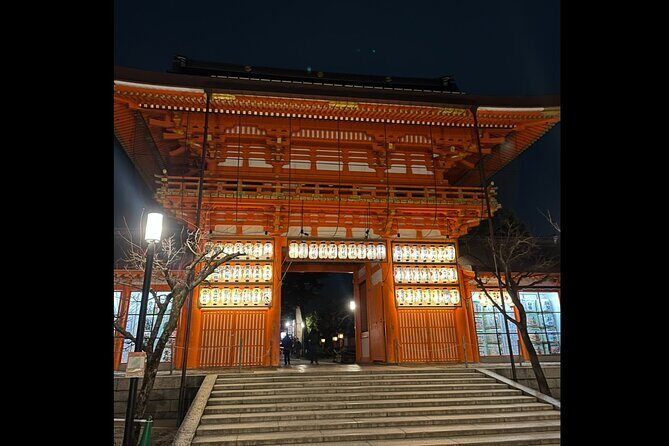
The walk finishes at Yasaka Shrine (about 10 minutes). It’s the head shrine of roughly 2,300 related shrines throughout Japan.
Your guide also connects it to the name Gion-san, with blessings tied to:
- warding off bad luck,
- bringing good luck,
- and promoting beauty.
This is a fitting finale. You’ve spent the evening moving through Gion streets and side-corridors, and now you land at a major spiritual center with a clear theme: luck, protection, and positive change.
How to make the most of it in just 10 minutes:
- Let your guide explain what you’re looking at rather than trying to read everything yourself.
- If you’re the kind of traveler who likes to ask questions, ask them here—this is often where guides can connect themes across the whole walk.
Walking Logistics: Slopes, Stairs, and the Best Shoes You Own
The tour is not recommended for people who aren’t comfortable with walking because of slopes and stairs.
So plan like you’re on an evening mini-trek, not a flat stroll:
- Wear comfortable shoes with traction.
- Keep your pace steady. On hills, the group moves as a single unit.
- If rain shows up, go slower. Even “gentle rain” can make stone and steps slick (and the city gets more humid).
One more tip: since it’s a night walk, bring a light layer. Kyoto evenings can feel cooler than you expect compared with midday.
How This Fits Into Your Kyoto Plan
This tour is ideal if:
- you’ve already done major daytime sights and want something calmer,
- you want geisha culture explained in a way that connects to real streets,
- you like street photography and night lighting,
- you want a guided route that saves you decision fatigue.
It’s also a smart “first Gion night” activity. You’ll get your bearings fast. After this, you’ll understand why certain lanes feel important, and you’ll know what to notice if you return on your own.
Where it may not fit:
- If you have limited mobility or don’t handle stairs well, skip it. The tour itself warns about that.
- If you hate walking uphill, be selective. The vibe is great, but your legs do the work.
What to Expect From the Guide Experience
The guide is a major part of the value here. Across the guidance style described, there’s a pattern: stories at every stop, explanations that turn street scenes into something you understand, and time for photos.
Also, language levels can vary. One person noted an English-learning guide situation where some questions didn’t get answered exactly as expected. If you care about specific details, bring questions and keep them simple. If the guide can’t answer right away, they may still point you toward what matters in the moment.
Should You Book This Kyoto Gion Magical Night Walking Tour?
Book it if you want a structured way to see Gion at night while it’s quieter and more atmospheric, and you like your Kyoto with context—geisha culture, shrine traditions, and the meaning behind what you’re seeing.
Skip it if walking stairs and slopes are hard for you. No matter how good the tour is, it won’t feel good if your body is struggling the whole time.
If your goal is an evening that feels calm, respectful, and genuinely guided for a reasonable price, this is a strong choice. You’ll come away with more than photos. You’ll know what you were looking at.
FAQ
How long is the Kyoto Gion Magical Night Walking Tour?
The tour lasts about 1 hour 40 minutes.
What is the price of the tour?
The price is $29.60 per person.
Where do we meet, and where does the tour end?
You meet at Minamiza Theater, 2F west lobby (198 松竹南座 2F西ロビ), Kyoto 605-0075. The tour ends at 625 Gionmachi Kitagawa, Kyoto 605-0073.
How many people are on the tour?
It’s described as a small-group tour with a maximum of eight, and the activity also lists a maximum of 10 travelers.
Are there entrance fees at the stops?
The listed stops include admission ticket free for the street and shrine/area visits on the route.
What should I do if I see a maiko or geiko?
The tour guidance says to greet with a smile and say Konnichiwa.
What happens if the weather isn’t good?
The experience requires good weather. If it’s canceled due to poor weather, you’ll be offered a different date or a full refund.