REVIEW · TOKYO
Tokyo: Asakusa Sightseeing Tour by Rickshaw
Book on GetYourGuide →Operated by Ebisuya Rickshaw · Bookable on GetYourGuide
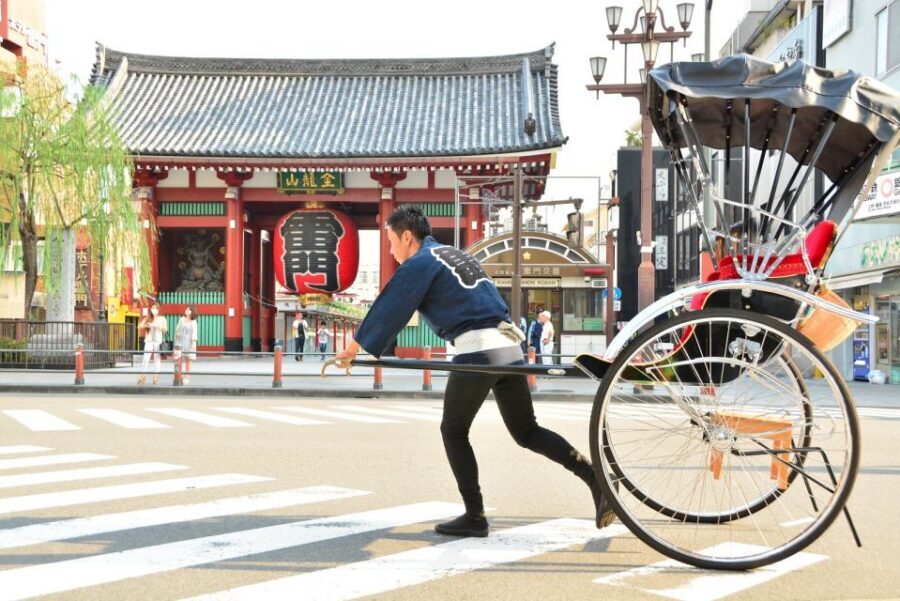
A rickshaw ride through Asakusa turns Tokyo into something small and personal. You’ll glide past famous landmarks like Bentendo Hall and Asakusa Shrine, then cut into the quirky side streets most people miss. It’s a great way to get oriented fast while still feeling like you’re seeing real neighborhoods.
I love the private setup—your guide and driver shape the route and pace—and I also like the mix of big sights plus everyday stops, from Sumida Park to Hanayashiki. One thing to plan for: it’s not a snack-and-sightseeing cruise, and with a small vehicle (74 cm wide), the comfort level depends a lot on how you’re sharing the rickshaw.
If you want a fun, structured introduction to Asakusa—without the stress of navigating cramped streets—this is a strong match. If you’re extremely sensitive to walking ramps or you’re in early pregnancy, you’ll want to think twice.
In This Review
- Key Highlights That Make This Rickshaw Tour Worth It
- Why a Private Rickshaw Ride Makes Asakusa Easier
- Meeting at Asakusa Station Exit #1 (Do This, or You’ll Wander)
- Temple Zone First: Asakusa Shrine and Bentendo Hall Area
- The Ride Through Hanakawado and Everyday Asakusa Streets
- Sumida Park and the Sumida River: Best Timing for Cherry Trees
- Tanuki-doori and Rokku Ward: Quirky Stops With Real Local Texture
- Hanayashiki Photos and Denpoin Street’s Nostalgic Feel
- Price and Time Options: Is $35 Good Value?
- Guides and Drivers: What Makes the Ride Fun (and Not Awkward)
- Comfort, Size, and Rules You Should Know Before You Go
- Rickshaw size and sharing
- Kids
- What’s not allowed
- Weather comfort
- Strollers and wheelchairs
- Pregnancy note
- Customization: How Flexible Is This Tour?
- Should You Book This Asakusa Rickshaw Tour?
- FAQ
- How long is the Asakusa rickshaw sightseeing tour?
- Where is the meeting point?
- What languages are the guides?
- Is this a private tour?
- How many adults can ride per rickshaw?
- Can children ride for free?
- Is the tour wheelchair and stroller friendly?
- Are selfie sticks allowed?
Key Highlights That Make This Rickshaw Tour Worth It
- Temple-and-shrine route with Bentendo Hall in the mix, not just a quick pass-by
- Sumida Park and the Sumida River area, especially good when cherry trees are blooming
- Local street character in Nishi Shitamachi, plus quirky stops like Tanuki-doori
- Rokku Ward stories and stop-offs, including the area’s historic adult theater corridor
- Hanayashiki and Denpoin Street, where the vibe feels grounded and nostalgic
- Optional 3-hour memorial gift (Hello Kitty doll or T-shirt) if you want a longer ride
Why a Private Rickshaw Ride Makes Asakusa Easier
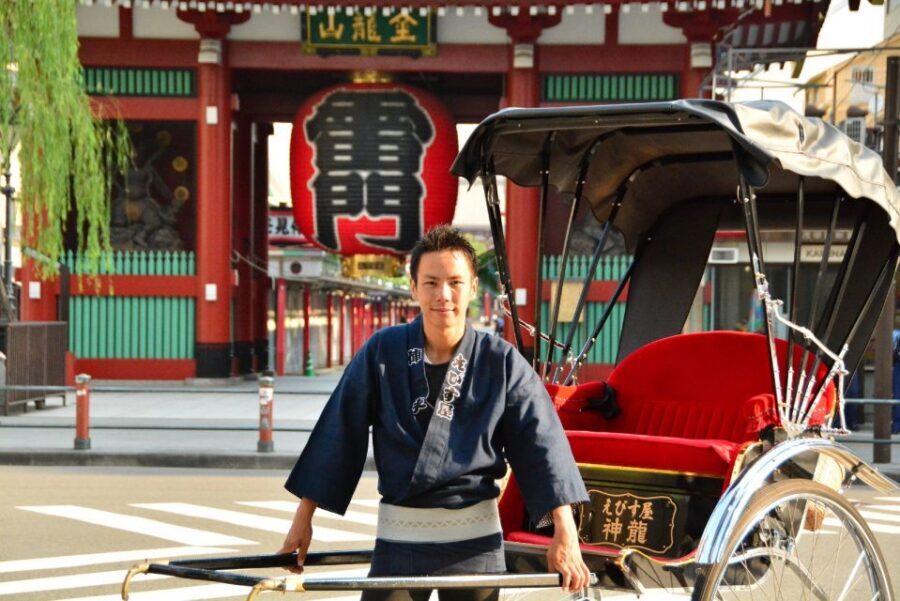
Asakusa can feel like Tokyo’s funhouse: shrines, snacks, souvenir stalls, shoe shops, side streets, and constant motion. A rickshaw tour compresses that chaos into something manageable. You get a guided route, photo breaks, and the kind of local context that helps the place click.
The big win is that it’s private group style, so you’re not stuck waiting for a large crowd to shuffle along. Your guide can set the tempo to your comfort level, and you’re less likely to miss the small details that make this district special—like tiny shrines, old stone steps, and the way back streets connect to the main temple area.
There’s also a psychological benefit. Sitting above street level (but still close to the sidewalk) gives you an in-between perspective: you’re not trapped behind glass, and you’re not sweating your way between points. It’s Tokyo sightseeing with a break built into it.
You can also read our reviews of more tours and experiences in Tokyo.



Meeting at Asakusa Station Exit #1 (Do This, or You’ll Wander)

Show up at the rickshaw stand just outside Exit #1 of Asakusa Station on the Tokyo Metro GINZA line. Important detail: there are multiple stations with the Asakusa name, served by different subway lines. If you land at the wrong one, you’ll waste time before the ride even begins.
From Exit #1, you still need to walk a few meters to the stand. So I’d treat the meeting point as a short walk, not a door-to-door situation.
Practical tip: plan to arrive a bit early, especially if you’re juggling kids or a stroller. You want that buffer before you’re trying to find the exact stand along the street.
Temple Zone First: Asakusa Shrine and Bentendo Hall Area
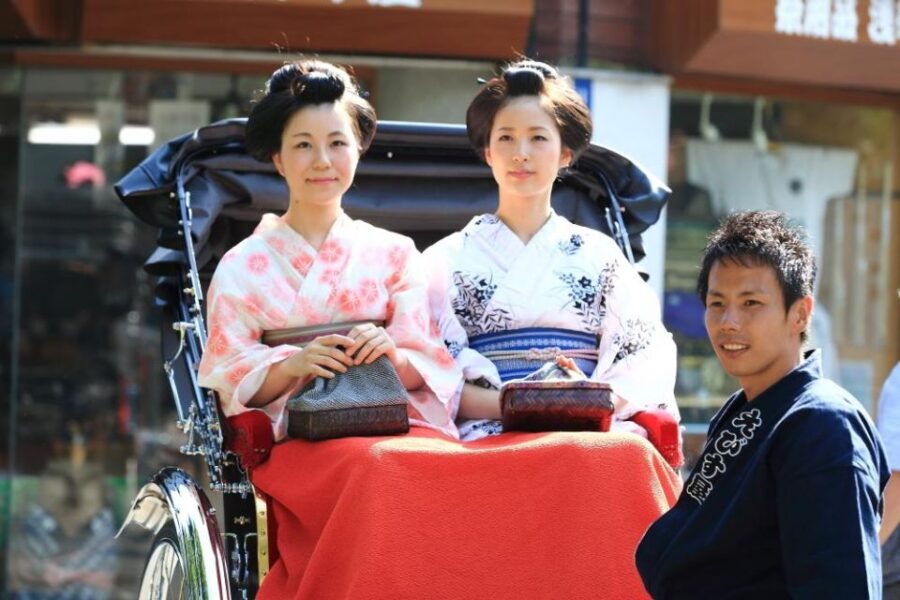
Most rickshaw rides in Asakusa start where the crowds peak, and that’s exactly why it works. You get to see the central sacred zone early, when it’s easier to orient yourself and find your bearings.
Expect to see the Asakusa Shrine area, positioned next to the city’s oldest temple (this neighborhood pairing is part of what makes Asakusa so recognizable). You’ll also pass Bentendo Hall, one of those landmarks you’ll likely hear about in any Asakusa conversation, because it’s visually distinctive and tied into the area’s devotional rhythm.
What you’ll gain here is simple: understanding the logic of the complex. Temple areas in Tokyo aren’t just pretty backdrops—they’re living places with rituals, layout, and unspoken rules for how people move and behave. A good guide helps you notice what you’d otherwise treat as scenery.
One more plus: rickshaws let you glance around without constantly stopping. That matters in dense temple streets, where stopping too long can get awkward.
The Ride Through Hanakawado and Everyday Asakusa Streets
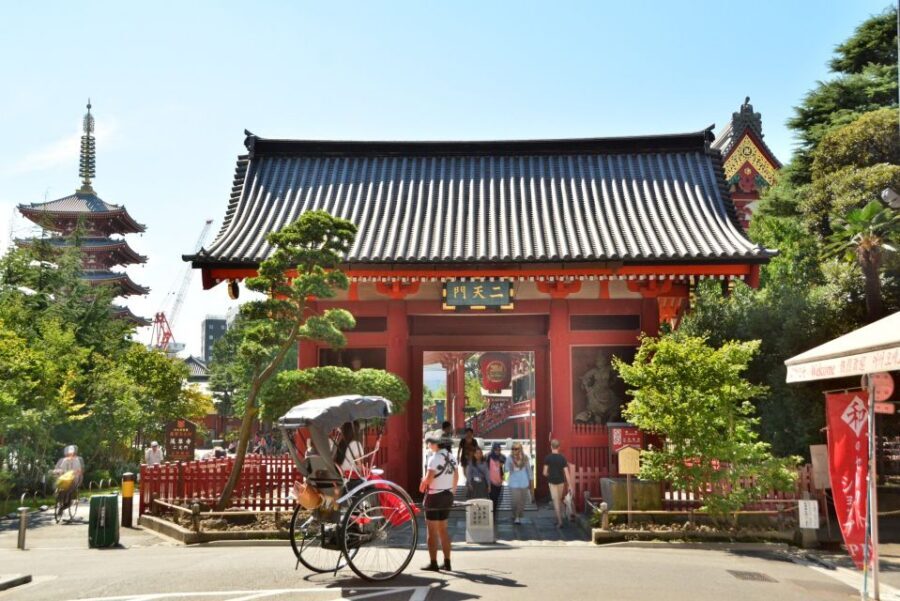
A straight line of famous stops would be nice, but it would miss the point of Asakusa. Your route continues toward the shoe shopping district of Hanakawado and the local streets between attractions.
This part of the tour is about daily Tokyo. You’ll get that contrast: sacred space up front, then storefront life as you travel through the neighborhood. It’s also a practical way to learn what’s where—so later, when you’re walking on your own, you’re not guessing which street leads back to the temple area.
If you like souvenir browsing, this segment is useful even if you don’t buy anything. You’ll see the flow of the district, the storefront density, and the kind of items that keep locals busy.
And because the ride is private, your guide can tailor photo stops so you’re not constantly hopping on and off your seat. That keeps the experience moving without turning into a checklist.
Sumida Park and the Sumida River: Best Timing for Cherry Trees
One of the standout features is that you make it to Sumida Park, close to the Sumida River. The highlights explicitly call out spring—when thousands of cherry trees bloom—so if your travel window lines up, you’re in a great spot.
Even if you’re not there in peak bloom, this area tends to feel like a breather from the tight streets. You’ll get more open views and greenery, and the rickshaw perspective helps you take in the riverfront feel without needing a long walk.
Why this stop matters for your trip: it anchors the whole Asakusa experience. Temples and markets are important, but having one scenic, calmer zone makes the district feel complete instead of packed.
If you’re someone who likes photos, this is a reliable place for images that look less like souvenir snapshots and more like Tokyo-atmosphere.




Tanuki-doori and Rokku Ward: Quirky Stops With Real Local Texture
Asakusa isn’t just temples and shopping. You’ll also run into the quirky side of the district, including Tanuki-doori and areas tied to Rokku Ward.
Tanuki-doori is the kind of street name that signals personality. Expect a playful atmosphere as you move along, and expect your guide to point out what you’d otherwise walk right past. It’s the difference between seeing a street and understanding why it has that specific flavor.
Then comes Rokku Ward, including stops connected to the area’s historic adult theater corridor. The tour description flags this deliberately, which is a good sign: you’ll know what you’re getting before you’re confronted with it. If that kind of neighborhood detail makes you uncomfortable, this is worth taking into account when you choose the length and timing of your ride.
In a city full of polished tourist districts, this kind of stop can be refreshing. It’s a reminder that Asakusa includes layers—serious and casual—coexisting in the same walking world.
Hanayashiki Photos and Denpoin Street’s Nostalgic Feel
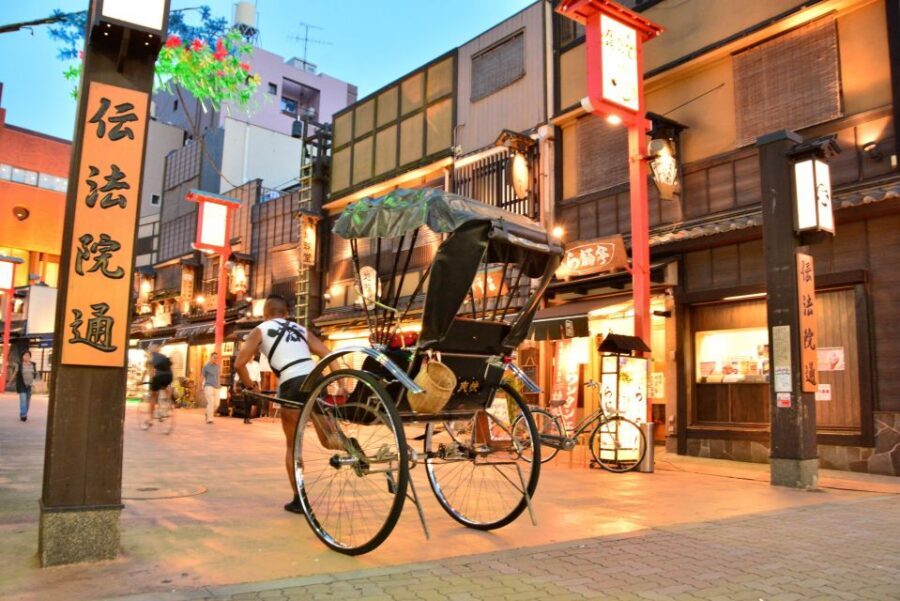
No Asakusa ride feels complete without at least one “wait, that’s still there?” moment. Here, that comes through in two ways: Hanayashiki, noted as the oldest amusement park in Japan, and Denpoin Street, described as having changed little since World War II.
Hanayashiki gives you a fun, photo-friendly contrast to the temple visuals. It’s a different kind of tradition—less ceremonial, more everyday entertainment—and it helps you see the neighborhood’s identity beyond religion and shopping.
Denpoin Street is the more reflective stop. Even if you’re not trying to be solemn, the vibe works. It feels less like a curated attraction and more like a lived-in corridor where time has layered rather than erased.
This segment is also a clever way to structure the last part of your tour. As you head back toward the starting point, you’re not just repeating the route—you’re closing with a street that gives Asakusa that grounded, memory-like feeling.
Price and Time Options: Is $35 Good Value?
$35 per person for a private rickshaw ride with a local guide is not just a novelty price—it’s value if you treat it like a guided orientation and photo session, not just transport.
Here’s how I’d judge the value:
- You’re paying for time you don’t have to plan. The guide handles route flow and makes stops make sense.
- You’re paying for the private factor, especially important in Tokyo, where group schedules can slow you down.
- You’re getting a mix of major sights and local streets, which usually costs more if you do it with multiple tickets or separate walking guides.
Duration matters. You can choose anything from 30 up to 190 minutes, and the longer options typically give you more room for detours into the quirks (and extra photo stops). If you’re deciding between short and long, think about your goal:
- Choose the shorter option if you want a fast hit of highlights and a guide-led feel for the area.
- Choose the longer option if you want to slow down, see more side streets, and get a more layered look at Asakusa.
If you book the 3-hour option, you also get a memorial gift option: a Hello Kitty doll or an original T-shirt. That’s not about collecting stuff—it’s a practical incentive to choose the longer ride if you know you’ll enjoy the experience.
One note: snacks and drinks aren’t included, so plan on buying along the way if you need it.
Guides and Drivers: What Makes the Ride Fun (and Not Awkward)
This kind of tour lives or dies by the human factor. The format here is built for that. You have a live tour guide available in English and Japanese, plus rickshaw drivers who manage the route through tight streets.
In the provided guide feedback, you’ll see names popping up like Shima, Matcha, Masa, Kazu, Yusuke, Nene, and Ryu Buchi—with consistent praise tied to friendliness, humor, and strong English. Many people also specifically call out the guide’s ability to explain small ritual details at quieter temples and to take genuinely helpful photos.
The photos part is worth your attention. If you’ve got someone who can compose shots for you while you’re still moving through the neighborhood, you’ll get better keepsakes than fumbling with your phone at arm’s length.
Also, don’t be surprised if your guide works in light pop-culture references to keep the pace fun—some past rides included anime-related spot connections, which can be a hit if you’re traveling with teens.
Comfort, Size, and Rules You Should Know Before You Go
A few practical details can shape your comfort level.
Rickshaw size and sharing
Each rickshaw is 74 cm wide. There’s also a cap of maximum 2 adults per rickshaw. If you’re deciding between sharing and booking separately, this is one of the few times in Tokyo where splitting up can genuinely improve comfort.
Kids
Children 5 and under can ride for free if they sit on an adult’s lap (one child per adult, max two adults and two children per rickshaw). If a child age 5 wants their own seat, they must book as an adult.
What’s not allowed
Selfie sticks are not allowed. If you use one, leave it at home or plan to keep it out of sight.
Weather comfort
The ride description doesn’t promise heated seats, but at least one cold-weather experience included blankets and heated seat pads. If you’re visiting in winter or bad weather, it’s fair to hope for comfort options, but I’d still bring your own layer just in case.
Strollers and wheelchairs
The activity is wheelchair accessible and stroller friendly, which is a big deal for Asakusa, where sidewalks can vary a lot.
Pregnancy note
Pregnancy is a hard limitation here. The info says pregnant women aren’t suitable, and it also notes it’s not recommended for people in their first 16 weeks. If that applies to you, skip this one and choose a different activity.
Customization: How Flexible Is This Tour?
This ride can be customized according to your interests. That matters because Asakusa has different faces: temples, shopping, riverside views, nostalgic streets, and quirky lanes.
If you care most about:
- Religious sites and ritual details, you’ll want a longer ride so you can linger at calmer spots.
- Photos and landmarks, ask your guide to prioritize the iconic photo zones and less-crowded angles.
- Local neighborhood texture, lean into the side streets like Tanuki-doori and Denpoin Street.
Customization is also why a private rickshaw feels better than a standard bus route. You’re not locked into a rigid script.
Should You Book This Asakusa Rickshaw Tour?
I’d book this if you want three things at once: a guided introduction, classic Asakusa sights, and local street flavor in one smooth experience. The price works best when you treat it as the backbone of your first look at the district.
I’d skip it if you’re traveling with constraints that the ride can’t handle well—especially around pregnancy, or if you know you won’t enjoy a shared vehicle with a strict adult cap and a narrow footprint. Also, if you’re expecting snacks included, plan ahead.
If you’re unsure, a simple decision rule helps:
- If you’re visiting Asakusa for the first time and want to understand it quickly, this is one of the smarter ways to do that.
- If you’re returning to Asakusa and already know exactly where you want to walk, you may prefer a self-guided stroll.
Either way, Asakusa rewards curiosity. This rickshaw tour turns that curiosity into a route with context, photo stops, and a lot less mental load than figuring it all out on foot.
FAQ
How long is the Asakusa rickshaw sightseeing tour?
The duration ranges from 30 to 190 minutes. You’ll need to check availability for specific starting times.
Where is the meeting point?
Meet at the rickshaw stand just outside Exit #1 of Asakusa Station on the Tokyo Metro GINZA line. From there, you’ll walk a few meters along the street to the stand.
What languages are the guides?
The live tour guide is available in English and Japanese.
Is this a private tour?
Yes, it’s listed as a private group experience.
How many adults can ride per rickshaw?
There can be a maximum of 2 adults per rickshaw.
Can children ride for free?
Yes. Children 5 and under can ride for free if they sit on an adult’s lap (one child per adult, max two children per rickshaw when there are two adults).
Is the tour wheelchair and stroller friendly?
Yes. The tour is listed as wheelchair accessible and stroller friendly.
Are selfie sticks allowed?
No. Selfie sticks are not allowed on this activity.