REVIEW · TOKYO
Mt Fuji Top 5 Spots Day Tour: Arakurayama Park,Oshino Hakkai
Book on GetYourGuide →Operated by Tour Easy · Bookable on GetYourGuide
Fuji in ten hours is the real challenge. This day tour strings together the classic Mount Fuji views with calm countryside stops, so you get variety without the stress of trains and connections. I especially like the photo-first pacing at Arakurayama and the peaceful feel of Oshino Hakkai’s springs. The only thing to keep in mind is that Mt Fuji visibility can change fast with weather and timing.
What makes this tour work for most people is how it turns big sights into manageable chunks. You’ll get a climb-and-view moment at Arakurayama, a pagoda photo stop, then a quieter break in town at Hikawa Clock Shop. And yes, you’ll also hit the iconic Lawson photo spot near Kawaguchiko, plus Oishi Park or a seasonal replacement depending on the month.
The main drawback? It’s a long day with a shared group, and the schedule can compress if roads are crowded or Mt Fuji is hiding behind clouds. If you’re the type who needs flexibility, plan to go in with a good attitude (and keep your evening free for possible delays).
In This Review
- Key things you’ll notice
- Fuji in ten hours: how the tour actually feels
- Picking your meeting point in Tokyo (and why early matters)
- Getting to the Fuji area: the long transfer you can’t skip
- Arakurayama Sengen Park and the Fuji framing that makes people stop and stare
- Hikawa Clock Shop: a quieter photo angle before you go “water mode”
- Lunch reality check: planned, but not paid for in the tour price
- Oshino Hakkai: the calm break with Fuji snowmelt springs
- The Lawson Kawaguchiko photo spot: short time, big internet energy
- Oishi Park and herb-season scenery: where Fuji meets gardens
- Autumn and spring swaps: Momiji Corridor or cherry blossoms instead of Oishi Park
- The guide effect: why people keep praising the same things
- Price and value: is $53 worth a full Fuji day?
- What could affect your results: weather, crowds, and return-time reality
- Who this tour suits best (and who should think twice)
- Should you book this Mt Fuji Top 5 Spots Day Tour?
- FAQ
- What is the price and duration?
- Where do you meet for the tour?
- How long is the transfer from Tokyo?
- Which stops are included?
- Is lunch included?
- Are there multilingual guides?
- Is Mount Fuji visibility guaranteed?
- What should I bring?
- Is this a private tour?
- What if I need to cancel?
Key things you’ll notice
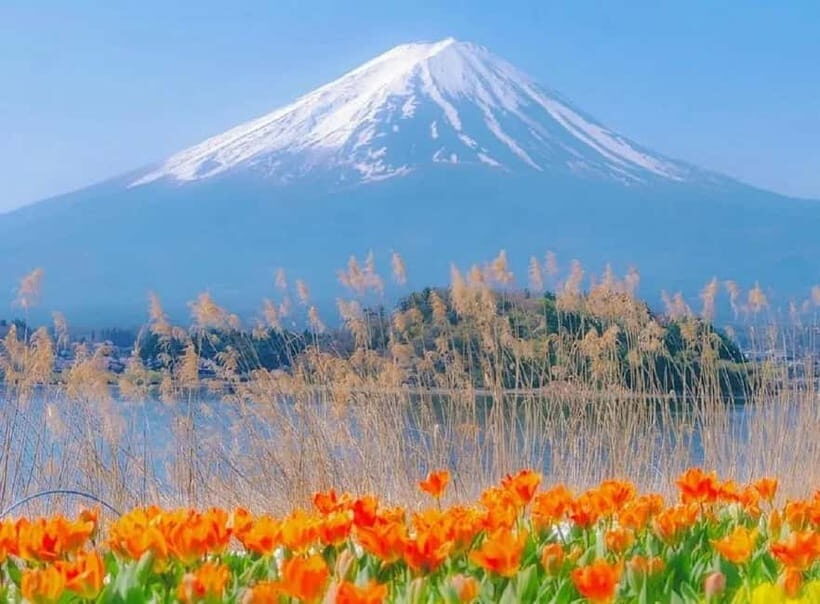
- Arakurayama Park’s 397 steps give you a classic Fuji framing over town and pagoda scenes.
- Oshino Hakkai’s eight springs are clear, serene, and built around Fuji’s snowmelt.
- Lawson at Kawaguchiko is a quick photo stop, but crossing the street needs care.
- Seasonal swaps can replace Oishi Park with the Momiji Corridor (autumn) or cherry blossoms (spring).
- Guide help with timing and photos is a repeated highlight, with staff like Anna, Sawaki, Peter, and Linda often mentioned.
- Comfy shared transport gets strong feedback, including for driver safety and overall smooth flow.
Fuji in ten hours: how the tour actually feels
This is a “top hits” day tour that treats Mt Fuji like the star it is. You’re not trying to conquer an entire region; you’re getting multiple viewpoints so your odds improve when the sky cooperates.
I like that the day is built around short, intentional photo windows instead of long, vague wandering. You’ll move through several recognizable stops, but each one gets enough time for photos, a bit of walking, and getting oriented before you’re on to the next scene.
You can also read our reviews of more tours and experiences in Tokyo.



Picking your meeting point in Tokyo (and why early matters)
You’ll start from one of two Tokyo locations. Choose JR Tokyo Station Marunouchi South Exit at 8:00 AM, or Tokyo Mode Gakuen at 8:30 AM. Arrive about 15 minutes early because the tour doesn’t wait for latecomers.
For you, the practical win here is simplicity: two clear meeting options, then one vehicle taking you out to Fuji. If you want the easiest start, the Tokyo Station option is usually the most straightforward for first-timers moving through the city.
Getting to the Fuji area: the long transfer you can’t skip
Expect about a 2.5-hour transfer from Tokyo into the Mt Fuji/Kawaguchiko area. That’s normal for this route, and it’s part of why you get a full set of stops in one day.
Bring something for the ride: water for sure, and maybe a snack if you’re sensitive to long gaps between meals. The tour includes sightseeing stops, but water and food aren’t included, so your personal planning matters.
Arakurayama Sengen Park and the Fuji framing that makes people stop and stare
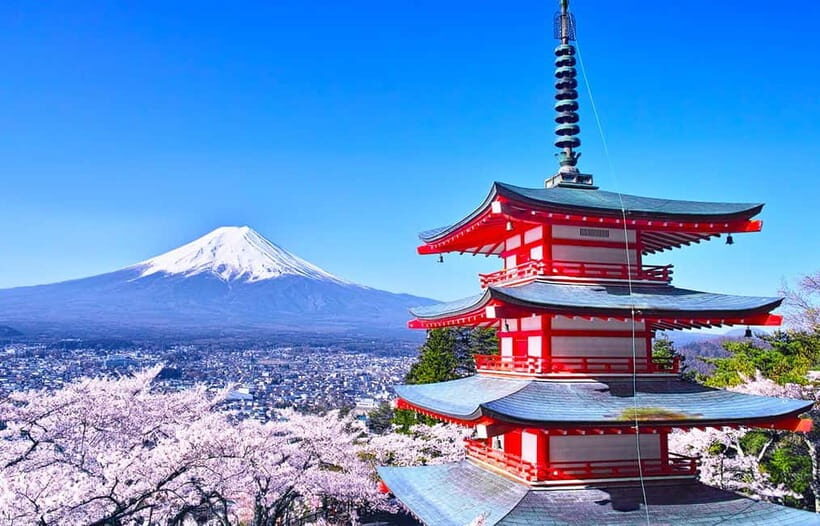
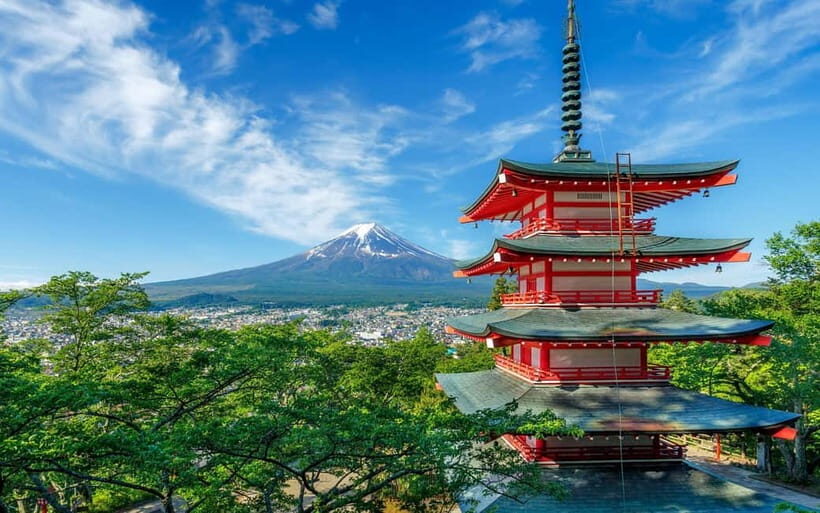
Your day’s first big set piece is Arakurayama Sengen Park (around an hour, with schedule timing that can vary slightly by day). This is one of those spots people put on their list for a reason: you climb toward viewpoints where Mount Fuji looks framed by the season’s colors.
You’ll also tackle the famous 397 steps, which is short on paper but real under Japanese sun or cold air. The reward is the view over Fujiyoshida’s streets and the chance to photograph Fuji with different seasonal backdrops, from cherry blossoms to autumn leaves and winter snow conditions.
Right nearby, you’ll also pass through Arakura Fuji Sengen Shrine with a photo stop and a short walk. Then you’ll move to the Chureito Pagoda area for another quick Fuji photo moment and a bit of free time.
What to watch for: this section is popular. Even with good timing, you’ll likely share space with other photographers. Comfortable shoes help more than you’d think, especially if steps get slick in cooler months.
Hikawa Clock Shop: a quieter photo angle before you go “water mode”
After the pagoda area, the tour heads to Hikawa Clock Shop for about 20 minutes. This stop is fun because it feels less like a landmark queue and more like a photo scavenger moment: you walk the side streets, then look for the Fuji view that pops at the end.
The setup is part of the appeal. You’re exploring a small, calm town area, not just standing at a platform. Visibility depends on weather, so if Fuji is partially hidden, keep your expectations flexible and aim for the cleanest moments.
This is also a good stop for photos where you’re trying to avoid the biggest crowds. You’re still getting a “Fuji with a subject” vibe, just with a different mood than Arakurayama.





Lunch reality check: planned, but not paid for in the tour price
The schedule includes a local restaurant lunch stop (about 45 minutes). But here’s the key: lunch isn’t included in the tour price, and you should budget for it when you’re there.
That means you’ll want cash on hand. Some scenic spots and restaurants can be cash-only, and it’s smart to be ready before you arrive at the lunch area. If you’re picky about meals, go in knowing you’ll be eating what’s available at that stop rather than choosing a restaurant.
Oshino Hakkai: the calm break with Fuji snowmelt springs
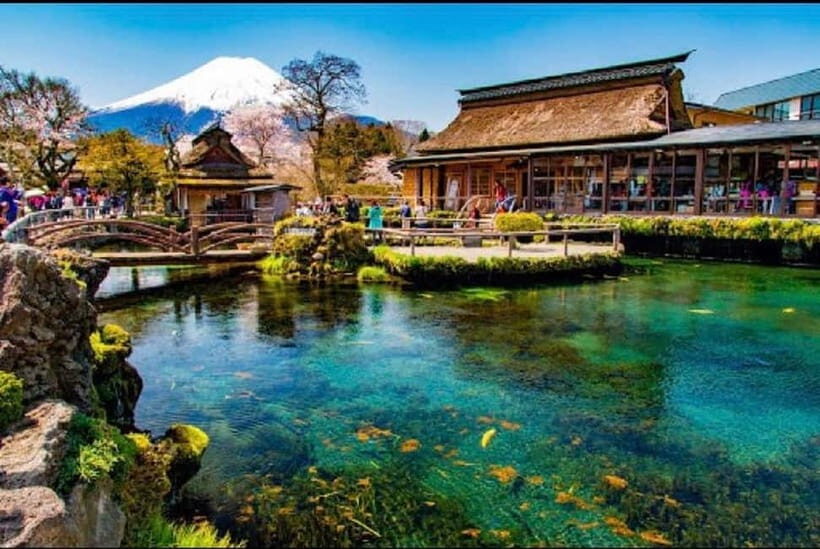
Next comes the day’s most relaxing change of pace: Oshino Hakkai. You’ll spend about 1.5 hours here, with both a guided overview and time to stroll.
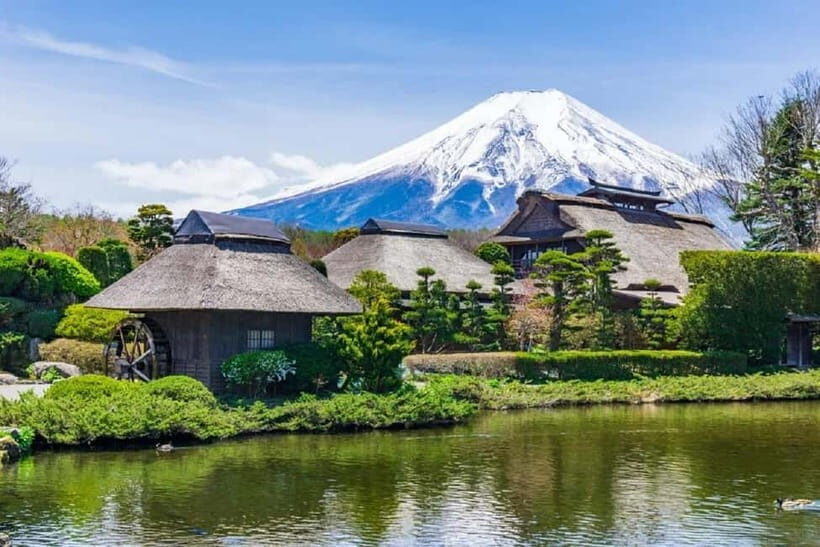
Oshino Hakkai is known for its eight crystal-clear springs, formed by Fuji’s melted snow. The vibe is different from the viewpoint-heavy parts of the day: more quiet walking, water-focused scenery, and photos where you can slow down.
The village atmosphere helps too. It’s not just “see water, move on.” You get enough time to wander around the springs and enjoy the calm without feeling rushed.
A small consideration: since this is outdoors and you’re on a schedule, bring water and dress for temperature swings. Even on clear days, it can feel cooler near spring areas.
The Lawson Kawaguchiko photo spot: short time, big internet energy
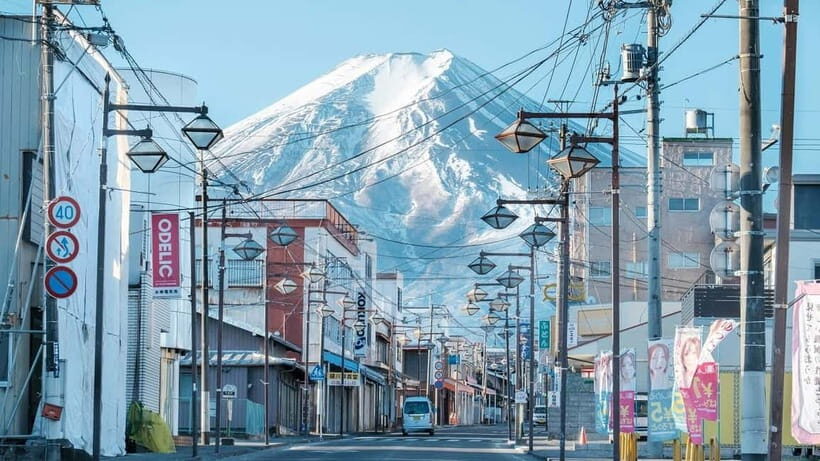
After Oshino Hakkai, you’ll hit the Lawson convenience store by Kawaguchiko Station for a quick photo stop (about 20 minutes). This is one of those famous “only in Japan” photo moments: street scene framing with Fuji in the background.
Do this one with safety first. The tour specifically warns you to be careful crossing the street, because people do trip over timing and traffic when they’re trying to get the shot.
If you’re thinking you’ll take a dozen photos here, you probably can. Just remember it’s a shared group day, so keep your movement tight so everyone stays on plan.
Oishi Park and herb-season scenery: where Fuji meets gardens
Your next major stop is Oishi Park (around 50 minutes), with time for visiting, shopping, and sightseeing. This is where the day starts leaning more into “seasonal scenery” than just architecture and viewpoints.
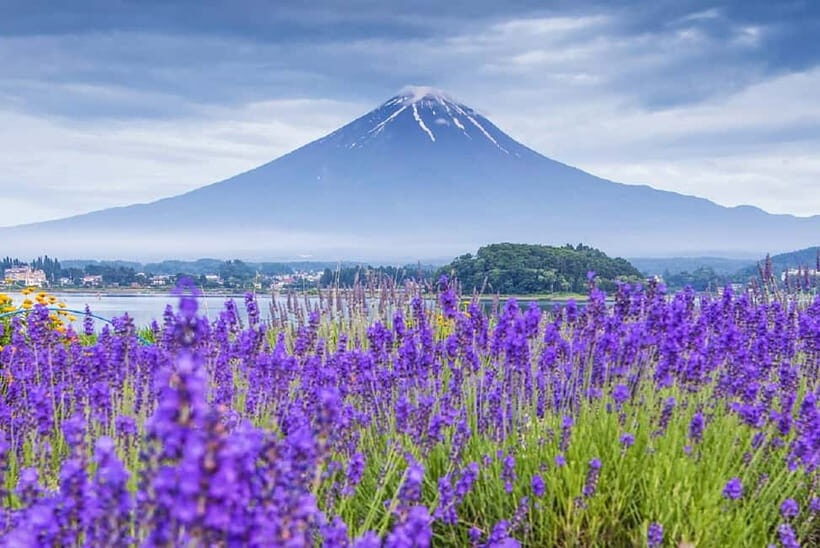
In summer, expect lavender-type fields and color contrasts that make Fuji feel softer around the edges. From June to October, the area ties into the Kawaguchiko Herb Festival, which can add a special seasonal atmosphere if you’re there in those months.
Shopping can be part of your time here too. You’ll find souvenir opportunities, and the tour includes room for you to browse before moving on.
Autumn and spring swaps: Momiji Corridor or cherry blossoms instead of Oishi Park
This tour is smart about seasons. Depending on the time of year, Oishi Park may be replaced so you see the “right” seasonal scene.
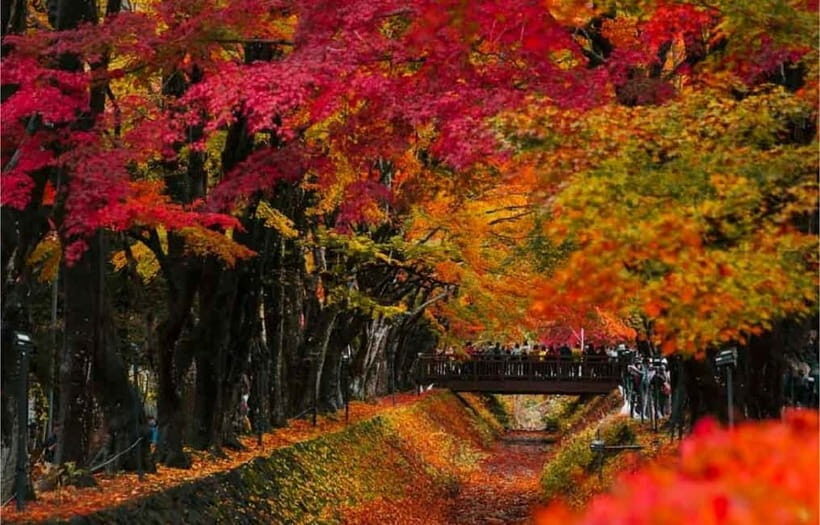
In autumn, the schedule can shift to the Momiji Corridor Lake Kawaguchi photo stop (around 50 minutes) instead of Oishi Park, targeting peak red kochia/maple color periods (the tour notes an autumn window roughly around late October through mid-November). If Fuji is clear, this can be a dramatic color-and-snow-capped pairing.
In spring, there can be a swap to Kawaguchiko Cherry Blossom Festival timing (the provided window is around early-to-mid April), again with the note that it may mean skipping Oishi Park on those dates. That’s your chance for Fuji plus cherry blossoms, which is exactly what many people hope for when they time Japan around spring.
For you, the trick is to check your travel month and accept that “best” changes by season. If your only goal is Oishi Park specifically, you may not always get it on every date.
The guide effect: why people keep praising the same things
A day tour like this lives or dies by timing and group control. That’s where guides tend to get the best marks.
In the feedback, guides such as Anna, Sawaki, Peter, Linda, Sia, Erina, Olivia, Mila, and Karen show up repeatedly for being upbeat, organizing the pace, and helping with photos. You’ll often find mentions of them taking or helping with photo moments, making sure people know where to stand, and keeping the group moving so you don’t waste prime Fuji minutes.
The guides also share a lot of context across stops, which matters because you’ll understand what you’re seeing faster. When you know why a spring is there, why a pagoda is placed where it is, or what you’re looking for at Arakurayama, you take better photos and enjoy the walk more.
Also note: this is a shared group tour with guests from multiple countries. The guide provides Chinese, English, and Japanese explanations, which usually helps everyone follow along without feeling left behind.
Price and value: is $53 worth a full Fuji day?
At about $53 per person for a 10-hour day, this tour can be good value if you’re optimizing for convenience and seeing the headline spots in one go.
Here’s what you’re buying beyond the viewpoints:
- Comfy air-conditioned transport plus driver time
- Multilingual guide support across multiple stops
- Pickup and drop-off at two Tokyo meeting points
- Highway tolls, parking fees, and fuel costs included in the price
- Overtime fees for driver and guide covered if applicable
The only major “not included” items are water and food plus your personal spending. In practice, that means you’ll likely spend a bit more on lunch and drinks, but you control that part.
If you’re traveling solo or as a small group, this pricing can be especially sensible. Hiring taxis for a full-day route to multiple Fuji photo locations would usually cost far more, and trains plus transfers would eat your sightseeing time.
What could affect your results: weather, crowds, and return-time reality
Let’s be honest: the tour is built on a weather-dependent star. Mt Fuji visibility can change with cloud cover and conditions, and the tour flags this directly.
Crowds matter too. Arakurayama and the pagoda area can get busy, especially on weekends and peak season. Even with good planning, you’ll sometimes need to accept “shared space” for the shot.
Traffic can also shift the schedule. The tour notes that in bad weather, traffic, Japanese weekends, or peak seasons, the return time may run late and the schedule can shorten or change. That means your best move is to keep your evening open after pickup drop-off.
Who this tour suits best (and who should think twice)
This is a strong fit if you:
- Want the classic Fuji photo circuit without building routes and schedules yourself
- Like your sightseeing structured, with stop times that help you manage a long day
- Prefer a guide to handle the “where to go and when to stand” part
- Are traveling with a mix of photo styles, from quick phone shots to more careful photography
You might think twice if you:
- Need very flexible timing (this is still a shared group schedule)
- Have strict plans after the tour and can’t handle possible delays
- Feel strongly about seeing only one specific park, since seasons can swap stops like Oishi Park
Should you book this Mt Fuji Top 5 Spots Day Tour?
If you’re first-time in the Fuji region and you want the “most wanted” viewpoints in one day, I think this tour is a smart booking. The combination of Arakurayama’s steps and framing, Oshino Hakkai’s spring calm, and the Lawson + seasonal garden/pagoda mix gives you a full spread that’s hard to duplicate easily on your own.
Book it if your main goal is efficient, photogenic Mt Fuji time with guide support and minimal hassle. Skip it if you only care about one landscape-style photo moment and you need absolute predictability, because weather and crowds control the final outcome.
FAQ
What is the price and duration?
The tour costs about $53 per person and runs for roughly 10 hours.
Where do you meet for the tour?
There are two options: JR Tokyo Station Marunouchi South Exit (8:00 AM) or Tokyo Mode Gakuen (8:30 AM). The exact meeting point can vary by option booked.
How long is the transfer from Tokyo?
The transfer time is listed as about 2.5 hours each way.
Which stops are included?
The tour includes Arakurayama Park/Sengen area (with shrine and pagoda stops), Hikawa Clock Shop, Oshino Hakkai, a Lawson convenience store photo stop near Kawaguchiko, plus Oishi Park or seasonal alternatives like the Momiji Corridor or cherry blossom festival.
Is lunch included?
Lunch is not included in the tour price. There is a lunch stop during the schedule, but you pay for your own meal.
Are there multilingual guides?
Yes. The guide provides explanations in Chinese, English, and Japanese.
Is Mount Fuji visibility guaranteed?
No. Visibility can be affected by weather conditions, and the tour notes this upfront.
What should I bring?
Bring comfortable shoes, water, and cash.
Is this a private tour?
No, it’s a shared group tour with guests from various countries.
What if I need to cancel?
Cancellation is listed as free up to 24 hours in advance for a full refund.