REVIEW · TOKYO
Samurai Training Tokyo Asakusa
Book on Viator →Operated by Cool Japan Entertainment Inc. · Bookable on Viator
Sword training in Asakusa beats any souvenir run. You’ll dress in samurai gear, practice kata-style sword moves like battou and nattou, and finish with a certificate and photo keepsake made for real bragging rights. It’s also set up as a small, private class with hands-on coaching, so you’re not just watching from the side.
The biggest thing to know up front: this isn’t a hard-core dojo boot camp. It’s family-friendly and fast-moving, and you’ll want moderate physical fitness plus an adult for kids (minimum age is 6).
In This Review
- Key Points You’ll Care About
- Why Asakusa Works So Well for Samurai Training
- The One-Hour Schedule: What Actually Happens From Start to Finish
- 1) Gather together and get coached
- 2) Change into the costume
- 3) Belt the sword and take a first photo
- 4) Greetings and the training rhythm
- 5) Practice battou, nattou, and kata
- 6) Sword-fighting practice (simulated battle moves)
- 7) Video recording
- 8) End with greetings and switch out of costume
- 9) Certificate + photo data on an SD card
- 10) You end back at the meeting point
- Sword Basics Without the Confusing Parts
- The Mock Battles and That Big Video Moment
- Keepsakes That Feel Worth the Money
- Price and Value: Is $85.89 a Good Deal?
- Who This Fits Best in Your Travel Plan
- What to Watch Out for Before You Go
- Should You Book Samurai Training Tokyo Asakusa?
- FAQ
- Where does the experience take place?
- How long is Samurai Training Tokyo Asakusa?
- How much does it cost?
- Is this a private experience?
- What’s the minimum age, and can children participate?
- What do you get included with the booking?
- What keepsakes do you receive at the end?
- Do they pick you up from your hotel?
- Can I get a refund if I need to cancel?
- When will I get confirmation of my booking?
Key Points You’ll Care About
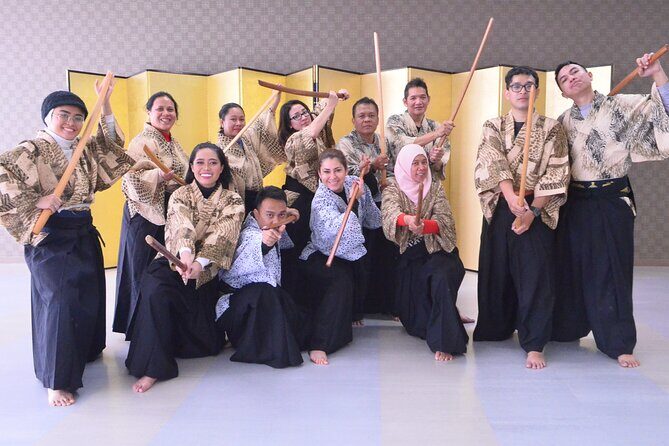
- Small private group: up to 10 people per booking, and only your group trains.
- Full costume + sword practice: you’ll rent samurai outfit pieces and learn sword handling steps.
- Structured basics: pullout and pullback practice (battou and nattou) plus kata and simulated sparring moves.
- You leave with media: photo and video footage, plus a certificate with photo data on an SD card.
- Short timing: about 1 hour, so it fits even tight Tokyo days.
Why Asakusa Works So Well for Samurai Training
Asakusa is one of those Tokyo neighborhoods that feels like it has a steady heartbeat. You’re close to public transportation, and the setting makes the experience feel easy to plug into a normal day, not like you need a half-trip just to get to the “cool thing.”
What I like about this kind of training in Asakusa is the contrast. You’re learning disciplined sword movements in a busy modern city, then ending with photos that look like you stepped into a movie set. Even if you only know a few samurai words, you’ll have a clear sequence to follow, and the instructors guide you through it step by step.
The program is supervised under Ukon Takafuji of the Kenbu Ukon-ryu (Tachibana samurai kenbu school), which gives it real lineage rather than being just a costume-and-camera stunt. In plain terms: you’re not only dressing up. There’s an actual system behind what you practice.
You can also read our reviews of more tours and experiences in Tokyo.



The One-Hour Schedule: What Actually Happens From Start to Finish
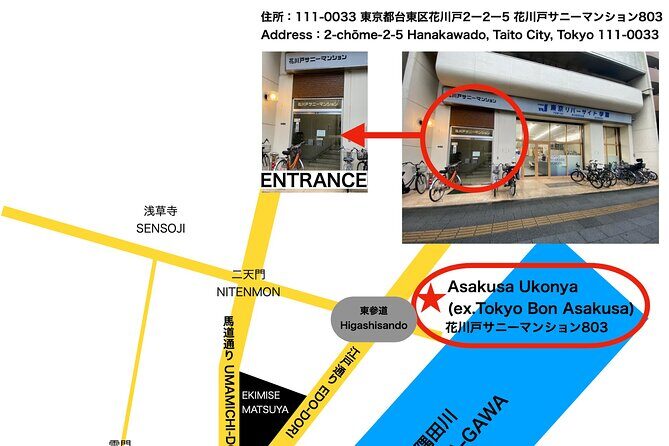
You start at a meeting point in Hanakawado (Taito City), near public transportation. The exact meeting spot and training location can vary based on group size, and you’ll be contacted at least 2 days before to confirm details. Plan to arrive on time, because you’ll be changing quickly and moving into practice without long delays.
Here’s the flow, in human terms:
1) Gather together and get coached
You’ll meet the instructor team, usually with an English-speaking lead (from reviews, Jiro often teaches, with assistants such as Aya). The vibe is friendly and clear, and you’re guided on what to do next.
2) Change into the costume
You’ll rent the samurai outfit and get dressed on-site. This matters more than people expect. When you’re physically in the costume, your posture and movement change, and it becomes easier to learn the sword-handling basics the way the instructor wants you to.
3) Belt the sword and take a first photo
Before training starts, you’ll belt the sword and do a photo moment. Think of it as your “entry scene.” You’ll get used to the weight and feel of being in character, not just holding something for a quick picture.






4) Greetings and the training rhythm
You’ll begin with greetings, then move into the mechanics: what your hands do, where your body stands, and how you keep control through the sequence.
5) Practice battou, nattou, and kata
This is where the class earns its name. Battou means the pull-out action, and nattou is the pull-back. You’re basically training the controlled motion of drawing and returning the katana, plus the kata patterns that connect movement and form.
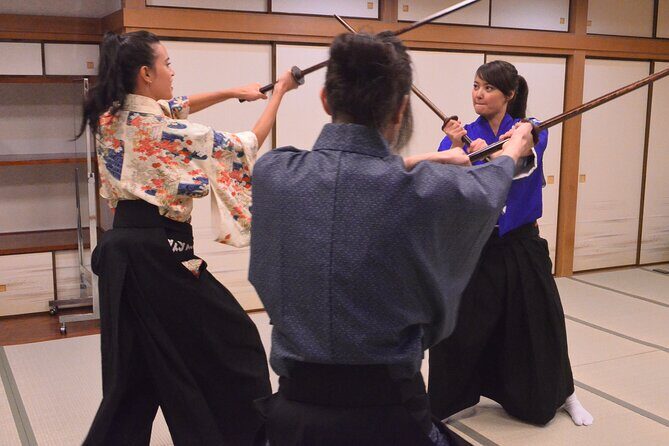
6) Sword-fighting practice (simulated battle moves)
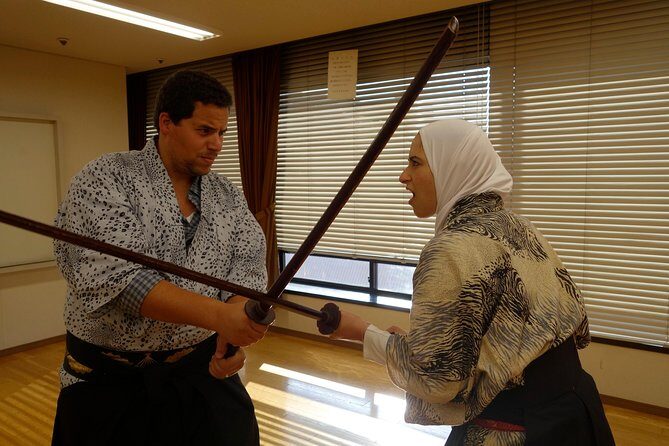
Next comes the fun part: you practice moves that resemble battle scenarios. You’ll likely do it in a controlled, choreographed way, with the instructor pairing you as needed. Reviews mention that kids and adults both get paired up in a way that feels manageable rather than scary.
7) Video recording
They record the training so you can relive it. This is also part of why the class feels efficient: you do your movements once, you get coached, and then the video captures your progress while it’s still fresh.
8) End with greetings and switch out of costume
After the final sequence and greetings, you change clothes again. Then the keepsakes roll in.
9) Certificate + photo data on an SD card
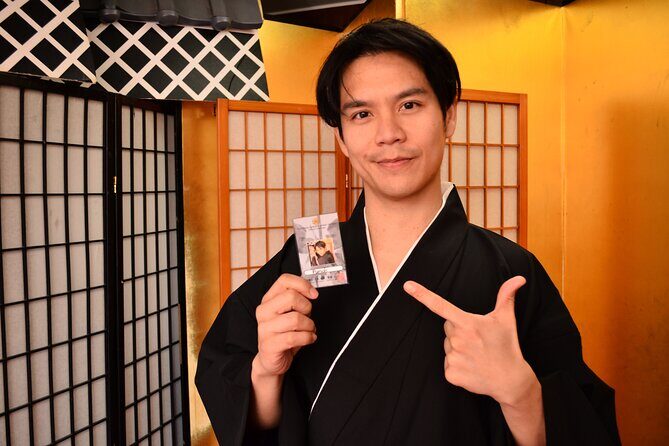
You’ll receive a certificate of recognition with your photo. You also get photo data on an SD card plus a photo of your face. (Some guests described getting it on a memory chip or a pen-drive style setup, but the official feature is photo/video footage delivered via storage.) Either way, it’s the kind of souvenir you can actually use later, not just a printed snapshot.
10) You end back at the meeting point
The activity finishes where you started. No extra wandering, no complicated transfers.
Sword Basics Without the Confusing Parts
If you’ve ever watched martial arts demos and thought, I have no idea what they’re doing, you’ll appreciate how this class teaches the fundamentals.
Battou and nattou aren’t taught as mystic sword arts. They’re taught as repeatable actions: controlled draw, controlled return. That structure is great for families because kids can “get” the pattern quickly, and adults feel productive instead of awkward.
Then comes kata—a sequence of movements that links posture, timing, and intent. You’re not being asked to perform like a trained swordsman. You’re learning how the pieces fit together so you can follow along and move safely.
One more practical note: the experience is described as having “real swords” or full-size katana handling in demonstrations in reviews. That’s exactly why the instructor’s coaching matters. Watch for the safety cues early in the session, and don’t rush your own draw just because you’re excited. The class is designed to be fun, not dangerous.
The Mock Battles and That Big Video Moment
This experience isn’t only about technique. It’s also designed for the moment when you and your partner look at each other, step into a choreographed exchange, and do the little “samurai battle” sequence for the camera.
Here’s why that part is valuable: it turns practice into story. A lot of travel activities show you something. This one helps you be in it. The video recording makes the training feel like an achievement you can share later, and it gives you proof you actually did the sword basics, not just watched.
In reviews, people specifically call out the way instructors were patient with kids and made them comfortable during simulated combat. That’s a big deal if you’re traveling with children, because comfort affects everything: focus, safety, and how much your kid enjoys trying again.
Keepsakes That Feel Worth the Money
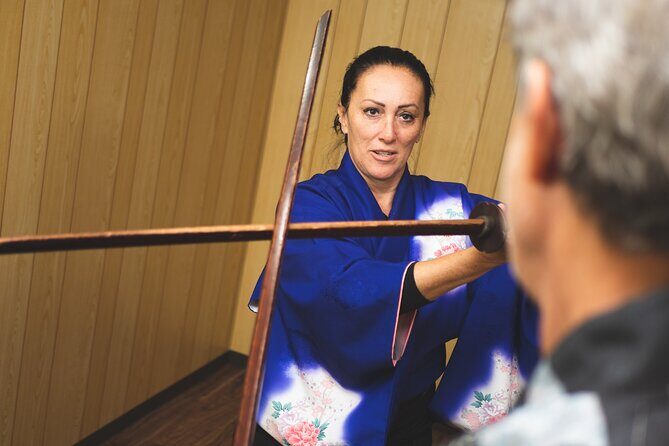
Let’s talk souvenirs. In Tokyo, it’s easy to buy something pretty and forget it in a drawer. This experience gives you keepsakes that connect to the activity itself.
You get:
- Photo and video footage from the session
- A certificate of recognition with your photo
- Photo data on an SD card plus a photo of your face
I also like that the keepsakes support both big-screen sharing and personal remembering. You can show the video at home, send the photos to family, and keep the certificate like a travel passport stamp.
And if you’re the kind of person who usually takes photos for everyone else, this is a relief. You aren’t stuck behind your camera all hour.
Price and Value: Is $85.89 a Good Deal?
At about $85.89 per person for roughly 1 hour, you’re paying for several combined things: a private class setup, a costume rental, an instructor team, and professional photos/video delivered after.
If you compare it to separately booking a costume session, a guided photo shoot, and an activity, it can start to look reasonable. Here, the “value” isn’t only the sword. It’s the whole package:
- You practice actual actions (draw, return, form)
- You get recorded (video + pro photo work)
- You leave with a certificate and digital files
It’s also booked fairly far in advance on average (around 48 days), which usually suggests it’s a popular slot. If you want one of the better times, don’t wait until the last week.
Would I call it cheap? No. But for families and couples who want one memorable, hands-on activity that produces lasting keepsakes, it’s priced in the sensible range for Tokyo.
Who This Fits Best in Your Travel Plan
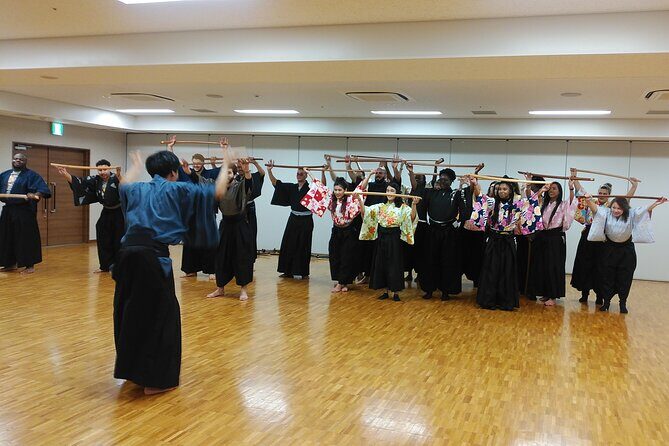
This class is especially well suited for:
- Families with kids (minimum age is 6, and kids must have an adult)
- Couples who want a shared activity and photos that aren’t generic
- Older kids and teens who like performance and want something active, not only sightseeing
- Adults who enjoy learning a skill briefly, then taking the story home on video
You don’t need martial arts experience. The training is structured for beginners, and instructors adjust to the group.
That said, if you’re hunting for a severe, sweat-heavy dojo day, you might feel like the pacing is lighter than what you expect. The class is meant to be fun, safe, and finished within about an hour.
What to Watch Out for Before You Go
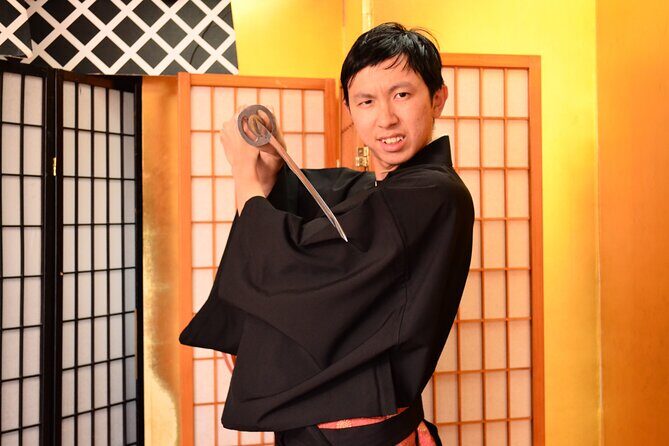
A few practical considerations will help your experience go smoothly:
- No hotel pickup: you’ll need to get to the meeting area yourself.
- Meeting details can vary by group size: confirm the location message you’ll receive at least 2 days prior.
- Moderate physical fitness: sword movement and standing practice mean you’ll be using your body, even if it’s not extreme training.
- Minimum age 6, adult required for children: plan around that rule if you’re traveling with a mixed-age group.
- Private means private: it’s not mixed with strangers; it’s your booking’s group only (max 10 people).
If you’re the parent in the group, the good news is that multiple reviews praise the instructors for making kids comfortable and pairing them in a way that feels appropriate. If you’re nervous about your child trying the sword motion, that reassurance matters.
Should You Book Samurai Training Tokyo Asakusa?
Book it if you want an hour of hands-on fun with real coaching, a costume moment that doesn’t feel silly, and photo/video keepsakes you’ll actually use later. The structure (greetings → costume → draw/return practice → kata → simulated battle → recorded results → certificate) keeps the class moving and makes it easy for kids and first-timers to follow.
Skip or rethink it if you:
- want a full martial arts workout,
- need door-to-door pickup from your hotel,
- or don’t want to participate in a moderate physical activity.
If you’re visiting Asakusa and want one activity that feels special, not just another photo stop, this is a strong choice.
FAQ
Where does the experience take place?
It’s in Tokyo’s Asakusa area. The exact meeting point and training location can vary depending on the number of participants, and you’ll be contacted at least 2 days prior with the updated details.
How long is Samurai Training Tokyo Asakusa?
The class is about 1 hour (approx.).
How much does it cost?
The price is $85.89 per person.
Is this a private experience?
Yes. It’s a private tour/activity, and only your group participates. There is a maximum of 10 people per booking.
What’s the minimum age, and can children participate?
The minimum age is 6 years, and children must be accompanied by an adult.
What do you get included with the booking?
Included items are a local instructor, rental costume, and picture and video footage. At the end you also receive a certificate of recognition with photo data.
What keepsakes do you receive at the end?
You’ll get a certificate of recognition with your photo. You’ll also receive photo data (on an SD card) and a photo of your face.
Do they pick you up from your hotel?
No. Hotel pickup and drop-off are not included.
Can I get a refund if I need to cancel?
You can cancel up to 6 days in advance for a full refund. Refund amounts change depending on how close you cancel to the start time.
When will I get confirmation of my booking?
Confirmation is received within 48 hours of booking, subject to availability.