REVIEW · TOKYO
Popular Sushi Making Class near Tokyo Tower
Book on Viator →Operated by SUSHI GARYU · Bookable on Viator
Tokyo Tower and sushi, both in one hour. This Higashiazabu class near the tower teaches you sushi basics in English and then has you eat what you make.
What I like most is how practical it feels: you get hands-on coaching, a simple process you can repeat later, and a good amount of fresh sushi at the end. One watch-out: if you miss bits of English during the step-by-step assembly (or the pacing feels quick), it can take effort to keep up.
In This Review
- Key points worth knowing
- A sushi class that fits Tokyo without feeling like a detour
- Higashiazabu meeting point and the 1.5-hour rhythm
- Tokyo Tower area stops that pair well with sushi time
- Tokyo Tower stop: your anchor point
- Zojo-ji and Shiba Park: calmer stops between big sights
- Azabujuban and Azabudai Hills: neighborhoods plus a modern Tokyo hit
- Hamarikyu Wharf: a water-area change of pace
- Tokyo City View Observation Deck, National Art Center, and Roppongi: big-city culture mode
- Inside the sushi class: rice, assembly, and English coaching
- You’ll learn how sushi actually gets built
- Step-by-step support with real names
- The sushi you eat: fresh ingredients and a satisfying portion
- A practical tip: ask for more rice if you want it
- Costumes, photos, and the fun that helps the lesson stick
- Price and value: what $87.55 really buys you
- Dietary needs and allergies: how to get the right setup
- Who this suits best (and where you might want a backup plan)
- Should you book this sushi making class near Tokyo Tower?
- FAQ
- FAQ
- How long is the sushi-making experience?
- Where does the class meet?
- Is the class taught in English?
- Is there a limit on group size?
- Can I request vegetarian, vegan, or gluten-free options?
- Do you need to tell them about allergies?
- Is the class appropriate for children?
- Can I cancel for a full refund?
Key points worth knowing
- Small group size: capped at 14 travelers, and you may be seated with other customers depending on the day
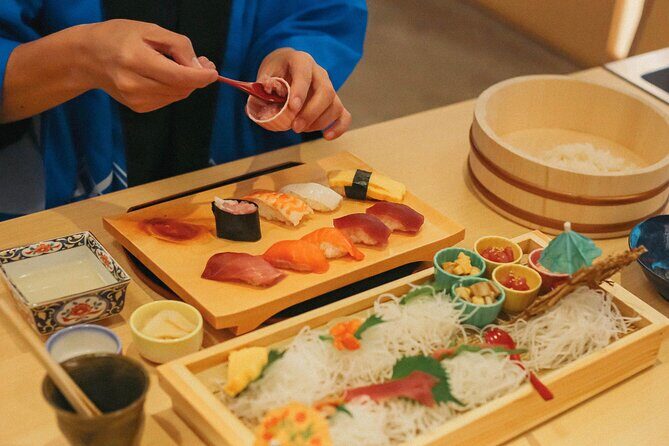
- Make-and-eat payoff: you craft sushi and then eat it as part of the class
- English teaching with support: chefs/instructors demonstrate and explain in English
- Photo-friendly add-ons: kimono-style dressing up and picture moments, often with a video/photo setup
- Dietary options with advance notice: vegetarian, vegan, and gluten-free are available if you message ahead
- Tokyo Tower proximity: it’s a convenient base for pairing your sushi lesson with tower views
A sushi class that fits Tokyo without feeling like a detour
If you only have a short window near Tokyo Tower, this kind of class is a smart move. You’re not just watching someone else cook. You’re learning how the rice gets built, how the filling gets placed, and how sushi comes together as an actual craft.
At Higashiazabu, the location matters. You can pair the class with Tokyo Tower area sightseeing before or after, and the whole day stays in one part of town. The course runs about 1 hour 30 minutes, so it’s not a half-day commitment that steamrolls your itinerary.
A few more Tokyo tours and experiences worth a look

Higashiazabu meeting point and the 1.5-hour rhythm
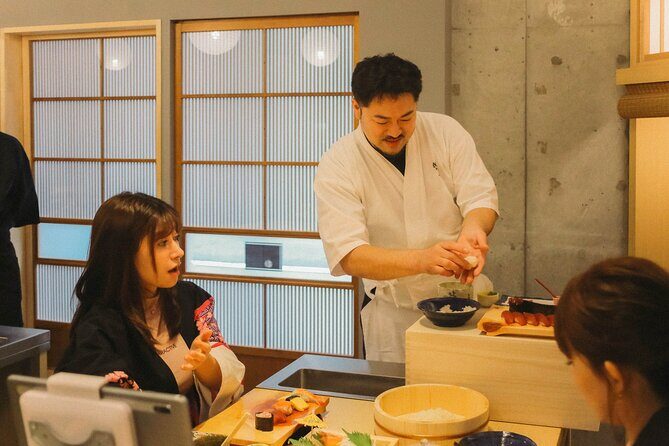
You meet at 1-chōme-6-8 Higashiazabu, Minato City. From there, the experience follows a tight loop: instruction, hands-on practice, then eating what you made. That pace is part of the value. You’re not waiting around for long lectures.
The class also isn’t just one person working while you watch. You generally sit down to work and assemble your own sushi pieces, with an instructor demonstrating and helpers on hand. Several reviews call out how clearly staff walk people through the steps, and how much easier it feels because everything is set up for beginners.
One practical note: some sessions can include other customers at your table area if it’s busy. That’s not a dealbreaker, but it can affect your sense of space if you want a very private setup.
Tokyo Tower area stops that pair well with sushi time
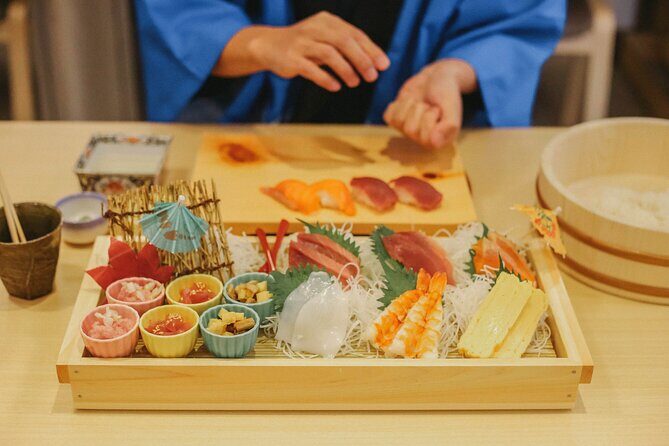
This outing threads through some of the most recognizable Tokyo spots near the Minato side. Even if you’re here mainly for sushi, these stops help you turn a cooking class into a real Tokyo “day.”
Here’s how the route plays out at a glance, and why each stop makes sense.
Tokyo Tower stop: your anchor point
You start at Tokyo Tower. Even if you don’t plan a long visit, having the tower as your anchor makes everything feel easier. You can use it like a landmark for your day, and if you time things later, you may catch the tower’s night look, which is a common reason people plan this area.
Zojo-ji and Shiba Park: calmer stops between big sights
Next comes a Zojo-ji stop, followed by Shiba Park. These give your day a breather between louder, more modern Tokyo scenes. You’re still in the same neighborhood zone, so you’re not burning time hopping across the city.
Even if you’re not spending ages here, short stops help break up the day so you don’t feel like your only activity is standing in lines.





Azabujuban and Azabudai Hills: neighborhoods plus a modern Tokyo hit
You continue through Azabujuban, then move toward TeamLab Borderless Tokyo at Azabudai Hills and Azabudai Hills itself. This is where the day gets more “Tokyo now.” TeamLab-style experiences are popular for a reason: they’re visual, atmospheric, and easy to enjoy even if you’re not a museum person.
Then you still have the option to keep moving through Azabudai Hills without making it your entire plan.
Hamarikyu Wharf: a water-area change of pace
After that, you hit Hamarikyu Wharf. A wharf stop can be a welcome shift from streets and crowds. It’s the kind of pause that helps your legs, your eyes, and your appetite.
If you’re going hungry (and you probably should), this kind of stop helps set you up for the “eat what you made” finale.
Tokyo City View Observation Deck, National Art Center, and Roppongi: big-city culture mode
The route also includes Tokyo City View Observation Deck (linked to Roppongi Hills), The National Art Center, Tokyo, and Roppongi. These are good markers for “we’re doing Tokyo” energy: views, art spaces, and a lively district.
The key is pacing. If you only have time for quick looks at each stop, that’s still enough. You’re building context for where you are, not trying to do everything like a sprint.
Inside the sushi class: rice, assembly, and English coaching
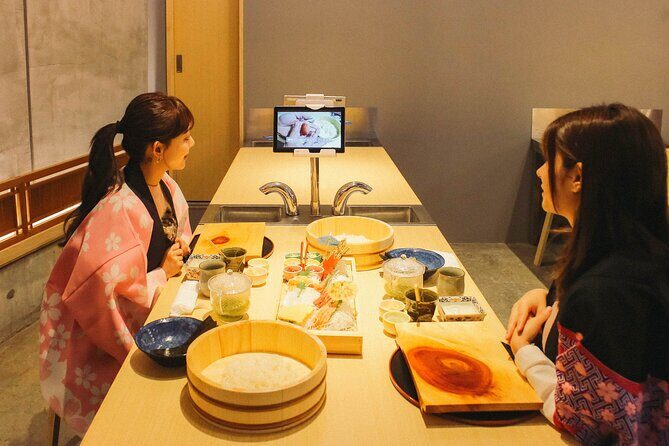
The heart of this experience is the sushi lesson in Higashiazabu. A Japanese sushi chef teaches you in English, and you practice the steps as you go.
You’ll learn how sushi actually gets built
What people love here is not just the final result, but the how. Reviews highlight learning the right way to roll the rice and place fish properly. That’s the skill that pays off later when you’re at a sushi restaurant and trying to choose what to order.
You may also watch a short video instruction right beside your seat. This helps because it gives you a second channel of information when you’re hands-on. A couple reviews describe it as a quick screen-based lesson, then straight into rolling.
Step-by-step support with real names
Instructors vary by day, but specific instructors were mentioned in reviews, including Keiko, Yuki, and Mickie. The common thread is that staff explain clearly and stay patient while you assemble.
Even if you’re a total beginner, the process is set up so you’re not stuck guessing. The space is described as clean and well organized, which matters because sushi rice is picky. If your setup is messy, your rice work gets stressful fast.
The sushi you eat: fresh ingredients and a satisfying portion
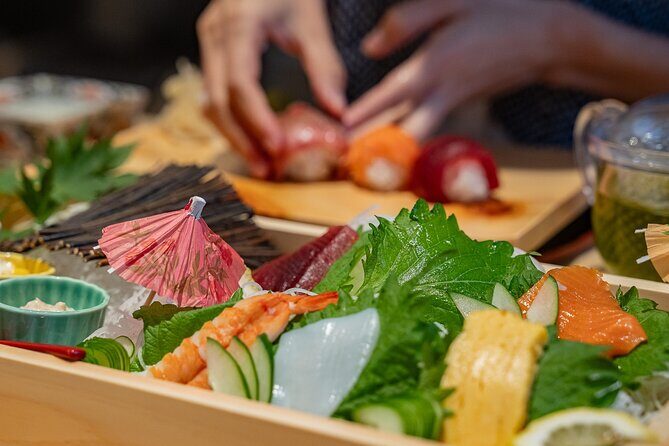
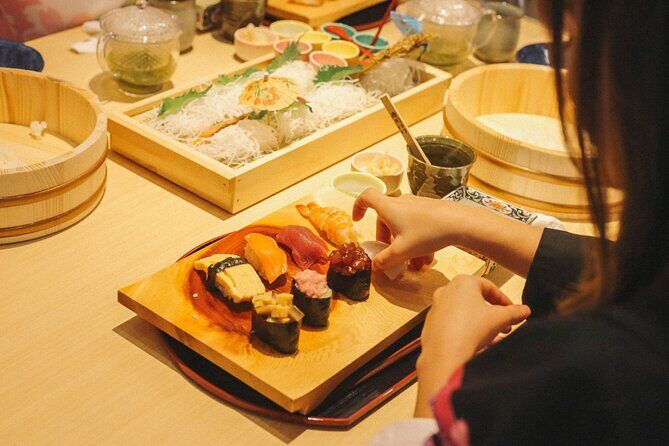
This is a make-and-eat class, so you’re not leaving still hungry. You’ll eat your hand-made sushi after crafting it, and reviews consistently describe the ingredients as fresh and enjoyable.
The number of pieces is described a bit differently across classes, but you can generally expect around 8 to 12 pieces of sushi, plus a feeling of a complete meal-stop. People also note it’s enough to satisfy, with some saying it was plentiful.
You’ll usually work with items like salmon, tuna, and other ingredients, since those are part of the standard teaching lineup.
A practical tip: ask for more rice if you want it
One review specifically notes that you could ask for more rice. That tells me the class setup isn’t rigid about quantities. If you’re new at shaping rice, having a little extra can help you redo a piece without panicking.
Costumes, photos, and the fun that helps the lesson stick
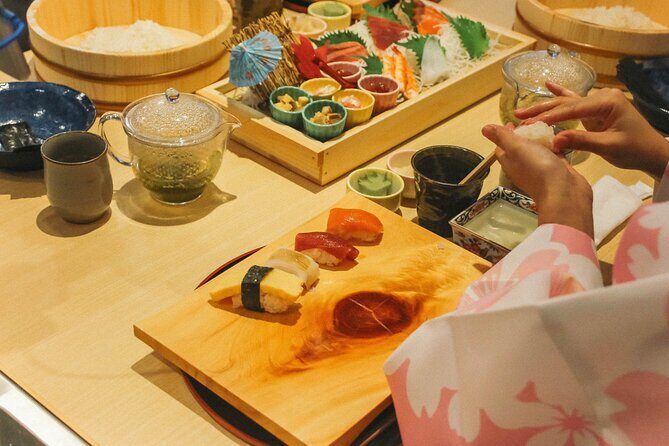
A lot of the charm here comes from the “make it an event” approach. You can dress up—kimono-style was mentioned often—and you may get props like samurai sword accessories. There’s also a ring-light style photo setup in some sessions, plus a video/photo moment at the end.
I like this because it makes the lesson memorable without turning it into a gimmick. Sushi is technique-heavy, and if you remember the steps because you had fun, you’re more likely to try it again at home.
Also, the class sometimes includes a chef costume element. It sounds silly until you realize it helps you get into the mindset: relax, do the steps, and don’t overthink it.
Price and value: what $87.55 really buys you
At $87.55 per person, you’re paying for more than ingredients. You’re paying for:
- a short guided coaching session in English
- use of the workspace and teaching setup
- the full “make it, then eat it” meal experience
- extras like dress-up and photos in many sessions
- a small group format (up to 14)
Is it cheap? No. But it’s not overpriced when you compare it to how much effort and time it takes to learn sushi basics from scratch. Several reviews also mention it felt worth doing as a lunch stop, especially when pairing it with nearby sights.
I’d frame it like this: you’re buying a guided practice session that ends with a real meal. For many people, that combination is the sweet spot.
Dietary needs and allergies: how to get the right setup

Good news: the class lists options for vegetarian, vegan, and gluten-free. The important part is timing. You need to request these in advance by message. If you wait until the day-of, accommodation might not be possible.
If you have allergies, you should let the team know in advance by message. That’s not just politeness. It’s the difference between a safe meal and a stressful one.
A small detail to note for families: fees apply from age 4. If a child is under 4, the guidance is to share a dish under that age. If you’re traveling with kids, that helps you plan.
Who this suits best (and where you might want a backup plan)
This is ideal if you want an active, beginner-friendly food experience. It’s also a great fit for:
- couples who want something more interesting than another restaurant meal
- families with kids who can follow step-by-step tasks
- first-time sushi fans who want guidance on what makes sushi work
A slight caution if you prefer slower, extra explanation. One review mentioned a language barrier made the steps harder to follow. If you’re the type who needs lots of repetition or detailed visuals, you might want to build in some patience.
Also, sushi expectations matter. While many reviews praise freshness and taste, one person felt the fish quality and rice texture weren’t what they hoped for. If you’re extremely picky about seafood quality or rice texture, you may still enjoy the learning—but don’t assume it will match every high-end counter experience.
Should you book this sushi making class near Tokyo Tower?
I think you should book it if you want a fun, hands-on Tokyo activity that ends in a meal you made yourself. The combination of English instruction, a clean teaching space, and the costume/photo extras turns it into something you’ll remember long after the rice is gone.
I’d particularly recommend it if you’re already planning time near Tokyo Tower. The location makes it easy to stitch into a day of sightseeing without wasting your energy on long transfers.
If you hate the idea of learning from a quick video plus hands-on assembly, or if you’re sensitive about seafood quality expectations, consider a backup plan for your meal later in the day. That way, the class stays a fun experience rather than a high-stakes food test.
FAQ
FAQ
How long is the sushi-making experience?
It’s about 1 hour 30 minutes (approx.).
Where does the class meet?
The meeting point is 1-chōme-6-8 Higashiazabu, Minato City, Tokyo 106-0044, Japan. It ends back at the meeting point.
Is the class taught in English?
Yes. A sushi chef/instructor teaches the sushi-making process in English.
Is there a limit on group size?
Yes. The maximum group size is 14 travelers, and depending on how busy the venue is, you may be seated with other customers.
Can I request vegetarian, vegan, or gluten-free options?
Yes, vegetarian, vegan, and gluten-free options are available if you message in advance. Requests made on the day may not be accommodated.
Do you need to tell them about allergies?
Yes. If you have food allergies, you should inform them in advance by message.
Is the class appropriate for children?
Fees apply from 4 years old. For children under 4, you’ll share a dish as directed in the class information.
Can I cancel for a full refund?
You can cancel up to 24 hours in advance for a full refund. If you cancel less than 24 hours before the start time, the amount paid is not refunded.