REVIEW · TOKYO
Tokyo: Meiji Shrine Walking Tour — Shinto & Imperial System
Book on GetYourGuide →Operated by Local Guide Stars · Bookable on GetYourGuide
A city hush lives inside this forest.
This Meiji Shrine small-group tour turns Tokyo noise into something quieter and more focused, with a guided walk through sacred spaces and the stories behind Japan’s long-running Shinto traditions.
I especially like the sense of order and meaning built into the route, from the huge torii gates to the respectful way you pass through them. I also love that you get to see Emperor Meiji’s legacy in a way that feels clear and usable, including Omigokoro fortunes with English translations. The main thing to consider is simple: this tour is English only, so Japanese language support isn’t provided.
In This Review
- Key highlights I’d pencil into your day
- Why Meiji Shrine feels different from the start
- Price and timing: what $23 buys you in real life
- A small-group route that moves with you (and your questions)
- Entering correctly through the torii: seichu etiquette in plain terms
- The consecrated wine and sake barrels: why these matter
- Emperor Meiji’s presence: imperial system meets Shinto practice
- At the main shrine: respect, prayers, and Omigokoro fortunes
- Forest Terrace Meiji Jingu: tea, light snacks, and a slower reset
- Practical notes: what can slow you down (and how to plan around it)
- Who should book this Meiji Shrine walking tour
- Should you book it?
- FAQ
- How long is the Tokyo Meiji Shrine walking tour?
- How big is the group?
- Where does the tour start?
- Where does the tour end?
- Is the tour in English?
- What are the main things you’ll see during the walk?
- Is there time to explore on your own?
- What is included in the tour price?
- Can I cancel for a full refund?
- Is there a pay-later option?
Key highlights I’d pencil into your day
- Small group, up to 10 people for questions, photo help, and a pace that doesn’t feel rushed
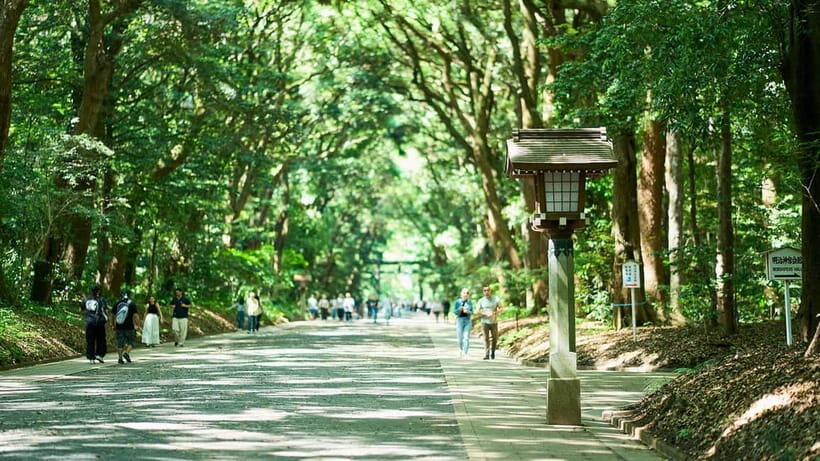
- The forest where sound disappears, framed by about 100,000 trees
- Huge wooden torii made from 1,500-year-old Taiwanese cypress, a seriously striking moment
- Learn torii etiquette and why you avoid the seichu (the sacred central route)
- Emperor Meiji poetry + Omigokoro fortunes with English translations for real understanding
Why Meiji Shrine feels different from the start
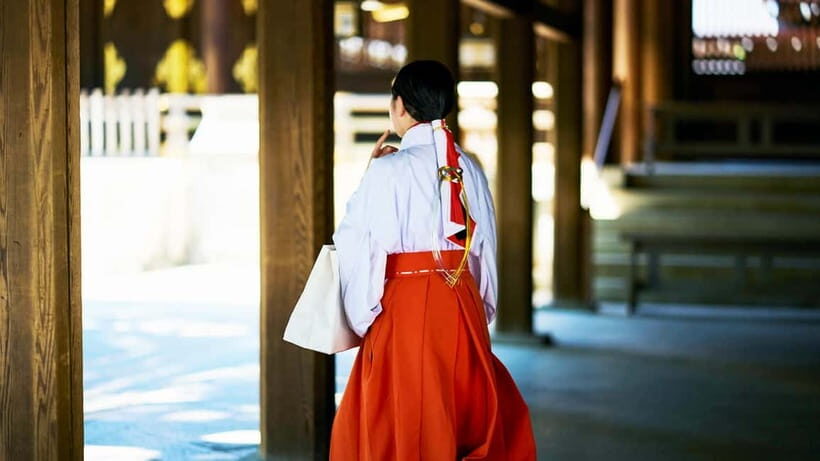
Tokyo has a way of keeping your senses busy. Then you walk into Meiji Shrine, and the air changes. The grounds sit in a wooded area of roughly 100,000 trees, so birdsong and footstep sounds replace the street rhythm fast. That quiet effect matters, because it helps you experience what Shinto sites are trying to create: a respectful pause.
On this tour, you’re not just dropped at the entrance and sent away. You get a guide, a set route, and time to actually look. With groups capped at 10 people and a total duration of 90 to 135 minutes, you get structure without feeling trapped. It’s one of the smarter ways to fit Meiji Shrine into a first visit, especially if you want meaning with your photos.
You can also read our reviews of more walking tours in Tokyo


Price and timing: what $23 buys you in real life
At $23 per person for a guided walk of about 90–135 minutes, you’re paying for three things you can’t replicate quickly on your own: a guided pace, etiquette coaching, and interpretation of the symbols. Meiji Shrine is famous, sure. But symbols are the difference between seeing something and understanding it.
That duration also gives you something practical: enough time to enjoy the forest walk and still have a block of free time at the main shrine for shopping and your own pace. If your schedule is tight, this is a compact way to cover the key points without turning the experience into a marathon.
One note for your day planning: the tour starts from Harajuku Station (you’ll have two options for where you begin), and it also returns you to Harajuku Station. That makes it easy to pair with Harajuku’s shopping energy afterward, or with a morning route when you want the shrine before the crowds build.
A small-group route that moves with you (and your questions)
The tour is designed for English-speaking guests, and the group stays small—up to 10 participants. In practice, that kind of size matters at Meiji Jingu because there are moments where you’ll want help: figuring out where to stand for photos, understanding what you’re seeing on the walk, and knowing what to do at the shrine respectfully.
You might meet guides like Tomo, Keiko, Yuuka, Ayaka, Nonoka, or Yuuki (guide assignments vary). Across their styles, a consistent theme shows up: clear explanations in English, patience with questions, and guidance for how to participate without guessing. Some guides also bring practical extras—like being able to help with offering items if you don’t have what you need—so you don’t feel stuck.
The big drawback is language. If you wanted Japanese support on-site, you won’t get it here. But if you’re comfortable with English, you’ll likely find the experience becomes easier as you go, because you’re always told what comes next.
Entering correctly through the torii: seichu etiquette in plain terms
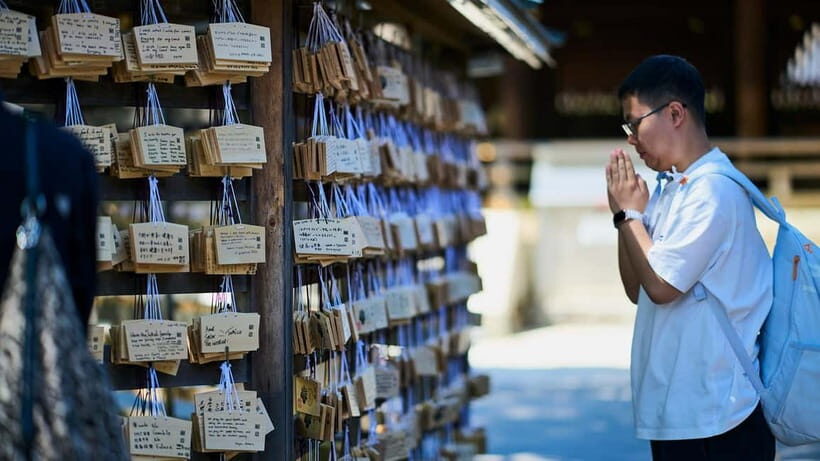
One reason Meiji Shrine can feel confusing is that visitors naturally want to rush toward the big photo spots. This tour slows you down in the right places.
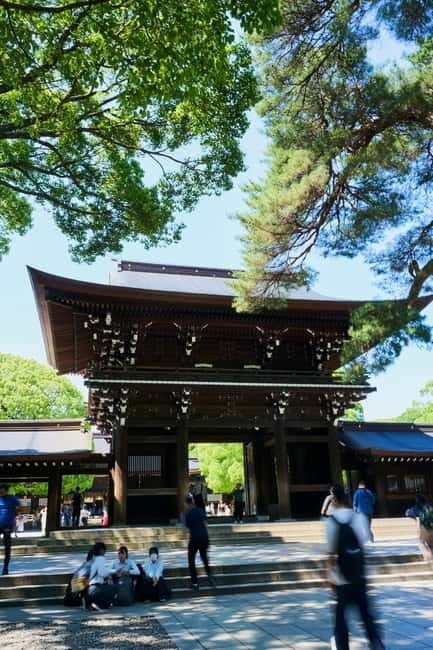
A key moment comes right at the torii. When you pass through, it’s customary to walk along the edges of the path and avoid the sacred central route called seichu (reserved for deities). It’s a small physical adjustment, but it signals respect, and it changes how you move through the space.
You also get a staged view of the torii system:
- a photo stop and guided look at the Meiji Jingu Ichino Torii
- later, a bigger torii moment with another guided stop for photos and sightseeing
This matters because torii aren’t just entrances. They work like visual markers that tell you you’re crossing into a different kind of space—one with rules, meanings, and a different pace.
If you’re the type who loves doing things the correct way the first time, you’ll appreciate that the guide teaches the “what” and the “why,” not just the do-this instruction.
The consecrated wine and sake barrels: why these matter

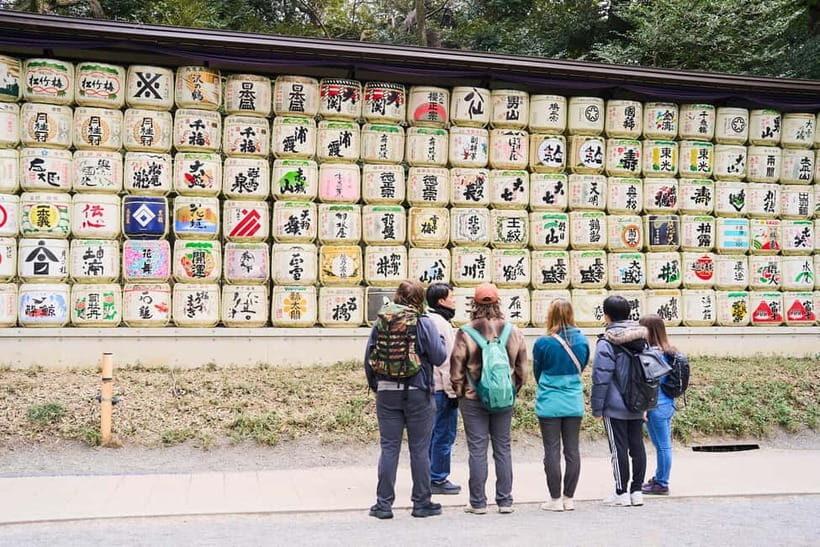
Between the torii gates, you’ll see consecrated barrels connected to offerings—first the consecrated wine barrels, then consecrated sake barrels. These short stops aren’t just for looking; they’re framed as part of how Shinto offerings work at the site.
What I like about including these early is that it prevents a common beginner mistake. Many people see the main hall and focus only on that. But Meiji Shrine communicates through its smaller sacred objects too. The guide’s role here is to help you read what you’re seeing, so the barrels feel meaningful instead of random.
Timing is tight but fair here: you’ll get guided time at these barrel areas (one stop around 10 minutes, another around 5), which is enough to understand the symbols without turning the walk into a lecture.






Emperor Meiji’s presence: imperial system meets Shinto practice
Meiji Shrine isn’t only a nature retreat. It’s also a place deeply tied to Japan’s modern imperial story. The tour includes a stop focused on the imperial poetry of Emperor Meiji, giving you a bridge between the sacred space and the historic system behind it.
You’re also told about Japan’s imperial system and how the country moved into modern life—from the world of samurai power toward a modern state. That context helps explain why Meiji Shrine holds such cultural weight even today. It’s not just that the site is old. It’s that the meanings have kept evolving alongside Japan itself.
This is also where guides tend to shine in conversation. If your guide happens to be someone like Yuki/Yuuki or Ayaka, you may find they connect the dots between symbols and everyday practice—how people show respect now, not just in the past.
At the main shrine: respect, prayers, and Omigokoro fortunes
The heart of the tour is your time at Meiji Jingu itself, with about 45 minutes for guided sightseeing plus free time. That free time is important. You’ll want space to:
- pay your respects at the right points
- follow customs you’ve been taught
- browse without feeling rushed
After you pay respects, you can also purchase protective items and fortunes. The tour highlights two specific options:
- Omamori, protective charms
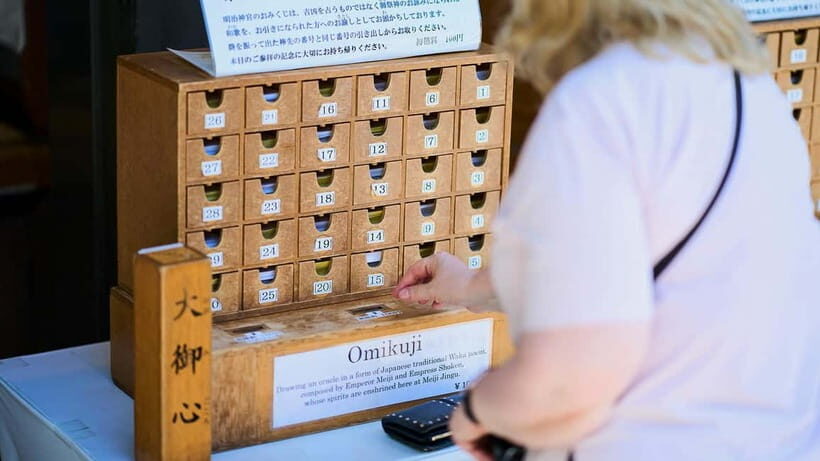
- a special fortune called Omigokoro, which features poems written by Emperor Meiji and Empress Shoken
What’s especially useful is that English translations are available for the poems. If you’re trying to make your visit feel personal (not just ceremonial), this turns the fortune into something you can actually read and understand without guessing.
If you want a souvenir that feels connected to the spiritual side—not just the gift shop—you’re likely to enjoy picking up one charm and one fortune during this window.
Forest Terrace Meiji Jingu: tea, light snacks, and a slower reset
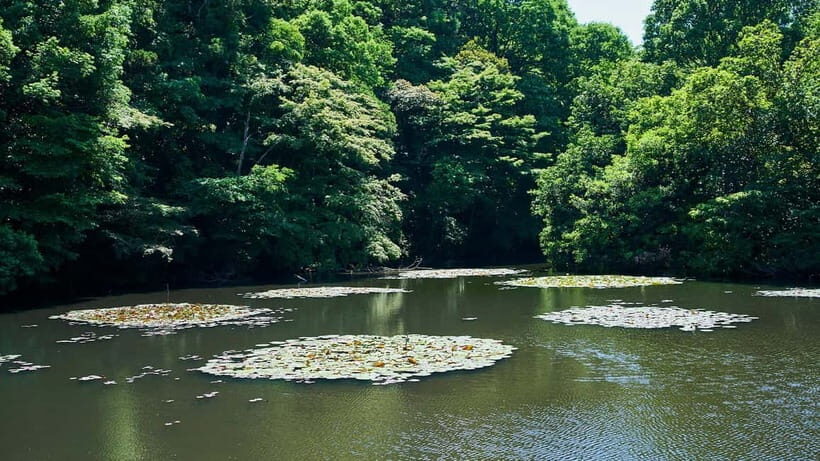
After the shrine, you head to Forest Terrace Meiji Jingu. This is where the tour becomes a break, not just a sight route. You’ll visit Café Mori no Terrace for Japanese tea and light snacks, while you take in the scenery.
I like this stop because it gives you a mental cooldown. Meiji Shrine is peaceful, but the spiritual focus can still be intense when you’re learning as you go. Tea helps you return to normal human speed.
Then you’ll have shopping time at the gift area. The tour notes specific, meaningful items such as:
- eco-blocks made from fragrant Japanese camphor
- miniature barrels of sacred sake
These are great for bringing a story home. They also tend to make better gifts than generic souvenirs because they connect to the shrine’s offering theme.
Practical notes: what can slow you down (and how to plan around it)
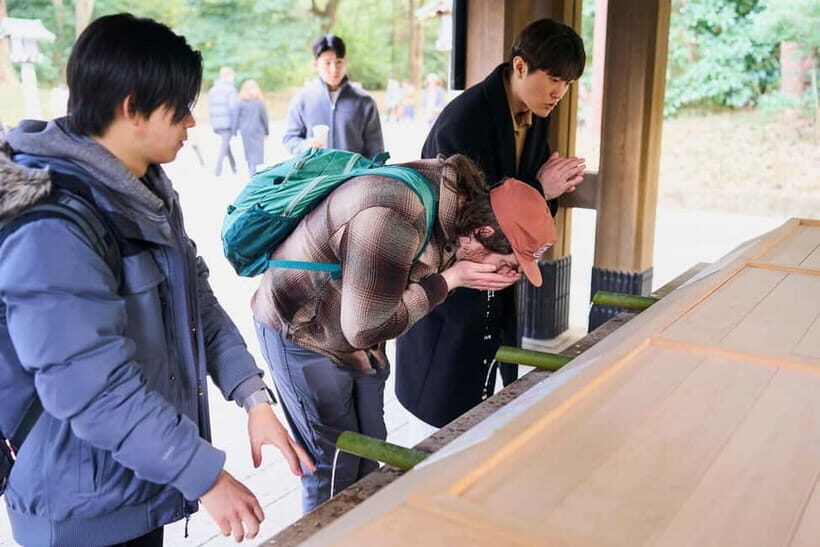
A few things can affect your experience at Meiji Shrine, even with a guided route:
- The site can be crowded, especially near the main shrine and popular photo spots, so your free time may include short waits.
- You’ll spend a lot of your best attention on customs and symbols. If you’re in a pure hurry-photographer mode, you might feel the tour is slower than you expected.
- Because the tour is English only, you’ll rely on the guide’s explanations rather than quick Japanese on your own.
Still, if you show up with curiosity, you’ll find the pace works. The itinerary is built to alternate between walking, photo moments, short explanation stops, and then a real pause at the café.
Who should book this Meiji Shrine walking tour
I think this fits best if you:
- want an organized way to learn Shinto basics and shrine etiquette
- like getting the meaning behind symbols (torii, offerings, imperial connections)
- prefer small groups where you can ask questions
- are traveling in English and want someone to handle the cultural context
It might not be your top pick if you:
- already know shrine etiquette well and want total freedom with no guidance
- don’t care about Shinto customs or the imperial context
- need Japanese support for explanations
Should you book it?
Yes, if you want Meiji Shrine to make sense. This tour is strong value for the time because it focuses on what visitors usually skip: how to move respectfully through sacred space and what the key shrine elements actually represent. The small group size also helps, because you’re not just watching—you’re learning and participating.
Book it especially if it’s your first or second time in Tokyo and you want a day-anchoring experience that feels calm, cultural, and guided from the moment you meet at Harajuku Station.
FAQ
How long is the Tokyo Meiji Shrine walking tour?
It runs about 90 to 135 minutes depending on the starting time.
How big is the group?
The group is limited to up to 10 participants.
Where does the tour start?
It starts at Harajuku Station (原宿駅). The exact meeting point can vary depending on which option you book.
Where does the tour end?
You return to Harajuku Station (原宿駅) for drop-off.
Is the tour in English?
Yes. The tour is English only, and Japanese language support is not available.
What are the main things you’ll see during the walk?
You’ll visit key shrine areas and photo spots including torii gates, consecrated wine barrels, consecrated sake barrels, the imperial poetry area, and the main Meiji Jingu shrine.
Is there time to explore on your own?
Yes. At the main shrine area, you’ll have free time (about 45 minutes) for shopping and your own visit.
What is included in the tour price?
Included items are an English guide, a sightseeing tour, and the guide.
Can I cancel for a full refund?
Yes. Free cancellation is available up to 24 hours in advance for a full refund.
Is there a pay-later option?
Yes. You can reserve now & pay later, so you can book without paying immediately.