REVIEW · OKAYAMA PREFECTURE
Mt. Koya Sacred Full-Day Private Tour (Osaka departure) with Licensed Guide
Book on Viator →Operated by Japan Guide Agency · Bookable on Viator
Mount Koya is quiet even when the world isn’t. This private full-day walking tour from Osaka brings you to Koyasan’s most important Shingon Buddhism landmarks, with a licensed English-speaking guide who can steer the day toward what you care about. I especially love how much context you get at Kongobu-ji and along the Okunoin path, so the place doesn’t feel like a postcard. The main drawback: it’s a walking day with stairs and hills, and some ticketed stops (like Okunoin) are extra.
What makes this tour work is the human factor. Your guide meets you in the Osaka-area pickup zone and helps with the real hassle—figuring out trains, connections, and the flow of getting up to Koyasan without wasting time. One more practical note: the tour price doesn’t include transportation, lunch, or personal expenses, so you’ll still budget for transit and a couple of paid admissions.
At $224.02 per person for a private tour that runs about 9 hours, you’re paying for convenience plus interpretation. If you like sacred sites but hate logistical stress, this is a strong match.
In This Review
- Key Points You’ll Actually Use
- Mount Koya’s Special Sauce: Sacred Space Meets Real Guidance
- Price and Logistics: What You’re Paying For (and What You Still Pay)
- Riding the Train to Koyasan: Your Guide Makes It Feel Easy
- Stop 1: Osaka Departure—Set Your Day Up Before You Reach the Temple Grounds
- Kongobu-ji Temple: Where Shingon Buddhism Shows Its Business End
- Stop 2: Koyasan Okunoin—The Heartbeat of the Sacred Walk (Ticketed)
- Danjo Garan and Konpon Daito Pagoda Feel: Sacred Power in Stone and Ceremony
- Reihokan Museum: The Treasures Stop That Changes How You See the Temples
- Daishi Kyokai: The Admin Center With a Meaningful Role
- Tokugawa’s Mausoleum: Optional Weight Near Kobo Daishi’s Legacy
- Return to Osaka: Getting Back Without Stress
- What to Expect From the Walking Pace (and How to Prepare)
- Should You Book This Private Mount Koya Tour From Osaka?
- FAQ
- How long is the Mt. Koya Sacred full-day private tour from Osaka?
- Is this tour private or shared?
- How many sites can I choose during the day?
- Is pickup included, and where does the guide meet me?
- Are entrance fees included in the price?
- Are transportation costs included from Osaka?
- Does the tour use a mobile ticket?
- Can I cancel for a full refund?
- Is lunch included?
Key Points You’ll Actually Use
- Private by default: only your party, with a licensed English-speaking local guide
- 3–4 sites tailored to your interests from the main Koyasan sacred list
- Public transport navigation handled by your guide, including the train route out of Osaka
- Okunoin is the emotional anchor, but it includes a ticket you’ll pay
- A mix of temple, museum, and spiritual administration (not just one cemetery walk)
- Mobile ticket for smoother day-of check-in
Mount Koya’s Special Sauce: Sacred Space Meets Real Guidance
Mount Koya (Koyasan) sits in the mountains south of Osaka, and the vibe is different from the cities. You’re not just seeing temples—you’re walking through a living religious world where Shingon Buddhism’s traditions show up in buildings, rituals, and the way people move through the grounds.
I like that the tour is built around meaning, not speed. You can spend time at places like Kongobu-ji Temple—the headquarters of the Shingon Sect—or shift focus toward Okunoin, the heart of the inner sanctuary. Either way, your guide explains why these spots matter, including the role of Kobo Daishi (Kukai), a central figure in Japan’s Buddhist history.
The other big win is that you get a person, not just a route map. Guides such as Naka, Yuki, and Yuka are praised for fluent English and for stepping in when transit or timing gets tricky. That matters at Koyasan, where the day can feel complicated if you’re doing it on your own.
You can also read our reviews of more guided tours in Okayama Prefecture

Price and Logistics: What You’re Paying For (and What You Still Pay)
The headline price is $224.02 per person, with an approximately 9-hour outing. That sounds steep until you compare it to the cost of “solo chaos”: private transit planning, timed connections, and the admission/ticket math that can trip you up at religious sites.
Here’s the practical breakdown. The tour includes the licensed local English-speaking guide plus a customizable walk of 3–4 sites. It also includes meeting your guide within a designated Osaka-area pickup area (on foot), and the tour is private for your group only.
What you should expect to pay separately: transportation fees, entrance fees, lunch, and other personal expenses. The itinerary also signals that some key places are free while others are not—for example, Koyasan Okunoin is listed as ticketed, and Tokugawa’s Mausoleum is also not included. So your “all-in” day budget depends on which 3–4 stops you choose.
Riding the Train to Koyasan: Your Guide Makes It Feel Easy
This is a walking tour, but the day’s first real hurdle is the trip from Osaka. You’ll head out together by train toward Koyasan, typically with a couple of transfers and the kind of station complexity that can make first-time visitors second-guess every turn.
That’s where your guide earns their fee. In guided days led by people like Emi, the help starts immediately—prompt pickup, strong station navigation, and support with tickets and connections. Another smart tip from the guide-style experiences shared here: if you can, choose a front car on the train for a better view.
Also, expect that the mountain ascent can involve more than one transportation mode. Some routes include a cable car step, and your guide will get you through it. The point isn’t luxury. It’s time saved and fewer wrong turns.
And yes, weather matters. Cold and rain show up in real seasons, and having a guide helps you stay moving rather than losing your whole rhythm.
Stop 1: Osaka Departure—Set Your Day Up Before You Reach the Temple Grounds
You start in Osaka and depart with your guide for Koyasan. The itinerary lists about 1 hour 30 minutes for this travel segment, with admission tickets free at the departure portion since it’s just the transfer.
This early time is more than transit. Good guides use it to get you oriented—what you’ll see, why it matters, and how to read what you’re walking toward. That’s when the emotional pay-off begins, because you arrive already knowing what you’re looking at rather than guessing.
If your schedule is tight, you’ll appreciate this structure. It’s not a “late start and hope for the best” setup. You’re moving from Osaka into the mountain sacred zone with a plan, and that plan helps you protect your time at the places that actually require your attention.
Kongobu-ji Temple: Where Shingon Buddhism Shows Its Business End
Kongobu-ji Temple is the headquarters for Shingon Buddhism. It’s tied to the Shingon Sect’s scale—thousands of temples across Japan and millions of followers worldwide—so the stop has weight even if you’re not a scholar.
You’ll spend about 1 hour here, and the admission ticket is listed as free. That makes it one of the best “high meaning, lower cost” stops on the day.
What I like about this stop is that it acts like a guidebook inside the experience. It’s not just architecture; it’s also the religious artifacts and art that communicate how Shingon practice is organized and taught. The itinerary notes visitors can see things like fusuma sliding door paintings and religious artifacts, which give you a tangible sense of daily sacred life.
A practical tip: this is a great anchor point for your day’s theme. If you’re more curious about how Shingon works, Kongobu-ji will satisfy that. If you’re more focused on the spiritual “walk to the dead,” you can still enjoy Kongobu-ji, but spend the time purposefully.

Stop 2: Koyasan Okunoin—The Heartbeat of the Sacred Walk (Ticketed)
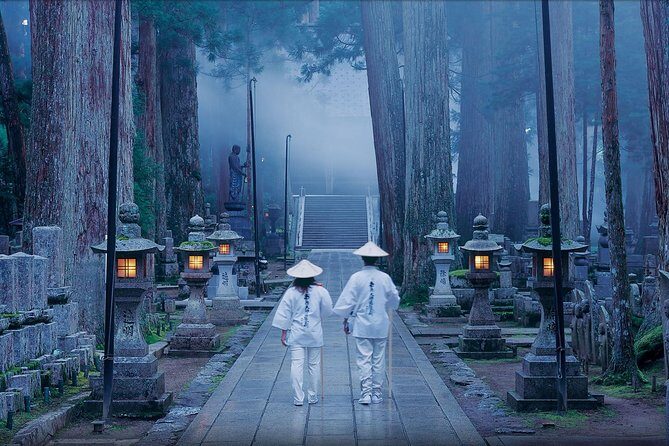
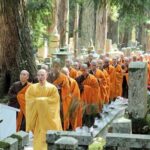
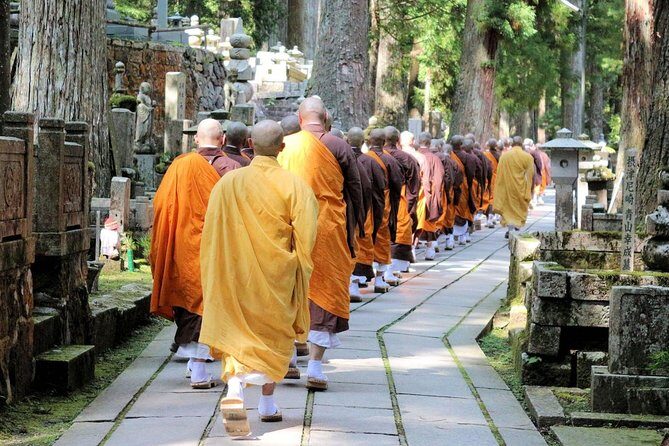
Okunoin is the emotional center of Mount Koya. This is where Kobo Daishi (Kukai), the founder figure of Shingon Buddhism, rests. The itinerary describes the area as the heart of Koyasan, lined with graves of prominent personalities.
You’ll spend about 1 hour 30 minutes here, and the itinerary states admission is not included. That matters for budgeting, but it also hints that this site is the one you should plan for with care.
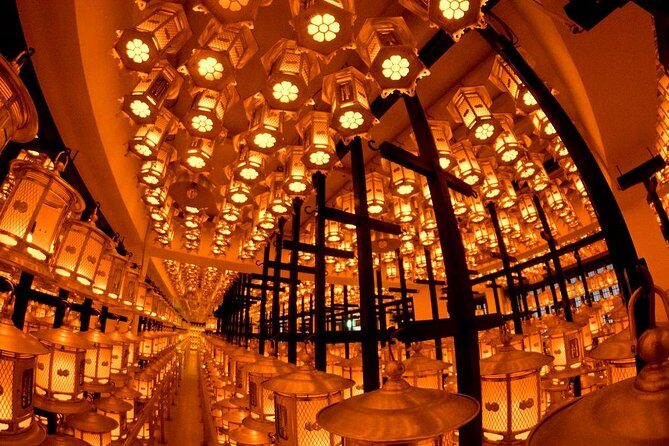
What you’ll feel here is hard to “summarize” into a single sentence. The grounds are designed for contemplation, and the walking rhythm matters. You’ll likely notice ceremonial spaces and memorial details that don’t translate well on photos. One guide-style highlight mentioned here is the hall of lanterns, which can be a standout feature along the route through the sacred cemetery area.
If you’re picking your 3–4 sites, this is the stop that most strongly turns the day from sightseeing into something more personal. Just know you’ll want comfortable shoes and the mental readiness for a quieter kind of time.
Danjo Garan and Konpon Daito Pagoda Feel: Sacred Power in Stone and Ceremony
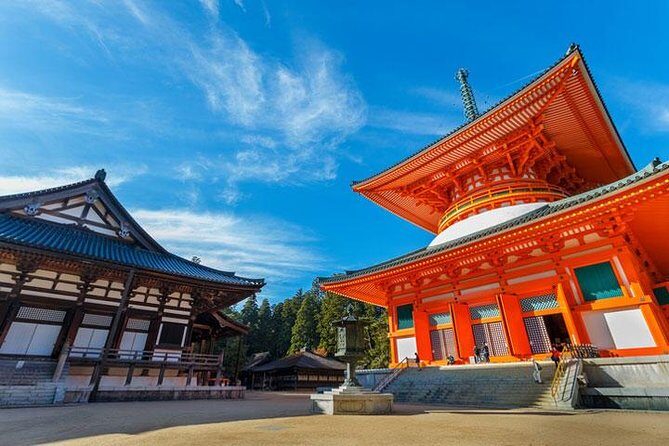
Koyasan Danjo Garan is described as one of the two most sacred sites on Mount Koya. It ties to the founding story—Koyasan was founded on this ground, and Kobo Daishi held a ceremony there. You’ll also be in the vicinity of major temple structures that many visitors consider essential.
The itinerary gives about 1 hour for Danjo Garan, with admission listed as free. That means it’s another strong “value per minute” stop.
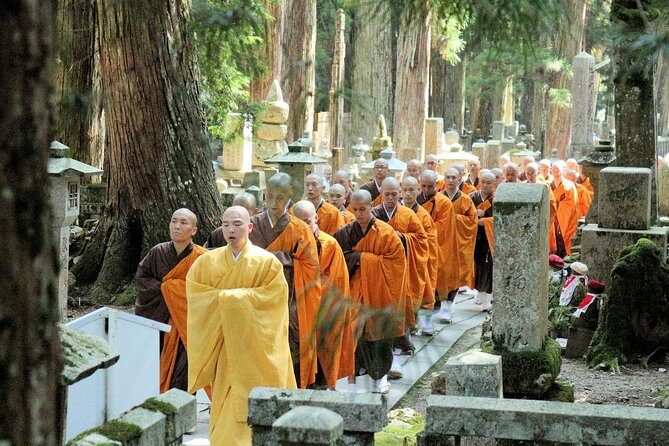
Also mentioned in guide experiences is the Konpon Daito Pagoda and the Kondo Hall as part of the most meaningful walking routes around the Danjo Garan area. Even if your exact 3–4-site selection shifts, Danjo Garan is a place where the big religious architecture does the heavy lifting.
Drawback to consider: this is sacred space, so you may feel less “hands-on” freedom than at an art museum. You’ll want to keep your pace respectful and accept that some sections are more about seeing and understanding than photographing everything.
Reihokan Museum: The Treasures Stop That Changes How You See the Temples
The Koyasan Reihokan Museum is built to preserve religious and cultural treasures of Koyasan. The entrance hall is described as styled after Byodoin Temple in Uji, and there are multiple exhibits.
You’ll spend about 30 minutes here, with admission listed as free. This is the right length: long enough to add context, short enough not to derail your sacred walking time.
I like this museum stop because it explains the “why” behind what you’re seeing outside. Temples can look similar to visitors on a first pass, but when the museum shows the kinds of artifacts they protect, the buildings stop being just pretty. They become purposeful containers for specific traditions.
If you’re the type who enjoys a little structure—facts, artifacts, and guided explanations—this museum is an easy win.
Daishi Kyokai: The Admin Center With a Meaningful Role
Daishi Kyokai is described as the administrative center of Shingon Buddhism. It’s responsible for spreading the teachings of Kobo Daishi, and the complex includes two buildings.
You’ll spend about 1 hour here, with admission listed as free. That’s important: it’s an easy add-on that deepens your understanding without extra ticket costs.
This stop is valuable because it shows how religious tradition continues beyond the courtyard. Temples aren’t only about worship spaces; they’re also institutions that manage teachings, education, and continuity. If you’re interested in how spirituality becomes a system—not just a moment—this is your stop.
Tokugawa’s Mausoleum: Optional Weight Near Kobo Daishi’s Legacy
Tokugawa’s Mausoleum is described as built in 1643 by the third Tokugawa shogun, Iemitsu. The idea was to place the family mausoleum close to Kobo Daishi’s mausoleum. The itinerary lists about 1 hour here, and admission is not included.
This stop can be fascinating if you like the overlap between political power and religious legitimacy. It’s also the kind of place where explanations from a guide can make the symbolism click quickly.
Consider it this way: if you choose it, you’re adding another layer to the day’s theme—religion, authority, and history in one area. If you choose to skip it, you’ll have more time for the core spiritual sites and museum.
Return to Osaka: Getting Back Without Stress
The itinerary brings you back to Osaka by train, about 1 hour 30 minutes. This return segment isn’t ticketed on the list, and it’s effectively about making sure you leave Koyasan at the right time and don’t get stuck sorting connections after a long day.
This is also where private guiding pays off. The route back can be mentally harder than the morning transfer if you’re tired from walking and stairs. A guide keeps the plan intact and helps you get to Osaka smoothly.
For a day trip, leaving on time matters more than you think. You’ll arrive back with fewer regrets because you won’t be fighting the clock the whole way.
What to Expect From the Walking Pace (and How to Prepare)
Most of the day is walking, including hills and stairs. One of the clearest practical notes from guide-style experiences is that you should be fit enough for those stair-and-slope stretches, especially if you plan to spend your full time in Okunoin.
Weather can swing. Cold snowy days happen, and rain happens too. Bring layers and expect you may spend time outside even when it’s unpleasant.
What helps most is footwear. You want shoes that handle uneven stone paths and long stretches. Also bring a small umbrella or rain shell if the forecast looks iffy, since you’re moving between sacred zones.
If you’re sensitive to long days, plan your expectations around it. This isn’t a quick drive-by. It’s a focused spiritual walk day, and the best way to enjoy it is to treat it like one continuous flow rather than a checklist.
Should You Book This Private Mount Koya Tour From Osaka?
If you want Koyasan without the transit headache, this tour is a strong choice. It’s private, it’s built around 3–4 customizable sacred sites, and it includes a licensed English-speaking guide who helps with the steps that usually derail day trips: navigating trains, managing connections, and interpreting what you’re seeing.
Book it if:
- You care about understanding Shingon sites, not just ticking boxes
- You’d rather pay for guidance than spend your day figuring out stations
- You’re comfortable with a walking day and can handle stairs and hills
- You’re willing to budget for transit plus a couple of paid admissions like Okunoin
Think twice if:
- You want a fully “all-in” price with no extra ticket or transit costs
- You have limited mobility or you can’t manage long outdoor walking and uneven ground
- You prefer ultra-fast sightseeing (this is a slow, respectful pace)
FAQ
How long is the Mt. Koya Sacred full-day private tour from Osaka?
It runs for about 9 hours.
Is this tour private or shared?
It’s a private tour. Only your party participates.
How many sites can I choose during the day?
The tour is customizable around 3–4 sites from the main Koyasan stops.
Is pickup included, and where does the guide meet me?
Pickup is offered. The guide meets you on foot within a designated Osaka-area area.
Are entrance fees included in the price?
Entrance fees are not included overall. Some stops are listed as free, but others—like Koyasan Okunoin and Tokugawa’s Mausoleum—are marked as not included.
Are transportation costs included from Osaka?
No. Transportation fees are not included.
Does the tour use a mobile ticket?
Yes, a mobile ticket is included.
Can I cancel for a full refund?
Free cancellation is available. You can cancel up to 24 hours in advance for a full refund.
Is lunch included?
Lunch is not included. You’ll need to pay for it separately.