REVIEW · IRIOMOTE JIMA
Okinawa Iriomotejima Night Adventure Tour
Book on Viator →Operated by IRIOMOTE ADVENTURE PiPi · Bookable on Viator
Night air on Iriomote feels alive. This 90-minute guided night walk on Iriomote-jima turns a dark, hard-to-navigate coastline into an organized hunt for jungle wildlife and a shot at the starry sky when conditions cooperate. It’s built for one simple truth: there’s very little light at night here, so wandering off alone can be risky.
I love how the guides focus on what you actually see in the moment, not just general nature talk. Guides like Yuina and Shoma are praised for patiently helping people spot animals you’d never notice on your own, including coconut crabs and other nocturnal critters. I also like that the tour blends creature-finding with stargazing, so the night doesn’t feel like a single-note search.
One thing to think about: it’s a wet, dark outing. Tours generally run in rain, there are no restrooms at the site, and you’ll need to wear clothes you don’t mind getting soaked and follow the guide’s safety instructions closely.
In This Review
- Key highlights worth knowing before you go
- Why a guided Iriomote night walk beats DIY
- From pickup to drop-off: how the 90-minute plan actually feels
- Stop 1 on Iriomote: entering the jungle where you can’t rely on sight
- Wildlife spotting with UV light: how the guides help you see more
- Coconut crab season excitement: what you can hope for realistically
- Stargazing above the jungle: when the sky is clear enough
- Rain, tides, and safety: what can change on the fly
- What to wear for Iriomote at night (and what to avoid)
- Language and guide style: Japanese or English night expertise
- Eco-friendly approach: why this kind of tour should matter
- Price and value: why $32.37 for 90 minutes can make sense
- Who should book this Iriomote night adventure
- Should you book the Okinawa Iriomotejima Night Adventure Tour?
- FAQ
- FAQ
- Where is the tour meeting point?
- What time does the night tour start?
- How long is the tour?
- Is pickup offered?
- What will we do during the tour?
- What kind of weather should I expect?
- What are the age limits and participation requirements?
- Is the tour conducted in English?
Key highlights worth knowing before you go
- Expert-led safety at night: you’re not just walking into darkness; you’re following trained guidance.
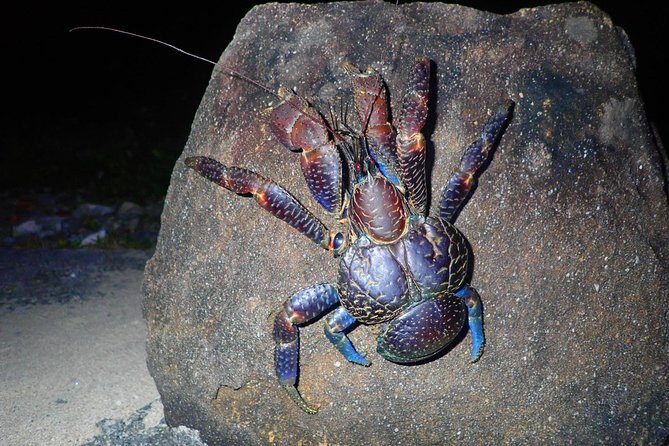
- Coconut crabs and other nocturnal wildlife: chances include land crabs and beach activity, depending on the night.
- UV-light spotting: guides use light to help reveal animals most people never spot.
- Stargazing when the weather clears: the night sky can be a big payoff.
- Eco-focused approach: the tour is designed with sustainability in mind.
- 90 minutes with pickup options: Uehara-area pickup can save you hassle.
Why a guided Iriomote night walk beats DIY
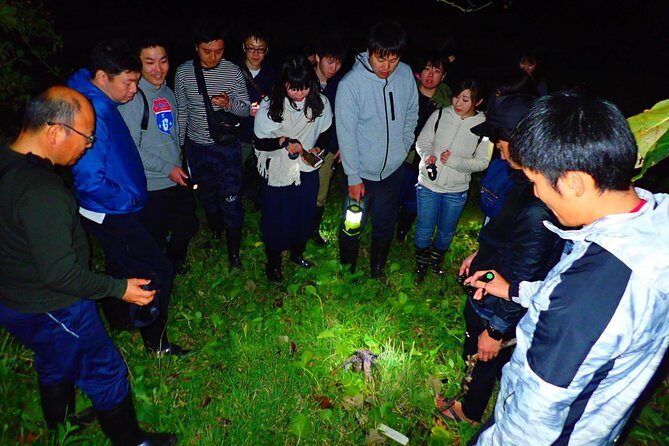
Iriomote-jima is famous for nature, but at night it’s another world. The tour’s core idea makes sense fast: with so little light, it’s easy to lose your footing, get turned around, or unintentionally step into places that don’t feel safe.
What makes this tour work for real life is that you’re not left to figure it out yourself. Your guide takes point, keeps the group together, and helps you look in the right spots. In the reviews, guides such as Seki and 関 come up again and again for spotting animals at dusk and then explaining what they’re seeing in plain terms. That guidance matters because most nocturnal creatures are motion-quiet and easy to miss.
You also get a night rhythm that feels intentional: search, pause, look closely, then reset. That’s a big upgrade over trying to explore on your own with a flashlight and guesswork.
You can also read our reviews of more evening experiences in Iriomote jima

From pickup to drop-off: how the 90-minute plan actually feels
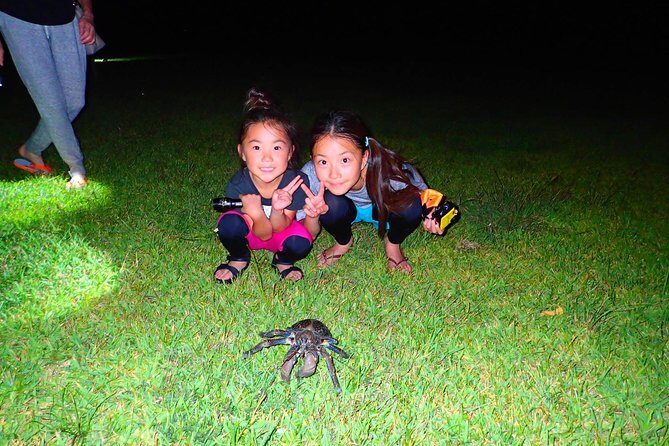
This tour runs at night, with an early-evening meeting window that helps the sky and jungle do their best work.
Here’s the flow you can expect:
- 8:00 PM: pickup at your accommodation in the Uehara area only
- 8:15 PM: arrival at the spot
- 8:45 PM: jungle exploration and stargazing time
- 9:45 PM: the tour ends, and you get dropped back at your accommodation (if you’re on the pickup route)
If you’re meeting at the start point, it’s Densa Terminal (Uehara), 竹富町上原553-1. The timing can shift based on weather and tide conditions, which is exactly what you’d want here—tides affect shoreline critters, and weather affects visibility for stargazing.
One more practical note: the itinerary mentions stargazing when conditions are clear. So even though the tour is about wildlife, you should keep your eyes up at the right times. A phone camera can tempt you, but try to take a few moments without it.
Stop 1 on Iriomote: entering the jungle where you can’t rely on sight
This tour is basically one main experience, but it’s built around where you’re walking and how you’re scanning.
At the start, your guide brings you from the meeting point into the night environment and sets expectations. This part matters because once you’re in the jungle and along the coastline, your normal day-light instincts stop working. You’ll be looking for movement in the shadow line, glints on wet surfaces, and small animals that don’t show up unless you’re looking at the right angle.
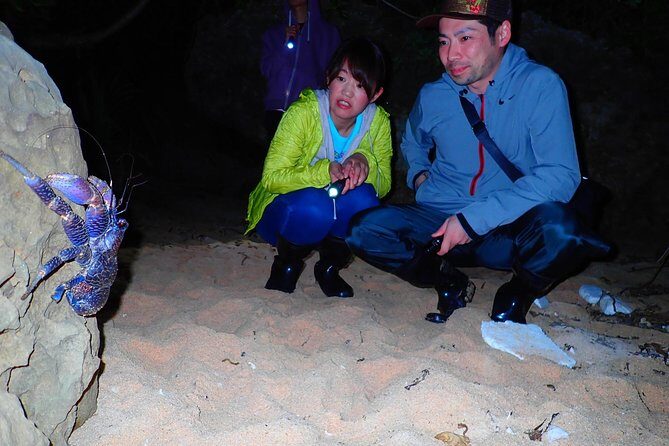
The reviews are full of this “wait, that was right there” feeling. People mention seeing coconut crabs near banana trees, beach areas where land crabs lay eggs into the sea, and other small nightlife patterns that only become obvious with the right lighting and guidance. Even when the big-ticket sightings don’t happen, the night walk still turns into a slow, fascinating lesson in how Iriomote’s nighttime ecosystem behaves.
Wildlife spotting with UV light: how the guides help you see more
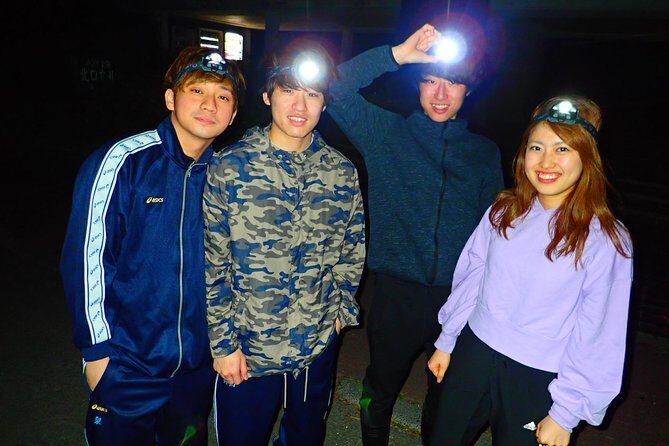
One of the most praised elements is the way the guides spot animals. Several write-ups mention wildlife being easier to find under UV lights, which makes sense for a place where your normal flashlight beam often just creates glare and shadows.
Here’s what that usually means for your experience:
- You get guided “look here” moments, not random searching.
- The guide can adjust where the light goes based on what you spot.
- You’re more likely to notice smaller critters—like crabs and night insects—that blend into the dark.
Guides including Yuina and Seki are highlighted for taking time and helping people see clearly. One person described spotting multiple coconut crabs and witnessing special beach activity, while another talked about flying foxes at dusk and a string of discoveries that felt like a real-time nature lesson.
The takeaway for you: this isn’t just a walk. It’s a guided method for seeing wildlife in low light.
Coconut crab season excitement: what you can hope for realistically
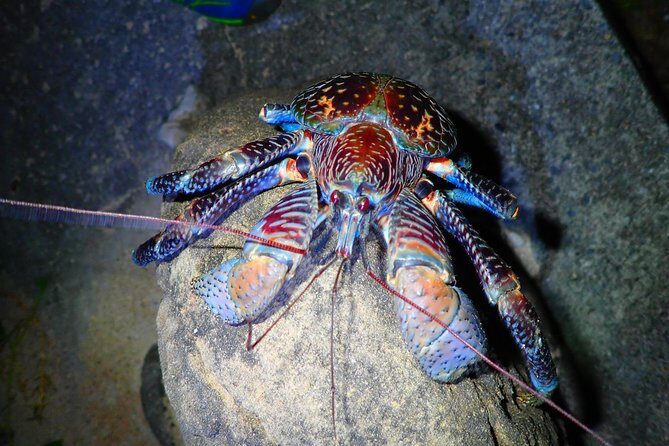
Coconut crabs are the celebrity attraction here, and they show up in a lot of the tour write-ups. In one standout account, people described seeing roughly six to seven large coconut crabs around vegetation, with the guide leading them to a beach where crabs were laying eggs into the sea.
That’s the kind of moment that makes this tour feel worth it: you’re not only looking for animals; you’re seeing natural behavior tied to the time of night.
Still, keep your expectations flexible. Wildlife depends on weather, timing, and what the island is doing that night. Even with excellent guides, sightings can vary. One write-up also mentions a separate attempt to spot the Iriomote wildcat, but the success rate was described as uncertain. So treat that as a bonus possibility, not a guarantee.
What’s more consistent is the “wow, this is alive” feeling: palm crabs, hermit crabs, spiders, and firefly larvae are all mentioned across the accounts, along with flying fox sightings at dusk. On a good night, the whole coastline feels like it has a pulse.



Stargazing above the jungle: when the sky is clear enough
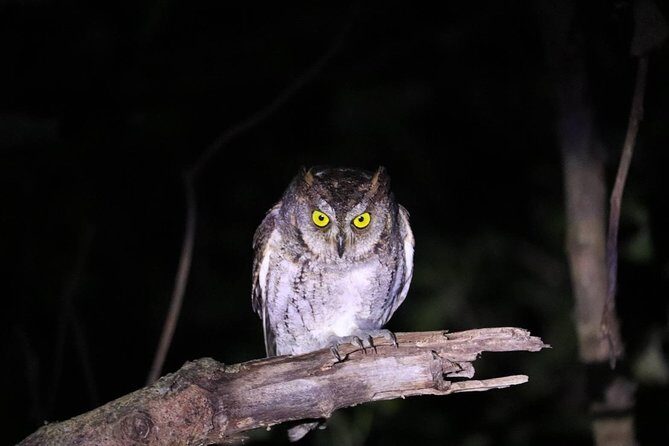
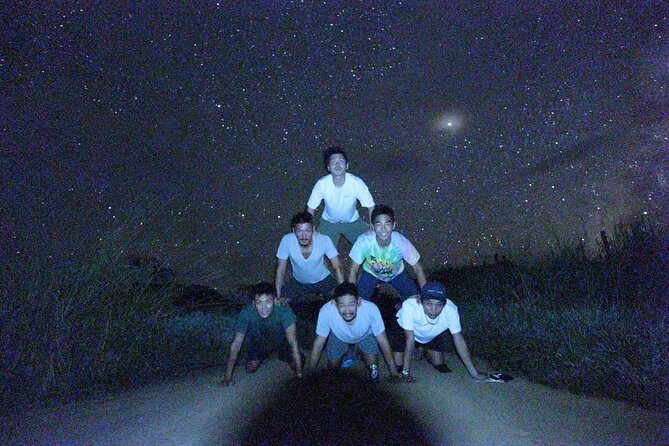
The tour promises a chance to marvel at the starry night sky when the weather is clear. That’s a real detail you should plan around. Cloud cover and rain will change the view fast.
Even if the stars aren’t perfect, the stargazing moment still works as a mental reset after the search for wildlife. You’ve been scanning close-up—the guide points and the light reveals movement—then suddenly you look up and the island opens into something bigger.
One person wrote about seeing an impressive starry sky after arriving in good conditions. I’d take that as encouragement: this isn’t a token stop where someone says good luck. It’s built into the night window.
If you’re someone who normally focuses only on photos, try this trick: spend 30 seconds just staring. Let your eyes adjust. Night skies reward patience more than gear.
Rain, tides, and safety: what can change on the fly
This tour generally runs in rain. That’s not a rare exception—it’s the norm here. The upside is you’re not paying for good weather. You’re paying for a night experience with trained guidance regardless of the conditions.
But weather affects everything:
- Rain changes visibility for stargazing.
- Tide conditions can affect what you encounter near the shoreline.
- If the field is deemed unsafe, the tour may be canceled.
Your best move is simple: assume wet conditions and dress like it’s going to happen. The tour also states there are no restrooms at the activity site, so use facilities before you go.
Safety rules are strict for a reason. You must follow the guide’s instructions, and alcohol is prohibited for participation. The reason is obvious: moving around dark jungle/coastal paths is easier when everyone’s alert.
What to wear for Iriomote at night (and what to avoid)
You’ll be walking in a subtropical night environment. The tour doesn’t ask for fancy gear, but it does ask for sensible choices.
Wear clothes you don’t mind getting wet. Plan for darkness and humidity. Bring whatever keeps you comfortable if you’re damp longer than expected.
Avoid alcohol, obviously. Also, the tour restricts participation for people with pre-existing medical conditions and for pregnant individuals. The stated age range is 3 to 65, so this is child-friendly as long as everyone meets the minimum age and can handle the situation.
One more detail that people forget: there’s no bathroom at the site. That small line in the rules can matter on a 90-minute outing, especially if you’re traveling with kids.
Language and guide style: Japanese or English night expertise
The tour runs in Japanese or English depending on booking availability. If you’re booking late or you care about English specifically, confirm what’s offered for your date.
Guide style seems to be a major part of the positive feedback. People mention guides helping interpret what they’re seeing, and even responding with enthusiasm when a child spots something first. Names that come through include Yuina, Shoma, Yume-san, Seki, and 関. That range suggests a team approach: different personalities, same goal—help you see the island’s night life responsibly.
Eco-friendly approach: why this kind of tour should matter
The tour describes itself as eco-friendly and committed to sustainable guiding. You can see why that matters in a night wildlife context.
Low-light areas attract delicate behavior. You don’t want people charging around or shining random light without control. Having a guide keeps the group moving in a way that’s safer for you and less disruptive for animals.
The best part is that eco-awareness doesn’t have to feel preachy. It shows up as better wildlife encounters. When a guide knows where to look and how to pause, you get more sightings and fewer mistakes.
Price and value: why $32.37 for 90 minutes can make sense
At $32.37 per person for about 1 hour 30 minutes, this isn’t a long tour, and that’s actually a value signal. Night walks need to stay focused: the point is animal spotting and stargazing while conditions are right, not turning it into an all-night hike.
What you’re really paying for is:
- Organized access to a dark environment where it’s easy to wander into unsafe spots
- A guide who can identify and explain what you see
- The added tech and technique for low-light wildlife spotting (UV lighting is mentioned)
- Time on the coastline and in the jungle at night, where you’ll otherwise have limited options
Also, this is a tour that accepts reservations up to 7:00 PM on the day of the tour, which makes it practical if you decide late that you want a night nature experience.
One reason it’s popular (booked around 25 days in advance on average) is that it offers a high “night payoff” for a reasonable price. You’re not spending much time, but you’re getting a memorable, sensory change from day travel.
Who should book this Iriomote night adventure
Book it if you want:
- A guided way to see Iriomote’s nighttime wildlife without struggling in the dark
- A mix of jungle critters and a chance at starry sky
- A family-friendly nature activity that’s more than just standing at a viewpoint
It also fits you if you like learning from guides who slow down and help you notice what matters. Kids have done well here in the written accounts, with some children finding animals quickly and keeping the mood high even into the later part of the evening.
Skip it if you:
- Have restrictions listed by the tour (pregnancy, pre-existing medical conditions, under age 3)
- Don’t want to be in wet conditions (it’s generally rainy)
- Plan to drink alcohol beforehand (it’s not allowed)
Should you book the Okinawa Iriomotejima Night Adventure Tour?
Yes, if you want a structured night on Iriomote that actually helps you see animals and not just walk around hoping. The combination of guided wildlife searching, UV-light spotting, and planned stargazing time is a strong mix for a short outing. Plus, multiple named guides come up with praise for patience and real help identifying what’s out there.
I’d decide based on your tolerance for wet weather and darkness. If you’re good with that, you’ll likely come away with the kind of night memories that don’t feel like a checklist. If you want a dry, easy evening with bathrooms on site, this probably won’t feel like the right match.
FAQ
FAQ
Where is the tour meeting point?
The tour starts at Densa Terminal, 907-1541 Okinawa, Yaeyama District, Taketomi, Uehara, 竹富町上原553-1.
What time does the night tour start?
The start time is 8:00 PM.
How long is the tour?
The tour lasts about 1 hour 30 minutes.
Is pickup offered?
Pickup is offered in the Uehara area only. If you requested pickup, your pickup time may differ from what is displayed, and the exact time is confirmed the day before.
What will we do during the tour?
You’ll do jungle exploration and stargazing, with the goal of searching for jungle creatures at night. The exact experience can vary with weather and tide conditions.
What kind of weather should I expect?
The tour generally proceeds in rain, and it may be canceled if the field is considered unsafe.
What are the age limits and participation requirements?
The tour is for ages 3 to 65. Pregnant people, children under 3, and people with pre-existing medical conditions cannot participate. Alcohol is also strictly prohibited for participation.
Is the tour conducted in English?
The tour is conducted in Japanese or English, depending on booking availability.