REVIEW · OKINAWA
Okinawa Jungle Trails & Waterfalls – Private Yanbaru Tour
Book on Viator →Operated by Padaloha · Bookable on Viator
A river hike in Okinawa feels like therapy. This Yanbaru trek through a jungle river, with mini waterfalls and a chance to swim at the base of a waterfall in summer, is a rare mix of movement and calm, led by English-speaking guide Nik.
I especially like the practical feel of the trip: you get walking support where you need it (like wading help) and a pace that adjusts to your group. One possible drawback: if swimming is your main goal, plan around summer-only conditions for that waterfall dip.
In This Review
- Why This Yanbaru Private Trek Works (Quick Take)
- Yanbaru Jungle River Trek: What You’re Really Signing Up For
- Start Point in Nago: The Quick Setup That Matters
- Walking the Yanbaru River: Jungle Steps, Humidity, and Wildlife Clues
- Mini Waterfalls and the Nature Reset Break
- Waterfall Time: Tea-Style Pauses and the Summer Swim Option
- Nik’s Guide Style: English Communication and Real Flexibility
- Difficulty Levels: How to Choose the Right Effort
- What to Bring (So You Don’t Spend the Day Thinking About Logistics)
- Duration and Pace: The Sweet Spot for a Half-Day Adventure
- Price and Value: Is $69.02 Worth It?
- Weather and River Reality: How the Day Handles Okinawa
- When You Should Book This Tour
- FAQ
- FAQ
- How long is the Okinawa Jungle Trails & Waterfalls private Yanbaru tour?
- Is this tour private or shared with other groups?
- Where do you meet for the tour?
- Can I swim at the waterfall?
- What difficulty level is this hike?
- How fit do I need to be?
- What should I wear and bring?
- Does the tour run in bad weather?
- Are there any admission fees?
- Is there a cancellation policy?
- Is there a weight or BMI limit?
Why This Yanbaru Private Trek Works (Quick Take)
- Private tour, not a cattle-call: only your group goes, so Nik can slow down, speed up, or change the route based on how you’re doing.
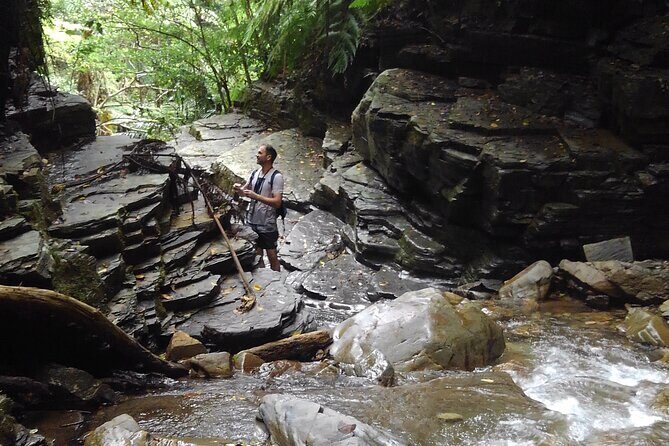
- River walking with real nature stakes: you follow a jungle river route where rocky bits and small falls shape the day.
- Waterfall time is part hike, part reset: you get a break at the falls—snacks and downtime help you actually enjoy it.
- Endemic wildlife context (without feeling like a lecture): you’ll pass banyan trees and hear about the Yanbaru Kuina and other local species.
- Guide gear is a big deal: neoprene booties for wading show up, plus extra help to reduce the mess.
- Fitness is flexible, but not pretend-flexible: the easy route is friendly, but the extended option can get more rugged.
Yanbaru Jungle River Trek: What You’re Really Signing Up For
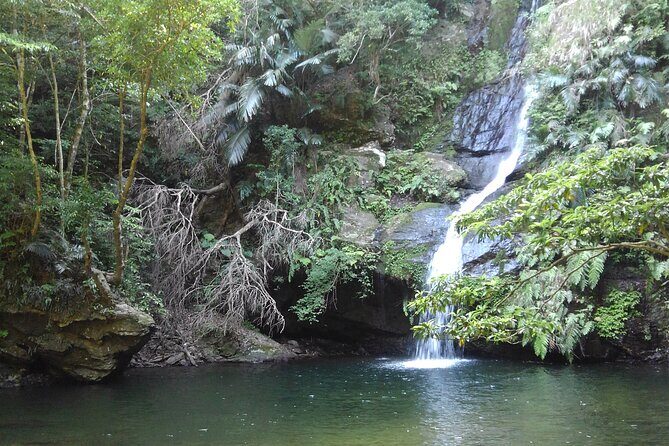
This isn’t a dry “walk in the park” kind of outing. You’re going into the Yanbaru side of Okinawa, where humidity, river steps, and lush growth are part of the deal, and Nik guides you through the rhythm of a real jungle hike.
The payoff is both visual and emotional. You move through shaded greenery, hear water running, and get a break at mini waterfalls—with a waterfall swim option in summer. It’s the kind of outing that feels like outdoor stress relief, but still gives you the fun of an adventure.
You can also read our reviews of more private tours in Okinawa

Start Point in Nago: The Quick Setup That Matters
You’ll meet at 888 Makiya, Nago, Okinawa (905-1143), and the activity ends back at the same place. That “back to the start” format keeps things simple, especially if you’re using public transport or don’t want to coordinate a separate end point.
One detail I’d plan for: you’ll likely get wet. Even if you don’t swim, you’re on a river route with rocks and water crossings, so the day can run damp and humid from start to finish.
Walking the Yanbaru River: Jungle Steps, Humidity, and Wildlife Clues
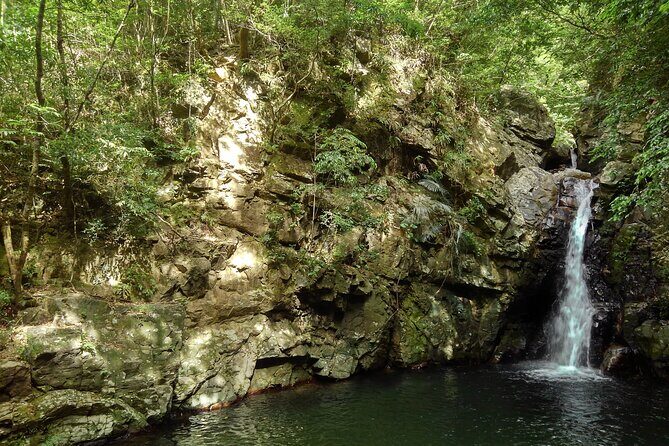
Your first chunk of time is about getting into the Yanbaru zone and warming up your legs for what’s ahead. The route follows a jungle river corridor, so you’re constantly in the green—close enough to feel the humidity, but guided in a way that keeps it manageable.
This is also where the “Yanbaru” meaning comes into play. Yanbaru refers to the field-and-mountain feel of northern Okinawa—greener, wetter, and home to species found there and nowhere else. Nik points out local wildlife context like the Yanbaru Kuina bird (often called elusive) and towering banyan trees, helping you connect what you’re seeing to what makes the region special.
What to expect: shaded walking, changing footing, and frequent chances to pause and look. The “easy on the body” factor depends on your route choice, but the overall pacing is designed to stay friendly.
Mini Waterfalls and the Nature Reset Break
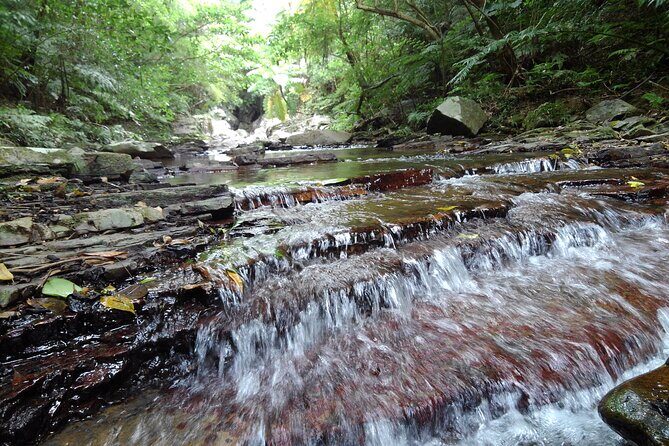
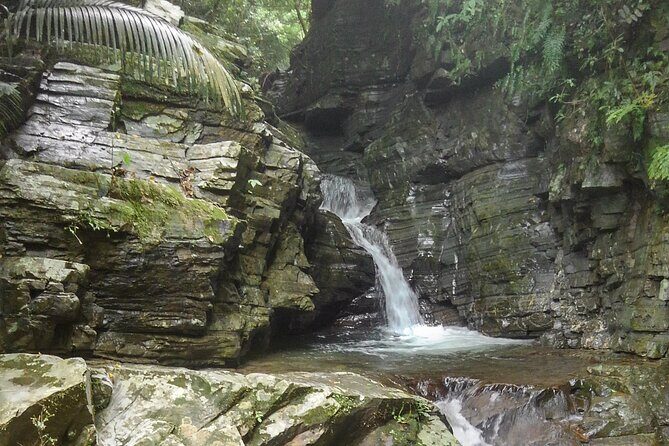
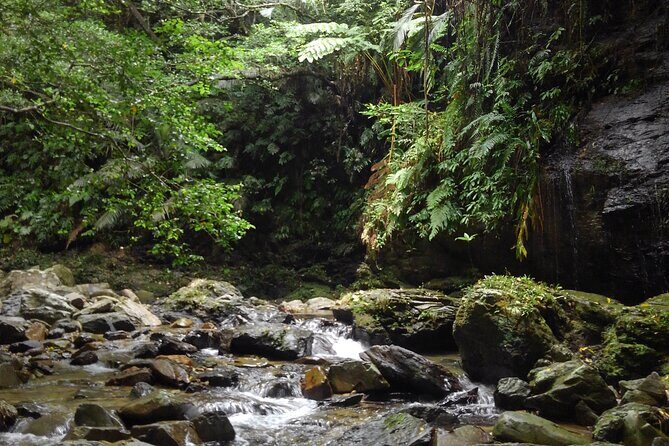
As you continue upstream, the terrain tends to get more rugged. Think rocky outcrops, mini waterfalls, and the kind of river-adjacent footing that asks you to be alert without turning it into a survival test.
This is where the day balances out: you’re exercising, but you’re also getting a break from screens and crowds. The trip is built around that Japanese outdoor tradition of spending time in the forest to calm your mind and reset your attention—water sounds and leaf rustling do most of the work.
If you’re the type who likes photos, you’ll likely find good spots, but the bigger win is the feeling of being in a quiet, living ecosystem where you can stop and actually breathe.
Waterfall Time: Tea-Style Pauses and the Summer Swim Option
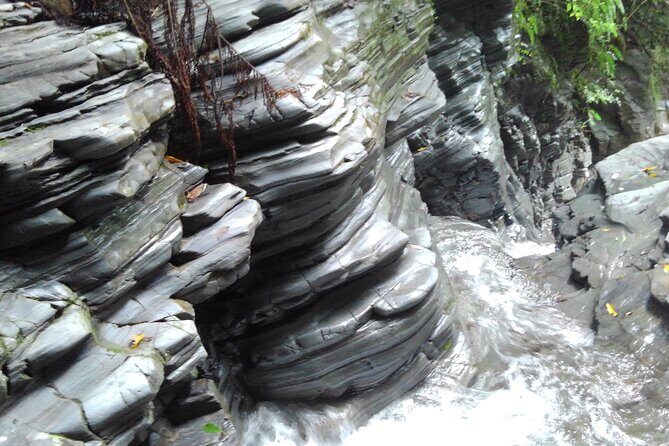
The highlight is the waterfall portion. You’ll reach a waterfall where you stop for a break, and in summer you can take a refreshing swim at the base. The water there is described as cool and clear, with rocks around it—exactly the kind of place that feels like a reward after the walk.
Even if you skip the swim, you still get waterfall time. The experience is set up so the climb doesn’t feel like a grind; it turns into a moment to cool off, relax, and enjoy the sounds of running water.
A note on expectations: the swim is seasonal. If you’re visiting outside summer, you can still enjoy the waterfall break, but don’t build your whole plan around getting into the water.

Nik’s Guide Style: English Communication and Real Flexibility
This tour is private, and that matters. Nik is known for being kind and thoughtful, and the communication is a standout. If you’re used to tours that run on autopilot, you’ll appreciate that this one adapts.
That flexibility shows up in small ways that actually change your day:
- If your food needs are different, Nik can adjust. One example from the experience: a vegetarian lunch request was handled quickly.
- He supports your confidence on the climb. Multiple people noted his sure-footed guidance and helpful attitude when the terrain gets tricky.
- He provides practical help to handle the wet parts of the trip—neoprene booties for wading came up again and again, and there’s also mention of extra gear to help you stay dry as much as possible.
- At the summit or break point, there’s often a snack, so you’re not just marching and hoping you find food later.
One more practical benefit: accessibility to the day for visitors without a car. Pickup from Nago Station has happened for at least some participants, and Nik has also dropped people back to a bus stop on the return.
Difficulty Levels: How to Choose the Right Effort
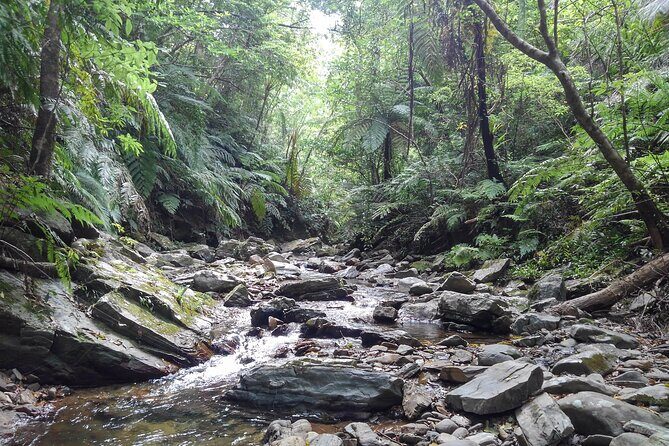
This trek is not one-size-fits-all. The route can vary from a gentle dry path stroll to a longer, more challenging walk that involves navigating shallow river beds and rocks and boulders.
Here’s the baseline suitability: it works for most ages and abilities, especially if you can walk about 1 km on a maintained path with a few stairs. If you choose the extended option, expect more rugged river walking.
There’s also a body-weight consideration listed by the operator: the activity may not be suitable for individuals with a BMI around 30 or over or for people over 109 kg / 240 lb. If you’re near that range, it’s smart to contact the provider before booking.
What to Bring (So You Don’t Spend the Day Thinking About Logistics)
Even with guide support and provided wading gear, your comfort depends on what you pack.
Bring:
- clothes that can get wet
- a towel
- a change of clothes for after the hike
- anything you need for sun protection (the humidity can feel intense even if the air isn’t scorching)
The info also suggests you may be able to leave your change of clothes in the car depending on season. That’s worth planning, because keeping dry clothes separated from wet gear is the difference between feeling refreshed at the end and feeling cold or sticky on the ride back.
Duration and Pace: The Sweet Spot for a Half-Day Adventure
Expect roughly 2 to 3 hours. That’s long enough to feel like you left the resort bubble, but short enough that you won’t blow your entire day.
Because it’s private, pacing is more flexible than standard group hikes. If someone in your group needs slower breaks, it’s usually doable. If you want more challenge, the extended option can add distance and tougher river walking.
Price and Value: Is $69.02 Worth It?
At about $69.02 per person, you’re paying for a few things that often cost extra when bundled poorly elsewhere: a private guide, local nature knowledge, and equipment support for wet walking.
For value, I look at three questions:
- Do you get a meaningful experience for the money? Yes—this is a guided Yanbaru river walk with a waterfall stop and (in summer) a swim.
- Is it safer and easier than doing it on your own? The guide’s sure-footed technique and wading help (like neoprene booties) can be a big deal on rocky river terrain.
- Do you get flexibility? People noted Nik’s adaptability—communication, pace, and even meal preferences like vegetarian needs.
If you compare the cost to the price of a solo guide plus transport-plus-ticket logistics, this can feel reasonable—especially because it’s only your group.
Weather and River Reality: How the Day Handles Okinawa
The tour operates in most weather conditions, but it requires good weather. That means if conditions are poor, you may be offered a different date or a full refund.
In practice, this matters because tropical weather can change quickly, and river walking is sensitive to surface conditions. I’d keep your schedule light around this day so you can accept a reschedule if needed.
When You Should Book This Tour
Book it if:
- you want a private nature experience in northern Okinawa rather than a busier day-trip
- you like water features and want a waterfall break that’s part of the hike, not just a photo stop
- you’re aiming for a more “move + reset” outing, the kind that feels like forest time
- you want an English-speaking guide named Nik who’s known for good communication and real flexibility
Skip it (or ask more questions first) if:
- you’re outside summer and you specifically want a waterfall swim
- you’re not comfortable with potentially wet conditions and uneven river steps
- you’re in the BMI/weight range mentioned by the operator, since it may not be suitable
FAQ
FAQ
How long is the Okinawa Jungle Trails & Waterfalls private Yanbaru tour?
It runs about 2 to 3 hours.
Is this tour private or shared with other groups?
It’s private. Only your group participates.
Where do you meet for the tour?
The meeting point is 888 Makiya, Nago, Okinawa 905-1143, Japan. The tour ends back at the meeting point.
Can I swim at the waterfall?
Yes, but the swim at the waterfall is listed as summer only.
What difficulty level is this hike?
It can range from a gentle path stroll to a more challenging extended walk. The difficulty is adjusted to your ability on the day.
How fit do I need to be?
It’s suitable for most travelers who can walk about 1 km on a maintained path with a few stairs. The extended option is more challenging.
What should I wear and bring?
Wear clothes that can get wet. Bring a towel and a change of clothes for after. You may be able to leave the change in the car depending on the season.
Does the tour run in bad weather?
It operates in most weather conditions, but it requires good weather. If canceled due to poor weather, you’ll be offered a different date or a full refund.
Are there any admission fees?
The activity includes tickets marked as free at the stops listed.
Is there a cancellation policy?
You can cancel for a full refund up to 24 hours before the experience’s start time. Cancellation within 24 hours isn’t refunded, and changes less than 24 hours before the start time aren’t accepted.
Is there a weight or BMI limit?
The information notes it may not be suitable for those with a BMI around 30 or over or over 109 kg / 240 lb. Contact the provider if this might apply to you.
If you want, tell me your travel month and your group’s comfort level with wet, rocky footing, and I’ll help you decide how to plan the pace for the day.