REVIEW · TAKAMATSU
Art Island Naoshima BROMPTON Slow Cycling Tour
Book on Viator →Operated by BROMPTON SLOW CYCLING TOURS · Bookable on Viator
Naoshima looks different at bike speed. This BROMPTON slow cycling tour uses a ferry from Takamatsu to Naoshima, then guides you through the island’s art areas at a calm pace. You start with the famous red pumpkin vibe, roll past photo-worthy public artworks, and end with an easygoing ferry ride back with Seto Inland Sea sunset light.
I love the mix of an art-focused route and real-world comfort: the small group size (up to 6) and guide support make it doable even if you are not a confident cyclist. I also like that you do more than street art—you get a shot at major museum stops like Chichu Art Museum and Benesse House as part of the day’s flow.
One possible drawback is cost creep: the tour price covers the bike and guide, but the ferry and museum/art-house ticket fees are separate, so your final spend depends on how many indoor sites you want to add. Also, the tour depends on good weather, so plan for schedule shifts.
In This Review
- Key things that make this tour work
- Bromptons on Naoshima: why this ride feels different
- Takamatsu Port to Naoshima: getting there without making it complicated
- Akakabocha and the early-art warm-up in Miyanoura
- Honmura back alleys and the Art House Project pace
- Chichu Art Museum and Benesse House: planning for the big-ticket stops
- The return route and sunset ferry back to Takamatsu
- Price and value: what $129 really buys you
- Who should book this Brompton Slow Cycling Tour
- Should you book it?
- FAQ
- Where is the meeting point for the tour?
- What time does the tour start?
- How long is the tour?
- What is included in the tour price?
- What is not included in the tour price?
- Is this tour suitable if I am not an experienced cyclist?
- How many people are in the group?
- What happens if the weather is bad?
Key things that make this tour work
- Brompton folding bikes: easy to handle and fun for short-and-medium art runs
- Guide help for beginners: you do not need to be a cyclist to keep up
- Honmura back-alleys on purpose: this is where the Art House Project vibe lives
- Major museums are in the plan: Chichu Art Museum and Benesse House Museum are within reach
- Return ferry has its own moment: you ride back with time for sunset over the Seto Inland Sea
Bromptons on Naoshima: why this ride feels different
Naoshima can be a lot of walking if you try to do everything on your own. This is built around a simple idea: use a British-made Brompton for the in-between distances, then let the guide keep the rhythm human. The result is that you spend more time looking at art and less time thinking about directions.
The “slow cycling” part is not just marketing. The pacing matters on Naoshima because the best moments are often brief: a sculpture you spot from the sidewalk, a doorway installation you only catch as you turn a corner, or a quiet alley that suddenly feels like a scene from a movie. With a steady, unhurried plan, you do not have to sprint from one highlight to the next.
Also, because the tour combines bike time with public transportation connections (and the guide manages the flow), it’s less stressful than piecing together ferry schedules and local routes yourself. You’re not fumbling maps while balancing a folding bike.
You can also read our reviews of more tours and experiences in Takamatsu.
Takamatsu Port to Naoshima: getting there without making it complicated
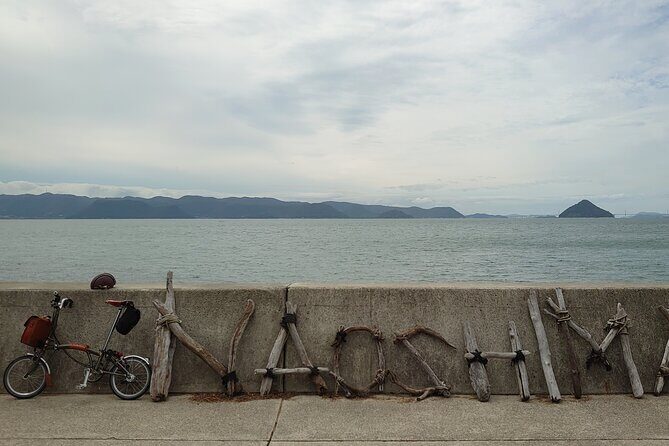
Your day starts at Takamatsu Port 8 Sunport around 9:45 am, and the first big piece is the ferry ride to Naoshima’s Miyanoura Port. The practical win here is that your bike is part of the trip from the start, so you are not stuck with a transportation plan that only works if you travel light.
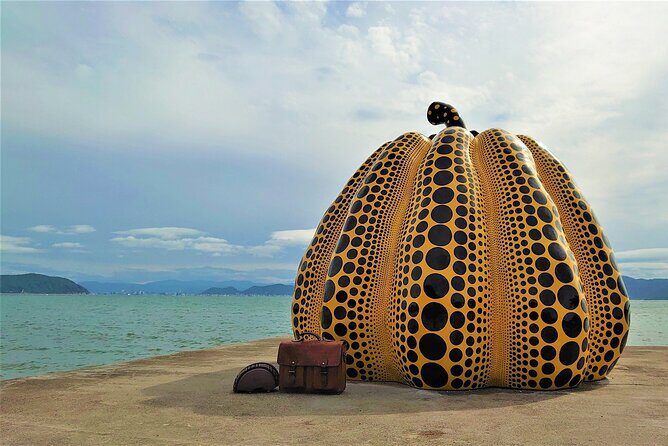
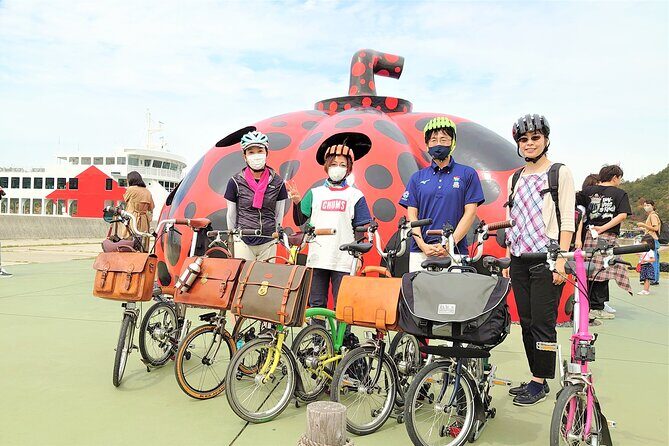
When you land, you get an immediate identity hit: the iconic red pumpkin (Akakabocha) is right there as your visual anchor. That matters more than you might think. On an art island, landmarks help you orient quickly, and you’ll start noticing how the town’s installations fit together.
And the guide’s role matters early. If you are still getting comfortable with your Brompton, the first stretch is when guidance helps you feel in control. One of the strongest impressions from people who did this tour is how friendly and supportive guides can be, including when the wind is strong or the pace needs adjusting.
Akakabocha and the early-art warm-up in Miyanoura
The day’s first stop is Akakabocha, and it sets the tone: casual, iconic, and perfect for that first wave of photos. You will see how Naoshima’s art isn’t limited to museums. Even in public spaces, the island loves a clear visual symbol, and that red pumpkin works like a kickoff flag.
From there, you’ll move through the areas where art tends to be scattered—so you can stop, look, shoot photos, and still keep rolling. This part is ideal if you want your day to feel like discovery rather than a checklist. You also get the nice rhythm of “cycle a bit, pause for art, cycle again,” which is exactly what a slow tour should feel like.
A small tip: if you’re planning to use your phone camera heavily, keep your pauses short and intentional. The island is easy to enjoy in pieces, and you’ll get better results if you don’t lose track of time before the museum windows.
Honmura back alleys and the Art House Project pace
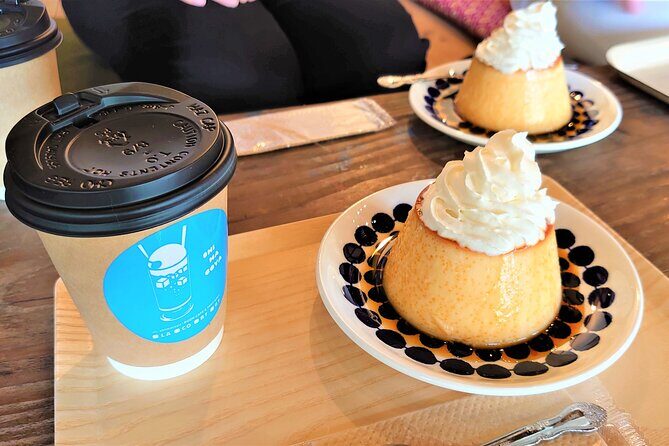
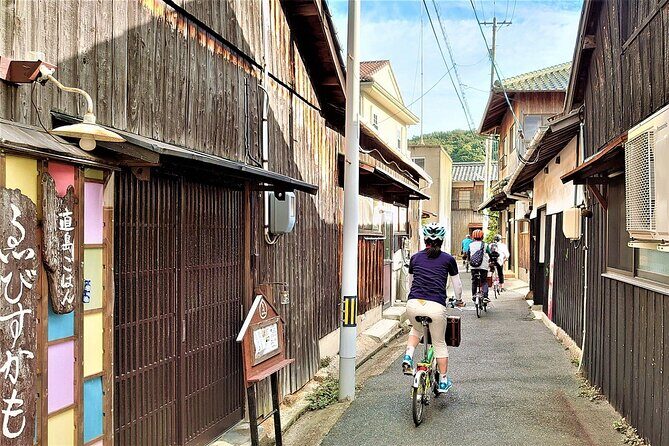
The heart of the day is the Honmura area on the east side, where you’ll find the House Project style of art—art you experience in and around homes, courtyards, and tight little streets. This is where cycling becomes useful but not dominant. The best parts often happen when you park the bike and take the short walk, turning slowly through narrow lanes.
Honmura is built for wandering with purpose. You can stop at shops you like, drift toward street art when it catches your eye, and return to the bike without feeling rushed. It’s also a great match for the “slow” approach because the art here doesn’t demand speed. You’ll get more out of it if you stay curious and let each twist in the alley reset your attention.
There is a practical consideration, too: you’re paying for some of this experience separately. The Art House Project ticket is not included in the base price, and it’s an extra cost you should budget if you want those interior art-house moments.
Also note this: because Honmura is a walking-heavy experience, you’ll want to wear shoes that work well on uneven pavement and steps. Even if you’re strong on a bike, your feet will do a lot of the real art viewing.
Chichu Art Museum and Benesse House: planning for the big-ticket stops
The tour includes time to visit two internationally known sites: Chichu Art Museum and Benesse House Museum. These are the day’s “major stops,” the ones that pull Naoshima’s art reputation into focus.
Here’s the value logic for you: museums like these are often the hardest part of planning on your own because they come with entry fees and timing considerations. Having a guide route them into a single day—while you’re already on Naoshima and already rolling—saves mental energy, even if you still pay the entry tickets separately.
The fees do matter for budgeting. Chichu Art Museum costs 2,100 yen, and Benesse House Museum is not listed as an included fee in the information you’re given. So you’ll want to treat museums as add-ons when you total the trip.
Also, indoor art has its own pace. Even if you arrive ready to race, museum spaces typically reward quieter attention. The slow cycling format supports that. You’re not forced to squeeze a museum visit between two high-speed bike segments.
If you like a day that balances outdoor street art with rooms and spaces designed for art, this combination is a strong match.
The return route and sunset ferry back to Takamatsu
On the way back, you take a different route to Miyanoura Port. That change is more than just logistics—it helps prevent the day from feeling like you did one long loop the same way twice.
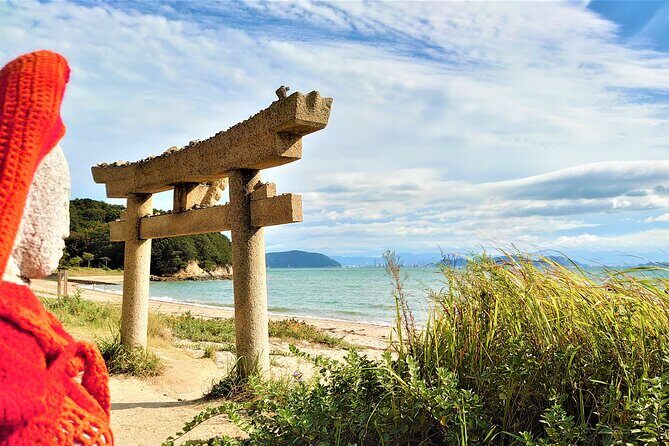
Then you head back by ferry toward Takamatsu Port, with time to enjoy sunset light over the Seto Inland Sea. This is a smart finishing touch. Naoshima days can be mentally intense, especially once you’ve done indoor spaces and ticketed art. The ferry ride gives you a decompression window without needing to plan anything extra.
One more reality check: this is a weather-dependent tour. If conditions are poor, you could see a date change or a refund option. So if you’re traveling in shoulder season, keep at least one extra day in your schedule if possible.
Price and value: what $129 really buys you
The headline price is $129 per person. For that, you get bicycle rental and guide fee. That’s the foundation of what makes the tour comfortable—someone handles the bike piece and the art route piece.
Where value gets tricky (in a useful way) is what is not included:
- Round trip ferry: 990 yen
- Chichu Art Museum: 2,100 yen
- Art House Project: 1,050 yen
- Tour insurance: 500 yen
- Lunch and souvenirs (your choice)
So the real question is: are you planning to pay for the museum and house experiences anyway? If your answer is yes, the tour looks more efficient because you’re paying for guidance, bike support, and a day that connects it all without you spending hours plotting routes.
If your answer is no—if you only want the outdoor public art and photos—then you might still enjoy the ride, but you should do the math so you do not overpay for museum access you skip. Either way, I’d treat this as a “guided art day with a bike,” not a cheap transport ticket.
Also, reservations are described as supporting two people or more, and there are group discounts. If you’re traveling with a friend, the price often feels easier to justify because the experience is naturally social.
Who should book this Brompton Slow Cycling Tour
This tour fits best if you want:
- A structured Naoshima day without micromanaging routes
- Beginner-friendly cycling support, since the guide helps you keep going even if you are not confident
- A balance of street art and big-name museum time
- A small-group vibe (up to 6), where questions and pace adjustments actually happen
You might skip this one if you want a super intense workout or if you dislike paying separate ticket fees for museums and art houses. Also, if you’re traveling with very limited mobility, note that the day includes walking time around art areas even though cycling is part of the plan.
Should you book it?
I’d book this tour if you’re going to Naoshima and you want an art-filled day that feels manageable. The Brompton + guide support combo is the main selling point, and it’s especially good if you want to see both outdoor installations and serious museum experiences without turning your day into a logistics project.
Skip it—or plan more carefully—if you’re only interested in free outdoor art, because the base price plus optional museum and Art House costs can add up fast. Also, because the tour relies on good weather, try not to schedule it as the single make-or-break day of your whole trip.
FAQ
Where is the meeting point for the tour?
You meet at Takamatsu Port 8 Sunport, Takamatsu, Kagawa 760-0019, Japan.
What time does the tour start?
The tour starts at 9:45 am.
How long is the tour?
It runs for about 8 hours.
What is included in the tour price?
The price includes bicycle rental and the guide fee.
What is not included in the tour price?
Not included are the round trip ferry (990 yen), lunch/souvenir fees, Chichu Art Museum (2,100 yen), Art House Project (1,050 yen), and tour insurance (500 yen).
Is this tour suitable if I am not an experienced cyclist?
Yes. The guide supports you, and the tour is described as doable even if you are not a cyclist and not very confident in your physical fitness (a moderate fitness level is still recommended).
How many people are in the group?
The maximum group size is 6 travelers.
What happens if the weather is bad?
The tour requires good weather. If it’s canceled due to poor weather, you’ll be offered a different date or a full refund.