REVIEW · GIFU PREFECTURE
Explore Kiso Valley : Magome – Tsumago Mountain Trail Walk
Book on Viator →Operated by Trip Designer Inc. · Bookable on Viator
Japan’s old highway on foot feels personal. In the Kiso Valley, this guided Magome–Tsumago trail walk mixes well-paced walking (about 5.5 miles / 9 km) with stops in preserved post towns, so you get the story of the Nakasendo Trail without the usual map stress. I like that it’s set up to be simple: bus tickets and entry fees are handled, and your guide keeps you on the right path.
I also like the variety packed into one day—views from an observatory, a pair of waterfall stops, then town streets and Edo-period buildings that you can actually see up close. The one thing to consider: this is not a casual stroll. You should have strong physical fitness for a 7-hour day with steady walking.
In This Review
- Key highlights worth planning for
- Kiso Valley and the Nakasendo: what makes this walk work
- Getting there and finishing at Nagiso Station
- Price and value: why $171.31 can make sense here
- Start in Magome-juku: the post town feeling right away
- Magome Observatory at 801 m: the view stop that breaks the day
- Odaki-Medaki Waterfalls: a quick stop with local meaning
- Otsumago and the preservation streets: where you feel the era
- Tsumago-juku: the post town where the inn system was built
- Nagisomachi Museum: stepping into a restored waki-honjin residence
- Wakihonjin Okuya: 1877, Japanese cypress, and the proof you can walk past
- Guides make the day: local stories you can’t get from a map
- Walking comfort: what to bring for a 9 km day
- Who this is best for (and who should skip it)
- Should you book the Magome–Tsumago trail walk?
- FAQ
- FAQ
- How long is the Magome to Tsumago trail walk?
- What distance will I walk?
- Where do I meet the guide, and when?
- Where does the tour end?
- Is this tour private?
- What’s included in the price?
- Is food included?
- Do I need to speak Japanese?
- What should I do about the return train ticket?
- Does the tour require good weather?
Key highlights worth planning for
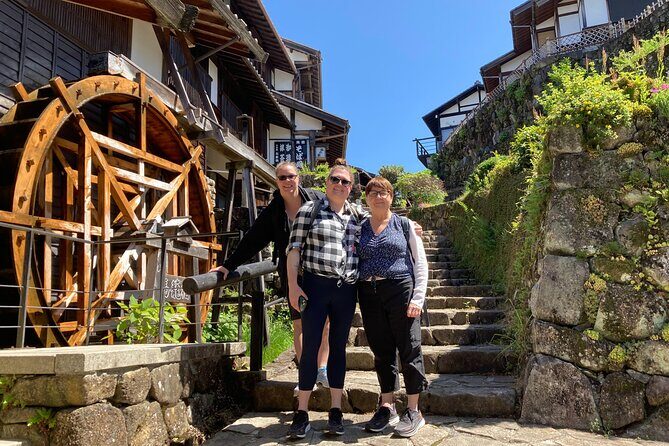
- Magome-juku to Tsumago-juku on the Nakasendo: medieval post towns tied to the Kyoto–Tokyo highway
- 9 km of walking with a guided route so you’re not guessing trail segments
- Bus + entrance fees included, so you can budget for food and nothing else
- Scenic stops with real payoff, including Magome Observatory at 801 m
- Edo-period architecture you can tour, like a restored residence used as a waki-honjin and provision store
- Local guides with hands-on connection to the trail (for example, Ryo and Kazuo)
Kiso Valley and the Nakasendo: what makes this walk work
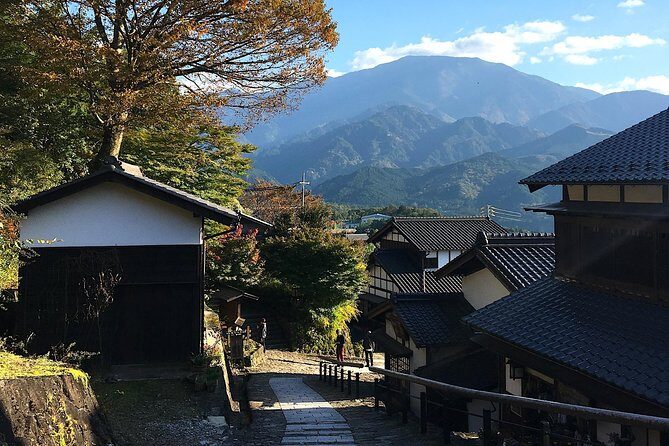
The magic of the Nakasendo isn’t just that it’s old. It’s that it’s specific. You’re not wandering around a theme park version of history—you’re walking between real post towns in the Kiso Valley, a region long associated with the Kyoto–Tokyo overland route.
This tour is especially good if you want a classic Japan day that still feels active. You’ll cover about 5.5 miles (9 km) on foot, but it’s broken up with stops so your pace stays comfortable. And since it’s guided, you don’t lose time trying to figure out what’s “the” trail and what’s just a side road.
Another thing I like: you get both big-picture context and small details. The big-picture part is the Nakasendo as a working highway with inns, officials, and provisioning. The small details show up in the architecture—house styles, preserved street layouts, and residences restored from historical plans.
You can also read our reviews of more tours and experiences in Gifu Prefecture.
Getting there and finishing at Nagiso Station
Your day is built around trains, which is a relief. You meet at Nakatsugawa Station at 9:00 am (right at the ticket gate area). From there, you head toward Magome-juku by bus, then transition into the walking portions.
At the end, you finish around 15:45 at Nagiso Station. Your guide will help you buy your train ticket back to your hotel or next stop, which saves time if you’re still getting your bearings in Japan.
Time-wise, plan on a full 7 hours. That sounds long on paper, but the route is punctuated with short breaks and timed stops. Still, you should treat this as a walking day, not a sightseeing-and-snap-photos-only day.
Price and value: why $171.31 can make sense here
At $171.31 per person, this isn’t the cheapest option in Japan—but it also isn’t priced like a luxury private driver day. The value comes from what’s included and what it prevents.
You get:
- English guide
- Bus ticket
- Entrance fees
That matters because two of the common “gotchas” on self-guided routes are cost creep (multiple admissions) and time waste (figuring out buses and where to start). Here, the structure is already done for you. You show up, follow the guide, and the paid parts of the day are covered.
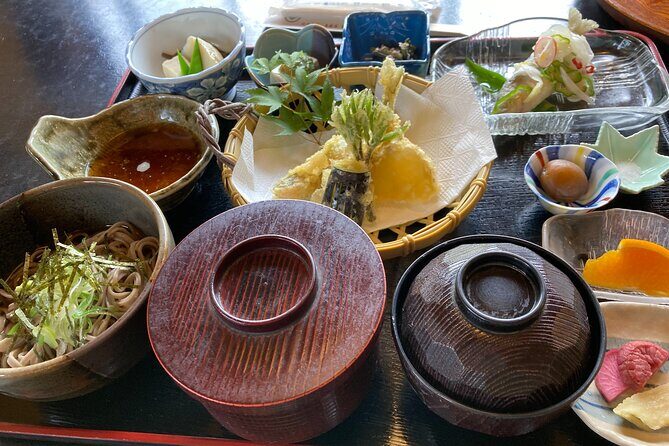
What’s not included is also important for budgeting: food & drink. So you’ll want to plan for meals or snacks during breaks. The good news is the route includes town stops where it’s realistic to eat something you like, even if you’re keeping it simple.
Also keep in mind booking timing. This is commonly reserved about 66 days in advance on average, so if you’re traveling during peak periods, it’s smart to lock it in earlier.
Start in Magome-juku: the post town feeling right away
Once you meet at Nakatsugawa Station, the bus ride gets you to your first real taste of the Nakasendo. Your first stop is Nakasendo Magome-juku.
This is a post town—meaning it wasn’t just a place to look at buildings. It was built to support travelers: lodging, provisioning, and the steady flow of people moving along the highway. You’ll spend about 40 minutes here, which is enough time to get oriented, see the preserved town atmosphere, and notice the “why” behind the layout.
One underrated benefit of starting in Magome: you ease into the story. You’re not jumping straight into hiking. You get town context first, then the day turns into trail and scenery.
And since it’s private for your group, the guide can adjust the pace to your comfort level without the pressure of a big tour schedule.
Magome Observatory at 801 m: the view stop that breaks the day
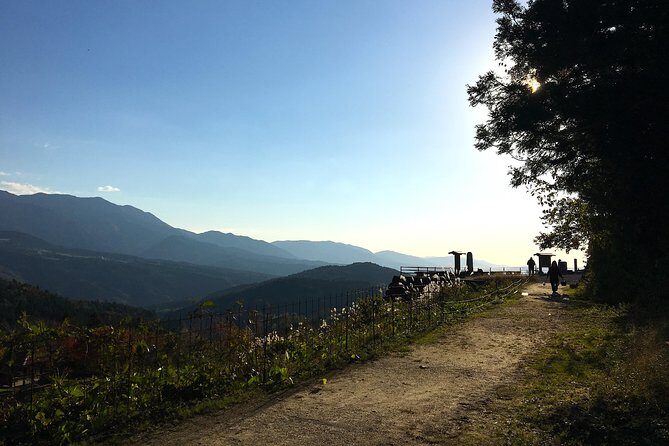
Next comes a short move up to Magome Observatory, located just uphill from Magome-juku.
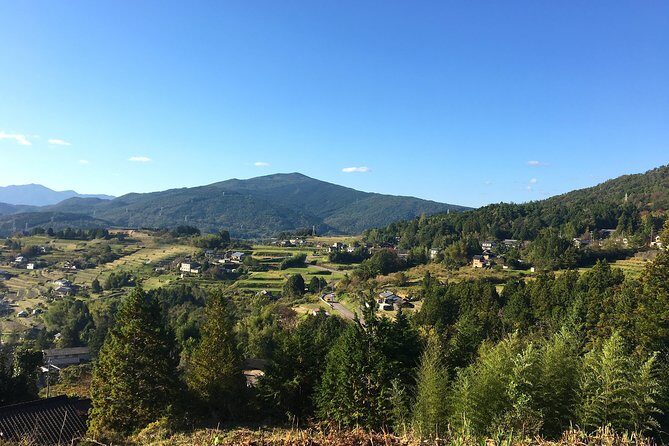
This stop is about 15 minutes, and the payoff is altitude. You’re at 801 m, described as the highest point on the Magome–Tsumago hiking course. Even if you don’t linger, it’s a strong way to reset your brain halfway through the day—views help you understand the geography behind the route.
If you like trail days, this is a practical kind of scenic stop. It gives you a sense of where you are without turning the whole day into a long walking slog.


Odaki-Medaki Waterfalls: a quick stop with local meaning
Then it’s a short break at the Odaki-Medaki Waterfalls. You’ll have about 10 minutes here, which is perfect if you’re moving through several stops and don’t want your schedule swallowed by one location.
The details are fun and very Japan: the falls are described as Odaki (man waterfall) and Medaki (woman waterfall). It’s a simple stop, but it adds texture beyond buildings and streets. You get sound, moisture in the air, and a different kind of scenery.
It’s also the kind of place where your guide can point out what to watch for in the surroundings—something that’s hard to do on your own.
Otsumago and the preservation streets: where you feel the era
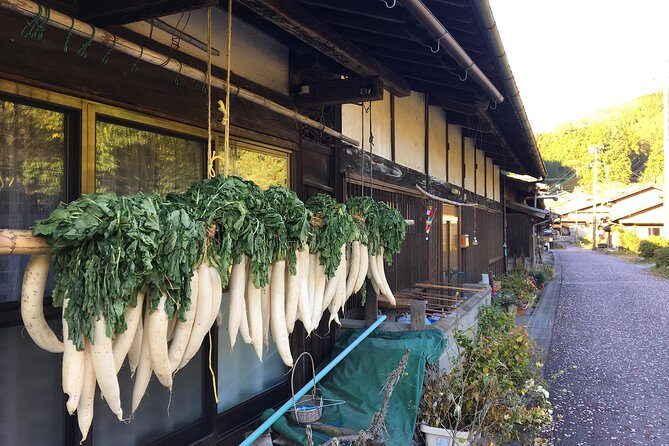
After the early trail scenery, you shift into another side of Kiso Valley: Otsumago.
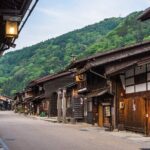
This area is part of the Tsumago-juku preservation district, known for houses built in Hon-Udatsu and Dashibari styles. You’ll have about 20 minutes, which is enough time to see the streetscape, recognize the building style differences, and understand why preservation matters here.
What I find useful about Otsumago is that it teaches you how the towns were designed for travel. The preserved streets aren’t just “pretty.” They reflect what travelers would have experienced—tight, practical layouts; distinct house facades; and a town rhythm shaped by the highway.
The main “consideration” at this point is the reality of time and walking energy. If you’re tired, it can be tempting to hurry. But Otsumago rewards slower attention. Even five extra minutes to look at doorways, facade shapes, and street angles makes the visit feel more meaningful.
Tsumago-juku: the post town where the inn system was built
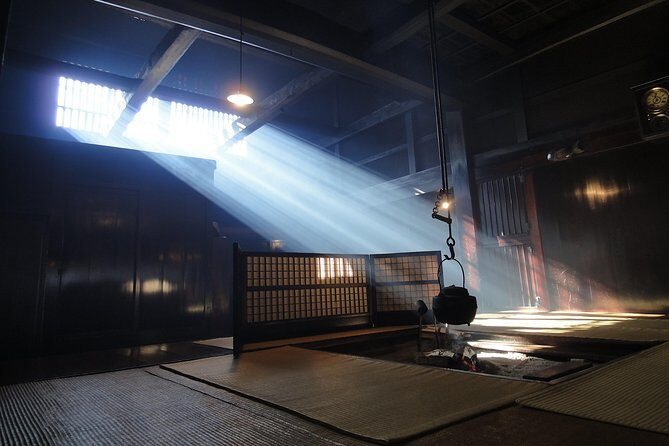
Next comes the heart of the day for many people: Nakasendo Tsumagojuku. You’ll spend about 1 hour 10 minutes here.
This is where the highway system becomes concrete. Tsumago-juku used to have:
- one Honjin inn
- one Waki-Honjin inn
- 31 Hatago inns
That’s a big deal, because it tells you who stayed where. Honjin and Waki-Honjin were for higher-status travelers and officials, while Hatago were for common travelers. Even if you’re not a history buff, those numbers give you a mental map of how the town functioned.
Another reason Tsumago works so well on foot: the town is made for strolling. When you move through it as part of a guided walk, you notice how the streets guide your eye and how the preserved buildings shape the experience.
If you’re the type who loves photos, you’ll likely get plenty. But I’d also suggest you take a minute between photo stops and just look at the street line—where the road bends, how the town opens, and what that means for travelers heading to the next post town.
Nagisomachi Museum: stepping into a restored waki-honjin residence
After Tsumago, you move into a more indoor, story-heavy stop: Nagisomachi Museum.
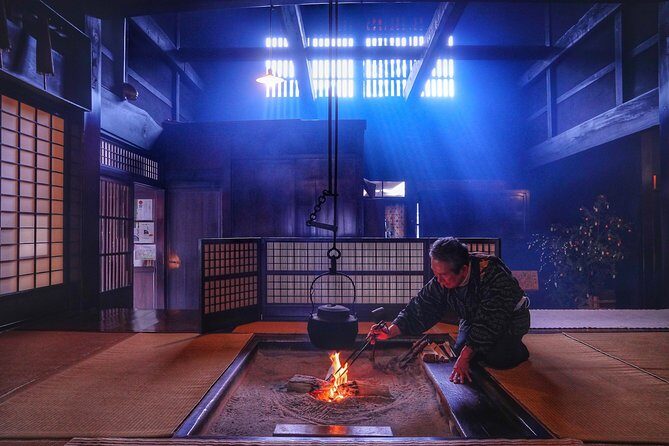
The museum is located inside a Waki-honjin Okuya residence—including the Hayashiya House, noted as a designated Important Cultural Property. You’ll have about 25 minutes for this.
The museum is restored using late Edo period floor plans. That matters because you’re not just looking at old-looking rooms. You’re seeing a reconstruction that tries to match how the residence would have been organized during its historic use.
Even if you’re not deeply into architecture, this stop gives you a different kind of perspective. It answers the practical question behind the highway: what did support infrastructure actually look like? Where did goods go? How were roles organized? How did daily spaces connect to traveling life?
Wakihonjin Okuya: 1877, Japanese cypress, and the proof you can walk past
You then tour Wakihonjin Okuya, another 25-minute stop with an included entrance.
This residence served as a waki-honjin and a provision store for generations. It’s built from fragrant Japanese cypress, and the material detail is part of the story: it was legalized as a building material only fairly recently at the time the residence was built (in 1877).
To me, that’s one of the strongest “value” elements of the day: you get more than a general lecture about the past. You see the wood, the layout, and the kind of craftsmanship that would support traveling communities.
If the weather is good, this day already gives you plenty outdoors. But if the day turns a little gray, these indoor stops keep the pace enjoyable without feeling like you’ve lost the day to clouds.
Guides make the day: local stories you can’t get from a map
A guided route is one thing. A good guided route is another.
From the tone of recent experiences around this trail, you’ll get guides who genuinely know the area firsthand. Names that have come up include Ryo, Kazuo, Moto, and Harumoto. In particular, one guide noted in feedback grew up in the Nakasendo trail area, and that kind of connection shows when someone can connect a view, a building style, or a town corner to a lived understanding.
You’ll feel that most in two moments:
1) when you’re walking and don’t have to worry about route confusion
2) when the history shifts from facts to context—like how the town’s inn system worked or what a residence functioned as beyond just being “old”
Also, a theme in the feedback is that the day feels relaxed. That’s not an accident. With timed stops and a guide pacing you, the walk feels like a planned day rather than a stress test.
In one shared experience, the guide also introduced a meal and special treats along the way. Even if you plan your own food, it’s a hint that the guide may offer useful suggestions so you’re not stuck wondering where to stop.
Walking comfort: what to bring for a 9 km day
Because this is a walking day with strong fitness expectations, take comfort seriously. You’ll want:
- Good walking shoes with grip
- A small day bag you can manage while moving between stops
- Layers, because weather can shift through valleys and higher viewpoints
I’d also pack a water bottle, even though the tour includes transport and admissions rather than drinks. Food and drink aren’t included, and you don’t want to be hunting when you’re tired.
If you tend to get cold at viewpoints, bring a light layer for the observatory area. If you tend to overheat, plan to shed layers as you move between town sections.
Who this is best for (and who should skip it)
This experience is best for active travelers who want a guided slice of the Nakasendo between Magome and Tsumago. If you like history but don’t want a museum-only day, this mix is strong.
You’ll also like it if you:
- want 9 km of walking without needing to navigate on your own
- prefer a structured day with bus + entrance fees included
- enjoy preserved towns with real streets you can move through on foot
If you’re looking for a very slow, minimal-walking experience, this may feel like too much. The tour expects strong fitness, and the day runs about 7 hours.
Should you book the Magome–Tsumago trail walk?
If your goal is a classic Kiso Valley day that’s active, guided, and built around real preserved towns, I’d say yes. The combination of route support, included admissions, and a walk length that’s doable for many active travelers makes it a smart way to experience the Nakasendo without turning your day into logistics.
I’d think twice only if you’re sensitive to walking time or you’re not comfortable with a sustained route. Otherwise, this is the kind of trip where a guide’s local stories add weight to what you see—and the town-to-trail rhythm keeps the day from dragging.
FAQ
FAQ
How long is the Magome to Tsumago trail walk?
It runs for about 7 hours.
What distance will I walk?
You’ll walk about 5.5 miles (9 kilometers).
Where do I meet the guide, and when?
You meet your guide at Nakatsugawa Station at 9:00 am.
Where does the tour end?
The tour ends at Nagiso Station at around 15:45.
Is this tour private?
Yes. It’s a private tour/activity with only your group participating.
What’s included in the price?
The price includes an English guide, a bus ticket, and entrance fees.
Is food included?
No. Food & drink are not included.
Do I need to speak Japanese?
No. The tour includes an English guide.
What should I do about the return train ticket?
Your guide will help you buy the train ticket back to your accommodation at the end of the tour.
Does the tour require good weather?
Yes. It requires good weather, and if it’s canceled due to poor weather, you’ll be offered a different date or a full refund.