REVIEW · NAHA
Original Street Kart Experience in Naha, Okinawa
Book on GetYourGuide →Operated by Reservation Center · Bookable on GetYourGuide
A costume, a street kart, and Naha air in your face. This is a guided ride where you drive a little, pose a lot, and collect photo data you did not have to take yourself. I love how the guide handles the safety basics clearly before you join traffic, and I really like that you get to choose between a quick 1-hour style run or a longer 2-hour course. The one thing to think about is the IDP and rules part: you must have the right driving paperwork and follow the ride restrictions.
You’ll cruise past the Naha Airport area and the famous Kokusai Street, usually with a stop on the long option. The guides are genuinely interactive and photo-focused, and I’ve seen first-hand how a good guide can turn a technical ride into a fun, confidence-building outing. Still, you’re on a kart on public roads, so it’s not for everyone—no back issues, no mobility limits, and not the kind of plan for pregnant riders or folks who can’t safely handle a vehicle setup.
In This Review
- Key Points at a Glance
- Price and Time: Is $35 Good Value in Naha?
- Two Routes That Change the Whole Vibe: 1 Hour vs 2 Hours
- The Real Deal Breaker: IDP, Passport, and the License Rules
- Safety Setup at the Shop: Gear, Costumes, and a Driving Tutorial
- Rolling Through Naha: Airport Views and Kokusai Street Energy
- The Photo Plan: How You’ll Get Your Souvenir Without Doing Anything
- Senaga Island on the Long Course: Why That Stop Matters
- What This Experience Is Really Like (On the Road)
- Who Should Book This, and Who Should Skip It
- Should You Book Street Kart in Naha?
- FAQ
- Do I need an International Driving Permit (IDP) to drive the street kart?
- What should I bring for check-in?
- How long are the tours?
- What’s included in the price?
- Are cellphones allowed during the ride?
- Is there an option for an action camera?
Key Points at a Glance
- Two course lengths: choose a shorter 1-hour course or a longer 2-hour course
- English-speaking guide who teaches you how to drive before you roll out
- Naha highlights on the route including passes by Naha Airport and Kokusai Street
- Long-course break at Senaga Island for a breather and a scenery shift
- Guide-taken photos included as photo data at the end of your ride
- Clear driving requirements: you’ll need the right International Driving Permit (IDP) plus passport
Price and Time: Is $35 Good Value in Naha?
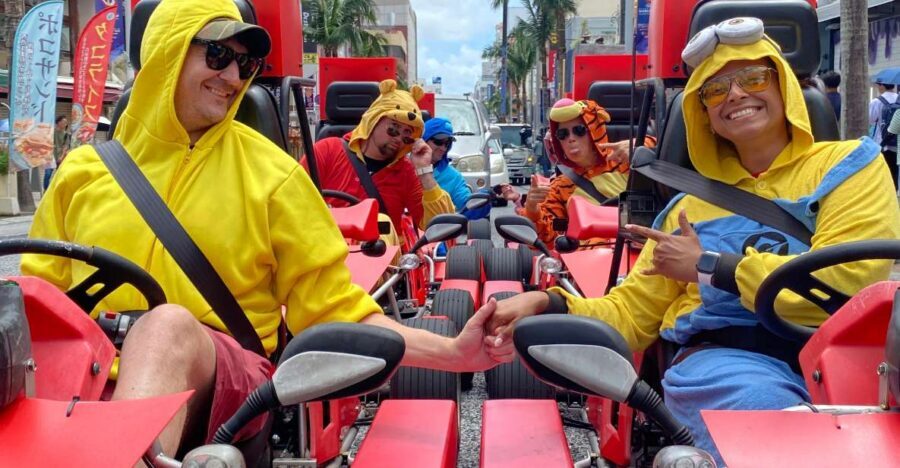
At $35 per person, this street kart experience is a solid value—mostly because it’s not just a rental. Your money covers the kart, gasoline, an English-speaking guide, costumes, goggles, and even a rain coat if weather turns. You also get photo data from the guide, which matters more than it sounds. With a street-kart ride, you are busy steering and staying aware, so having someone else capture the moments is a real convenience.
Time-wise, plan on 90 to 150 minutes total. That range covers check-in, instructions, and the actual driving time. If you choose the shorter course, you’ll feel the action faster. If you choose the longer course, you’re buying more riding time plus the added scenery break at Senaga Island.
One practical note: you must show up 15 minutes early. If you’re late, you won’t be able to join. That rule is strict because they have to assign karts, fit gear, and time the group into traffic safely.
You can also read our reviews of more tours and experiences in Naha.

Two Routes That Change the Whole Vibe: 1 Hour vs 2 Hours
The big choice is simple: go shorter for maximum fun-per-minute, or go longer for a more complete Naha loop.
Short course (about 1 hour):
You’ll drive by the Naha area highlights, including the route near Naha Airport and the famous Kokusai Street area. This option is best if you want energy and entertainment without committing to the full time block.
Long course (about 2 hours):
You still get those Naha highlights, but the longer route adds a brief stop at Senaga Island. That change matters because it gives you a contrast moment—more sea-and-land feeling, a chance to reset, and a natural spot for photos. The long course also tends to feel more like a “real experience” instead of just a quick spin.
In both cases, the guide takes photos during the ride and gives you the photo data afterward. That means the longer you ride, the more chances you have for costume-and-street memories.
The Real Deal Breaker: IDP, Passport, and the License Rules
This is where you either glide through planning or hit stress.
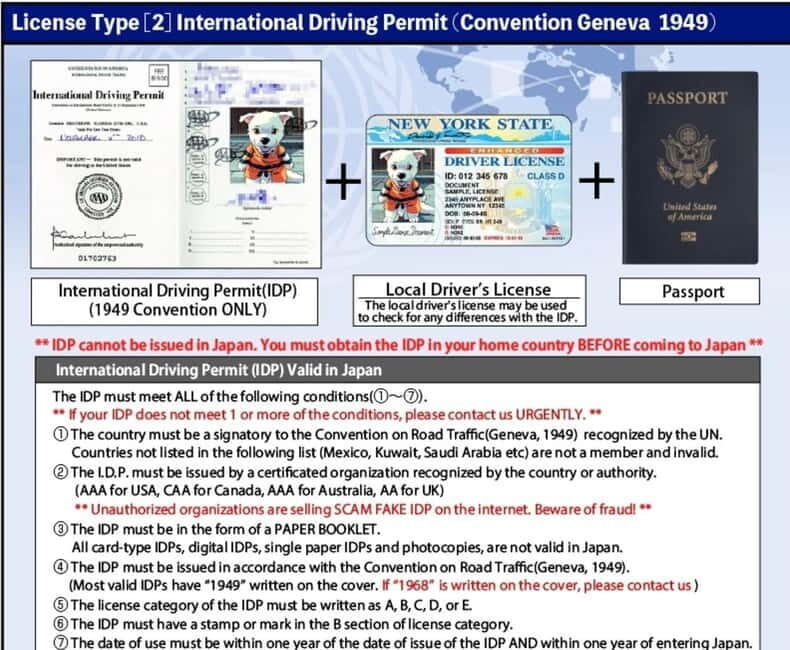
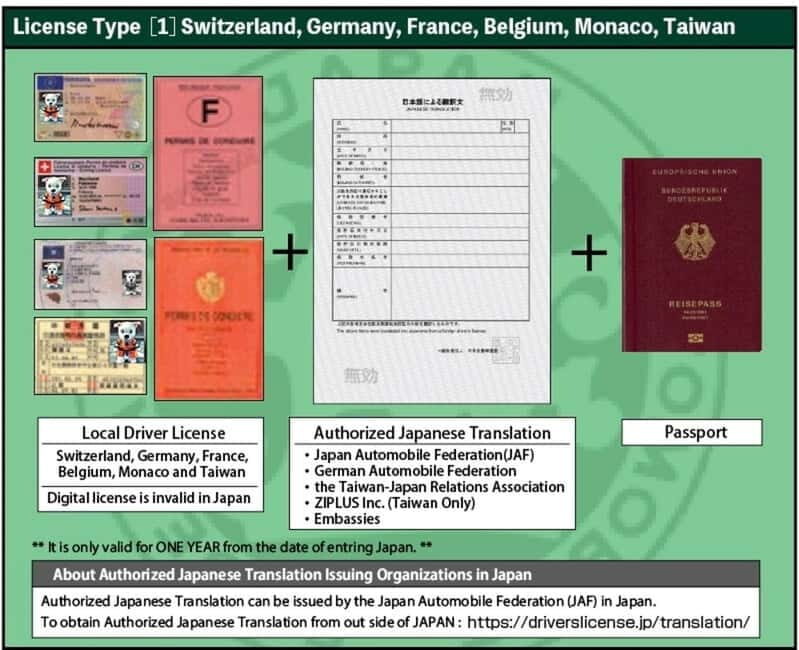
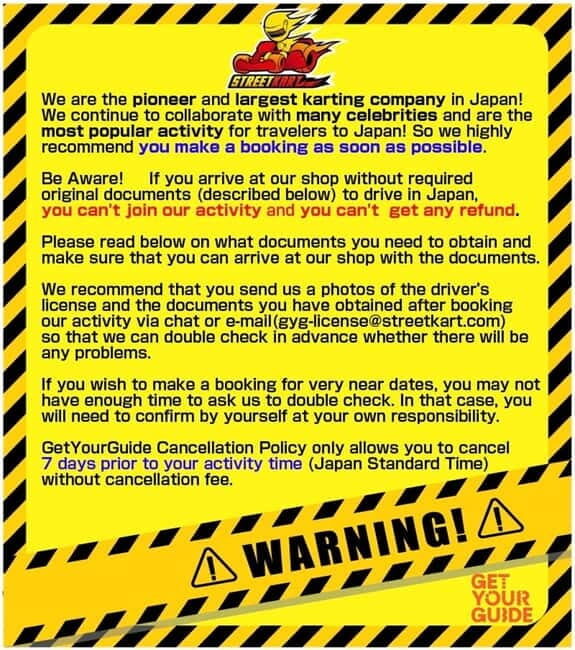
To drive in Japan, you need the proper documents. Most visitors need an International Driving Permit (IDP) in the booklet format issued under the 1949 Geneva Convention by an authorized government association. And you must carry the physical IDP, not a photo.
If your license is from Switzerland, Germany, France, Taiwan, Belgium, or Monaco, you’ll need a Japanese translation via the Japan Automobile Federation (JAF), and you still need the physical documents.
If your license is from countries not covered by the 1949 Geneva Convention (examples include China, Indonesia, Mexico, Qatar, Saudi Arabia), you are not permitted to drive.
Also keep your passport with you. Your tour involves on-the-street driving, so you should treat this as a “paperwork first” activity.
Street Kart will also email you after booking with guidance on the required permit. That helps, but I still recommend you confirm your exact situation before you arrive in Okinawa—because “almost” valid paperwork can’t save you once check-in starts.
Safety Setup at the Shop: Gear, Costumes, and a Driving Tutorial
When you get to the meeting point, look for the karts in the space in front of the shop. The experience starts with a practical, no-drama setup: you’ll get your kart, goggles, and a costume.
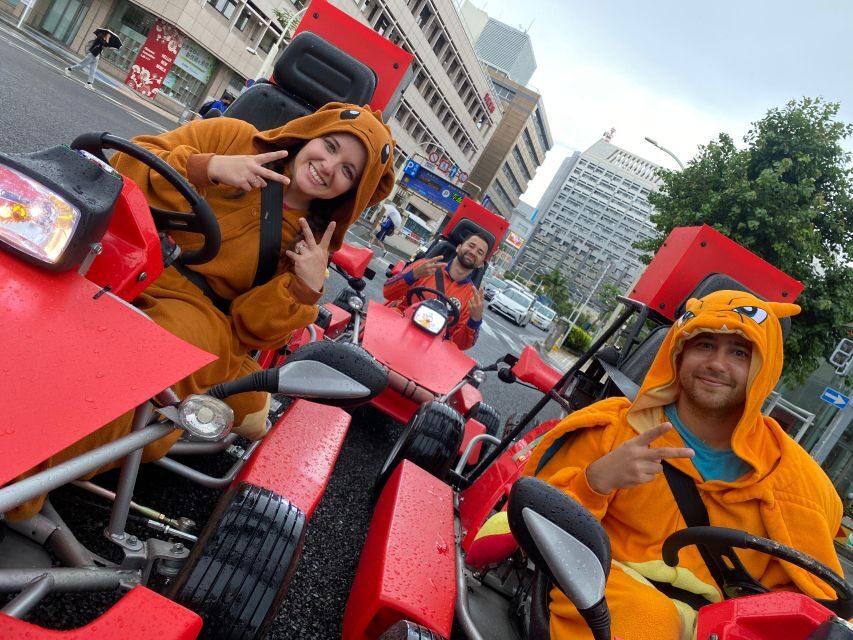
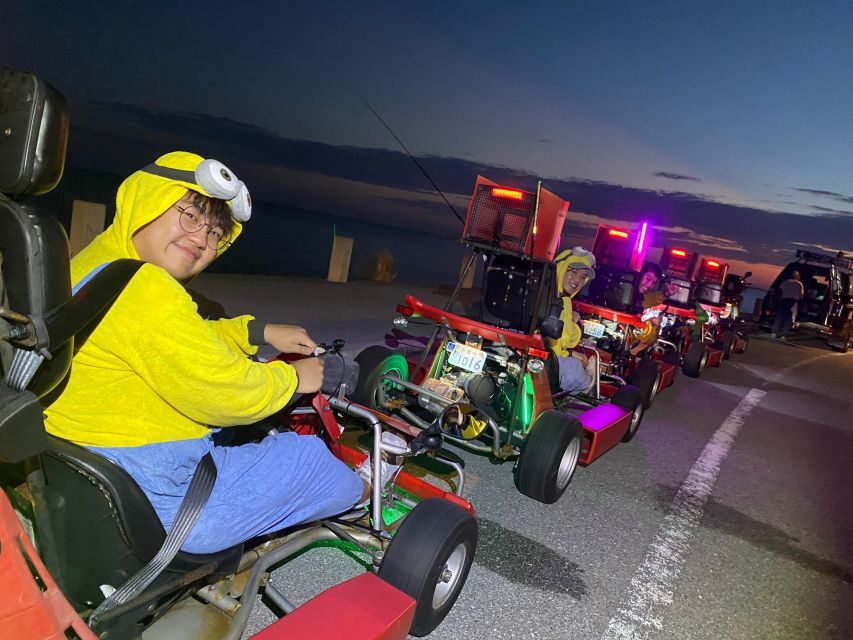
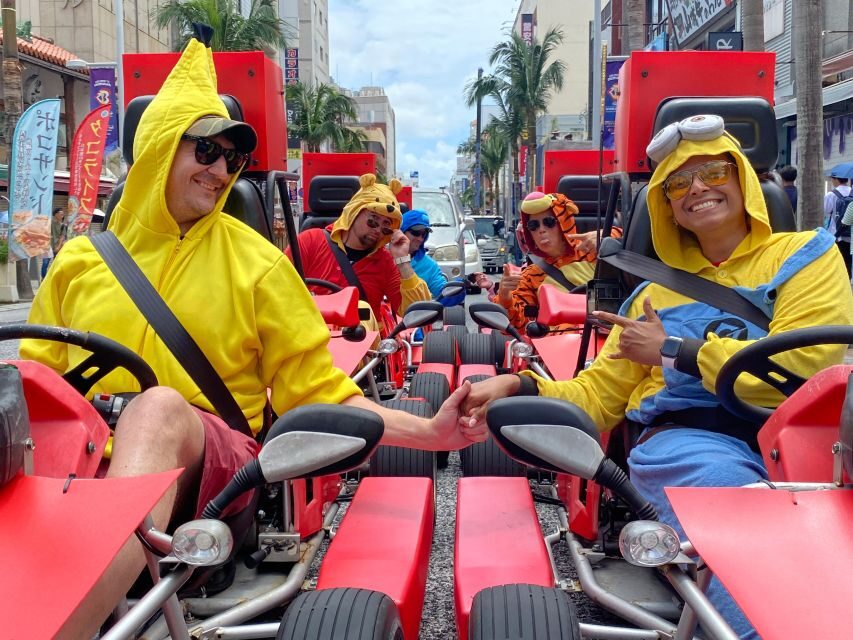
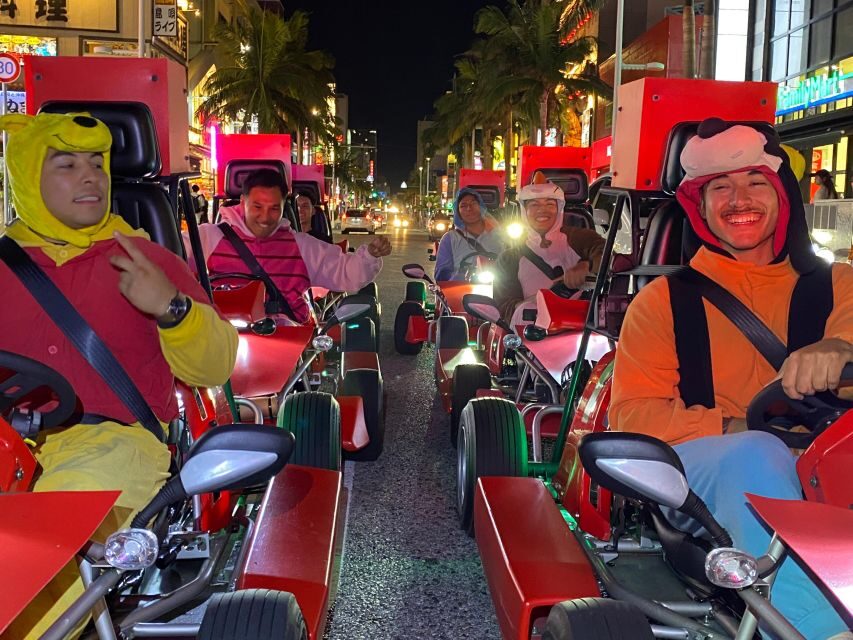
Costumes are a real part of the fun. People go all-in. One guest chose a costume like Piccolo, and another mentioned a Pikachu team vibe, which tells you the selection is flexible and playful. If you like picking a theme—anime, characters, or just something colorful—this is your moment.
Before you drive, you’ll get an explanation and a tutorial. This matters because you’re steering a street kart in an environment with cars around you. The guides are interactive and clear with signals. In one example, a guide named muscle dog was described as very interactive and easy to understand with signals. Another guide, Hiro, was noted as great, and John/Jhon was praised for making people feel safe and supported.
There are also rules you should respect from the start:
- No high-heeled shoes
- No cellphones
- No slippers
- No alcohol and drugs
So wear something you can move in and handle walking in. And yes, that means your phone camera time is mainly before or after—your guide handles photos during the ride.
Rolling Through Naha: Airport Views and Kokusai Street Energy
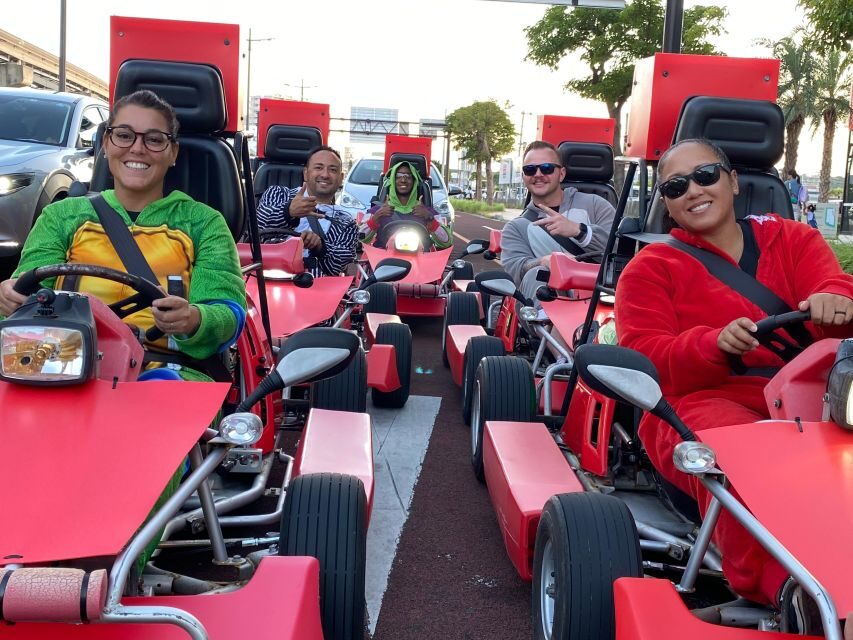
The route is built around two very recognizable Naha moments: the area near Naha Airport and the famous Kokusai Street.
Driving by the airport area adds a sense of motion and scale. Plan to feel like you’re part of the city’s flow—airplanes above, karts on the street. It’s a fun contrast to the slower pace people expect when they think of vacation mode.
Then comes the Kokusai Street energy—busy, recognizable, and very Okinawa in feel. You’re not sitting on a bus window. You’re actually moving through it, in costume, with your guide pacing you and keeping things organized.
If you’re wondering whether you’ll feel comfortable mixing with traffic: that’s why the tutorial exists. The better the guide, the more confident you’ll feel. Reviews highlight guides who teach clearly and handle issues quickly, so you’re not left figuring it out on your own.
Also, since you cannot use your cellphone during the drive, it’s easy to worry you’ll miss moments. Don’t. Your guide takes photos as you go and provides the full photo data at the end. It’s a smart trade: less fiddling, more being present.



The Photo Plan: How You’ll Get Your Souvenir Without Doing Anything
I love this part because it changes what you focus on.
Instead of trying to hold a camera while you drive, you can just ride. The guide takes as many photos as possible and hands over the entire photo data after your activity. That means you’ll end up with costume shots plus street views you might not bother to capture when you’re busy controlling a kart.
Different guests have pointed out guide personalities—like John taking many photos, or Jhon solving an issue promptly—so the photo experience is not an afterthought. It’s part of the performance.
If you want to really document the moment, there’s an optional action camera rental—but that’s extra. You should also know that saving video footage involves additional fees (like a micro-SD purchase and a camera mount rental). If you’re just here for photos and fun, you can skip the action camera and still walk away with a strong souvenir package.
Senaga Island on the Long Course: Why That Stop Matters
On the longer route, you get a short break at Senaga Island. You might think any stop is just a pause, but it does something specific.
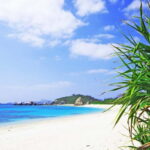
First, it gives your brain a scenery reset. You’ve been riding through street textures—curbs, traffic flow, city landmarks. Then you hit an area where the sea-and-land contrast is more obvious. That shift helps the experience feel like more than a single loop.
Second, breaks help you catch your breath and regroup. Even with a safety-focused guide, street karting is physically engaging. A short pause makes you appreciate the ride more on the way back.
Third, it creates another photo moment with your costume. Costumes on open streets already look fun, but adding a seaside-feeling background makes the souvenir feel more varied.
If you like the idea of more variety and a better “arc,” pick the long course. If you want quick thrills without adding time, the shorter course still hits the Naha highlights.
What This Experience Is Really Like (On the Road)
This is a guided street kart tour with real driving involved. That means you should expect:
- You’ll pay attention to signals and instructions
- You’ll ride close enough to traffic that safe handling matters
- Your body will be involved more than a normal sightseeing day
People also tend to underestimate the costume factor. It’s fun, but it also means you might notice heat or movement constraints depending on what you pick. Choose a costume you can move in without fuss.
One more thing: this activity comes with restrictions for a reason. It’s not just about safety checkboxes. It’s about whether the driving setup works for you. The tour is not suitable for children under 18, people with back problems, mobility impairments, wheelchair users, pregnant women, or hearing-impaired people. If any of those apply, skip it and choose a calmer Naha activity.
Who Should Book This, and Who Should Skip It
If you’re the type of traveler who likes mixing sightseeing with something hands-on, this fits well. It’s also great for groups or solo travelers who want an activity that includes interaction with a guide and a bit of social energy from being part of the same ride.
You’ll particularly enjoy it if you want:
- A fun, guided ride instead of self-driving stress
- A built-in photo souvenir (from the guide)
- A route with recognizable Naha landmarks like Kokusai Street
- A chance to wear a playful costume while cruising
You might skip it if:
- You’re not set up for the IDP and license requirements
- You want a low-impact, sit-and-look experience
- You need to stay on the phone for navigation or documentation during the ride (cellphones aren’t allowed)
Should You Book Street Kart in Naha?
Yes, if you want a memorable Okinawa day that feels playful but still organized. The value is strong for the total package: kart + gas + English guide + costumes + goggles + rain coat + guide-taken photo data. That combo is hard to beat for $35.
Book it if you’re comfortable meeting a strict timing rule (arrive early), can handle driving requirements (IDP + passport), and you’re physically able to ride. If you do those things, you’re set up for a fun, confidence-building experience in Naha—with a costume and photos that actually look like a story, not just a quick snapshot.
FAQ
Do I need an International Driving Permit (IDP) to drive the street kart?
Yes. You must present your International Driving Permit and passport. Most participants need an IDP issued in the booklet format of the 1949 Geneva Convention. Some license countries require a Japanese translation from JAF, and licenses from countries not covered by the 1949 Geneva Convention are not permitted.
What should I bring for check-in?
You should bring your physical International Driving Permit (or domestic license plus official translation, if required) and your physical passport. Also plan to arrive 15 minutes before your booking time.
How long are the tours?
The activity runs about 90 to 150 minutes total. You can choose a shorter course (around 1 hour) or a longer course (around 2 hours), and availability controls the start times.
What’s included in the price?
Included are the kart, gasoline, an English-speaking guide, costumes, goggles, a rain coat for rainy days, and photo data of photos your guide took during the activity.
Are cellphones allowed during the ride?
No. Cellphones are not allowed during the activity.
Is there an option for an action camera?
Action camera rental is not included. There may be optional fees for the action camera rental, plus additional costs related to saving the video footage and mounting the camera.