REVIEW · NAHA
From Naha: Whale Watching with Pickup and English Guide
Book on GetYourGuide →Operated by Cerulean Blue Okinawa · Bookable on GetYourGuide
Humpback whales near Naha are pure wow. This is a 3-hour Okinawa trip built around finding wild humpbacks, with pickup around Naha and an English-speaking crew to help you make sense of what you’re seeing. I love that you get up to an hour of close viewing once whales appear, and I also like the mix of a live guide plus a QR digital guide on your phone for extra facts. The main drawback to plan for is the one thing you can’t control: whale sightings are never guaranteed, and the refund window has specific dates.
You’ll check in at Naha Miegusuku Port, hop on a boat headed out around 9:00 or 13:45, and spend the morning or afternoon scanning warm Okinawan waters for blow, tail, and breaches. The vibe is respectful and rules-based, with a low-stress viewing limit when whales are spotted. If you’re prone to motion sickness, take that seriously ahead of time.
In This Review
- Key things I’d circle before you go
- Okinawa Humpback Whales From Naha: What This 3-Hour Trip Really Delivers
- Meeting at Naha Miegusuku Port: Check-In, Consent, and the Departure Clock
- Pickup Spots in Naha: Choosing the Easiest Start (and Avoiding Sunday Snags)
- On Board With a Captain and a Smartphone QR Guide
- What the Whale Watching Time Feels Like (and Why You Only Get One Close Hour)
- Safety Rules That Matter More Than You Think
- Price and Value: Does $30 Really Make Sense?
- Who This Tour Fits Best (and Who Should Skip It)
- Should You Book This Naha Whale Watching Tour?
- FAQ
- How long is the whale watching tour?
- Where do I check in for the tour?
- What time does the boat depart?
- Does the tour offer pickup in Naha?
- Is there an English guide?
- What languages are available for the digital guide?
- Is whale spotting guaranteed?
- What happens if no whales are seen?
- What should I bring, and what’s not allowed?
Key things I’d circle before you go
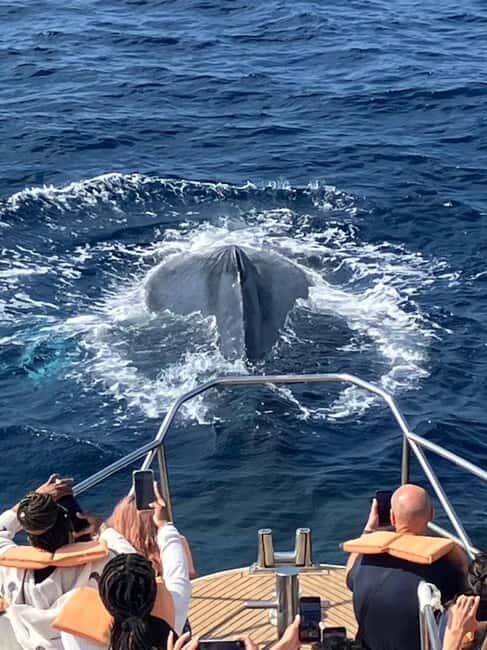
- English guide plus smartphone QR guide: Live help in English, with deeper whale info in the digital audio guide.
- Up to one close viewing hour: After spotting, you’re allowed a more intimate look for about an hour.
- 13 Naha pickup points: From major hotels along Kokusai Dori to Saion Square and Omoromachi T Galleria.
- Life jacket rules are strict: You must wear one at all times on board.
- Free digital whale photos: You’ll get photos after the tour when the day goes whale-way.
- Refund depends on the date window: A whale guarantee exists only for a specific slice of time in 2026.
Okinawa Humpback Whales From Naha: What This 3-Hour Trip Really Delivers
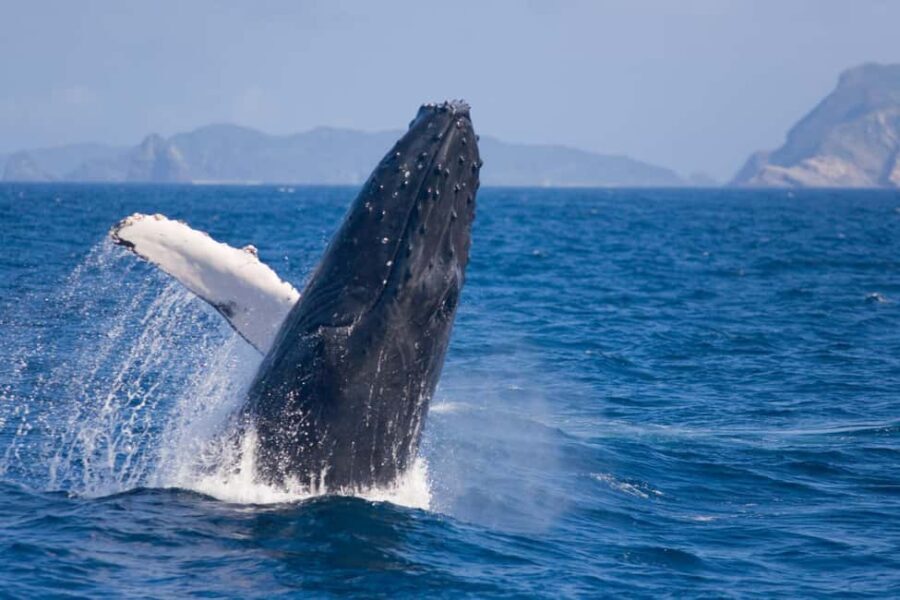
This tour is all about one goal: seeing humpback whales in Okinawa’s winter waters, when they’re migrating in the region around the Kerama Islands. The scale is hard to fully picture until you’re close enough to spot the blow and watch the tail work in real time.
The trip length matters. You’re out for around three hours total, with your best chance of a close encounter once a sighting happens. That timing is designed around how whale watching is managed here—short, focused viewing instead of endless circling.
Where this tour feels practical is in how it teaches you while you wait. You’ll have an English-speaking crew on board, and you’ll also have a multilingual digital guide via QR code for behavior and migration basics. That means you’re not stuck only guessing what you’re looking at, even if the live spoken info is brief.
The biggest “consideration” is also the most honest part: you can’t treat a whale-watching day like a scheduled show. The boat will return after about three hours if no whales are spotted, and refunds are tied to the guarantee period.
You can also read our reviews of more guided tours in Naha

Meeting at Naha Miegusuku Port: Check-In, Consent, and the Departure Clock
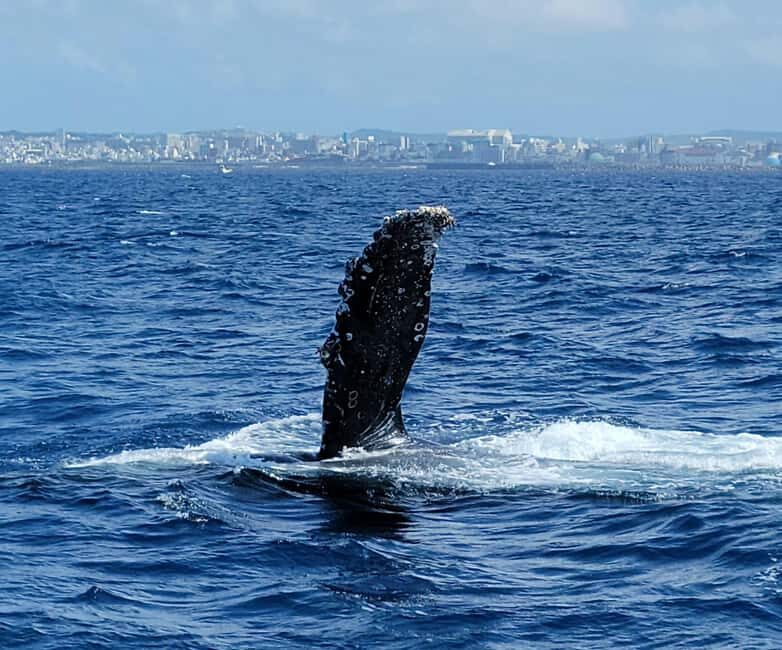
Check-in is inside the Naha Miegusuku port waiting room. Look for staff in a blue t-shirt with Cerulean blue, and plan to get there early enough to find the right line without stress.
One detail that affects your day: the start time of the activity is the start of check-in, when you sign the consent form. That means you don’t want to treat check-in like a casual two-minute stop. If you show up late, you can miss the actual boat timeline.
Departures are roughly 9:00 and 13:45. The return is around 12:00 or 16:45, or earlier if whales are found quickly. So yes, you might get back sooner, but you should mentally prepare for the full window.
Also pay attention to the “no excuses” rules that come with whale watching. Life jackets must be worn at all times, and staff can refuse boarding for certain cases like intoxication or illness. This is less about being picky and more about keeping everyone safe on a moving boat.
Pickup Spots in Naha: Choosing the Easiest Start (and Avoiding Sunday Snags)
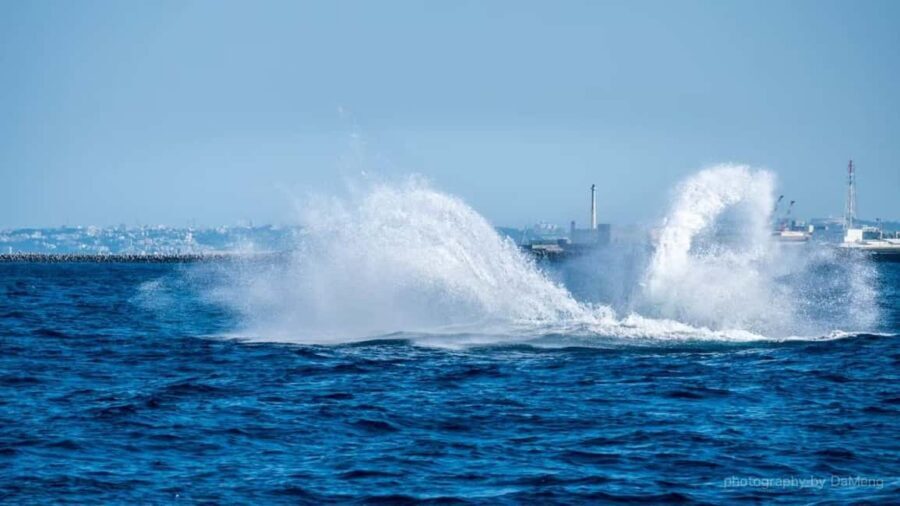
If you’re staying in the Naha city center, pickup is one of the biggest value boosts here. The tour lists 13 drop-off/pickup options, including well-known spots like DoubleTree by Hilton, Pacific Hotel Okinawa, Saion Square, and Omoromachi T Galleria.
Pickup times are offered in two blocks: AM around 7:45–8:25, and PM around 12:30–1:10. The schedule is tight, so I’d aim to be at the pickup point early rather than at the exact minute.
There’s also a small but real gotcha: some pickup options exclude Sundays because they are pedestrian roads. If you’re going on a Sunday, you’ll want to choose a pickup point that doesn’t require access through a restricted area.
Another detail to respect: reservations made after 3:00 PM the day prior don’t qualify for pickup. In that case, you must go to Naha Miegusuku Port yourself.
If you’re the kind of traveler who hates last-minute navigation, pickup is a win. It reduces friction so you can focus on scanning the water instead of hunting buses and taxis.
On Board With a Captain and a Smartphone QR Guide
The tour combines a live guide with a digital layer. You’ll have an English-speaking guide (and Japanese is also listed), but the most detailed whale explanations are primarily provided through the digital guide accessed by scanning a QR code on your phone.
That setup is actually smart. On a boat, announcements can be short because of wind and sound. With the QR guide, you can still read and listen to the facts at your own pace when you’re not hearing everything through the noise.
The digital guidance is listed in multiple languages via QR/audio on your smartphone, including English, Spanish, French, Japanese, Cantonese, Mandarin (including Simplified Chinese), and Korean. So even if the spoken guide language isn’t as detailed as you hoped, you still have a strong backup.
Important practical note: Wi‑Fi and earphones aren’t included. Bring a charging-friendly plan. At minimum, have your phone ready, your battery topped up, and some kind of audio solution if you want it.
One other detail to keep in mind: the experience is structured around regulations. You’ll get the chance for close viewing once whales are spotted, but the tour won’t treat it like unlimited time on station.
What the Whale Watching Time Feels Like (and Why You Only Get One Close Hour)
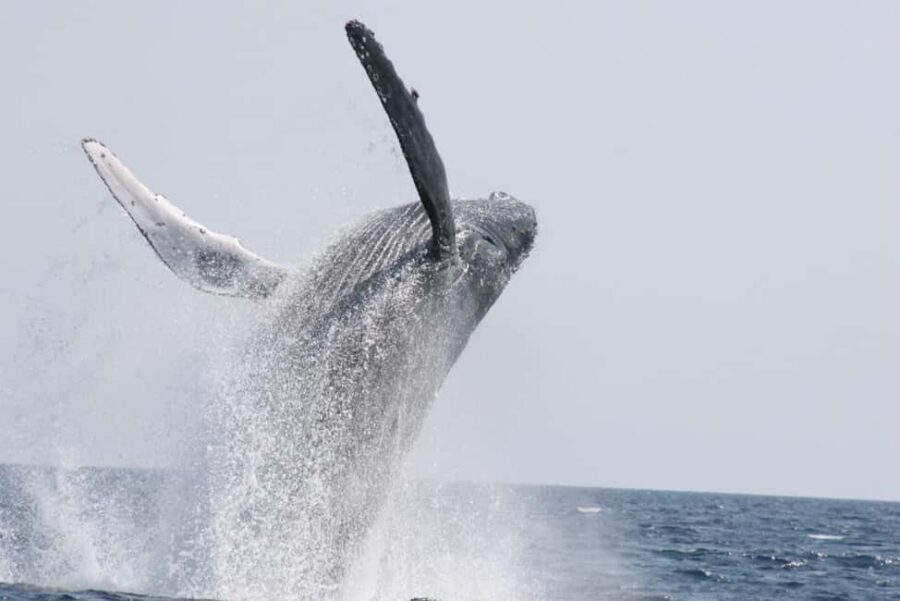
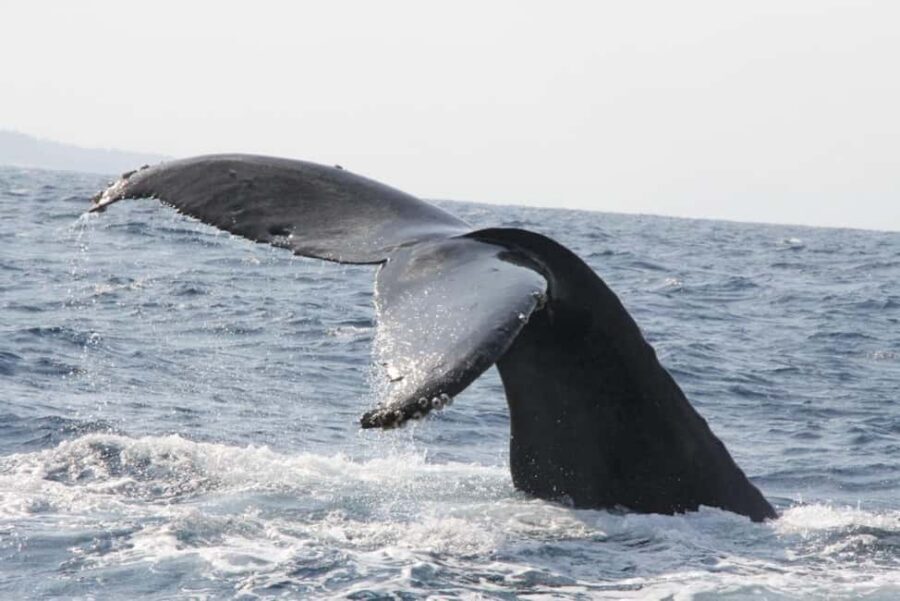
Once you board, you’re essentially doing the world’s simplest job: looking for signs. Watch for the blow (a spout of air), and the rest often follows—tail slaps, splashes, and breaches. The timing is designed so that once a sighting happens, you’re not just hearing about it. You’re there while it’s happening.
The tour notes that after whales are spotted, you can have up to one hour of close observation, and that this follows official Okinawa whale-watching regulations. That matters because the goal here is low-stress, respectful viewing, not crowding around the whales for long periods.
From a comfort standpoint, the boat ride can feel crowded depending on day and weather. I recommend you bring your “boat brain”: position yourself for sight lines, keep your eyes wide, and accept that the best views aren’t always evenly distributed.
Also, the tour framing around the Kerama Islands is a clue about where your attention goes. Humpbacks in this season migrate through the region for mating and birth, then continue across the Pacific. So you’re not looking for a permanent resident. You’re watching a moving story.
And yes, your day can be different from someone else’s even if you book the same slot. That’s normal with wild animals, not a failure of the operator.
You can also read our reviews of more whale watching tours in Naha

Safety Rules That Matter More Than You Think
This tour is serious about safety. You’re required to wear a life jacket at all times. It’s not optional, and it’s not something to treat casually, especially when the boat is moving and the deck gets slick.
You’re also told not to swim. That’s a comfort thing for your mind as much as it is a safety thing for your body. Boats offshore can be unpredictable.
Avoid alcohol and drugs, and don’t board intoxicated or hungover. The tour specifically says those cases may lead to refusal without a refund. That might sound harsh, but on a boat it’s a practical safety rule.
Health exclusions are also part of the setup. Pregnant women are not allowed, and people who are ill (including a cold) are not suitable and may be refused boarding. If you’re traveling with someone who isn’t feeling 100 percent, it’s better to plan a different activity on shore.
Don’t ignore motion sickness either. Motion sickness prevention is on your packing list, and food or drink isn’t included. If you know you get seasick, bring what helps you and use it early, not after you’re already miserable.
Price and Value: Does $30 Really Make Sense?
At $30 per person for a roughly three-hour whale watching experience, this tour is priced in the “good value if the whales show” category. You’re not just paying for time on a boat—you’re also paying for boat fare, insurance, a life jacket, and transportation from many Naha pickup points (as long as your booking timing qualifies).
You also get a live guide and a digital guide option. Plus, the tour includes free digital whale photos after the trip. That’s not a small perk. It saves you from begging strangers or juggling your camera at the exact moment a whale decides to show off.
Where value can slip is the randomness. The day can still be whale-less, and the guarantee terms are date-bound. There are two pieces to pay attention to:
- The main description says the full refund if no whales are spotted is between February 1 and March 15, 2026.
- The fine print repeats a similar whale guarantee window but mentions March 15, 2025 in one place.
That discrepancy is exactly why I’d confirm the exact dates in your booking confirmation before you rely on the refund.
Bottom line: $30 is fair for the boat time, guide support, and pickup. Just don’t book this as your only whale plan unless you’re going during the guarantee window and you’re okay with checking confirmation details carefully.
Who This Tour Fits Best (and Who Should Skip It)
This is a great fit if you want a straightforward Naha whale-watching experience with English support and minimal hassle.
I’d especially recommend it if:
- you’re staying around central Naha and want pickup options
- you like being guided but also want extra whale context through your phone
- you’re comfortable being out on the water for a few hours and scanning for movement
It’s not a fit if:
- you’re pregnant (not allowed)
- you’re currently ill or have a cold
- you’re sensitive to boat motion and you haven’t planned for it
- you need swimming access (it’s not allowed)
Group feel is generally part of the deal on tours like this. One recent comment flagged that the meet-up and boarding process can get crowded, and I’d be ready for that. Bring patience, get your gear squared away quickly, and focus on the water.
Should You Book This Naha Whale Watching Tour?
Yes, I’d book it if you’re traveling in the winter season in Okinawa and you’re okay with the wild-animal reality. The combination of English guide, QR digital learning, and pickup makes it easy to do well without extra legwork.
Before you click confirm, do three quick checks:
- Confirm the exact whale guarantee dates shown in your booking details (the information mentions 2026, but there’s also a 2025 mention in the fine print).
- Choose a pickup point that works for your day—especially if your trip might be on a Sunday.
- Plan for comfort: life jacket rules mean you should dress for wind and deck movement, and bring motion sickness prevention.
If you want one memorable winter activity in Okinawa that feels genuinely connected to nature, this is a strong choice. Just go with the right mindset: you’re hunting clues in the water, not ordering a guaranteed performance.
FAQ
How long is the whale watching tour?
The tour duration is listed as 3 hours.
Where do I check in for the tour?
Check-in is inside the Naha Miegusuku port waiting room. Staff wear a blue t-shirt with Cerulean blue.
What time does the boat depart?
Departures are around 9:00 and 13:45, depending on the selected time slot.
Does the tour offer pickup in Naha?
Yes. Pickup is optional, with pickup times listed for many locations in Naha city. If pickup isn’t eligible for your booking timing, you must gather at Naha Miegusuku Port.
Is there an English guide?
Yes. The tour includes an English-speaking guide, and digital guidance via QR is also available on your smartphone.
What languages are available for the digital guide?
The digital guide audio is listed for English, Spanish, French, Japanese, Cantonese, Mandarin (including Simplified Chinese), and Korean.
Is whale spotting guaranteed?
Whale sightings are not guaranteed. There is a whale guarantee only for a specific date window mentioned for February 1 to March 15, but refunds/re-boarding depend on those dates.
What happens if no whales are seen?
If no whales are spotted, the boat returns after about 3 hours. Refund or free re-boarding is tied to the whale guarantee period mentioned in the tour info; outside that window, no refunds or re-boarding are offered.
What should I bring, and what’s not allowed?
Bring sunglasses, a towel, drinks, sunscreen, a jacket, and motion sickness prevention. Alcohol and drugs are not allowed, and swimming is not allowed. Intoxicated or hungover guests may be refused boarding.