REVIEW · NAHA
Karate History Tour in Okinawa
Book on Viator →Operated by Ageshio Japan Co.,Ltd · Bookable on Viator
Karate history in Okinawa reads like a street map. This tour mixes big-name karate landmarks with a real chance to meet a Goju-ryu 10th dan master, and it keeps you fed with an included Japanese lunch.
I especially liked how the day doesn’t just point at statues; it connects the names to the places you’re standing in, from Matsuyama Park to the shops at Shureido. You’ll be walking through the story of Okinawan karate in the same order the tradition feels like it developed—stone, museum artifacts, shrine respect, then gear shopping.
One consideration: it’s a 5–7 hour day and it depends on good weather, so plan for a long stretch outdoors and a tight schedule if conditions are rough.
In This Review
- Key points
- Karate in Okinawa: what this tour really gives you (and why it works)
- A small drawback worth factoring in
- Starting in Naha: pickup, a private group, and a guide you can ask questions
- Matsuyama Park monuments: Kanryo Higaonna and Chojun Miyagi up close
- How to get the most out of a short park stop
- Potential drawback
- Okinawa Prefecture Karate Museum: historical goods and the Hokama 10th dan meeting
- Expect more than static displays
- A practical way to prepare
- Okino-gu Shrine: Gichin Funakoshi’s monument and a respectful Okinawan stop
- Why this shrine stop is valuable
- Small timing note
- Shureido shopping: buying karate gear and souvenirs without turning it into a mall day
- The best way to shop in 30 minutes
- Possible drawback
- Price and logistics: value at $125.50, and how to judge if it’s worth it
- Who will feel the best value
- Who might hesitate
- Timing and what to pack for a smooth day in Naha
- One more practical note about tickets
- Should you book this Karate History Tour in Okinawa?
- FAQ
- How long is the Karate History Tour in Okinawa?
- Where is the tour located, and is pickup included?
- What’s included in the price besides the guide?
- What stops will we visit during the tour?
- Do we meet a karate master during the tour?
- Is this a private tour?
- What happens if the weather is bad?
Key points
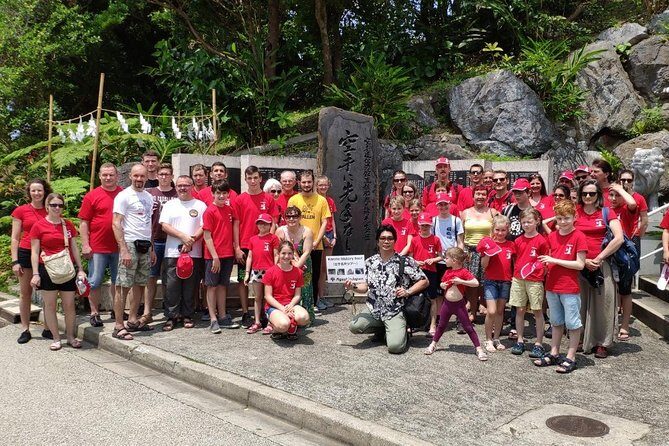
- Entrance fees to every stop are included, so you don’t do ticket math all day
- Meet Tetsuhiro Hokama (Goju-ryu 10th dan) at the Okinawa Prefecture Karate Museum
- Matsuyama Park monuments for Kanryo Higaonna and Chojun Miyagi
- Okino-gu Shrine visit with the Gichin Funakoshi monument
- Shureido karate goods shop time for souvenirs and practical gear
- Pickup offered with a mobile ticket, making a Naha-based day easier to manage
Karate in Okinawa: what this tour really gives you (and why it works)
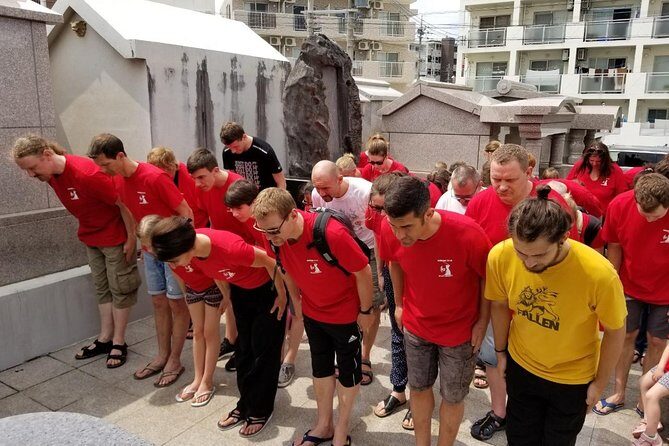
If you care about martial arts beyond the showy stuff, Okinawa is the place where karate stops being abstract. This tour is built for that exact feeling: you go from monuments to museum artifacts to shrine context, then finish with the kind of shopping that actually relates to the day.
What makes it work is the pacing. You get multiple short stops—nothing so long that you start checking your phone—plus a guided flow that helps you connect the dots. And because entrance fees are included, the “start-up friction” that ruins self-guided days is mostly gone.
Also, lunch matters here. You’re not wandering around hungry, guessing what’s open, and losing momentum. The Japanese lunch is organized by your guide, which keeps the schedule intact and helps you stay focused on the history part.
You can also read our reviews of more tours and experiences in Naha.



A small drawback worth factoring in
This is still a full day. Even though each site is timed, you’re out for about 5–7 hours, which can feel like a lot if you planned to do beach time or a relaxed stroll day. If your travel style is short and sweet, consider whether you want a structured day like this—or a slower one with fewer stops.
Starting in Naha: pickup, a private group, and a guide you can ask questions
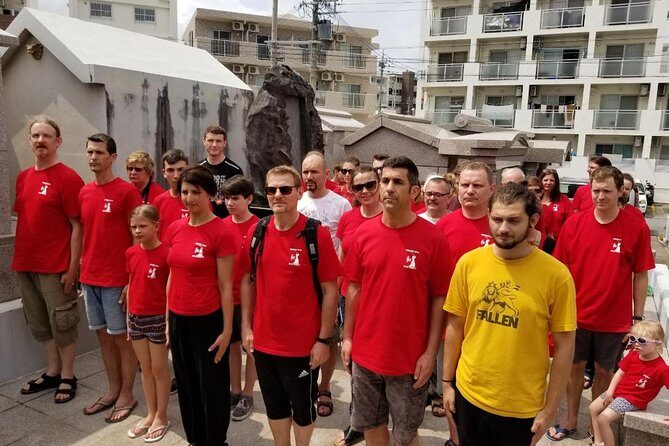
The tour is based in Naha, and pickup is offered. If you’d rather use public transportation, the route is described as being near it, so you’re not forced into a single option.
Another practical win: it’s private, meaning only your group participates. That helps a lot when you’re trying to understand names, dates, and connections between masters. In a shared group, the conversation tends to get rushed. In a private setup, you can ask follow-up questions when something doesn’t click.
Guides are a big part of the experience. In the versions I looked at, you’ll encounter friendly, English-capable guides—Yoshi is noted for being helpful and warm, while Kenny is described as a 7th Dan Black Belt sensei of Okinawan karate. Carlo also comes up as a guide with an organized, smooth pace. Different people guide different groups, but the theme is consistent: you’re not stuck reading signs alone.
Matsuyama Park monuments: Kanryo Higaonna and Chojun Miyagi up close
Your day starts at Matsuyama Park, with a short visit timed at about 15 minutes and admission included. This is one of those “small time, big meaning” stops.
You’ll see monuments dedicated to Kanryo Higaonna and Chojun Miyagi. That pairing matters because these names are tightly linked to Okinawan karate’s development. Standing in front of the stones, it’s easier to understand why karate history isn’t just a timeline—it’s a set of lineages and influences you can track geographically.
How to get the most out of a short park stop
Fifteen minutes goes fast, so use it smart:
- Start by looking for the name you recognize first. Then connect it to the explanation your guide gives.
- Take a moment to notice the monument layout. Places like this are often designed so you naturally orient yourself toward the main markers.
- If you’re early in your karate learning, don’t worry about memorizing everything. The goal is pattern recognition: who, where, and why.





Potential drawback
Because it’s brief, this isn’t the stop for long photo sessions or slow wandering. If you love parks and scenic roaming, you may wish you had more time here. The trade-off is that you’ll have more guided time later at the museum and shrine.
Okinawa Prefecture Karate Museum: historical goods and the Hokama 10th dan meeting
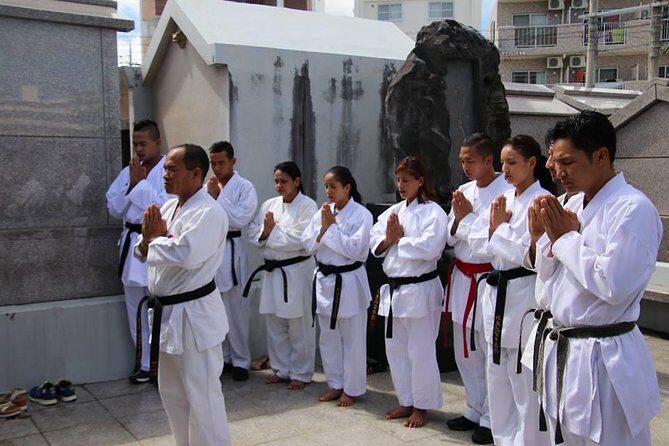
Next comes the Okinawa Prefecture Karate Museum, where admission is included and the visit runs about 45 minutes. This is the heart stop if you want context, not just names.
Two big things set this museum apart:
1) There’s a lot of karate historical goods, so you’re looking at objects that help explain how practice and culture took shape over time.
2) You get the special chance to meet Tetsuhiro Hokama, a Goju-ryu 10th dan master.
That meeting is the part most people remember. A museum can explain history, but meeting a master turns history into something lived. Even if you’re not a long-time practitioner, you’ll likely come away with a clearer sense of what respect, discipline, and lineage mean in Okinawan karate.
Expect more than static displays
From the way the experience is described, the museum visit includes engaging elements like videos as part of the learning flow. So you’re not just looking at cases behind glass. It’s designed to keep your attention while you absorb the story.
A practical way to prepare
Before you go, pick one question you genuinely care about, like:
- How the different Okinawan karate traditions relate
- Why specific masters are remembered
- What a museum like this includes that a practice space would highlight
Then ask it. That’s where a guided visit becomes more than sightseeing.
Okino-gu Shrine: Gichin Funakoshi’s monument and a respectful Okinawan stop
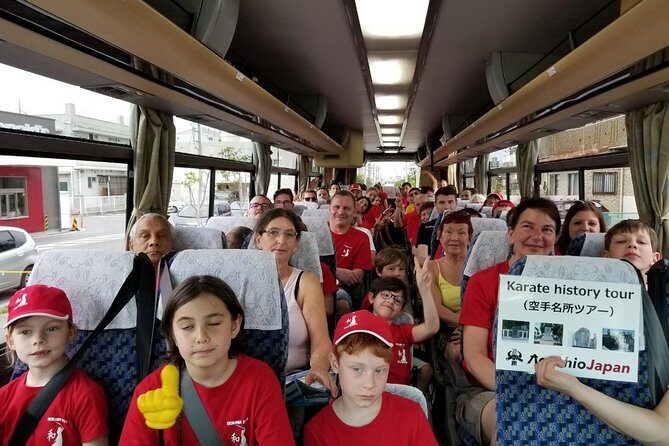
After the museum, you head to Okino-gu Shrine, where the visit is about 30 minutes and admission is included. Here, the tour shifts from artifacts to reverence.
You’ll visit Okino-gu Shrine (Okinogu) and see a monument of Gichin Funakoshi. Funakoshi is strongly associated with karate’s broader spread beyond Okinawa, so seeing his name in a shrine context feels meaningful. It’s a reminder that karate wasn’t only about technique—it also carried a moral and spiritual weight in Okinawan life.
Why this shrine stop is valuable
This is where the tour helps you avoid a common mistake: treating karate history like a list of champions and dates. At a shrine, you get a different kind of understanding. You start to see karate as something tied to community respect and remembrance.
You’ll also have time to slow down a bit compared with the more concentrated museum energy. It’s a nice reset if you tend to get museum-fatigued halfway through the day.
Small timing note
Thirty minutes isn’t for deep, unhurried exploration. It’s enough time for the main visit and the guide’s explanation. If you want to linger, you may need to come back on your own later.
Shureido shopping: buying karate gear and souvenirs without turning it into a mall day
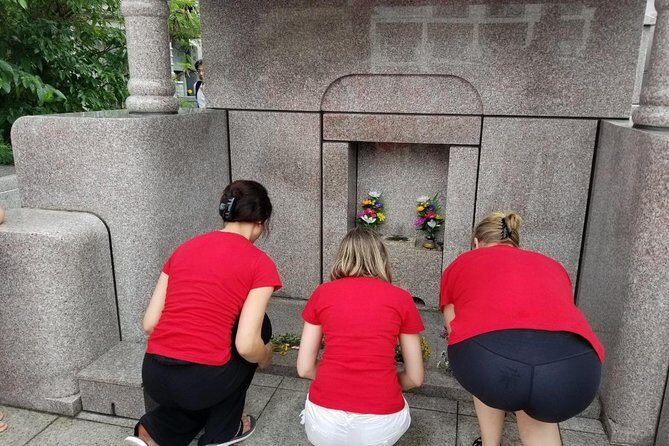
The final stop is Shureido, a famous karate goods shop, with about 30 minutes set aside. This is the part that can either feel fun or feel rushed, depending on what you want.
If you love the culture side of travel—bookshops, craft stores, and specialty shops—this is a good ending. You can take home souvenirs that actually connect to what you learned that day. Think along the lines of items that reflect karate practice and Okinawan martial arts branding, not generic tourist trinkets.
The best way to shop in 30 minutes
Go in with one intention. For example:
- Buy one meaningful item rather than five small ones
- Compare sizes or categories quickly, then decide
- Ask your guide for practical suggestions for what fits the theme
Because you only have a half hour, you don’t want to start browsing randomly. Use the time like a mini hunt.
Possible drawback
If shopping isn’t your thing, this can be the most skippable feeling part of the day. It’s not a long stop, but it does exist specifically for goods and souvenirs. You’ll get more history earlier, so at least the day isn’t all shopping.
Price and logistics: value at $125.50, and how to judge if it’s worth it
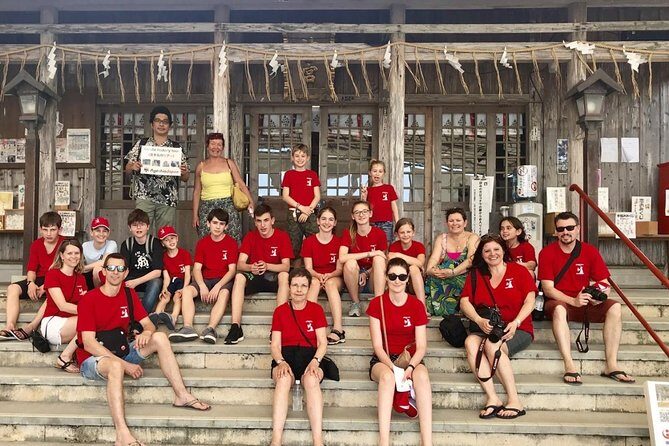
At $125.50 per person, this tour sits in the “not cheap, but not crazy” zone for Okinawa. The real question is what you get for that price.
Here’s what’s clearly part of the value package:
- Entrance fees to all stops included
- Japanese lunch organized by your guide
- Multiple guided sites tied together into one structured learning day
- Pickup offered and a mobile ticket, which reduces friction in Naha
- The big memory-maker: a meeting with Tetsuhiro Hokama (Goju-ryu 10th dan) at the museum
- Private tour format (only your group)
When you add up entrances plus lunch plus guided interpretation, it starts to make sense. If you were to self-guide, you might spend time juggling tickets and directions, then still miss the contextual explanations you get here.
Who will feel the best value
You’ll likely feel this tour is worth it if:
- You’re a karate enthusiast or you enjoy martial arts history
- You want a guided day that strings together meaningful Okinawan sites
- You prefer a private format where you can ask questions
- You want lunch handled so your day stays on track
Who might hesitate
If you mainly want beaches, long scenic time, or lots of free wandering, this may feel too planned. Also, if you’re traveling solo, a private tour style can feel expensive in any destination.
Timing and what to pack for a smooth day in Naha
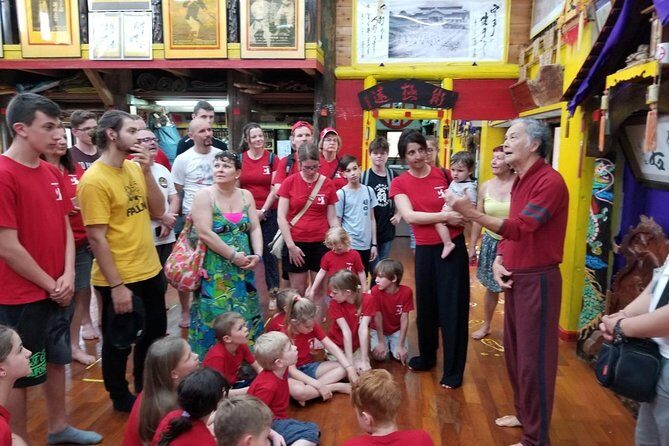
The day runs about 5 to 7 hours, and it’s built from short, timed legs. That means you should dress for comfort over style.
Bring:
- Comfortable walking shoes
- A light layer if the weather shifts
- A small bag for anything you buy at Shureido
It’s also worth knowing the tour requires good weather. So if your Okinawa schedule is tight, you’ll want to keep some flexibility on the day you choose.
One more practical note about tickets
You’ll use a mobile ticket, which is usually easy. Just keep your phone charged and avoid last-minute screen issues.
Should you book this Karate History Tour in Okinawa?
If you want a single day that connects the big Okinawan names, the places tied to them, and the culture behind karate, I think this is a strong pick. The combination of monuments at Matsuyama Park, a museum visit full of historical karate goods, a chance to meet Tetsuhiro Hokama (Goju-ryu 10th dan), and the shrine stop for Gichin Funakoshi makes this tour more than a sightseeing route.
Book it if you’re the type who likes learning on your feet and you want a private, guided day without ticket chaos. Skip or reconsider if you hate structured schedules, don’t care about karate history, or you’re banking on a totally free-form day.
FAQ
How long is the Karate History Tour in Okinawa?
It lasts about 5 to 7 hours.
Where is the tour located, and is pickup included?
The tour is in Naha, Japan. Pickup is offered, and the tour is described as near public transportation.
What’s included in the price besides the guide?
Entrance fees to all stops are included, and the tour includes a Japanese lunch organized by your guide.
What stops will we visit during the tour?
You’ll visit Matsuyama Park, the Okinawa Prefecture Karate Museum, Okino-gu Shrine, and the Shureido karate goods shop.
Do we meet a karate master during the tour?
Yes. At the Okinawa Prefecture Karate Museum, you meet Tetsuhiro Hokama, a Goju-ryu 10th dan master.
Is this a private tour?
Yes. It’s a private tour/activity, and only your group participates.
What happens if the weather is bad?
The experience requires good weather. If it’s canceled due to poor weather, you’ll be offered a different date or a full refund. You can cancel up to 24 hours in advance for a full refund.
If you want, tell me your travel dates and how many people are in your group, and I’ll help you think through whether the timing and private format match your pace.