REVIEW · NAHA
Kerama Half-Day Snorkeling Tour
Book on GetYourGuide →Operated by Cerulean Blue Okinawa · Bookable on GetYourGuide
Clear water, strict rules, big smiles. This half-day Kerama National Park trip is a simple way to see why people call the area Kerama Blue while still keeping things beginner-safe with a snorkeling instructor and a marked plan for your time in the water. I especially like the combination of the banana boat ride plus the fact that your tour includes photos taken during the trip, so you’re not just wrestling with your camera. The one thing to weigh up is that life jackets are required the entire time, and snorkeling is done in a limited area, which can feel a bit more controlled than some solo snorkel plans.
You’ll meet at Naha’s Miegusuku Port (look for staff in a blue Cerulean-blue T-shirt), check in, then head out on a half-day boat from Naha before returning back to the same spot. If the sea is calm you’ll get the full experience as planned, and if conditions are rough, the operator may change the snorkeling site and photos may depend on visibility. For a lot of first-timers, that trade-off is worth it because the schedule is tight, the staff runs the day clearly, and you’re in some of Okinawa’s best-looking water without needing special training.
In This Review
- Key things I’d focus on before you go
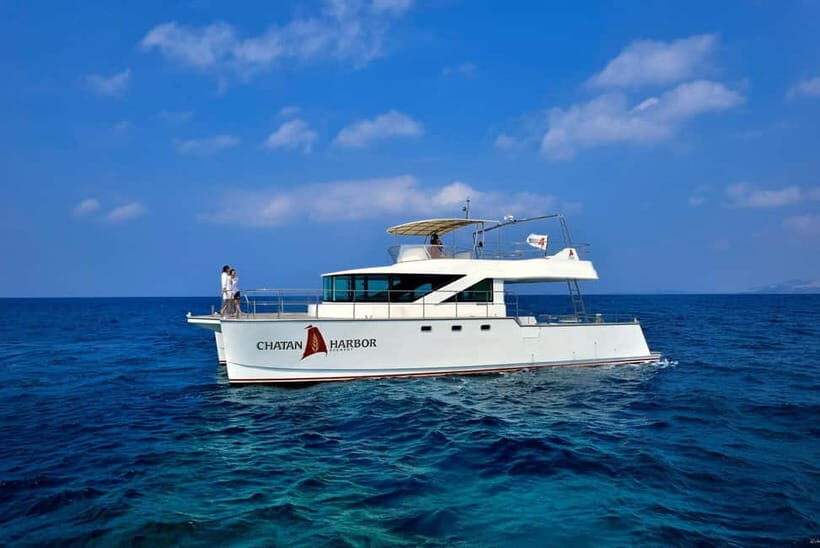
- From Naha to Kerama Blue: the vibe of a half-day boat day
- Check-in and getting aboard at Naha Miegusuku Port
- The snorkeling plan: clear water, coral viewing, and a marked zone
- Life jackets required: safety first, freedom second
- Banana boat ride timing and why it’s worth the motion
- Photos included, but sea conditions matter
- What you get: included gear, instructor time, and a rinse shower
- What’s not included, and what to pack so the day feels easy
- Sea conditions can change the plan on the day
- Languages and communication: you won’t be stuck guessing
- Price and value: what $57 covers (and what it doesn’t)
- Who this tour fits best (and who should think twice)
- Equipment expectations: mask issues and fin confidence
- Should you book this Kerama half-day snorkeling tour?
- FAQ
- Where do I check in for the tour?
- What time does the boat depart?
- What snorkeling gear is included?
- Do I need to wear a life jacket while snorkeling?
- Is a wetsuit included?
- Is the banana boat ride included?
- Are prescription masks available?
- What happens to photos if conditions are poor?
- Who isn’t eligible to join?
Key things I’d focus on before you go
- Kerama Blue water: clear visibility and coral areas are the whole point of the half-day.
- Mandatory life jacket: safety first, but it changes how you’ll move in the water.
- Banana boat ride included: a quick, fun add-on that breaks up the snorkeling time.
- Free photos, weather-dependent: you get them during the tour, but sea conditions can affect whether photos are possible.
- Limited prescription masks: there’s a small pool of masks with up to ±3.0 diopter correction.
- No island landing: it’s boat-based snorkeling, not a beach day.
From Naha to Kerama Blue: the vibe of a half-day boat day
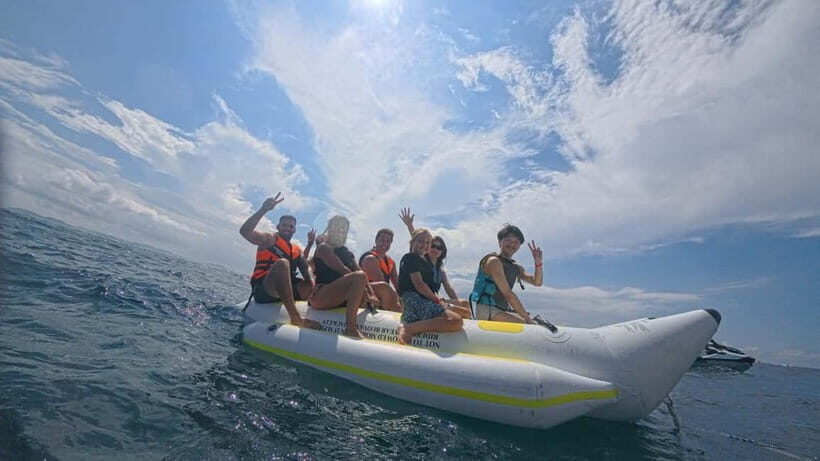
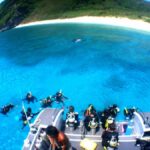
This is a half-day outing designed for people who want the Kerama snorkeling experience without turning it into a full travel project. You leave from Naha’s Miegusuku Port, then spend your short slice of time out on the water exploring the reef area near the Kerama Islands group, which sits west of Naha.
The best part of choosing a half-day format is that you still get the “wow” factor fast. In one helpful detail, the ride from Naha to the snorkeling area is around 30 minutes, so you’re not stuck staring at waves for hours before you can get in the water. For many visitors, that time balance is what makes this tour feel good value.
You can also read our reviews of more snorkeling tours in Naha
Check-in and getting aboard at Naha Miegusuku Port
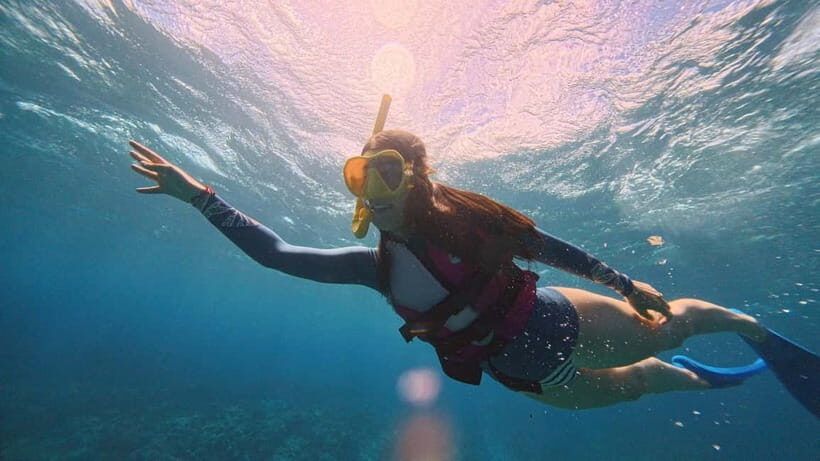
Plan to arrive for check-in at either 9:00 or 13:45. Departure is 9:30 or 14:15 depending on the session you book, and the check-in is inside the Naha Miegusuku port waiting room.
The staff wear a blue t-shirt with Cerulean blue on it, which makes it easier to find the right group if you’re arriving a little early. You’ll also sign a medical form before you go, so it’s smart to read the eligibility notes ahead of time and not wait until you’re on-site.
One practical tip: your pickup locations are fixed. When booking, choose the pickup point closest to your accommodation so you don’t end up spending your morning or afternoon backtracking.
The snorkeling plan: clear water, coral viewing, and a marked zone
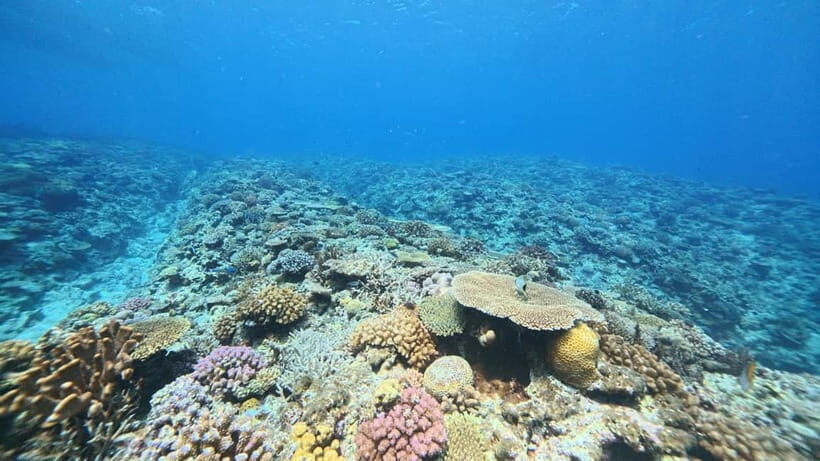
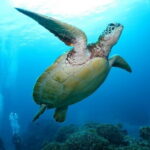
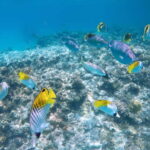
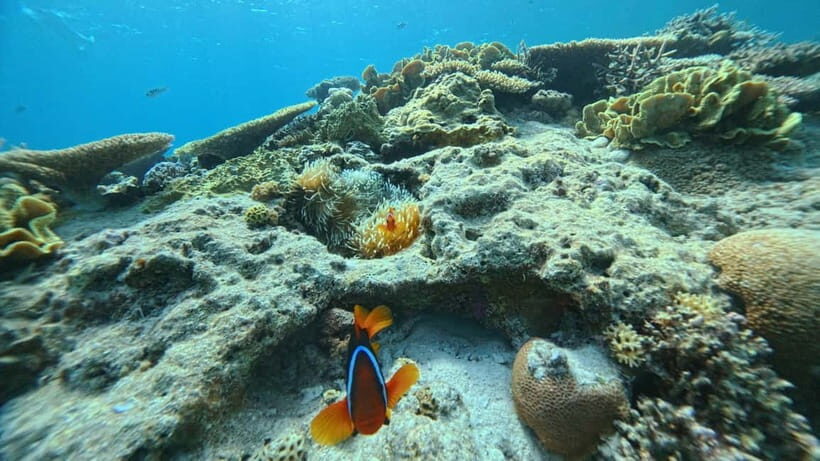
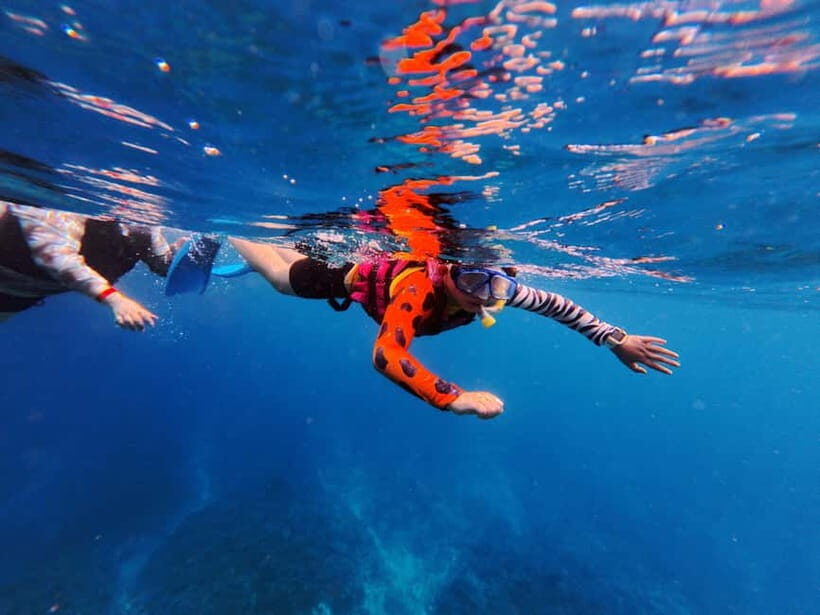
At the snorkeling spot near the closest Kerama Islands, you’ll get in the water to explore coral reefs and tropical fish in the clearer Kerama area. With luck, you might even spot a sea turtle, but the honest reality is that marine sightings depend on what’s in front of you that day.
This tour is set up for beginners, and that shows in how it’s managed: you’re given snorkeling guidance, and safety rules are strict. One major point to know is that snorkeling happens in a roped-off area rather than free roaming, which keeps the group together and reduces risk for people who are still learning.
That also leads to the biggest “consideration” you should think about before booking: some first-timers might expect a more flexible snorkel session. If you’re the type who wants to swim far, do long breath-holds, or treat it like an all-day reef exploration, this format may feel more controlled than you want.
Life jackets required: safety first, freedom second
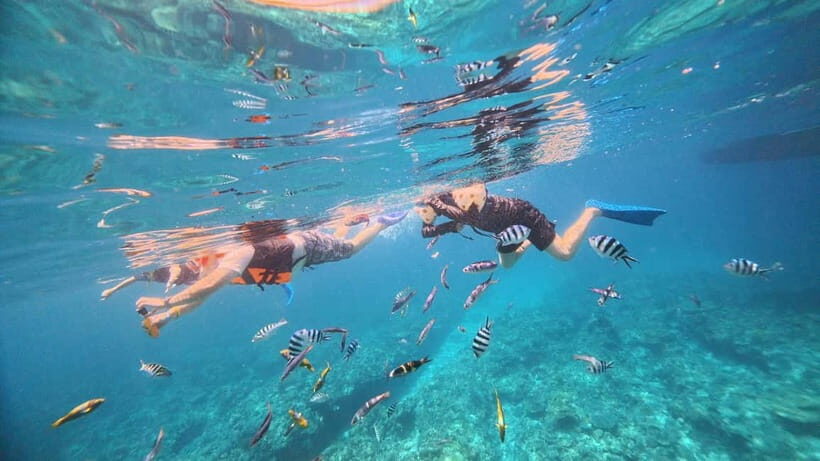
Here’s the rule that affects the whole experience: life jackets must be worn at all times, even while you are in the water snorkeling. Even if you’re a strong swimmer, that’s the program requirement, and it’s non-negotiable.
This is a genuine safety choice, especially for beginners or mixed swim abilities. The flip side is that some people feel the vest limits how they move or how relaxed they are while snorkeling, especially if they want to float and angle themselves a certain way.
If you’re worried, the best approach is mindset. Think “easy, guided snorkeling in a clear spot” rather than “sporty, flexible reef swim.” You’ll still have plenty to look at—coral and fish are the focus—but you’ll do it in a safety-first rhythm.
Banana boat ride timing and why it’s worth the motion
One of the most fun parts for first-timers is the included banana boat ride. It’s not a long activity, but it adds energy and a shared moment before or after snorkeling depending on how the crew runs the schedule.
Because the boat trip is half-day, every activity needs to feel worth your time. The banana ride checks that box: it gives you something lively even if you’re still getting used to snorkeling gear.
Also, if you’re trying to manage seasickness, this is the kind of day where the operator tells you what to bring for motion sickness prevention. Bring what works for you—ginger, medication you’ve used before, or other remedies—since the boat ride is part of the experience.
A few more Naha tours and experiences worth a look
Photos included, but sea conditions matter
You get free photos taken during the tour, which is a big practical win. You don’t have to juggle a camera with rental gear, and you’ll end up with proof of your day in the water.
But there’s a catch: photos depend on sea conditions. If the operator can’t take photos in the daytime due to the conditions, there’s no refund. So if photography is a top priority, keep one flexible expectation in mind on days with wind or lower visibility.
What you get: included gear, instructor time, and a rinse shower
The package covers the basics that usually add up fast when you travel:
- Snorkeling set rental: mask, snorkel, fins
- Snorkeling instructor guidance
- Mandatory life jacket
- Photos taken during the tour
- Shower to rinse salt
- Naha city transfers
- Greeter support at the port
It’s a well-structured list for a half-day. You’re not paying extra to figure out logistics, and you get the rinse solution that makes the rest of your Okinawa day more comfortable.
A small gear detail worth flagging: there are a limited number of masks with up to ±3.0 diopter correction. If you rely on prescription vision support, it may be easier to use one-day contact lenses rather than hoping you’ll get the right mask on the day.
What’s not included, and what to pack so the day feels easy
You’ll want to cover the items not included, so your half-day doesn’t turn into a last-minute shopping trip:
Not included:
- Wetsuit
- Parking fees
- Landing on any island
What to bring:
- Hat
- Swimwear
- Change of clothes
- Towel
- Camera (or waterproof phone case if you use one)
- Drinks
- Sunscreen
- Motion sickness prevention
- Camera-ready basics like a bag for wet items
Also keep in mind the rules: smoking and alcoholic drinks are not allowed in the vehicle.
A quick practical note on comfort: saltwater days feel better when you plan for the dry-off and rinse routine. With the provided shower, you’ll still want your own towel and a full change of clothes ready to go.
Sea conditions can change the plan on the day
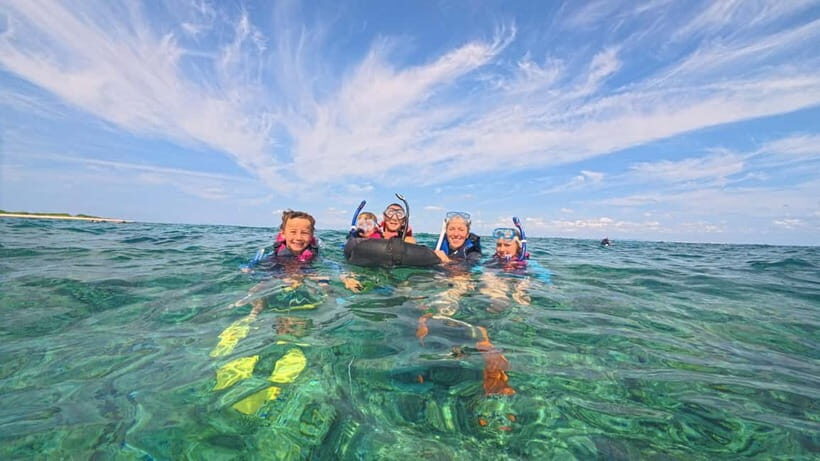
This is a real ocean tour, not a guaranteed showroom experience. The captain selects the safest and most scenic site based on conditions, and depending on ocean conditions, the snorkeling location may be changed.
On days with rougher water, visibility and marine life can vary, and that’s beyond anyone’s control. The best thing you can do is treat the Kerama snorkeling as a “go with the ocean” activity and set expectations for natural variability.
Also, the tour runs even in rain. If you’re expecting a sunny postcard day, pack for gray skies too.
Languages and communication: you won’t be stuck guessing
Communication is built into the experience. The tour can operate in English, Korean, Chinese, and Japanese, which matters when you’re learning safety rules and snorkeling handling.
In practice, that means you can ask questions clearly and understand instructions about where to go, what to do, and how to stay safe.
Price and value: what $57 covers (and what it doesn’t)
At $57 per person, the price is trying to buy you convenience. You’re getting transfers, equipment rental, an instructor, the life jacket, and free photos, plus a banana boat ride.
That’s the value equation: if you’d otherwise pay for a guided snorkeling service with rental gear and transportation in Naha, the bundled package makes sense. It’s less attractive if you already have all equipment, are traveling with your own boat/snorkel plan, or mainly want island hopping and beach time, because landing on islands isn’t part of this program.
Where the price may feel less convincing is if you personally dislike controlled snorkeling areas or you strongly prefer a more open-water, less-rule-heavy swim. In that case, you might want a different style of snorkeling day in Okinawa that matches your comfort level.
Who this tour fits best (and who should think twice)
This is a beginner-friendly snorkeling day, and it’s a good match if you want a guided way to see coral and tropical fish without planning everything yourself. It’s also a solid choice if you like the “two-part day” feel: boat ride plus snorkeling, with a fun banana ride added.
It’s not suitable for many health situations, including:
- Children under 6 years
- Pregnant women
- People with back problems
- People with heart problems
- People with respiratory issues
- People with epilepsy
- People over 264 lbs (120 kg)
- People over 60 years
- People with diabetes
- People with high blood pressure
- Asthma, circulatory disorders, ear infections, liver disease
- Anyone with a hangover or who consumed alcohol that day
If you fall into any of these categories, don’t treat it as a “maybe.” Participation can be refused on the day without a refund.
If you’re anxious about snorkeling mechanics, that’s still okay. The instructor and structured setup are part of the safety design. Just be ready to follow the life jacket rule and stay within the snorkeling boundaries.
Equipment expectations: mask issues and fin confidence
A couple of practical realities to plan around:
- Some masks are available only in limited prescription options (±3.0 diopter correction).
- Some people report basic anti-fog support may not be enough if your lenses fog quickly.
So if you know your gear fogs, pack anti-fog products you trust. It’s a small thing, but it can make the difference between “I can see fish” and “I’m squinting at haze.”
Also, use the fin time wisely. If you’ve never used snorkeling fins before, don’t pretend you’ll figure it out in the moment. The safest path is to get the instructor’s tips and practice a little movement before water time.
Should you book this Kerama half-day snorkeling tour?
Book it if you want a low-planning, guided snorkeling day from Naha with clear-water reef time, rental gear handled for you, and photos that document the experience. I think it’s especially good for first-timers who value structure, safety, and an activity schedule that fits a half-day window.
Skip it or look for an alternative if you strongly dislike strict safety rules—especially the life jacket all the time requirement—or if you expected a long, free-roaming reef swim. This tour is built for controlled snorkeling in a limited zone, and that’s part of the deal.
If you’re on the fence, the deciding question is simple: do you want the convenience and guidance of a beginner-first snorkeling setup, or do you want maximum freedom and minimum rules? For many people in Okinawa, the first choice is exactly what makes the day work.
FAQ
Where do I check in for the tour?
Check in is inside the Naha Miegusuku port waiting room. Staff wear a blue t-shirt with Cerulean blue on it.
What time does the boat depart?
There are two sessions. Check-in is 9:00 and boat departure is 9:30, or check-in is 13:45 and boat departure is 14:15.
What snorkeling gear is included?
The tour includes snorkeling set rental: mask, snorkel, and fins, plus a mandatory life jacket.
Do I need to wear a life jacket while snorkeling?
Yes. Life jackets must be worn at all times, including during snorkeling.
Is a wetsuit included?
No. Wetsuits are not included.
Is the banana boat ride included?
Yes. You get 1 banana boat ride included with the tour.
Are prescription masks available?
There is a limited number of masks with up to ±3.0 diopter correction. If you need more help, the tour notes that one-day contact lenses may be better.
What happens to photos if conditions are poor?
Free photos depend on sea conditions. If photos can’t be taken that day due to conditions, you won’t get any refund.
Who isn’t eligible to join?
The tour lists many restrictions, including asthma, circulatory disorders, ear infections, liver disease, heart problems, respiratory issues, epilepsy, diabetes, high blood pressure, pregnancy, and several age and weight limits. Participation may be refused if you’re on the not-suitable list.