REVIEW · YAMANASHI PREFECTURE
Exploring Mt Fuji Ice Cave and Sea of Trees Forest
Book on Viator →Operated by trip-fuji.com Japan · Bookable on Viator
You only need one reason to go: the ice cave. This Mt. Fuji-area walk through the famous Sea of Trees (Aokigahara Jukai) feels eerie in the best way, and the guide turns a muddy, mossy hike into a story you can actually picture.
What I love most is the contrast: a living forest above ground, then real ice formations underground—often year-round. The second big win is having a guide like Toshi, who explains what you’re seeing (flora, fauna, and the lava story) in a way that makes you look closer without sounding like a lecture.
One thing to think about: the cave route can be slippery and uneven, with a slightly dark interior. You’ll want balance, good shoes, and comfort with cold.
In This Review
- Key things to know before you go
- Getting to Narusawa and what “pickup” really gives you
- The Sea of Trees walk: moss, lava shapes, and animal noise
- The Jukai story: why you need a guide to get the meaning
- Ice cave time: what year-round ice looks like in real life
- Footing, darkness, and why good shoes aren’t optional
- Helmet and gloves: small inclusions that make the cave feel easier
- Toshi the guide: photos, humor, and fungi-finder energy
- Crowds, peace, and when Mt. Fuji shows up
- Price and value: is $56.82 a fair deal?
- Who should book this ice cave and Sea of Trees tour?
- Should you book the Mt. Fuji Ice Cave and Sea of Trees tour?
- FAQ
- Is the Mt. Fuji Ice Cave and Sea of Trees tour about how long?
- Where does the tour start and end?
- Do you provide pickup?
- Is the entrance ticket included in the price?
- What gear is provided for the cave?
- What language is the guide available in?
- What kind of fitness do you need for the ice cave?
- Is the tour suitable for children?
- How big are the groups?
- What’s not included (food and drinks)?
Key things to know before you go
- Small group size (up to 20): less chaos, more chances to ask questions and slow down for details.
- Helmet and gloves included: you’re not hauling gear, and it makes cave time feel more controlled.
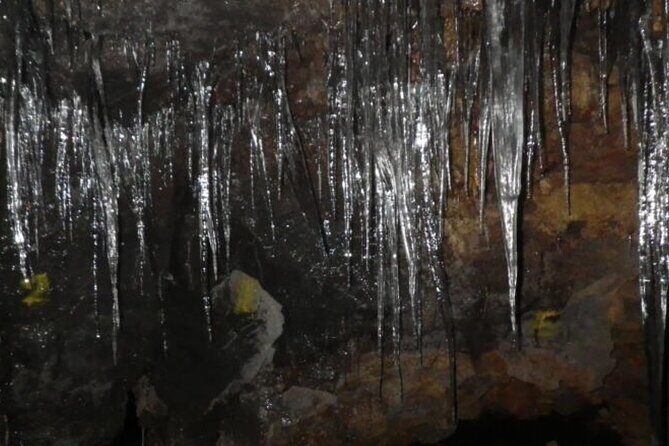
- Ice in a lava cave: ice is visible all year, and winter adds icicles and snow scenes.
- Aokigahara is moss-first: the ground cover is a major part of what you came to see.
- Reality check on footing: expect slippery rocks, some steps, and a need for balance.
Getting to Narusawa and what “pickup” really gives you
This tour starts at Roadside Station Narusawa. If you’re staying in the Lake Kawaguchiko area, you can also use the provided shuttle service around Kawaguchiko Station, which is a big deal when you’re trying to fit nature time into a tight Fuji schedule.
The whole outing runs about 3 hours, and it’s designed for a small group (maximum 20). That time window matters because you’re not just “doing” the cave—you’re also getting the forest context while you walk. You finish back at the meeting point, so you’re not stuck wondering how to get yourself out.
You’ll also get a mobile ticket, which simplifies entry day—no paper scramble, no extra stops.
You can also read our reviews of more tours and experiences in Yamanashi Prefecture.
The Sea of Trees walk: moss, lava shapes, and animal noise
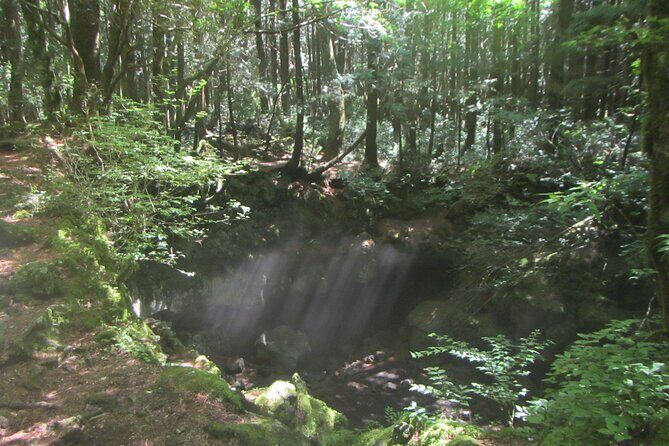
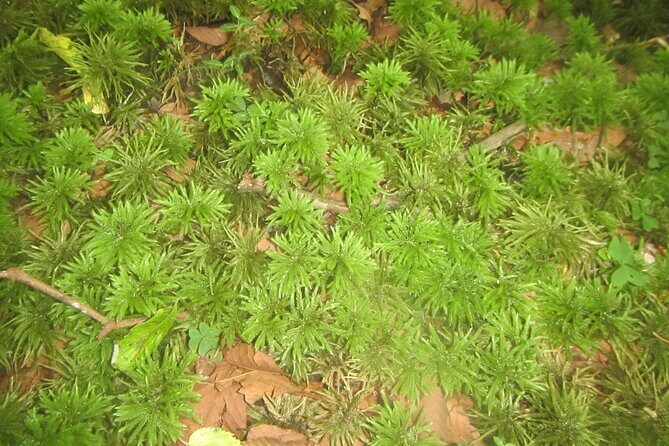
Once you head into Aokigahara Forest, you immediately notice how different it feels from the typical Mt. Fuji sightseeing route. Reviews and on-the-ground descriptions both point to the same first impression: the moss. It covers the ground like a soft filter, so even before you learn anything, your senses get re-tuned for slower, quieter walking.
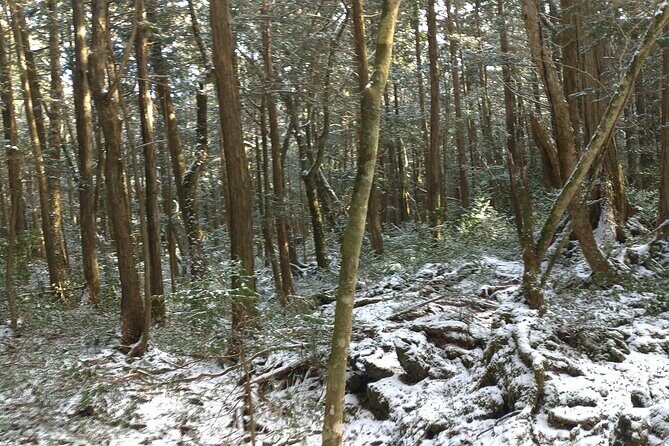
You’re walking over plateau lava, which helps explain the weird tree shapes and the uneven feel of the ground. It’s not a manicured park. It’s a working natural system, and the guide keeps pointing out small things your eyes would otherwise slide past.
Expect nature “soundtracking,” too—things like birds such as woodpeckers and Japanese tits. And if you’re lucky, you might spot animals like Japanese squirrels and deer.
The plant variety changes with the season. Depending on when you go, you might see wild plants like rare orchids, mushrooms, evergreen plants, plus lichens and algae. The point isn’t to memorize botany. It’s to understand that this place runs on subtle life forms—moss, fungi, and micro-ecosystems—right alongside the bigger trees.
The Jukai story: why you need a guide to get the meaning
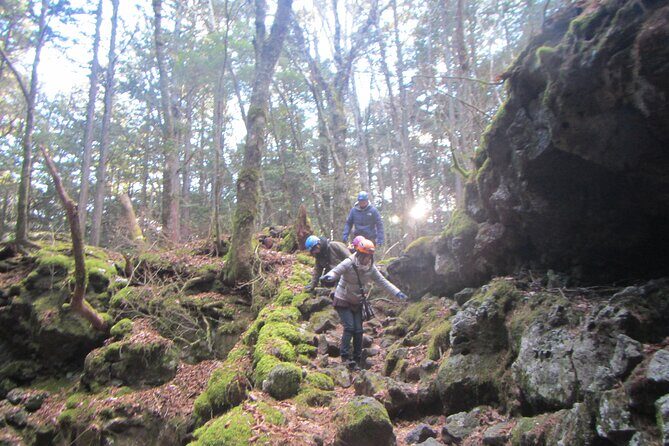
Aokigahara Jukai isn’t just “a spooky forest.” It’s tied to the broader Mt. Fuji environment—lava origins, a protected setting, and a lot of cultural attention. The tour frames it as part of a World Heritage Site and a national park, which helps you see the area as something you visit responsibly, not something you rush through.
There’s also a practical reason you’ll probably appreciate the guided approach: individual visitors often need a special entry permit arranged through the local tourism association. With this tour, you don’t have to personally sort that out to access the area.
What the guide brings to the walk is the ability to connect the physical place to the human stories around it—there are plenty of anecdotes connected to Jukai, and many movies, documentaries, and books have drawn from the forest’s mystique. You’ll hear the nature side and the cultural side together, so the forest feels real, not like a foggy legend.
Ice cave time: what year-round ice looks like in real life
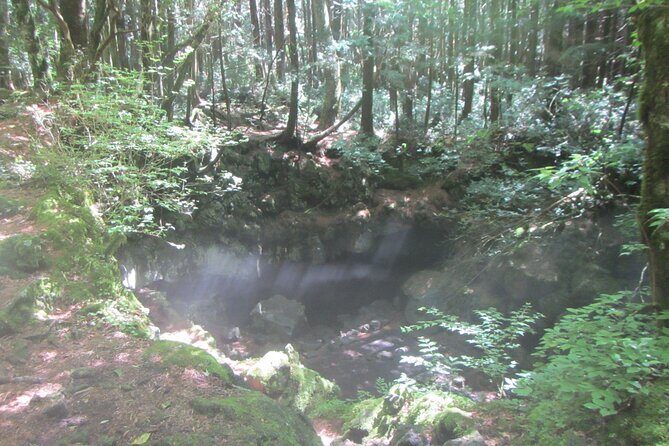
The highlight is the Mt. Fuji ice cave—rare enough that it’s described as unusual to find ice in a lava cave. The big promise here is straightforward: ice can be seen all year round, which means you’re not just chasing a one-season gimmick.
In winter, the cave experience shifts dramatically. You’ll be surrounded by icicles and ice stalagmites, creating a dreamlike effect that changes slightly day to day as temperatures and melt-freeze cycles do their thing. If you’ve ever been in a place where nature keeps “repainting” overnight, this has that same feel.
Even better: this is presented as something children and adults can enjoy. That doesn’t mean it’s flat and easy—more on that next—but it does mean it’s not only for hardcore trekkers.
Footing, darkness, and why good shoes aren’t optional
Let’s talk about the only part of the tour that can catch people off guard: the cave route.
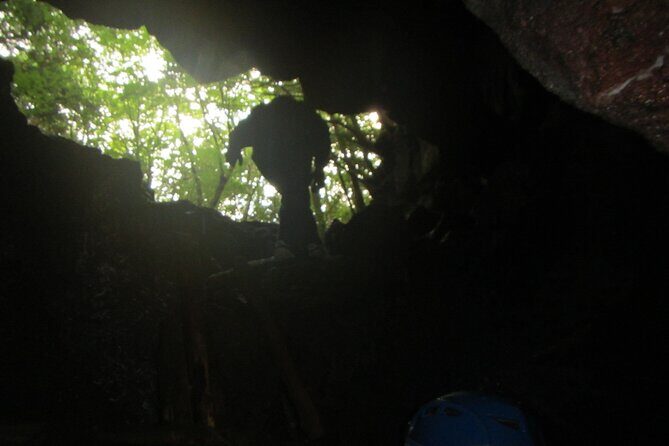
One review described the cave as requiring average footing and balance in a slightly dark environment. Another pointed out slippery rocks, plus the need for flexibility and strength in your legs due to the way you move and brace. If you don’t usually exercise, you might use muscles you don’t call on every day.
So here’s the practical checklist I’d follow:
- Wear good hiking shoes with solid grip.
- Bring warm layers even if the forest feels mild at first; cave time is cold.
- Consider pants you don’t mind getting scuffed, since you’ll be stepping and bracing.
- Be comfortable with short sections where you’re thinking about heights and darkness.
The cave may look surreal, but the experience is still physical enough that your body needs attention. The good news: the tour is set up to feel safe for a wide range of ages, and the guide is there to keep the group moving responsibly.
Helmet and gloves: small inclusions that make the cave feel easier
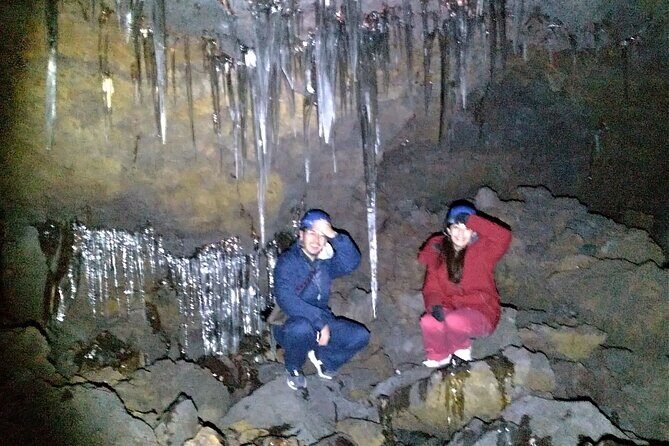
You don’t show up and improvise. This tour includes helmet and gloves, which removes a common friction point for cave activities. It also signals the operators take safety seriously—at least as seriously as you can take it in real natural conditions.
With that gear, the cave feels less like an adventure challenge and more like a managed exploration. You still need balance and care, but you’re not thinking about where to rent protection gear.
Toshi the guide: photos, humor, and fungi-finder energy
In almost every glowing account of this tour, the guide is the reason it feels memorable. The name that pops up again and again is Toshi.
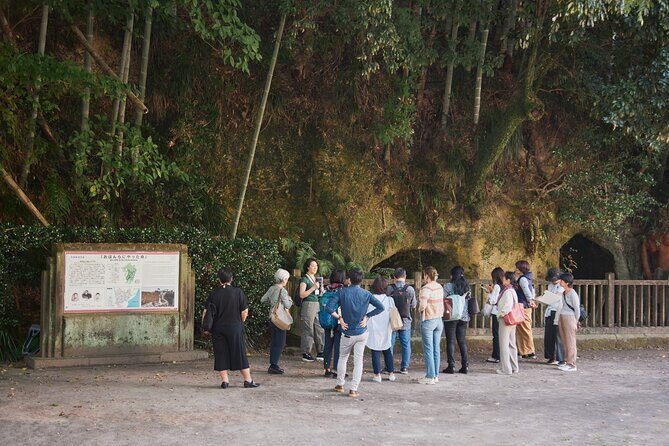
Toshi’s style lands as friendly and practical:
- He points out things in the forest as you walk, including small fungi and other details.
- He uses visual aids and pictures, which helps a lot when you’re looking at lichens, mushrooms, and moss that can be easy to overlook.
- He’s responsive about timing and pickup coordination—useful when your schedule is already tight around Mt. Fuji.
- He’s willing to answer questions, and he brings humor without rushing you.
There’s also a standout detail: Toshi has an interest in mycology. One review mentioned he’s an amateur mycologist and even aspires to be a botanist one day. If you’re the type who gets excited when someone points out a mushroom you didn’t notice, this will feel like a gift. If you’re not, it still helps because the guide translates the forest into something you can observe, not just admire from a distance.
He may also help with photos. One review noted he took pictures during the experience. If you want proof you were there (and not just a blurry selfie in the dark), that’s a real advantage.
And yes, some people appreciated extra kindness like restaurant recommendations and even being dropped off to eat instead of being shuttled straight back. That’s not something you should bank on, but it fits the overall pattern: Toshi tends to make your day smoother.
Crowds, peace, and when Mt. Fuji shows up
A lot of people come to the Mt. Fuji area and get hit with crowds—especially at the famous viewpoint circuit. This tour offers a different vibe: a quieter forest pace and a feeling of separation from the busy places.
Several accounts describe it as peaceful, with fewer people than you’d expect, which is exactly what you want for a walk like this. When you’re surrounded by moss and ice, silence (or near-silence) makes the experience.
Season matters for what you’ll notice. Autumn can bring brilliant color before winter sets in. In some periods, the forest can show an abundance of mushrooms and fungi. In winter, snow and ice add another layer of “moving art.”
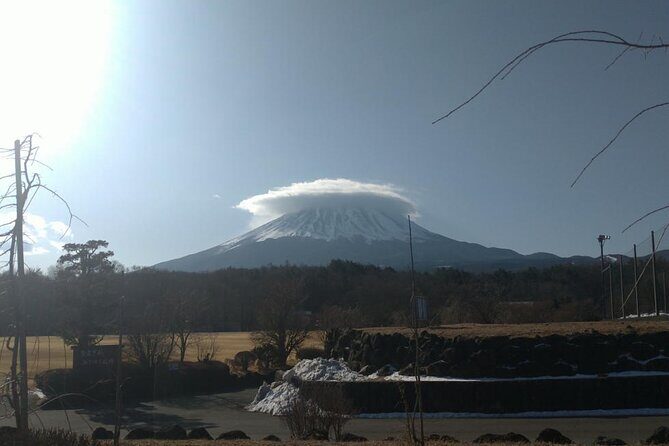
And while it’s not guaranteed in every situation, the tour experience is often described as having Mt. Fuji views as an added bonus—like the cherry on top.
Price and value: is $56.82 a fair deal?
At about $56.82 per person, this tour sits in the “reasonable guided day” range rather than “cheap” or “premium extravagance.”
What you’re paying for that makes the price feel workable:
- Admission/ticket is included
- Shuttle service around Kawaguchiko Station is included (depending on where you start)
- A professional guide helps you understand what you’re seeing
- Helmet and gloves are included, which is one less cost and one less hassle
What’s not included:
- Drinks and meals
If you’re trying to do this as an independent plan, you’d likely deal with permit questions and figuring out cave access. So the value isn’t just the hike—it’s the guided access and interpretation.
For a short 3-hour outing, it also earns points for not chewing up your whole day when you’re already spending hours chasing Mt. Fuji light.
Who should book this ice cave and Sea of Trees tour?
This is a great match if you:
- Want a break from city bustle but still like learning as you walk
- Enjoy nature details—moss, lichens, mushrooms, and how ecosystems work
- Like the idea of a rare ice cave rather than just another viewpoint stop
- Prefer a small group and a guide who keeps things moving with explanations
It’s also presented as family-friendly. If you’re traveling with kids aged 6–11, a parent or guardian must accompany. So if you’re a family, this can be a meaningful outing—not only a “photo stop.”
If you’re someone who struggles with uneven footing, slippery surfaces, or confined dark spaces, you should seriously consider whether the cave part fits you. The tour is designed to be safe for many ages, but it does involve physical footing demands.
Should you book the Mt. Fuji Ice Cave and Sea of Trees tour?
Yes, if you want an experience that feels specific to this region—mossy Jukai above ground and ice formations in a lava cave below—handled by a guide who actually helps you see what you’re walking through.
Book it especially if:
- You care about the nature details, not just the Instagram angle
- You’d rather have a guide handle access and context for you
- You like the idea of a quieter alternative to the most crowded Fuji stops
Skip or think twice if:
- Cave footing and darkness are deal-breakers for you
- Your plan includes lots of resting time after a long day and you know your legs aren’t happy on uneven terrain
If you’re in good hiking shoes, dressed for cold, and open to a guided walk that mixes science and atmosphere, this is a standout way to spend a few hours near Mt. Fuji.
FAQ
Is the Mt. Fuji Ice Cave and Sea of Trees tour about how long?
It runs for approximately 3 hours.
Where does the tour start and end?
It starts at Roadside Station Narusawa in Yamanashi Prefecture and ends back at the same meeting point.
Do you provide pickup?
Yes. A shuttle service around Kawaguchiko Station is included.
Is the entrance ticket included in the price?
Yes. The tour includes an admission ticket.
What gear is provided for the cave?
You’ll receive a helmet and gloves.
What language is the guide available in?
The guide is available in Japanese or English.
What kind of fitness do you need for the ice cave?
The cave requires average footing and balance, and conditions can be slippery and slightly dark, so good balance and comfortable leg strength help.
Is the tour suitable for children?
Most travelers can participate. For ages 6–11, a parent or guardian must accompany.
How big are the groups?
The tour has a maximum of 20 travelers.
What’s not included (food and drinks)?
Drinks/meals are not included. The tour includes the shuttle, fees/tax, helmet/gloves, and a professional guide.